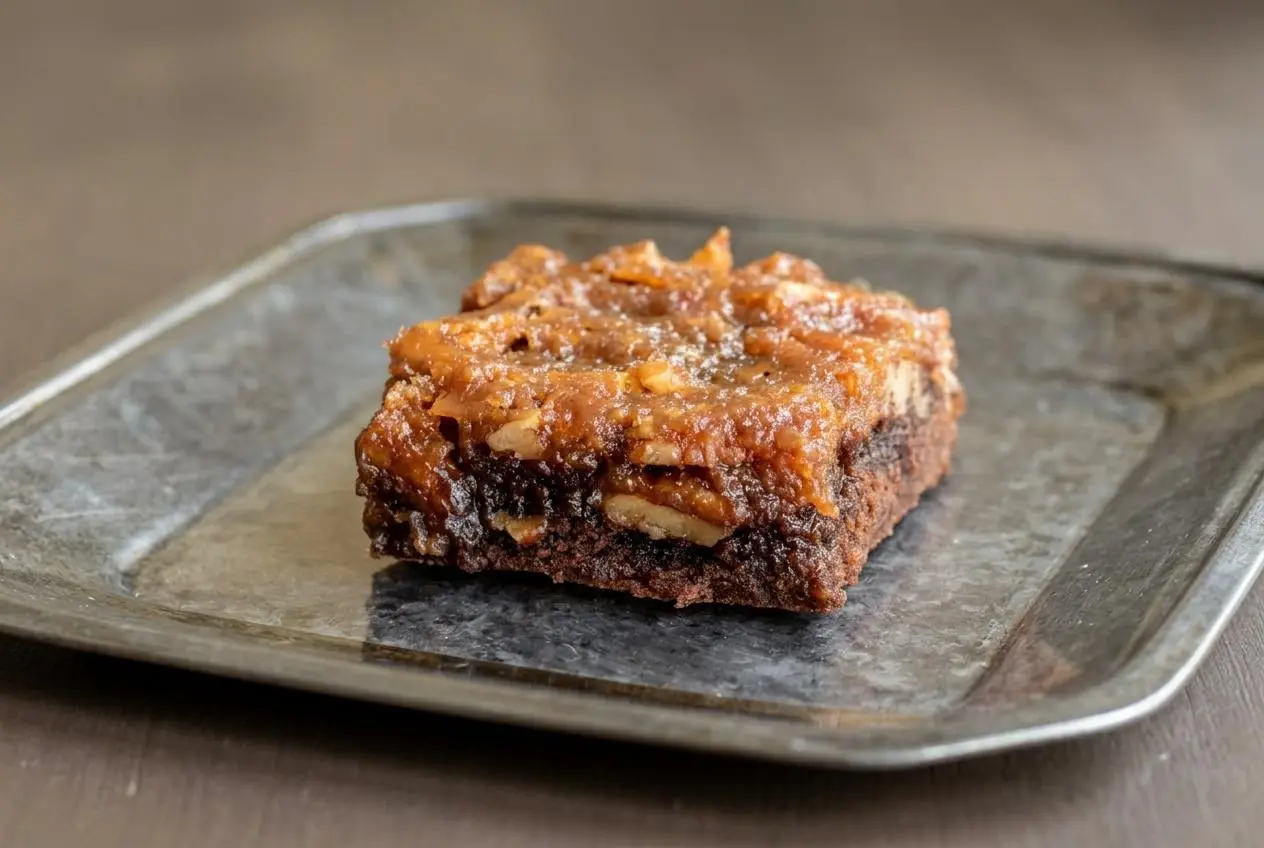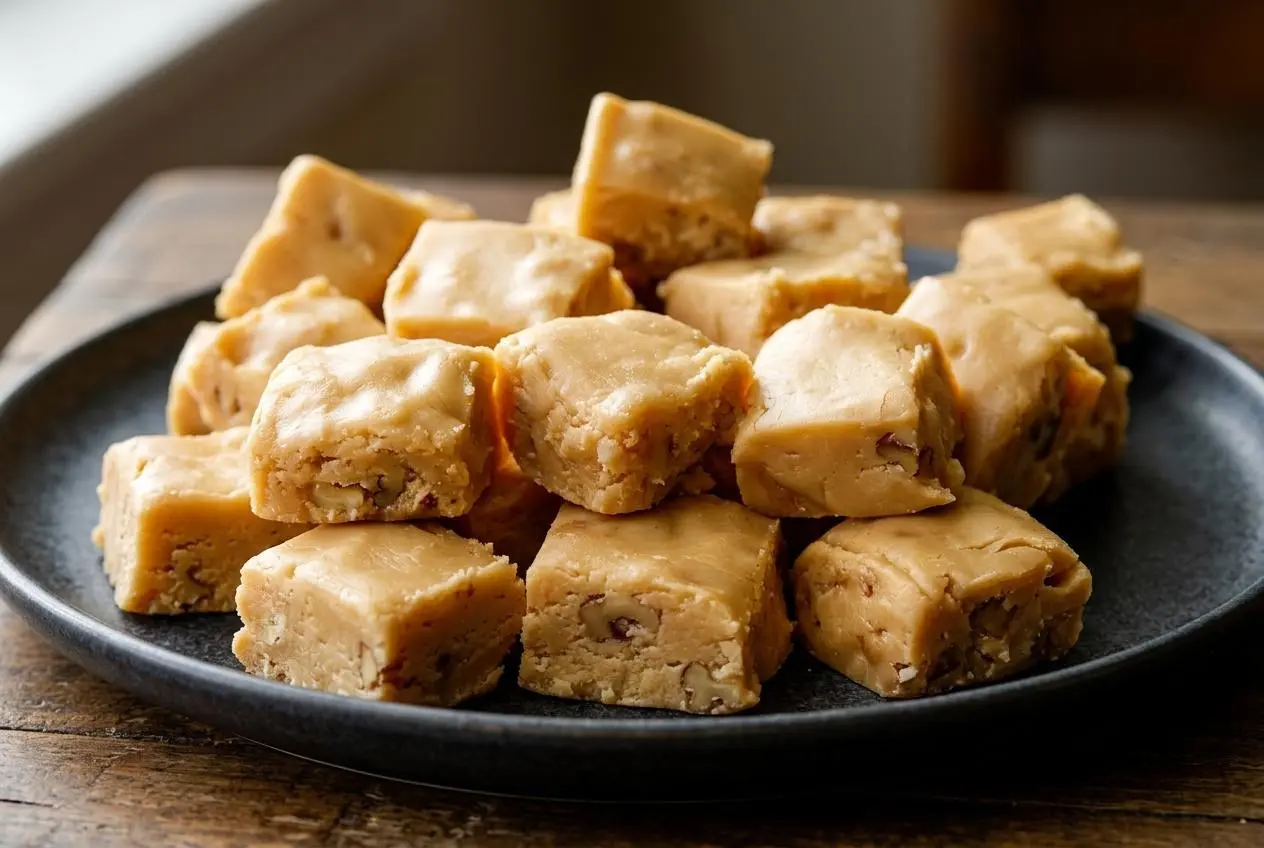
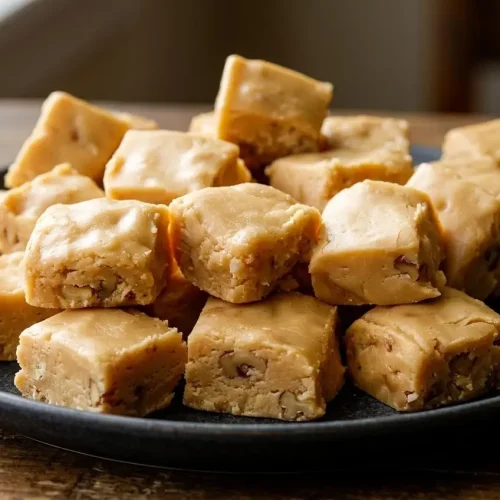
Penuche fudge is a chocolate-free brown sugar candy with a creamy, buttery caramel flavor. This old-fashioned version uses boiled milk, corn syrup, vanilla, and walnuts, with careful cooling and beating to create its velvety texture.
The warm brown sugar aroma makes this candy inviting before you cut the first square. Unlike a melted-chocolate fudge, penuche depends on cooking the syrup, letting it rest, and then beating it into a fine-textured candy.
The process rewards patience, especially during the cooling pause. You don’t need to stir harder or work faster throughout, just recognize the moment when the mixture thickens and its shine begins to fade. That’s the cue that matters.
Set the prepared pan beside your beating area so you can spread the fudge as soon as it’s ready.
What Is Penuche Fudge?
Pronounced puh-NOO-chee, penuche tastes like buttery brown sugar, caramel, and butterscotch, with a flavor reminiscent of Southern pralines but a softer, creamier fudge texture.
This New England favorite has a name commonly linked to panocha, a Mexican-Spanish term for raw brown sugar. Its molasses notes come from brown sugar, not from cooking the syrup to the much hotter caramel stage.
Unlike chocolate-based candies such as classic Texas fudge, penuche lets brown sugar and butter lead. This version uses a traditional boiled-milk method rather than a sweetened condensed milk shortcut.
Ingredients You Need and Why Each One Matters
Sugars provide flavor and structure, butter adds richness, and milk supplies moisture. Corn syrup helps control crystallization, while salt, vanilla, and walnuts balance the sweetness with flavor, aroma, and crunch.
- 1 teaspoon plus 1/4 cup butter, divided
- 2 cups packed brown sugar
- 1 cup sugar
- 3/4 cup 2% milk
- 2 tablespoons light corn syrup
- 1/8 teaspoon salt
- 1 teaspoon vanilla extract
- 1 cup chopped walnuts
The teaspoon of butter greases the foil; the remaining 1/4 cup enriches the candy. Vanilla rounds out the brown sugar aroma, salt tempers sweetness, and walnuts break up the creamy texture with a pleasantly firm bite.
I separate the butter portions before starting so the pan-greasing amount doesn’t accidentally end up in the saucepan.
Light vs. Dark Brown Sugar and Corn Syrup’s Role
Light brown sugar gives a gentler molasses flavor, while dark brown sugar produces a deeper flavor and color. Either character fits penuche; the ingredient list doesn’t specify one type. Pack the brown sugar when measuring.
Granulated sugar contributes sweetness and the crystal structure that makes fudge sliceable. Light corn syrup helps interfere with large sugar crystals, reducing grittiness. It still needs careful stirring and cooling practices. Corn-syrup-free versions use different formulas, so don’t simply leave it out here.
Real Milk vs. Evaporated or Condensed Milk Shortcuts
- 2% milk: The specified milk provides the moisture and dairy content for this formula.
- Whole milk: Contains more milk fat and can change richness; keep 2% milk for the recipe as written.
- Evaporated milk: Has less water than regular milk and needs a formula designed for its concentration.
- Sweetened condensed milk: Contains added sugar as well as concentrated milk, so it isn’t a direct substitute.
- Dairy alternatives: Their fat, protein, and water content vary, and their setting behavior hasn’t been established here.
Salted vs. Unsalted Butter
The listed butter doesn’t specify salted or unsalted. Salted butter contributes additional salt, and the amount varies by brand; unsalted butter gives more predictable control over that balance. Keep the listed butter quantity and 1/8 teaspoon salt unchanged when following this formula.
How to Make Penuche Fudge Step by Step
Have a 9-inch square pan, foil, large heavy saucepan, candy thermometer, and spoon ready. The yield is 2 pounds, or 81 pieces. Allow for the stated 20-minute prep and 15-minute cook estimates, plus about 40 minutes of undisturbed cooling before beating and complete cooling afterward.
- Fit foil into a 9-inch square pan, leaving enough beyond the rim to grip later, and coat it with 1 teaspoon butter.
The buttered lining should cover the interior, with accessible foil handles on the edges. - Heat both sugars, milk, corn syrup, and salt in a large, heavy saucepan over medium heat, stirring continuously until a rapid boil develops; then leave the syrup unstirred until the candy thermometer reaches 234°F, remove it from the heat, and add the vanilla and remaining 1/4 cup butter without mixing.
The syrup should reach the soft-ball stage before the butter and vanilla go in. - Leave the mixture untouched until it measures 110°F, about 40 minutes, then beat with a spoon; when thickening begins, incorporate the walnuts and continue beating until very thick and just starting to lose its shine, about 10 minutes total, before immediately spreading it in the prepared pan and allowing it to cool completely.
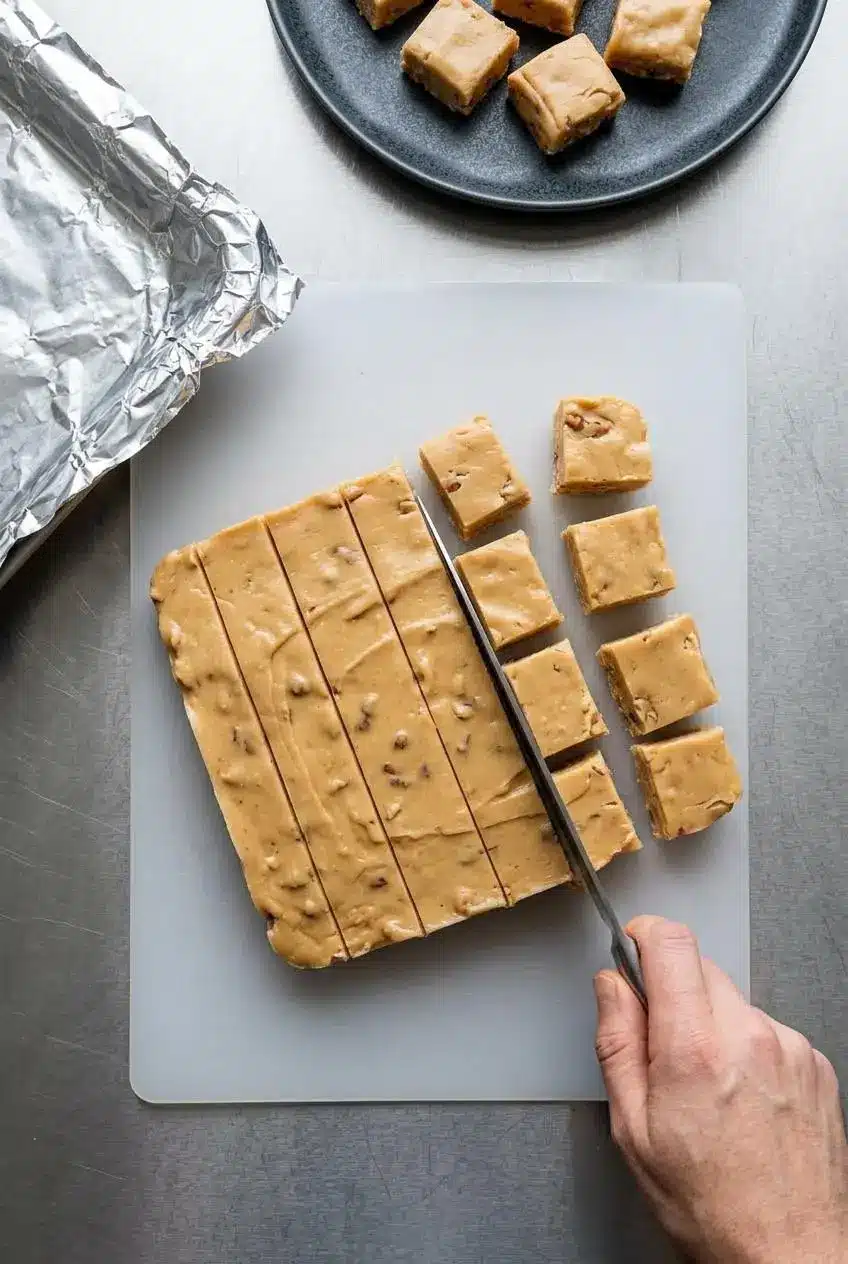
Increasing spoon resistance and the first dulling of the glossy surface signal that the fudge is ready to spread. - Lift the fully cooled slab by its foil handles, peel away the lining, and slice into 1-inch squares.
The firm slab should hold its shape as you cut the 81 pieces.
Preparing the Foil-Lined Pan
Press the foil into the corners while keeping the overhang intact. The butter coating helps release the candy, and the handles let you lift the slab without prying against its edges. Prepare it before heating the syrup.
Boiling to the Soft-Ball Stage at 234°F
Stir while heating so the sugars dissolve and the milk mixture heats evenly. Once it reaches a rapid boil, stop stirring. Agitation can encourage unwanted crystallization as the syrup concentrates.
At the cooking target, take the saucepan off the burner before adding the butter and vanilla. Leave both undisturbed during cooling rather than stirring the butter into the hot syrup.
The 110°F Cooling Pause and Beating Cues
Cooling before beating helps the fudge develop fine crystals rather than coarse, sandy ones. Let the thermometer guide you; the approximate cooling time isn’t permission to start early.
At first, the spoon moves through a glossy mixture. As beating continues, you’ll feel more resistance. Add the walnuts when thickening starts, then watch for the surface to shift from bright gloss toward satin. Spread it at that first slight dulling, not after it becomes completely matte. The hand-beating estimate is secondary to that cue.
Cooling Completely and Cutting the Squares
Let the fudge cool completely in the pan before lifting. Peel away the foil before cutting so it doesn’t cling underneath the pieces. A firm slab is easier to handle and gives tidier squares without a required refrigerator stage.
Tips and Troubleshooting for Smooth, Creamy Fudge
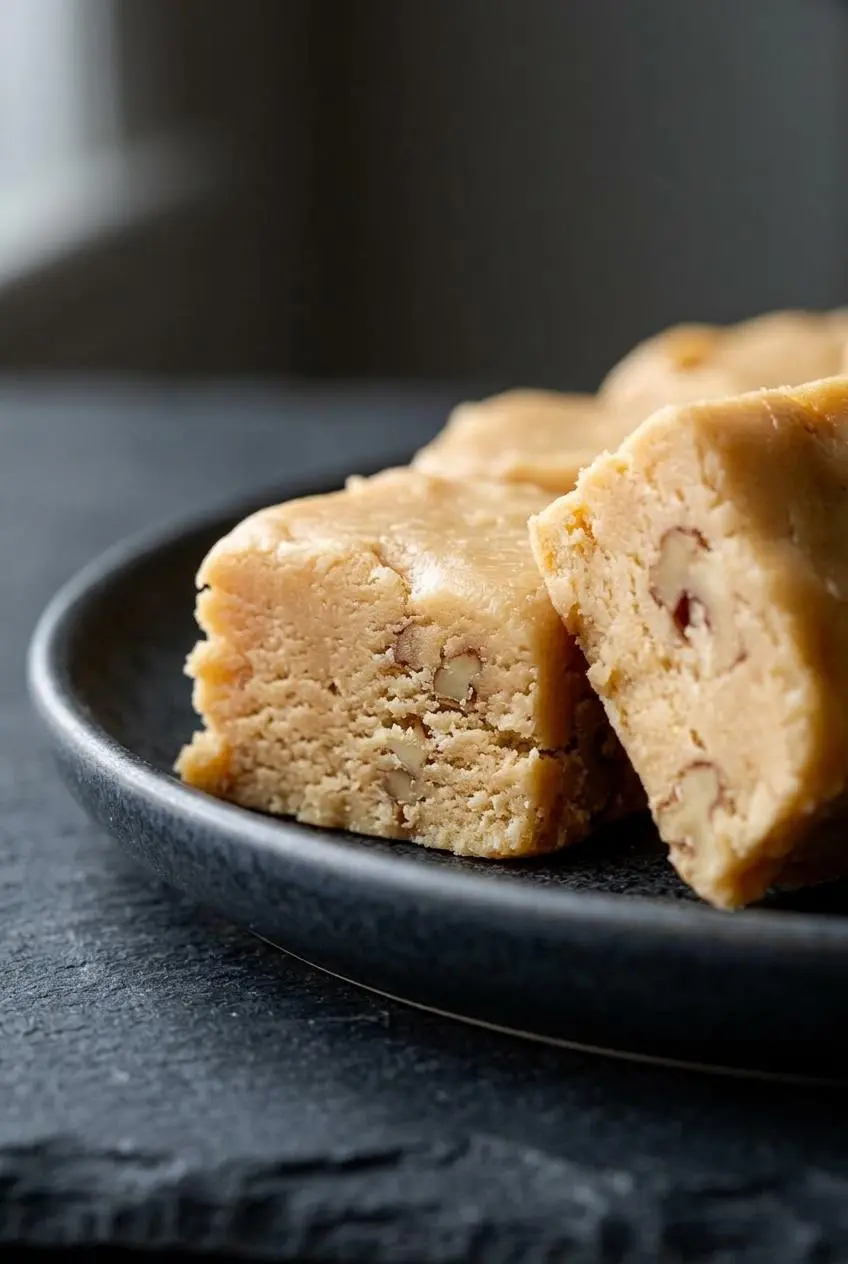
Good fudge contains sugar crystals, but they need to stay small enough that your tongue doesn’t notice them. Temperature, agitation, and the beating endpoint all affect that texture.
Checking the Thermometer and the Soft-Ball Texture
- Check accuracy: Compare your thermometer’s boiling-water reading with the expected boiling point for your location, following its calibration directions.
- Position it correctly: Follow the thermometer’s immersion instructions and keep its sensing area away from the pan bottom.
- Check texture if needed: Drop a small syrup sample into cold water, let it cool, then gather it with your fingers. At soft-ball stage, it forms a pliable ball that flattens when removed from the water. Never touch hot syrup directly.
Hand Beating vs. Stand Mixer Paddle Method
Spoon beating is the method used here. A stand mixer is an optional alternative, provided its instructions permit handling this mixture and quantity.
Wait until the syrup reaches the specified cooling target before transferring it carefully. Use the paddle on medium-low speed and watch continuously. Add walnuts when thickening starts, then stop when the mixture becomes very thick and first loses a little shine.
A mixer can reach that point much faster than a spoon. Don’t apply the hand-beating time to the machine, and have the pan ready before switching it on.
High-Altitude Soft-Ball Temperatures
At higher elevations, water boils at a lower temperature, so the candy target needs adjustment downward. Use candy-making guidance specific to your elevation or verified local boiling point rather than automatically cooking to the sea-level target.
Account for thermometer error separately, without applying the same correction twice. The cold-water test offers a useful supporting cue: look for a soft, pliable ball, not a firm or brittle lump.
How to Rescue Unset or Overcooked Chalky Fudge
Wait until the batch cools completely before deciding it hasn’t set. Then match the symptom to the likely cause:
- Unset or too soft: Insufficient cooking can leave excess moisture, while incomplete beating can also prevent the expected structure. A dissolve-and-reboil attempt may help.
- Grainy: Stirring during boiling or cooling can encourage coarse crystals. Fully dissolving those crystals is essential before attempting another cook.
- Dry or chalky: Excess cooking can remove too much moisture; overbeating can also make the texture crumbly. Reworking may improve it, though the result can differ.
- Seized in the saucepan: The mixture likely passed the spreading endpoint during beating. If it won’t spread, consider reworking it rather than forcing a crumbly mass into the pan.
For a recovery attempt, return the fudge to the saucepan with a small splash of milk. Stir gently over low heat until it dissolves with no visible sugar crystals. Bring it back to a boil, stop stirring, and cook to the appropriate soft-ball target.
Repeat the undisturbed cooling to 110°F, then beat to the original thickening and slight sheen-loss endpoint. Recovery isn’t guaranteed, and reboiling cannot remove burnt flavor.
- Don’t rush the cooling pause in the refrigerator.
- Spread immediately when the thick mixture first loses a little gloss.
- Leave crystallized residue on the saucepan walls rather than scraping it into the slab.
Maple, Pecan, and Holiday Penuche Variations
Choose optional flavor changes carefully: changing the syrup’s sugar or moisture balance is different from choosing a nut or topping. Keep these ideas separate from the recipe above.
New England Maple Penuche
Maple extract offers concentrated maple flavor, but its strength varies, so use a formula that specifies it. Pure maple syrup adds both sugar and moisture. For that approach, choose a maple-syrup penuche formula rather than adding an unmeasured splash to this batch.
Butter Pecan or Plain Nut-Free Penuche
Pecans offer a buttery alternative to walnuts. Plain penuche leaves the focus on its smooth brown sugar texture, without nut crunch. These are optional variations, not changes to the official walnut ingredient line.
For someone avoiding nuts because of an allergy, omitting walnuts alone doesn’t address ingredient labels or cross-contact.
Dried Fruit, Toffee Crunch, and Toasted Salted Walnuts
- Dried fruit: Cranberries, cherries, or raisins add chewy contrast when folded in near spreading; work promptly so the candy doesn’t set in the saucepan.
- Toffee crunch: Crushed English toffee makes an optional topping pressed onto the fudge while it’s still warm.
- Toasted salted walnuts: Toasted chopped walnuts and a tiny pinch of flaky sea salt contrast nutty crunch with brown sugar sweetness.
How to Store and Gift Penuche Fudge
Protect the finished candy from air and moisture to help preserve its creamy texture. Packaging matters as much as neat cutting.
- Cool the fudge completely before packing so trapped warmth doesn’t create condensation.
- Use a tightly closed container with waxed paper between layers.
- Protect the package from heat, direct sunlight, and moisture.
- If refrigerating, wrap tightly and keep the container closed to limit drying and condensation.
- For gifts, use food-safe tins or boxes, disclose walnuts and the other ingredients, and include storage directions.
This formula doesn’t establish a verified room-temperature storage duration, so don’t attach a promised shelf life to gift boxes.
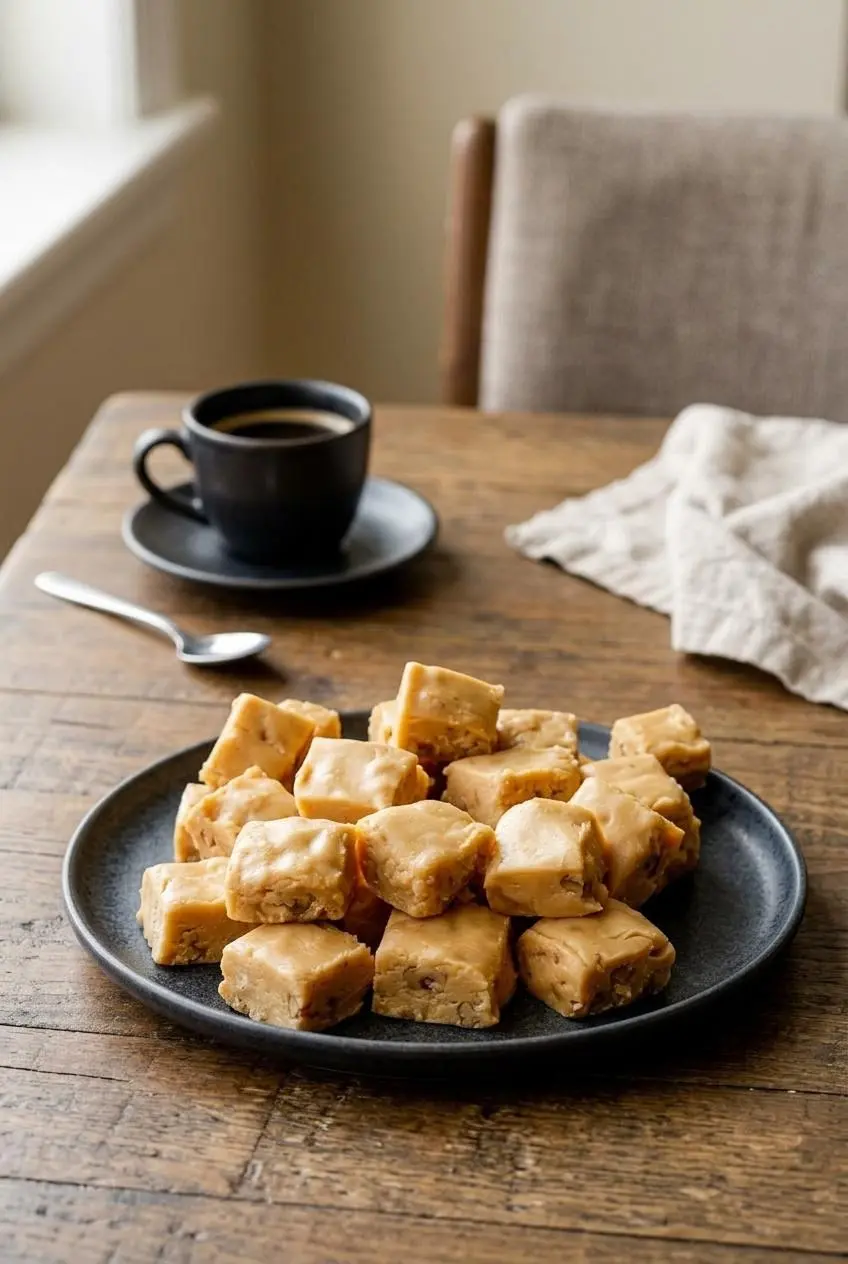
Serve small squares with black coffee or espresso, arrange them beside rocky road fudge on a holiday platter, or crumble pieces over vanilla ice cream for a praline-like finish.
Conclusion
Creamy penuche brings together buttery brown sugar flavor and walnut crunch without chocolate. Its texture depends on patience during cooling and attention during beating.
Respect the cooling target, then spread the thickened fudge at the first slight loss of shine. Keep that prepared pan close, and let the spoon’s resistance guide you.
Frequently Asked Questions
What Flavor Is Penuche Fudge and What Does Penuche Mean?
It tastes like buttery brown sugar, caramel, and pralines, with no chocolate. The name is commonly linked to panocha, a Mexican-Spanish term for raw brown sugar.
How Do You Pronounce Penuche?
Say puh-NOO-chee. Stress the middle syllable, “NOO.”
Can I Use a Stand Mixer to Beat Penuche Fudge?
Yes, as an optional alternative to spoon beating, after cooling to 110°F and checking the equipment’s handling directions. Use a paddle at medium-low speed, add walnuts when thickening begins, and stop when very thick and just losing shine. Don’t use a fixed machine time.
Why Did My Penuche Fudge Turn Grainy, Chalky, or Fail to Set?
Premature stirring can create coarse crystals; excess cooking removes moisture, and overbeating can cause crumbling. Undercooking or incomplete beating can leave fudge too soft. Dissolving it with a splash of milk and repeating the cook, cool, and beat sequence may help, but won’t fix burnt flavor.
How Do I Adjust Penuche Fudge for High Altitude?
Use a lower candy target based on verified local boiling-point or elevation-specific candy guidance. Account separately for thermometer error, and support the adjusted reading with the cold-water test: the cooled sample should form a soft, pliable ball.
Penuche Fudge

Equipment
- 9-inch square pan
- Foil
- Large heavy saucepan
- Candy thermometer
- Spoon
Ingredients
- 1 teaspoon plus 1/4 cup butter divided
- 2 cups packed brown sugar
- 1 cup sugar
- 3/4 cup 2% milk
- 2 tablespoons light corn syrup
- 1/8 teaspoon salt
- 1 teaspoon vanilla extract
- 1 cup chopped walnuts
Instructions
- Fit foil into a 9-inch square pan, leaving enough beyond the rim to grip later, and coat it with 1 teaspoon butter. The buttered lining should cover the interior, with accessible foil handles on the edges.
- Heat both sugars, milk, corn syrup, and salt in a large, heavy saucepan over medium heat, stirring continuously until a rapid boil develops; then leave the syrup unstirred until the candy thermometer reaches 234°F, remove it from the heat, and add the vanilla and remaining 1/4 cup butter without mixing. The syrup should reach the soft-ball stage before the butter and vanilla go in.
- Leave the mixture untouched until it measures 110°F, about 40 minutes, then beat with a spoon; when thickening begins, incorporate the walnuts and continue beating until very thick and just starting to lose its shine, about 10 minutes total, before immediately spreading it in the prepared pan and allowing it to cool completely. Increasing spoon resistance and the first dulling of the glossy surface signal that the fudge is ready to spread.
- Lift the fully cooled slab by its foil handles, peel away the lining, and slice into 1-inch squares. The firm slab should hold its shape as you cut the 81 pieces.