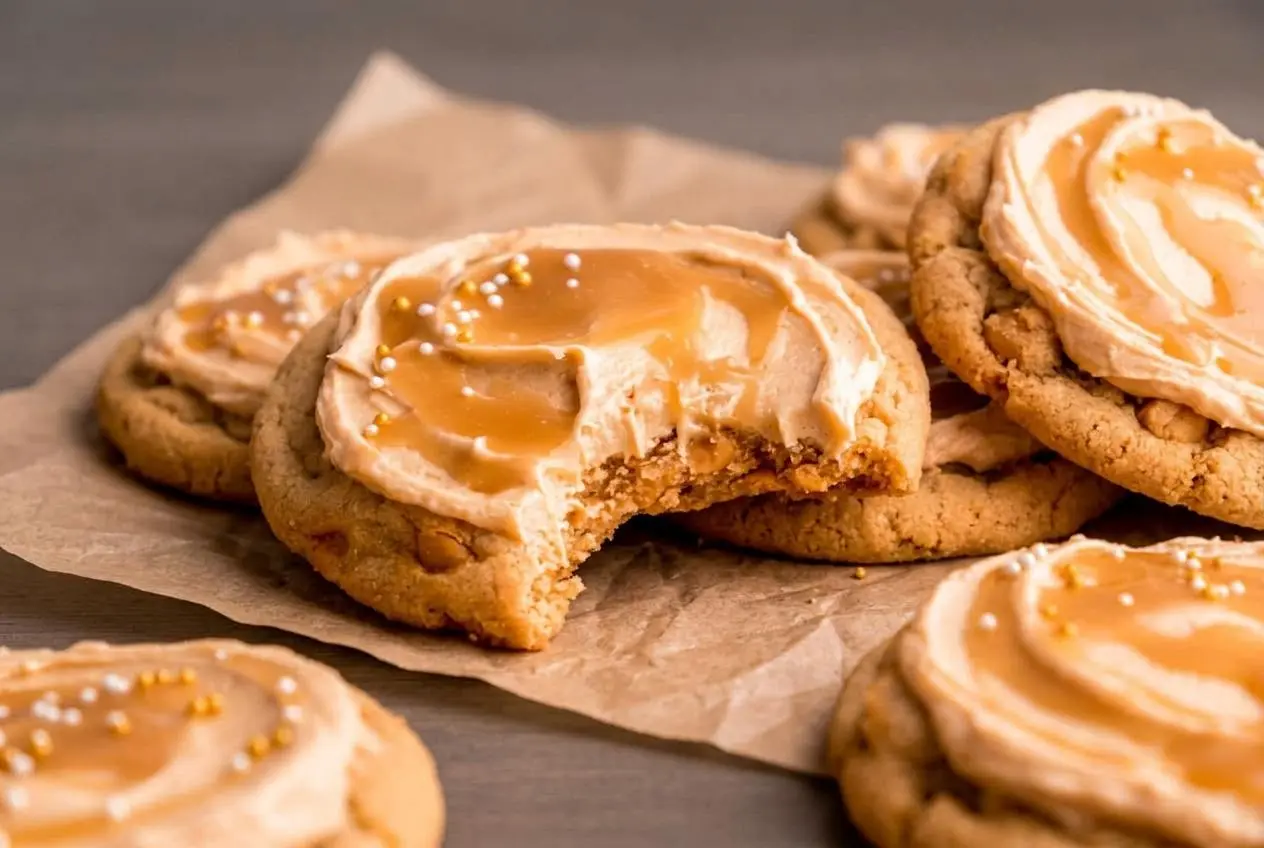
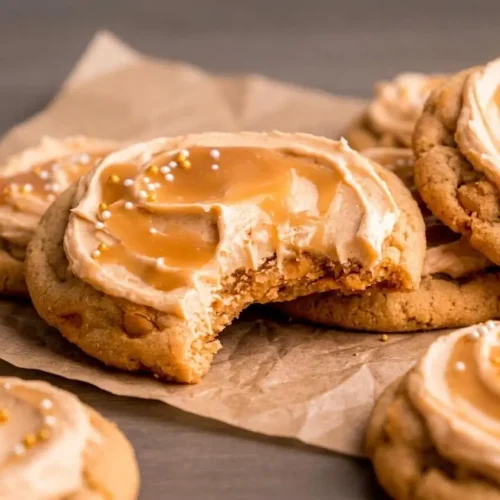
This butterbeer cookies recipe pairs chewy brown sugar and butterscotch cookies with whipped butterscotch buttercream and a cream soda caramel drizzle. The dough needs no instant pudding mix, and each topping brings a different part of the Wizarding World drink to the cookie.
Warm vanilla and butterscotch give these cookies their inviting bakery aroma. Melted chips flavor the dough throughout, while whole chips leave sweet pockets in the chewy centers.
The three components take a little attention, but the most useful cues are easy to recognize: fluffy butter, barely warm melted chips, and thick amber soda syrup. That syrup makes the drizzle.
Set out the butter, egg yolks, and cream before mixing so they can reach the temperatures listed below.
What Makes These Butterbeer Cookies Taste Like the Wizarding World Drink
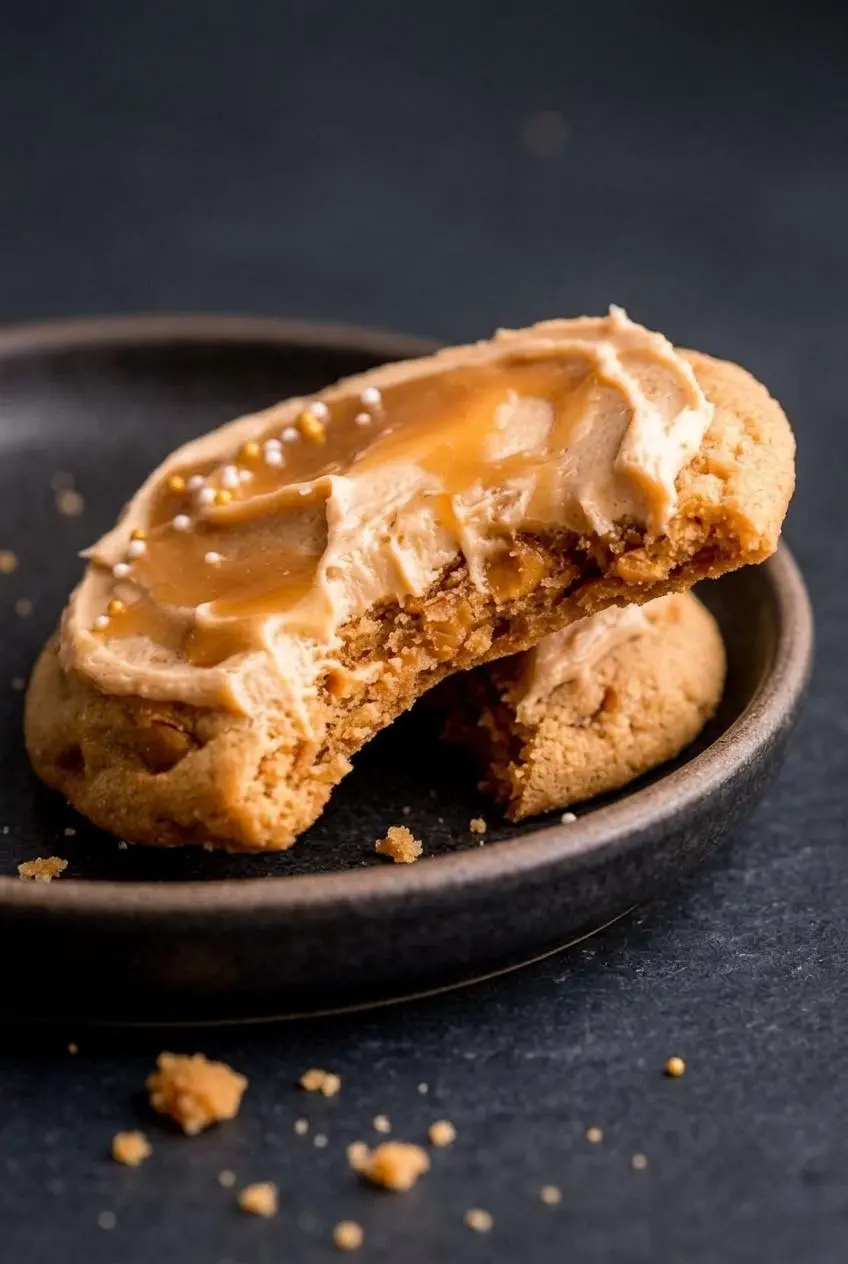
These cookies translate butterbeer into three layers: buttery butterscotch dough, an airy frosting that echoes the drink’s foam, and a sweet soda reduction. Vanilla rounds out the flavor without competing with the butterscotch.
Expect a rich, sweet cookie rather than a lightly sweet biscuit. The chewy center contrasts with the fluffy topping, while salt keeps the finish from tasting flat. They capture the flavor idea of a Three Broomsticks treat without requiring a trip to Universal Studios.
Use nonalcoholic butterscotch beer soda or cream soda here. The word “beer” in a soda’s name doesn’t mean the recipe calls for an alcoholic beverage; check the label when shopping.
Essential Ingredients and Smart Substitutions
Flour gives the cookies structure, brown sugar and yolks support chewy centers, and butterscotch chips supply flavor throughout. Butter adds richness, vanilla builds aroma, and the soda, cream, and salt create a balanced caramel topping.
For the Butterbeer Cookies
- 2 cups (250 g) all-purpose flour, spooned and leveled
- 1/2 tsp baking soda
- 1/2 tsp baking powder
- 1/2 tsp salt
- 3/4 cup (168 g) unsalted butter, softened
- 3/4 cup (165 g) light brown sugar, packed
- 1/4 cup (50 g) granulated white sugar
- 2 egg yolks, at room temperature
- 1 tbsp vanilla bean paste or extract
- 1 1/2 tsp butter extract
- 1/4 cup (50 g) butterscotch chips, melted and slightly cooled
- 1/2 cup (100 g) butterscotch chips
Butterbeer Caramel
- 12 oz (355 ml) butterscotch beer or cream soda
- 3 tbsp (42 g) unsalted butter, softened
- 3 tbsp (45 ml) heavy cream, at room temperature
- pinch salt
For the Butterscotch Buttercream
- 1/2 cup (112 g) unsalted butter, softened
- 1/8 tsp salt
- 1/2 cup (100 g) butterscotch chips, melted and slightly cooled
- 1 cup (130 g) powdered sugar
- 1/4 tsp butter extract
- 1/2 tsp vanilla bean paste or extract
Cookie Dough and Buttercream Essentials
Egg yolks add richness without the extra water from whole eggs. Packed light brown sugar contributes moisture and a gentle molasses flavor. Together with melted butterscotch chips, they create a chewy cookie without instant pudding mix. The unmelted chips provide a different texture: distinct butterscotch pockets rather than an evenly flavored dough.
Measure flour with a scale when possible. If using cups, spoon flour into the cup and level the top rather than dipping into the bag. The listed 250 g helps avoid accidentally packing in extra flour.
Softened butter should hold its shape while yielding to gentle pressure. Room-temperature yolks blend more evenly into creamed butter, and room-temperature cream reduces the temperature shock when it meets the hot caramel. These temperature choices help the mixtures stay smooth, though they don’t replace careful mixing.
Best Substitutes for Butter Extract and Butterscotch Soda
- No butter extract: Replace it with an equal amount of vanilla extract in the dough; omit it from the frosting or replace it with vanilla there, too.
- No specialty soda: Regular cream soda can replace Flying Cauldron butterscotch beer in the listed amount, giving the caramel a more vanilla-forward flavor.
- Browned butter option: For a toastier dough, brown half the dough butter, then let it return to a softened solid before creaming; browning changes moisture, so this is a variation rather than an identical substitute.
I aim for melted butterscotch chips that feel barely lukewarm, not hot, before adding them to whipped butter.
How to Make Butterbeer Cookies Step by Step
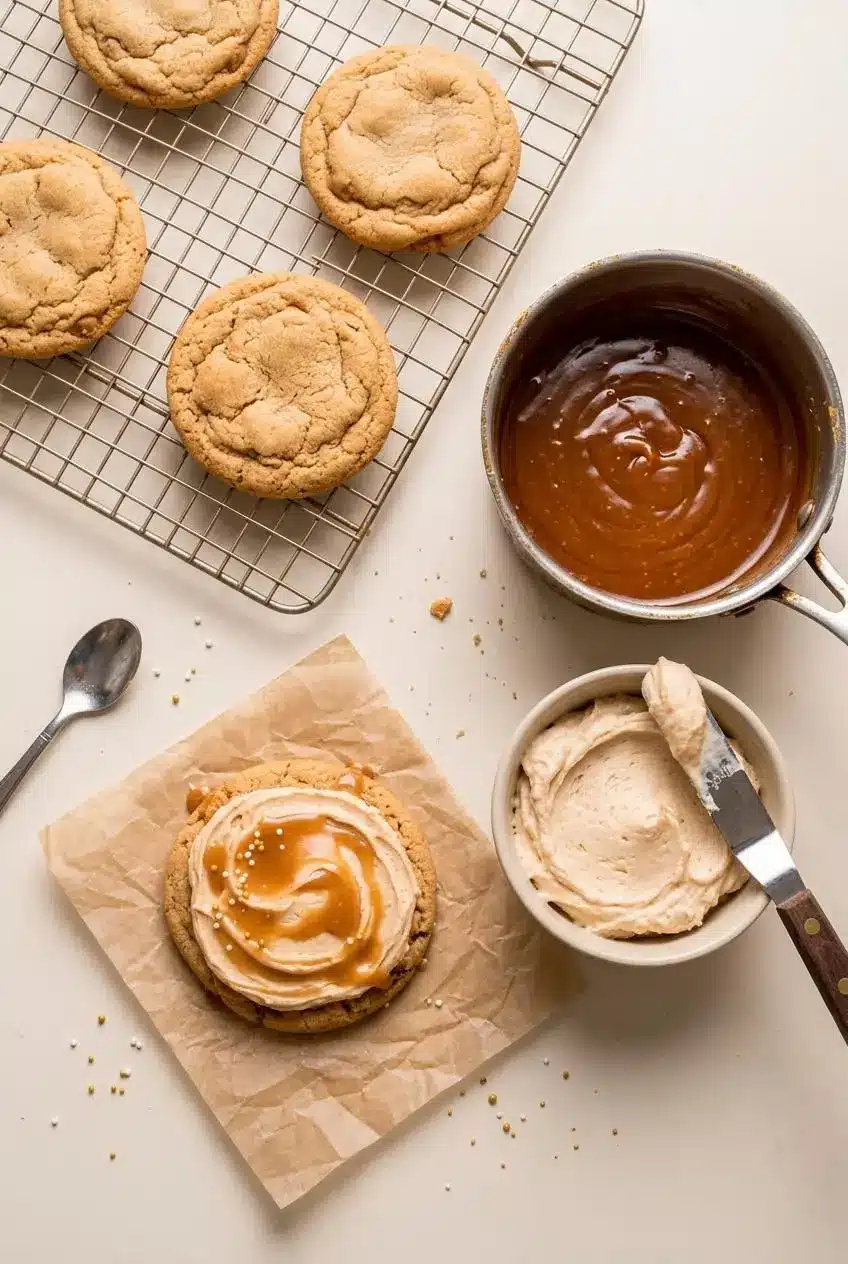
This recipe makes about 19 cookies. Allow 45 minutes for preparation, plus baking and cooling; each tray bakes for 10 to 11 minutes.
Step 1: Mixing and Baking the Chewy Butterscotch Cookies
For the Butterbeer Cookies
- Set the oven to 350°F.
Let it reach temperature before the first tray goes in. - Combine the flour, baking powder, baking soda, and salt in a medium bowl with a whisk, then reserve.
The mixture should look evenly blended. - Beat both sugars with the softened butter in a large bowl on high speed for 2 to 3 minutes using an electric mixer or a stand mixer with a paddle.
Stop when the mixture looks lighter and fluffy. - Beat in the yolks, vanilla, butter extract, and cooled melted chips on medium speed for 1 to 2 minutes, scraping the bowl as needed.
The mixture should become pale and aerated, without hot chips melting the butter. - Work in the flour mixture on low speed, stopping as soon as it comes together.
No dry flour should remain visible. - Distribute the whole butterscotch chips through the dough with a rubber spatula.
The chips should appear throughout the mixture. - Portion the dough into 2-tablespoon scoops with a large cookie scoop.
Keep the portions consistent for even baking. - Place six portions on a parchment-lined baking sheet, leaving 2 inches between them, and bake for 10 to 11 minutes.
The centers may still look slightly soft. - Immediately circle each hot cookie with a large round cookie cutter to nudge its edges inward.
The warm edges should settle into a rounded shape. - Leave the cookies on the sheet for 5 minutes before moving them to a wire rack to cool completely.
The centers firm as the cookies rest on the warm pan.
Step 2: Reducing the Soda Into Thick Butterbeer Caramel
For the Butterbeer Caramel
- Simmer the soda in a pot over medium-low heat for about 15 to 17 minutes, watching its consistency.
The liquid should become thick and deep golden as the lively bubbles turn slower and glossier. - Lower the heat to low and stir the softened butter into the syrup.
The butter should disappear into a cohesive sauce. - Stir in the room-temperature cream and salt after the butter has blended in.
The sauce should look creamy and uniform. - Maintain a low simmer for 1 minute, then take the pot off the heat and let the caramel cool.
The cooled sauce should have more body than the hot mixture.
Step 3: Whipping the Fluffy Butterscotch Buttercream
For the Butterscotch Buttercream
- Beat the softened butter and salt in a medium bowl on high speed for 5 to 10 minutes.
Look for a pale, airy mixture with noticeably increased volume. - Blend the fully melted but barely warm butterscotch chips into the whipped butter.
The frosting should stay fluffy rather than turning oily. - Sift the powdered sugar into the bowl and beat it into the butter mixture.
The frosting should look smooth without visible sugar lumps. - Beat in the butter extract and vanilla for about 1 minute.
The finished buttercream should look light and spreadable.
Decorating the Cookies
- Spread buttercream over each completely cooled cookie with a mini offset spatula.
The frosting should hold soft swirls without melting. - Finish with cooled caramel and sprinkles, then serve.
The drizzle should sit over the buttercream rather than immediately running off.
Expert Tips and Caramel Troubleshooting
Temperature and reduction matter more than extra mixing. Use these checks when a component doesn’t look right.
- Runny caramel: The soda likely needed more reduction before the dairy went in. Look for a small amount of thick, deep golden syrup rather than a bubbling pot of thin soda. If the finished sauce stays watery after cooling, return it to a gentle low simmer until it coats a spoon, then cool again.
- A timer that doesn’t match the syrup: Pot width and stove output affect evaporation. Use the listed simmering time as a guide, but confirm the thick, glossy consistency before adding butter. Watch closely as the syrup concentrates so it doesn’t scorch.
- Greasy buttercream: Hot melted chips can soften the whipped butter too much. Let the mixture cool until it can hold its shape, then beat again. Prevent the problem by checking the chips before adding them; they should be fluid but barely warm.
- Dry or cakey cookies: Too much flour is a common cause. Weigh the flour or spoon and level it, then stop mixing once the dry ingredients disappear. Don’t wait for the cookie centers to look completely firm in the oven.
- Cookies spreading too far: Check that the butter was softened, not partly melted, and that the melted chips had cooled. The round-cutter shaping step tidies edges, but it can’t correct an overly warm dough.
- Sweetness feels overwhelming: Try the optional browned butter variation for toasted contrast, or finish the caramel drizzle with a pinch of flaky sea salt. Salt balances the flavor; it doesn’t remove sugar.
Delicious Variations to Try
Keep the dough as written for the frosted version, or choose an unfrosted style when you want less decorating.
Simple Unfrosted Drop Cookies With White Chocolate or Toffee
Bake the dough using the same portions and baking cues, then skip both toppings. The melted chips already flavor the cookie itself, so it still tastes distinctly of butterscotch. For another unfrosted option, try these classic butterscotch cookies.
- White chocolate: Swap half the whole butterscotch chips for white chocolate chips for a creamy flavor contrast; keep the melted chips unchanged.
- Toffee: Replace some whole chips with toffee bits for a crisp, caramel-like bite.
- Pecans: Add chopped toasted pecans for nutty crunch and a less candy-forward finish.
- Warm spice: Add a pinch of cinnamon to the dry mixture and finish with flaky sea salt for a cozy bakery-style variation.
Why Skip Instant Pudding Mix?
This dough already has a texture and flavor system, so pudding powder isn’t a direct add-in.
- Frosted style: Yolks, brown sugar, and melted chips support chewiness, while soda caramel supplies the drink-inspired topping.
- Unfrosted style: The same dough becomes a more portable cookie without preparing buttercream or caramel.
- Pudding-mix style: Instant pudding brings starch, sugar, and flavoring that change the dough balance. If you prefer it, use a formula designed for pudding mix and adapt the optional chip combinations there.
Storage and Packaging Tips
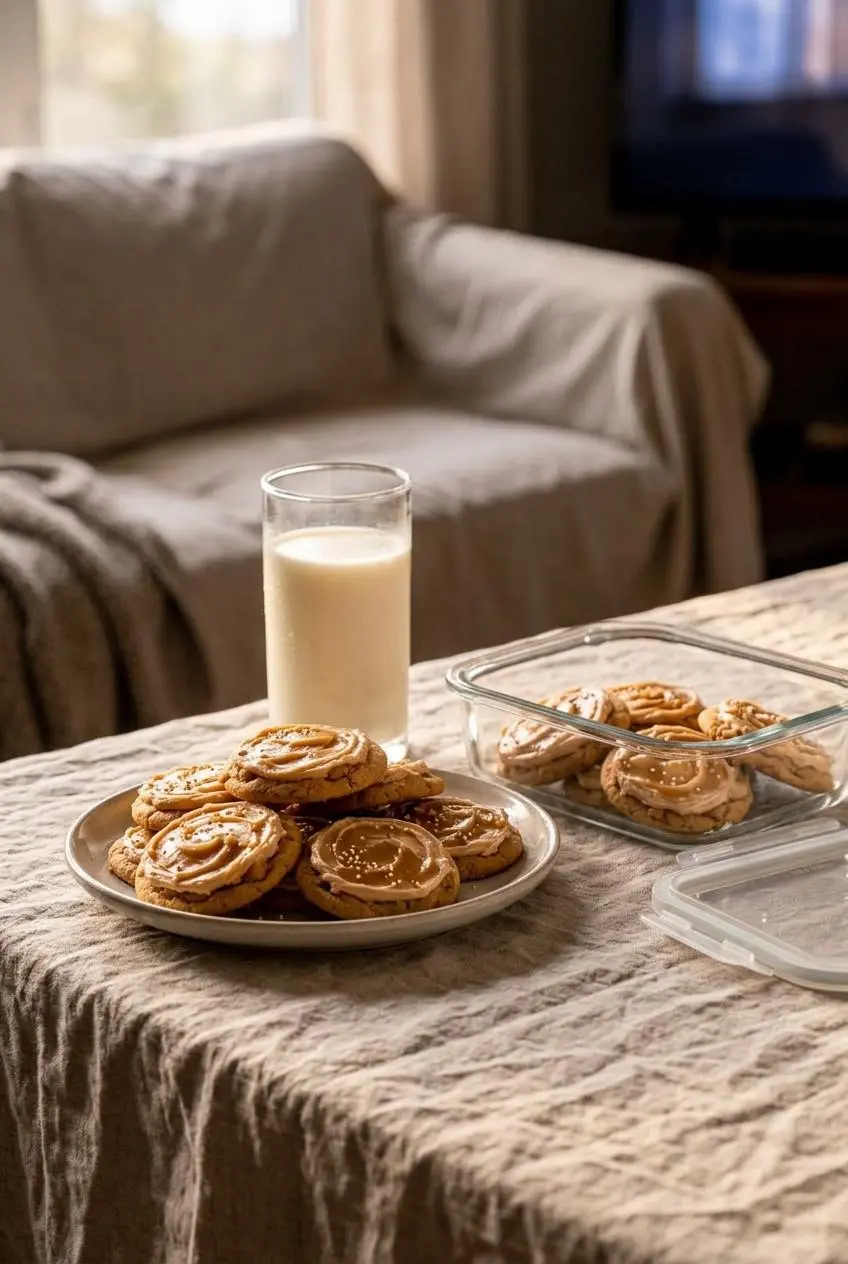
Protecting the frosting matters more than squeezing another layer into the container. Cool every cookie completely before closing the lid so trapped warmth doesn’t soften the toppings.
Pack decorated cookies in a single layer in a rigid, airtight container. Chill them until the buttercream feels firm enough to resist light contact, but expect the caramel to remain somewhat tacky. Keep lids and wrapping away from the decorated surfaces; individual cavities or roomy containers work better than tight bags.
As a precaution with the dairy-based toppings, keep decorated cookies refrigerated rather than assuming they are suitable for extended room-temperature storage. Keep perishable foods refrigerated at 40°F or below.
Unfrosted cookies are easier to stack once completely cool. Place them in an airtight container, separating layers with parchment if needed. A slice of white bread can help limit drying; keep it separate from the cookies so they don’t pick up damp spots.
For gifting, unfrosted cookies travel more neatly. Bring frosted cookies in a level container and keep them chilled during transport. At a Harry Potter movie night or book club, serve them with cold milk to contrast the rich topping, and decorate close to serving when practical for the neatest presentation.
Conclusion
Chewy butterscotch centers, airy buttercream, and a glossy soda caramel make these cookies worth the separate components. Give the soda time to become thick and amber, and let melted chips cool before they meet whipped butter.
Choose the full frosted version for a themed dessert platter or leave the cookies plain for easier packing. A little flaky sea salt is a welcome optional finish when you want to balance the sweetness.
Frequently Asked Questions
Why Is My Butterbeer Caramel Sauce Super Runny and How Do I Fix It?
The soda probably didn’t reduce enough before you added the butter and cream. First let the sauce cool, since warm caramel flows more freely. If it remains watery, simmer it gently on low until it coats a spoon, then cool it again before decorating.
What Can I Substitute for Butter Extract if I Cannot Find It?
Use an equal amount of vanilla extract in the dough. In the buttercream, omit the butter extract or replace it with vanilla. Browning half the dough butter is another optional flavor direction, but let it return to a softened solid before creaming.
Do I Have to Frost These Butterbeer Cookies or Can I Pack Them for Gifts?
You can leave them unfrosted, which makes stacking and packaging easier. For decorated gifts, chill until the buttercream firms, then pack in a single layer with space above the topping. The caramel can stay sticky, so avoid wrapping it tightly.
What Flavor Are Harry Potter Butterbeer Cookies and Do They Contain Alcohol?
They taste of butterscotch, vanilla, sweet cream soda, and butter. This version calls for nonalcoholic butterscotch beer soda or cream soda, not alcoholic beer. Check the beverage label to confirm you’re buying the intended soda.
Can I Keep the Components Separate Before Decorating?
Yes. Let the cookies and caramel cool separately before assembly, and keep the buttercream covered and chilled when you aren’t using it. Decorate only when the cookies are completely cool and the frosting is spreadable, following the storage precautions above.
Butterbeer Cookies Recipe

Equipment
- Electric Mixer
- Stand mixer
- Rubber spatula
- Large Cookie Scoop
- Baking Sheet
- circular cookie cutter
- Wire rack
- mini offset spatula
Ingredients
For the Butterbeer Cookies
- 2 cups (250 g) all-purpose flour spooned and leveled
- 1/2 tsp baking soda
- 1/2 tsp baking powder
- 1/2 tsp salt
- 3/4 cup (168 g) unsalted butter softened
- 3/4 cup (165 g) light brown sugar packed
- 1/4 cup (50 g) granulated white sugar
- 2 egg yolks at room temperature
- 1 tbsp vanilla bean paste or extract
- 1 1/2 tsp butter extract
- 1/4 cup (50 g) butterscotch chips melted and slightly cooled
- 1/2 cup (100 g) butterscotch chips
Butterbeer Caramel
- 12 oz (355 ml) butterscotch beer or cream soda
- 3 tbsp (42 g) unsalted butter softened
- 3 tbsp (45 ml) heavy cream at room temperature
- pinch salt
For the Butterscotch Buttercream
- 1/2 cup (112 g) unsalted butter softened
- 1/8 tsp salt
- 1/2 cup (100 g) butterscotch chips melted and slightly cooled
- 1 cup (130 g) powdered sugar
- 1/4 tsp butter extract
- 1/2 tsp vanilla bean paste or extract
Instructions
For the Butterbeer Cookies
- Set the oven to 350°F. Let it reach temperature before the first tray goes in.
- Combine the flour, baking powder, baking soda, and salt in a medium bowl with a whisk, then reserve. The mixture should look evenly blended.
- Beat both sugars with the softened butter in a large bowl on high speed for 2 to 3 minutes using an electric mixer or a stand mixer with a paddle. Stop when the mixture looks lighter and fluffy.
- Beat in the yolks, vanilla, butter extract, and cooled melted chips on medium speed for 1 to 2 minutes, scraping the bowl as needed. The mixture should become pale and aerated, without hot chips melting the butter.
- Work in the flour mixture on low speed, stopping as soon as it comes together. No dry flour should remain visible.
- Distribute the whole butterscotch chips through the dough with a rubber spatula. The chips should appear throughout the mixture.
- Portion the dough into 2-tablespoon scoops with a large cookie scoop. Keep the portions consistent for even baking.
- Place six portions on a parchment-lined baking sheet, leaving 2 inches between them, and bake for 10 to 11 minutes. The centers may still look slightly soft.
- Immediately circle each hot cookie with a large round cookie cutter to nudge its edges inward. The warm edges should settle into a rounded shape.
- Leave the cookies on the sheet for 5 minutes before moving them to a wire rack to cool completely. The centers firm as the cookies rest on the warm pan.
For the Butterbeer Caramel
- Simmer the soda in a pot over medium-low heat for about 15 to 17 minutes, watching its consistency. The liquid should become thick and deep golden as the lively bubbles turn slower and glossier.
- Lower the heat to low and stir the softened butter into the syrup. The butter should disappear into a cohesive sauce.
- Stir in the room-temperature cream and salt after the butter has blended in. The sauce should look creamy and uniform.
- Maintain a low simmer for 1 minute, then take the pot off the heat and let the caramel cool. The cooled sauce should have more body than the hot mixture.
For the Butterscotch Buttercream
- Beat the softened butter and salt in a medium bowl on high speed for 5 to 10 minutes. Look for a pale, airy mixture with noticeably increased volume.
- Blend the fully melted but barely warm butterscotch chips into the whipped butter. The frosting should stay fluffy rather than turning oily.
- Sift the powdered sugar into the bowl and beat it into the butter mixture. The frosting should look smooth without visible sugar lumps.
- Beat in the butter extract and vanilla for about 1 minute. The finished buttercream should look light and spreadable.
Decorating the Cookies
- Spread buttercream over each completely cooled cookie with a mini offset spatula. The frosting should hold soft swirls without melting.
- Finish with cooled caramel and sprinkles, then serve. The drizzle should sit over the buttercream rather than immediately running off.