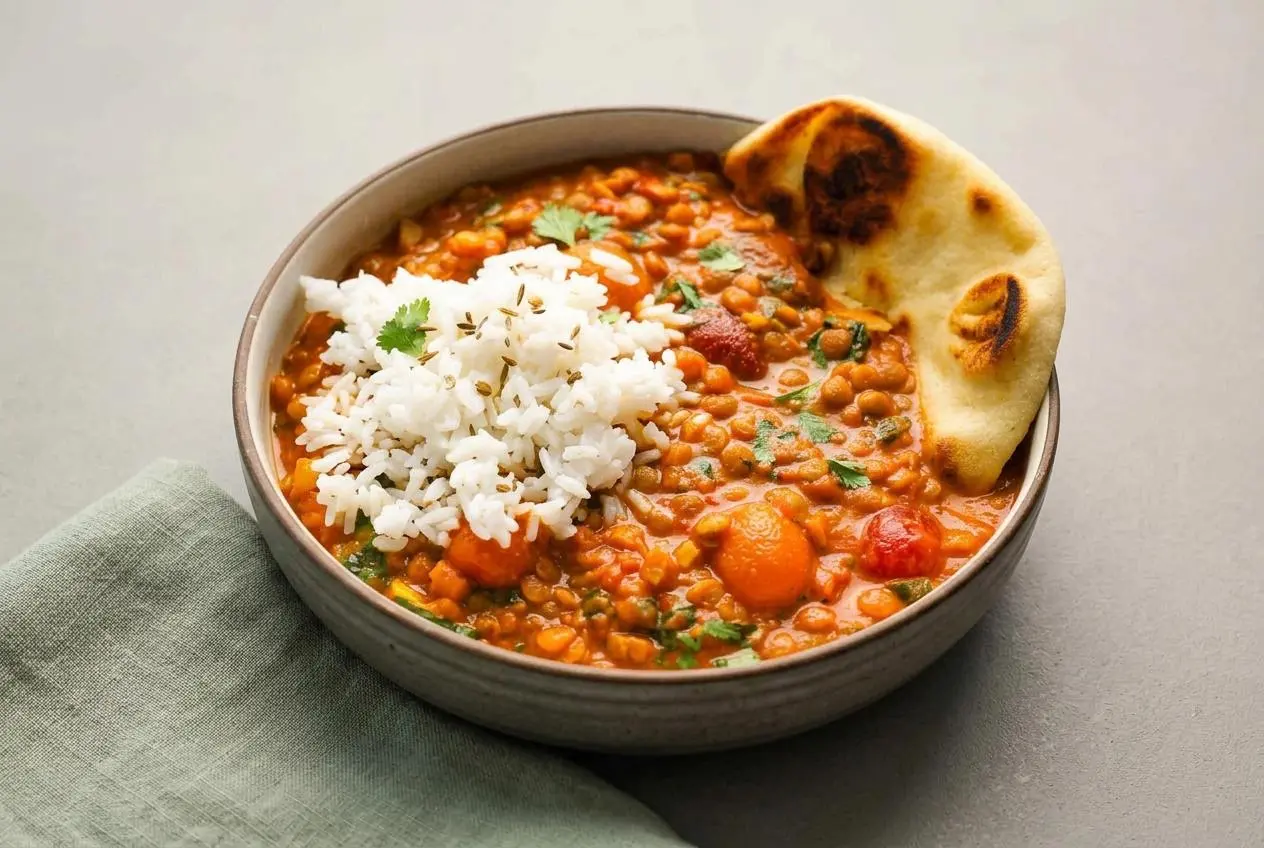
Toast whole cumin and coriander seeds, simmer brown lentils in tomatoes until tender, then finish with coconut milk and cilantro. This fragrant, plant-based curry cooks in one pan and takes about an hour, with a mostly hands-off simmer.
Creamy Coconut Lentil Curry brings together earthy lentils, warming ginger, plenty of garlic, and a velvety tomato-coconut sauce. The whole spices give it a deeper aroma than a curry made with ground seasonings alone.
You get tender lentils that still have some shape, juicy cherry tomatoes, and enough sauce to spoon generously over rice. The optional cayenne lets you control the heat. Start with the sizzling seeds.
Use a large skillet or braiser with a snug-fitting lid, and keep the chopped garlic ready before the seeds hit the oil.
Essential Ingredients and Flavor Builders
Whole spices supply aroma, lentils give the curry body, and water lets them soften. Tomatoes add brightness, coconut milk rounds out their acidity, and garlic, ginger, turmeric, salt, optional cayenne, and cilantro build a warm, balanced flavor.
- 1 tablespoon coconut oil
- 1 tablespoon cumin seeds
- 1 tablespoon coriander seeds
- 1 head garlic (chopped – 10-12 cloves)
- 28 ounce can of crushed tomatoes
- 2 tablespoons ginger (chopped)
- 1 tablespoon turmeric
- 2 teaspoons sea salt
- 1 cup dried brown lentils
- 1-2 teaspoons cayenne powder (optional)
- 2 cups water
- 15 ounce can coconut milk
- A few handfuls of cherry tomatoes
- 1 cup chopped cilantro
The coconut oil carries the toasted spice flavors through the sauce. Garlic adds savory depth, while ginger brings a sharper, warming note. Freshly chopped cloves have a more lively aroma than jarred chopped garlic, which can also contribute a tang from its preserving liquid.
Crushed tomatoes create the sauce’s foundation, and cherry tomatoes add juicy contrast at the end. Turmeric contributes earthy flavor and golden color. Sea salt brings the components into focus; cayenne adds heat only if you want it. Cilantro supplies the fresh finish that keeps the coconut richness from feeling heavy.
I like to chop the garlic before heating the pan so I can add it as soon as the seeds smell nutty, rather than letting them darken while I’m still at the cutting board.
Choosing the Right Lentil Variety
Brown lentils suit this curry because they soften while keeping recognizable pieces. Their texture gives you something to bite into beneath the creamy sauce. They cook directly in the curry without a soaking step.
- Brown lentils: Use these for the stated 35–40 minute covered simmer, checking tenderness before finishing.
- Green lentils: An optional alternative with a firmer texture; judge readiness by the center of a lentil rather than expecting the brown-lentil timing to fit exactly.
- Red split lentils: These soften faster and break down, producing a smoother, dal-like texture rather than distinct lentils.
Lentil color alone doesn’t determine the final cooking time. Age, variety, and the cooking liquid all matter. A tender lentil should crush easily when pressed, without a dry or chalky center.
The Magic of Whole Toasted Spices
Blooming cumin and coriander seeds in coconut oil develops their aroma and distributes it through the curry. Cumin brings a warm, earthy character; coriander adds a lighter, citrusy note.
Watch the pan closely during this stage. The seeds should sizzle, become fragrant, and start to brown in about 45 seconds. You’re looking for a nutty aroma, not smoke. Add the garlic promptly, and reduce the heat if the seeds darken too quickly.
Ground spices can flavor a curry, but they won’t give the same little bursts of toasted seed flavor. They also scorch more readily, so they aren’t a direct timing-for-timing replacement here.
Full-Fat Coconut Milk Versus Alternatives
For the richest texture, choose full-fat canned coconut milk. It gives the tomato sauce body and a rounded mouthfeel without adding dairy. Stir the contents of the can together before adding them if the cream and liquid have separated.
Light canned coconut milk is an optional substitution, but expect a thinner sauce. Coconut beverages sold in cartons are generally more diluted and won’t provide the same creamy finish. Neither is an equal replacement when a velvety texture is the goal.
Add the coconut milk after the lentils soften. That lets you finish the curry with a brief, gentle simmer rather than subjecting the coconut milk to the entire cooking period.
How to Make the Creamy Coconut Lentil Curry Step by Step
Allow 5 minutes for prep and about 55 minutes for cooking, for a total of roughly 1 hour and 6 servings. Have a wooden spoon ready to scrape the bottom gently during the covered simmer.
- Set a large skillet or braiser over medium-high heat, melt the coconut oil, and stir the cumin and coriander seeds through it for about 45 seconds.
The seeds should sizzle and begin browning as their aroma turns warm and nutty. - Add the chopped garlic and cook for about 2 minutes, moving it around the pan to encourage even browning.
Look for golden edges and a fragrant aroma rather than dark, bitter-looking pieces. - Stir in the crushed tomatoes, ginger, turmeric, and sea salt, and cook for 5 minutes with occasional stirring.
The mixture should bubble and become evenly colored as the aromatics blend into the tomato sauce. - Mix in the brown lentils, optional cayenne, and 2 cups water, then bring the mixture to a boil.
The lentils should sit throughout a loose, bubbling sauce before you begin the covered simmer. - Lower the heat to low, cover, and simmer for 35–40 minutes, stirring several times and adding an extra 1/2–1 cup water if the mixture becomes dry.
Keep the bubbling gentle and check for softened lentil centers, with enough moisture that the mixture doesn’t catch on the bottom. - Fold the coconut milk and cherry tomatoes into the thickened curry once the lentils are tender, and return it to a gentle simmer.
The sauce should become creamy and coat the back of a spoon without boiling vigorously. - Take the pan off the heat and stir in the chopped cilantro.
The herbs should remain bright and fresh-smelling against the warm coconut sauce.
Check the lentils before adding the finishing ingredients. The sauce can look thick while the lentil centers are still firm. Taste a lentil carefully, and continue the covered simmer if it feels chalky.
Essential Cooking Tips and Troubleshooting
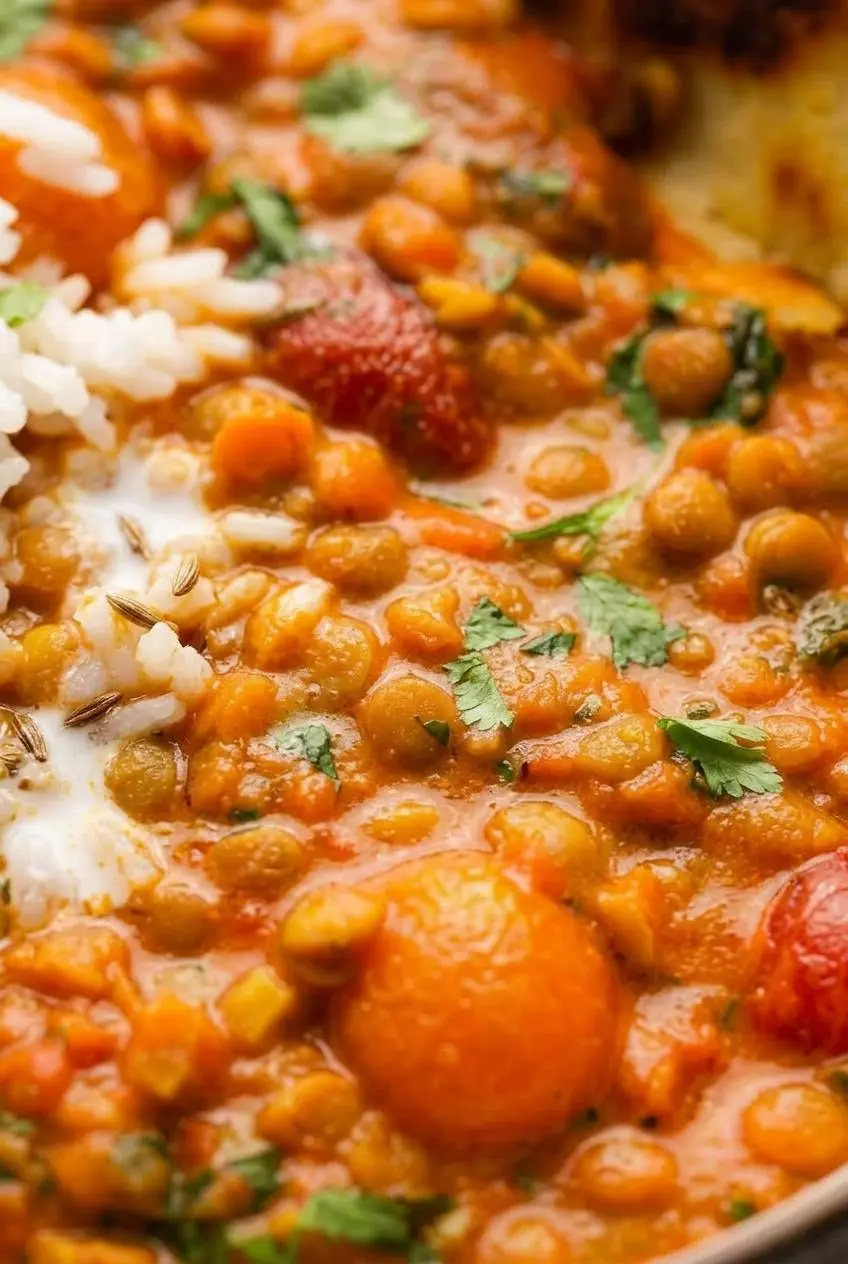
Most texture problems come from moisture loss, uneven heat, or stopping before the lentils soften. Adjust the sauce only after checking the lentils themselves.
- Thin curry: If the lentils are tender, simmer gently uncovered to let excess moisture evaporate, stirring so the bottom doesn’t stick.
- Dry or pasty curry: Add water gradually and stir thoroughly before deciding whether it needs more; the sauce should flow around the lentils rather than sit in stiff clumps.
- Scorched bottom: Lower the heat and transfer the unburned portion to another pan without scraping up the stuck layer.
- Sharp tomato flavor: Stir in the coconut milk before judging the balance, since its richness softens the perception of acidity; if needed, an optional touch of sweetness can round out a harsh edge.
- Flat flavor: Check the seasoning after the coconut milk goes in, because the creamy finish can soften the impact of the salt and spices.
How to Fix Tough Lentils
Older dried lentils can take longer to soften, even when you follow the cooking time closely. Hard cooking water may also contribute to stubborn texture, and the acidic tomato sauce can slow softening.
Keep the heat low and the lid snug. Add water in 1/2-cup increments as needed, stir, and continue simmering until the centers soften. Turning up the heat mainly drives off water and increases the chance of scorching.
Check whether the pan has enough liquid between the lentils, not just around its edges. If the mixture forms a dry mound when stirred, replenish the moisture before continuing. Some very old lentils may remain unevenly firm despite extended cooking.
Preventing Sauce Separation
A vigorous boil can make coconut milk separate into oily and watery patches. Add it near the end, stir gently, and stop at a soft simmer.
If you notice an oily sheen, lower the heat or take the pan off the burner and stir gently. A little surface oil doesn’t necessarily mean the entire sauce has broken. Avoid prolonged boiling in an attempt to stir it back together.
Brightening Rich Coconut Flavors
For an optional brighter finish, add fresh lime zest and a splash of lime juice off the heat. Taste before adding more; a little acidity can lift the coconut and toasted spices without taking over.
Skip the lime juice if the tomatoes already taste sharp. Citrus helps a rich curry feel fresher, but it doesn’t reduce tomato acidity. Let the coconut milk do that balancing work first.
Alternative Cooking Methods
The stovetop method gives you the clearest control over liquid and tenderness. Appliance adaptations need their own liquid checks, especially because this curry contains a thick crushed-tomato sauce.
Instant Pot Pressure Cooker Method
For an optional pressure-cooker adaptation, use the sauté function to bloom the whole spices and brown the garlic. Keep the coconut milk, cherry tomatoes, and cilantro for the finishing stage rather than pressure-cooking them.
Before pressure cooking, loosen any browned material from the liner and follow your appliance’s minimum-liquid and fill requirements. Thick tomato mixtures can trigger a burn warning, so don’t assume the stovetop water amount transfers unchanged.
Use an appliance-specific brown-lentil curry method for the pressure setting, liquid arrangement, cooking time, and release procedure. Once the lentils are tender and the lid can be opened as directed, stir in the coconut milk and cherry tomatoes, warm gently, and finish with cilantro off the heat.
Slow Cooker Hands-Off Directions
To preserve the toasted flavor in an optional slow-cooker adaptation, bloom the spices and brown the garlic in a skillet first. Add the tomatoes, ginger, turmeric, and salt before transferring the mixture to the cooker with the lentils, optional cayenne, and water.
Follow a slow-cooker lentil-curry method suited to your appliance for liquid needs and cooking time. Keep the lid closed as much as practical and check that the lentils have softened before adding coconut milk and cherry tomatoes. Stir in the cilantro after cooking.
This route offers less active cooking, but it isn’t a shortcut. Judge the lentils by tenderness rather than by how thick the sauce looks.
Flavor Variations and Adaptations
Keep these optional changes separate from the main method so you can choose the texture and vegetables you want without changing the official ingredient list.
Spinach and Veggie-Packed Curry
- Baby spinach: Fold it into the hot curry near the end and stir just until the leaves wilt.
- Chopped kale: Add it before the tender spinach stage would begin, allowing it to soften before finishing the curry.
- Roasted sweet potato: Stir already-tender cubes in gently at the end so they warm through without breaking apart.
Add vegetables gradually so the curry remains saucy. Tender greens need little cooking, while raw chunks of firm vegetables would require a separate timing adjustment.
Red Split Lentil Dahl Style
Red split lentils are an optional choice for a smoother, dal-like curry. They soften sooner than whole brown lentils, so begin checking well before the stated brown-lentil cooking time.
Watch the liquid closely as they break down. Stir more frequently as the mixture thickens, and add water as needed to keep it spoonable. Don’t use the same appearance test as brown lentils: red lentils can lose their shape completely while creating the desired creamy texture.
If you want a different legume curry rather than a lentil substitution, try chickpea curry instead of treating chickpeas as a direct swap in these cooking steps.
Serving Suggestions and Delicious Pairings
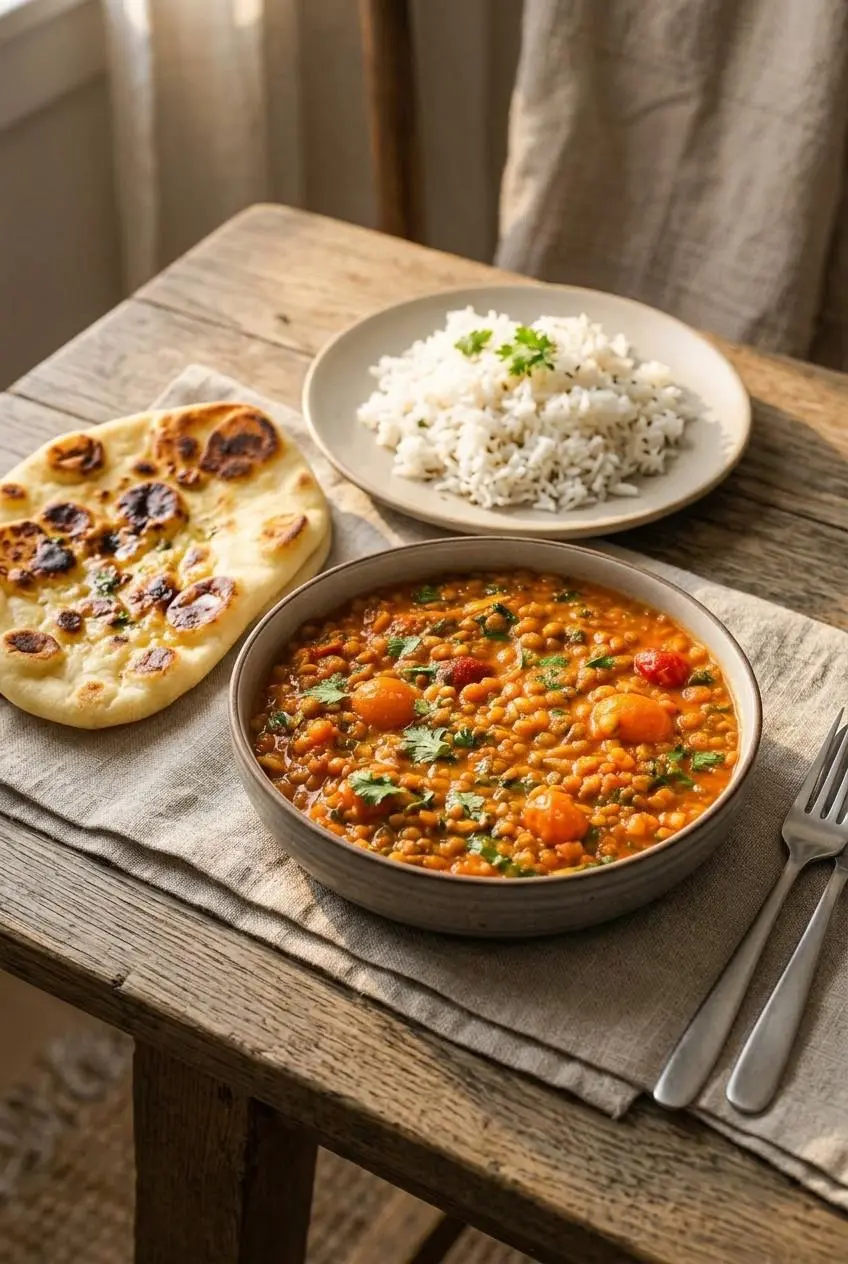
Choose a side that catches the sauce, then add something cool and crisp to contrast the warm spices.
- Basmati rice: Spoon the curry over fluffy rice, leaving enough sauce to mingle with the grains.
- Garlic naan: Warm it on a griddle and use it to scoop up lentils and sauce.
- Cauliflower rice: Serve it alongside when you want a vegetable-based alternative to grain rice.
- Cucumber raita: Offer it as a cooling accompaniment, using a dairy-free version if you want the whole meal plant-based.
A chilled creamy cucumber salad also provides a refreshing contrast to the ginger, cumin, and coconut milk. Keep the side lightly seasoned so it doesn’t compete with the curry.
Storage and Reheating Instructions
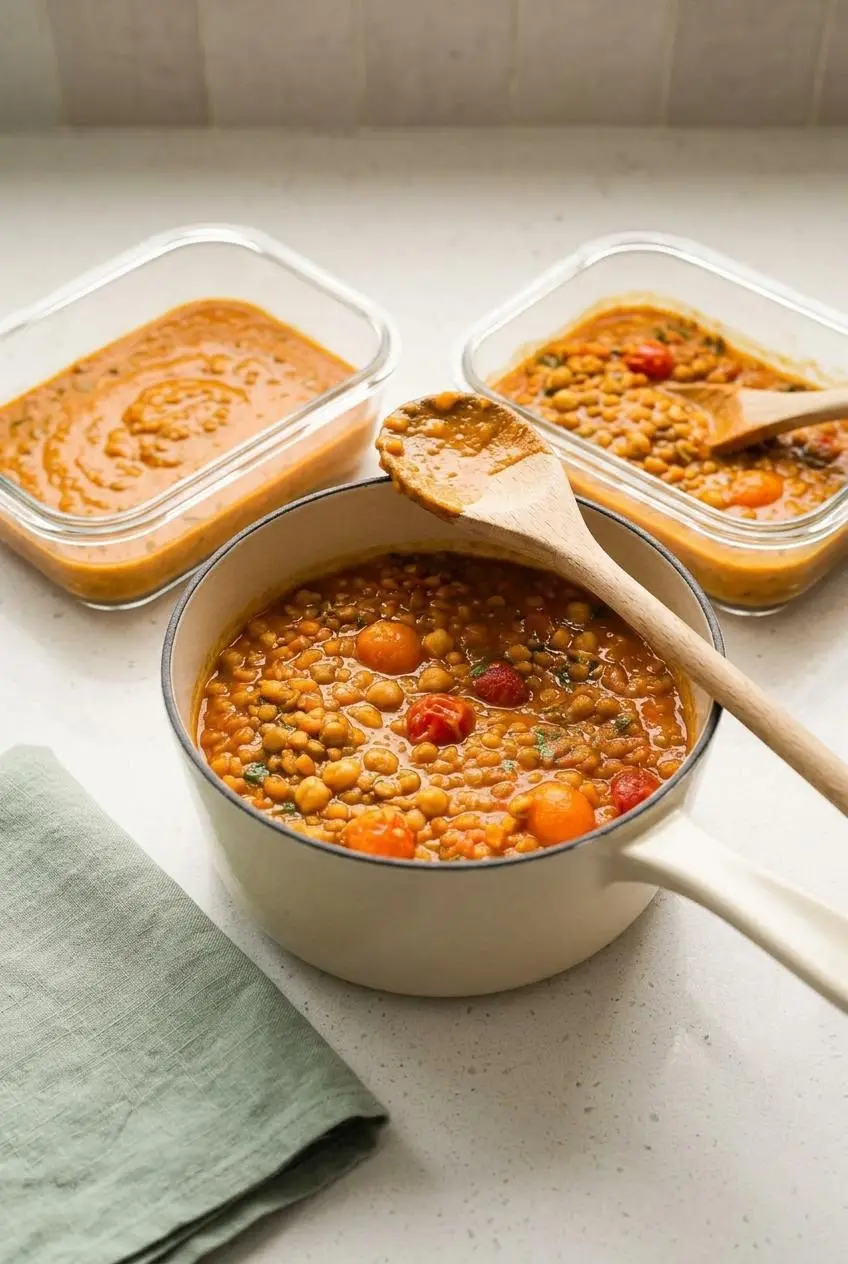
For leftovers, focus on prompt chilling and preserving moisture. Divide the curry into shallow containers rather than leaving it in a deep, warm cooking pan, and refrigerate promptly in covered containers.
The sauce may thicken as the lentils continue absorbing moisture. Reheat the portion you need gently in a saucepan, adding a splash of water and stirring to restore a creamy consistency. Keep the heat moderate enough to avoid scorching or vigorously boiling the coconut milk.
Warm the curry throughout, and stir from the bottom so thicker pockets heat evenly. Add fresh cilantro just before serving if you’d like to refresh the herbal finish.
Conclusion
Toasted cumin and coriander give this curry its fragrant foundation, while tender brown lentils and coconut milk create a hearty, velvety finish. A covered, gentle simmer makes the difference between soft lentils and a dry pan.
Check tenderness before adding the coconut milk, then finish gently. Spoon it over warm rice or bring flatbread to the table, and leave a little extra sauce for the last bite.
Frequently Asked Questions
What Type of Lentils Work Best for Creamy Coconut Curry?
Brown lentils work best for this method because they soften while retaining some shape. Green lentils provide a firmer texture and may need a different simmering time. Red split lentils break down into a smoother, dal-like consistency.
Why Are My Lentils Still Hard After Simmering?
Older dried lentils, hard cooking water, and acidic tomatoes can all slow softening. Insufficient liquid also prevents even cooking, especially if the lid doesn’t fit snugly. Add water as needed and continue a covered, low simmer rather than increasing the heat.
How Should I Store Leftover Coconut Lentil Curry?
Divide leftovers into shallow, covered containers and refrigerate promptly. Reheat the portion you need gently, stirring in water to loosen the thickened sauce. Avoid a vigorous boil, which can make the coconut sauce separate.
Can I Substitute Light Coconut Milk for Full-Fat Coconut Milk?
Yes, light canned coconut milk is an optional substitute, but the curry will be thinner and less velvety. Full-fat canned coconut milk gives the richest sauce body. Carton coconut beverages won’t provide the same creamy result.

Creamy Coconut Lentil Curry

Equipment
- braiser
- Measuring spoons
- Measuring cup
- Wooden Spoon
- Chef’s knife
- Can Opener
Ingredients
- 1 tablespoon coconut oil
- 1 tablespoon cumin seeds
- 1 tablespoon coriander seeds
- 1 head garlic chopped – 10-12 cloves
- 28 ounce can of crushed tomatoes
- 2 tablespoons ginger chopped
- 1 tablespoon turmeric
- 2 teaspoons sea salt
- 1 cup dried brown lentils
- 1-2 teaspoons cayenne powder optional
- 2 cups water
- 15 ounce can coconut milk
- A few handfuls of cherry tomatoes
- 1 cup chopped cilantro
Instructions
- Set a large skillet or braiser over medium-high heat, melt the coconut oil, and stir the cumin and coriander seeds through it for about 45 seconds. The seeds should sizzle and begin browning as their aroma turns warm and nutty.
- Add the chopped garlic and cook for about 2 minutes, moving it around the pan to encourage even browning. Look for golden edges and a fragrant aroma rather than dark, bitter-looking pieces.
- Stir in the crushed tomatoes, ginger, turmeric, and sea salt, and cook for 5 minutes with occasional stirring. The mixture should bubble and become evenly colored as the aromatics blend into the tomato sauce.
- Mix in the brown lentils, optional cayenne, and 2 cups water, then bring the mixture to a boil. The lentils should sit throughout a loose, bubbling sauce before you begin the covered simmer.
- Lower the heat to low, cover, and simmer for 35–40 minutes, stirring several times and adding an extra 1/2–1 cup water if the mixture becomes dry. Keep the bubbling gentle and check for softened lentil centers, with enough moisture that the mixture doesn’t catch on the bottom.
- Fold the coconut milk and cherry tomatoes into the thickened curry once the lentils are tender, and return it to a gentle simmer. The sauce should become creamy and coat the back of a spoon without boiling vigorously.
- Take the pan off the heat and stir in the chopped cilantro. The herbs should remain bright and fresh-smelling against the warm coconut sauce.