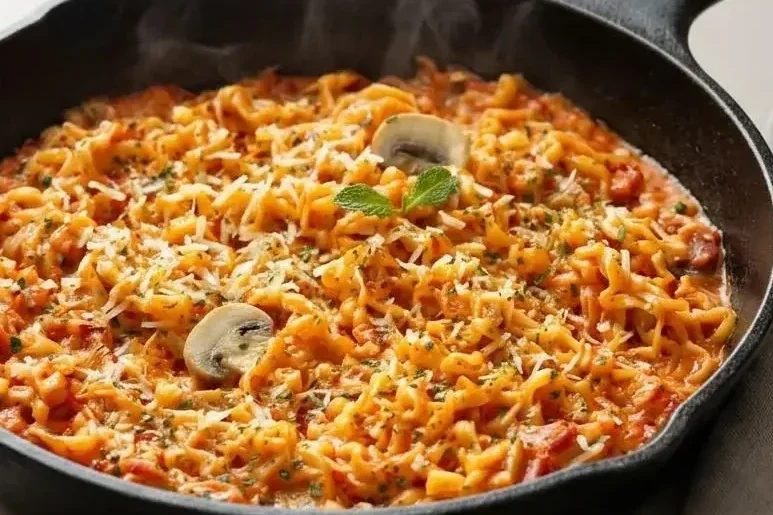
This buldak ramen carbonara recipe coats chewy noodles in thick cream, parmesan, spicy seasoning, bacon, and mushrooms. Boil the noodles for 5 minutes while cooking the skillet toppings, then combine everything into a glossy sauce, using reserved noodle water if it needs loosening.
Carbonara-flavored Buldak brings the fire; cream and cheese bring the silky coating. Onion, fresh garlic, bacon, and mushrooms turn the instant noodles into a savory skillet meal with more texture in every forkful.
You can keep the full spicy kick or dial it back without giving up the creamy carbonara seasoning. The skillet version serves two and takes about 10 minutes with everything chopped and ready. Watch for that glossy finish.
Set a cup beside the saucepan before cooking so you remember to save some noodle water before draining.
Essential Ingredients for Buldak Ramen Carbonara
Every ingredient contributes to the finished bowl: noodles provide chew, bacon and mushrooms add savory depth, onion and garlic build aroma, and cream and parmesan create a rich coating that balances the spicy seasoning.
- 2 buldak ramen packs (carbonara flavor)
- 1 small onion, chopped
- 1 garlic clove, minced
- 100 g bacon strips
- 130 g mushrooms, sliced
- 280 ml thick cream
- 40 g parmesan
- cooking oil
- dried parsley (| optional – garnish)
- extra parmesan (| optional – garnish)
Carbonara-flavored ramen: Use the carbonara version for its creamy seasoning powder and separate spicy sauce. Those packets serve different purposes, so adjusting the red sauce doesn’t mean you need to reduce the powder too.
Thick cream and parmesan: For US cooks, heavy cream is the closest familiar choice for thick cream here. It gives the sauce body, while parmesan adds a salty, savory finish. Finely grate the cheese so it melts evenly rather than collecting in little clumps.
Onion, garlic, bacon, and mushrooms: Chopped onion brings gentle sweetness, and minced fresh garlic gives a rounded aroma once it hits the pan. Garlic powder won’t provide quite the same flavor. Thin mushroom slices soften quickly and contrast with the springy noodles; bacon contributes smoky richness.
Reserved noodle water: Although it isn’t a purchased ingredient, keep some nearby. Its suspended starch helps the cream, cheese, and cooking fat form a cohesive coating. Add it gradually only when the sauce needs more fluidity.
- Optional dairy-free adjustment: Unsweetened soy milk and dairy-free parmesan can replace the dairy, but expect a thinner sauce and a different melting texture.
- Optional plant-based adjustment: Omit the bacon and use a noodle product and seasonings labeled suitable for your needs. Check the packets before retaining them; replacing the cream alone doesn’t make the dish vegan.
- Optional bowl variation: Egg yolk and Kewpie mayonnaise create a different creamy coating without the skillet toppings. They belong to the variation below, not the ingredient list above.
I prefer finely grated parmesan here because it blends into the warm cream more smoothly than thick shavings.
How to Make Creamy Buldak Carbonara
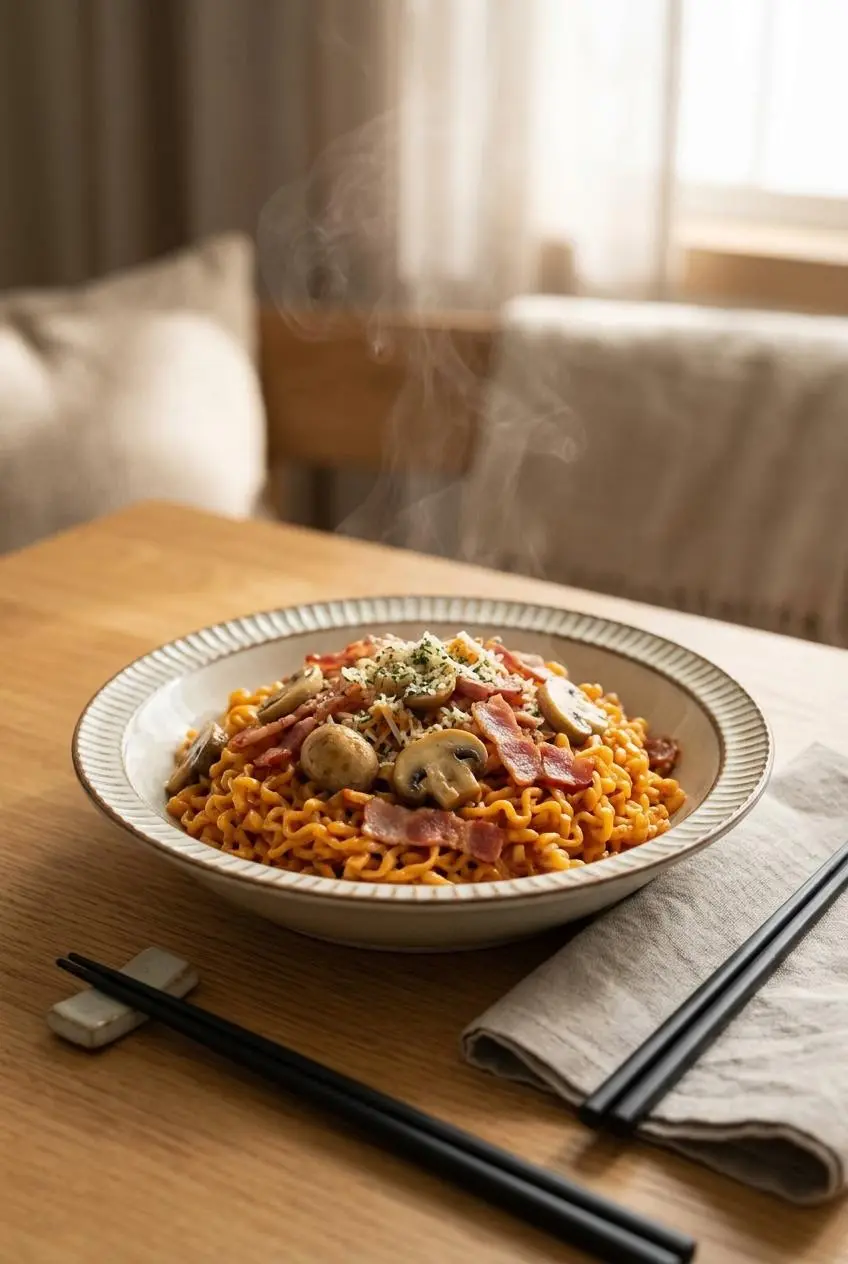
Use a nonstick frying pan for the toppings and a saucepan for the noodles. Have the ingredients ready before starting: the cooking moves quickly, and garlic needs attention while the noodle water comes to a boil.
- Soften the chopped onion and minced garlic for 1 minute in a frying pan with cooking oil, stirring to distribute the heat.
The garlic should smell fragrant without developing dark edges. - Start the noodles in a saucepan of boiling water while the aromatics cook, following the package directions for a 5-minute boil.
The noodle strands should separate and become flexible while retaining their characteristic chew. - Scatter the bacon strips and sliced mushrooms into the frying pan and stir-fry over medium-high heat for about 2–3 minutes, until the mushrooms are fully cooked.
The mushrooms should soften and lose their raw, firm texture as the bacon releases fat. - Combine the thick cream and ramen seasoning packets with the skillet toppings, stirring through the pan.
The seasoning should disperse into an evenly colored sauce with no dry powder pockets. - Take the pan off direct heat and fold the parmesan into the warm cream mixture.
The cheese should blend into the sauce rather than forming grainy clusters. - Drain the cooked noodles and toss them through the skillet sauce until every strand carries a coating.
The finished noodles should look glossy, with sauce clinging to them rather than sitting separately underneath. - Finish with dried parsley and extra parmesan if desired.
The optional garnishes add green flecks and a savory cheese finish.
The Skillet Method: Sizzling Bacon and Mushrooms
The skillet gives this version its savory depth. Keep the bacon and mushrooms moving so they contact the hot pan rather than piling up in one spot. Any lightly browned bits contribute flavor when you stir in the cream.
Don’t chase deeply crisp bacon at the expense of the onion and garlic. Thin bacon strips suit the brief cooking time better than thick pieces, and the mushrooms should finish tender. Watch the pan rather than relying on color alone.
Once the cream goes in, avoid a hard boil. Stir across the bottom to distribute the seasoning and lift any browned bits into the sauce. Remove the pan from direct heat before adding parmesan; residual warmth is gentler on the cheese.
Before draining the saucepan, save some cooking water. If the finished coating feels stiff or sticky, toss in a splash and reassess. Stop when the strands separate easily but still hold sauce. You’re making saucy noodles, not noodle soup.
The Viral Bowl Hack: Egg Yolk and Kewpie Mayonnaise
This optional variation replaces the cream-and-bacon skillet sauce with an egg-and-mayonnaise mixture. You still need to boil the noodles, but you don’t need a second pan for the sauce.
In a heatproof serving bowl, whisk an egg yolk with Kewpie mayonnaise, minced garlic, the carbonara powder, and your chosen portion of spicy sauce. Keep the bowl off the stove throughout.
Let a little reserved cooking water lose its vigorous bubbling, then whisk it into the yolk mixture gradually. Add the drained hot noodles and toss continuously until the coating looks smooth and glossy. Use more cooking water sparingly if the mixture becomes too thick.
This uses the gentle mixing approach associated with classic pasta carbonara, although the mayonnaise and packaged seasoning give it a distinctly different flavor. Kewpie adds tangy richness, while the yolk gives the coating body.
Tempering controls texture; it isn’t a verified cooking treatment for the egg. As a precaution, choose a pasteurized egg yolk for this lightly heated variation, or stick with the egg-free skillet version if you prefer to avoid undercooked egg.
Raw minced garlic tastes sharper in the bowl variation because it doesn’t receive the skillet’s brief sauté. Use it with that flavor difference in mind rather than expecting the mellow aroma of cooked garlic.
How to Control Spiciness Without Losing Flavor
Adjust the spicy sauce before trying to rescue an overpowering bowl. Cream and cheese make each bite richer and can soften the impression of heat, but they don’t erase the chili flavor.
For an optional savory boost, stir a little white miso into the warm cream. It adds depth rather than removing spice, and it also brings saltiness, so taste before adding extra parmesan.
Calibrating the Spicy Sauce Packet
Use the same chosen proportion from each red sauce packet when making both servings. Keep the carbonara powder for its creamy, savory flavor.
- Gentler heat: Start with one-quarter to one-half of each red sauce packet, then taste before adding more.
- Moderate heat: Try three-quarters of each packet if you enjoy spice but want the cream and toppings to remain prominent.
- Full heat: Use the entire red sauce packet alongside the carbonara powder.
These are starting points, not promises of a mild bowl. Spice tolerance varies, and even a reduced portion can taste hot. Hold the remaining sauce aside until you’ve tasted the coated noodles.
Cooling Additions: Cheeses and Dairy Balancers
Add richer ingredients gradually so the sauce stays balanced rather than becoming heavy or overly salty.
- Extra heavy cream: Adds richness and spreads the spicy seasoning through more sauce.
- Whole milk: Loosens a thick coating, though it gives less body than cream.
- Mozzarella: Adds a mild flavor and stretchy texture; use it only if you want that cheese pull.
- Mild cheddar: Adds a fuller cheese flavor that changes the parmesan-forward finish.
- Extra parmesan: Boosts savory depth, but also increases saltiness, so taste first.
If you prefer creamy noodles without Buldak’s chili-forward flavor, creamy chicken ramen offers another direction rather than requiring repeated adjustments to a fiery packet.
Troubleshooting Common Sauce and Texture Mistakes
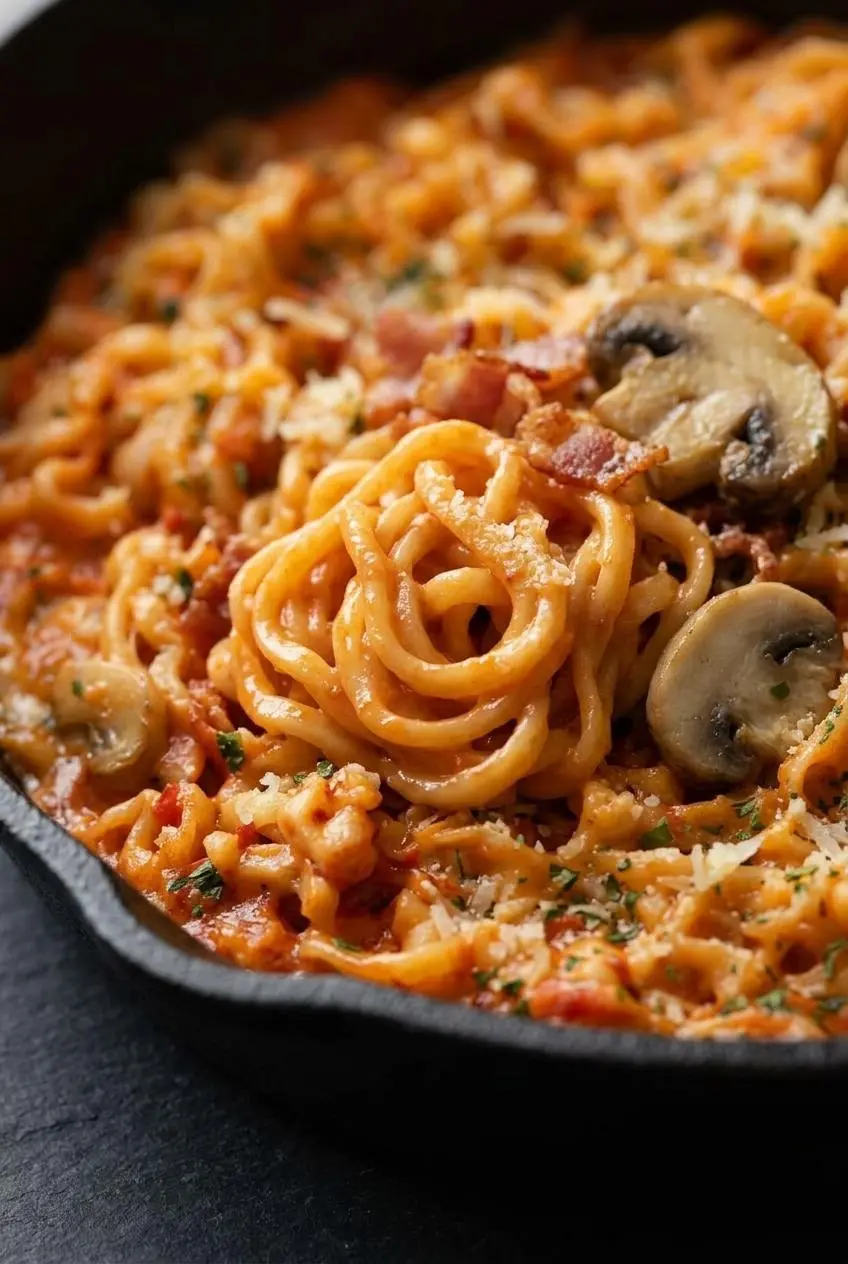
Most texture problems come from excess heat, too little liquid, or leaving the cooked noodles sitting while the sauce finishes.
- Oily sauce: Excess heat can separate the fat from the liquid. Take the pan off the burner and stir briskly with a little warm reserved noodle water; add it gradually until the mixture becomes more cohesive.
- Dry, clumpy noodles: The noodles have absorbed liquid or the sauce started too thick. Toss with a splash of cooking water so the strands loosen without washing away the seasoning.
- Grainy cheese: A very hot sauce or coarse cheese can leave uneven clumps. Remove direct heat, stir gently, and loosen with cooking water; finely grated parmesan helps prevent the problem next time.
- Watery coating: Too much added liquid leaves sauce pooling beneath the noodles. Stop adding water and toss thoroughly so the coating redistributes before deciding whether it needs further adjustment.
- Mushy noodles: Extended boiling or continued simmering in the skillet softens them further. Keep the stated 5-minute boil, drain promptly, and toss into the ready sauce instead of simmering them again.
- Overly salty flavor: Seasoning, bacon, and parmesan all contribute salt. Skip the extra cheese garnish and add a little unseasoned cream; don’t try to fix it with another seasoning packet.
- Curdled egg in the bowl variation: Concentrated heat has set the yolk into small pieces. Gradual mixing helps prevent this, but once the egg sets, whisking won’t fully restore the smooth texture.
For serving, a crisp cucumber salad or pickled daikon gives a refreshing contrast to the rich noodles. Optional scallions or toasted sesame seeds add freshness or crunch without changing the sauce.
Storage, Reheating, and Make-Ahead Reality
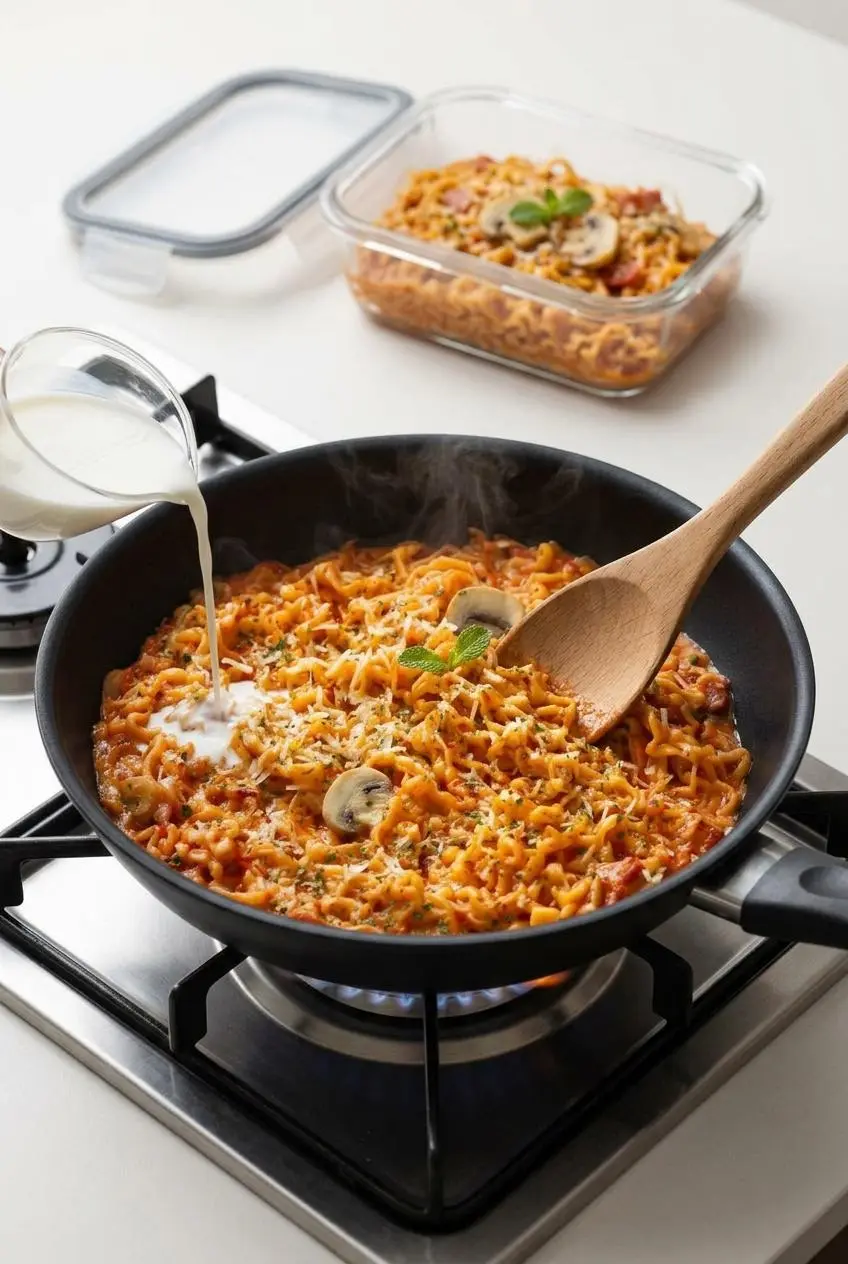
These noodles have their best texture immediately after tossing. As they sit, they absorb sauce and lose some of their springy bite, so a reheated portion won’t feel exactly like a freshly made bowl.
Keep leftovers covered and chilled in an airtight container. Store any crisp or fresh optional toppings separately so they don’t soften in the sauce.
For reheating, place the noodles in a nonstick skillet over low heat with a splash of fresh milk or water. Gently separate the strands as they warm, adding liquid gradually until the coating loosens. Warm the portion through without aggressively boiling the sauce.
Avoid blasting a dry bowl at high microwave power. That approach can heat the sauce unevenly and leave the noodles stiff around the edges.
For easier assembly, focus on getting ready before you start cooking: chop the onion, mince the garlic, slice the mushrooms, and grate the parmesan. Leave the noodle boiling and final tossing until you’re ready to eat rather than preparing the assembled dish ahead.
Conclusion
Cream, parmesan, bacon, and mushrooms give carbonara-flavored Buldak a rich skillet upgrade while keeping its signature spicy character. Adjust the red sauce packet to suit your taste and let the creamy seasoning do its part.
Keep reserved noodle water nearby, treat the cheese gently, and serve while the coating is glossy. A little attention at the finish makes every forkful more enjoyable.
Frequently Asked Questions
How Can I Make Buldak Carbonara Ramen Less Spicy?
Start with half or one-third of each red sauce packet, keeping the carbonara powder. Add extra cream or a splash of milk if the coated noodles still taste too hot. Optional mild cheese can make the bite richer, but taste before adding more salty parmesan.
Why Is Reserved Noodle Water Important for This Recipe?
The starch helps the cream, cheese, and cooking fat form a cohesive coating. It loosens sticky noodles without adding a new flavor. Add it gradually so the sauce clings rather than pools.
How Do I Prevent the Egg Yolk From Curdling in the Ramen?
Whisk the yolk and mayonnaise in a separate heatproof bowl off the stove. Gradually whisk in warm cooking water rather than pouring in vigorously boiling liquid. Toss continuously as you add the noodles to distribute their heat evenly.
Can I Reheat Leftover Creamy Buldak Carbonara?
Yes, gently warm properly chilled leftovers in a nonstick skillet over low heat. Add a splash of milk or water and separate the strands as the sauce loosens. Expect softer noodles than in a freshly made portion, and avoid aggressively boiling the dairy sauce.
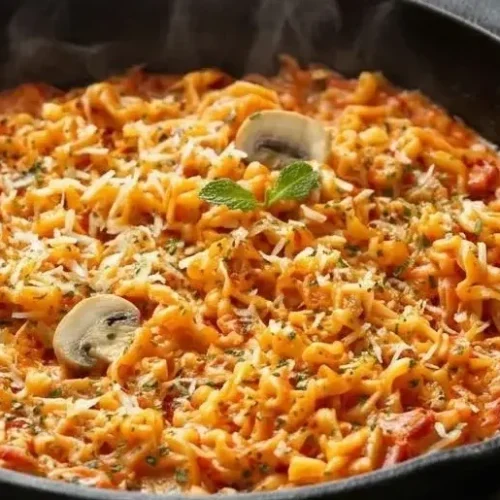
Buldak Ramen Carbonara Recipe

Equipment
- Non-stick frying pan
- Saucepan
Ingredients
- 2 packs buldak ramen (carbonara flavor)
- 1 small onion chopped
- 1 clove garlic minced
- 100 g bacon strips
- 130 g mushrooms sliced
- 280 ml thick cream
- 40 g parmesan
- cooking oil
- dried parsley optional – garnish
- extra parmesan optional – garnish
Instructions
- Soften the chopped onion and minced garlic for 1 minute in a frying pan with cooking oil, stirring to distribute the heat. The garlic should smell fragrant without developing dark edges.
- Start the noodles in a saucepan of boiling water while the aromatics cook, following the package directions for a 5-minute boil. The noodle strands should separate and become flexible while retaining their characteristic chew.
- Scatter the bacon strips and sliced mushrooms into the frying pan and stir-fry over medium-high heat for about 2–3 minutes, until the mushrooms are fully cooked. The mushrooms should soften and lose their raw, firm texture as the bacon releases fat.
- Combine the thick cream and ramen seasoning packets with the skillet toppings, stirring through the pan. The seasoning should disperse into an evenly colored sauce with no dry powder pockets.
- Take the pan off direct heat and fold the parmesan into the warm cream mixture. The cheese should blend into the sauce rather than forming grainy clusters.
- Drain the cooked noodles and toss them through the skillet sauce until every strand carries a coating. The finished noodles should look glossy, with sauce clinging to them rather than sitting separately underneath.
- Finish with dried parsley and extra parmesan if desired. The optional garnishes add green flecks and a savory cheese finish.