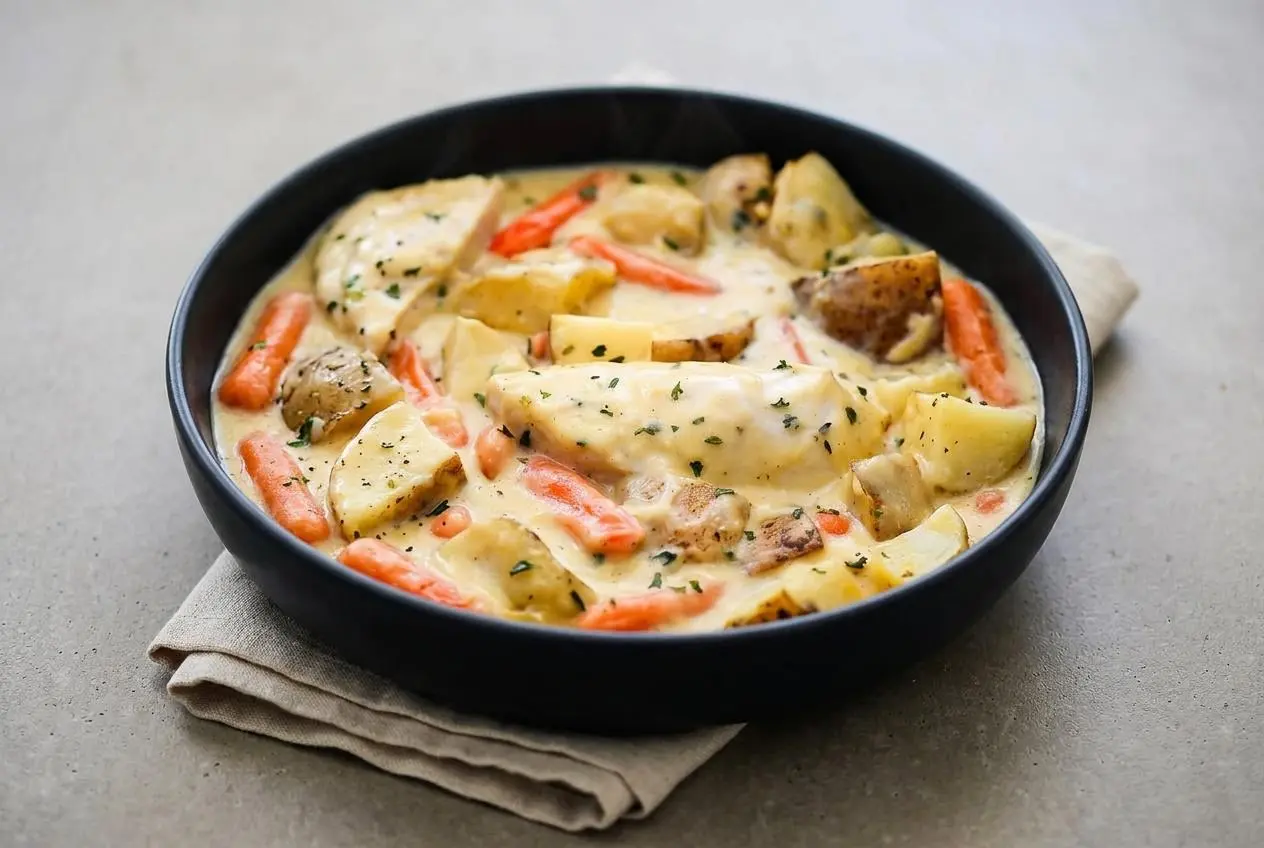
Slow Cooker Creamy Ranch Chicken is a complete dinner of chicken breasts, potatoes, and carrots in a creamy, herb-seasoned sauce. Cook it on low for 8 to 9 hours or high for 5 to 6 hours, then check the chicken’s temperature and the vegetables’ tenderness before serving.
Slow Cooker Creamy Ranch Chicken brings the main dish and vegetables together in one pot. Condensed cream of chicken soup, ranch seasoning, and milk make a savory sauce that coats everything without a separate stovetop sauce.
As dinner cooks, the herby aroma gives you something cozy to look forward to. Most of the work happens before the lid goes on, making this a useful meal for a busy day at home. Save a spoonful of sauce for the potatoes.
Cut the potatoes into even 2-inch pieces before loading the cooker so they soften at a similar pace.
Essential Ingredients and Flavor Foundations
Chicken gives this dinner its hearty center, potatoes and carrots add texture and sweetness, and soup with milk creates the creamy coating. Ranch seasoning supplies savory herbs, salt and pepper balance the flavor, and optional parsley adds a fresh finish.
- 6 medium Russet potatoes (cut into 2-inch pieces)
- 2 cups baby carrots
- 4 boneless skinless chicken breasts
- salt and pepper (to taste )
- 1 large can (23 ounces) condensed cream of chicken soup
- 1 packet (1 ounce) dry ranch dressing mix
- 1/2 cup milk
- fresh chopped parsley (optional)
Use condensed soup, not ready-to-eat chicken soup. The concentrated consistency gives the sauce body; milk loosens it enough to whisk and spread over the chicken. Chicken juices will contribute more moisture during cooking, so there’s no need to dilute the soup as though you were serving it in a bowl.
Boneless skinless chicken breasts offer a mild flavor that lets the ranch seasoning come through. Pieces of similar thickness are helpful because they’re more likely to finish cooking together. Very uneven sizes can leave a thin breast dry while a thicker one still needs time.
The potatoes absorb savory sauce, while the carrots bring sweetness that balances its richness. Parsley is optional, but its fresh flavor makes a pleasant contrast to the creamy coating.
I’d keep the potato pieces chunky rather than dice them small; tender pieces that still hold together are easier to serve.
Balancing Ranch Seasoning and Sodium
Dry ranch dressing mix contains concentrated seasoning, including salt, so go lightly when seasoning the chicken. The soup contributes salt as well. You can adjust the finished dish, but you can’t easily remove salt once it’s mixed into the sauce.
Reduced-sodium condensed cream of chicken soup is a useful optional choice if packaged ranch mixtures taste too salty to you. Keep the same soup amount and use the condensed variety so the sauce retains its intended body.
A ranch packet gives predictable seasoning strength. Homemade dry ranch blends vary in salt, herbs, and dairy powder, so they aren’t automatically interchangeable by volume. If you prefer homemade seasoning, use a blend with its own stated packet-equivalent guidance rather than guessing. Liquid ranch dressing is a different product and isn’t a direct replacement here.
Selecting the Best Potatoes and Carrots
Russets become soft and fluffy, but they can crumble if you cut them too small or stir them roughly after cooking. Uniform 2-inch pieces help them retain recognizable chunks through the long cooking time. Leave them in the vegetable layer rather than mixing them repeatedly into the sauce.
Yukon Gold potatoes are an optional alternative if you prefer a creamier, less fluffy texture. Keep the same amount and cut size. The listed Russets remain the choice for this version.
Whole baby carrots suit this meal because they can withstand extended cooking better than thin carrot slices. At the end, a fork should pierce them without a firm, crunchy center. Check a potato piece too; soft chicken alone doesn’t tell you whether the vegetables are ready.
How to Make the Slow Cooker Creamy Ranch Chicken
Plan on about 15 minutes of prep and use a large, 7-quart slow cooker. This recipe serves four. Choose the cooking setting that fits your schedule, then leave the lid closed until it’s time to check doneness.
- Coat the inside of a 7-quart slow cooker with nonstick spray, then arrange the potatoes and baby carrots across the bottom.
The vegetables should form the lower layer beneath the chicken. - Set the chicken breasts on the vegetables and season them with salt and pepper to taste.
Keep the breasts spread across the vegetable layer rather than stacked in a pile. - Whisk the condensed soup, dry ranch mix, and milk in a medium bowl, then distribute the sauce over the chicken.
The mixture should look uniform, with no dry pockets of seasoning or unmixed streaks of milk. - Secure the lid and cook without lifting it for 5 to 6 hours on high or 8 to 9 hours on low, checking doneness at the end of the selected cooking range.
Look for tender vegetables and a gently bubbling sauce, and confirm the chicken’s doneness with a thermometer. - Finish each portion with fresh chopped parsley if desired.
The optional herbs add a fresh green contrast to the creamy sauce.
Layering for Even Cooking
Put dense root vegetables underneath the poultry because they usually take longer to soften. The lower layer sits close to the heated crock and cooks in the liquid that collects around it. Slow cookers heat through the crock’s sides and base, so this placement helps the vegetables cook thoroughly.
The chicken rests above that layer under a coating of sauce. You don’t need to stir everything together at the start. The sauce will settle around the ingredients as it heats, and the chicken will release juices into it.
Whisking the sauce in a bowl is worth the small amount of cleanup. Condensed soup is thick enough to trap dry seasoning, and trying to mix it around raw chicken and chunky vegetables makes an even blend harder to achieve. A smooth mixture before cooking gives you a better starting texture.
Setting Heat and Temperature Guidelines
The two cooking options are 5 to 6 hours on high or 8 to 9 hours on low. Low provides a gentler cooking pace; high is useful when you have less time. Neither setting guarantees juicy chicken if the meat stays in the cooker beyond doneness.
At the end of the cooking range, insert an instant-read thermometer into the thickest part of each breast. Chicken should reach a minimum internal temperature of 165°F. Bubbling sauce, pale meat, and easy shredding are useful cooking observations, but they don’t replace that temperature check.
Check the potatoes and carrots with a fork during the same end-of-cooking check. They should yield without a hard center. If either the chicken or vegetables need more cooking, replace the lid and continue until both are ready.
Avoid lifting the lid just to stir or peek. Each opening releases trapped heat and steam, which can extend cooking. There’s no need to attach a fixed number of extra minutes to every lid lift; the effect depends on the cooker and how long it stays open.
Pro Tips and Troubleshooting
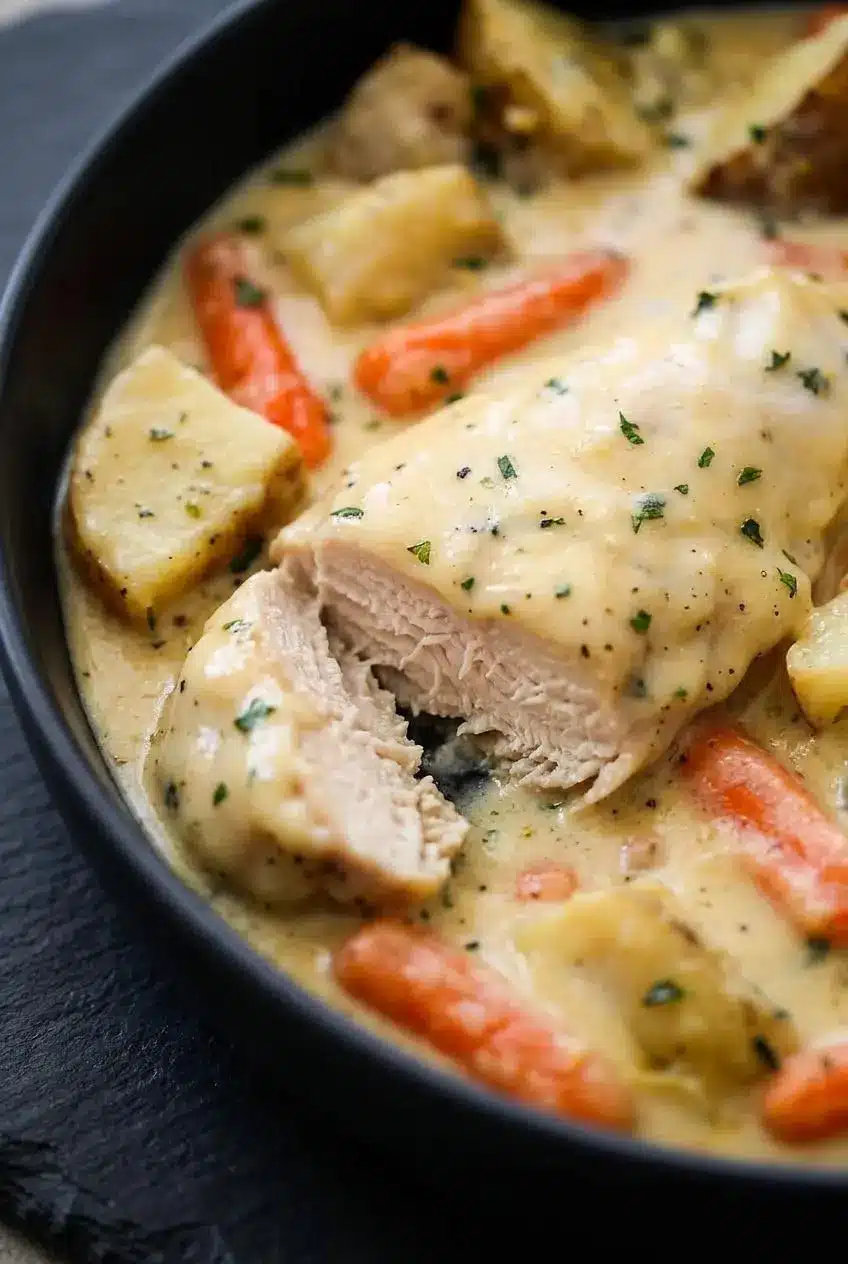
Check texture and seasoning before making adjustments. A sauce that looks loose around the edge may still coat the chicken well once you gently combine it with the cooking juices.
- Watery sauce: Chicken releases moisture, and condensation stays inside the covered cooker. If the finished sauce needs more body, mix cornstarch with cold water until smooth, then stir the slurry into the hot sauce. Use high heat until it thickens, checking the consistency rather than relying on a fixed repair time. If the chicken is already done, remove it while adjusting the sauce.
- Separated or grainy sauce: Thoroughly whisking the milk into the condensed soup helps create an even mixture before cooking. Avoid leaving the finished sauce at prolonged high heat. If you see some separation, gently stir the sauce together; continued vigorous heating can make the texture worse.
- Too much salt: The ranch packet and condensed soup both contribute salt. Stir in unsalted chicken broth to dilute the sauce, or add sour cream off the heat for a milder, tangier finish. Sour cream balances the taste but doesn’t remove the salt. Broth also makes the sauce thinner, so add it gradually.
- Dry chicken: Lean breasts can dry out when cooking continues after they’re done. Remove cooked breasts while you finish any sauce adjustment, then spoon sauce over them. Shredding can make them easier to coat, but it won’t restore moisture lost through overcooking.
- Mushy potatoes: Small pieces and rough stirring can break down soft Russets. Keep the listed cut size and use a broad spoon to lift cooked vegetables rather than vigorously mixing them.
- Firm vegetables: Uneven chunks or vegetables piled above the chicken can cook less evenly. Keep them underneath the meat, check the largest pieces, and continue cooking if their centers remain firm.
- Uneven ranch flavor: Dry mix can collect in pockets when sprinkled directly over thick soup. Whisk until the seasoning disperses throughout the sauce before pouring it into the cooker.
Storage and Reheating
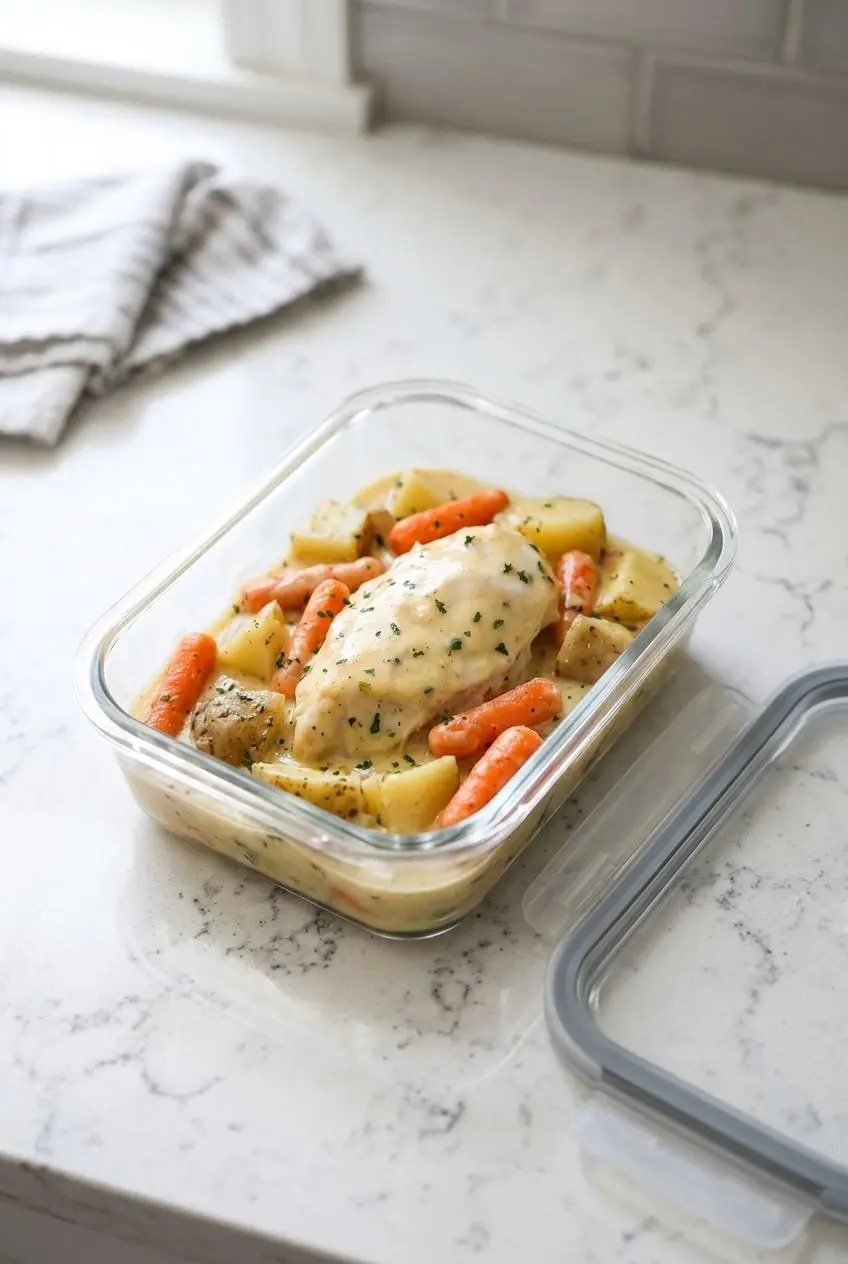
Store leftover chicken with some sauce so it doesn’t dry out during reheating. Divide the meal into shallow containers rather than leaving everything in the warm crock.
Refrigerate leftovers within two hours and keep them covered and chilled. Portion the chicken, vegetables, and sauce into containers that let you reheat only what you need.
- Protect the texture: Keep sauce around the chicken and handle the cooked potatoes gently. Store optional fresh parsley separately so you can add it after reheating.
- Reheat gently: Warm a portion in a saucepan over low heat, stirring carefully so the potatoes don’t fall apart. A splash of milk or unsalted broth can loosen sauce that has thickened while chilled.
- Avoid harsh heating: Gentle heat helps preserve the sauce’s consistency, but don’t stop while the center is still cool. Check that the whole portion heats through, especially a thick chicken breast.
- Use the microwave carefully: Use reduced power and stir between heating intervals to distribute heat. Keep heating until the portion is hot throughout rather than judging it by the sauce at the edges.
Popular Recipe Variations and Serving Ideas
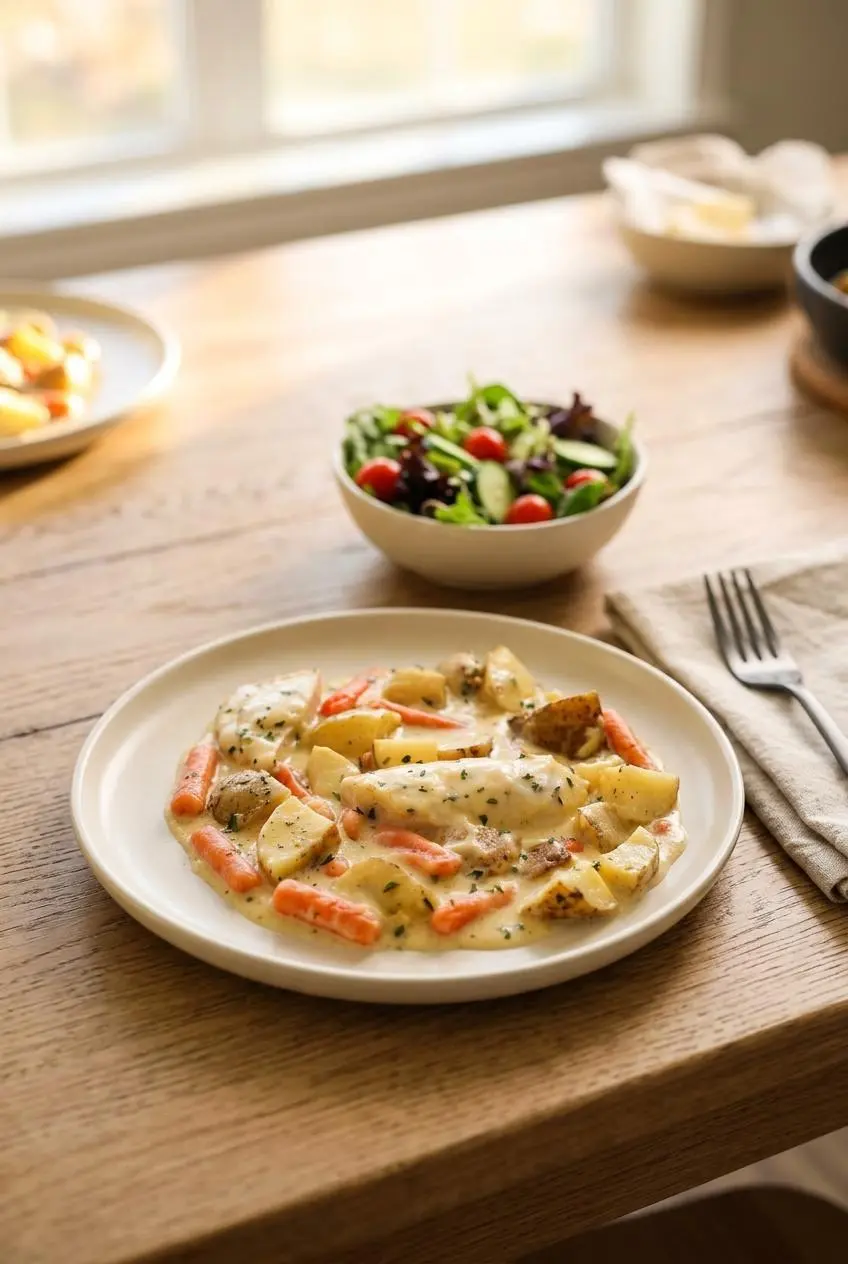
The potatoes and carrots make this a complete plate already. Optional changes can brighten the sauce, create a sandwich filling, or give you a different way to serve the chicken.
- Brighter flavor: Stir a little Dijon mustard and fresh lemon juice into the finished sauce. Add them gradually and taste, since both can quickly change the ranch flavor.
- Vegetable-free adaptation: Omit the potatoes and carrots and serve the chicken and sauce over steamed riced cauliflower or alongside crisp green beans. Removing the root vegetables changes the cooker’s contents, so don’t assume the same timing will give an identical result.
- Rice or noodles: Spoon chicken and sauce over fluffy white rice or buttered egg noodles. These make sense when you want extra starch to catch the sauce, though the dinner already includes potatoes.
- Fresh contrast: Pair the meal with a crisp green salad or steamed green beans. Their lighter texture balances the rich sauce without adding another creamy component.
Bacon Cheddar Shredded Chicken Option
- Make it sandwich-friendly: After confirming doneness, shred the chicken with two forks and fold it into enough sauce to coat. Add crispy crumbled bacon and shredded sharp cheddar, then serve in toasted brioche rolls.
- Add cream cheese optionally: For a richer finish, stir softened cream cheese into the hot sauce after cooking. Add it gradually until smooth; replacing all the condensed soup would require a different liquid balance.
- Keep the bacon crisp: Fold it in close to serving rather than letting it soften throughout the cooking time. Taste before adding salt because bacon and cheddar contribute their own seasoning.
For a baked dinner with the same savory pairing, try chicken bacon ranch casserole.
Chicken Thigh Adaptation
- Choose boneless skinless thighs: They give the dish a richer flavor and generally tolerate extended cooking better than lean breasts.
- Keep the vegetable layering: Place thighs above the potatoes and carrots, with the sauce over the meat. Their moisture may change the finished sauce consistency, so assess it before adding extra liquid.
- Check rather than guess: Thigh size and thickness affect cooking, so there isn’t a dependable shortened schedule for every substitution. Use the thermometer benchmark described above and check vegetable tenderness too.
Conclusion
Tender chicken, hearty vegetables, and a velvety ranch sauce make this a cozy dinner with most of the cooking handled in one pot. Whisk the sauce thoroughly and keep the potato pieces evenly sized for a more consistent result.
Leave the lid closed while dinner cooks, then check both the chicken and vegetables before serving. Spoon the sauce generously, and enjoy a plate that doesn’t need much else.
Frequently Asked Questions
Can I Use Chicken Thighs Instead of Chicken Breasts?
Yes, boneless skinless chicken thighs work well and give the dish a richer flavor. Follow the same layering order, but judge readiness by the thermometer check and vegetable tenderness rather than assuming a shorter cooking time.
How Do I Thicken the Sauce If It Turns Out Too Runny?
Stir a smooth mixture of cornstarch and cold water into the hot sauce, then use high heat until it thickens. Remove already-cooked chicken while adjusting the sauce so it doesn’t keep cooking unnecessarily.
How Should I Store Leftover Creamy Ranch Chicken?
Divide it into shallow, covered containers and refrigerate promptly using the storage guidance above. Keep sauce with the chicken, and reheat only the portion you need.
Why Is It Important Not to Open the Slow Cooker Lid While Cooking?
Lifting the lid lets trapped heat and steam escape, which can extend cooking. Keep it closed during the cooking period and open it when you’re ready to check the chicken’s temperature and the vegetables’ tenderness.
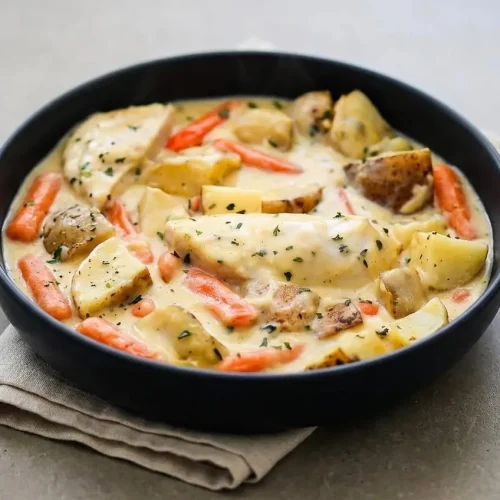
Slow Cooker Creamy Ranch Chicken

Equipment
- 7-quart slow cooker
- Medium mixing bowl
- Whisk
Ingredients
- 6 medium Russet potatoes cut into 2-inch pieces
- 2 cups baby carrots
- 4 boneless skinless chicken breasts
- salt and pepper to taste
- 1 large can condensed cream of chicken soup 23 ounces
- 1 packet dry ranch dressing mix 1 ounce
- 1/2 cup milk
- fresh chopped parsley optional
Instructions
- Coat the inside of a 7-quart slow cooker with nonstick spray, then arrange the potatoes and baby carrots across the bottom. The vegetables should form the lower layer beneath the chicken.
- Set the chicken breasts on the vegetables and season them with salt and pepper to taste. Keep the breasts spread across the vegetable layer rather than stacked in a pile.
- Whisk the condensed soup, dry ranch mix, and milk in a medium bowl, then distribute the sauce over the chicken. The mixture should look uniform, with no dry pockets of seasoning or unmixed streaks of milk.
- Secure the lid and cook without lifting it for 5 to 6 hours on high or 8 to 9 hours on low, checking doneness at the end of the selected cooking range. Look for tender vegetables and a gently bubbling sauce, and confirm the chicken’s doneness with a thermometer.
- Finish each portion with fresh chopped parsley if desired. The optional herbs add a fresh green contrast to the creamy sauce.