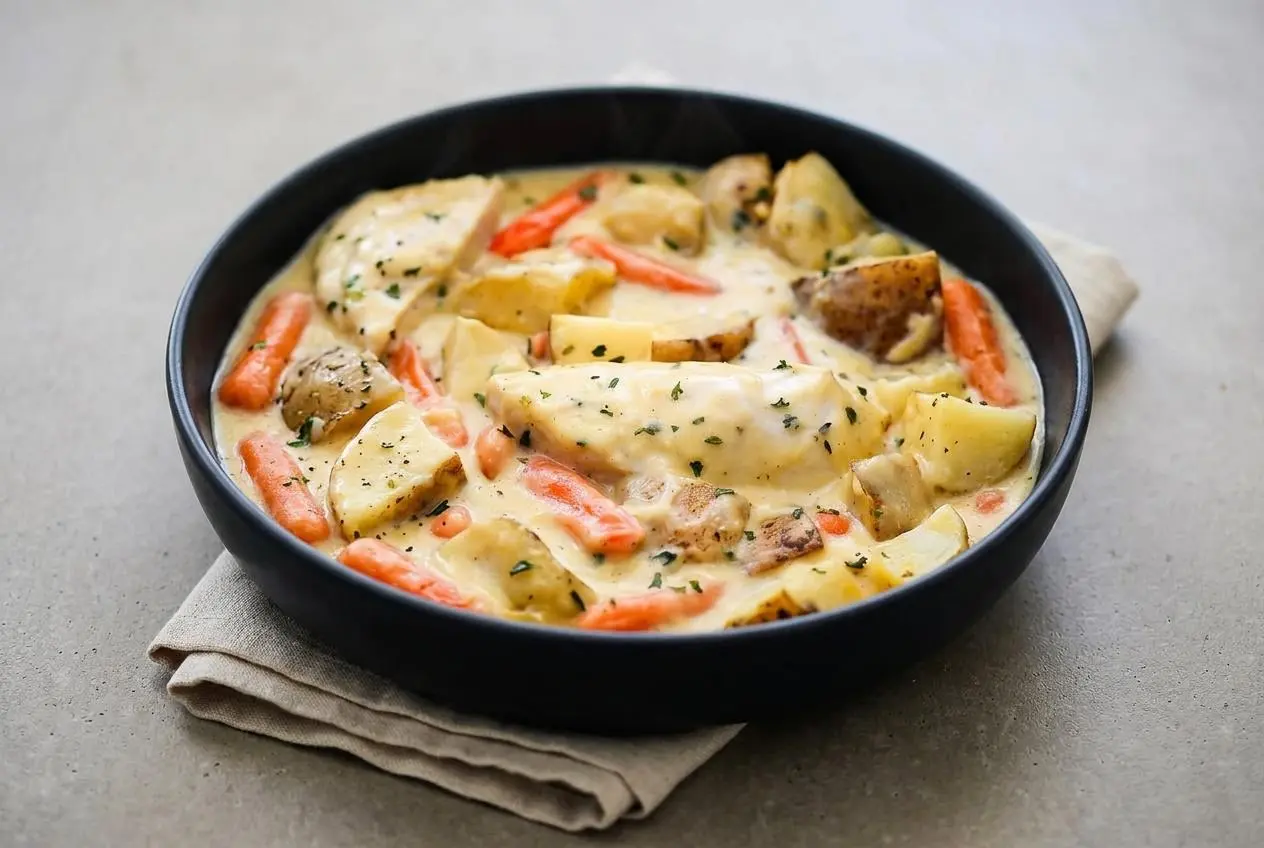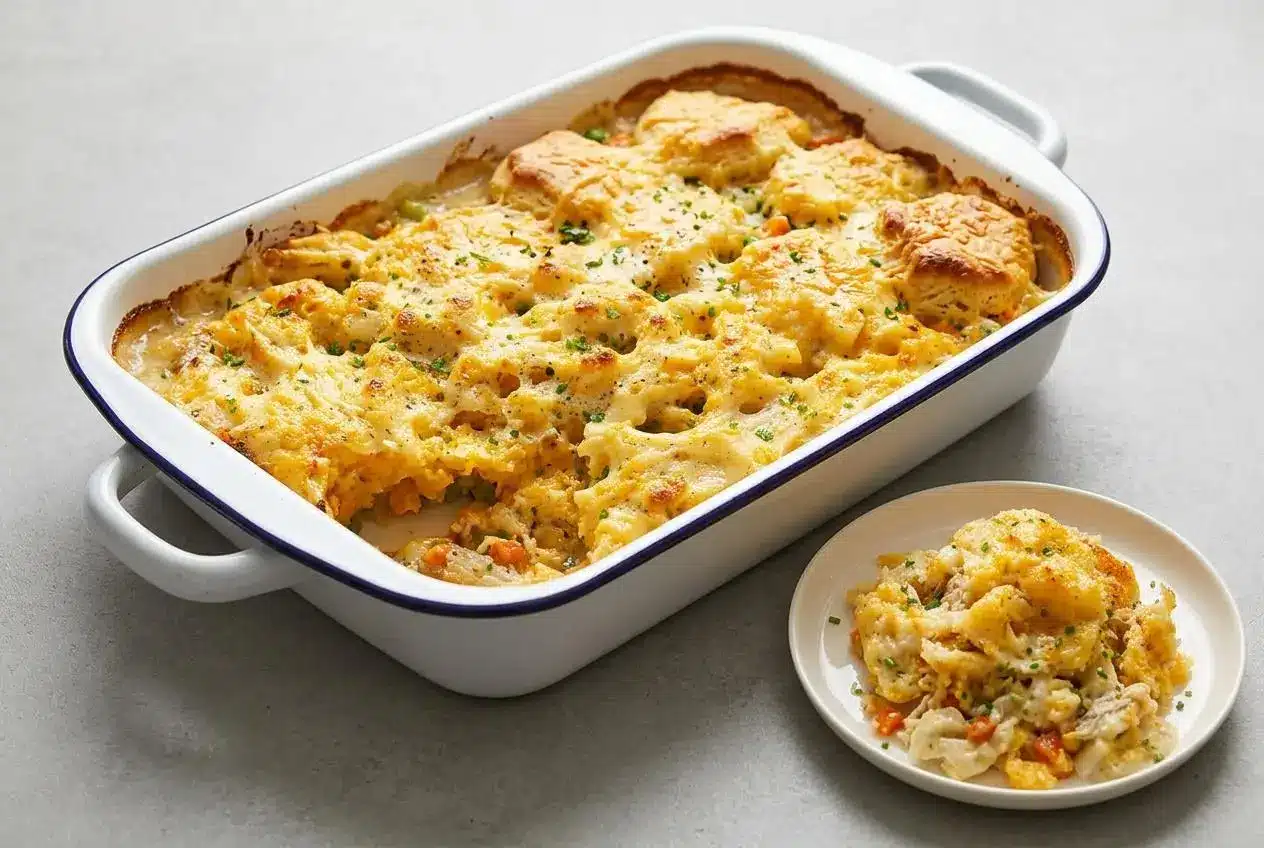
Chicken cobbler is a savory casserole of tender chicken, vegetables, and creamy gravy baked beneath a fluffy biscuit topping. Layer the batter and sauce without stirring, then bake until the cheddar crust is golden and the filling bubbles around the edges.
Shredded rotisserie chicken makes this a comforting dinner without cooking the meat first. As the dish bakes, the aroma of toasted cheddar gives you a good reason to check the oven.
The trick is in the pour: the sauce goes over the biscuit batter, and the layers stay untouched. That’s where the crust begins.
Keep a rimmed baking sheet handy for the baking dish; the gravy can bubble over as it cooks.
What Makes a Classic Chicken Cobbler
Think of chicken cobbler as a pot pie alternative with a softer, more rustic top. Pot pie typically has rolled pastry that bakes into flaky layers. Here, a cheddar biscuit batter goes over chicken and vegetables, then rises through the sauce as it bakes.
That contrast makes each spoonful satisfying: tender shreds of chicken and mixed vegetables sit in a creamy, seasoned gravy beneath a golden topping. You don’t need to roll dough or fit pastry into a pan. You do need to keep the layers separate. Stirring the batter into the filling would leave dough dispersed through the sauce instead of a distinct crust.
Essential Ingredients and Their Roles
Every ingredient has a job: butter and onion build savory flavor, chicken and vegetables give the filling substance, cornstarch thickens the gravy, and biscuit mix, milk, and cheddar create the soft, golden topping.
- PAM® Original No-Stick Cooking Spray
- 1/2 cup butter
- 1/2 cup chopped onion
- 2 cups shredded rotisserie chicken
- 1 bag (10 oz each) Birds Eye® Steamfresh Mixed Vegetables
- 2 cups chicken broth
- 1/4 cup cornstarch
- 1 cup half-and-half
- 1 teaspoon kosher salt
- 1/4 teaspoon ground black pepper
- 1 teaspoon parsley flakes
- 1/2 teaspoon garlic powder
- 1 pkg (16 oz each) Duncan Hines® Dolly Parton’s Buttermilk Biscuit Mix
- 2 cups milk
- 2 cups shredded Cheddar cheese
Rotisserie chicken brings seasoned flavor and saves the time you would spend cooking chicken for the filling. Shred it into pieces that spread evenly across the baking dish, so each serving gets chicken rather than one crowded corner.
Chicken broth gives the sauce its savory backbone. Cornstarch thickens it once the broth reaches a boil, while half-and-half makes it creamy. Whisk the cornstarch thoroughly into the broth before heating; dry pockets are harder to smooth out once the liquid thickens. The onion, parsley, garlic powder, salt, and pepper season both the vegetables and the gravy around them.
The biscuit mix provides the structure that lets the topping rise. Milk turns it into a pourable batter, and cheddar adds richness and browned, savory edges. The cheese belongs in the batter rather than scattered over the finished dish, so its flavor runs through the crust.
I spread the shredded chicken loosely across the pan instead of pressing it down; the sauce reaches the filling more evenly that way.
How to Make Chicken Cobbler with the No-Stir Method
Use a 9×13-inch baking dish so the filling and topping have room to spread. Set out a large saucepan and whisk for the gravy. The sequence matters: build the chicken layer, thicken the sauce, then pour the biscuit batter and sauce into the dish without mixing them.
- Heat the oven to 400°F and coat a 9×13-inch baking dish with cooking spray.
The coating should reach the corners where the filling will bubble. - Melt the butter in a large saucepan over medium heat, then cook the chopped onion in it for about 3 minutes.
The onion should look softened before it goes into the dish. - Spread the chicken and mixed vegetables across the prepared dish, then pour the onion and butter over them.
The filling should cover the bottom in an even layer. - Whisk the chicken broth and cornstarch together, add them to the saucepan, and stir constantly as the mixture comes to a boil.
The sauce should turn glossy and visibly thicker. - Stir the half-and-half, kosher salt, pepper, garlic powder, and parsley into the thickened sauce, then take the pan off the heat.
The finished gravy should look smooth and creamy. - Combine the biscuit mix, milk, and cheddar, then pour the batter evenly over the chicken and vegetables.
The batter should spread across the filling without being stirred into it. - Pour the warm sauce evenly over the batter without stirring, set the dish on a rimmed baking sheet, and bake for 35 to 40 minutes.
The top should be golden brown, with gravy bubbling around the edges.
Pouring sauce over batter can feel backward, but leave it alone. The biscuit mixture rises as it bakes while the sauce moves around and beneath it. A spoon dragged through the pan now would combine those layers and make the topping less distinct.
Look beyond color when deciding whether to take the cobbler out. The top should appear set rather than wet, and the gravy should bubble actively at the perimeter. A fragrant cheddar aroma is another welcome cue, but check the center of the topping too; browned edges can arrive before the middle finishes baking.
Success Tips and Troubleshooting Common Issues
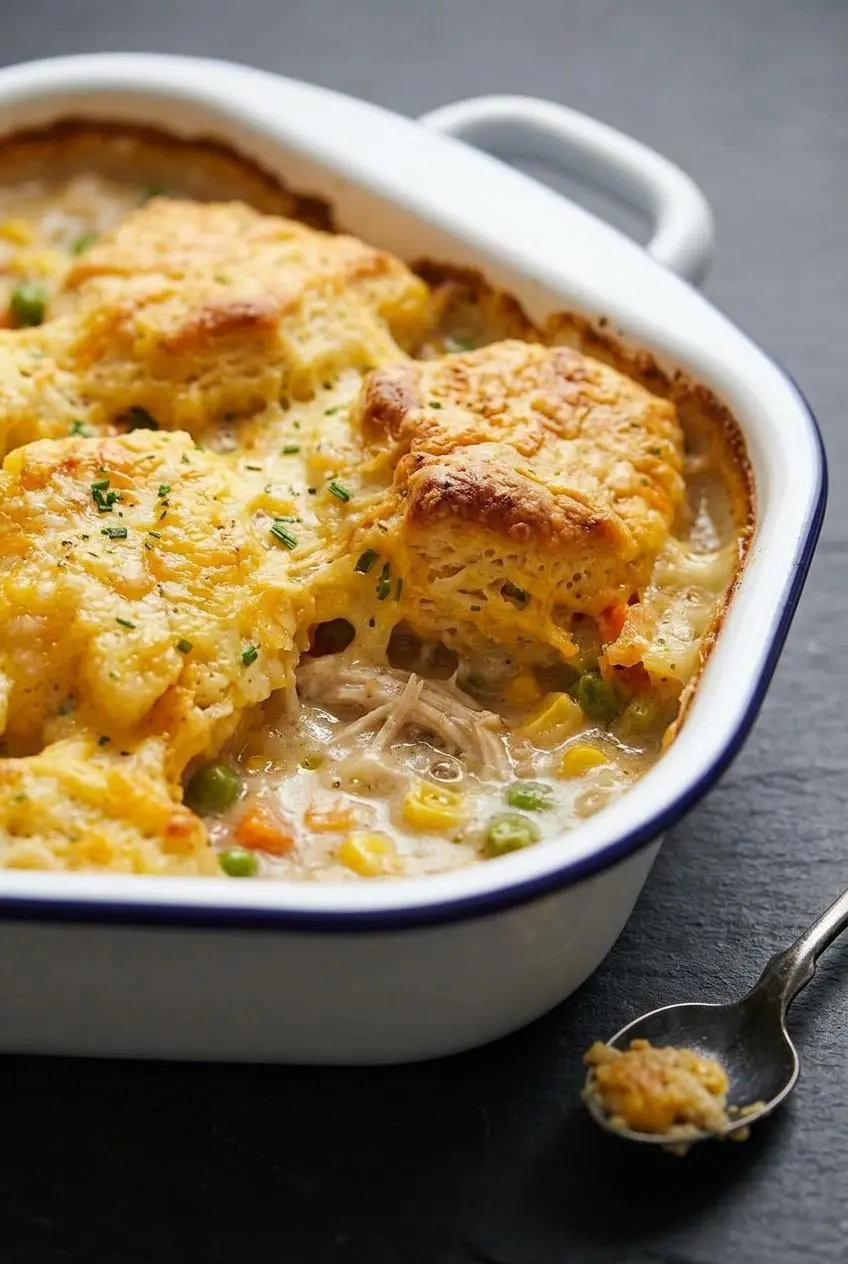
A good cobbler needs a set biscuit top and gravy that coats a spoon. If either texture seems off, the cause is usually excess vegetable moisture, sauce that did not thicken on the stove, or a center that needs more oven time.
- Overflow: A full baking dish can bubble at the rim. Keep it on a rimmed baking sheet to catch drips rather than placing it directly on the oven rack.
- Loose gravy straight from the oven: Bubbling sauce needs a chance to settle. Let the cobbler rest for about 10 minutes before scooping; it should become easier to serve.
Preventing a Gummy Biscuit Layer
Too much water near the batter can leave it damp instead of fluffy. If the mixed vegetables have collected liquid after thawing or steaming, drain them before adding them to the dish. Keep the biscuit mixture on top of the chicken and vegetables, and do not stir once the sauce goes in.
If the top browns while the center still looks wet, loosely tent the dish with foil and continue baking until the middle looks set. The foil shields the browned surface while the center finishes. Keep checking the middle rather than judging the crust by its edges alone.
Avoiding Watery Filling
Give the broth and cornstarch a full boil in the saucepan while stirring. The change should be easy to see: thin broth becomes a glossy sauce that leaves a coating on the spoon. Taking it off the heat before it thickens can leave the finished filling runny.
Vegetable liquid can thin a properly thickened sauce, too, so avoid tipping pooled water into the baking dish. Finally, serve the cobbler after its brief rest rather than scooping it while the gravy is still boiling vigorously.
Make-Ahead, Storage, and Reheating
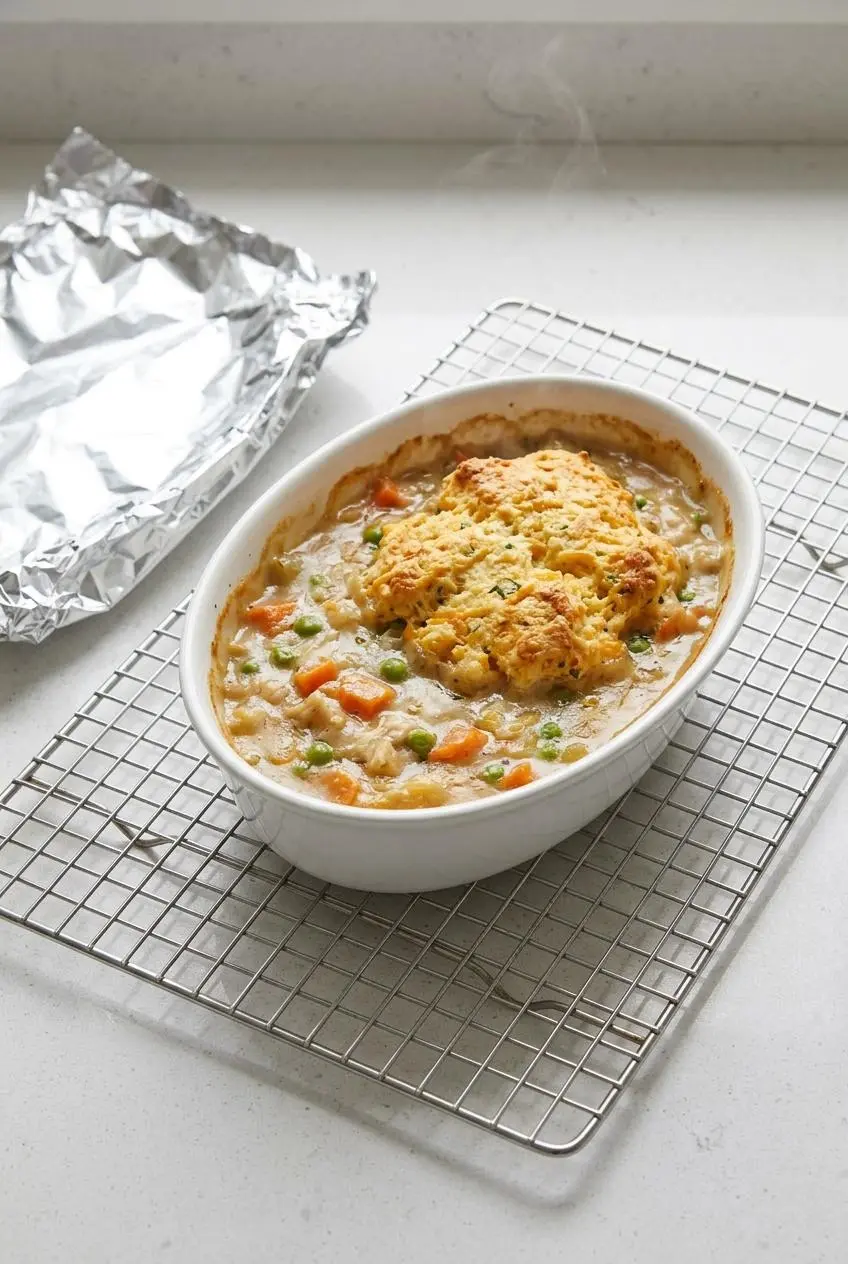
For a head start on dinner, arrange the cooked chicken and vegetables in the baking dish, cover it, and keep it refrigerated. Hold off on the biscuit batter and sauce until you’re ready to bake. Letting batter sit against the filling can weigh down the topping, and the gravy is best poured on while warm.
After baking, transfer leftovers to covered containers and refrigerate them promptly. When reheating chicken casserole, warm the center to 165°F on a food thermometer.
For a better biscuit texture, warm a portion in an oven-safe dish under a loose foil cover, then uncover it as the top finishes heating. Covering protects the crust from getting too dark; removing the foil lets surface moisture escape. A microwave works when convenience matters, but it will leave the biscuit softer.
Easy Customizations and Variations
Keep changes outside the main ingredient list and method, especially if they affect how thick the batter pours. These options let you adjust the flavor or prepare the chicken yourself while keeping the casserole’s chicken, vegetable, gravy, and biscuit layers.
- More savory gravy: Fresh thyme and a little Dijon mustard can be stirred into the warm sauce for a sharper, herbal finish.
- Different chicken preparation: If you don’t have a rotisserie bird, use cooked homemade shredded chicken. Season it to taste, since it may not have the same flavor as rotisserie chicken.
- Vegetable changes: Choose vegetables that will cook through during baking, and drain away excess liquid so they do not dilute the gravy.
Cheddar Bay Garlic Herb Variation
For a garlic-herb topping, use a biscuit blend with those flavors in place of the standard mix. Keep the cheddar in the batter for the same savory finish. Because biscuit blends can call for different amounts of liquid, follow the package’s mixing directions and aim for a batter that can spread over the filling without being kneaded or rolled.
Homemade Scratch Biscuit Topping
Prefer to skip the boxed mix? Make a loose drop-biscuit batter from all-purpose flour, baking powder, salt, cold diced butter, milk, and shredded cheddar. Work the butter into the dry ingredients before adding the milk, then mix only until the dough comes together.
A scratch batter may be thicker than the one made with the packaged mix. Distribute it gently across the filling rather than forcing it into a perfectly smooth layer, and pour the gravy over it without stirring. Check that the center is baked through before serving; changing the biscuit mix can change how the topping sets.
Serving Suggestions for a Complete Meal
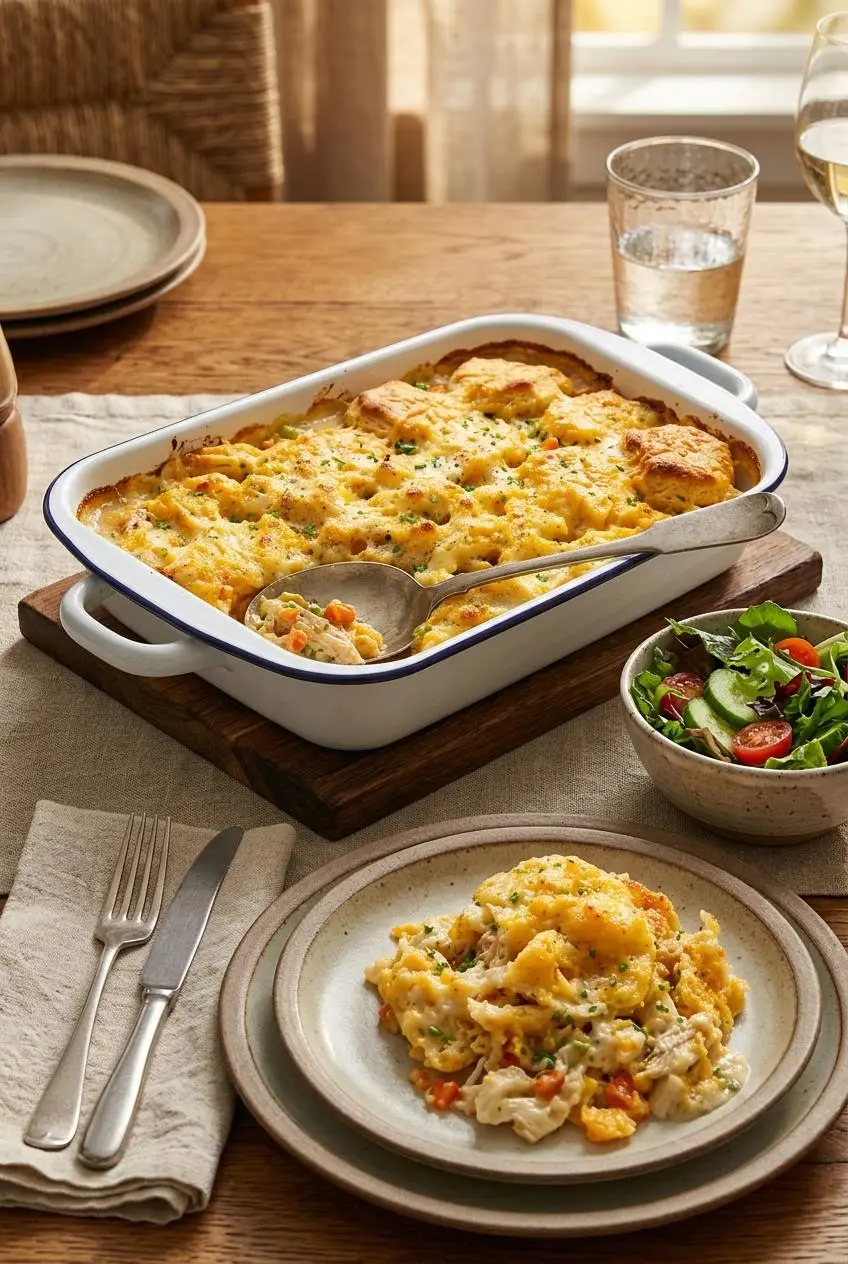
This rich casserole benefits from something fresh or green alongside it. A crisp green salad with lemon vinaigrette cuts through the buttery cheddar topping without competing with the gravy.
Roasted green beans bring a little bite, while steamed broccoli keeps dinner straightforward. Serve either on the side so its texture stays distinct from the creamy filling.
Conclusion
Chicken cobbler brings chicken, vegetables, creamy gravy, and a golden cheddar biscuit topping together in one baking dish. Rotisserie chicken keeps the preparation manageable for dinner.
Thicken the sauce first, keep the layers unstirred, and wait until the crust is set and the edges bubble. Then give the gravy a moment to settle and bring it to the table.
Frequently Asked Questions
What Is the Secret to Chicken Cobbler?
Do not stir the layers after adding the biscuit batter and warm sauce. The batter needs to stay separate so it can rise into a topping as the casserole bakes.
Why Did My Chicken Cobbler Turn Out Runny?
The broth and cornstarch may not have reached a boil and thickened before assembly. Extra liquid from the vegetables can also thin the gravy. Let the baked cobbler rest briefly before serving so the bubbling filling can settle.
Can I Assemble Chicken Cobbler Ahead of Time?
Prepare the cooked chicken and vegetable layer ahead and keep it covered in the refrigerator. Mix the biscuit batter and make the sauce when you’re ready to bake, then pour them into the dish without stirring.
How Do You Reheat Chicken Cobbler Without Making It Soggy?
Warm a portion in the oven with a loose foil cover, then remove the foil toward the end so moisture can escape from the biscuit top. Heat the filling thoroughly, using the temperature guidance above to check the center.
What Is the Difference Between Chicken Cobbler and Chicken Pot Pie?
Chicken pot pie usually has a rolled, flaky pastry crust. Chicken cobbler uses a softer biscuit batter that bakes over the savory filling, so there is no pastry to roll out.
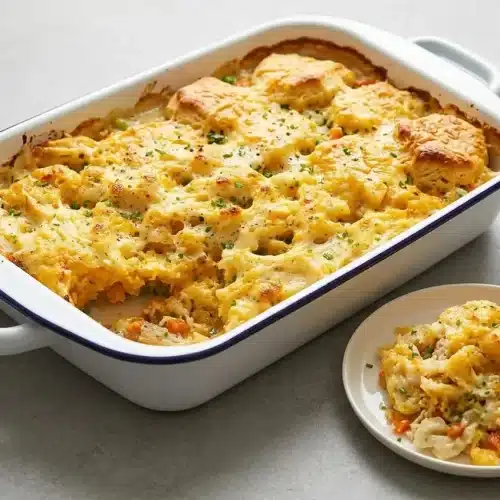
Chicken Cobbler

Equipment
- 9×13-inch baking dish
- Large saucepan
- Whisk
- Baking Sheet
Ingredients
- PAM® Original No-Stick Cooking Spray
- 1/2 cup butter
- 1/2 cup chopped onion
- 2 cups shredded rotisserie chicken
- 1 bag (10 oz each) Birds Eye® Steamfresh Mixed Vegetables
- 2 cups chicken broth
- 1/4 cup cornstarch
- 1 cup half-and-half
- 1 teaspoon kosher salt
- 1/4 teaspoon ground black pepper
- 1 teaspoon parsley flakes
- 1/2 teaspoon garlic powder
- 1 pkg (16 oz each) Duncan Hines® Dolly Parton’s Buttermilk Biscuit Mix
- 2 cups milk
- 2 cups shredded Cheddar cheese
Instructions
- Heat the oven to 400°F and coat a 9×13-inch baking dish with cooking spray. The coating should reach the corners where the filling will bubble.
- Melt the butter in a large saucepan over medium heat, then cook the chopped onion in it for about 3 minutes. The onion should look softened before it goes into the dish.
- Spread the chicken and mixed vegetables across the prepared dish, then pour the onion and butter over them. The filling should cover the bottom in an even layer.
- Whisk the chicken broth and cornstarch together, add them to the saucepan, and stir constantly as the mixture comes to a boil. The sauce should turn glossy and visibly thicker.
- Stir the half-and-half, kosher salt, pepper, garlic powder, and parsley into the thickened sauce, then take the pan off the heat. The finished gravy should look smooth and creamy.
- Combine the biscuit mix, milk, and cheddar, then pour the batter evenly over the chicken and vegetables. The batter should spread across the filling without being stirred into it.
- Pour the warm sauce evenly over the batter without stirring, set the dish on a rimmed baking sheet, and bake for 35 to 40 minutes. The top should be golden brown, with gravy bubbling around the edges.