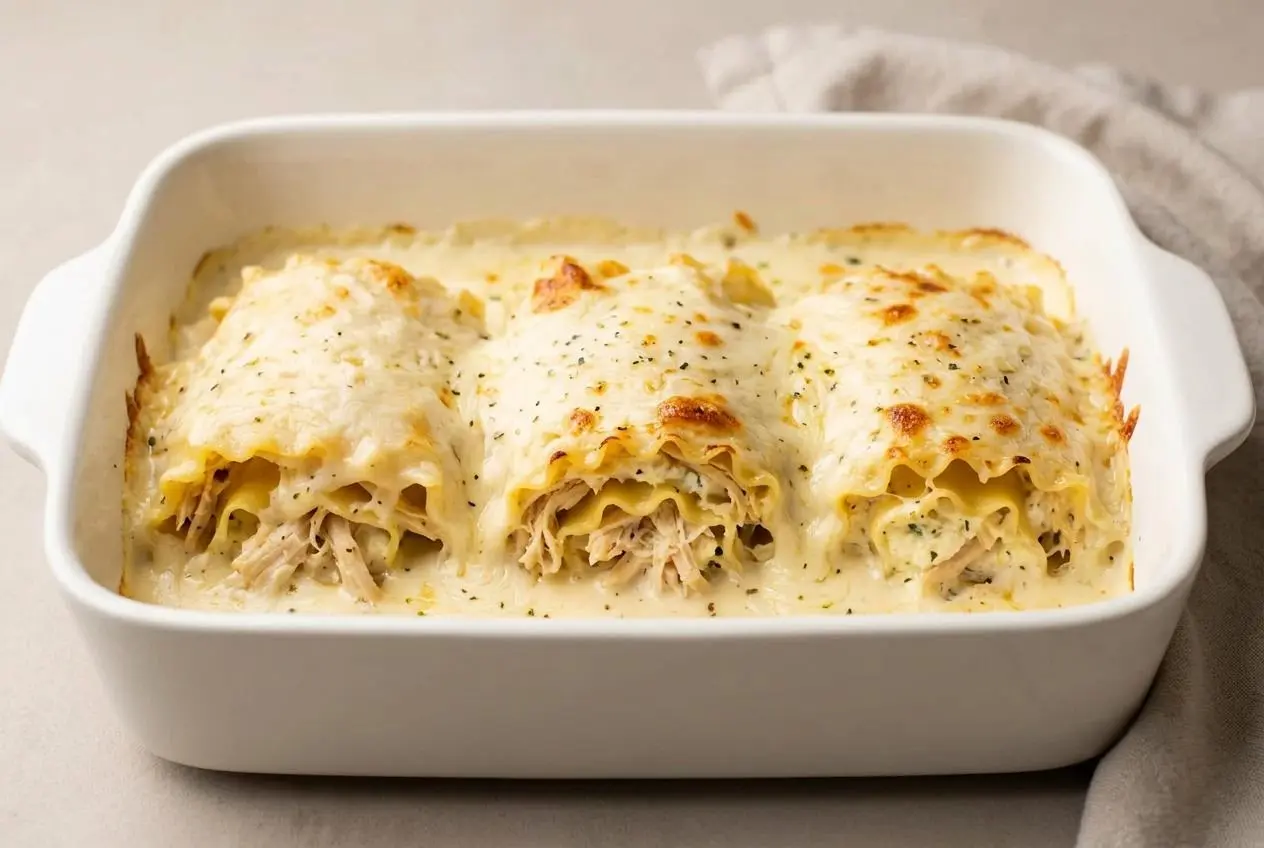
Chicken alfredo lasagna roll ups start with boiled lasagna noodles spread with seasoned chicken, ricotta, parmesan, and mozzarella. Roll them seam-side down, top with Alfredo sauce and more mozzarella, then bake until hot and bubbly.
Each roll holds its own creamy filling, so you get the comfort of chicken Alfredo lasagna without cutting through a layered casserole. The garlic-scented sauce bubbles around the edges while the cheese melts over the top.
Cooked chicken and a jar of Alfredo sauce keep dinner moving, but careful noodle handling makes the biggest difference. Dry pasta rolls up neatly and keeps the filling thick. That’s the trick.
Set out parchment paper or foil before draining the noodles so you have somewhere to lay them flat.
Key Ingredients and Smart Shortcuts
The noodles provide structure, the cheeses make the filling creamy and flavorful, and the sauce keeps the rolls moist as they bake. Italian seasoning and pepper round out the chicken without overpowering the Alfredo.
- 8 uncooked lasagna noodles
- 1 cup freshly grated parmesan cheese
- 1 cup ricotta cheese (whole milk recommended)
- 3 cups mozzarella (divided)
- 2 cups cooked chicken (I used rotisserie) (shredded)
- 1/2 teaspoon Italian seasoning
- 1 (15 ounce) jar Alfredo sauce (divided)
- Salt & pepper (to taste)
Whole milk ricotta gives the chicken filling a softer, richer texture than part-skim ricotta. Parmesan brings savory depth, while mozzarella helps the rolls hold together and gives the top its stretchy, browned finish. Half the Alfredo sauce goes into the filling; the rest covers the pasta so its exposed edges do not dry out.
Jarred Alfredo sauce is the convenient choice here. Pick one you enjoy on its own, since its flavor carries through the finished dish. If you prefer homemade Alfredo, it can take the place of the jarred sauce, but keep the finished amount consistent with the recipe and divide it between the filling and topping.
I shred the chicken into small pieces before mixing the filling; large chunks make an otherwise pliable noodle surprisingly hard to roll.
Selecting the Right Pasta and Chicken
Use standard lasagna noodles that you can boil until al dente. Oven-ready sheets are designed to soften during baking and may crack when you try to roll them. A wide pot gives the noodles room to move without folding or sticking to one another.
Shredded rotisserie chicken saves prep time. If you are starting with chicken breasts instead, cook them thoroughly before measuring and shredding the meat. Finely pulled juicy shredded chicken spreads more evenly than large pieces and is less likely to puncture the pasta.
For a gluten-free version, choose lasagna noodles labeled gluten-free that can be boiled and rolled. Handle them gently, since some varieties are more delicate than wheat pasta, and use the package’s al dente guidance rather than assuming they cook at the same rate.
The Perfect Three-Cheese Melting Blend
Ricotta gives the filling body without making it firm or rubbery. Mozzarella adds a mild, melty stretch, and parmesan supplies the salty, nutty flavor that keeps the dairy from tasting flat. Together with the chicken and sauce, they should form a thick mixture you can spread, not a loose liquid that runs off the noodle.
Freshly grated parmesan blends more readily into the filling than a dry, finely powdered version. If your mozzarella comes in a block, shredding it yourself can also help it melt smoothly. Taste the filling before adding much salt: parmesan, rotisserie chicken, and jarred sauce may already bring plenty.
How to Make Chicken Alfredo Lasagna Roll Ups Step by Step
The recipe makes eight rolls in a 9×13-inch baking dish. Give the noodles space to lie flat, portion the filling evenly, and place each roll seam-side down so it stays closed under the sauce.
- Heat the oven to 375°F with a rack in the upper third.
The oven should be fully heated before the assembled dish goes in. - Boil the lasagna noodles in a large pot until al dente, following the package directions; drain without rinsing, then lay them side by side on parchment paper or foil as soon as they are cool enough to handle.
The sheets should bend easily while still feeling firm enough to lift without tearing. - Coat the bottom of a 9×13-inch baking dish with cooking spray or a little olive oil.
A lightly greased surface will help the finished rolls release from the dish. - Combine the parmesan, ricotta, 1 cup mozzarella, shredded chicken, Italian seasoning, half the Alfredo sauce, and salt and pepper in a bowl.
The filling should look cohesive and spreadable rather than runny. - Blot any remaining water from the noodles, divide the filling evenly among them, and roll each sheet away from you before placing it seam-side down in the dish.
Each roll should hold its shape without filling squeezing heavily from the ends. - Cover the rolls with the remaining Alfredo sauce and scatter the remaining mozzarella over them.
The sauce should reach across the pasta, with cheese distributed over the tops. - Bake uncovered for 20 minutes or until hot and bubbly; broil briefly if you want a browner top, watching closely.
The sauce should bubble and the mozzarella should be melted, with golden spots if broiled.
Prepping and Handling the Noodles
Al dente matters here: pasta that is too firm resists rolling, while overcooked sheets can split when lifted. Use plenty of boiling water and move the noodles gently as they cook. Follow the package timing, checking for a sheet that bends without feeling mushy.
Do not rinse the drained pasta. Its surface starch helps the filling cling, and rinsing makes the sheets slippery and wetter than they need to be. Lay the noodles in a single layer while they cool; overlapping sheets can stick and tear when pulled apart. If you tend to have trouble lifting them, a very light coating of oil on the parchment can help. Blot visible moisture before spreading the filling.
Mixing the Savory Filling and Rolling
Stir the filling until no pockets of plain ricotta remain. The chicken should be distributed throughout, with enough sauce to make the mixture easy to spread. If it seems loose, check whether the chicken or ricotta carried excess liquid into the bowl rather than adding more sauce.
Divide the mixture across all eight noodles before rolling the first one. That makes it easier to keep the portions even and avoids overstuffing the early rolls. Spread it in a thin, even layer, leaving a little room at the end where the seam will close. Roll firmly but gently, then set the seam against the bottom of the baking dish. There is no need to squeeze the roll tight enough to force filling out.
Baking and Broiling to Golden Perfection
Bake the assembled rolls uncovered at 375°F. With cooked chicken and boiled pasta already inside, you are heating the filling and sauce while melting the cheese. Look for bubbling sauce around the rolls and a fully melted top, rather than judging by browning alone.
Broiling is optional. If you want darker, blistered spots on the mozzarella, stay at the oven and watch closely: the top can go from golden to scorched quickly. Let the dish settle briefly before lifting out the rolls so the warm filling has a chance to firm up.
Pro Tips for Perfectly Creamy, Non-Watery Roll Ups
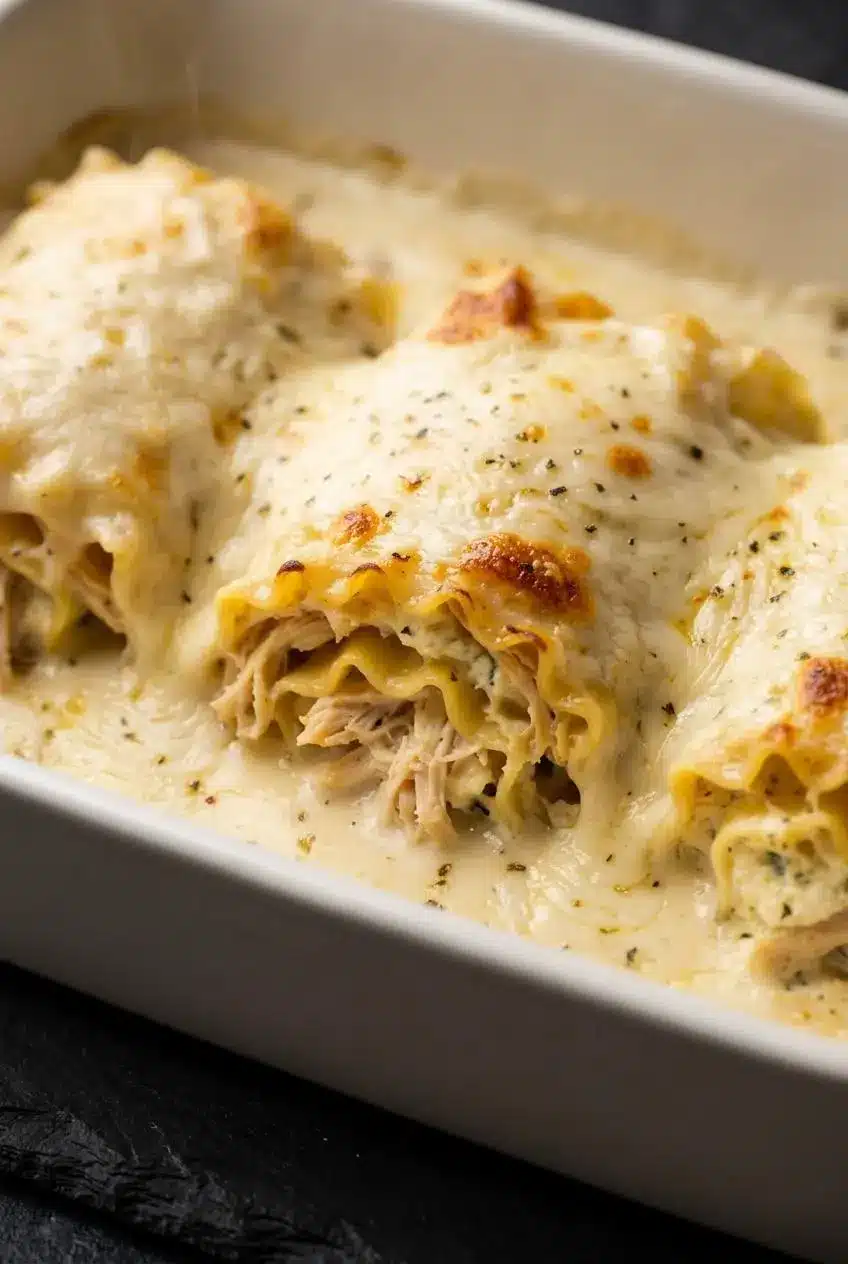
Most texture problems start before the baking dish reaches the oven. Keep excess water out of the filling, give the noodles room as you handle them, and avoid turning up the heat in an attempt to brown the top faster.
- Noodles tear while rolling: They may be undercooked, stuck together, or handled while too hot. Cook until pliable, lay them separately on parchment or foil, and lift each one gently.
- The filling leaks out: Too much filling or a loose roll can push it toward the ends. Portion across every noodle first, spread evenly, and set each seam firmly against the dish.
- Liquid gathers beneath the rolls: Wet noodles or watery vegetable add-ins can thin the sauce. Blot the pasta well and drain any optional vegetables thoroughly before mixing them in.
- The sauce looks greasy: Excessive heat can cause a cream sauce to separate. Keep the oven at the stated temperature and use the broiler only briefly, if at all.
- The top browns before the filling is hot: Browning is not the only doneness cue. Check for bubbling sauce and heat throughout the center; save any extra browning for the end.
If the rolls feel too soft to lift neatly when they first leave the oven, give them a brief rest. The mozzarella and ricotta will settle enough to make serving easier, while the sauce remains creamy.
Planning Ahead, Storing, and Reheating
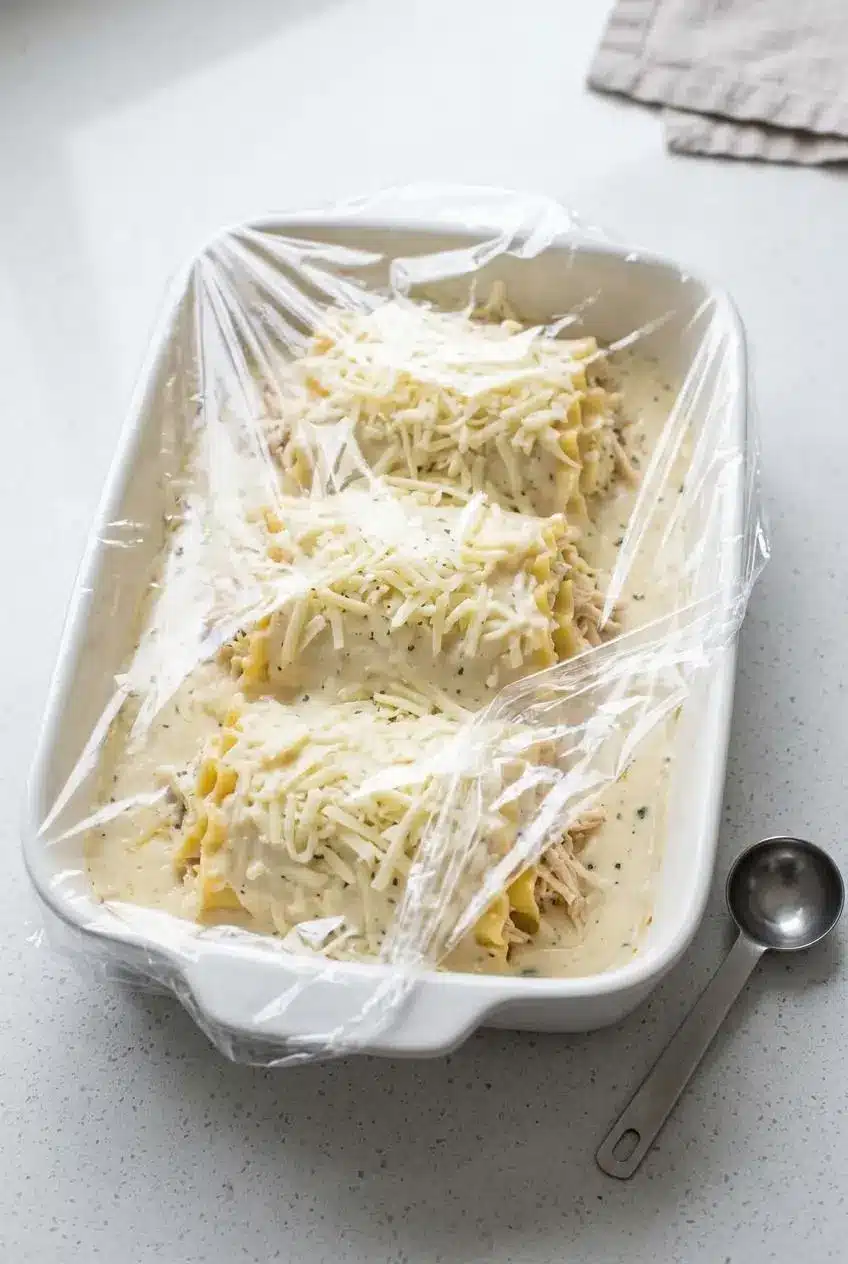
For a smoother dinner rush, cook and shred the chicken before you begin assembling, then keep it chilled until needed. You can also grate the cheeses and set out the baking dish in advance. Once the noodles are cooked, assemble the rolls while they are pliable; leaving drained sheets stacked makes them harder to separate cleanly.
If you assemble the dish before you are ready to bake, cover it and keep it refrigerated rather than leaving the chicken and dairy filling on the counter. A chilled dish may need more oven time than the freshly assembled version, so check that the center is thoroughly hot instead of relying on the usual baking time. Do not move a cold ceramic dish directly into a hot oven, since a sudden temperature change can crack it.
For leftovers, cover and refrigerate the rolls promptly. Reheat a portion gently, covered, in the oven or microwave; a small splash of milk or cream can loosen sauce that has thickened in the refrigerator. Heat leftovers thoroughly to 165°F when reheating, checking the center rather than just the sauce at the edges.
A cream-heavy filling and sauce may lose their smooth texture after freezing and thawing. For the result described here, keep the rolls chilled until baking rather than relying on a freezer method.
Serving Suggestions and Delicious Variations
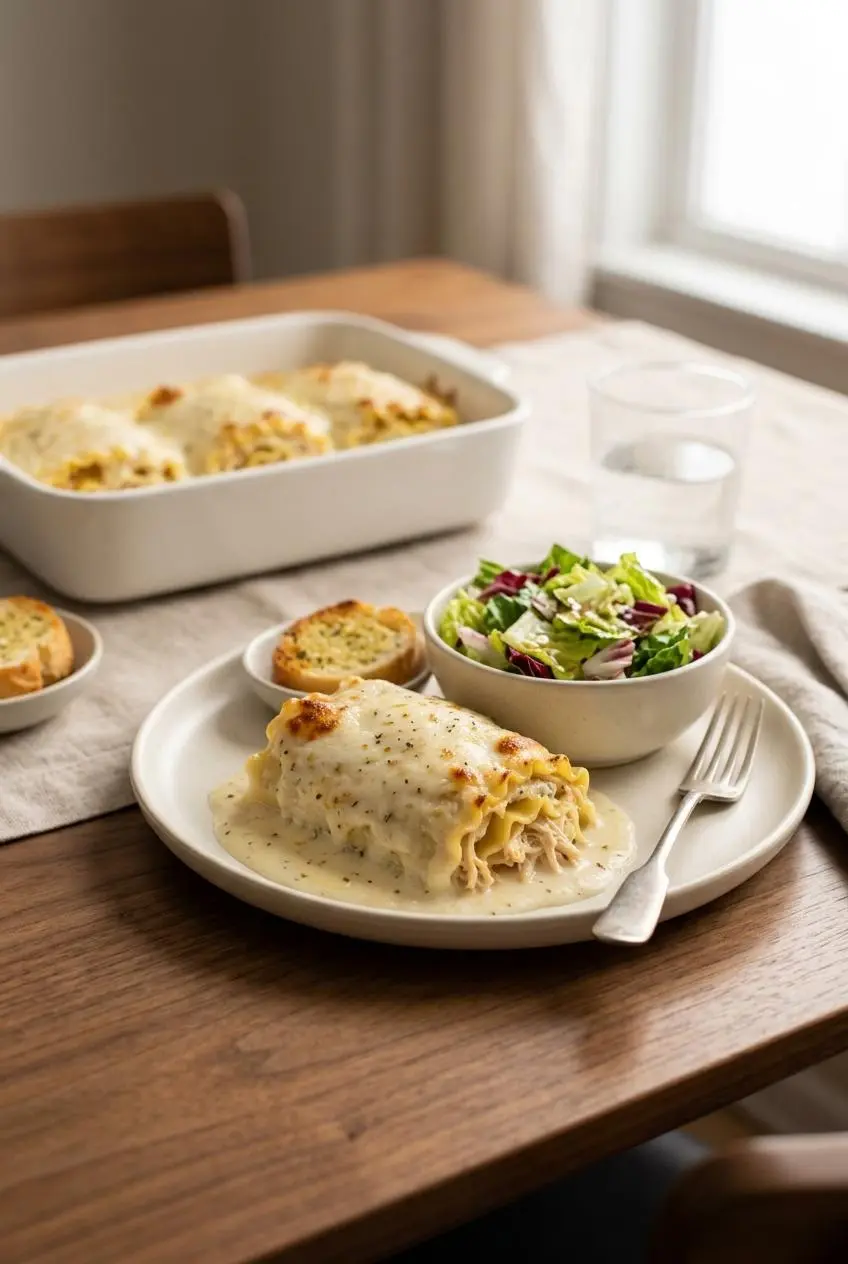
These rolls are rich enough to anchor dinner, so a crisp or tangy side gives the plate welcome contrast. Keep any changes to the filling optional, and drain vegetable additions carefully so the rolls remain easy to lift.
Chicken Spinach Alfredo Variation
For chicken and spinach rolls, fold chopped spinach into the chicken and ricotta mixture. If using thawed spinach, squeeze it firmly in a clean towel first. If using sautéed baby spinach, let it cool and drain away the released liquid. The filling should still spread like a thick paste; wet greens can make it slide off the noodles and leave liquid in the dish.
Complementary Side Dishes for Rich Pasta
A crisp chopped green salad with a sharp vinaigrette cuts through the buttery sauce. Roasted broccoli brings a firmer, savory contrast, while warm garlic ciabatta is handy for the Alfredo left on the plate.
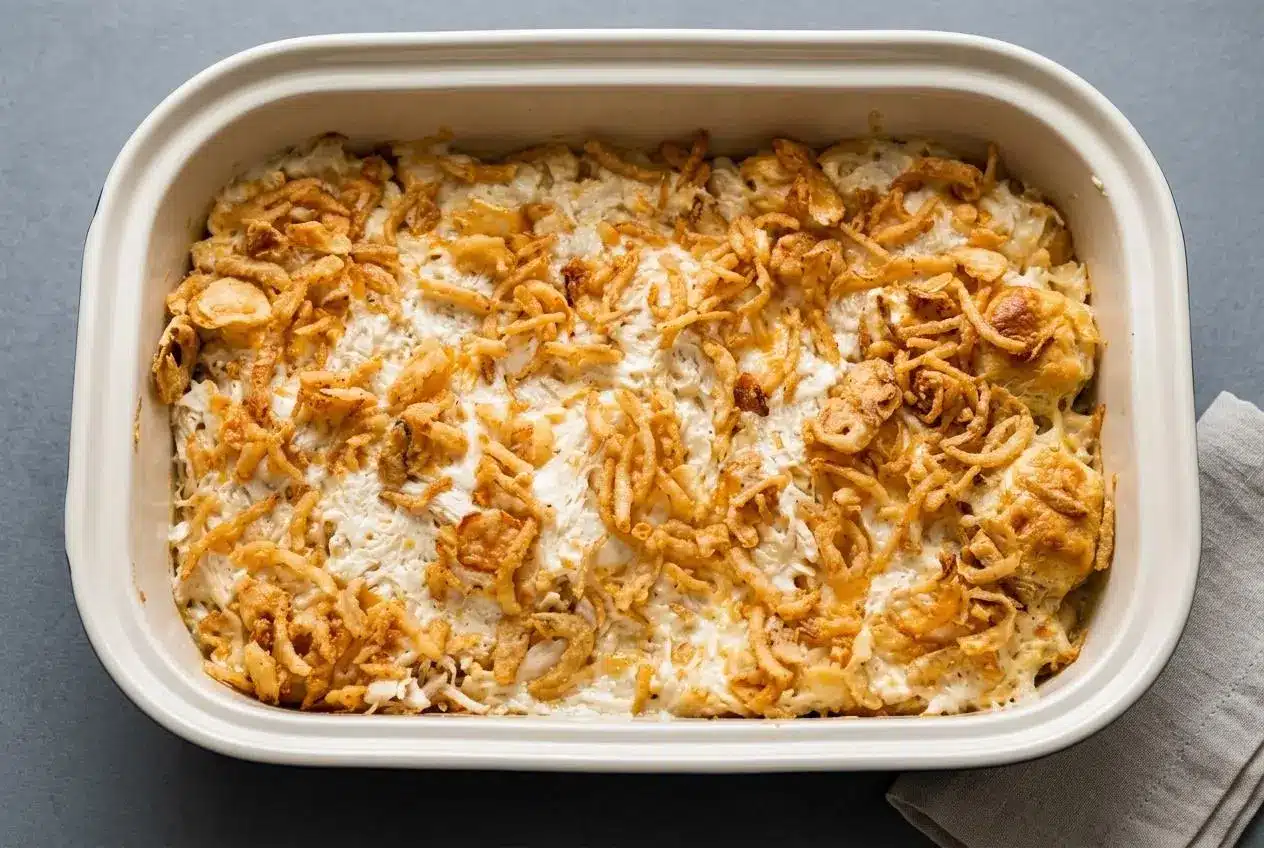
If you would rather make broccoli the center of another creamy pasta dinner, try a chicken broccoli alfredo bake. For these rolls, use well-drained broccoli as an optional filling addition so it does not water down the cheese mixture.
- Chicken bacon ranch: Add crisp, crumbled bacon and a little dried herb seasoning to the filling for a smoky, savory variation. Keep the bacon crisp until mixing so it does not add extra grease.
- Homemade Alfredo: Use a smooth sauce made with cream, butter, garlic, and parmesan in place of the jarred sauce. Divide it between the filling and topping as directed.
- Broccoli filling: Chop cooked broccoli into small pieces and drain it thoroughly before folding it into the chicken mixture. Large florets make the noodles harder to roll.
- Brighter finish: A little lemon zest in the ricotta filling can lift the rich dairy flavor without changing the character of the dish.
Conclusion
Chicken Alfredo lasagna rolls bring creamy pasta, seasoned chicken, and bubbling mozzarella together in tidy portions. Rotisserie chicken and jarred sauce make them especially practical for a busy dinner.
Pat the noodles dry, roll them seam-side down, and bake uncovered until the sauce bubbles. Then let the rolls settle briefly and bring them to the table warm.
Frequently Asked Questions
Can I Assemble Chicken Alfredo Lasagna Roll Ups Ahead of Time?
Yes. Assemble the rolls in the baking dish, cover it, and keep it refrigerated until you are ready to bake. A chilled dish may take longer to heat through than a freshly assembled one. Avoid putting cold ceramic straight into a hot oven.
Do You Cover Lasagna Roll Ups While Baking?
No. Bake the freshly assembled rolls uncovered so the sauce bubbles and the mozzarella melts across the top. If the cheese browns before the center is hot, loosely cover the dish while it finishes heating.
Can I Freeze Chicken Alfredo Lasagna Roll Ups?
For the creamiest texture, I recommend baking these from fresh or chilled rather than freezing them. The ricotta and Alfredo sauce may turn grainy or separate after freezing and thawing.
How Do I Prevent the Alfredo Sauce From Curdling or Separating?
Use the stated oven temperature rather than turning up the heat, and watch carefully if you broil the top. Whole milk ricotta and freshly grated parmesan also help the filling stay creamy; dry noodles and well-drained add-ins keep extra water out of the sauce.
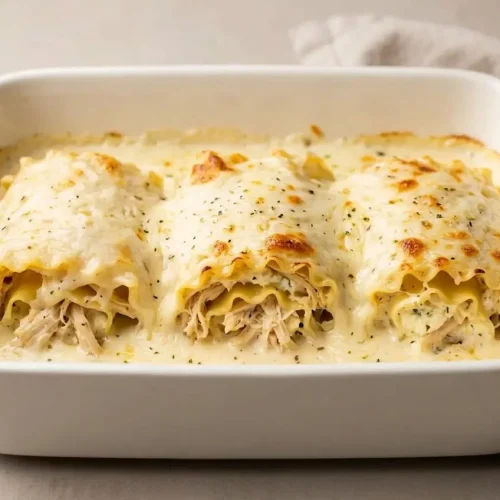
Chicken Alfredo Lasagna Roll Ups

Equipment
- 9×13 Baking Dish
- Large Pot
- Prep bowl
- Parchment paper or foil
Ingredients
- 8 uncooked lasagna noodles
- 1 cup freshly grated parmesan cheese
- 1 cup ricotta cheese whole milk recommended
- 3 cups mozzarella divided
- 2 cups cooked chicken I used rotisserie, shredded
- 1/2 teaspoon Italian seasoning
- 1 jar Alfredo sauce 15 ounce, divided
- Salt & pepper to taste
Instructions
- Heat the oven to 375°F with a rack in the upper third. The oven should be fully heated before the assembled dish goes in.
- Boil the lasagna noodles in a large pot until al dente, following the package directions; drain without rinsing, then lay them side by side on parchment paper or foil as soon as they are cool enough to handle. The sheets should bend easily while still feeling firm enough to lift without tearing.
- Coat the bottom of a 9×13-inch baking dish with cooking spray or a little olive oil. A lightly greased surface will help the finished rolls release from the dish.
- Combine the parmesan, ricotta, 1 cup mozzarella, shredded chicken, Italian seasoning, half the Alfredo sauce, and salt and pepper in a bowl. The filling should look cohesive and spreadable rather than runny.
- Blot any remaining water from the noodles, divide the filling evenly among them, and roll each sheet away from you before placing it seam-side down in the dish. Each roll should hold its shape without filling squeezing heavily from the ends.
- Cover the rolls with the remaining Alfredo sauce and scatter the remaining mozzarella over them. The sauce should reach across the pasta, with cheese distributed over the tops.
- Bake uncovered for 20 minutes or until hot and bubbly; broil briefly if you want a browner top, watching closely. The sauce should bubble and the mozzarella should be melted, with golden spots if broiled.