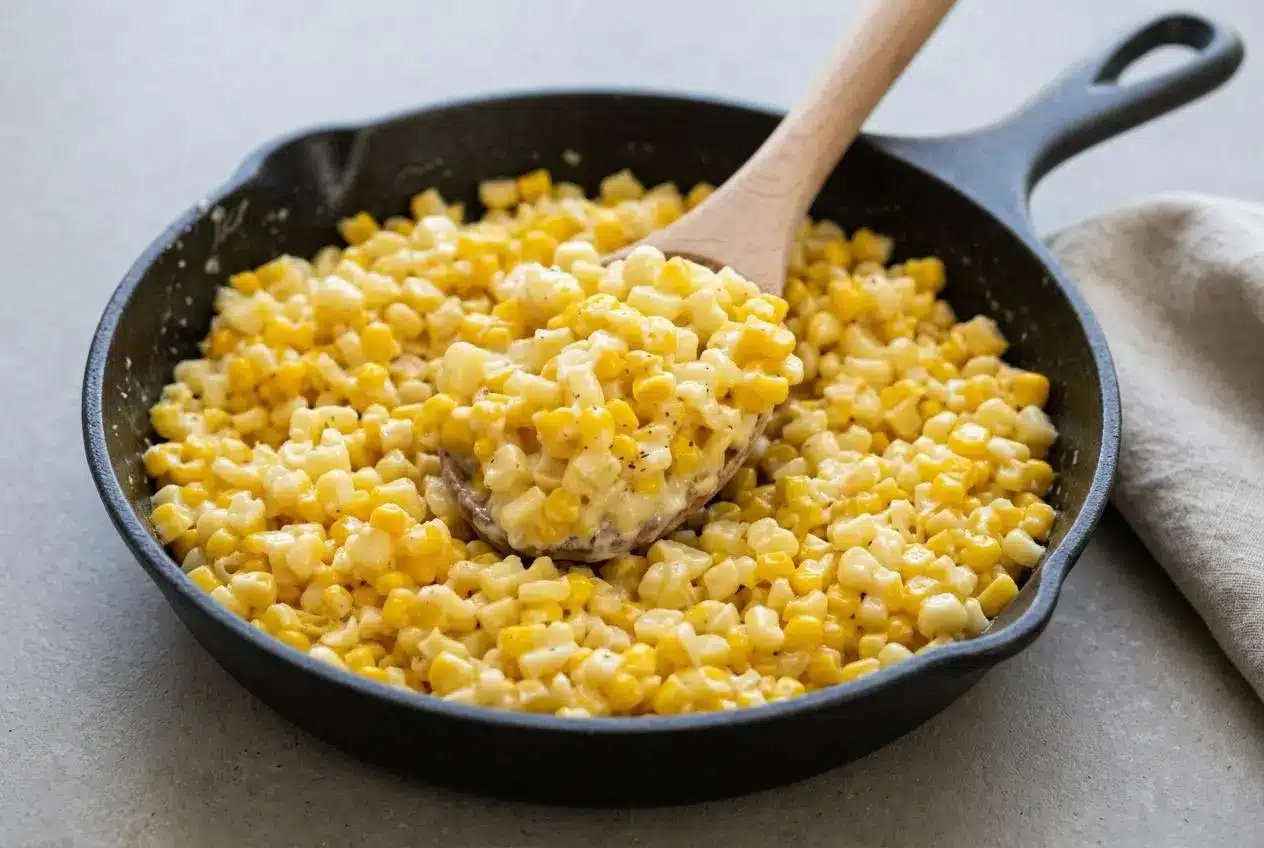
Honey butter skillet corn is a quick stovetop side dish. Cook sweet corn in melted butter and honey, then stir in cream cheese until the kernels are tender and coated in a velvety glaze.
The skillet starts with a gentle sizzle, then fills the kitchen with the aroma of warm butter and sweet corn. Everything comes together in one pan, with no oven space needed.
It works beside a weeknight dinner and feels right at home on a holiday table. The trick is letting excess corn moisture cook away before the cream cheese goes in.
Have the cream cheese cut into chunks before you turn on the burner; the corn moves quickly once it hits the pan.
What Makes Honey Butter Skillet Corn a Holiday Favorite
This side brings the comfort of creamed corn without heavy cream or a long bake. Honey gives the kernels a light gloss, butter adds richness, and cream cheese turns the warm pan juices into a coating that clings to each bite.
It is especially handy when the oven is busy with Thanksgiving dinner. The same sweet corn and creamy combination also makes creamy corn dip a natural choice for a gathering, but this skillet version belongs beside the main course.
Expect distinct, tender kernels rather than corn swimming in sauce. That difference comes down to the pan: give released moisture a chance to evaporate before adding the dairy.
Essential Ingredients and Their Roles
Each ingredient shapes the finished corn: butter and honey bring richness and shine, cream cheese gives the glaze body, and salt and pepper keep the sweetness balanced.
- 2 tablespoons butter (I use salted)
- 2 tablespoons honey
- 1 bag (16 oz) frozen corn
- 2 ounces cream cheese (cut into chunks)
- 1/4 teaspoon salt
- 1/4 teaspoon black pepper
The frozen corn supplies sweet, juicy kernels, while the butter helps the honey spread evenly through the skillet. Cream cheese binds the coating as it melts. Salt sharpens the corn flavor, and black pepper gives the rich finish a little contrast.
I cut the cream cheese into small chunks before cooking so it melts into the hot corn evenly, without needing a hard boil.
Corn Selection: Frozen, Canned, or Fresh
Frozen corn is the easiest fit for the method below: add it straight from the bag without thawing. It will briefly cool the skillet and release moisture as it heats. Keep stirring occasionally until the kernels are hot and the liquid in the pan has mostly cooked away.
Canned corn is an optional swap. Drain it thoroughly, then spread the kernels on paper towels and blot the surface dry. Since canned corn is already cooked, focus on warming it through and evaporating any remaining liquid rather than automatically following the frozen corn cooking time.
Fresh corn cut from the cob is another option. Cook it until the kernels soften and taste tender; it may need a little longer than frozen corn. With either swap, watch the kernels and the moisture in the skillet rather than relying on the clock alone.
Balancing Honey and Salted Butter
Salted butter gives the sweet honey and corn a savory edge. If you use unsalted butter instead, the measured salt in the ingredient list becomes especially important. Taste the finished corn before changing the seasoning, since the sweetness of corn can vary.
The honey should melt with the butter, not sit over fierce heat on its own. Once the corn enters the pan, stir often enough to keep the glaze moving across the bottom.
Cream Cheese for Silky Emulsion
As the cream cheese warms, it thickens the buttery pan juices into an opaque, creamy coating. Small chunks melt more evenly than a single block. Full-fat block cream cheese is a useful choice when you want a rich, smooth result, though the official ingredient amount stays the same.
Add it only after the corn is heated through and excess liquid has diminished. The skillet should still be warm enough to melt the cheese, but the sauce does not need a vigorous boil.
How to Make Honey Butter Skillet Corn
Use a skillet pan large enough to stir the corn comfortably. The key stages are melting the honey butter, cooking the frozen kernels through, and letting the cream cheese form a coating rather than a pool of sauce.
- Set a skillet pan over medium-high heat and warm the butter with the honey until melted; add the frozen corn and cook for 5 to 8 minutes, stirring occasionally.
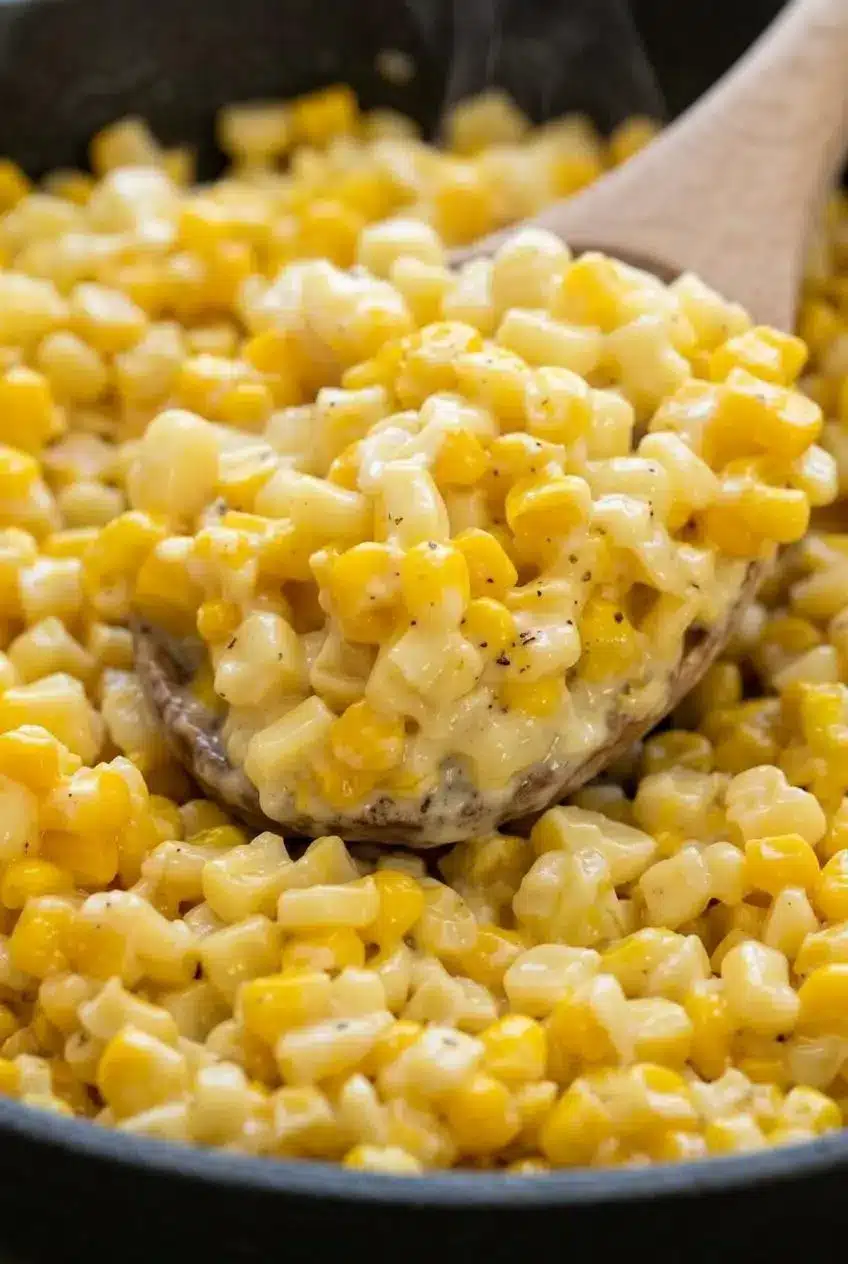
The kernels should be hot and tender, with less loose moisture visible in the pan. - Stir in the cream cheese, salt, and black pepper, then cook for about 3 to 5 minutes, stirring occasionally.
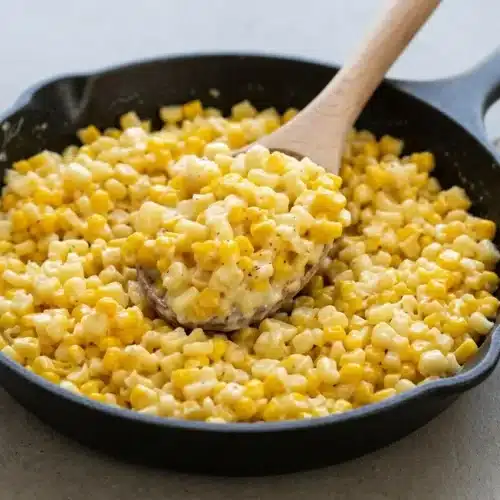
The cream cheese should melt into an opaque, glossy coating around the corn. - Spoon the corn out and serve it immediately.
The glaze should cling to the kernels while everything is warm.
At first, frozen kernels may give off a louder sizzle as their surface moisture meets the hot skillet. As that moisture cooks away, look for plump kernels moving through a bubbling honey-butter glaze. If the honey begins to darken rapidly before the corn is ready, lower the heat.
Once the cream cheese goes in, stir across the bottom of the pan so no thick patches linger there. A gentler sizzle and a sauce that coats the back of a spoon are better cues than trying to cook the dairy down aggressively.
Critical Success Tips and Troubleshooting
Most texture problems begin with excess water or too much heat. Fixing either is easier while the corn is still in the skillet.
Eliminating Excess Moisture
- Thin sauce from canned corn: Water left on the kernels dilutes the glaze. Drain and blot the corn before cooking, then let visible pan liquid evaporate before adding cream cheese.
- Thin sauce from frozen corn: Frozen kernels release moisture as they heat. Keep cooking and stirring until the liquid reduces and the kernels are hot, then add the dairy.
- Sauce still looks loose: Let it bubble gently uncovered, stirring so the honey does not catch on the pan. Give the cream cheese time to melt completely before deciding whether it needs more thickening.
A skillet crowded with wet kernels will spend more time steaming than coating the corn. You are looking for a glossy sheen on the kernels, not a layer of liquid underneath them.
Preventing Scorched Honey
Butter and honey need only enough heat to melt before the corn goes in. If the mixture darkens quickly or smells bitter, reduce the burner to medium and stir. The corn helps moderate the heat once added, but keep an eye on the exposed edges of the pan.
Do not try to force moisture away with an extremely hot burner after adding cream cheese. That can leave browned honey on the skillet while the dairy turns uneven. Patient stirring gives a better coating.
Fixing Curdled or Separated Dairy
If the coating looks grainy or oily, the dairy may have become too hot. Take the pan off the heat and stir steadily as it cools slightly. A small splash of warm milk, added only if needed, can help loosen a tight or broken-looking sauce.
If the corn tastes too sweet, check the salt before adding anything else. For a different finish, an optional squeeze of lime can brighten the richness, but add it off the heat so you can taste the balance as you go.
Savory and Spicy Flavor Variations
Keep the skillet method the same and treat these as optional finishes or add-ins. Each changes the balance of the side dish without replacing its honey-butter flavor.
- Smoky and bright: Stir in a pinch of smoked paprika and a little fresh lime zest off the heat. The paprika adds warmth, while the zest lifts the creamy finish.
- Spicy: Sauté minced jalapeño with the corn, then add a pinch of cayenne if you want more heat. Start cautiously so the sweetness still comes through.
- Bacon and chives: Scatter crispy crumbled bacon and chopped chives over the finished corn. Add the bacon right before serving so it keeps its crunch.
- More savory flavor: Finish with chopped scallions or parsley, or try a little sharp cheddar for a cheesier coating. These additions are optional, so taste before adding more salt.
For a meal built around sweet corn and peppery heat, serve the spicy version with spicy jalapeño cornbread.
Make-Ahead, Storage, and Reheating Guide
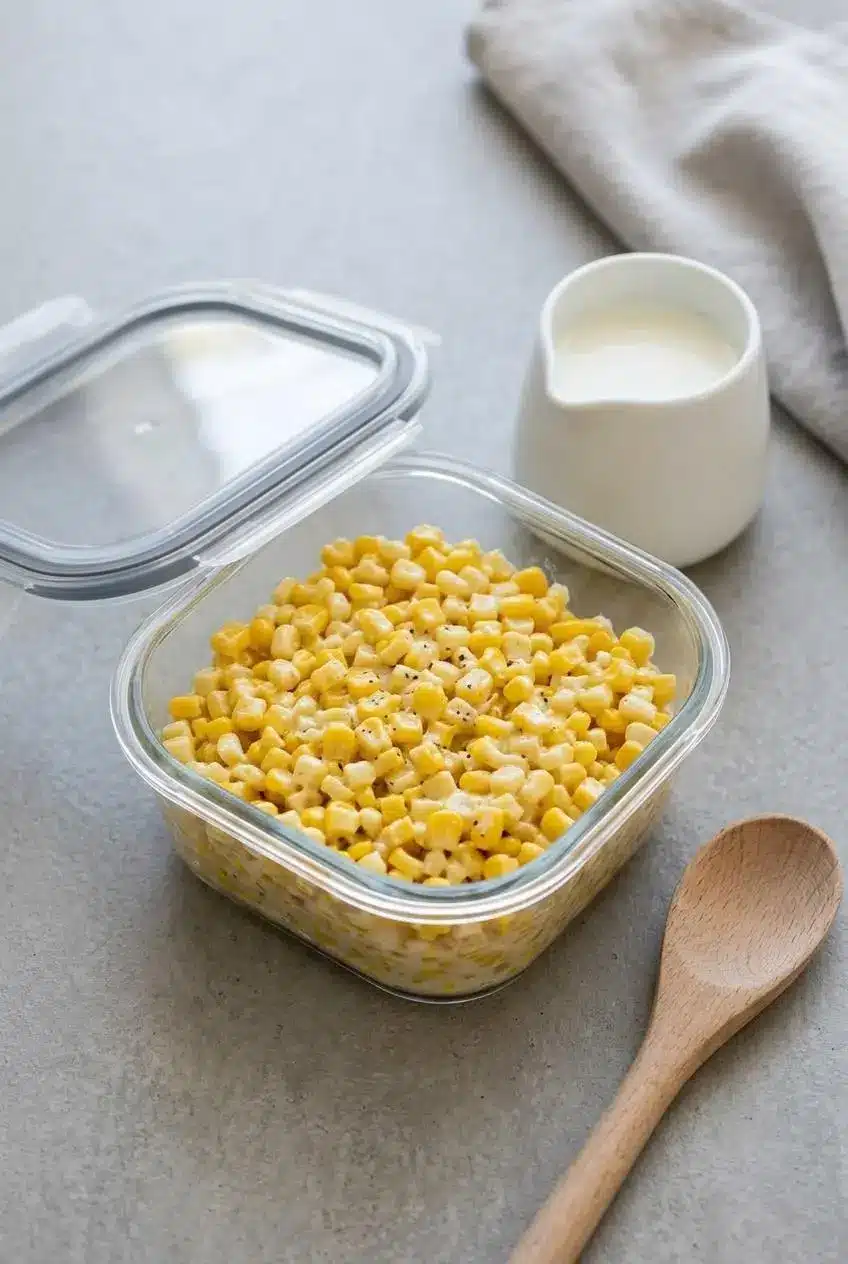
For easier holiday cooking, measure the butter and honey and cut the cream cheese before guests arrive. Cooking the corn close to serving gives you the glossiest glaze, but leftovers can be covered and refrigerated as directed in the method.
Let cooked corn cool, transfer it to a covered container, and refrigerate it promptly. When you are ready to serve it again, warm the portion you need gently in a skillet, stirring as the cream cheese coating softens. Add a small splash of milk if the chilled sauce seems too thick. Avoid a hard boil.
A microwave also works for reheating a portion: warm it in brief intervals and stir between them so the dairy heats more evenly. For a holiday buffet, a slow cooker is better suited to holding corn that has already been cooked and warmed than to replacing the skillet cooking method. Stir occasionally and avoid letting the edges scorch.
If the oven is occupied, there is no need to move this recipe out of the skillet. Preparing the ingredients in advance leaves the actual stovetop cooking quick, while gentle reheating remains an option if the corn has already been cooked.
Perfect Mains to Serve with Skillet Corn
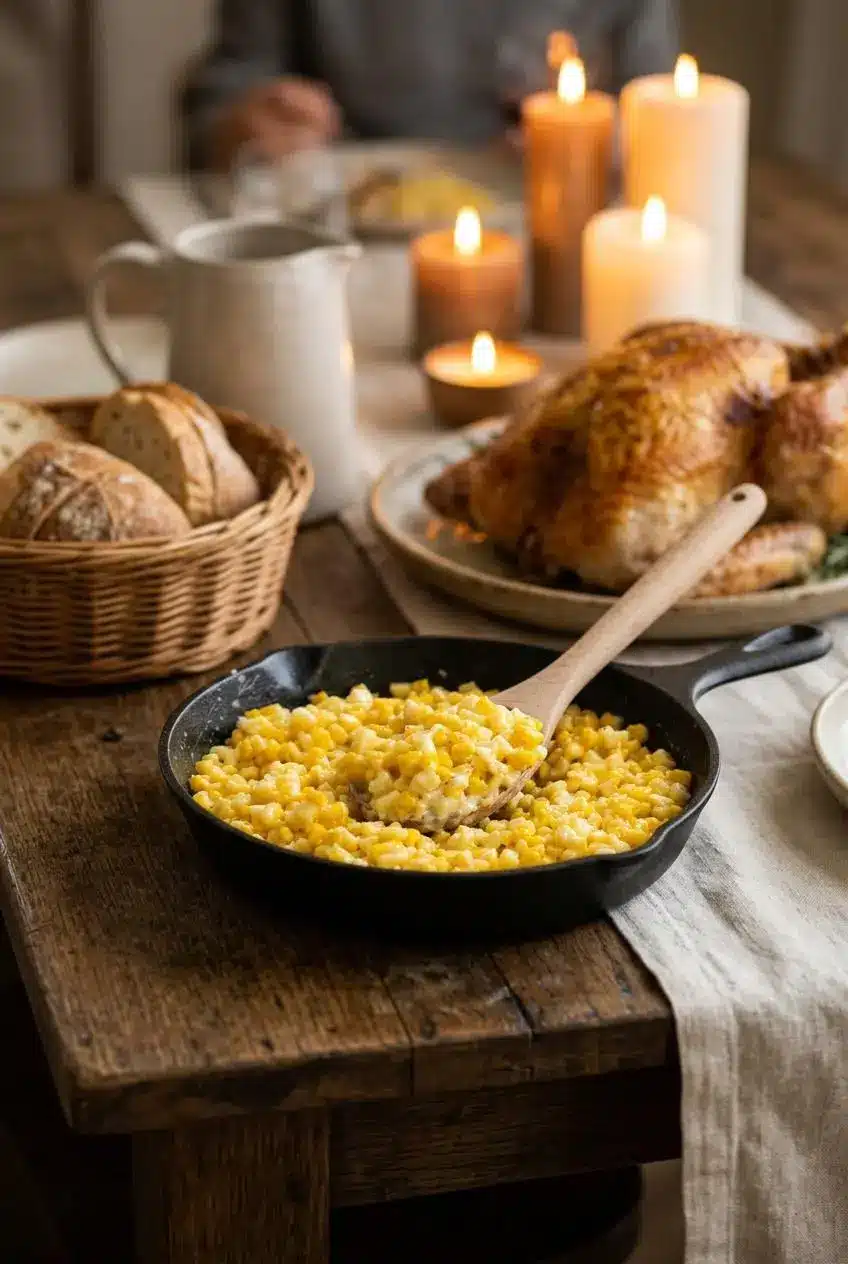
The sweet, creamy coating is especially good beside savory mains with browned or smoky edges. Smoked barbecue ribs provide a bold contrast, while roast Thanksgiving turkey makes this feel like a comforting holiday side.
For a smaller dinner, try it with grilled ribeye steak or roasted pork tenderloin. Spoon the corn onto plates just before eating, while the cream cheese glaze is warm and silky.
Conclusion
Honey butter skillet corn brings tender, sweet kernels and a rich coating to the table with one pan and a short cooking time. It fits a busy weeknight as comfortably as a festive meal.
Keep the heat controlled and let excess corn moisture cook away before adding cream cheese. Those two small choices make every spoonful creamier.
Frequently Asked Questions
Can I Use Canned or Fresh Corn Instead of Frozen?
Yes. Drain canned corn well and blot it dry before it goes into the skillet. For fresh corn, cut the kernels from the cob and cook until tender, allowing a little more time if needed. In either case, let excess pan moisture evaporate before adding cream cheese.
Do I Need to Thaw Frozen Corn Before Cooking?
No. Add the frozen kernels directly to the melted butter and honey. During the cooking time in the method, stir occasionally and wait until the corn is hot and the released moisture has reduced.
How Do I Fix a Watery Skillet Corn Sauce?
Keep the skillet uncovered and stir gently while excess liquid cooks away. If the cream cheese has not fully melted, give it time to combine before judging the thickness. Next time, blot canned corn thoroughly or let frozen corn release its moisture before adding the cheese.
Can Honey Butter Skillet Corn Be Made Ahead of Time?
You can prepare the ingredients in advance, or cover and refrigerate cooked corn to reheat later. Warm it gently in a skillet and stir in a small splash of milk if the coating needs loosening. Cooking it near serving time gives the freshest texture.
Why Does Leftover Skillet Corn Need Gentle Reheating?
High heat can make the cream cheese coating look grainy or oily. Warm the corn gradually, stir often, and add a little milk only if the chilled glaze is too thick.
Honey Butter Skillet Corn

Equipment
- skillet pan
Ingredients
- 2 tablespoons butter (I use salted)
- 2 tablespoons honey
- 1 bag frozen corn (16 oz)
- 2 ounces cream cheese (cut into chunks)
- 1/4 teaspoon salt
- 1/4 teaspoon black pepper
Instructions
- Set a skillet pan over medium-high heat and warm the butter with the honey until melted; add the frozen corn and cook for 5 to 8 minutes, stirring occasionally. The kernels should be hot and tender, with less loose moisture visible in the pan.
- Stir in the cream cheese, salt, and black pepper, then cook for about 3 to 5 minutes, stirring occasionally. The cream cheese should melt into an opaque, glossy coating around the corn.
- Spoon the corn out and serve it immediately. The glaze should cling to the kernels while everything is warm.