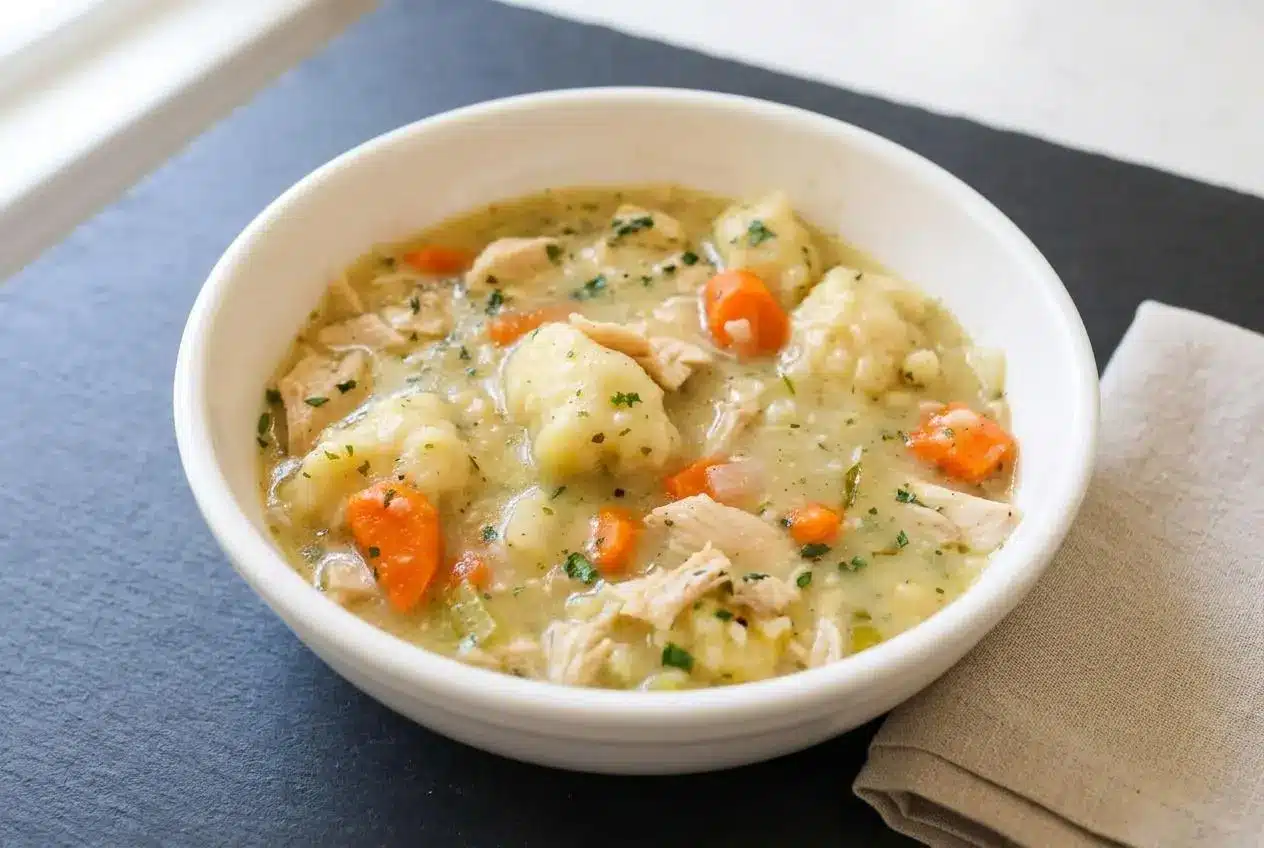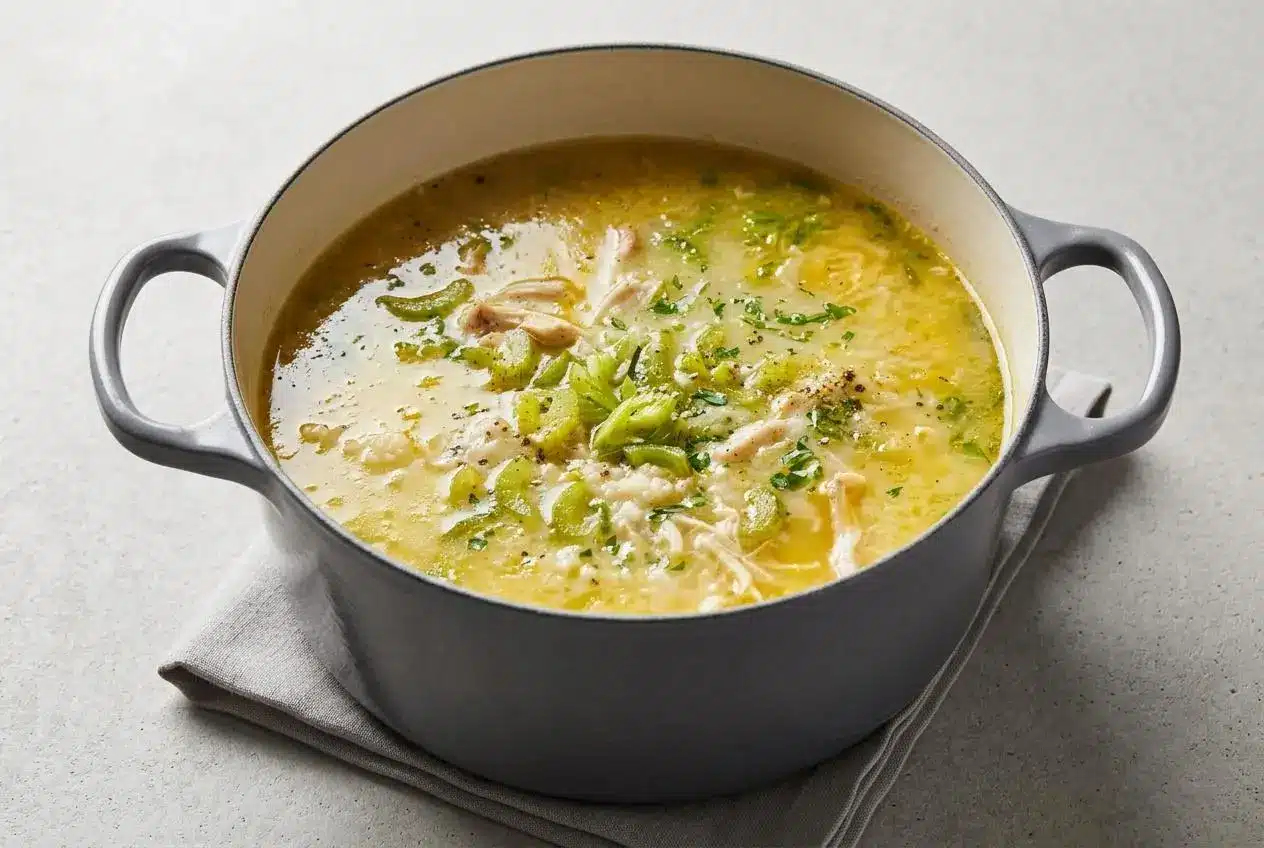
Chicken and rice soup comes together in one pot with tender chicken thighs, unrinsed jasmine rice, savory broth, celery, and a bright lemon-herb finish.
This chicken and rice soup turns silky as the rice softens and releases starch into the golden broth. It delivers comforting richness without heavy cream.
On a chilly evening, the celery and chicken broth perfume the kitchen long before dinner reaches the table. The lemony herb topping keeps every bowl lively.
Keep the pot at a quiet simmer rather than a hard boil so the broth stays clear and the rice softens gradually.
Essential Ingredients and Their Roles
Every ingredient contributes something useful: broth provides savory depth, chicken brings richness, rice creates body, celery adds aroma, and lemon and herbs bring fresh balance at the finish.
- 8 cups chicken broth
- 1 pound boneless, skinless chicken thighs
- 4 celery stalks, leaves reserved and stalks thinly sliced
- ¾ cup jasmine rice (unrinsed)
- Salt
- ½ cup fresh parsley leaves
- 1 teaspoon fresh lemon zest plus up to ½ cup lemon juice (from 2 to 3 lemons)
- 1 small garlic clove
- 1 tablespoon unsalted butter (optional)
Unrinsed jasmine rice is the quiet workhorse here. Its surface starch disperses into the broth as it cooks, giving the soup a velvety body while the grains soften around the edges. Chicken thighs stay moist during a steady simmer and lend more richness than very lean meat.
Celery stalks provide a clean, savory backbone, while the reserved leaves, parsley, lemon zest, and garlic make a fresh topping that cuts through the fuller chicken flavor. Add the butter at the end if you want a rounder, silkier finish.
I save the pale inner celery leaves whenever possible because their gentle herbal flavor is especially good with lemon and parsley.
Choosing Between Chicken Thighs and Breasts
Boneless chicken thighs are an excellent choice for this soup because their natural fat and connective tissue help them stay succulent while the broth simmers. They also shred easily once opaque throughout and tender enough to pull apart with two forks.
Chicken breasts can work, but they are leaner and can become dry if left in the pot after they are cooked through. If using breasts, watch them closely, remove them as soon as they are done, shred them, and return them only long enough to warm through.
Selecting the Ideal Rice Variety
Jasmine rice gives this soup a soft, silky texture without immediately turning the pot pasty. Long-grain white rice is a workable substitute when you prefer grains that hold their shape a bit more firmly.
Basmati stays more separate and has a firmer bite, while short-grain rice releases more starch and can thicken the soup quickly. For a brothy bowl rather than a porridge-like one, avoid especially sticky short-grain varieties.
How to Make Chicken and Rice Soup Step by Step
- Place the chicken broth, chicken thighs, sliced celery, and unrinsed jasmine rice in a large Dutch oven or pot, then season lightly with salt and bring the mixture toward a simmer over medium-high heat.
Once small bubbles gather steadily at the surface, lower the heat so the broth bubbles gently rather than rolling hard. - Simmer for 20 to 30 minutes, until the chicken is cooked through and the rice has softened enough to lose some of its distinct shape.
The broth should look lightly thickened, and the chicken should be opaque and easy to separate with tongs. - While the soup cooks, finely chop the parsley, lemon zest, and up to ½ cup celery leaves, then grate in the garlic, season with salt, and stir the mixture together in a small bowl.
The herb mixture should smell sharp, green, and lemony, ready to brighten the warm broth. - Lift out the chicken with tongs, shred it in a medium bowl with two forks, and stir it back into the soup before taking the pot off the heat; add the butter (optional), adjust the salt, and stir in lemon juice gradually.
Stop adding lemon when the soup smells bright and tastes balanced without losing its chicken-forward character, then spoon it into bowls and finish with the parsley mixture.
The rice will continue thickening the broth as it rests, so serve the soup when it reaches your preferred texture. A little movement in the pot is fine, but vigorous stirring can break down the grains faster than intended.
Mastering the Rice: In the Pot or Cooked Separately
Cooking rice in the pot gives the most integrated, comforting result when you plan to serve the soup right away. The raw grains absorb chicken flavor as they cook, and their starch gives the broth its naturally velvety texture.
For meals you expect to refrigerate, cook the rice separately and add it to each bowl instead. That approach keeps the grains from absorbing nearly all the broth while they sit, and it makes reheated portions easier to loosen with extra broth.
- Jasmine rice: Best for this method because it softens into the broth and creates a silky texture.
- Long-grain white rice: Keeps a little more definition and works well for a lighter-looking soup.
- Basmati rice: Offers a drier, more distinct grain and a firmer bite.
- Brown or wild rice: Needs a longer cook and more broth than jasmine rice. For a heartier grain-focused option, try wild rice soup.
Expert Tips for Broth Clarity and Texture
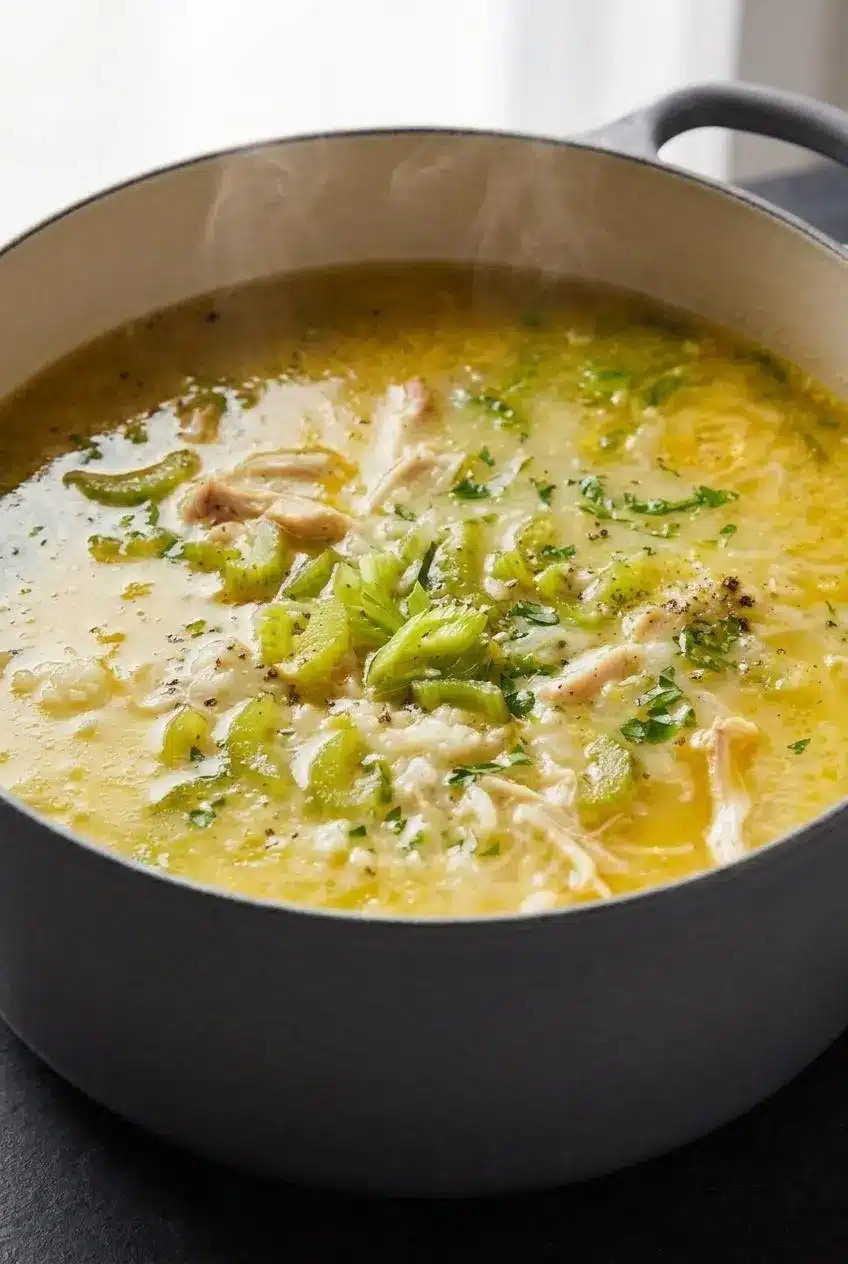
Small adjustments make a noticeable difference in a broth this clean and uncomplicated. The goal is a gently thickened soup with tender grains, not a cloudy pot of overworked rice.
- Cloudy broth: A hard boil agitates the chicken and rice too aggressively. Lower the heat until the surface has steady, gentle bubbles with only a little foam.
- Soup still looks thin: Give the rice time to soften and release starch. The broth moves from light and clear to velvety as the grains begin to relax at the edges.
- Soup has become very thick: The rice has continued absorbing liquid. Stir in more chicken broth as you reheat until the consistency feels spoonable again.
- Flavor seems flat: Start with a light hand on salt because broths vary. Taste near the end, then adjust salt and lemon juice gradually.
- Chicken seems dry: Shred it as soon as it is tender, then return it to the pot rather than continuing to simmer it unnecessarily.
A gentle simmer builds flavor without roughing up the broth. For another comforting approach to clear, savory poultry broth, this homemade chicken soup is a useful next meal idea.
Flavor Enhancements and Finishing Touches
The parsley, celery leaves, lemon zest, and garlic form a fresh herb topping that changes the character of the soup at the very end. Adding it over each bowl preserves its fragrance, while lemon juice wakes up the savory chicken broth and earthy celery.
Add lemon juice in small additions rather than all at once. A good stopping point is when the citrus sharpens the flavor but the soup still tastes deeply like chicken.
- Cracked black pepper: Add a pinch at the table for a gentle peppery warmth.
- Extra butter: Stir in a small swirl for a richer mouthfeel.
- Grated Parmesan: Sprinkle it over individual bowls for a salty, nutty finish.
If bright lemony chicken broth is your favorite kind of comfort food, Greek lemon chicken soup offers another satisfying direction.
Popular Variations and Flavor Options
These changes are optional and belong outside the main method, so you can keep the original soup’s clean lemon-herb character or adapt it to the ingredients on hand.
Quick Rotisserie Chicken Adaptation
Use shredded leftover chicken or rotisserie meat when you want to skip cooking raw thighs. Simmer the broth, celery, and rice first, then fold in the cooked chicken during the final 5 minutes so it warms through without becoming stringy.
This version keeps the rice-driven body and lemon-herb finish intact while moving dinner along faster. If you have extra shredded chicken, a rotisserie chicken casserole is another cozy way to use it.
Creamy Chicken and Rice Comfort Style
For a creamier bowl, stir in a splash of heavy cream or whole milk near the end of cooking. Keep the lemon juice restrained at first, then add it slowly so the soup stays balanced rather than sharply acidic.
A quick butter-flour roux can also add body if you prefer a thicker, more classic creamy chicken-and-rice style. Add it toward the end and keep the herb topping bright to prevent the soup from tasting heavy.
Storage and Reheating for Better Texture
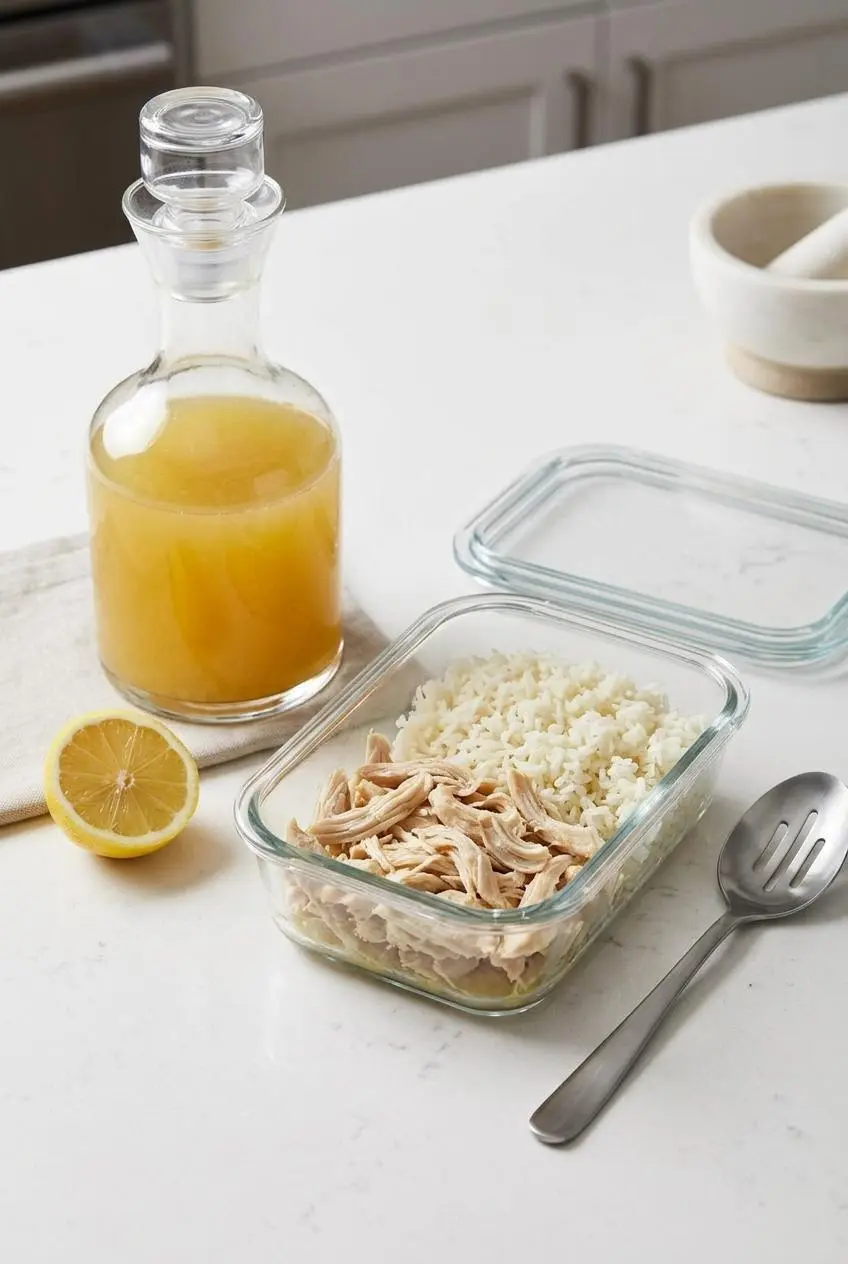
For the best leftover texture, use a slotted spoon to lift the rice and chicken from the broth before refrigerating, then keep them in separate airtight containers. The official method allows the soup, without the lemon juice and parsley mixture, to be refrigerated for up to 3 days.
When reheating, warm the broth gently and add more chicken broth if the rice has thickened it. Return the rice and chicken once the broth is hot, then finish each serving with fresh lemon juice and the parsley mixture just before eating.
For best texture, avoid freezing the assembled soup with rice already in the broth. The grains can break down and leave the reheated soup overly thick, so this dish is at its best enjoyed fresh or refrigerated in separated components.
Serving Suggestions for a Complete Meal
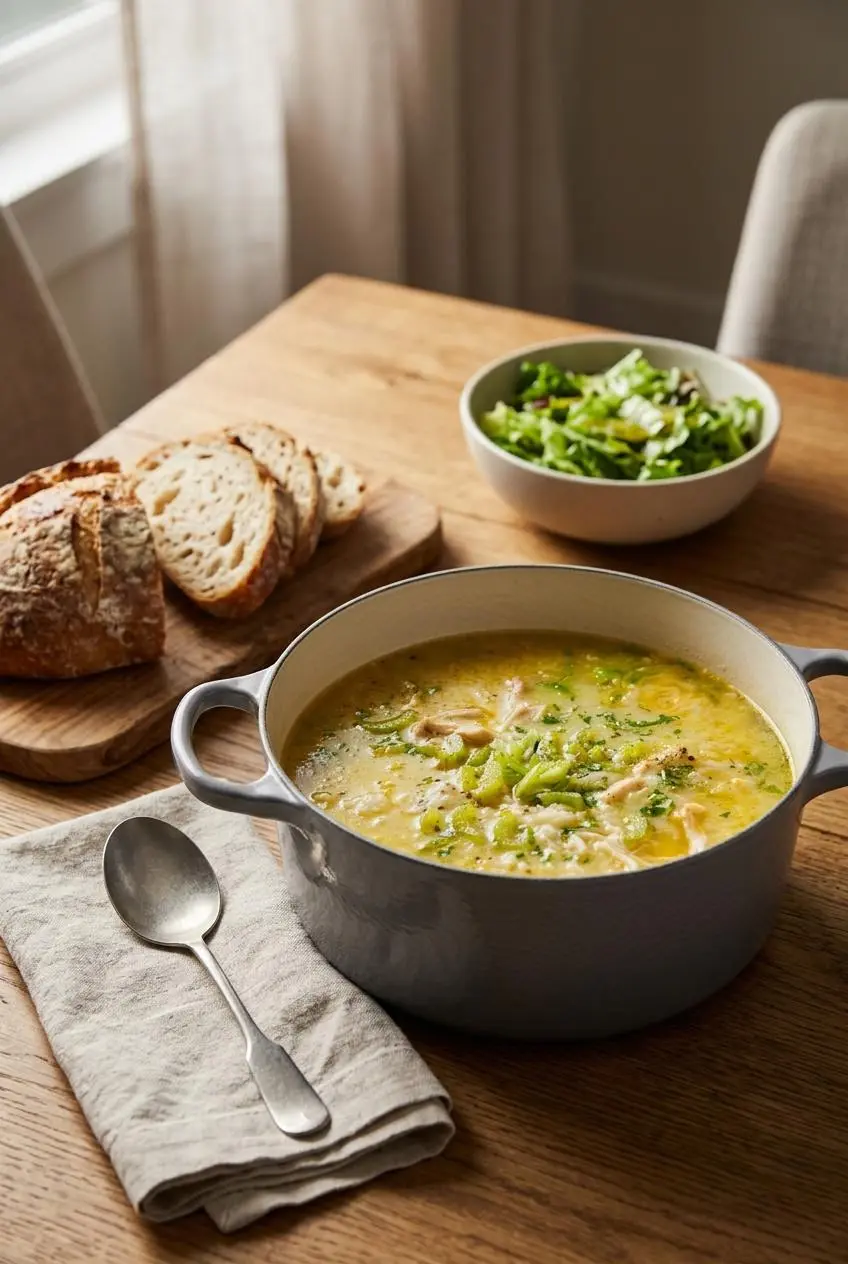
Serve this soup with warm crusty sourdough or garlic rolls for dipping into the silky broth. The bread is especially welcome when the soup is thickened by rice and finished with bright lemon.
A crisp green salad dressed with lemon and olive oil makes a fresh contrast to the warm, savory bowl. Keep the salad lightly dressed so it stays refreshing alongside the richer chicken broth.
Conclusion
This soup balances tender chicken, unrinsed jasmine rice, and savory broth with a lively lemon-herb finish. A gentle simmer keeps the broth clear while the rice creates just enough natural body.
Serve it right away for the silkiest texture, or store the rice separately from the broth for better leftovers. A final spoonful of herbs and lemon makes each bowl feel freshly made.
Frequently Asked Questions
Do You Cook Rice Before Putting It in Soup?
You can simmer uncooked rice directly in the broth, as this method does. It absorbs savory flavor and releases starch that naturally thickens the soup. Cook rice separately when you plan to save leftovers. Keeping it apart prevents the grains from drinking up much of the broth before reheating.
What Is the Best Cut of Chicken for Chicken and Rice Soup?
Chicken thighs are a strong choice because they stay tender and add richer flavor during simmering. Boneless thighs also shred easily for a soft, comforting texture. Chicken breasts can work, but remove them promptly once cooked through so they do not dry out. Return shredded breast meat to the soup only to warm it.
How Do You Keep Rice From Getting Mushy in Leftover Soup?
Separate the rice and chicken from the broth with a slotted spoon before refrigerating. Store the components in separate airtight containers, then combine them as you reheat. Add extra chicken broth if the rice has absorbed liquid and thickened the soup. Finish with lemon juice and herbs after reheating for the brightest flavor.
Can I Use Leftover Cooked Chicken or Rotisserie Chicken?
Yes. Cook the celery and rice in the broth first, then stir in shredded cooked chicken during the final 5 minutes. This gentle finish warms the chicken without giving it enough time to become tough or stringy. Use the same lemon-herb topping to keep the shortcut version fresh-tasting.
Can You Freeze Chicken and Rice Soup?
Freezing the assembled soup is not the best choice for texture because the rice can become overly soft and leave the broth very thick after thawing. For the most appealing result, make only the amount you plan to serve or refrigerate the rice separately from the broth and reheat it gently with extra broth as needed.

Chicken and Rice Soup

Equipment
- Dutch oven or pot
- Tongs
- Medium bowl
Ingredients
- 8 cups chicken broth
- 1 pound boneless, skinless chicken thighs
- 4 celery stalks leaves reserved and stalks thinly sliced
- ¾ cup jasmine rice (unrinsed)
- Salt
- ½ cup fresh parsley leaves
- 1 teaspoon fresh lemon zest plus up to ½ cup lemon juice (from 2 to 3 lemons)
- 1 garlic clove small
- 1 tablespoon unsalted butter (optional)
Instructions
- Place the chicken broth, chicken thighs, sliced celery, and unrinsed jasmine rice in a large Dutch oven or pot, then season lightly with salt and bring the mixture toward a simmer over medium-high heat. Once small bubbles gather steadily at the surface, lower the heat so the broth bubbles gently rather than rolling hard.
- Simmer for 20 to 30 minutes, until the chicken is cooked through and the rice has softened enough to lose some of its distinct shape. The broth should look lightly thickened, and the chicken should be opaque and easy to separate with tongs.
- While the soup cooks, finely chop the parsley, lemon zest, and up to ½ cup celery leaves, then grate in the garlic, season with salt, and stir the mixture together in a small bowl. The herb mixture should smell sharp, green, and lemony, ready to brighten the warm broth.
- Lift out the chicken with tongs, shred it in a medium bowl with two forks, and stir it back into the soup before taking the pot off the heat; add the butter (optional), adjust the salt, and stir in lemon juice gradually. Stop adding lemon when the soup smells bright and tastes balanced without losing its chicken-forward character, then spoon it into bowls and finish with the parsley mixture.