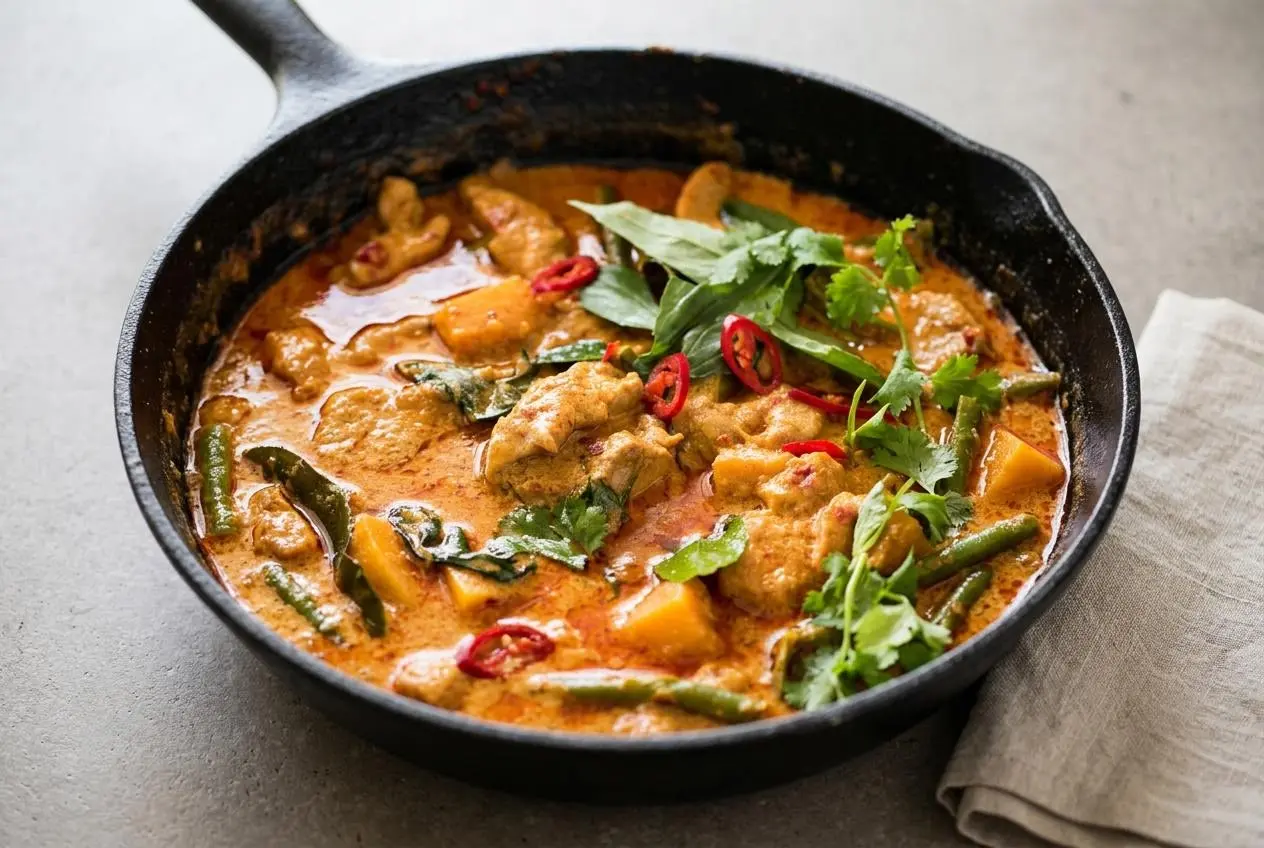
This creamy Thai curry comes together in 25 minutes by frying red curry paste in oil, reducing broth, then simmering chicken, coconut milk, squash, and green beans until glossy and fragrant.
This Thai Red Curry Recipe delivers tender chicken thighs in a rich coconut sauce with savory fish sauce, gentle sweetness, and bright herbal lift.
The method keeps the vegetables distinct instead of soft and muddled, while Thai basil stays fresh at the finish. The fragrant paste bloom makes all the difference.
Set out every ingredient before heating the skillet, because the curry moves quickly once the paste begins to fry.
Essential Ingredients for Thai Red Curry
Each ingredient contributes something useful: curry paste brings heat and spice, coconut milk creates body, chicken adds richness, vegetables add texture, and lime leaves and basil give the sauce its fresh aromatic finish.
Red Curry Paste – choose ONE
- 5 – 6 tbsp Thai Red Curry Paste (store bought, Maesri best)
Extras – only for jar curry paste
- 2 large garlic cloves, minced
- 2 tsp fresh ginger, finely grated
- 1 tbsp lemongrass paste or finely chopped fresh
Thai Red Curry
- 3 tbsp vegetable oil (or canola or peanut)
- 1 cup (250 ml) chicken broth/stock, low sodium
- 400 ml / 14 oz coconut milk (full fat!)
- 6 kaffir lime leaves
- 1 tbsp sugar (white, brown or palm)
- 2 tsp fish sauce, plus more to taste
- 350g / 12 oz chicken thighs (boneless and skinless), cut into 0.75 / 1/3″ thick slices
- 150g / 5 oz pumpkin or butternut squash, cut into 1.5cm / 3/5″ cubes (~1 heaped cup)
- 120g / 4oz green beans, trimmed and cut into 5cm/2″ pieces
- 12 Thai basil leaves
Garnishes (optional) & serving
- Fresh red chilli slices (small chilli – spicy, large = less spicy)
- Fresh coriander / cilantro leaves
- Steamed jasmine rice
Chicken thighs stay moist through the rapid simmer, while squash drinks in the sauce and green beans keep a welcome bite. Fish sauce supplies deep savoriness, sugar rounds the chile heat, and the herbs keep the finished curry lively.
I tear lime leaves and gently bruise the basil in my fingers just before adding them, which helps their citrusy and peppery aromas stay noticeable in the finished curry.
Choosing the Best Curry Paste: Maesri vs Mae Ploy
Maesri is a strong choice when you want balanced heat and a rounded spice profile. Mae Ploy tends to bring a fierier, saltier punch, which can be excellent if you like bold chile flavor but calls for a lighter hand with added fish sauce.
Both pastes benefit from being fried in oil rather than stirred straight into coconut milk. That brief contact with hot fat wakes up the dried spices and helps the curry taste fuller instead of flat or overly processed.
Aromatics, Coconut Milk, and Seasonings
Use full-fat coconut milk here. Its fat gives the sauce a smooth body and the glossy sheen that makes red curry feel luxurious; light coconut milk can leave the broth thin and less satisfying.
Garlic, ginger, and lemongrass add fresh high notes that packaged paste may lack. Lime leaves bring a floral citrus perfume, while Thai basil goes in off the heat so it stays green, fragrant, and gently peppery rather than dark and bitter.
How to Make Thai Red Curry Step by Step
Frying the paste first, then reducing the broth before adding coconut milk, builds flavor quickly without making the process fussy. A wide, heavy skillet gives the sauce room to reduce evenly.
- Warm the vegetable oil in a large heavy based skillet over medium-high heat.
The oil should look fluid and shimmer lightly across the pan before the paste goes in. - Cook the red curry paste with the garlic, ginger, and lemongrass for about 2 minutes when using jar paste.
Stir continuously until the mixture smells deeply fragrant and small beads of red oil appear around the edges. - Pour in the chicken broth and scrape through the skillet to loosen the concentrated paste.
Let it bubble rapidly for 3 minutes, until the liquid has reduced by about half. - Stir in the coconut milk, kaffir lime leaves, sugar, and fish sauce, then add the chicken.
The sauce should turn creamy orange-red as the paste blends into the coconut milk. - Arrange the chicken in an even layer, bring the curry to a simmer, then lower the heat to medium and cook for about 8–10 minutes.
The chicken should be cooked through and tender, while the sauce reduces toward your preferred thickness. - Taste the sauce and adjust with more fish sauce for savoriness or sugar for sweetness.
A balanced curry should taste savory first, warmly spicy next, with a rounded sweet finish. - Stir in the pumpkin and green beans, then cook for 3 minutes.
Check the pumpkin with a paring knife tip: it should yield easily without collapsing, and the sauce should coat a spoon. - Take the skillet off the heat and fold in the Thai basil leaves.
The residual heat will soften the leaves while keeping their aroma bright. - Spoon the curry over jasmine rice and finish with red chilli slices and coriander/cilantro leaves, if desired.
The rice should catch the glossy sauce, while the garnishes add fresh color and a sharper finish.
Blooming Paste and Aromatics
The two-minute paste bloom is the key move. Keep the skillet hot enough to sizzle gently, but stir constantly so the garlic does not scorch. The paste will look thicker and slightly drier as moisture cooks off, and the red oil at the pan edge signals that its spices are opening up.
If the lime leaves feel stiff, lightly crush them between your palms before adding them to the sauce. This simple step releases more of their herbal citrus aroma without changing the cooking sequence.
Simmering Sauce and Perfecting Meat Doneness
Reduce the broth before the coconut milk goes in so the sauce tastes concentrated rather than watery. Once the chicken is simmering, avoid a hard boil. A steady, moderate bubble keeps the coconut sauce smooth and gives the thighs time to turn tender.
Add the squash and beans near the end as written. The staggered timing matters: chicken needs the longer simmer, while the vegetables need only enough heat to become tender and keep their shape. Finish with basil after removing the skillet from the heat.
Recipe Tips and Flavor Troubleshooting
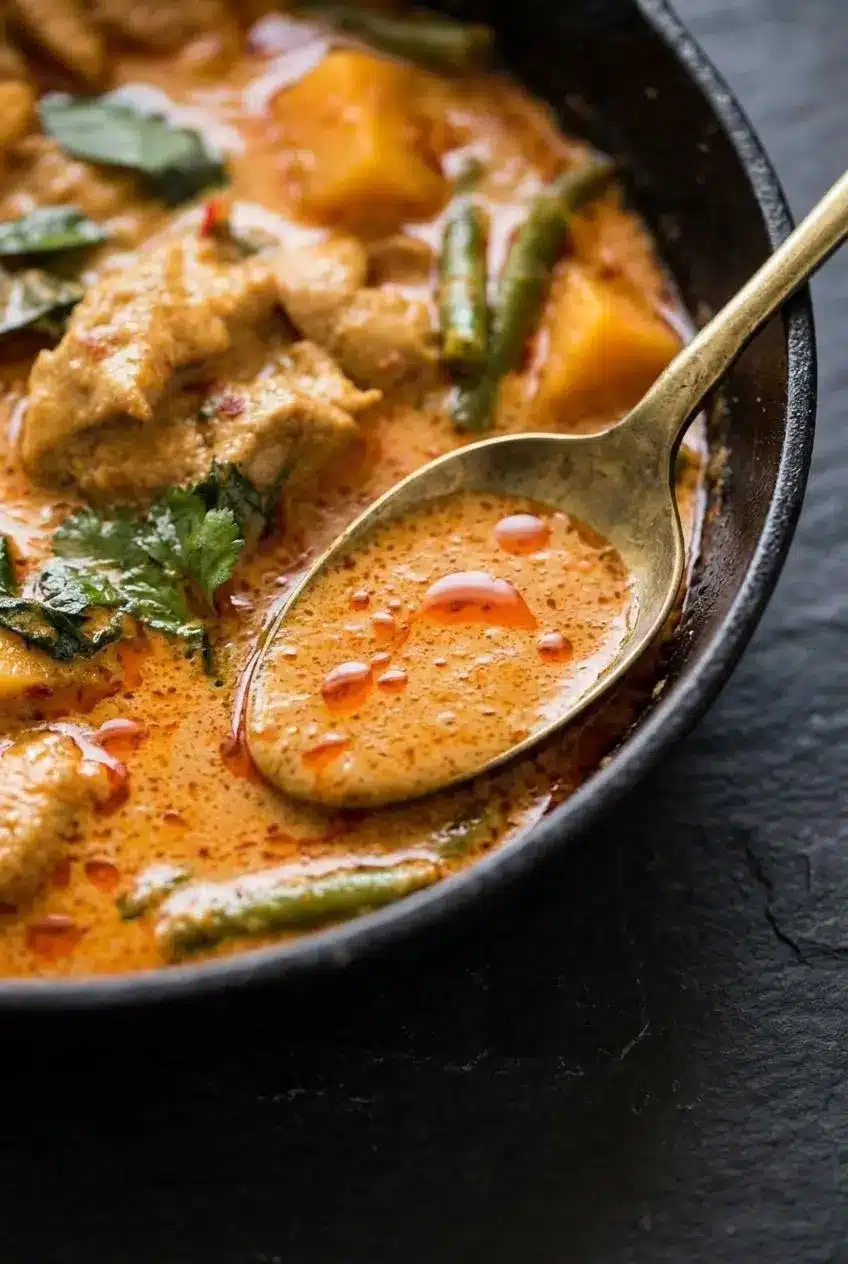
Small adjustments can rescue the sauce without masking the curry’s character.
- Too spicy: Stir in extra coconut milk or a splash of broth to soften the chile heat. A small pinch of sugar can round out the burn without making the curry taste sweet.
- Too salty: Mae Ploy paste can carry more salt than other brands. Add coconut milk or broth first, then taste again before reaching for more fish sauce.
- Too thin: Keep the skillet uncovered and let the curry simmer gently until it coats the back of a spoon. This concentrates flavor more naturally than adding starch.
- Too thick: Loosen the sauce with a small splash of broth and stir until glossy again.
- Oil on top: A little coconut oil separating into a shiny surface is normal and carries the curry’s aromas. If the sauce looks grainy, lower the heat and stir gently rather than boiling it hard.
- Flavor feels heavy: A little more lime leaf aroma, fresh basil, or garnish can brighten the bowl. For a gentler Thai curry style, try a mild Massaman curry another night.
Easy Variations and Protein Substitutions
Keep the chicken version as written, or use these optional changes when you want a different protein or a vegetable-forward bowl.
Tofu and Vegetable Red Curry
For a meatless option, pan-sear firm tofu until crisp before adding it to the curry near the end. Mushrooms, bell peppers, and bamboo shoots work especially well with red curry paste because they bring texture without overwhelming the coconut sauce. Simmer gently so the tofu absorbs flavor but does not break apart.
If you enjoy a brothier spin on these same flavors, a red curry noodle soup is a comforting way to turn the aromatic sauce into a noodle bowl.
Thai Red Beef Curry
Use thinly sliced flank steak or sirloin as an optional substitute. Sear it quickly, then simmer only briefly so it stays tender. Beef brings a deeper, meatier character than chicken, so taste the sauce after cooking and adjust the fish sauce or sugar only if it needs balance.
Shrimp and Seafood Option
Add peeled shrimp or firm white fish during the final 3 minutes of cooking. Stop when the shrimp turn opaque and curl gently, or when fish flakes easily with light pressure. Seafood cooks fast, so adding it earlier can make it firm and dry.
How to Store and Reheat Thai Curry
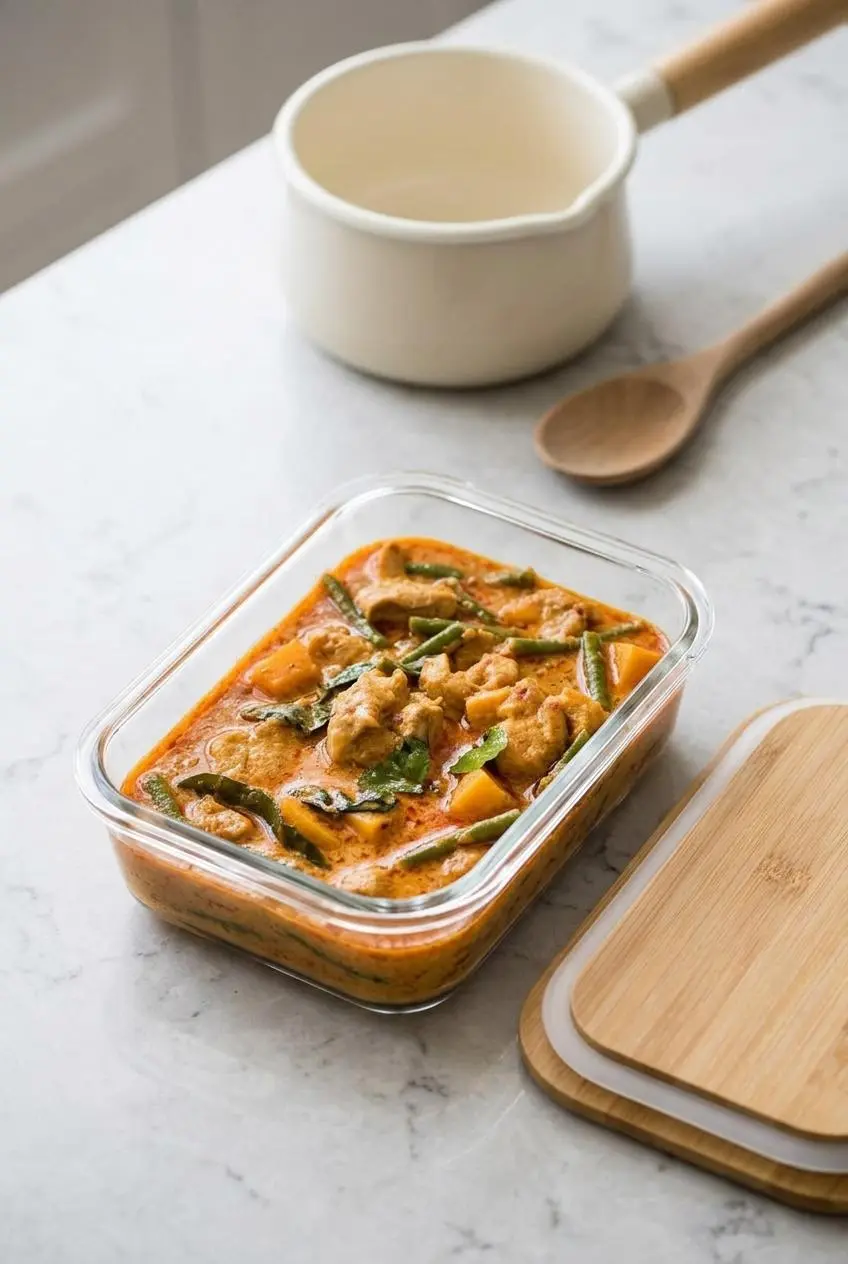
Let leftover curry cool, then transfer it to a clean airtight container and keep it chilled. Store the rice separately so it does not absorb all the sauce or turn the curry overly thick.
Reheat a portion gently in a saucepan over low heat, stirring often until the coconut sauce loosens and becomes smooth. Add a small splash of broth if needed, and stir in fresh basil only after reheating for the brightest flavor. Avoid aggressive boiling, which can make the sauce separate.
What to Serve with Thai Red Curry
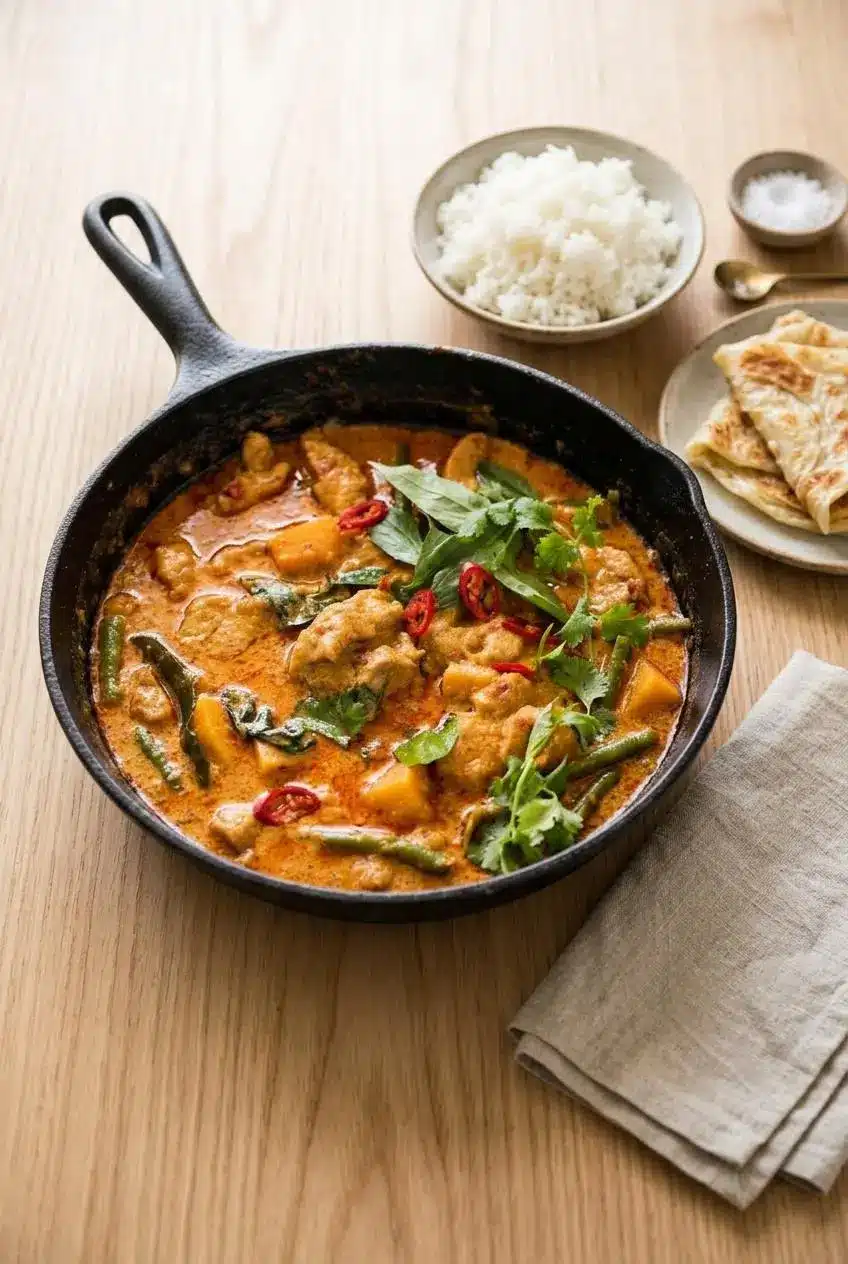
The best side is one that catches the rich sauce while giving the chile heat a little contrast.
- Steamed jasmine rice: Its floral fragrance and soft grains soak up the curry without competing with it.
- Coconut rice: Choose this when you want a richer meal and a softer contrast to the savory fish sauce.
- Warm roti canai or crisp flatbread: Use it to scoop up the sauce and tender squash.
- Cucumber salad: Crisp cucumber with a tangy dressing cuts through the coconut richness. A crisp Thai chicken salad also brings a cool, fresh counterpoint.
Conclusion
This curry earns its depth from a quick but essential sequence: bloom the paste with aromatics, reduce the broth, then simmer with full-fat coconut milk until the sauce turns glossy. Chicken thighs, squash, and beans make it satisfying without weighing it down.
Keep the heat gentle once coconut milk is in the skillet, taste before adding extra seasoning, and fold in the basil at the end. Dinner will taste bright, creamy, and wonderfully fragrant.
Frequently Asked Questions
What Is the Best Store-Bought Thai Red Curry Paste?
Maesri is a dependable choice for balanced heat and rounded spice. Mae Ploy is typically hotter and saltier, so add fish sauce cautiously and taste before adjusting the curry.
How Can I Make Canned Curry Paste Taste Like Takeout?
Fry the paste in hot oil with minced garlic, grated ginger, and lemongrass for about 2 minutes before adding liquids. This step deepens the aroma and removes the flat taste that can come from stirring paste directly into coconut milk.
How Should I Handle Leftover Thai Chicken Red Curry?
Cool it, keep it in an airtight container in the refrigerator, and reheat only the portion you plan to eat over low heat. Stir frequently and avoid a hard boil so the coconut sauce stays as smooth as possible.
What Can I Substitute for Kaffir Lime Leaves and Thai Basil?
Fresh lime zest can stand in for kaffir lime leaves when needed. For Thai basil, use Italian sweet basil with a very small amount of fresh mint to mimic its peppery, slightly anise-like character.
Thai Red Curry Recipe

Equipment
- large heavy based skillet
Ingredients
Red Curry Paste – choose ONE
- 5-6 tbsp Thai Red Curry Paste (store bought, Maesri best)
Extras – only for jar curry paste
- 2 large garlic cloves minced
- 2 tsp fresh ginger finely grated
- 1 tbsp lemongrass paste or finely chopped fresh
Thai Red Curry
- 3 tbsp vegetable oil (or canola or peanut)
- 1 cup chicken broth/stock (250 ml), low sodium
- 400 ml coconut milk / 14 oz (full fat!)
- 6 kaffir lime leaves
- 1 tbsp sugar (white, brown or palm)
- 2 tsp fish sauce plus more to taste
- 350 g chicken thighs (boneless and skinless) / 12 oz, cut into 0.75 / 1/3″ thick slices
- 150 g pumpkin or butternut squash / 5 oz, cut into 1.5cm / 3/5″ cubes (~1 heaped cup)
- 120 g green beans / 4oz, trimmed and cut into 5cm/2″ pieces
- 12 Thai basil leaves
Garnishes (optional) & serving
- Fresh red chilli slices (small chilli, spicy, large = less spicy)
- Fresh coriander / cilantro leaves
- Steamed jasmine rice
Instructions
- Warm the vegetable oil in a large heavy based skillet over medium-high heat. The oil should look fluid and shimmer lightly across the pan before the paste goes in.
- Cook the red curry paste with the garlic, ginger, and lemongrass for about 2 minutes when using jar paste. Stir continuously until the mixture smells deeply fragrant and small beads of red oil appear around the edges.
- Pour in the chicken broth and scrape through the skillet to loosen the concentrated paste. Let it bubble rapidly for 3 minutes, until the liquid has reduced by about half.
- Stir in the coconut milk, kaffir lime leaves, sugar, and fish sauce, then add the chicken. The sauce should turn creamy orange-red as the paste blends into the coconut milk.
- Arrange the chicken in an even layer, bring the curry to a simmer, then lower the heat to medium and cook for about 8-10 minutes. The chicken should be cooked through and tender, while the sauce reduces toward your preferred thickness.
- Taste the sauce and adjust with more fish sauce for savoriness or sugar for sweetness. A balanced curry should taste savory first, warmly spicy next, with a rounded sweet finish.
- Stir in the pumpkin and green beans, then cook for 3 minutes. Check the pumpkin with a paring knife tip: it should yield easily without collapsing, and the sauce should coat a spoon.
- Take the skillet off the heat and fold in the Thai basil leaves. The residual heat will soften the leaves while keeping their aroma bright.
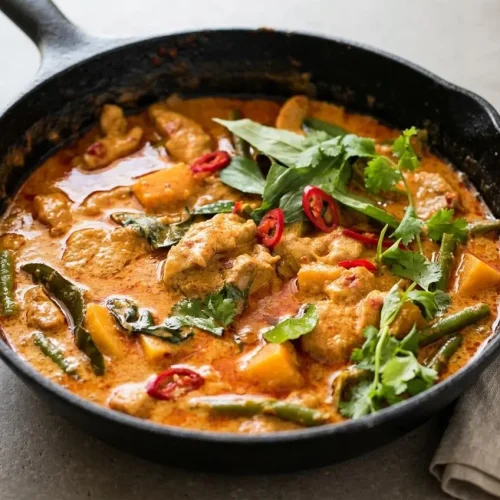
- Spoon the curry over jasmine rice and finish with red chilli slices and coriander/cilantro leaves, if desired. The rice should catch the glossy sauce, while the garnishes add fresh color and a sharper finish.