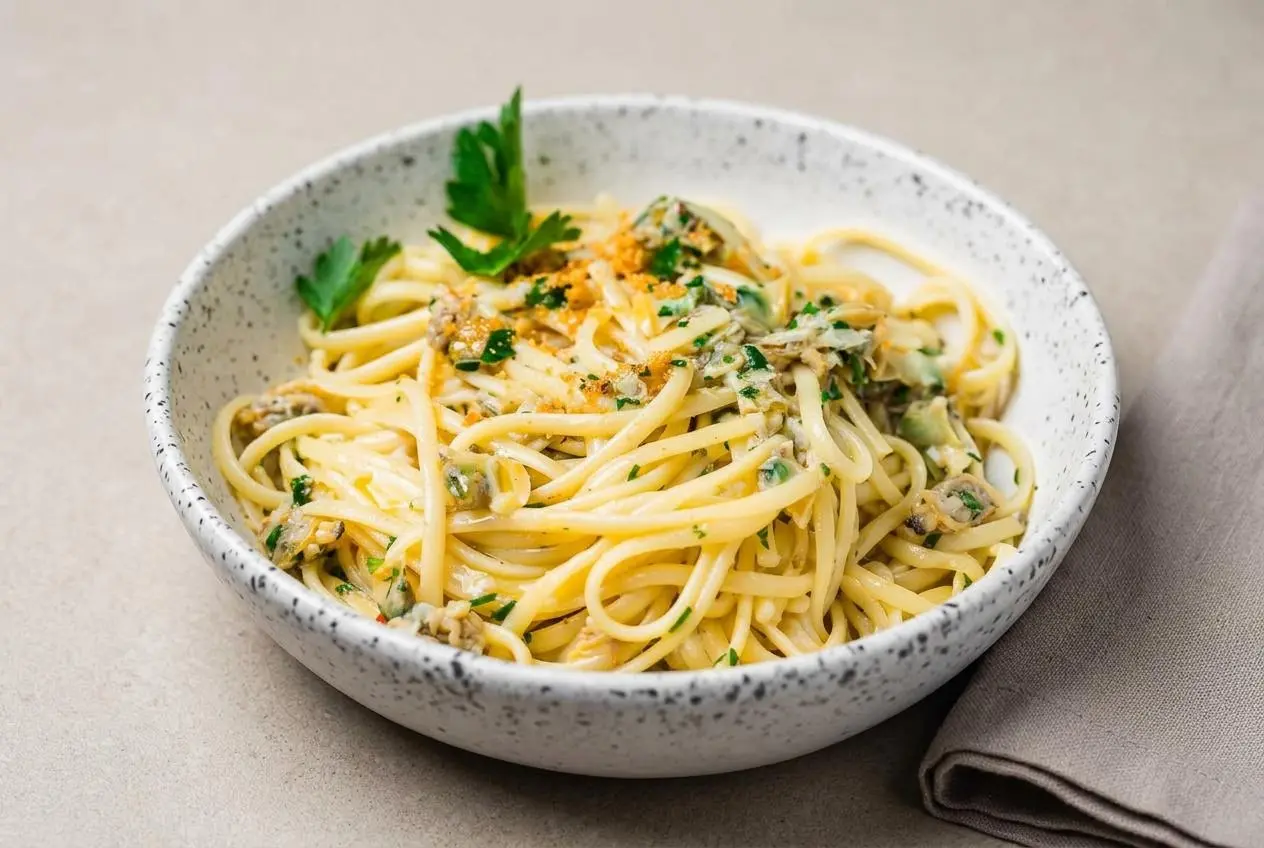
Clam linguine is a classic Italian-American pasta tossed with garlic, white wine, clam nectar, olive oil, and butter for a glossy seafood sauce ready in under 30 minutes.
This clam linguine brings the seaside aroma of garlic sizzling in olive oil straight to the dinner table. Tender baby clams, briny sauce, and al dente pasta make it feel special without a long cooking project.
The real magic happens when the pasta finishes in the skillet, turning the clam juices into a sauce that hugs every strand. Don’t skip the final toss.
Reserve the pasta water before draining, and keep it nearby until the sauce looks silky rather than dry.
Essential Ingredients for Clam Linguine
Each ingredient has a job here: clams provide briny sweetness, wine adds brightness, anchovies deepen the sauce, pasta water creates body, and breadcrumbs bring crisp contrast.
For the seasoned breadcrumbs (optional)
- 5 slices day old bread (crust removed) (or 1 cup store-bought plain breadcrumbs)
- 1/2 teaspoon salt
- 3 tablespoons (45g) olive oil
- 1/2 clove garlic (minced)
- 3 tablespoons minced flat-leaf Italian parsley
For the canned clam sauce
- 1 pound (454g) linguine
- 5 tablespoons (75g) extra virgin olive oil
- 7 cloves garlic (sliced)
- 5 anchovy fillets
- 1/4 teaspoon crushed hot red pepper flakes
- 1/2 cup (120g) dry white wine
- 3 10-ounce cans baby clams
- 1/4 cup minced flat-leaf Italian parsley
- 2 tablespoons (28g) butter (cubed)
- 2 cups (480g) reserved pasta water
The baby clams make this a practical weeknight dinner, while their reserved nectar forms the savory liquid foundation of the sauce. Dry white wine cuts through the richness with acidity. Anchovies dissolve into the oil, adding savory depth without making the pasta taste fishy.
I strain the clams over a bowl rather than the sink, because every drop of that briny nectar helps build a fuller-tasting sauce.
Canned Baby Clams and Clam Nectar Selection
Choose whole baby clams packed in their natural juice. They are already cooked, so they need gentle warming rather than a long simmer. Drain the clams while saving all of the liquid, then add the clams near the end so they stay pleasantly tender.
Clam nectar varies in saltiness from brand to brand. Taste the finished sauce before reaching for salt, especially because anchovies also bring salinity.
Choosing the Best Dry White Wine
Use a crisp, dry white wine that you would enjoy drinking, such as Pinot Grigio, Sauvignon Blanc, or a dry Italian white. Its acidity wakes up the clam liquor and balances the olive oil and butter. Skip sweet wines and salty cooking wines, which can make the sauce taste flat or overly seasoned.
Garlic, Parsley, and Anchovy Umami Foundation
Thin garlic slices cook more evenly than crushed garlic and become sweet, pale-golden chips instead of bitter brown bits. Flat-leaf parsley adds fresh herbal lift at the finish. Anchovies melt into warm oil and give the garlic white wine sauce a rounded, restaurant-style savoriness.
How to Make Clam Linguine Step by Step
Work in two pans so the pasta and sauce reach their finishing point together. The key cues are pale-golden garlic, a gentle sizzle from the clam liquid, and pasta that looks coated rather than submerged.
For the seasoned breadcrumbs
- Process the day-old bread with the minced garlic, parsley, salt, and olive oil until coarse crumbs form.
The mixture should look evenly moistened, with small pieces that will toast instead of clump. - Warm a large pan over medium heat and toast the breadcrumb mixture for 5 to 7 minutes, stirring often.
Take the pan off the heat when the crumbs are golden and smell nutty, before the garlic darkens.
For the canned clam sauce
- Bring a large pot of salted water to a full boil.
Keep the water actively bubbling so the linguine cooks evenly. - Drain the baby clams over a bowl, keeping the clams and their juice separate.
The reserved liquid will become the briny backbone of the pan sauce. - Set a large skillet over medium-low heat and add the extra virgin olive oil, sliced garlic, and anchovy fillets for about 3 minutes.
Stir until the anchovies disappear and the garlic turns pale golden with a fragrant, mellow aroma. - Cook the linguine in the boiling water, stopping 1 minute before it reaches al dente.
The noodles should still have a firm center because they will finish in the skillet. - Stir the red pepper flakes into the garlic oil for 30 seconds, then pour in the wine and raise the heat to medium-high.
After 2 to 3 minutes, the wine should smell less sharp and look slightly reduced. - Pour all of the reserved clam juice into the skillet, then lower the heat to medium-low.
Listen for a gentle sizzle rather than a hard boil. - Add the baby clams and fold them through the liquid.
Warm them gently for 1 to 2 minutes so they heat through without becoming chewy. - Transfer the linguine directly into the skillet and toss with tongs for 1 minute, adding reserved pasta water a couple of ounces at a time when needed.
The sauce should turn silky and cling to the pasta while the linguine reaches al dente. - Turn off the heat, then toss in the cubed butter and parsley before tasting and adjusting salt and pepper if needed.
The butter should melt into a glossy sauce that leaves a light coating on the pasta.
Serve the toasted breadcrumbs on the side so everyone can add crunch at the table without softening the topping too soon.
The Secret to a Glossy Emulsified Clam Sauce
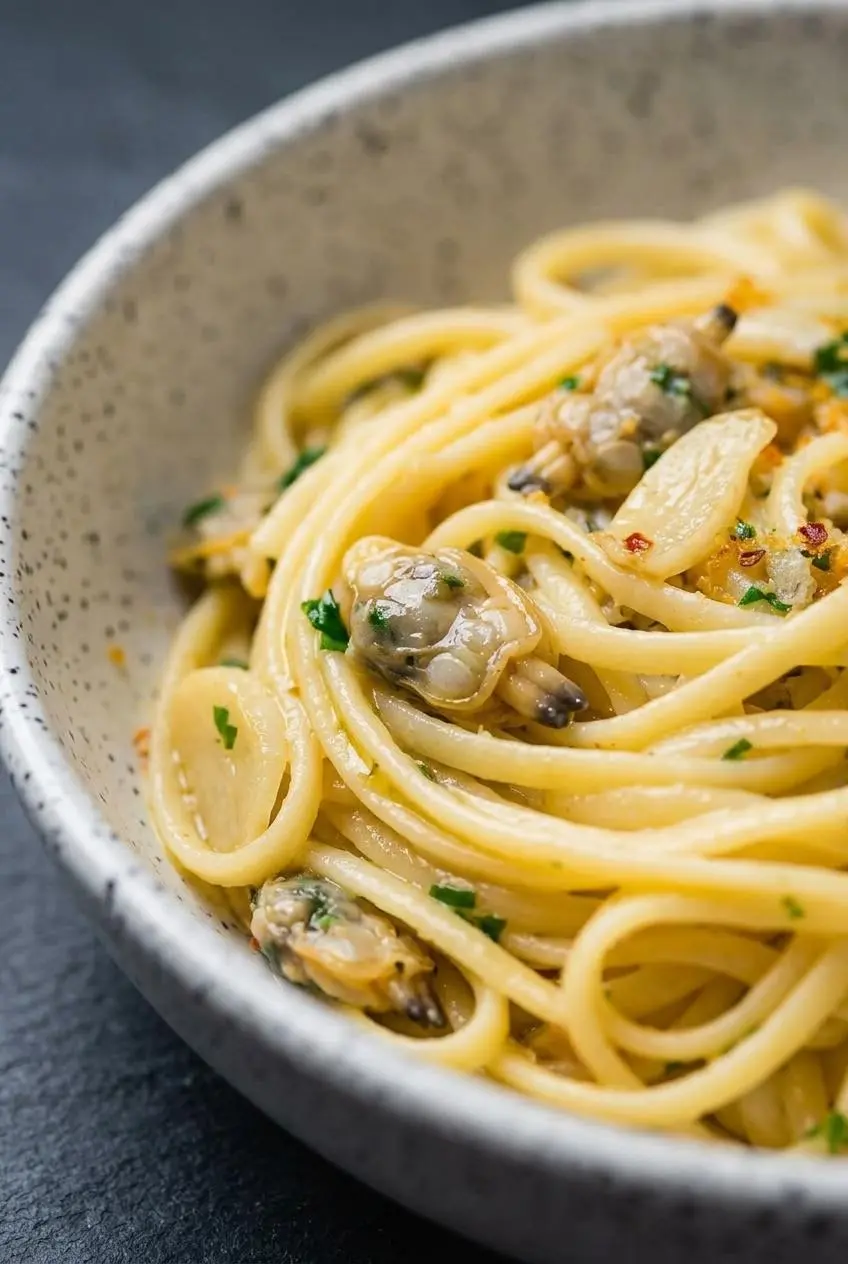
A smooth white clam sauce comes from vigorous tossing, not from cream or flour. Starchy pasta water carries suspended starch that helps the olive oil, clam nectar, and butter combine into one cohesive sauce instead of separating into watery liquid and oil.
Finishing the linguine in the skillet matters because the pasta surface absorbs flavor while it releases a little more starch. Use tongs to lift and turn the noodles repeatedly. If the skillet looks dry, add pasta water gradually. If it looks loose, keep tossing over medium-low heat until the liquid becomes creamy and coats the back of a spoon.
Cold cubed butter goes in after the heat is off. That final toss gives the sauce a glossy finish without making it greasy. The bowl should have enough sauce to look lush, but it should not collect in a thin puddle underneath the pasta.
Common Mistakes and Texture Troubleshooting
Most clam pasta problems come down to heat, timing, or rushing the final toss. These fixes keep the sauce smooth and the clams tender.
- Rubbery clams: Baby clams are already cooked, so extended boiling tightens their texture. Add them only after the clam juice has entered the skillet, then warm them gently for 1 to 2 minutes.
- Watery sauce: The pasta may have been added too late or tossed too little. Keep the noodles in the skillet and toss firmly over medium-low heat until the starch helps the sauce gather around them.
- Oily or separated sauce: Remove the skillet from the heat and toss in a little starchy pasta water with a cold piece of butter. The movement helps bring the fat and liquid back together.
- Overly salty flavor: Clam nectar and anchovies vary in sodium. Hold off on extra salt until the butter and parsley are incorporated and you can taste the finished sauce.
- Bitter garlic: Garlic that turns deep brown tastes harsh. Keep the heat at medium-low and move on as soon as the slices reach pale gold.
The Great Cheese Debate and Crispy Pangrattato Alternative
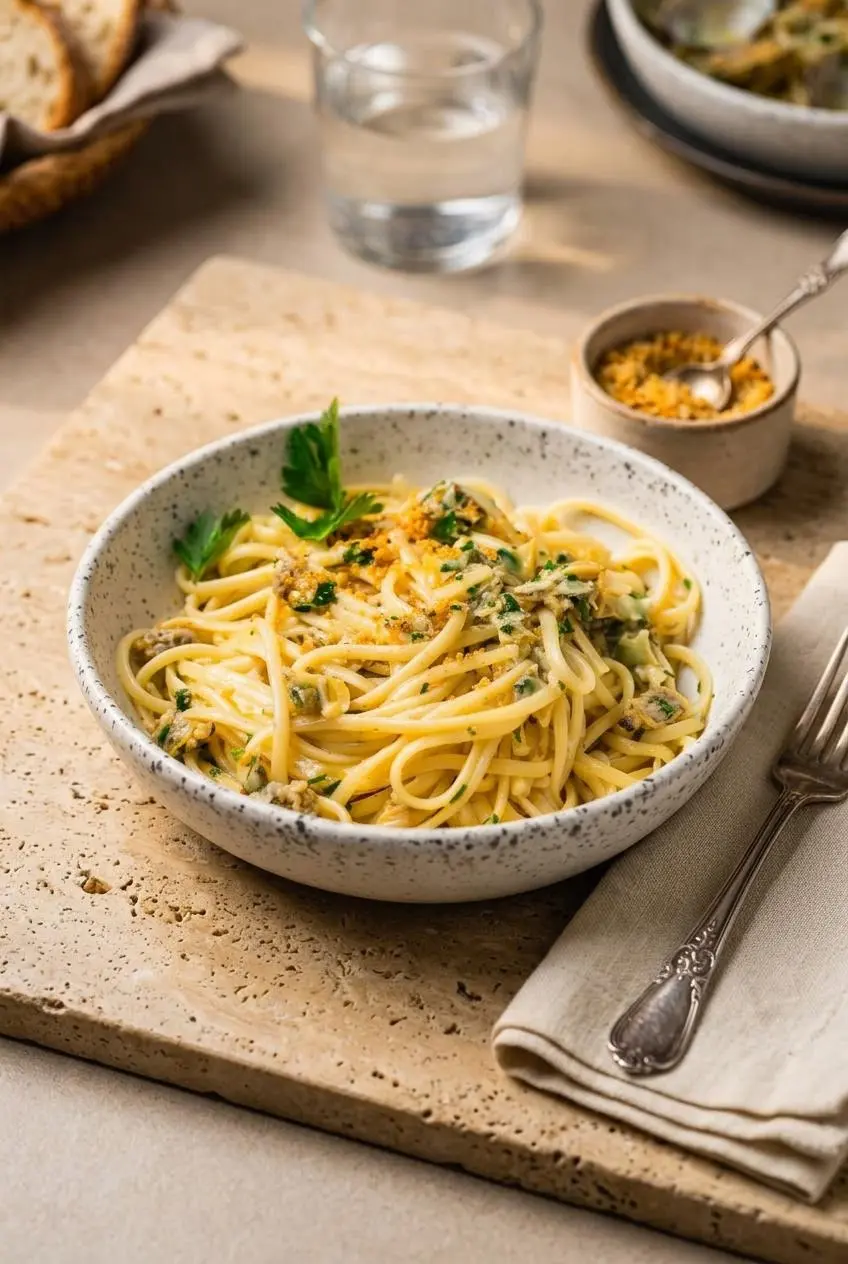
Traditional Italian seafood pasta is usually served without grated dairy cheese because strong aged cheese can cover the sweet, briny flavor of clams. That does not mean the dish needs to feel bare. Garlicky toasted pangrattato gives the same satisfying savory finish with a much lighter touch.
The optional breadcrumb topping adds crisp texture against the silken sauce and tender clams. For an optional bright finish, toss the toasted crumbs with lemon zest and toasted pine nuts just before serving. The citrus and nutty crunch work especially well with the anchovy-rich olive oil.
Popular Recipe Variations
These optional paths change the character of the dish without altering the main method above.
Fresh Littleneck Clam Variation
For an in-shell version, use fresh scrubbed littleneck or Manila clams in place of canned clams. Steam them in the garlic and wine mixture until the shells open, then discard any that remain closed. Add the cooked linguine once the clam juices have formed a broth, and finish with pasta water as needed.
Red Clam Sauce In Rosso
For linguine alle vongole in rosso, add crushed San Marzano tomatoes and sweet basil to the garlic and wine reduction before gently simmering the sauce. The tomato makes a richer, fuller sauce while the clams keep their salty-sweet character. If tomato and shellfish are your comfort-food combination, try this Manhattan clam chowder for another warming option.
Creamy Garlic Clam Sauce
For a softer American-style variation, stir in a splash of heavy cream and fresh lemon juice just before turning off the heat. Keep the cream optional and use a light hand so the clam flavor stays present. For another velvety shellfish dinner, a classic clam chowder is a natural next choice.
Storage and Gentle Reheating Tips
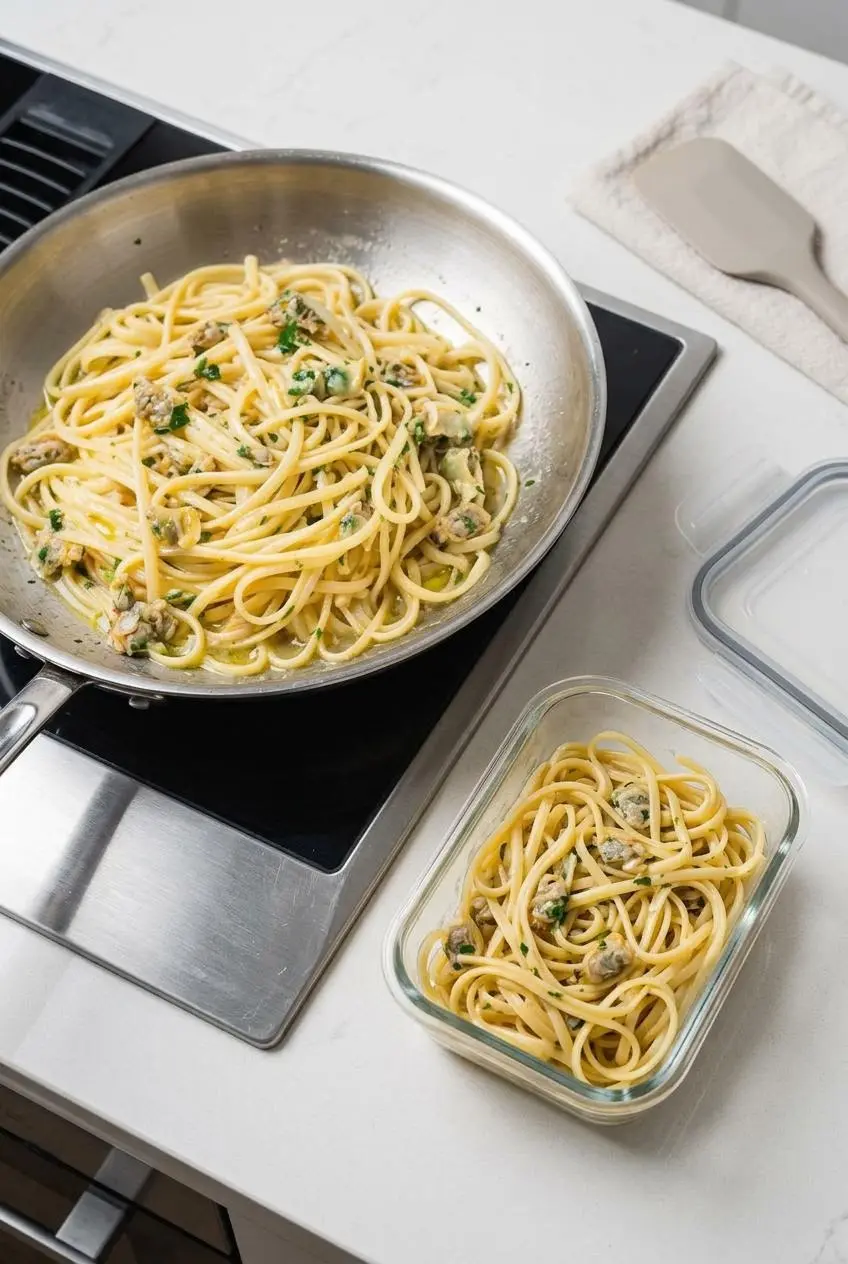
Cool leftover pasta promptly, transfer it to an airtight container, and refrigerate it for up to three days. Careful chilling and handling of seafood leftovers help reduce risk, as outlined for safe handling and storage of fish and shellfish.
Reheat only the portion you plan to eat in a skillet over low heat with a splash of water, clam broth, or extra virgin olive oil. Toss gently until warm and saucy. High microwave heat can quickly toughen the clams, so the stovetop is the kinder option here.
If you want to get ahead on dinner, make the optional breadcrumbs separately and keep them covered at room temperature until serving. Add them at the table so they stay crisp.
Conclusion
This is the kind of fast seafood dinner that earns its place in the regular rotation: garlicky, briny, silky, and finished with a welcome breadcrumb crunch.
Pull the linguine early, toss it hard in the skillet, and finish with cold butter for the glossiest sauce. Serve it while the pasta is still shining.
Frequently Asked Questions
Can I Use Fresh Clams Instead of Canned Clams?
Yes. Scrub fresh littleneck or Manila clams well, then steam them in the wine and garlic broth until they open, usually 5 to 7 minutes. Discard clams that remain closed after cooking. Once opened, continue with the pasta and pan-tossing method.
Why Do Canned Clams Turn Rubbery and Tough?
Canned baby clams have already been cooked before they reach your kitchen. Prolonged boiling tightens them and creates a chewy texture. Add them near the end and warm them gently for only 1 to 2 minutes. Keep the sauce at a gentle sizzle rather than a rapid boil.
Do You Put Parmesan Cheese on Clam Linguine?
Traditionally, grated Parmesan is left off seafood pasta so its strong dairy flavor does not overpower delicate clams. Use the seasoned toasted breadcrumbs instead. They add savory crunch and garlic flavor while keeping the clam sauce bright.
How Do You Thicken White Clam Sauce Without Heavy Cream?
Toss the linguine vigorously in the skillet with clam nectar, olive oil, and reserved starchy pasta water. The starch helps the liquids bind into a silky sauce. Finish off the heat with cold cubed butter. Keep tossing until the sauce coats the noodles rather than pooling in the bottom of the pan.
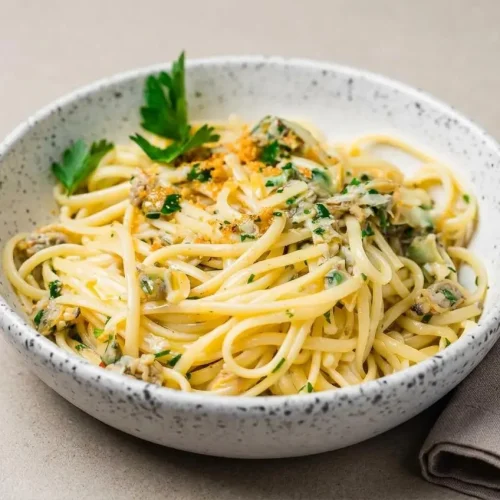
Clam Linguine

Equipment
- Food processor
- Large Skillet
- Large Pot
- Tongs
- Colander and bowl
Ingredients
For the seasoned breadcrumbs (optional)
- 5 slices day old bread (crust removed) (or 1 cup store-bought plain breadcrumbs)
- 1/2 teaspoon salt
- 3 tablespoons olive oil (45g)
- 1/2 clove garlic (minced)
- 3 tablespoons minced flat-leaf Italian parsley
For the canned clam sauce
- 1 pound linguine (454g)
- 5 tablespoons extra virgin olive oil (75g)
- 7 cloves garlic (sliced)
- 5 anchovy fillets
- 1/4 teaspoon crushed hot red pepper flakes
- 1/2 cup dry white wine (120g)
- 3 10-ounce cans baby clams
- 1/4 cup minced flat-leaf Italian parsley
- 2 tablespoons butter (cubed) (28g)
- 2 cups reserved pasta water (480g)
Instructions
For the seasoned breadcrumbs
- Process the day-old bread with the minced garlic, parsley, salt, and olive oil until coarse crumbs form. The mixture should look evenly moistened, with small pieces that will toast instead of clump.
- Warm a large pan over medium heat and toast the breadcrumb mixture for 5 to 7 minutes, stirring often. Take the pan off the heat when the crumbs are golden and smell nutty, before the garlic darkens.
For the canned clam sauce
- Bring a large pot of salted water to a full boil. Keep the water actively bubbling so the linguine cooks evenly.
- Drain the baby clams over a bowl, keeping the clams and their juice separate. The reserved liquid will become the briny backbone of the pan sauce.
- Set a large skillet over medium-low heat and add the extra virgin olive oil, sliced garlic, and anchovy fillets for about 3 minutes. Stir until the anchovies disappear and the garlic turns pale golden with a fragrant, mellow aroma.
- Cook the linguine in the boiling water, stopping 1 minute before it reaches al dente. The noodles should still have a firm center because they will finish in the skillet.
- Stir the red pepper flakes into the garlic oil for 30 seconds, then pour in the wine and raise the heat to medium-high. After 2 to 3 minutes, the wine should smell less sharp and look slightly reduced.
- Pour all of the reserved clam juice into the skillet, then lower the heat to medium-low. Listen for a gentle sizzle rather than a hard boil.
- Add the baby clams and fold them through the liquid. Warm them gently for 1 to 2 minutes so they heat through without becoming chewy.
- Transfer the linguine directly into the skillet and toss with tongs for 1 minute, adding reserved pasta water a couple of ounces at a time when needed. The sauce should turn silky and cling to the pasta while the linguine reaches al dente.
- Turn off the heat, then toss in the cubed butter and parsley before tasting and adjusting salt and pepper if needed. The butter should melt into a glossy sauce that leaves a light coating on the pasta.