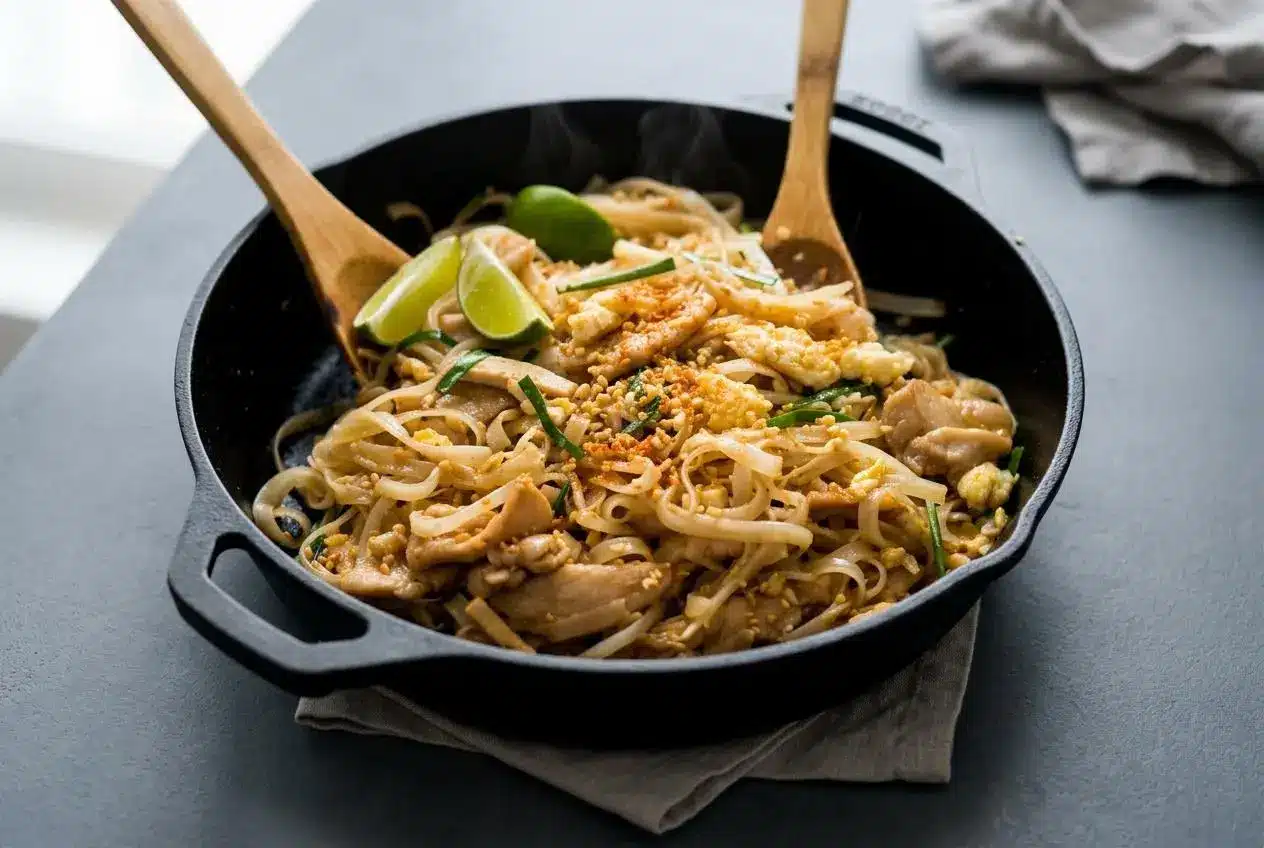
Chicken Pad Thai is a classic Thai stir-fried noodle dish with flat rice noodles, sliced chicken, eggs, firm tofu, bean sprouts, and a sweet, savory, tart tamarind sauce.
This chicken pad thai brings takeout-level flavor to the table in 30 minutes, with glossy noodles, nutty peanuts, fresh lime, and a satisfying wok-charred chew.
Sizzling garlic and onion set the pace, while tamarind and brown sugar turn glossy in the pan. The key is getting the noodles pliable before they ever touch the skillet.
Have the sauce, noodles, and stir-fry ingredients ready beside the stove before heating the pan, because the final toss moves quickly.
Essential Ingredients for Authentic Chicken Pad Thai
Each ingredient has a distinct job: tamarind adds tang, sauces bring deep savoriness, noodles provide chew, and sprouts, chives, peanuts, and lime give freshness and crunch.
- 125 g / 4oz Chang’s Pad Thai dried rice sticks
Sauce
- 1 1/2 tbsp tamarind puree, NOT concentrate
- 3 tbsp (packed) brown sugar
- 2 tbsp fish sauce
- 1 1/2 tbsp oyster sauce
Stir Fry
- 2 – 3 tbsp vegetable or canola oil
- 1/2 onion, sliced (brown, yellow)
- 2 garlic cloves, finely chopped
- 150 g/5oz chicken breast (or thigh), thinly sliced
- 2 eggs, lightly whisked
- 1 1/2 cups of beansprouts
- 1/2 cup firm tofu, cut into 3cm / 1 1/4″ batons
- 1/4 cup garlic chives, cut into 3cm / 1 1/4″ pieces
- 1/4 cup finely chopped peanuts
For Serving
- Lime wedges
- Ground chilli or cayenne pepper
- More beansprouts
Tamarind puree gives the sauce its fruity acidity, brown sugar supplies caramel-like depth, and fish sauce provides the salty, savory edge that seasons the noodles. Firm tofu holds its shape and adds a gentle chew beside the chicken and soft egg.
Use tamarind puree rather than concentrate. Puree is milder and designed for this balance, while concentrate is much sharper and can overwhelm the brown sugar and fish sauce.
I look for firm tofu that feels dense rather than sponge-like, because it stays intact when the noodles are tossed.
The Sweet, Savory, and Sour Sauce Trio
Whisk the tamarind puree, brown sugar, fish sauce, and oyster sauce until the sugar begins to dissolve. Before cooking, the sauce should taste a little tangier and saltier than you expect. It will mellow once it coats the plain rice noodles, tofu, and egg.
The goal is balance rather than a dominant flavor. Tamarind should smell bright and fruity, brown sugar should round off the edges, and fish sauce should bring depth without making the finished noodles taste aggressively salty.
Selecting the Best Rice Noodles and Aromatics
Medium flat rice sticks, often labeled Pad Thai rice noodles or banh pho-style rice sticks, give the best combination of surface area and chew. Very thin noodles soften too fast, while wide noodles can stay stiff in the center during a quick stir-fry.
Garlic and onion build the first savory layer. Garlic chives add a mild oniony bite at the end, when their green color and fresh aroma can stay lively. If you enjoy a more traditional street-stall-style flavor, finely minced sweet preserved radish is an optional add-in for the aromatics; it brings a salty-sweet crunch without changing the noodle method.
How to Make Chicken Pad Thai
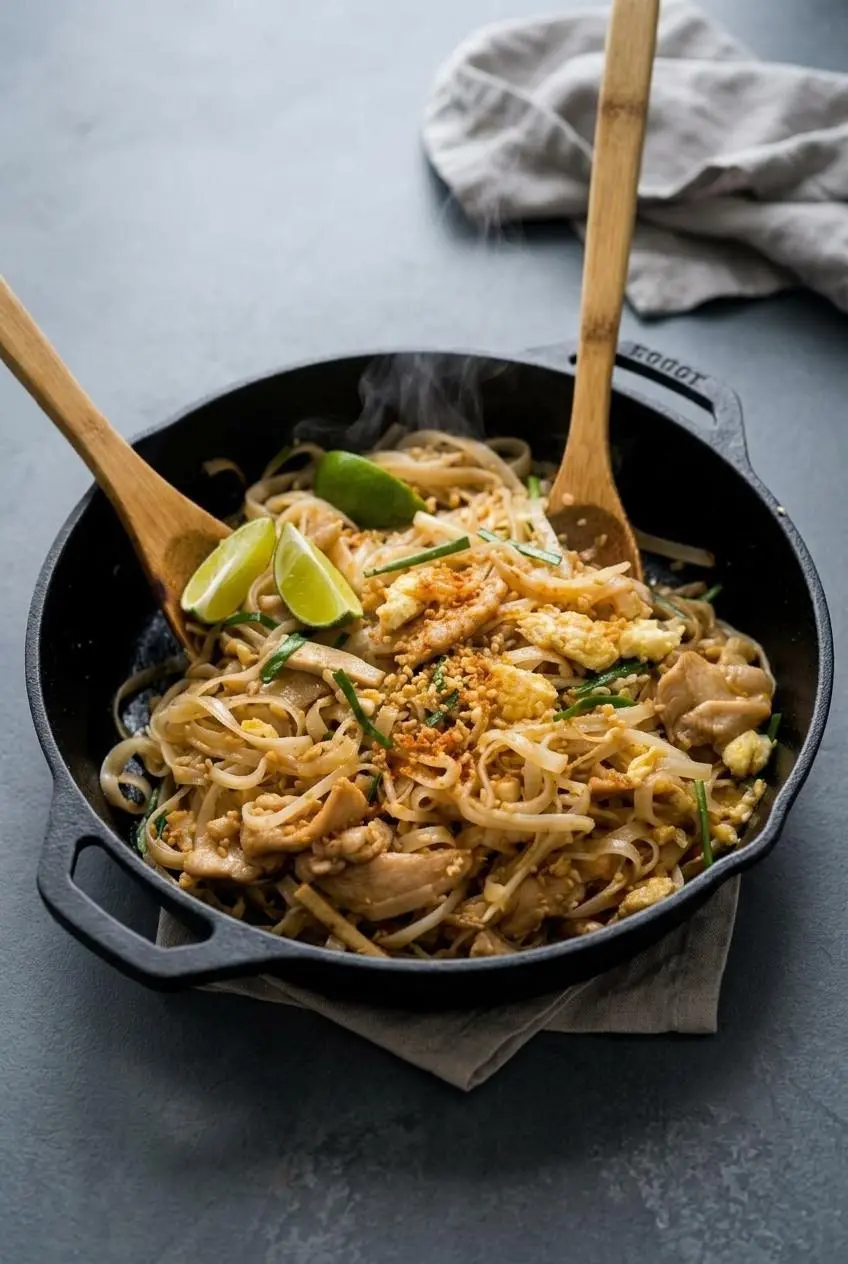
High heat and quick staging keep this stir-fry lively instead of watery. Use a large nonstick pan or well-seasoned skillet, and do not crowd it. If doubling the recipe, cook it in two batches so the pan can recover its heat.
- Cover the rice sticks with plenty of boiling water in a large bowl, soak for 5 minutes, then drain and rinse quickly under cold water.
The noodles should bend without snapping but still feel firm through the center. - Whisk the tamarind puree, brown sugar, fish sauce, and oyster sauce together in a small bowl.
The mixture should look dark amber and smell sweet, sharp, and savory. - Heat 2 tbsp oil in a large nonstick pan or well-seasoned skillet over high heat, then add the onion and garlic for 30 seconds.
Stir until the garlic becomes fragrant and the onion edges start to soften without browning deeply. - Add the thinly sliced chicken and stir-fry for 1 1/2 minutes.
The pieces should pick up light golden spots and look mostly opaque while remaining juicy. - Move the chicken to one side, add the eggs to the open side, and scramble them with a wooden spoon before folding them into the chicken.
Add a touch of extra oil if the pan looks dry; the egg should form soft, separate curds rather than a dry sheet. - Add the bean sprouts, tofu, drained noodles, and prepared sauce.
Keep the sprouts on top at first so they do not soften too early. - Toss gently for about 1 1/2 minutes until the noodles absorb the sauce.
The noodles should turn glossy and amber, with very little loose liquid left at the bottom of the pan. - Fold in the garlic chives and half the peanuts, then remove the pan from the heat.
The chives should stay bright and the peanuts should smell warm and nutty. - Serve immediately with the remaining peanuts, lime wedges, ground chilli or cayenne pepper, and more beansprouts on the side if desired.
Squeeze lime over each portion just before eating for a fresh, sharp finish.
That final 90-second noodle toss is where the dish comes together. Keep the noodles moving with tongs or a wooden spoon, lifting and turning rather than stirring aggressively, so the strands stay whole and the sprouts retain a little crunch.
How to Prepare Rice Noodles Without Breaking or Clumping
Rice noodles need soaking, not the rolling boil used for wheat pasta. The brief hot-water soak softens the outside while leaving enough structure for the skillet, where the noodles finish cooking in the sauce.
Test one strand before draining. It should wrap around a finger easily without cracking, yet have a firm core when bitten. If it feels fully tender before it reaches the pan, it is likely to turn soft and break during tossing.
Rinse the drained noodles under cold water right away. This stops residual cooking and washes off surface starch that encourages clumping. If they need to wait for several minutes, toss them gently with a tiny splash of neutral oil and keep them loose rather than packing them into a bowl.
Do not leave soaked noodles sitting for long. Add them to the hot pan while they are pliable and separated, then let the sauce finish the job.
Troubleshooting Common Pad Thai Mistakes
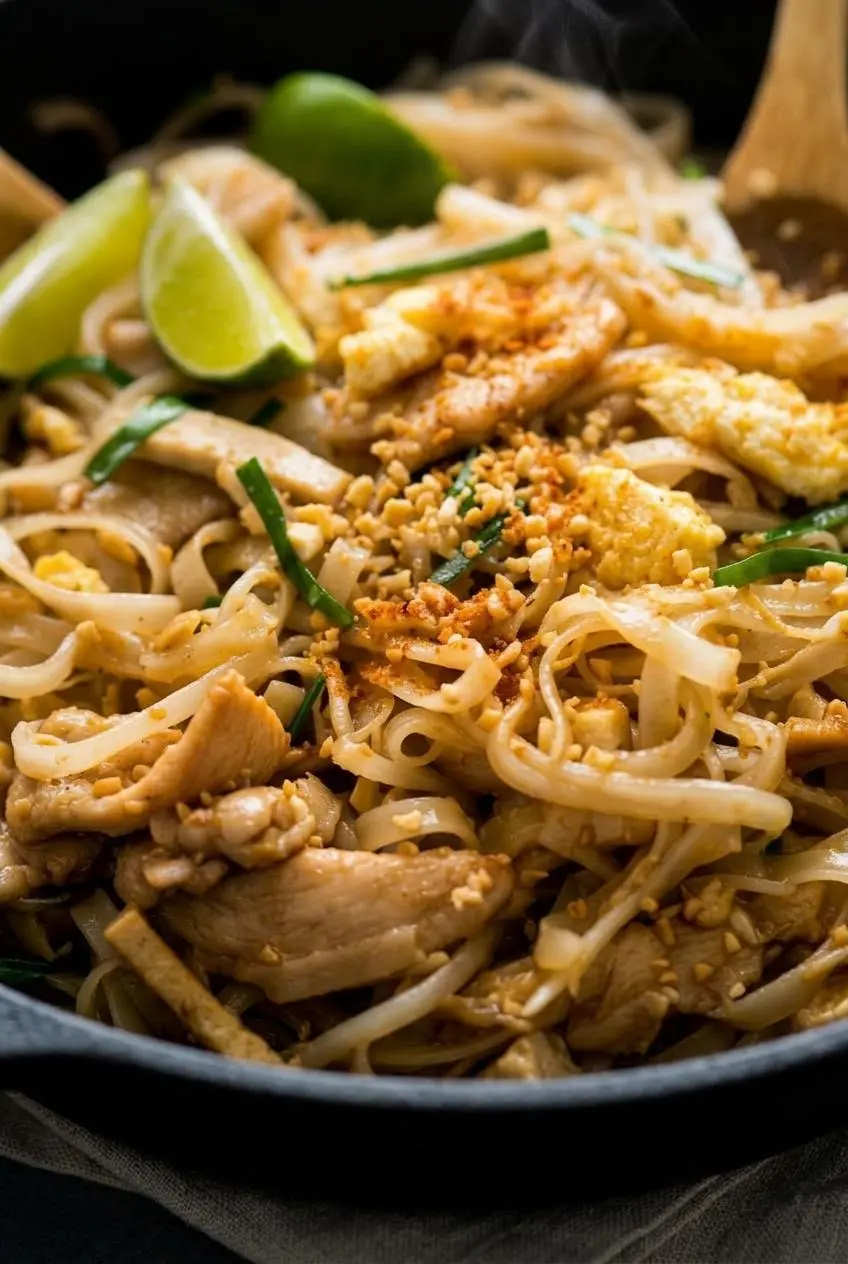
- Noodles clump or look dry: The pan may be too dry or the noodles may have sat too long after soaking. Add a small splash of warm water around the pan edge during the sauce toss, then keep lifting the noodles until they loosen.
- Noodles turn mushy: They soaked too long or were treated like wheat pasta. Start with noodles that are flexible but still firm, then finish them quickly in the sauce.
- The pan fills with liquid: Overcrowding lowers the heat and makes ingredients steam. Cook a smaller batch, wait for the skillet to feel very hot again, and use neutral oil that tolerates high heat well.
- The sauce tastes too sour: Tamarind brands vary. Stir in a pinch of extra brown sugar, toss, and taste again after the noodles have absorbed the sauce.
- The sauce tastes too sweet: Add a little more lime at the table rather than altering the pan dramatically. The fresh acidity brightens the noodles without making them salty.
- The chicken turns rubbery: Thin slices cook fast. Sear them over high heat only until mostly cooked, then let the final noodle toss finish the cooking gently.
- Peanuts taste flat: Add them near the end. Their toasted aroma is strongest when they avoid prolonged contact with wet sauce.
Protein Swaps and Flavor Variations
The tamarind sauce works with several optional variations, as long as the stir-fry stays quick and the pan remains hot. Keep the main chicken version as written, or use one of these changes when planning a different meal.
Shrimp and Prawn Pad Thai
Swap in peeled raw shrimp or prawns for the chicken if you prefer seafood. Sear them for about 1 minute per side until pink, move them aside, then return them at the end with the chives and peanuts so they do not overcook.
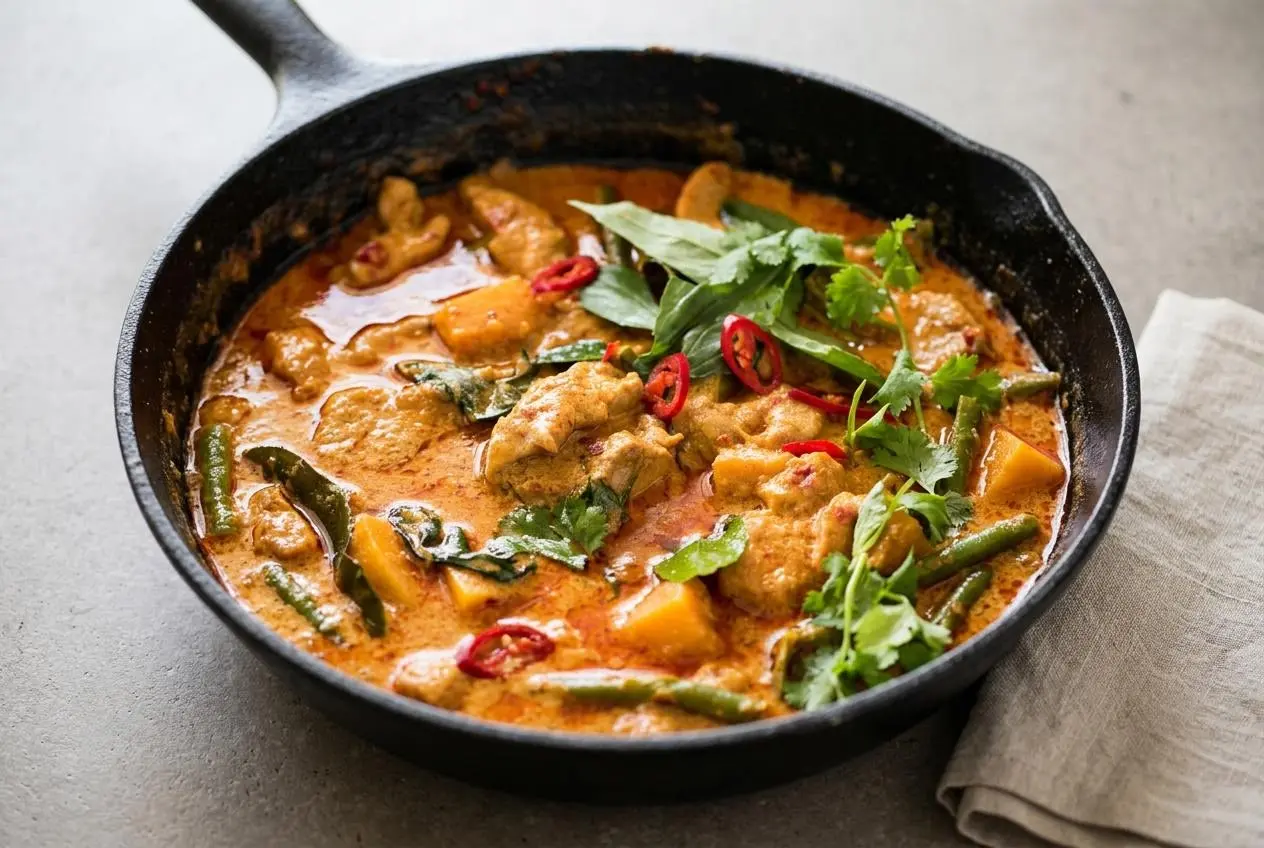
For a fuller Thai-style dinner, a crisp Thai chicken salad makes a refreshing contrast to the rich, caramelized noodles.
Crispy Tofu and Vegetarian Swaps
For a vegetarian version, use more firm pressed tofu and add thinly sliced bell pepper or carrot for color and crunch. Brown the tofu first if you want firmer edges, then follow the same noodle and sauce timing.
Rice noodles are naturally gluten-free, but check labels on fish sauce and oyster sauce. Tamari can replace soy-based seasoning in a vegetarian stir-fry sauce when a gluten-free option is needed, though the flavor will shift slightly from the original fish sauce balance.
Storage, Make-Ahead, and Proper Skillet Reheating
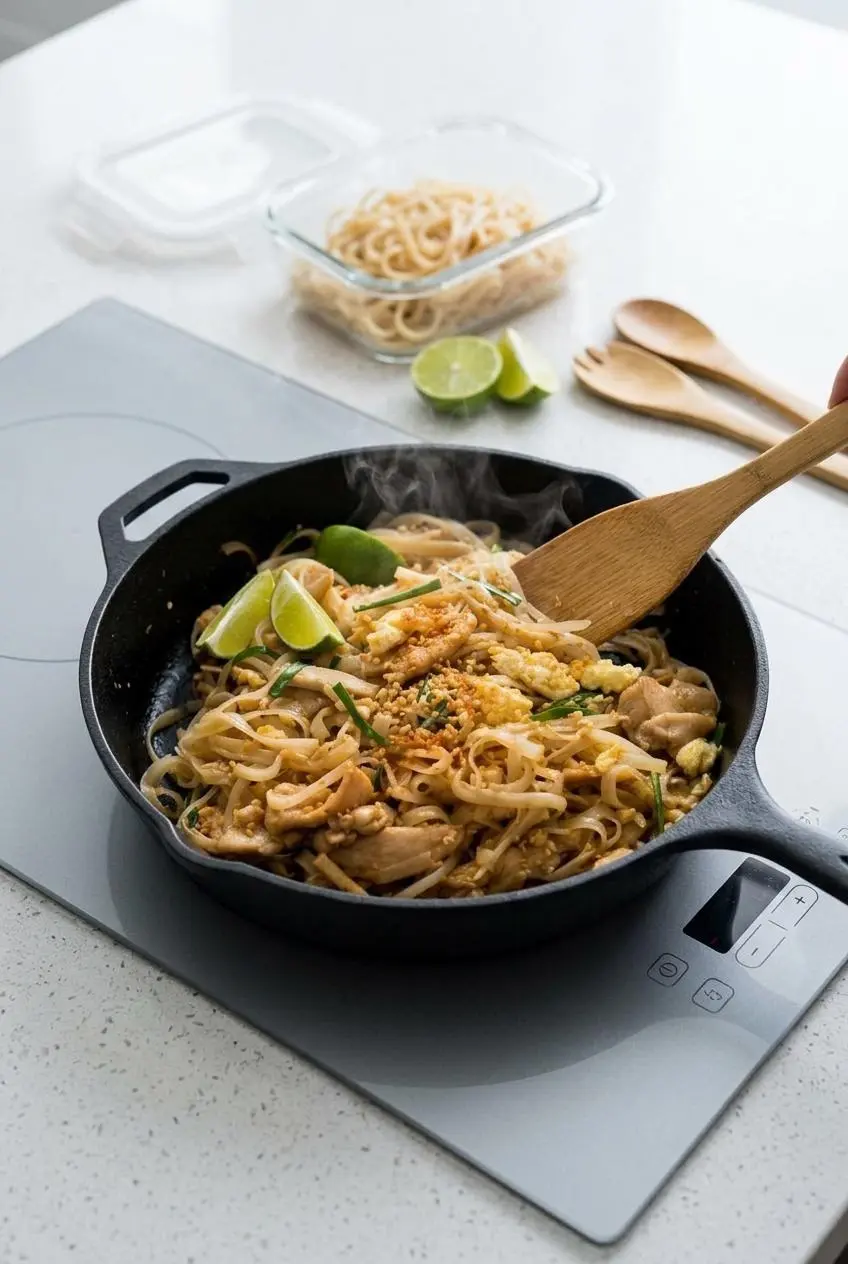
For advance prep, whisk the tamarind sauce before cooking and keep it covered in the refrigerator until you are ready to stir-fry. Slice the chicken and chop the onion, garlic chives, and peanuts separately, then soak the noodles close to cooking time for the best texture.
Cool leftovers promptly, place them in an airtight container, and keep them chilled. Reheat only the portion you plan to eat in a lightly oiled skillet over medium heat with a splash of water, tossing until the noodles loosen and regain some shine. A skillet protects the noodle chew better than prolonged microwave heating.
Keep lime, extra sprouts, peanuts, and chili separate until serving. Their crunch and brightness are what make leftover noodles taste lively again.
Conclusion
Chicken Pad Thai is fast enough for a weeknight while still delivering the sweet, savory, tangy balance that makes the dish so memorable. Soak the noodles just until pliable, keep the pan hot, and let the sauce absorb into every strand.
Set out crushed peanuts, lime wedges, bean sprouts, and chili so everyone can finish their own bowl. That little bit of table-side adjustment makes each serving feel just right.
Frequently Asked Questions
What Is the Secret Ingredient in Authentic Pad Thai?
Tamarind puree gives Pad Thai its signature tart, fruity flavor. It works with brown sugar and fish sauce to create the sweet, sour, and savory balance that defines the dish.
Why Do My Rice Noodles Turn Mushy or Break Apart?
Rice noodles become fragile when they soak too long or are boiled like wheat pasta. Soak them only until pliable with a firm center, rinse them briefly under cold water, and finish cooking them quickly in the hot sauce.
What Can I Use if I Cannot Find Tamarind Puree?
A pantry-style alternative is rice vinegar and brown sugar with a touch of soy sauce or ketchup. It will not taste exactly like tamarind, but it can provide sweet-tangy balance when tamarind puree is unavailable.
How Do You Properly Reheat Leftover Chicken Pad Thai?
Warm it in a lightly oiled skillet over medium heat with a splash of water. Toss gently until the noodles loosen and turn glossy again, then add fresh lime, peanuts, sprouts, or chili just before serving.
Chicken Pad Thai

Equipment
- Large non stick pan or skillet
- Colander
- Wooden Spoon
Ingredients
- 125 g Chang’s Pad Thai dried rice sticks 4oz
Sauce
- 1 1/2 tbsp tamarind puree NOT concentrate
- 3 tbsp brown sugar packed
- 2 tbsp fish sauce
- 1 1/2 tbsp oyster sauce
Stir Fry
- 2 – 3 tbsp vegetable or canola oil
- 1/2 onion sliced (brown, yellow)
- 2 cloves garlic finely chopped
- 150 g chicken breast (or thigh) 5oz, thinly sliced
- 2 eggs lightly whisked
- 1 1/2 cups beansprouts
- 1/2 cup firm tofu cut into 3cm / 1 1/4″ batons
- 1/4 cup garlic chives cut into 3cm / 1 1/4″ pieces
- 1/4 cup peanuts finely chopped
For Serving
- Lime wedges
- Ground chilli or cayenne pepper
- More beansprouts
Instructions
- Cover the rice sticks with plenty of boiling water in a large bowl, soak for 5 minutes, then drain and rinse quickly under cold water. The noodles should bend without snapping but still feel firm through the center.
- Whisk the tamarind puree, brown sugar, fish sauce, and oyster sauce together in a small bowl. The mixture should look dark amber and smell sweet, sharp, and savory.
- Heat 2 tbsp oil in a large nonstick pan or well-seasoned skillet over high heat, then add the onion and garlic for 30 seconds. Stir until the garlic becomes fragrant and the onion edges start to soften without browning deeply.
- Add the thinly sliced chicken and stir-fry for 1 1/2 minutes. The pieces should pick up light golden spots and look mostly opaque while remaining juicy.
- Move the chicken to one side, add the eggs to the open side, and scramble them with a wooden spoon before folding them into the chicken. Add a touch of extra oil if the pan looks dry; the egg should form soft, separate curds rather than a dry sheet.
- Add the bean sprouts, tofu, drained noodles, and prepared sauce. Keep the sprouts on top at first so they do not soften too early.
- Toss gently for about 1 1/2 minutes until the noodles absorb the sauce. The noodles should turn glossy and amber, with very little loose liquid left at the bottom of the pan.
- Fold in the garlic chives and half the peanuts, then remove the pan from the heat. The chives should stay bright and the peanuts should smell warm and nutty.
- Serve immediately with the remaining peanuts, lime wedges, ground chilli or cayenne pepper, and more beansprouts on the side if desired. Squeeze lime over each portion just before eating for a fresh, sharp finish.