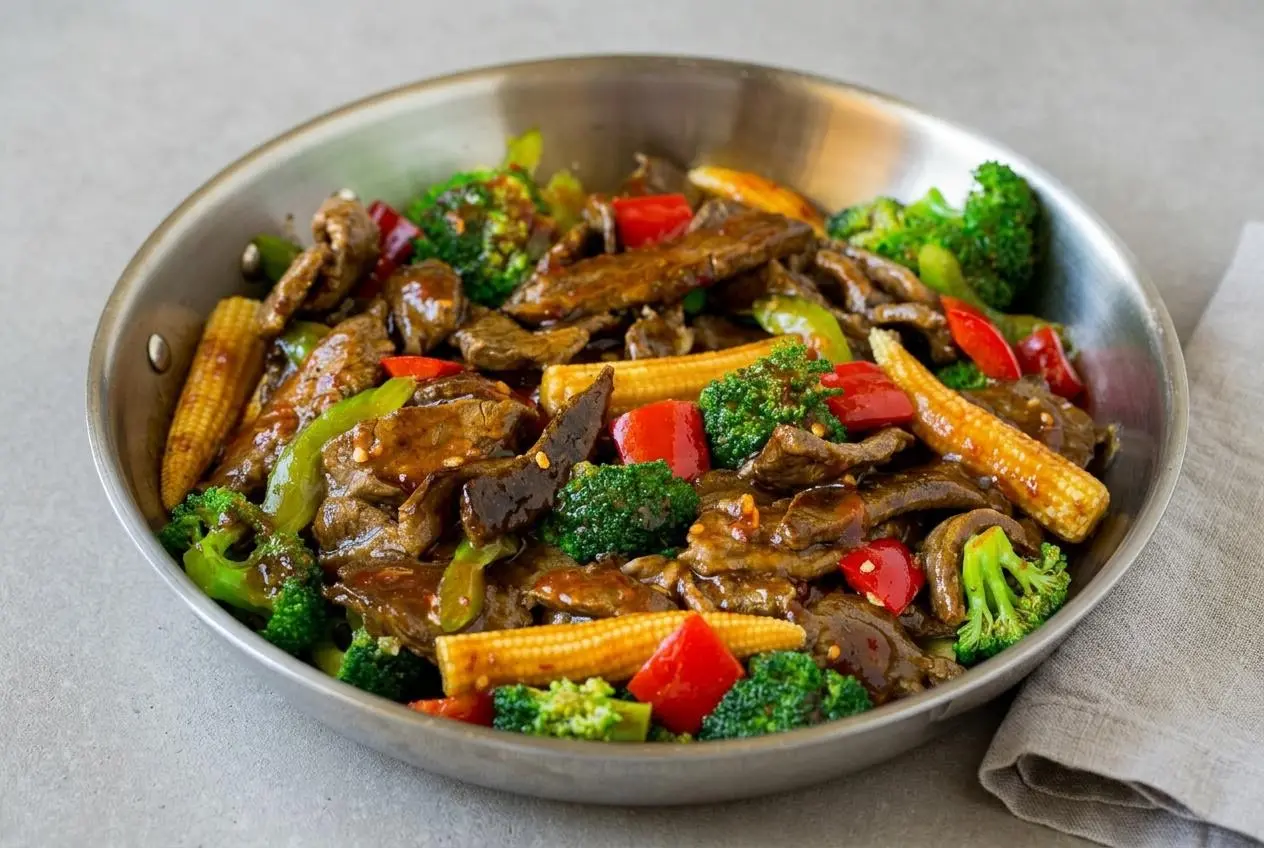
Hunan beef is a fast, high-heat stir-fry of thinly sliced flank steak, crisp vegetables, and a savory-spicy sauce balanced with chili paste and rice vinegar.
Hunan beef delivers sizzling steak, punchy garlic, and plenty of tender-crisp vegetables without a heavy sweet glaze. Thin slicing and quick batch searing keep the beef tender rather than chewy.
The sauce brings salty, tangy, and spicy flavors together in one glossy skillet coating. That lively sizzle is the whole point.
Set out the vegetables and sauce ingredients before heating the pan, because the cooking moves quickly once the oil is hot.
Essential Ingredients for Authentic Hunan Beef
Each ingredient supports the dish’s bold balance, from tender beef and crisp vegetables to savory depth, bright acidity, gentle sweetness, and a sauce that clings to every bite.
- 1 tablespoon vegetable oil
- 1 pound flank steak (thinly sliced)
- salt and pepper to taste
- 1 cup broccoli florets (cut into 1 inch pieces)
- 1/2 cup celery (thinly sliced)
- 1 medium red bell pepper (cored, seeded and diced)
- 1 cup canned baby corn (drained and halved)
- 1 1/2 teaspoons minced garlic
- 1/2 cup beef broth
- 2 tablespoons soy sauce
- 2 tablespoons oyster sauce
- 2 teaspoons rice vinegar
- 1 teaspoon honey
- 2 teaspoons chili paste (such as sambal oelek)
- 2 teaspoons cornstarch
Flank steak has a robust, lean beef flavor that works especially well with a bold stir-fry sauce. Soy sauce and oyster sauce build savory depth, while rice vinegar keeps that richness from feeling flat. Honey softens the sharp edges without turning the dish sugary, and cornstarch gives the pan juices a sleek coating.
For gentler heat, use less sambal oelek. For more fire, add more to taste. A small amount of optional doubanjiang can bring a fermented, savory chili flavor, but keep it outside the main mixture so the dish stays true to its original balance.
I prefer to slice flank steak while it is very cold, since firm meat is much easier to cut into even, thin strips.
The Perfect Cut: Slicing Flank Steak for Tenderness
Look for the long lines running through the steak, then slice across them rather than alongside them. Cutting perpendicular to those muscle fibers shortens the grain, so the finished beef feels more tender with each bite.
If the steak feels soft or slips under the knife, place it in the freezer for 20 minutes before slicing. This brief chill firms the surface and helps create thin, uniform ribbons. As an optional technique, toss the sliced beef with a little cornstarch and soy sauce before cooking to form a light protective coating, often called velveting.
Crafting the Savory Hunan Sauce
The sauce gets its character from contrast: beef broth keeps it fluid, soy and oyster sauce add deep savoriness, chili paste provides direct heat, and vinegar delivers a clean tang. The honey is subtle and simply rounds out the salt and spice.
Whisk the cornstarch into the cold broth and seasonings before the mixture reaches the skillet. Cornstarch dissolves smoothly in cool liquid, which helps prevent lumps when the sauce hits the hot pan and begins to bubble.
How to Make Restaurant-Quality Hunan Beef at Home
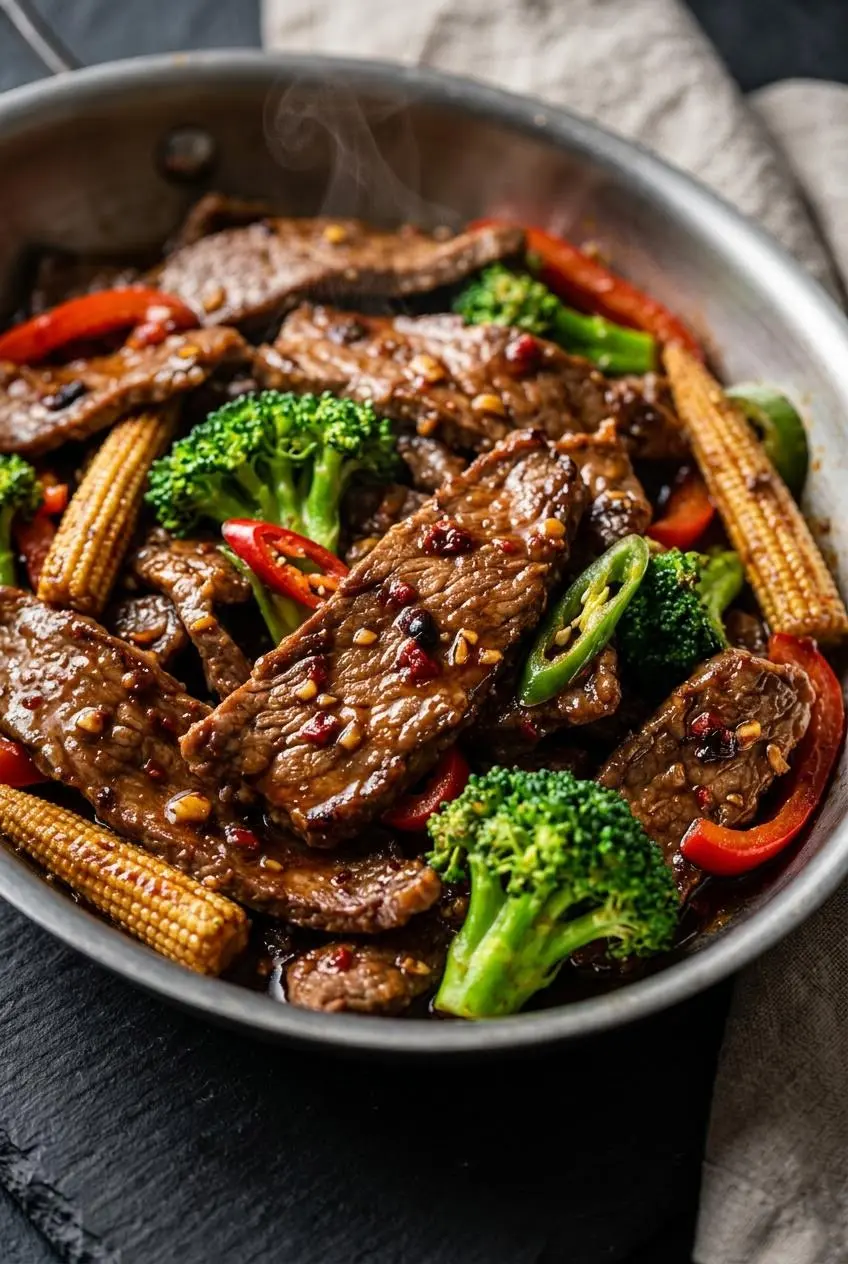
The key is controlling the order of the skillet. Sear the beef first, cook the vegetables until bright and crisp-tender, then finish everything quickly in the sauce. Serve it with steamed jasmine rice, cauliflower rice, or beef fried rice for a takeout-style dinner.
- Place a large pan over high heat and add the vegetable oil.
Wait until the oil shimmers and gives off the faintest wisp of smoke. - Arrange the flank steak in one uncrowded layer and season it with salt and pepper.
The strips should make an immediate, active sizzle when they touch the pan. - Leave the steak to brown for 3-4 minutes per side, working in batches as needed.
Look for browned edges and avoid letting the pan fill with pale liquid. - Transfer the browned steak to a plate and cover it to hold in warmth.
The beef will stay juicy while the vegetables cook. - Cook the broccoli, celery, and bell pepper for 4-5 minutes, seasoning with salt and pepper, then stir in the baby corn and garlic for 30 seconds.
The broccoli should stay bright green, and the garlic should smell fragrant rather than dark or bitter. - Return the beef and any collected juices to the pan with the vegetables.
Keep everything moving so the steak warms through without overcooking. - Whisk the beef broth, soy sauce, oyster sauce, rice vinegar, honey, chili paste, and cornstarch in a small bowl.
The mixture should look smooth, with no cornstarch settled at the bottom. - Pour the sauce into the pan, bring it to a simmer, and cook for 1-2 minutes.
It is ready when it bubbles into a glossy glaze that coats the beef and vegetables.
Mastering High-Heat Batch Searing
Overcrowding is the fastest route to gray, steamed beef. Too much steak lowers the pan’s temperature, and the moisture released by the meat collects faster than it can evaporate. Instead of browning, the strips simmer in their own juices.
Give each batch room to contact the hot surface. The sound should stay sharp and lively, and the meat should pick up browned edges before it leaves the pan. A wide skillet is helpful, but even a large pan benefits from patience here.
Staging Vegetables for Tender-Crisp Texture
Broccoli, celery, and bell pepper need the longest time because they start raw and benefit from enough heat to soften slightly while keeping their snap. Their color should stay vivid rather than dull.
Add baby corn after the first vegetables because it is already cooked and only needs to heat through. Garlic comes last and cooks for just 30 seconds. That short window releases its aroma without letting the minced pieces scorch.
If the finished sauce seems too thick, remove the pan from the heat promptly rather than continuing to simmer. The glaze will tighten slightly as it sits on the hot ingredients.
Hunan Beef vs Szechuan and Mongolian Beef
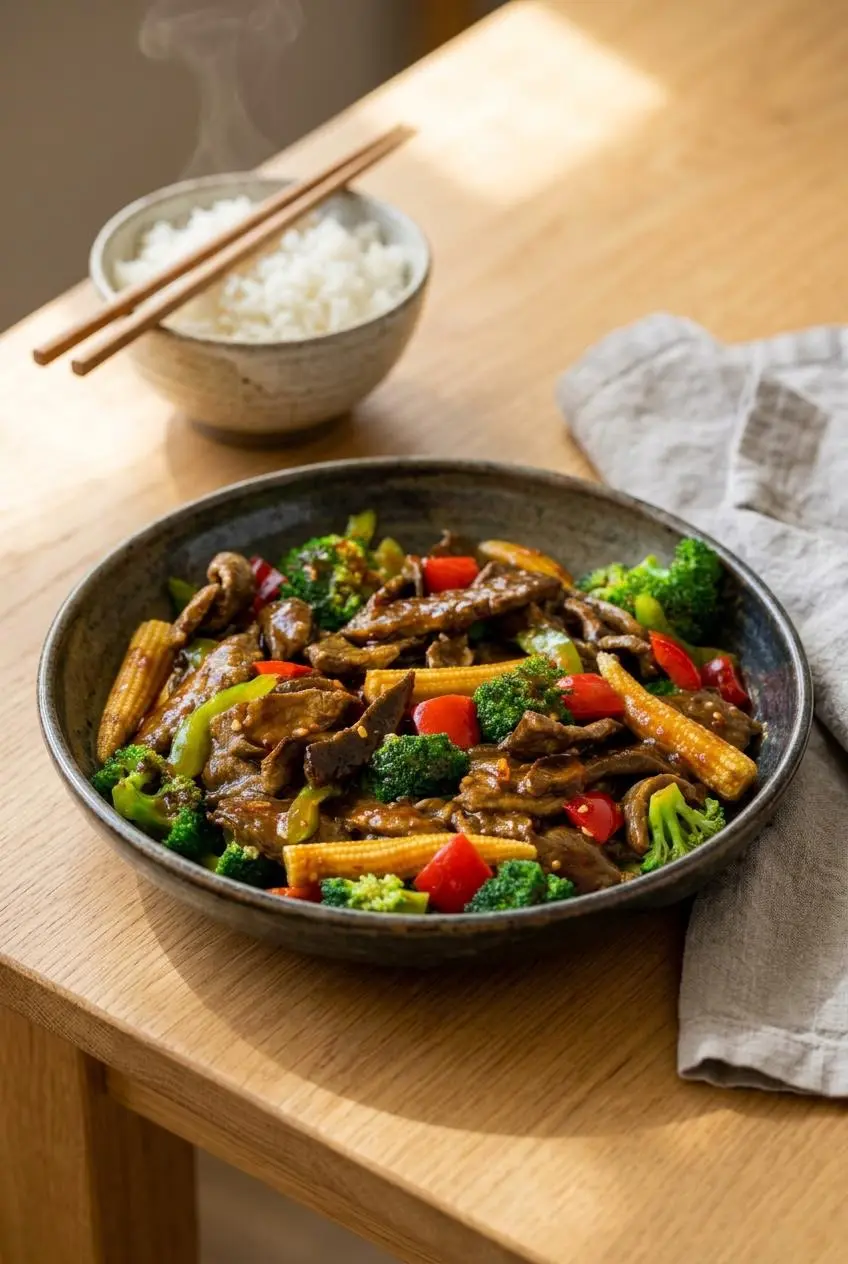
These dishes can all arrive in a dark, savory sauce, but their flavor profiles are quite different.
- Hunan beef: Direct chili heat, tangy vinegar, savory oyster sauce, and crisp vegetables lead the dish. The flavor is hot and savory with very little sweetness.
- Szechuan beef: Often features dried chiles and Sichuan peppercorns, which bring a citrusy tingle and signature numbing sensation alongside the heat. It can also lean sweeter than Hunan-style dishes.
- Classic Mongolian beef: Usually centers on a sweeter brown sugar and soy glaze with scallions. It is generally milder and less vegetable-focused than Hunan beef.
Hunan-style heat is easy to tailor without changing the sauce’s character. Reduce the chili paste for a mild warmth, or add extra chili paste for a sharper finish. Keep the vinegar and savory sauces steady so the flavor stays balanced rather than simply hotter.
Storage and Reheating Instructions
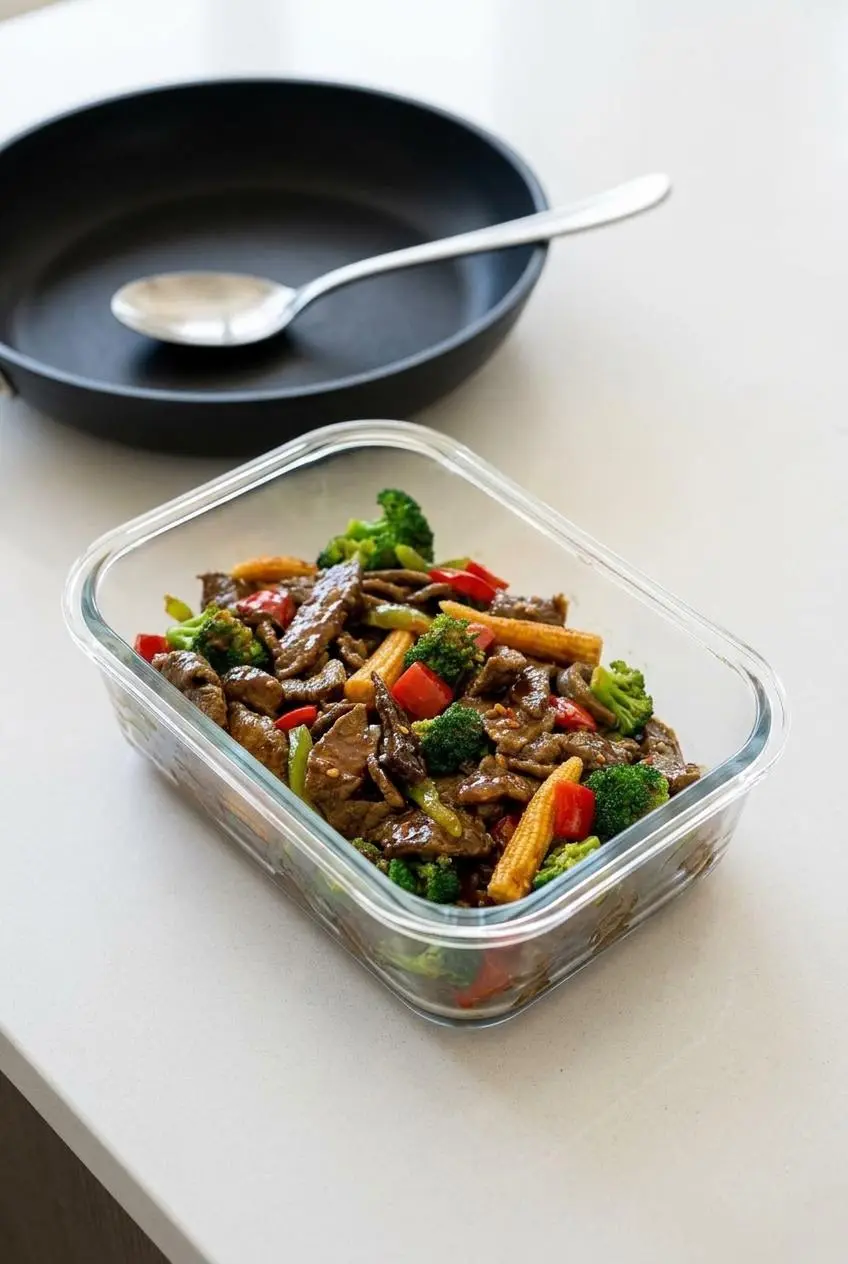
For the best texture, cool leftovers promptly, transfer them to an airtight container, and keep them chilled. The broccoli and bell pepper will soften over time, so this stir-fry is at its liveliest when served soon after cooking.
Reheat a portion quickly in a skillet over medium-high heat with a small splash of water or broth to loosen the thickened glaze. Stir only until hot and glossy. Long microwave reheating can toughen the lean beef and leave the vegetables limp.
If you are planning ahead, slice the steak and chop the vegetables close to cooking time, keeping each component separate until the skillet is hot. This protects the vegetables’ crunch and helps the beef sear instead of steaming.
Conclusion
This 35-minute stir-fry brings together tender flank steak, vibrant vegetables, and a savory-spicy sauce with just enough vinegar to keep every bite bright.
Keep the pan hot, sear the meat in roomy batches, and let the sauce simmer only until glossy. Those small choices make a big difference at the dinner table.
Frequently Asked Questions
What Gives Hunan Beef Its Distinct Flavor?
Hunan beef combines chili paste, garlic, soy sauce, oyster sauce, and rice vinegar for a spicy, savory, tangy finish. Chili paste provides direct heat. Oyster sauce and soy sauce add deep savory flavor. Rice vinegar keeps the sauce bright rather than heavy. Honey rounds out the sauce without creating a sugary glaze.
How Does Hunan Beef Differ From Szechuan Beef?
Hunan beef has straightforward chili heat and a savory-sour finish. Szechuan beef often includes Sichuan peppercorns, which create a citrusy, tongue-tingling sensation along with the chiles. Szechuan sauces can also have a sweeter edge.
What Is the Best Way to Slice Beef for Stir-Fry?
Slice flank steak thinly across the grain. Cutting through the long muscle fibers makes the cooked strips easier to chew. Chill the steak in the freezer for 20 minutes first if you want cleaner, more even slices.
How Should You Keep Leftover Hunan Beef at Its Best?
Keep leftovers chilled in an airtight container and reheat only the portion you plan to eat. A quick skillet reheat with a splash of liquid revives the sauce better than extended microwave heating, though the vegetables will become softer after storage.
How Can I Adjust the Heat Level in Hunan Beef?
Use less chili paste for a milder dish while leaving the remaining sauce ingredients unchanged. For more heat, add extra sambal oelek to taste. You can also use optional doubanjiang for deeper fermented chili flavor, though it will make the sauce more intense and savory.
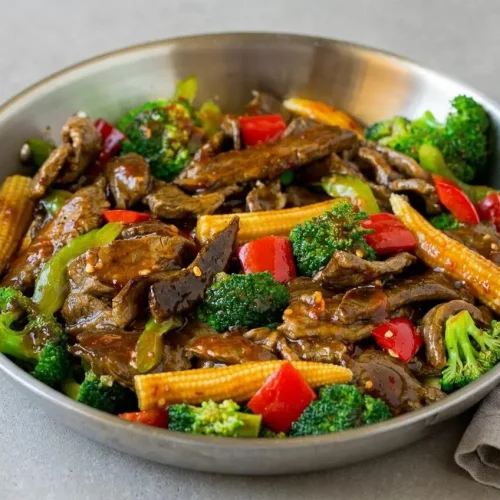
Hunan Beef

Equipment
- Large pan
Ingredients
- 1 tablespoon vegetable oil
- 1 pound flank steak thinly sliced
- salt and pepper to taste
- 1 cup broccoli florets cut into 1 inch pieces
- 1/2 cup celery thinly sliced
- 1 medium red bell pepper cored, seeded and diced
- 1 cup canned baby corn drained and halved
- 1 1/2 teaspoons minced garlic
- 1/2 cup beef broth
- 2 tablespoons soy sauce
- 2 tablespoons oyster sauce
- 2 teaspoons rice vinegar
- 1 teaspoon honey
- 2 teaspoons chili paste such as sambal oelek
- 2 teaspoons cornstarch
Instructions
- Place a large pan over high heat and add the vegetable oil. Wait until the oil shimmers and gives off the faintest wisp of smoke.
- Arrange the flank steak in one uncrowded layer and season it with salt and pepper. The strips should make an immediate, active sizzle when they touch the pan.
- Leave the steak to brown for 3-4 minutes per side, working in batches as needed. Look for browned edges and avoid letting the pan fill with pale liquid.
- Transfer the browned steak to a plate and cover it to hold in warmth. The beef will stay juicy while the vegetables cook.
- Cook the broccoli, celery, and bell pepper for 4-5 minutes, seasoning with salt and pepper, then stir in the baby corn and garlic for 30 seconds. The broccoli should stay bright green, and the garlic should smell fragrant rather than dark or bitter.
- Return the beef and any collected juices to the pan with the vegetables. Keep everything moving so the steak warms through without overcooking.
- Whisk the beef broth, soy sauce, oyster sauce, rice vinegar, honey, chili paste, and cornstarch in a small bowl. The mixture should look smooth, with no cornstarch settled at the bottom.
- Pour the sauce into the pan, bring it to a simmer, and cook for 1-2 minutes. It is ready when it bubbles into a glossy glaze that coats the beef and vegetables.