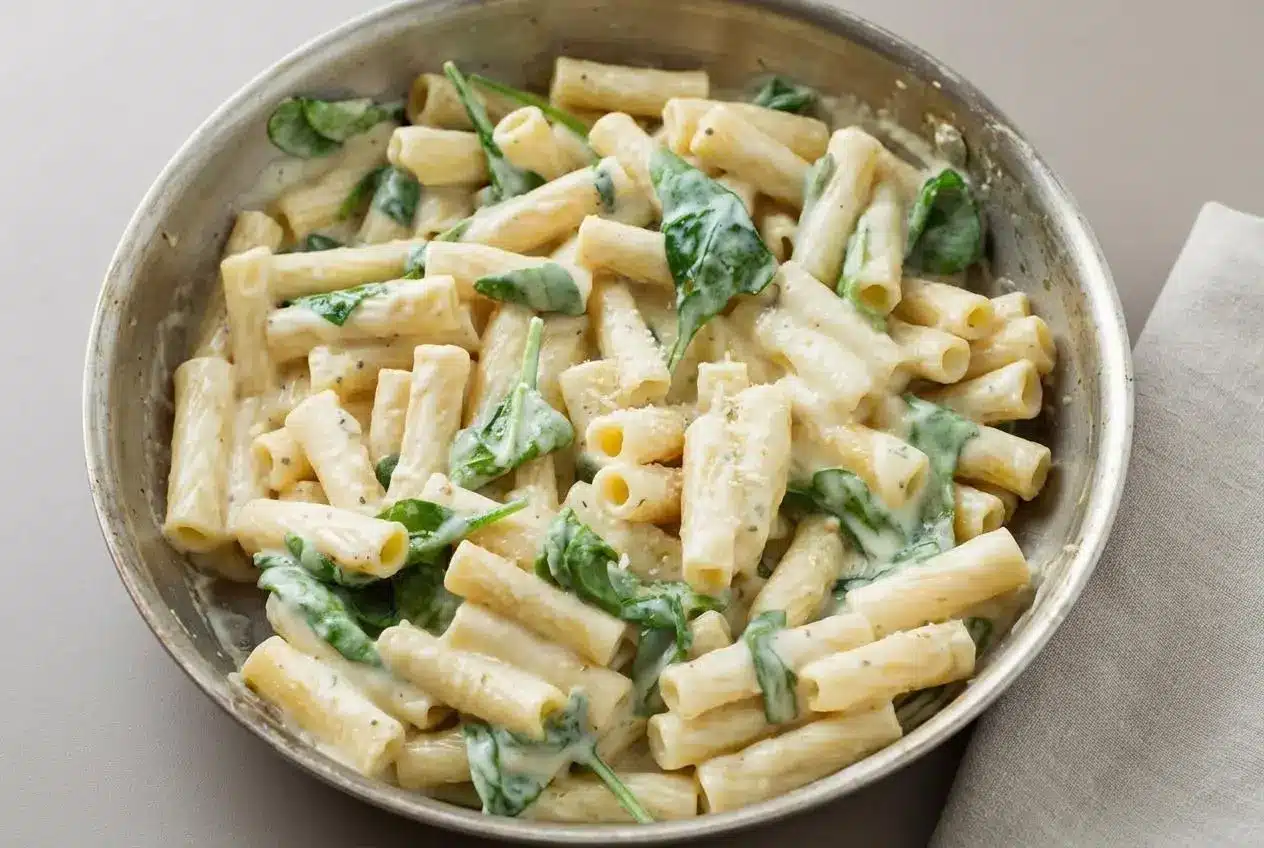
Creamy Spinach Pasta combines al dente ziti with a garlic Parmesan sauce and tender spinach for a rich, comforting dinner ready in about 30 minutes.
Creamy Spinach Pasta gets its silky texture from a lightly browned butter-and-flour base, slowly whisked broth and half-and-half, then finely grated Parmesan. It is fast enough for a busy weeknight but still feels like something worth sitting down for.
Garlic butter should smell warm and nutty before the flour goes in, while the spinach turns tender right in the finished sauce. The little details make the difference.
Set the Parmesan, broth, half-and-half, and seasonings within reach before heating the skillet, since the sauce moves quickly once the garlic hits the butter.
Key Ingredients for the Best Creamy Spinach Sauce
Each ingredient contributes something important: butter and flour give the sauce structure, broth and half-and-half create body, Parmesan adds savory depth, and lemon keeps the richness balanced.
Seasonings
- ½ teaspoon EACH: dried oregano, parsley, mustard powder
- ¼ teaspoon garlic powder
Sauce
- 4 tablespoons salted butter
- 3 cloves garlic (minced)
- 2 Tablespoons all-purpose flour
- 1 cup chicken broth
- 1 cup half and half ((half milk/half cream))
- 3 teaspoons lemon juice
- ¾ cup Parmesan cheese (finely grated from a block)
- 1 ½ cups spinach
- ½ pound ziti rigati (penne works well too)
Butter and flour form a roux, which gives the sauce enough structure to hold the broth, dairy, and cheese together. Garlic provides the savory backbone, mustard powder adds a quiet tang, and lemon juice keeps the Parmesan from tasting too heavy.
I grate Parmesan from a wedge immediately before cooking because it melts into the warm sauce much more smoothly than pre-shredded cheese.
Choosing the Right Dairy: Half-and-Half vs Heavy Cream
Half-and-half makes a creamy sauce that coats the pasta without becoming overly dense. Whole milk can make a looser sauce, while heavy cream creates a thicker, richer finish. If changing the dairy, keep the heat gentle and add it gradually so the sauce stays cohesive.
Why Freshly Grated Parmesan Is Essential
Freshly grated Parmesan softens readily into warm liquid and brings a clean, nutty flavor. Bagged shredded cheese often contains anti-caking ingredients that can keep it from melting smoothly, leaving the sauce grainy instead of glossy. Use a fine grater for the quickest melt.
Best Pasta Shapes for Gripping Cream Sauce
Ziti rigati works especially well because its ridges and hollow center catch the garlic Parmesan sauce. Penne is another good choice. Smooth, thin noodles can work, but ridged tubes give you more sauce in every bite and stay satisfying as the sauce thickens.
How to Make Creamy Spinach Pasta Step by Step
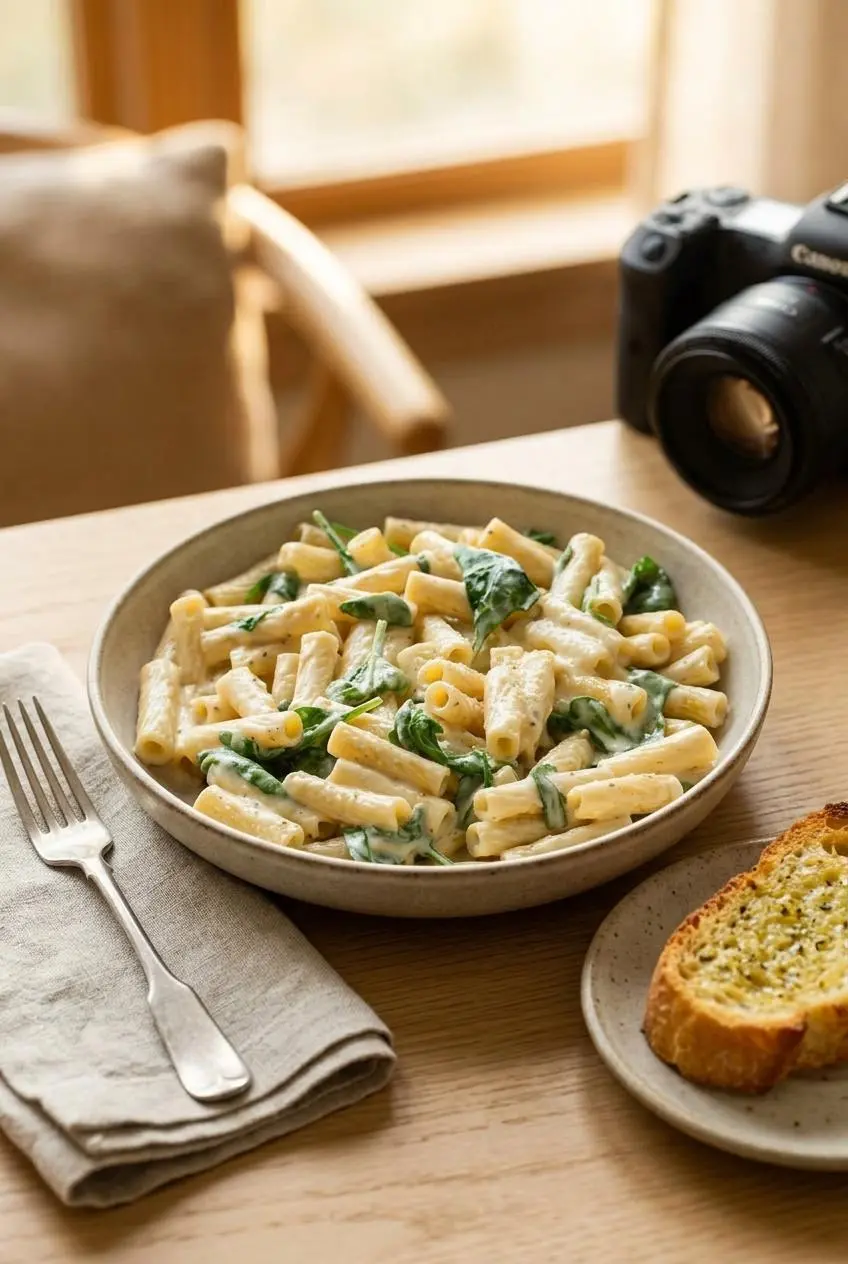
Start the pasta and sauce at the same time so both are warm when they meet. The key is steady whisking, low heat for the cheese, and a little reserved pasta water for adjusting the consistency if needed.
Step 1: Boiling Pasta to Al Dente
Cook the ziti in salted boiling water until it is firm but tender at the center. Before draining, reserve about ½ cup of the starchy cooking water. That cloudy water helps loosen a sauce that thickens too quickly while helping it cling to the pasta. Do not rinse the drained pasta.
Step 2: Building the Garlic Butter Roux
Let the butter warm over medium-low heat before adding the garlic. When it foams lightly and takes on a pale golden color, it is ready for flour. The flour needs its full cooking time so its raw flavor disappears and the sauce tastes gently toasted rather than pasty.
Step 3: Whisking Liquids and Melting Cheese
Add the broth a little at a time while whisking so the roux stays smooth. Once the half-and-half and seasonings are in, keep the sauce below an aggressive boil. Lower the heat before Parmesan goes in, then stir until the sauce coats the back of a spoon.
Step 4: Wilting Spinach and Final Toss
Fresh spinach wilts directly in the warm sauce, so there is no need to cook it separately. Add the drained pasta once the leaves have collapsed, then toss until the ridges are evenly coated. The sauce will continue to thicken as it stands.
Prep Work
- Bring a pot of salted water to a boil while measuring the remaining ingredients.
Having everything ready keeps the garlic and roux from overcooking while you search for an ingredient.
For the Pasta
- Add the ziti rigati to the boiling water as you begin the sauce, then cook according to the package directions without overcooking.
Drain when the pasta is firm al dente so it can finish absorbing flavor in the sauce.
For the Sauce
- Warm the butter in a skillet over medium-low heat for about 2 minutes, then add the minced garlic and swirl the pan occasionally.
Continue until the butter foams and lightly browns around the garlic without letting it scorch. - Raise the heat to medium and whisk in the flour, cooking it for about 2 minutes.
The roux should deepen slightly in color and smell toasted rather than like raw flour. - Whisk the chicken broth into the roux in small additions, stirring continuously after each splash.
The mixture should become smooth and gradually thicken without lumps. - Pour in the half and half slowly while stirring the sauce.
Keep the sauce moving until it looks creamy and even throughout. - Stir in the dried oregano, parsley, mustard powder, garlic powder, and lemon juice.
The lemon should brighten the aroma without making the sauce taste sharply acidic. - Turn the heat to low, then stir in the Parmesan followed by the spinach.
The cheese should melt smoothly and the spinach should collapse into the warm sauce. - Add the drained pasta and toss it through the sauce until evenly coated.
Let it rest briefly as the sauce settles into a thicker, silky coating.
Fresh vs Frozen Spinach: Moisture and Preparation
Fresh baby spinach is the easiest choice here because it softens directly in the skillet. Stir it into the hot sauce and listen for the bubbling to quiet slightly as the leaves collapse. It should turn tender in about 2 minutes without any pre-cooking.
Frozen spinach works as an optional swap, but moisture control matters. Thaw it completely, place it in the center of a clean kitchen towel, gather the towel around it, and squeeze firmly over the sink. Open the towel, loosen the spinach, and squeeze again until it no longer releases liquid easily. Add it only after the sauce is already smooth.
A compact portion of frozen spinach contains far more water than a loose pile of fresh leaves. Use it as a convenient alternative, but expect a more concentrated spinach flavor and make sure it is thoroughly wrung out. If you have extra fresh leaves, a chilled spinach pasta salad is another useful way to enjoy them.
Pro Tips and Troubleshooting Common Mistakes
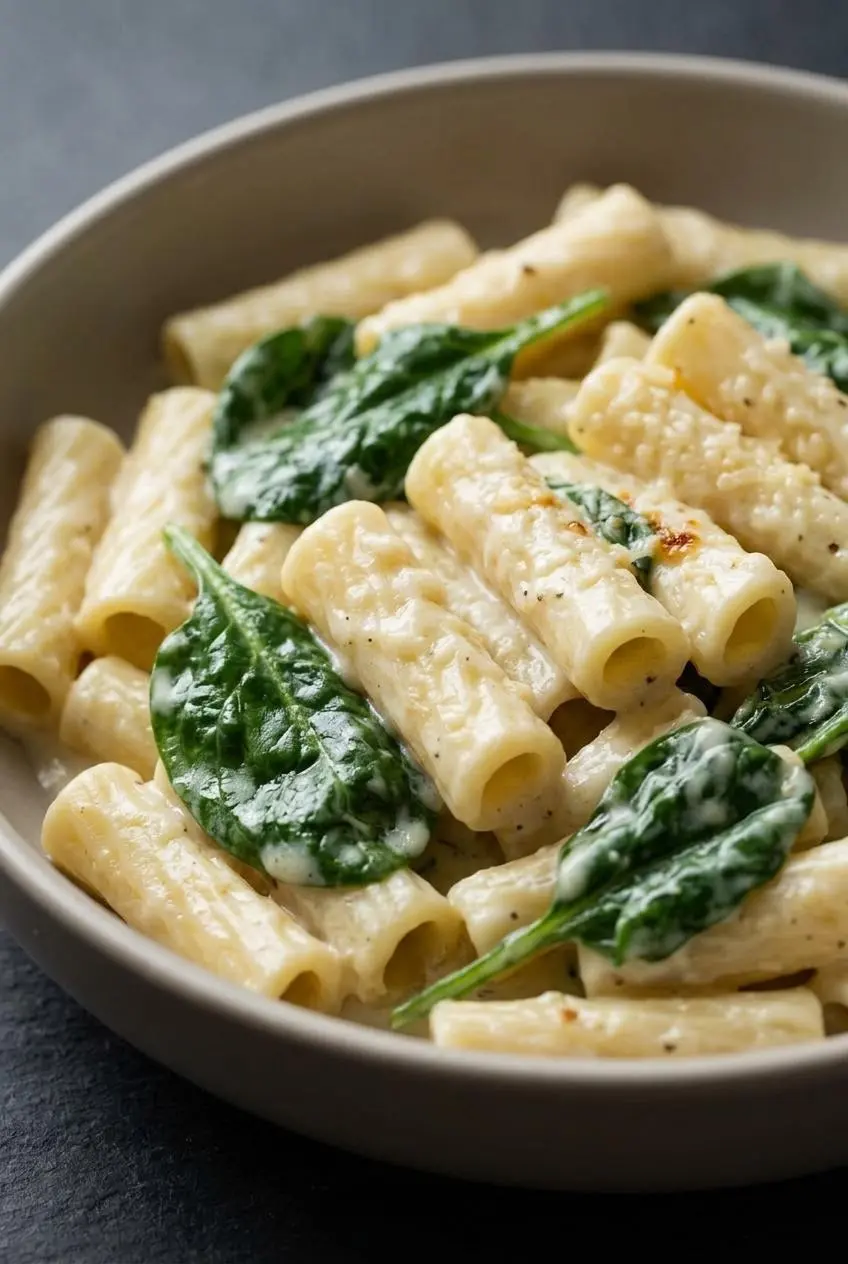
Most creamy pasta problems come down to heat, moisture, or cheese handling. These quick fixes keep the sauce smooth without changing the flavor of the finished dish.
- The sauce looks greasy or separated: Take the skillet off the heat and whisk in a small splash of warm pasta cooking water. The starch helps bring the fat and liquid back together.
- The sauce is too thick: Stir in reserved pasta water a little at a time until the sauce loosens enough to coat the ziti.
- The sauce seems thin: Let the pasta sit in the skillet briefly before adding more thickener. The cheese and starch will continue to tighten the sauce.
- The sauce turns grainy: Keep the heat low when adding Parmesan and use finely grated cheese from a block. High heat and pre-shredded cheese are common culprits.
- The spinach makes it watery: Use fresh leaves as directed, or squeeze frozen spinach very dry before it reaches the pan.
- The sauce tastes flat: Add a little more lemon juice only after tasting. Its acidity lifts the garlic and Parmesan without taking over.
A tiny pinch of ground nutmeg and a little fresh lemon zest are optional additions for the roux. They add aroma and brightness, especially when you want the cream sauce to taste a touch more rounded.
Flavor Variations and Protein Additions
Keep the main dish as written, then tailor individual bowls or the whole skillet with optional additions. Add cooked proteins at the end so they stay tender and do not interfere with the sauce.
Creamy Tomato Florentine Variation
For a blush-colored Florentine-style sauce, stir in 2 tablespoons of tomato paste with the roux, or add ½ cup of drained diced tomatoes after the broth has thickened. The tomato adds gentle acidity and turns the creamy garlic sauce pink. For a fuller tomato-forward dinner, try this pink sauce pasta.
Adding Sautéed Chicken or Shrimp
Sear seasoned chicken breast slices or shrimp in the skillet before starting the sauce, then transfer them to a plate. Make the sauce in the same skillet and fold the cooked protein back in with the pasta. For another hearty option with tender greens, try chicken and spinach pasta.
Lemon and Ricotta Finish
Add small dollops of whole-milk ricotta to warm bowls and finish with a pinch of lemon zest. The ricotta gives each serving a cool, soft contrast against the savory garlic Parmesan sauce.
- Gluten-free pasta: Choose a sturdy corn, rice, or chickpea pasta and begin checking it about 2 minutes early. It can soften quickly when tossed with warm cream sauce.
- Crispy bacon: Sprinkle it over individual portions for salty crunch while leaving the core dish meatless.
- Italian sausage: Brown it separately, then fold it in at the end for a bolder variation. A creamy Italian sausage pasta is a great option when that is the mood.
Storage and Reheating Instructions
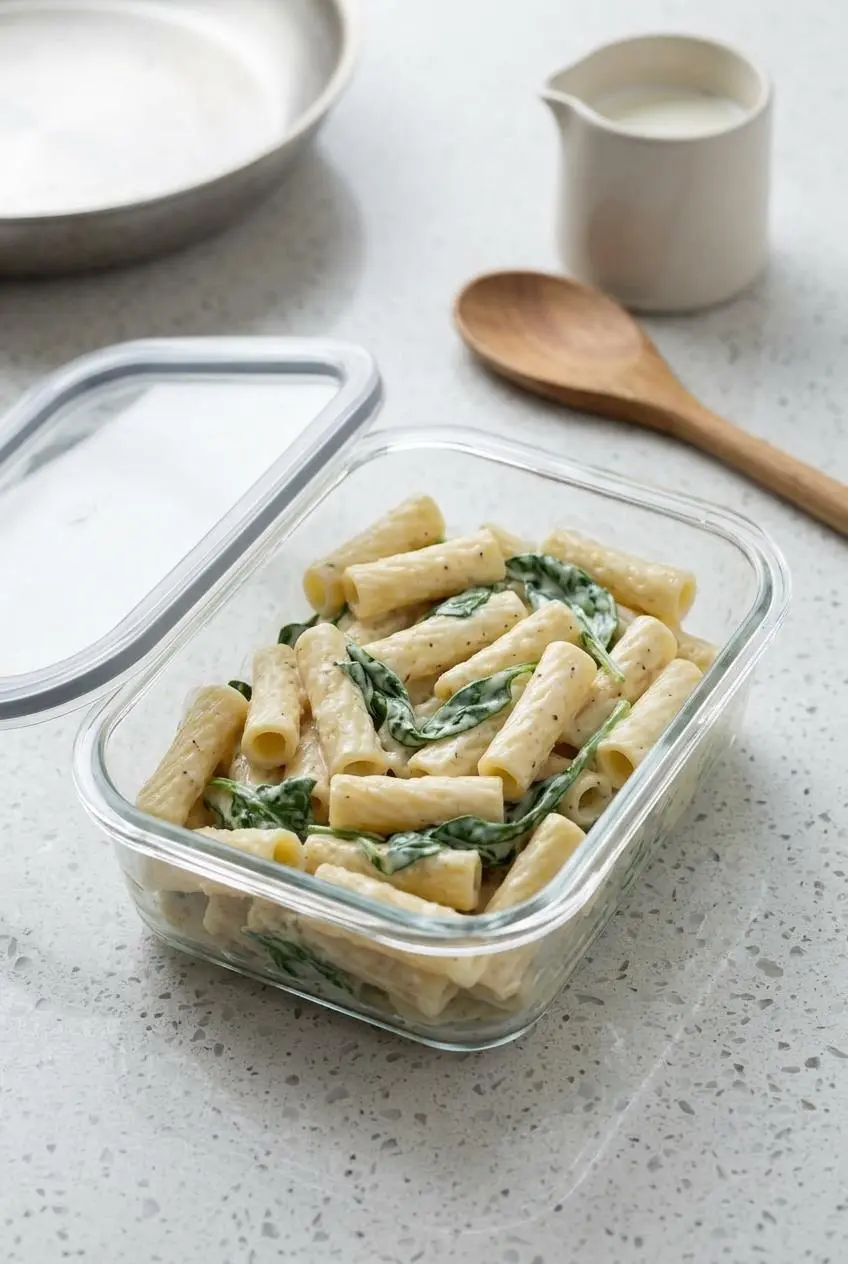
Cool leftover pasta, transfer it to an airtight container, and keep it chilled. Cream-based pasta thickens as it rests, so reheating works best in a skillet over low heat rather than with intense microwave heat.
Add a splash of milk or chicken broth and stir gently as the pasta warms. The added liquid helps the sauce become smooth and glossy again. Reheat only the portion you plan to serve, since repeated warming can make the sauce less cohesive.
Conclusion
This creamy pasta brings together garlic, Parmesan, lemon, and spinach in a satisfying 30-minute dinner. Gentle heat keeps the sauce smooth, while starchy pasta water gives you an easy way to fine-tune the texture.
Serve it warm with crusty garlic bread and a crisp salad with lemony dressing. A glossy sauce and tender spinach make every forkful feel especially comforting.
Frequently Asked Questions
Do You Need to Cook Spinach Before Adding It to the Pasta Sauce?
No. Fresh baby spinach can go directly into the finished warm sauce. It wilts quickly, usually within about 2 minutes, while the pasta is being tossed. Frozen spinach needs different handling: thaw it fully and squeeze it dry before adding.
Can I Use Frozen Spinach Instead of Fresh?
Yes, frozen spinach is a convenient substitute. Thaw it completely, wrap it in a clean dish towel, and squeeze firmly until excess liquid is removed. Wet spinach will dilute the sauce, so add it only after the Parmesan has melted smoothly.
Why Did My Creamy Pasta Sauce Separate or Become Grainy?
High heat is usually the issue. Dairy can separate when it is added to a rapidly boiling skillet. Lower the heat before adding Parmesan, and stir until it melts gently into the sauce. Pre-shredded cheese can also cause graininess, so grate Parmesan from a block whenever possible.
How Do You Reheat Leftover Creamy Spinach Pasta Without It Drying Out?
Warm it slowly in a skillet over low heat with a splash of milk or chicken broth. Stir gently until the sauce loosens and looks glossy again. Avoid high heat, which can cause the dairy sauce to become greasy or split.
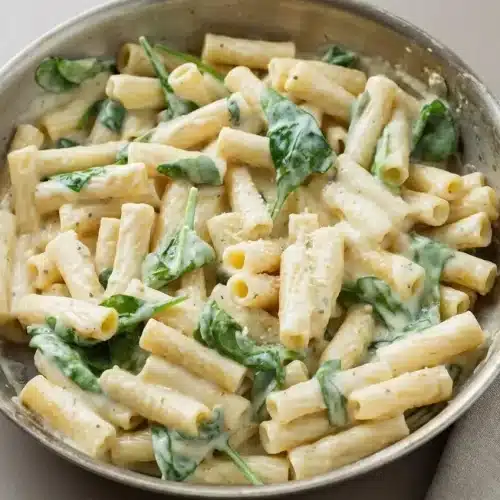
Creamy Spinach Pasta

Equipment
- Skillet
- Pasta pot
- Whisk
- Cheese grater
- Garlic Press
Ingredients
Seasonings
- ½ teaspoon EACH: dried oregano, parsley, mustard powder
- ¼ teaspoon garlic powder
Sauce
- 4 tablespoons salted butter
- 3 cloves garlic minced
- 2 Tablespoons all-purpose flour
- 1 cup chicken broth
- 1 cup half and half (half milk/half cream)
- 3 teaspoons lemon juice
- ¾ cup Parmesan cheese finely grated from a block
- 1 ½ cups spinach
- ½ pound ziti rigati penne works well too
Instructions
Prep Work
- Bring a pot of salted water to a boil while measuring the remaining ingredients. Having everything ready keeps the garlic and roux from overcooking while you search for an ingredient.
For the Pasta
- Add the ziti rigati to the boiling water as you begin the sauce, then cook according to the package directions without overcooking. Drain when the pasta is firm al dente so it can finish absorbing flavor in the sauce.
For the Sauce
- Warm the butter in a skillet over medium-low heat for about 2 minutes, then add the minced garlic and swirl the pan occasionally. Continue until the butter foams and lightly browns around the garlic without letting it scorch.
- Raise the heat to medium and whisk in the flour, cooking it for about 2 minutes. The roux should deepen slightly in color and smell toasted rather than like raw flour.
- Whisk the chicken broth into the roux in small additions, stirring continuously after each splash. The mixture should become smooth and gradually thicken without lumps.
- Pour in the half and half slowly while stirring the sauce. Keep the sauce moving until it looks creamy and even throughout.
- Stir in the dried oregano, parsley, mustard powder, garlic powder, and lemon juice. The lemon should brighten the aroma without making the sauce taste sharply acidic.
- Turn the heat to low, then stir in the Parmesan followed by the spinach. The cheese should melt smoothly and the spinach should collapse into the warm sauce.
- Add the drained pasta and toss it through the sauce until evenly coated. Let it rest briefly as the sauce settles into a thicker, silky coating.