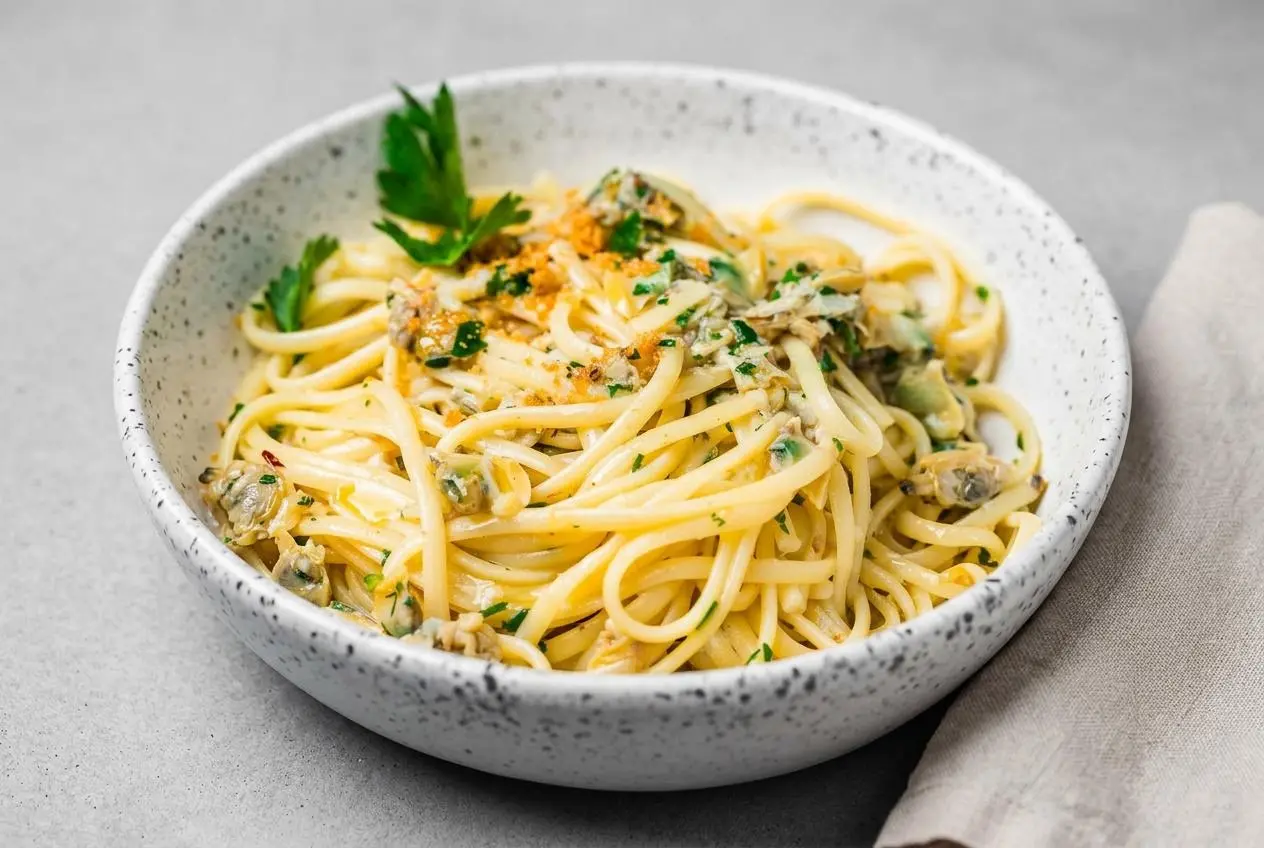
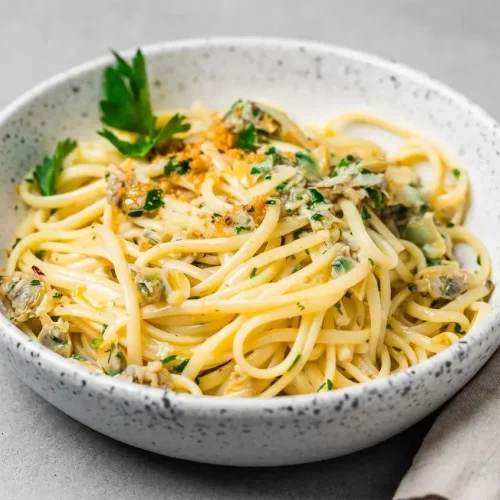
Linguine with clam sauce pairs al dente pasta with tender canned clams, garlic, olive oil, white wine, and briny clam liquor. Finish it with starchy pasta water and butter for a glossy, well-coated dinner in 30 minutes.
Linguine with Clam Sauce gets its coastal character from gently cooked garlic, savory anchovy, and clams warmed only long enough to stay tender. It is a fast, deeply satisfying pasta dinner with a restaurant-style finish.
As sliced garlic sizzles in olive oil, the kitchen starts smelling bright and briny rather than heavy. The crisp parsley breadcrumbs are worth waiting for.
Salt the pasta water with a lighter hand than usual, since the clam liquor and anchovies already bring plenty of seasoning.
Essential Ingredients for Restaurant-Quality Clam Sauce
Every component has a purpose: clams provide briny depth, wine adds brightness, pasta water creates body, butter gives sheen, and breadcrumbs bring crisp contrast.
For the seasoned breadcrumbs
- 5 slices day old bread (crust removed) (or 1 cup store-bought plain breadcrumbs)
- 1/2 teaspoon salt
- 3 tablespoons (45g) olive oil
- 1/2 clove garlic (minced)
- 3 tablespoons minced flat-leaf Italian parsley
For the canned clam sauce
- 1 pound (454g) linguine
- 5 tablespoons (75g) extra virgin olive oil
- 7 cloves garlic (sliced)
- 5 anchovy fillets
- 1/4 teaspoon crushed hot red pepper flakes
- 1/2 cup (120g) dry white wine
- 3 10-ounce cans baby clams
- 1/4 cup minced flat-leaf Italian parsley
- 2 tablespoons (28g) butter (cubed)
- 2 cups (480g) reserved pasta water (might not need all of it)
Canned Clams and Reserved Clam Liquor
Baby clams offer a tender bite, while the liquid in the cans becomes the backbone of the sauce. Drain the clams over a fine strainer set over a bowl, keeping both parts. This catches any stray shell fragments or grit without washing away the flavorful liquor.
Use the clam liquor in the pan after the wine reduces. It brings concentrated seafood flavor and enough salt that the finished dish often needs little, if any, additional seasoning.
Aromatics, Anchovies, and Olive Oil
Sliced garlic cooks more evenly than minced garlic here, giving it time to turn pale golden and fragrant without scorching. The anchovy fillets dissolve into the warm olive oil and create savory depth, but they should not make the sauce taste fishy.
The parsley keeps the sauce fresh, and the breadcrumb topping adds texture that the silky pasta needs. Sprinkle the crumbs over individual bowls at the table so they stay crisp.
White Wine Selection and Non-Alcoholic Options
A dry, crisp white wine such as Pinot Grigio, Sauvignon Blanc, or unoaked Chardonnay works well because its acidity cuts through the olive oil and butter. As it reduces, the sharp alcohol aroma fades and a softer fruity scent remains.
If you prefer to skip wine, use additional clam liquor with a squeeze of fresh lemon at the end. The flavor will be less wine-forward but still bright and briny.
I strain canned clam liquor every time, because a tiny shell fragment is an unpleasant surprise in an otherwise silky bowl of pasta.
How to Make Linguine with Clam Sauce
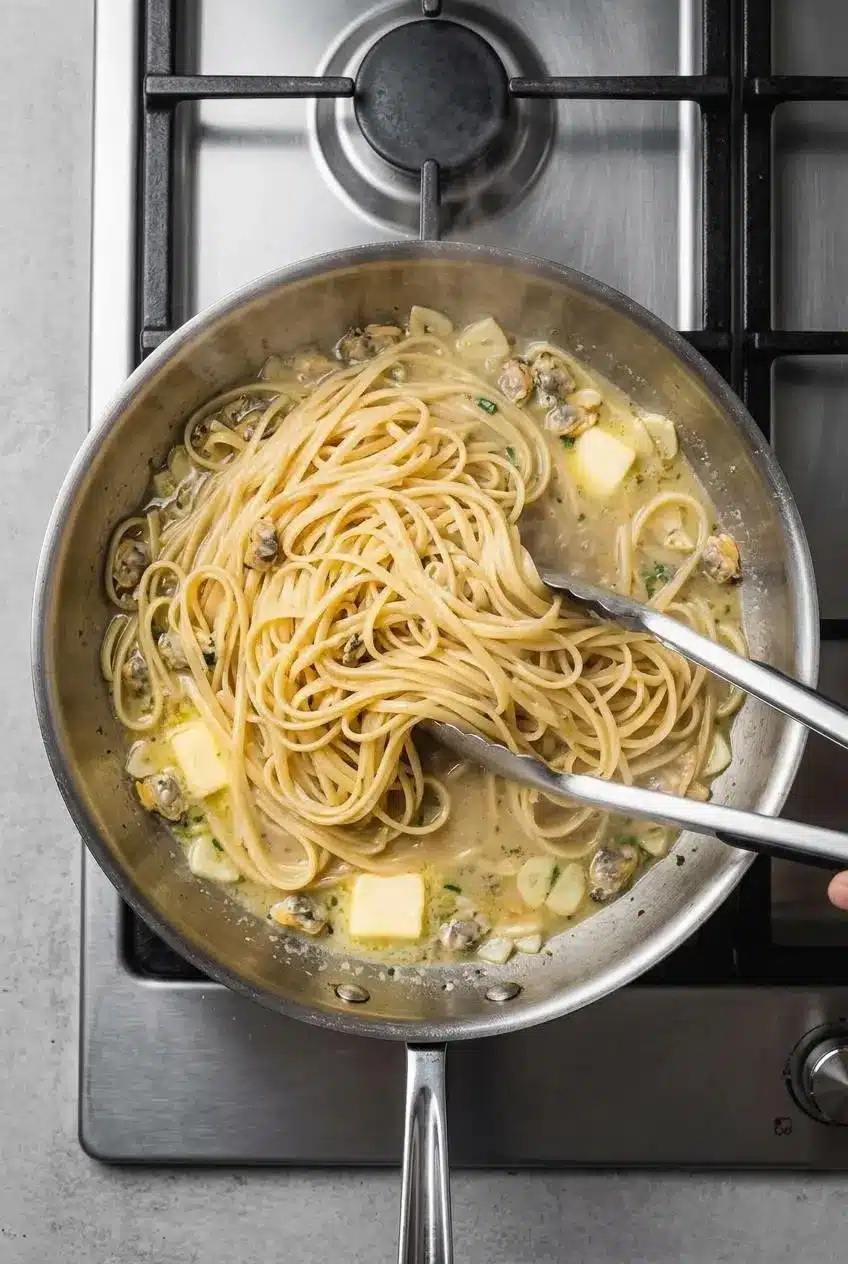
Keep the breadcrumbs separate while you build the sauce so their crunch stays intact. The pasta finishes directly in the skillet, where it can absorb the wine and clam juices rather than being coated afterward.
For the seasoned breadcrumbs
- Pulse the bread, garlic, parsley, salt, and olive oil in a food processor until the bread forms coarse, seasoned crumbs.
The mixture should look evenly moistened, with small pieces rather than a paste. - Warm a large pan over medium heat, then cook the breadcrumb mixture for 5 to 7 minutes, stirring often.
Take the pan off the heat when the crumbs are golden and smell toasted, not dark or bitter.
For the canned clam sauce
- Bring a large pot of salted water to a full boil.
The water should bubble steadily enough that the linguine moves freely once added. - Drain the baby clams through a fine strainer, reserving the liquid in a bowl and keeping the clam meat separate.
The reserved liquid should be clear of any grit or shell fragments. - Set a large skillet over medium-low heat and add the extra virgin olive oil, sliced garlic, and anchovy fillets.
Cook for about 3 minutes, until the anchovies disappear into the oil and the garlic is lightly golden. - Add the linguine to the boiling water and cook it until it is 1 minute shy of al dente.
Before draining, reserve the pasta water so there is plenty available for finishing the sauce. - Stir the red pepper flakes into the skillet for 30 seconds, then raise the heat to medium-high and pour in the white wine.
After 2 to 3 minutes, the wine should reduce slightly and smell mellow rather than sharply alcoholic. - Pour all of the reserved clam juice into the skillet, lower the heat to medium-low, and stir in the baby clams.
The liquid should simmer gently, not boil aggressively around the delicate clams. - Transfer the undercooked linguine to the skillet and toss it through the sauce for 1 minute, adding reserved pasta water as needed.
The strands should reach al dente and look coated in a loose, glossy sauce rather than sitting in a watery pool. - Turn off the heat, then toss in the cubed butter and parsley before tasting and adjusting salt and pepper if needed.
The butter should melt into a shiny coating that clings to the linguine; divide into bowls with breadcrumbs alongside.
Mastering the Glossy Clam Sauce Technique
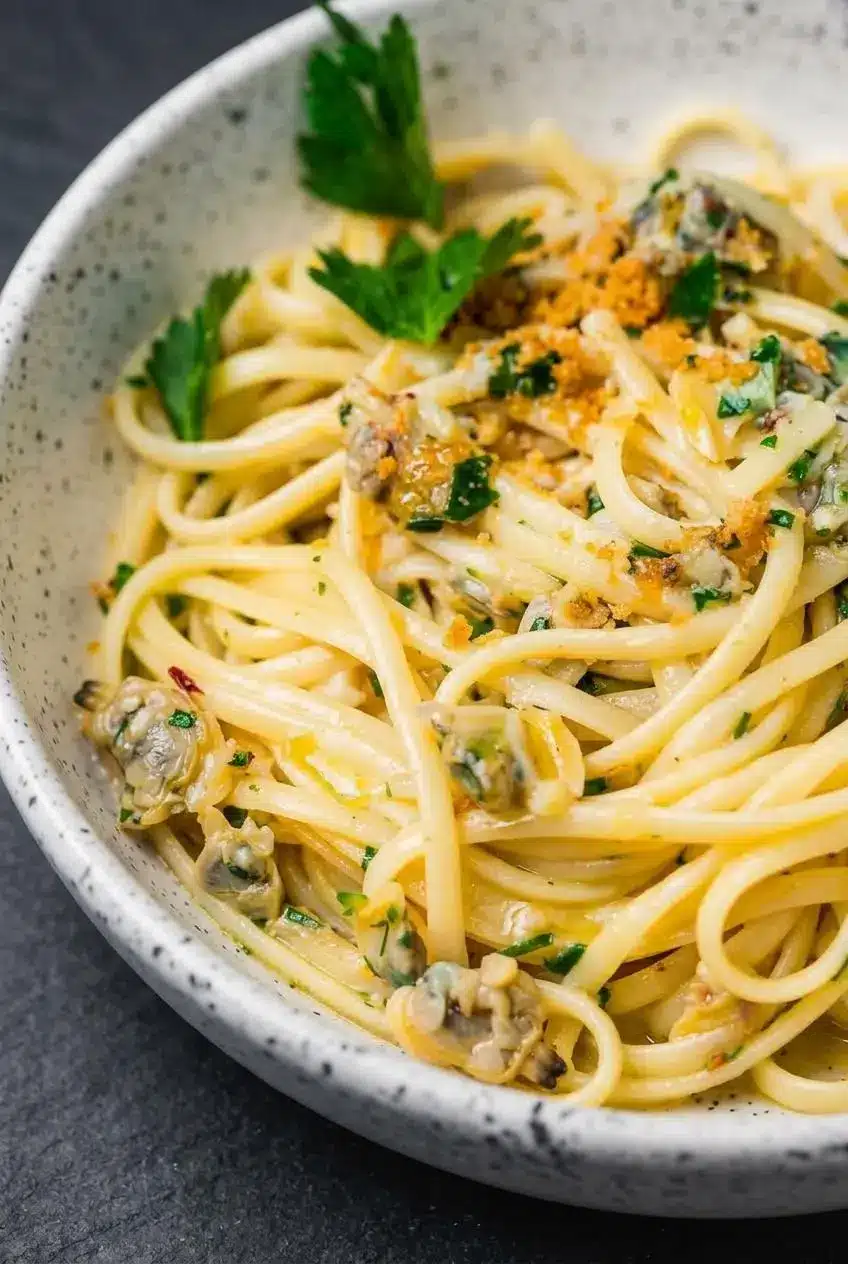
The key to rich clam sauce is reducing the wine and clam liquor first, then using pasta starch and butter to bind everything into one cohesive sauce. This is why the linguine comes out of the pot before it is fully done.
As the pasta finishes in the skillet, it releases starch into the clam juices. Tossing keeps that starch moving through the olive oil and broth, creating an emulsion that coats each strand. Add pasta water gradually when the pan looks dry, then keep tossing until the sauce clings.
Cold butter goes in off the heat because it tightens the emulsion without separating into an oily layer. The finished sauce should look shiny and fluid enough to pool lightly around the pasta, yet substantial enough that it does not run to the bottom of the bowl.
If the pan seems thin, do not keep boiling it hard. Toss briskly with a little hot pasta water and let the starch do the work. If it seems tight, loosen it with more reserved water until the linguine moves easily in the skillet.
Crucial Tips and Common Mistakes to Avoid
- The sauce tastes too salty: Clam liquor and anchovies both carry natural salt. Start with moderately salted pasta water, then taste only after the butter and parsley are incorporated.
- The garlic turns bitter: High heat browns thin garlic slices too quickly. Keep the skillet at medium-low until the garlic is pale golden, then add the wine promptly.
- The clams become chewy: Canned clams are already cooked. Warm them gently in the sauce and avoid a long, vigorous boil.
- The sauce looks watery: The pasta may need more tossing time to release starch. Add a little hot pasta water and cold butter, then toss firmly until the sauce turns glossy.
- The breadcrumbs soften too soon: Keep them out of the sauce. Add them at the table so every bite has a crisp, garlicky edge.
- The sauce lacks depth: Let the anchovies dissolve completely in the olive oil before adding wine. Their savory flavor supports the clams without taking over.
Many home cooks worry that anchovies will dominate the dish. They will not when they are melted slowly into the oil, where they act more like seasoning than a distinct fish flavor.
Popular Variations: Red Clam Sauce and Fresh Clams
These are optional directions for changing the style of the dish. Keep the main white clam sauce as written when you want the quick garlic, wine, and clam-liquor version.
Classic Red Clam Sauce Variation
For red clam sauce, add crushed canned tomatoes or puréed San Marzano tomatoes to the garlic and wine reduction. Simmer the tomatoes for about 15 minutes before adding the reserved clam liquor and clams. The tomatoes bring sweetness and acidity, while the clam liquor keeps the sauce unmistakably seafood-forward.
A prepared homemade marinara sauce can also provide a convenient tomato base. White clam sauce tastes lighter and more briny, while red clam sauce is fuller, sweeter, and more robust.
Incorporating Fresh Steamed Clams
For a dinner-party presentation, pair canned clams with fresh littleneck or Manila clams. Scrub the shells well, soak them in cold salted water to release sand, then steam them in the wine broth until they open. Discard any clams that remain closed.
Add the opened clams near the end, using the canned clams and their liquor for the faster sauce foundation. Whole shells make the dish feel festive, while canned clams keep the sauce generously packed with seafood.
Creamy White Clam Sauce Option
For a richer American-style version, stir a small splash of heavy cream into the finished sauce along with fresh lemon juice. Add both off the heat so the cream softens the briny edges without dulling the garlic and clam flavor.
Keep the cream restrained and preserve the breadcrumb topping. The best version still tastes like clam sauce first, with a velvety finish rather than a heavy cream sauce.
Storage, Reheating, and Serving Suggestions
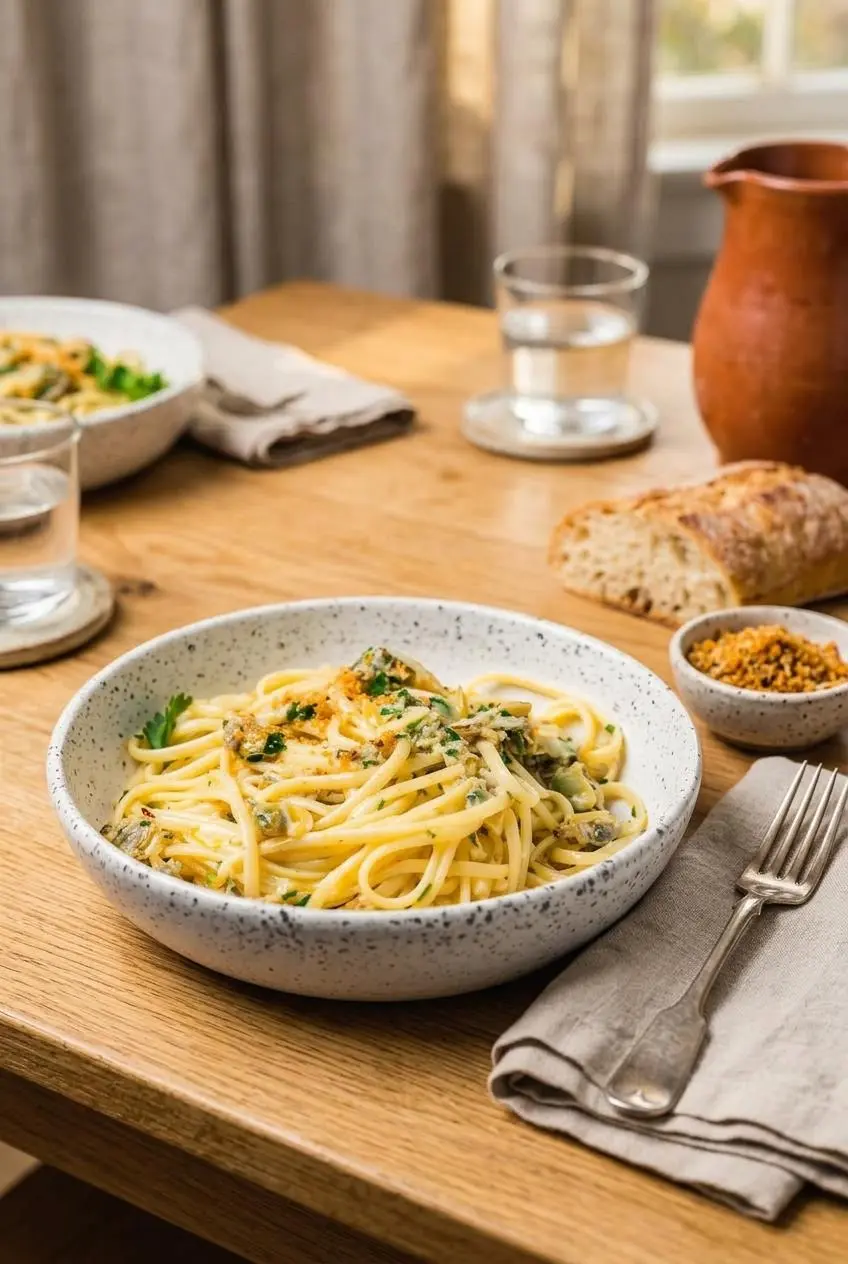
For leftovers, transfer the pasta to an airtight container once it has cooled and keep it chilled. Reheat only the portion you plan to eat in a skillet over low heat with a splash of water or broth, tossing gently until the sauce loosens and the clams are warmed through.
Avoid high heat, which can tighten the clams and break the sauce. Keep extra breadcrumbs separate in a sealed container at room temperature, then add them after reheating for their original crunch.
- Serve the linguine in warm, shallow bowls and bring the garlic breadcrumbs to the table for sprinkling.
- Add finely grated lemon zest and a pinch of Aleppo pepper to the breadcrumbs for citrusy warmth.
- Offer warm ciabatta or focaccia for the garlicky pan juices.
- Pair the pasta with a bitter green salad dressed in lemon vinaigrette to balance the rich olive oil and butter.
Conclusion
This pasta turns canned clams, garlic, wine, and olive oil into a glossy seafood dinner with real depth in 30 minutes.
Finish the linguine in the skillet, toss until the sauce clings, and save the breadcrumbs for the final crunch. That shiny, briny bite is the whole point.
Frequently Asked Questions
What Is the Secret to Rich Clam Sauce?
Reduce the clam liquor with white wine before adding pasta. Dissolved anchovies add savory depth, while starchy pasta water and cold butter create the glossy coating that makes the sauce taste rich rather than thin.
Can You Make Great Clam Sauce with Canned Clams?
Yes. Good-quality canned baby or chopped clams bring sweet, briny flavor and work especially well for a quick sauce. Warm them gently near the end so they remain tender.
Should I Rinse Canned Clams Before Adding Them to Pasta?
No. Do not rinse canned clams because the liquid in the can carries much of the briny flavor needed for the sauce. Strain the liquor to catch any grit, then add it to the skillet.
How Do You Prevent Canned Clams From Becoming Rubbery?
Add canned clams only after the wine and clam liquor have reduced, then keep the heat gentle. Since canned clams are already cooked, they only need warming through during the final stage.
What White Wine Works Best for Clam Sauce?
Choose a dry, crisp wine such as Pinot Grigio, Sauvignon Blanc, or unoaked Chardonnay. Avoid sweet wines, which can make the sauce taste heavy and distract from the clams.
Linguine with Clam Sauce

Equipment
- Food processor
- Large Skillet
- Large Pot
- Fine mesh strainer
- Tongs
Ingredients
For the seasoned breadcrumbs
- 5 slices day old bread (crust removed) (or 1 cup store-bought plain breadcrumbs)
- 1/2 teaspoon salt
- 3 tablespoons olive oil (45g)
- 1/2 clove garlic (minced)
- 3 tablespoons minced flat-leaf Italian parsley
For the canned clam sauce
- 1 pound linguine (454g)
- 5 tablespoons extra virgin olive oil (75g)
- 7 cloves garlic (sliced)
- 5 anchovy fillets
- 1/4 teaspoon crushed hot red pepper flakes
- 1/2 cup dry white wine (120g)
- 3 10-ounce cans baby clams
- 1/4 cup minced flat-leaf Italian parsley
- 2 tablespoons butter (cubed) (28g)
- 2 cups reserved pasta water (480g) (might not need all of it)
Instructions
For the seasoned breadcrumbs
- Pulse the bread, garlic, parsley, salt, and olive oil in a food processor until the bread forms coarse, seasoned crumbs. The mixture should look evenly moistened, with small pieces rather than a paste.
- Warm a large pan over medium heat, then cook the breadcrumb mixture for 5 to 7 minutes, stirring often. Take the pan off the heat when the crumbs are golden and smell toasted, not dark or bitter.
For the canned clam sauce
- Bring a large pot of salted water to a full boil. The water should bubble steadily enough that the linguine moves freely once added.
- Drain the baby clams through a fine strainer, reserving the liquid in a bowl and keeping the clam meat separate. The reserved liquid should be clear of any grit or shell fragments.
- Set a large skillet over medium-low heat and add the extra virgin olive oil, sliced garlic, and anchovy fillets. Cook for about 3 minutes, until the anchovies disappear into the oil and the garlic is lightly golden.
- Add the linguine to the boiling water and cook it until it is 1 minute shy of al dente. Before draining, reserve the pasta water so there is plenty available for finishing the sauce.
- Stir the red pepper flakes into the skillet for 30 seconds, then raise the heat to medium-high and pour in the white wine. After 2 to 3 minutes, the wine should reduce slightly and smell mellow rather than sharply alcoholic.
- Pour all of the reserved clam juice into the skillet, lower the heat to medium-low, and stir in the baby clams. The liquid should simmer gently, not boil aggressively around the delicate clams.
- Transfer the undercooked linguine to the skillet and toss it through the sauce for 1 minute, adding reserved pasta water as needed. The strands should reach al dente and look coated in a loose, glossy sauce rather than sitting in a watery pool.
- Turn off the heat, then toss in the cubed butter and parsley before tasting and adjusting salt and pepper if needed. The butter should melt into a shiny coating that clings to the linguine; divide into bowls with breadcrumbs alongside.