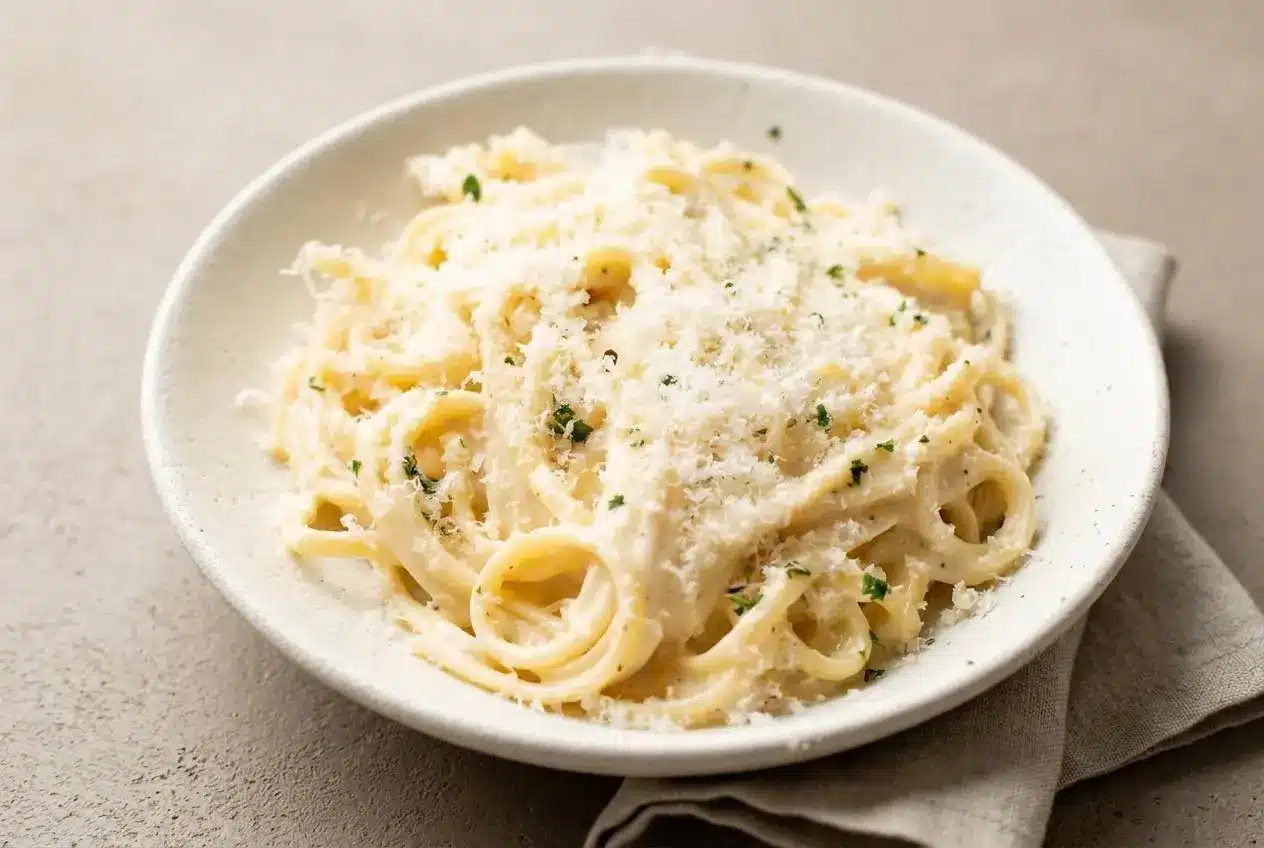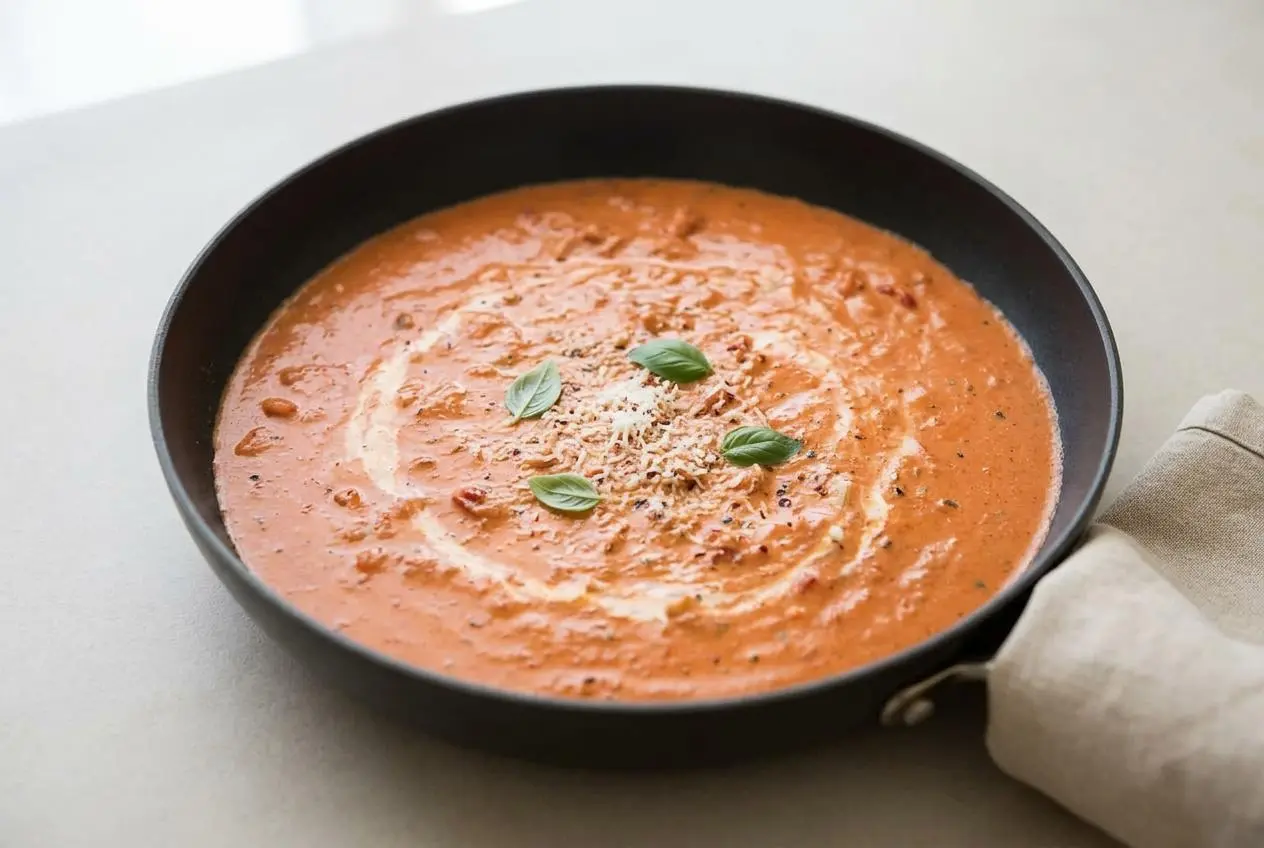
Tomato cream sauce, often called salsa rosa, turns tomatoes, aromatics, heavy cream, and Parmesan into a velvety pink pasta sauce in 10 minutes.
This tomato cream sauce starts with the quiet sizzle of sweet onion and garlic, then shifts from bright red to a pale coral blush as cream and cheese melt in.
It is quick enough for a busy evening but has the rich, clingy texture that makes pasta feel like a proper dinner. The gentle heat is the whole trick.
Keep the pan at medium-low and listen for a soft simmer rather than a loud boil once the cream goes in.
Understanding Traditional Tomato Cream Sauce (Salsa Rosa)
Salsa rosa, also called sugo rosa, is a tomato sauce softened with cream until it becomes smooth, rosy, and mellow. When Parmesan is part of the mix, you may also see it described as parma rosa.
The appeal is the balance. Tomatoes bring tang and savory depth, while heavy cream rounds off their sharper edges without covering up their flavor. The result sits somewhere between a bright red sauce and a rich cheese sauce, with enough body to coat pasta instead of pooling beneath it.
Compared with a dairy-free red sauce, cream sauce tastes gentler and feels silkier on the tongue. It is an especially good fit for a quick pasta night, whether you serve it simply or build it into pink sauce pasta with your favorite noodles.
Because the tomatoes, aromatics, herbs, and dairy cook together in one skillet, the flavor tastes more connected than a jarred sauce warmed on its own. The onion loses its sharp bite, garlic turns fragrant and sweet, and the Parmesan adds a savory finish.
Ingredients for Tomato Cream Sauce
Each ingredient contributes something important: onion and garlic build aroma, tomatoes bring brightness, cream creates richness, and Parmesan gives the sauce a savory, cohesive finish.
- 2 tablespoons olive oil
- ½ cup diced sweet yellow onion
- 1 teaspoon minced garlic
- 14.5 ounce can diced tomatoes
- 15 ounce can tomato sauce
- ½ teaspoon Italian seasoning
- ½ teaspoon dried basil
- ½ teaspoon sugar
- ½ teaspoon salt
- ¼ teaspoon crushed red pepper (or to taste (optional))
- freshly ground black pepper (to taste)
- ½ cup heavy cream
- ½ cup finely shredded Parmesan (plus more for serving)
- fresh basil (for serving (optional))
Sweet yellow onion gives the sauce a mellow base once softened, while diced tomatoes add small bursts of bright flavor. Tomato sauce keeps the texture cohesive, and the sugar gently rounds out tart canned tomatoes. Heavy cream and finely shredded Parmesan make the finished sauce glossy, rich, and deeply savory.
I prefer finely shredded Parmesan here because it melts more evenly than thick shreds, especially in a fast-cooking sauce.
Choosing Your Canned or Fresh Tomato Base
This version uses diced tomatoes for texture and tomato sauce for a smooth foundation. That combination creates a sauce with little tomato pieces but enough body to hold the cream and cheese together.
- Diced tomatoes: Keep the sauce rustic, with soft pieces that add brightness and texture.
- Crushed tomatoes: Make a more uniform, spoonable sauce with less distinct texture.
- Whole peeled tomatoes: Work well when crushed by hand or broken up in the pan, though they need more attention to reach an even texture.
- Passata: Gives the smoothest finish because the tomatoes are already strained.
For a summer variation, fold chopped ripe garden tomatoes into the simmer instead of relying entirely on canned tomatoes. Let their excess moisture cook off before adding dairy so the sauce stays thick rather than watery. Fire-roasted tomatoes are another optional route when you want a deeper, lightly smoky character.
Why High-Fat Cream Prevents Curdling
Tomatoes are acidic, and heat can make the proteins in lower-fat dairy clump or separate. Heavy cream has enough fat to make a more forgiving sauce, especially when it is stirred in over gentle heat and warmed only until the sauce bubbles quietly.
Milk and skim dairy are much more likely to look grainy in this situation. Half-and-half can work with extra care, but it is less stable than heavy cream. Keep the pan calm, add the cream after the tomato mixture is hot, and avoid a hard boil.
Dairy-Free and Lighter Alternatives
For a dairy-free version, use full-fat unsweetened coconut cream or soaked raw cashews blended until completely smooth. Both add fat and body that can stand up to tomato acidity, though coconut cream may add a faint coconut flavor.
For a lighter result, choose a plant-based cream designed for cooking rather than thin nondairy milk. These swaps are optional variations and will change the flavor and finish from the Parmesan-enriched version.
How to Make Tomato Cream Sauce
Start the pasta alongside the sauce if you are serving them together. Before draining, reserve some of the cloudy cooking water in case the finished sauce needs loosening while you toss.
- Warm the olive oil in a 12-inch sauté pan over medium-low heat, then add the onion and garlic; stir occasionally for 2 to 3 minutes.
The onion should look translucent and smell sweet and fragrant, with no browning at the edges. - Stir in the diced tomatoes, tomato sauce, Italian seasoning, dried basil, sugar, salt, crushed red pepper if using, and black pepper; then fold in the heavy cream and Parmesan and cook for 1 to 2 minutes.
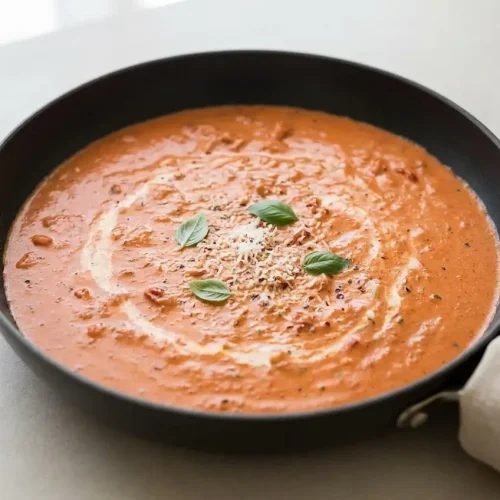
Stop when the sauce is hot, softly bubbly, and pale coral pink with melted Parmesan throughout. - Toss the sauce with cooked pasta and finish with fresh basil if desired.
The sauce should cling to the noodles; add a small splash of reserved pasta water if it tightens too much.
The first stage softens the aromatics so they disappear into the sauce instead of tasting raw. Once the tomatoes and seasonings go in, the pan should look a deeper red and smell herbaceous. Adding cream and Parmesan at the end keeps the finish smooth and lets the sauce stay lush rather than heavy.
Mastering Texture: Tips and Troubleshooting
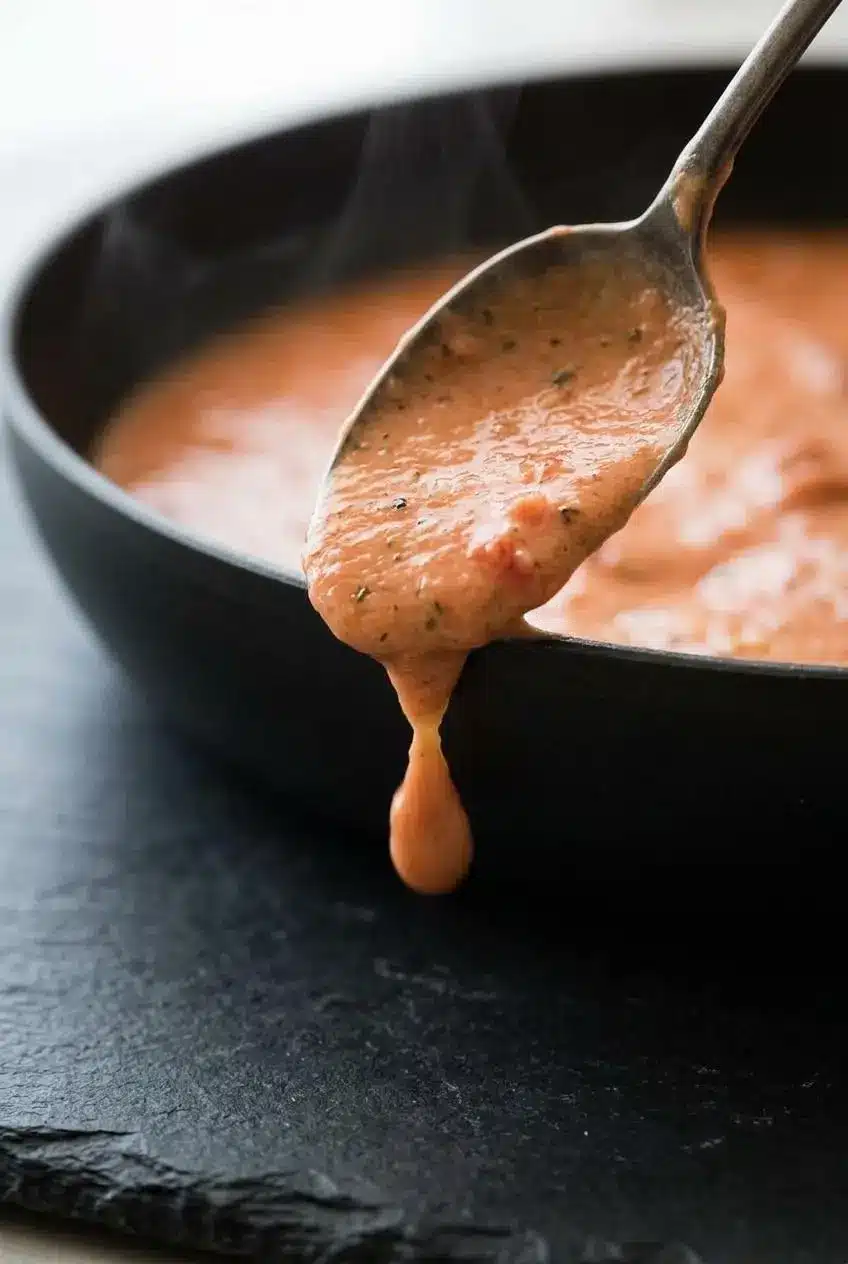
A smooth tomato cream sauce depends more on heat control than fancy technique. Keep the burner low after adding dairy, stir steadily, and taste before reaching for more salt because canned tomatoes and Parmesan both bring seasoning.
How to Rescue a Broken or Grainy Sauce
- If the sauce looks oily or separated: Pull the pan off direct heat and whisk firmly. A warm splash of pasta water can help pull the tomato liquid and dairy back together.
- If it looks grainy: The heat was likely too aggressive or the cheese did not melt evenly. Lower the heat, keep whisking, and add a little cold heavy cream if needed.
- If it is too thick: Loosen it gradually with reserved pasta water until it coats the pasta without feeling pasty.
- If it is too thin: Let it sit over low heat briefly, stirring often, so excess moisture can cook off without splitting the cream.
For an ultra-smooth finish, carefully blend the sauce with an immersion blender before tossing it with pasta. Leave it unblended when you enjoy the softer tomato pieces and a more rustic texture.
Balancing Acidity and Sweetness
The ½ teaspoon of sugar is there to soften the harsh edge some canned tomatoes can have, not to make the sauce sweet. Taste after the Parmesan melts, since its salty savoriness can make the tomatoes seem less sharp.
If the sauce still tastes overly tart, stir in a small pat of unsalted butter. Its richness rounds out the acidity while keeping the tomato flavor in front. Do not use extra sugar to cover burnt garlic, though. Burnt garlic needs a fresh start.
The Magic of Starchy Pasta Cooking Water
Pasta water looks cloudy because it carries starch released by the noodles. When you toss pasta with the sauce, that starch helps the tomato liquids and dairy fats stay connected, giving the sauce a glossy finish that grips rigatoni and penne instead of sliding off.
Use the water gradually and toss well after each addition. The sauce should look fluid in the pan, then settle into a creamy coating as it reaches the pasta.
Storage and Gentle Reheating
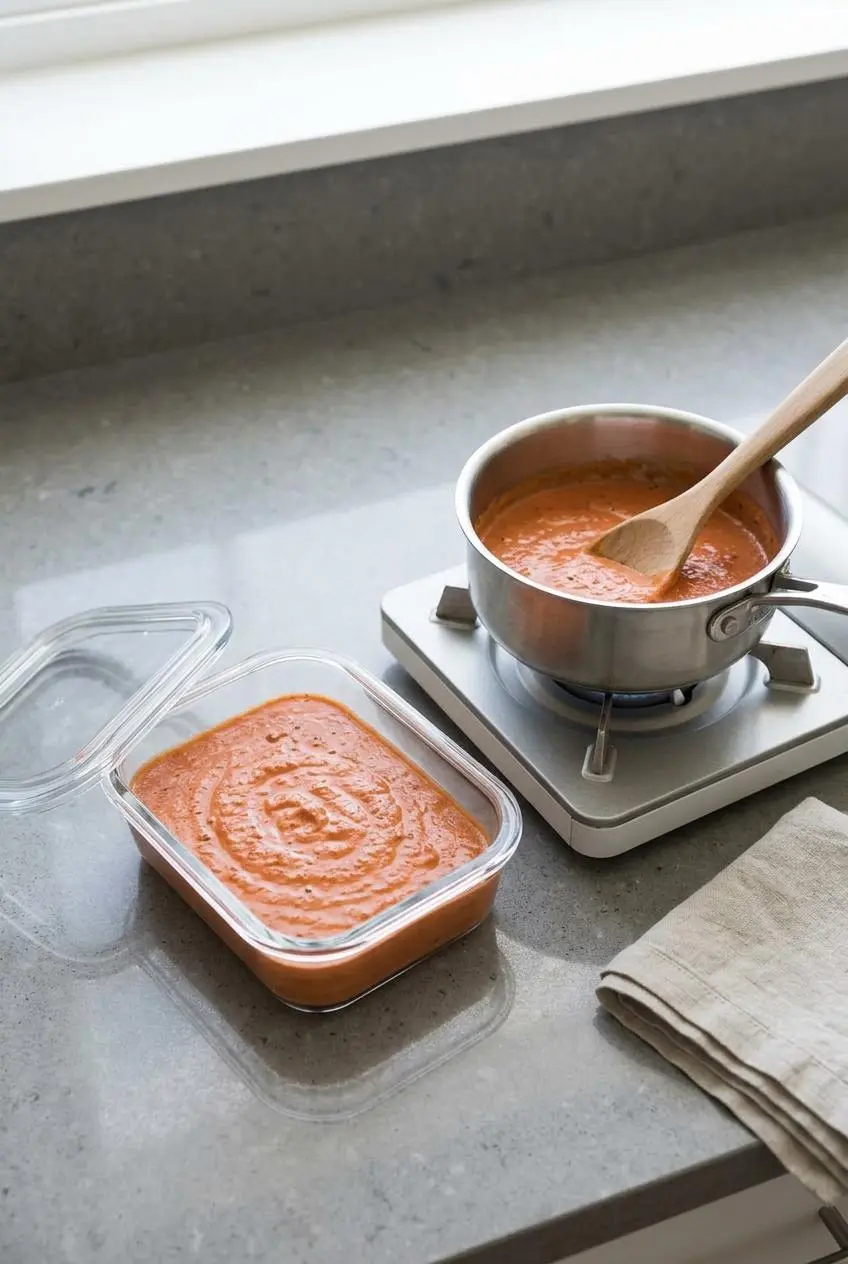
Cool leftover sauce promptly, transfer it to an airtight container, and keep it chilled. Careful cooling and refrigerated handling help protect the quality of cooked foods, especially dairy-based leftovers, as explained in safe cooling and storage practices for cooked food.
Store pasta separately from the sauce when possible. The noodles continue to absorb liquid as they sit, so separate storage gives you a better chance of restoring that silky texture later.
Safe Stovetop Reheating Without Splitting
Reheat the sauce in a small saucepan over low heat, stirring often. Add a splash of water, milk, broth, or reserved pasta water as it warms to loosen the sauce and help the cream come back together.
Avoid high heat and do not let the sauce boil rapidly. Gentle warming keeps the Parmesan from turning grainy and prevents the cream from separating.
Serving Suggestions and Delicious Pairings
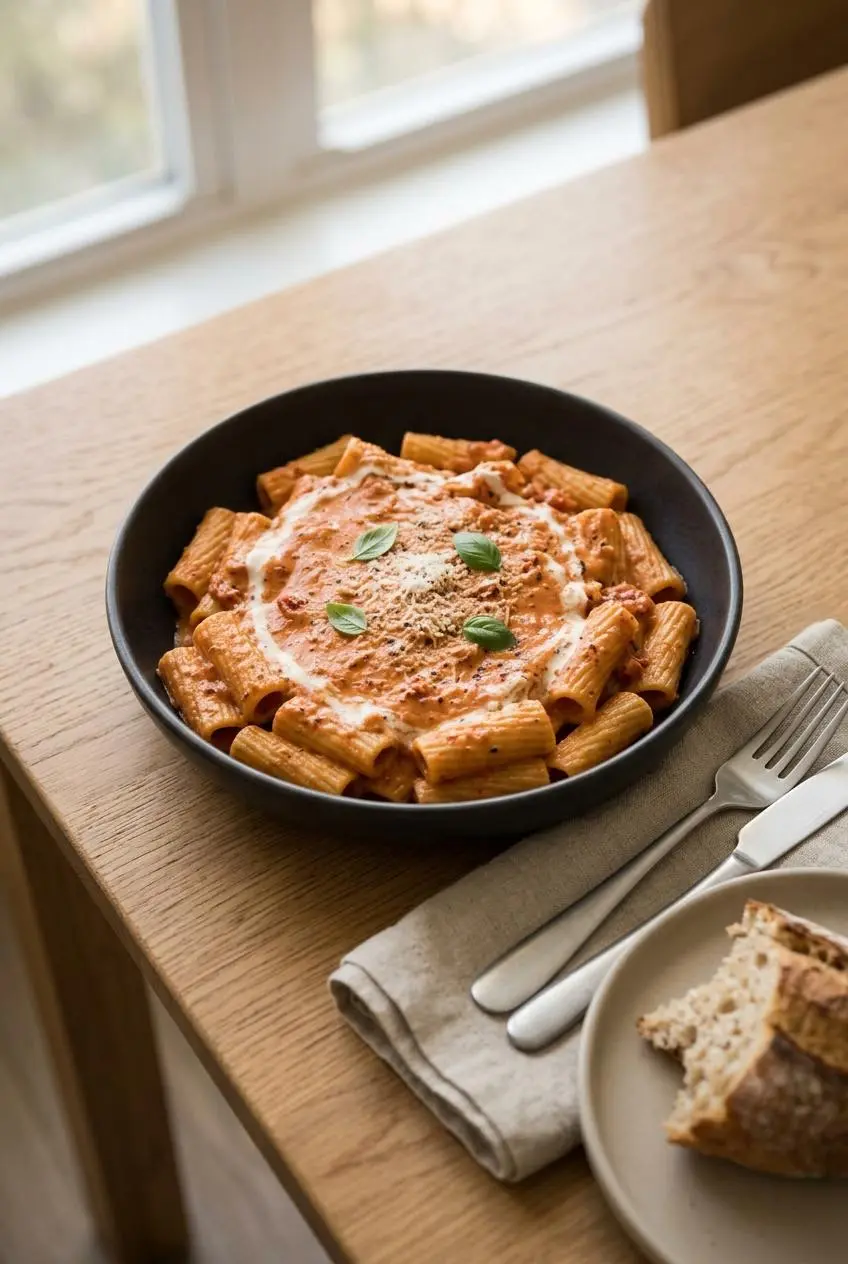
This sauce is substantial enough for dinner but flexible enough to work as a warm dip for garlic bread or a layer in vegetarian lasagna. Finish each serving with fresh basil and extra Parmesan for a fresher, sharper contrast to the creamy sauce.
Best Pasta Shapes for Clinging Sauce
Choose pasta with ridges, curves, or hollow centers that can catch the sauce.
- Rigatoni and penne rigate: Their ridges and tubes hold sauce inside and out.
- Cavatappi: Its twists collect creamy sauce in every curve.
- Cheese tortellini: The filling adds extra richness, making this a fast, comforting meal.
- Potato gnocchi: Soft dumplings pair beautifully with a smooth, clingy sauce.
Delicate angel hair is less successful because the thick sauce can make it clump. A sturdier noodle gives you better texture from the first forkful to the last.
Spicy Arrabbiata and Herb Variations
Make any of these changes separately from the main recipe when you want a different direction:
- Spicy pink arrabbiata: Add extra crushed red pepper or Calabrian chili paste for a warm, peppery kick.
- Deeper tomato flavor: Gently brown tomato paste with smoked paprika before adding the canned tomatoes for a darker, more concentrated profile.
- Fresh herb finish: Add torn basil ribbons and grated pecorino romano at the table for a sharper, more aromatic finish.
For a sweeter roasted-tomato direction, try a roasted cherry tomato sauce as a separate meal idea when you have time for deeper caramelized flavor.
Adding Protein and Vegetables
Fold in cooked protein near the end so it warms without overcooking. Sliced grilled chicken cutlets, baked meatballs, sautéed shrimp, and crisp tofu all work well with the sauce.
For vegetables, add baby spinach, roasted red peppers, or sautéed cremini mushrooms just before tossing with pasta. Pair the meal with creamy herb chicken when you want a more substantial dinner.
Conclusion
This 10-minute sauce turns canned tomatoes, cream, and Parmesan into a silky dinner that feels far more special than its cooking time suggests.
Keep the heat gentle, let the onion soften fully, and toss with sturdy pasta for a smooth, rosy sauce that earns a regular spot in busy-weeknight cooking.
Frequently Asked Questions
What Is Italian Tomato Cream Sauce Called?
Italian tomato cream sauce is commonly called salsa rosa or sugo rosa. When Parmesan is blended into the sauce, it may also be called parma rosa.
Why Does Cream Curdle When Added to Tomato Sauce?
Tomato acidity can make dairy proteins clump, especially in milk or other low-fat dairy. Heavy cream is more forgiving, and low heat helps keep the sauce smooth.
Can You Substitute Milk or Half-and-Half for Heavy Cream?
Half-and-half or milk can separate more easily because they contain less fat. If using half-and-half, temper it first with a spoonful of warm sauce and keep the heat very low.
How Long Does Homemade Tomato Cream Sauce Last in the Fridge?
Keep the cooled sauce sealed and chilled, then reheat only what you plan to serve over low heat. If the sauce thickens, stir in a splash of water or broth until it becomes smooth again.
Tomato Cream Sauce

Equipment
- 12-inch saute pan
Ingredients
- 2 tablespoons olive oil
- ½ cup diced sweet yellow onion
- 1 teaspoon minced garlic
- 14.5 ounce can diced tomatoes
- 15 ounce can tomato sauce
- ½ teaspoon Italian seasoning
- ½ teaspoon dried basil
- ½ teaspoon sugar
- ½ teaspoon salt
- ¼ teaspoon crushed red pepper or to taste (optional)
- freshly ground black pepper to taste
- ½ cup heavy cream
- ½ cup finely shredded Parmesan plus more for serving
- fresh basil for serving (optional)
Instructions
- Warm the olive oil in a 12-inch sauté pan over medium-low heat, then add the onion and garlic; stir occasionally for 2 to 3 minutes. The onion should look translucent and smell sweet and fragrant, with no browning at the edges.
- Stir in the diced tomatoes, tomato sauce, Italian seasoning, dried basil, sugar, salt, crushed red pepper if using, and black pepper; then fold in the heavy cream and Parmesan and cook for 1 to 2 minutes. Stop when the sauce is hot, softly bubbly, and pale coral pink with melted Parmesan throughout.
- Toss the sauce with cooked pasta and finish with fresh basil if desired. The sauce should cling to the noodles; add a small splash of reserved pasta water if it tightens too much.