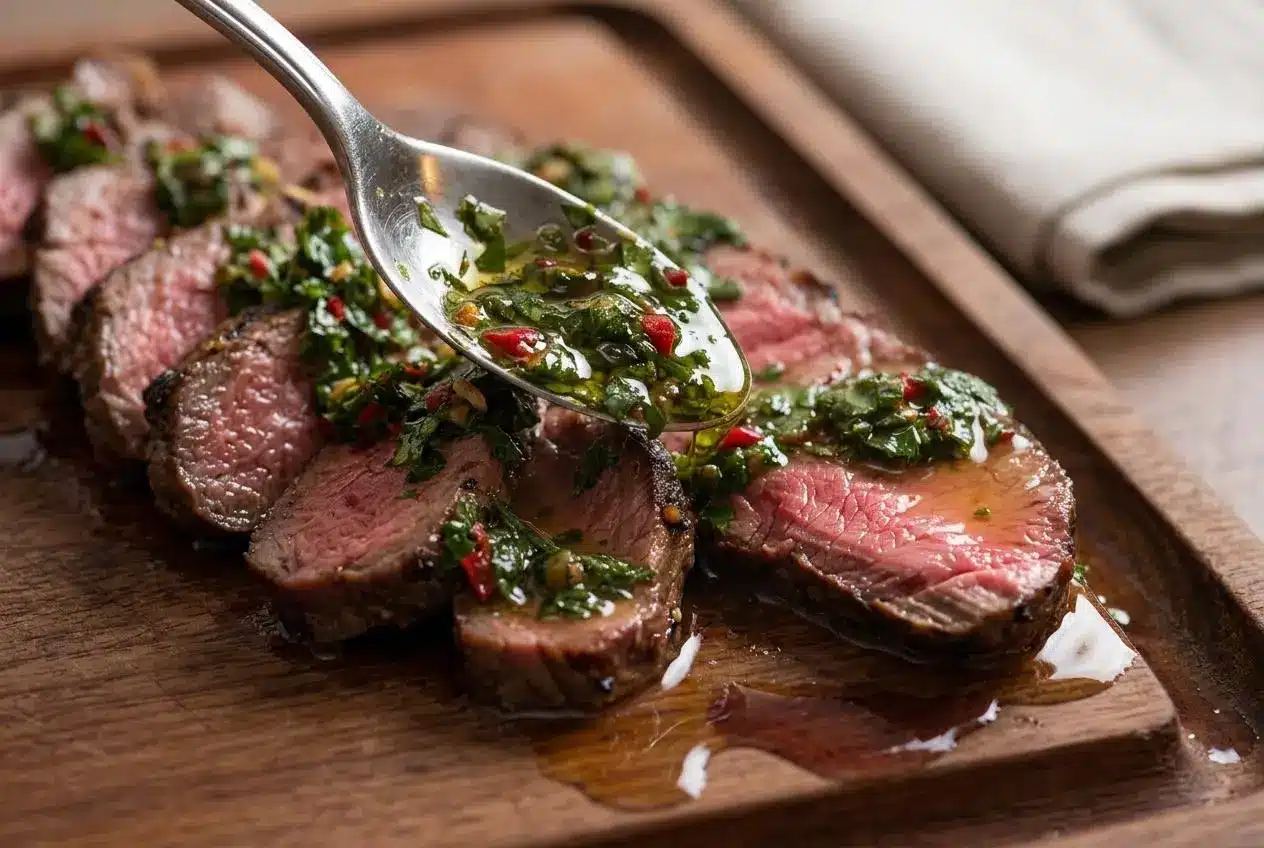
Chimichurri steak pairs quickly seared skirt, flank, or flat iron steak with an uncooked parsley sauce brightened by garlic, red wine vinegar, and olive oil.
Chimichurri steak brings together charred, savory beef and a cool, zesty herb sauce that cuts through every rich bite.
When the steak hits hot cast iron, the sizzle is loud and the garlic-herb aroma wakes up the whole kitchen. The key is a hard sear, a proper rest, and thin slicing.
Pat the steak dry before seasoning so it can form a dark, flavorful crust instead of steaming in the pan.
Ingredients for Chimichurri Steak
Each ingredient builds a distinct layer: herbs bring freshness, vinegar adds brightness, olive oil gives the sauce body, and seasoned beef develops a savory seared crust.
Chimichurri Sauce
- 1 cup parsley leaves (, tightly packed)
- 1 tbsp oregano leaves (, tightly packed (still lovely without))
- 4 garlic cloves (, minced)
- 0 – 2 tsp red pepper flakes ((optional – adjust to taste))
- 1/4 cup (65 ml) red wine vinegar
- 1/2 tsp salt
- Black pepper
- 1/2 cup (125 ml) extra virgin olive oil
Steak
- 700g / 1.4lb flat iron, flank, skirt steak (or other steak of choice, at room temperature)
- Salt and pepper
Flat-leaf parsley gives chimichurri its crisp, grassy character. Red wine vinegar brings punchy acidity that balances rich beef, while garlic and pepper flakes add savory warmth. Extra virgin olive oil carries the herbs and keeps the sauce spoonable. Salt the steak right before cooking for a better crust, then season the sauce lightly so the herbs stay in focus.
I prefer flat-leaf Italian parsley here because its broad leaves chop evenly and keep the sauce loose rather than fluffy or watery.
Herb Prep: Why Chopping Beats Blending
Chop the parsley by hand or pulse it briefly until the leaves are finely cut but still distinct. This keeps chimichurri textured, fresh-looking, and easy to spoon over sliced beef.
Do not blend it into a smooth green paste. Extended blending breaks down the herbs too aggressively, releasing bitter flavors and turning the oil cloudy and heavy. A loose chop also lets the vinegar, garlic, oregano, and parsley stay pleasantly separate on the palate.
Acidity and Oil: Balancing the Dressing
Red wine vinegar should taste lively without taking over. Stir it with the garlic, oregano, pepper flakes, salt, and black pepper first, then gently fold in the olive oil. The vinegar quickly carries the sharp aroma of garlic through the herbs.
For a rounder edge, optionally stir a pinch of smoked sweet paprika and a drop of honey into the vinegar before adding the oil. The result stays tangy and herb-forward, with a softer finish rather than noticeable sweetness.
Heat Levels and Pepper Variations
The red pepper flakes are optional, so use them to match your heat preference. Mild flakes add a background warmth that supports the garlic without making the sauce fiery.
- Use no flakes for a clean, parsley-forward sauce.
- Use the full amount for a stronger chile warmth.
- For a sharper spicy chimichurri, optionally add minced fresh jalapeño or serrano pepper outside the main recipe formula.
How to Make Chimichurri Steak
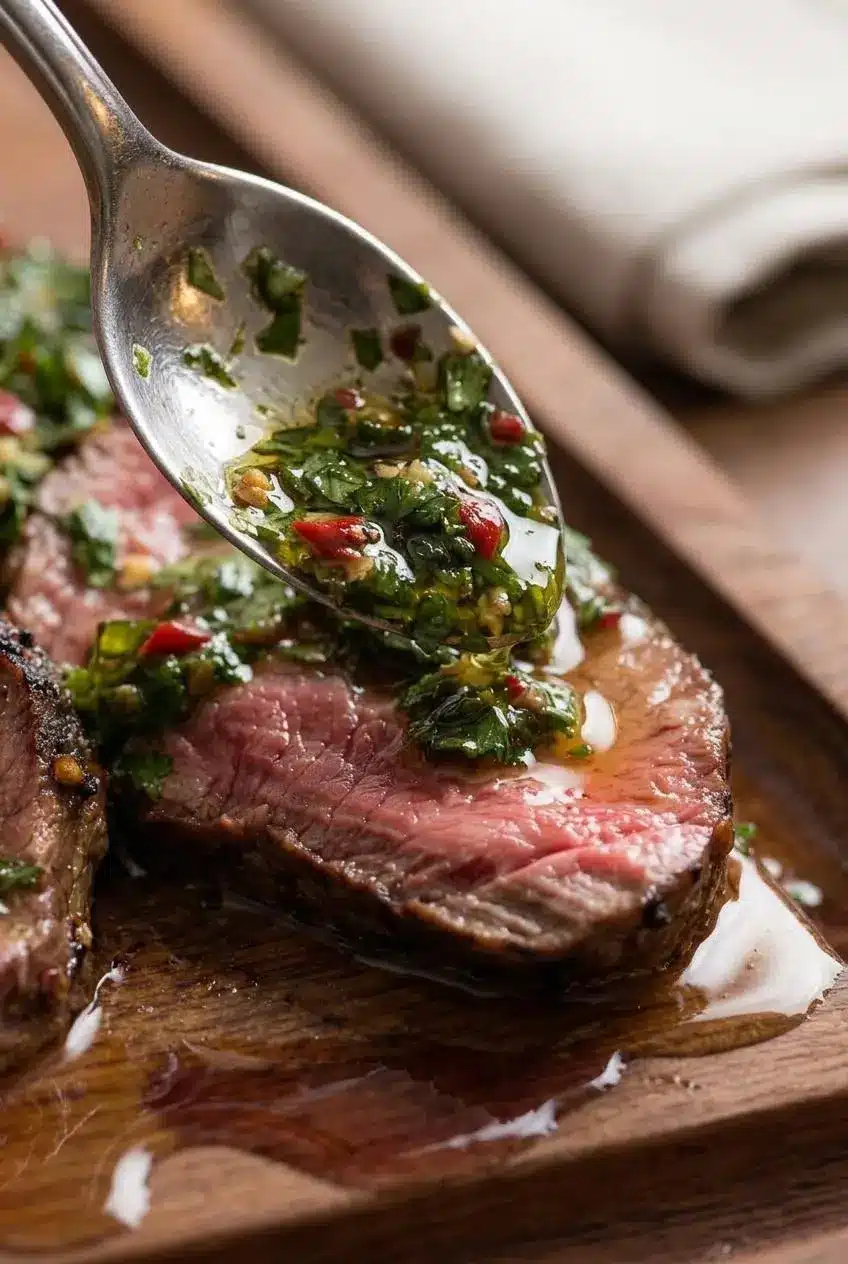
Keep the sauce separate from the steak while it cooks. Fresh herbs scorch quickly over intense heat, while a cool spoonful of chimichurri keeps its bright flavor and makes the crust stand out.
Chimichurri Sauce
- Add the parsley, oregano, garlic, red pepper flakes, red wine vinegar, salt, and black pepper to a food processor, leaving out the olive oil.
Pulse until the parsley is finely chopped with small, distinct pieces rather than a smooth puree. - Scrape the herb mixture into a small bowl and gently stir in the extra virgin olive oil.
Set the sauce aside for 1 hour so the vinegar softens the garlic and the flavors settle together. - Transfer any unused sauce to an airtight container and refrigerate it for up to 3 days.
The mixture makes about 3/4 cup, and chilled olive oil may firm up slightly.
Steak
- Set the steak out 30 minutes before cooking so it loses its refrigerator chill.
A less-cold steak cooks more evenly through the center during a fast, high-heat sear. - Heat a BBQ or heavy-based skillet with 1 tbsp vegetable or canola oil over high heat.
Wait until the oil is smoking before adding the beef. - Season both sides of the steak generously with salt and pepper immediately before it goes into the heat.
The dry surface should make an aggressive sizzle when it meets the hot pan or grill. - Cook the steak over high heat, turning once, until it reaches your preferred doneness.
For steak about 2cm / 4/5” thick, use the timing and thermometer cues in the next step. - For medium-rare, cook for 2 min on each side and remove the steak at 52C/125F; for medium, cook for 2 1/2 min on each side and remove it at 57C/135F.
After resting, medium-rare rises to 54C/130F and medium rises to 60C/140F. - Move the steak to a plate, cover it loosely with foil, and rest it for 5 – 10 minutes.
The center should feel slightly springy when pressed, and the juices should stay mostly within the meat rather than flooding the plate. - Slice the rested steak thinly against the grain and serve the chimichurri on the side.
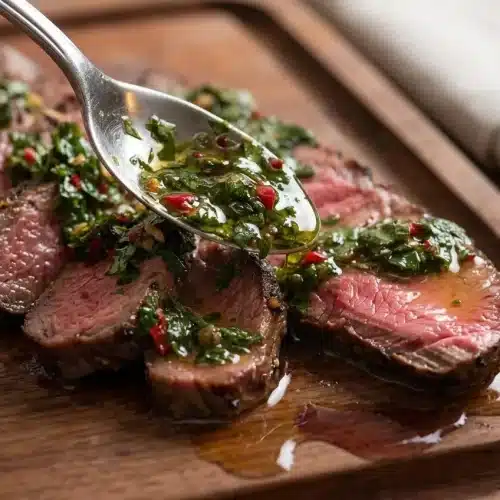
Each slice should show a browned exterior and a warm pink center when cooked medium-rare.
Outdoor Grilling vs Cast-Iron Searing
A hot outdoor grill gives skirt steak deeply charred edges and a clean open-air cooking experience. Keep the grate hot, cook quickly, and avoid moving the meat until it releases easily.
For an indoor cast-iron sear, use a heavy skillet and high-smoke-point vegetable or canola oil rather than butter or olive oil. Turn on the exhaust fan, open a nearby window if possible, and wait for the oil to smoke before adding the steak. That fierce sizzle tells you the crust is forming.
Thicker steaks need a different approach than thin skirt, flank, or flat iron cuts. For a thicker steak with more gradual heat control, a reverse sear steak method can help avoid an overcooked exterior.
Internal Temperature Milestones
A digital meat thermometer removes the guesswork from high-heat steak. Pull temperature means the temperature when you take the steak off the heat. Rested temperature is what it reaches as residual heat finishes the center during the 5 – 10 minute rest.
For this medium-rare method, pull the steak at 125F and let it rise to 130F while resting. For a higher food-safety endpoint, cook beef steaks to 145 °F with a 3-minute rest before carving or serving.
Choosing the Best Steak Cut
The best cut depends on whether you want bold beef flavor, a leaner slice, or the most naturally tender texture. All three choices below benefit from fast high heat and careful slicing across the muscle grain.
Skirt Steak vs Flank Steak
Skirt steak is the classic pick for deep beefy flavor. It has a loose, coarse grain and cooks quickly, which makes it especially good for a hard char and thin slices. Because its fibers are pronounced, cut it across the grain every time.
Flank steak is wider, leaner, and more uniform in shape. It makes neat strips for serving and stays tender when you slice it thinly across the grain. If you enjoy its firm texture and beef-forward flavor, this marinated flank steak is another useful way to cook the cut.
Flat Iron and Tender Alternatives
Flat iron steak is a tender alternative with fairly even thickness, making it easy to cook evenly in a skillet or on a grill. It has enough beef flavor to hold up against the vinegar and garlic without becoming chewy.
Ribeye and sirloin also work well with chimichurri, especially when you want more marbling or a thicker steak. Still, skirt, flank, and flat iron are especially suited to the fast-cooking, thin-slicing style that makes the sauce shine.
Slicing Technique and Serving Ideas
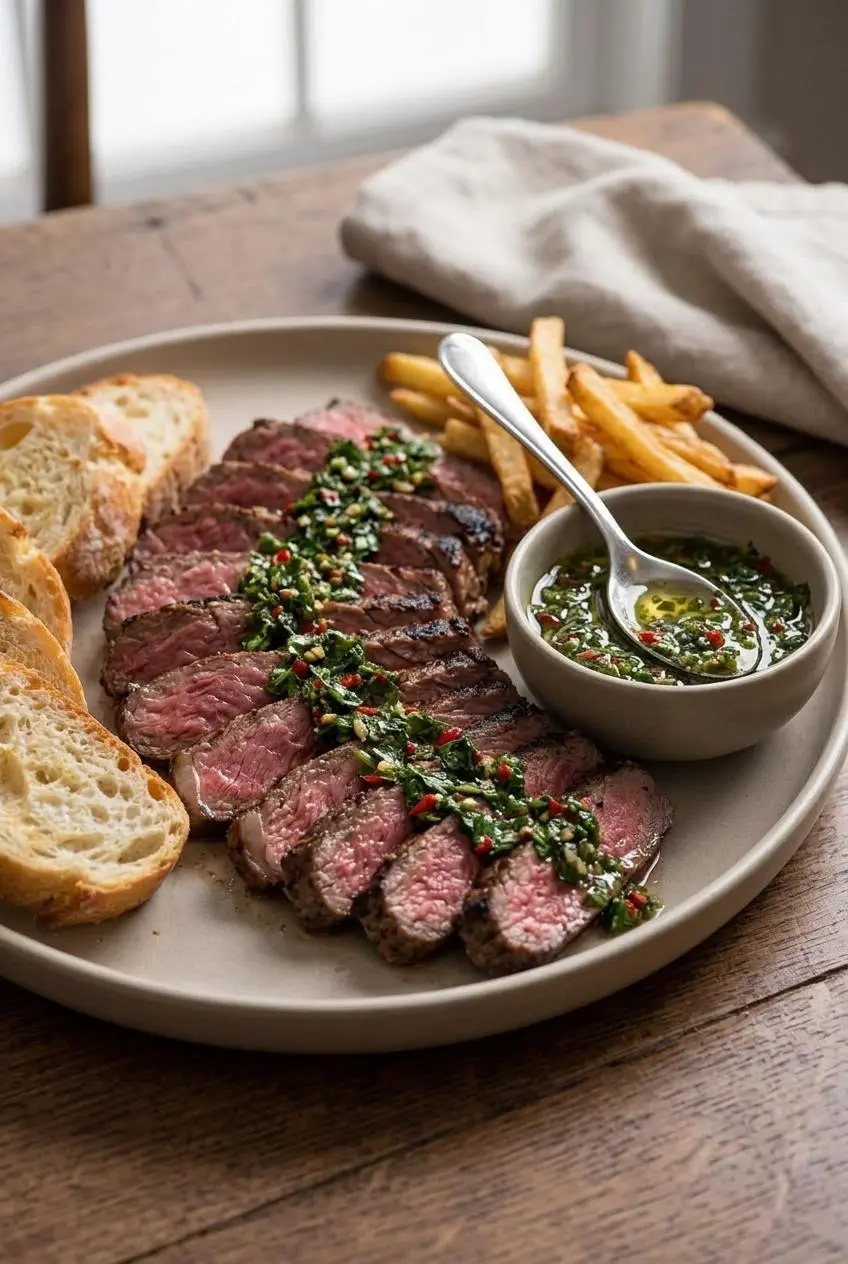
Resting protects the juices, but slicing determines whether each bite feels tender. Take a moment to find the grain before reaching for the knife.
Perpendicular Cuts Across the Grain
Look closely at the cooked steak for long parallel lines running in one direction. Those lines are muscle fibers. Position the knife perpendicular to them, then slice the steak into thin 1/4-inch pieces.
Cutting across the grain shortens the fibers in every bite, which makes skirt and flank steak far easier to chew. Cutting with the lines leaves long strands intact and can make even a properly cooked steak seem tough.
Fresh Sides and Plating Pairings
Arrange the warm slices on a platter, then spoon chimichurri over part of the steak and serve the rest alongside. This keeps the seared crust from softening before everyone gets to the table.
- Serve with crispy steak fries to catch the garlicky herb juices.
- Pair with grilled sweet corn, charred peppers, or roasted potatoes for a cookout-style plate.
- Add warm crusty bread for scooping up the parsley, garlic, and olive oil left on the platter.
Storing and Reheating Chimichurri Steak
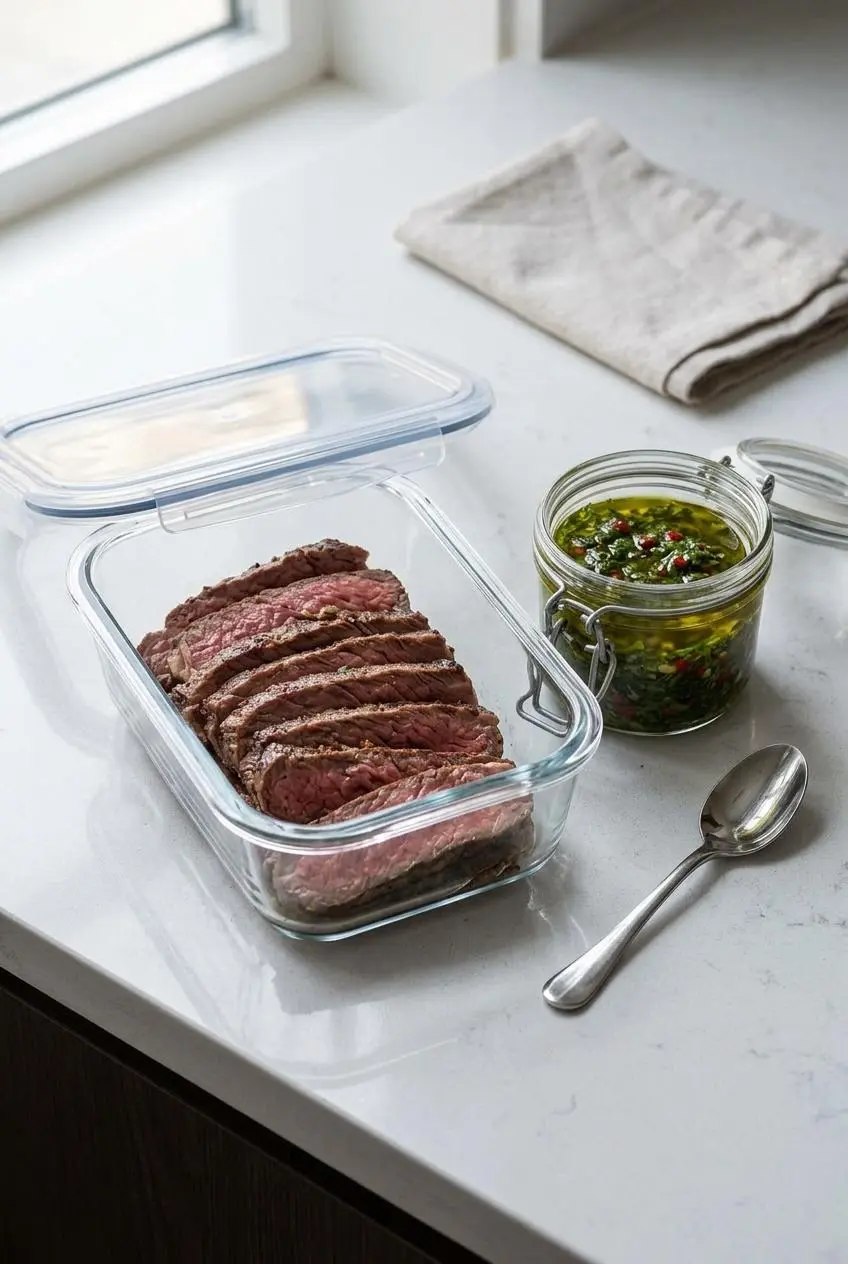
Keep unused chimichurri in an airtight container in the refrigerator and use it within 3 days. Because the sauce contains raw garlic and fresh herbs, keep it chilled when it is not being served.
Olive oil naturally firms up in the refrigerator. Let the chilled sauce sit on the counter for about 20 minutes before serving, then stir gently until it becomes loose enough to spoon.
For leftover steak, warm slices gently in a skillet over low heat just until warmed through, or serve them chilled over greens. Avoid high-power microwaving, which can quickly push a pink center toward dry and gray.
Use extra sliced steak in a leftover steak salad with a spoonful of chimichurri as the dressing.
Conclusion
Chimichurri steak delivers the contrast that makes a steak dinner memorable: smoky seared beef against a cold, sharp, herb-packed sauce.
Use high heat, pull the steak before carryover cooking takes it too far, and slice firmly across the grain. The rest is a very good excuse to pass around extra chimichurri.
Frequently Asked Questions
What Is Chimichurri Steak Made Of?
Chimichurri steak combines quickly seared beef with an uncooked herb sauce. The steak can be skirt, flank, flat iron, or another preferred cut. The sauce contains flat-leaf parsley, garlic, oregano, red wine vinegar, chili flakes, salt, black pepper, and extra virgin olive oil.
Do You Put Chimichurri on Steak Before or After Cooking?
Serve chimichurri after cooking and resting the steak. Spoon it over warm sliced beef or offer it alongside. Fresh herbs can scorch over intense searing heat, which dulls their color and can make the flavor taste bitter.
What Cut of Steak Is Best With Chimichurri?
Skirt steak is a classic choice because it has intense beef flavor and charred edges. Flank steak and flat iron steak are also excellent options. Choose a cut with visible grain, then slice it thinly across that grain for the most tender result.
How Long Does Homemade Chimichurri Sauce Last?
Keep homemade chimichurri in an airtight container in the refrigerator and use it within 3 days. Stir it after chilling and let the olive oil loosen slightly before spooning it over the steak.
Can You Use Chimichurri as a Marinade?
You can use part of the chimichurri as a brief marinade, but reserve a separate clean portion for serving. Discard any sauce that has touched raw steak, then finish the cooked meat with fresh chimichurri for its brightest flavor.
Chimichurri Steak

Equipment
- Food processor
- heavy based skillet or BBQ
Ingredients
Chimichurri Sauce
- 1 cup parsley leaves tightly packed
- 1 tbsp oregano leaves tightly packed (still lovely without)
- 4 garlic cloves minced
- 0 – 2 tsp red pepper flakes optional – adjust to taste
- 1/4 cup (65 ml) red wine vinegar
- 1/2 tsp salt
- Black pepper
- 1/2 cup (125 ml) extra virgin olive oil
Steak
- 700 g / 1.4lb flat iron, flank, skirt steak or other steak of choice, at room temperature
- Salt and pepper
Instructions
Chimichurri Sauce
- Add the parsley, oregano, garlic, red pepper flakes, red wine vinegar, salt, and black pepper to a food processor, leaving out the olive oil. Pulse until the parsley is finely chopped with small, distinct pieces rather than a smooth puree.
- Scrape the herb mixture into a small bowl and gently stir in the extra virgin olive oil. Set the sauce aside for 1 hour so the vinegar softens the garlic and the flavors settle together.
- Transfer any unused sauce to an airtight container and refrigerate it for up to 3 days. The mixture makes about 3/4 cup, and chilled olive oil may firm up slightly.
Steak
- Set the steak out 30 minutes before cooking so it loses its refrigerator chill. A less-cold steak cooks more evenly through the center during a fast, high-heat sear.
- Heat a BBQ or heavy-based skillet with 1 tbsp vegetable or canola oil over high heat. Wait until the oil is smoking before adding the beef.
- Season both sides of the steak generously with salt and pepper immediately before it goes into the heat. The dry surface should make an aggressive sizzle when it meets the hot pan or grill.
- Cook the steak over high heat, turning once, until it reaches your preferred doneness. For steak about 2cm / 4/5” thick, use the timing and thermometer cues in the next step.
- For medium-rare, cook for 2 min on each side and remove the steak at 52C/125F; for medium, cook for 2 1/2 min on each side and remove it at 57C/135F. After resting, medium-rare rises to 54C/130F and medium rises to 60C/140F.
- Move the steak to a plate, cover it loosely with foil, and rest it for 5 – 10 minutes. The center should feel slightly springy when pressed, and the juices should stay mostly within the meat rather than flooding the plate.
- Slice the rested steak thinly against the grain and serve the chimichurri on the side. Each slice should show a browned exterior and a warm pink center when cooked medium-rare.