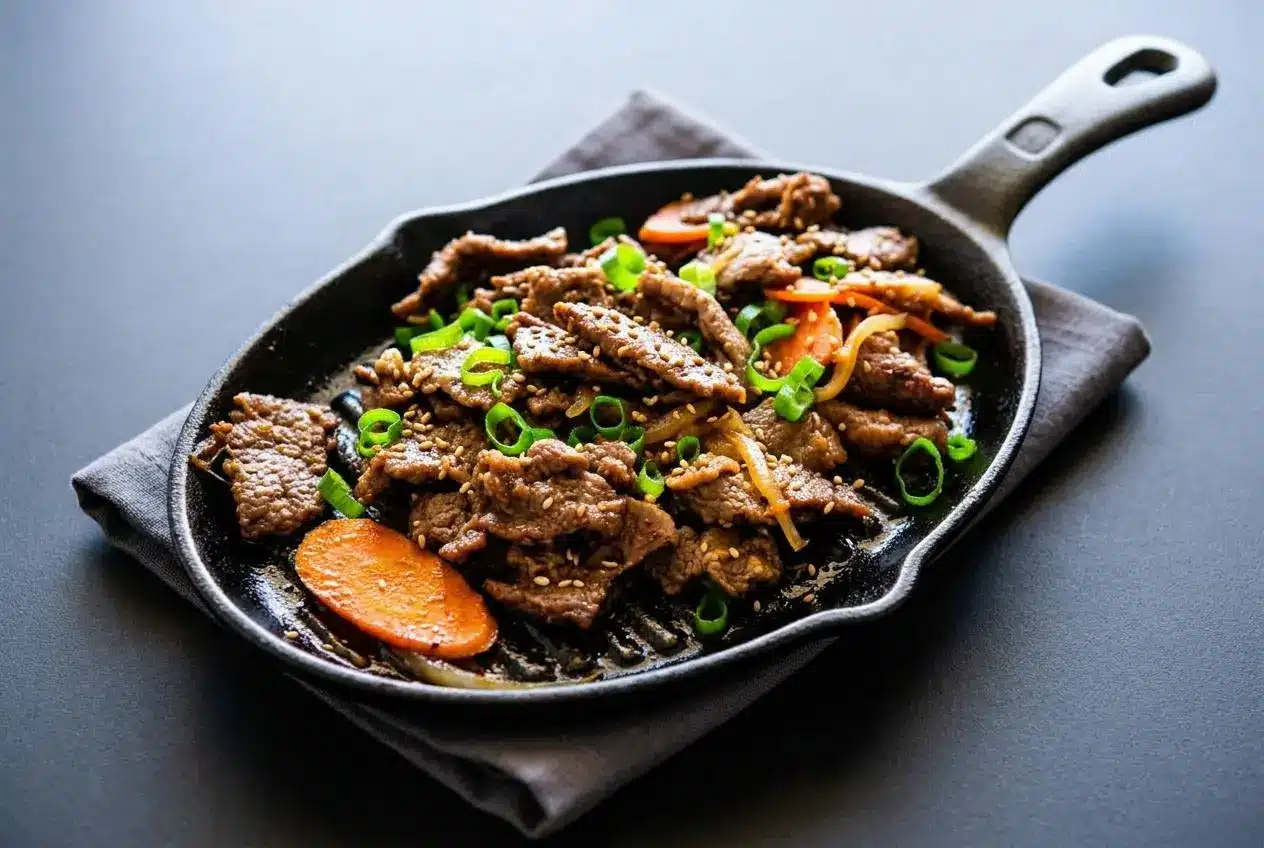
Beef bulgogi is classic Korean barbecue made with thinly sliced beef marinated in soy sauce, grated pear or apple, garlic, and sesame oil, then cooked quickly over high heat.
This beef bulgogi recipe brings together tender ribeye, a savory-sweet marinade, and fast skillet cooking for the glossy, caramelized beef you want from Korean BBQ.
The skillet should smell sweet and toasty, while the thinnest slices develop dark mahogany edges. That last minute of sizzling makes all the difference.
Set the beef in the freezer for 30 minutes before slicing so a sharp knife can make clean, even ribbons.
Key Ingredients for an Authentic Beef Bulgogi Recipe
Each ingredient contributes something important: beef brings richness, fruit softens and sweetens, soy sauce adds depth, and aromatics keep the finished bulgogi fragrant and balanced.
MAIN
- 800 g rib eye ((1.76 pounds) or top sirloin (or any tender prime beef cut), thinly sliced, 2mm to 3mm (1/8 inch) thickness)
- 1 onion ((130 g / 4.6 ounces), optional, peeled & thinly sliced)
- 2 stalks green onion ((55 g / 2 ounces), optional, thinly sliced)
- 1/2 carrot ((55 g / 2 ounces), optional, peeled & thinly sliced)
- 1 Tbsp toasted sesame oil
- 1 Tbsp toasted sesame seeds
- 1 Tbsp cooking oil ((I used rice bran oil))
BULGOGI MARINADE
- 6 Tbsp soy sauce ((I use regular Kikkoman soy sauce))
- 3 Tbsp brown sugar
- 2 Tbsp rice wine ((mirin))
- 1 red apple (or asian pear (155 g / 5.5 ounces))
- 1/2 onion ((80 g / 2.8 ounces))
- 1 Tbsp minced garlic
- 1 tsp minced ginger
- 1/8 tsp ground black pepper
Soy sauce seasons the meat with deep umami, while brown sugar gives the edges their lacquered caramelization. Mirin rounds out the saltiness with gentle sweetness. Apple or Asian pear adds fresh fruit flavor, and garlic and ginger cut through the richness of the beef.
Toasted sesame oil has a big job despite its small amount: it adds a nutty finish and helps the meat feel lush without making the marinade heavy. Sesame seeds bring aroma and a little crunch after the beef comes off the heat.
I slice the optional onion and carrot very thinly so they soften quickly without stealing the beef’s chance to brown.
Selecting the Right Cut: Ribeye Versus Sirloin
Ribeye is the classic choice for juicy, restaurant-style bulgogi because its marbling melts rapidly in a hot skillet. Look for a piece with fine white streaks throughout the meat rather than thick seams of exterior fat.
Top sirloin is leaner but still tender enough for bulgogi when sliced very thinly across the grain. Flank steak can also work when budget matters, though it needs especially careful slicing because its muscle fibers are more pronounced. Tenderloin is very soft but has less beefy richness than ribeye.
Ask for a tender steak cut if you are buying at the butcher counter, then slice it yourself after a brief chill. Thick slices cook more like stir-fry steak and miss bulgogi’s quick, lightly crisped texture.
The Tenderizing Magic of Asian Pear and Apple
Asian pear is prized in bulgogi marinades for mild sweetness, moisture, and calpain, a natural enzyme that gently softens beef fibers. It helps the meat become more pliable during marinating without overwhelming the savory seasoning.
A red apple is an excellent substitute and is already built into this recipe. It supplies fruit sweetness and enough brightness to balance the soy sauce. Blend it completely with the onion so no coarse fruit pieces scorch in the pan.
Some cooks reach for kiwi as a tenderizer, but it can soften beef too aggressively. Pear or apple gives a more forgiving result and keeps the beef tasting like beef.
How to Make Beef Bulgogi
High heat and thin slices turn the marinade into a glossy coating instead of a puddle. Have the cooked rice and serving dishes ready before the beef hits the skillet because it cooks quickly.
- Blend the soy sauce, brown sugar, mirin, apple or Asian pear, onion, garlic, ginger, and black pepper in a food processor until completely smooth.
The mixture should look fluid and evenly pureed, with no large fruit or onion pieces left behind. - Put the sliced beef in a bowl, work in the blended marinade with clean hands, then fold in the toasted sesame oil after the meat is evenly coated; cover and refrigerate for at least 4 hours.
After a gentle two-minute massage, the beef should feel supple and thoroughly coated rather than sitting in separated liquid. - Heat a skillet or grill over medium-high heat until very hot, coat it with the cooking oil, then cook the beef and optional vegetables over medium-high to high heat for 3 to 5 minutes; quickly stir in the sesame seeds at the end.
The meat should sizzle immediately, turn glossy, and show browned edges while the vegetables become tender. - Transfer the cooked bulgogi from the heat as soon as it reaches your preferred doneness.
The finished beef should have sweet, savory aroma and lightly crisped edges rather than a watery sauce.
How to Slice and Marinate the Beef
Thin, even slicing is the foundation of tender bulgogi. Keep the meat chilled while you work, use a stable cutting board, and return the sliced beef to the refrigerator promptly before marinating.
The Freezer Trick for Wafer-Thin Slicing
Place the ribeye or sirloin in the freezer for 30 minutes, just until it feels firm but is not frozen solid. This brief chill gives the knife resistance, which helps prevent ragged, uneven pieces.
Find the direction of the grain, then cut across those muscle lines with a sharp chef’s knife. Aim for the stated 2mm to 3mm thickness. The slices should bend easily and resemble wide ribbons, not chunky steak strips.
If the meat starts to soften while slicing, pause and chill it again rather than forcing the knife through it. Uniform slices cook at the same speed, which means fewer dry pieces in the finished batch.
Marinade Ratios and the Sesame Oil Timing Secret
Blend the fruit, onion, soy sauce, sugar, mirin, garlic, ginger, and pepper before adding them to the meat. A smooth puree coats every slice evenly and reduces the chance of fruit pulp burning against the skillet.
Massage the water-based marinade into the beef first, then add toasted sesame oil. The soy and fruit mixture can make close contact with the meat before the oil adds its fragrant, nutty finish.
Marinate for at least 4 hours. An overnight rest deepens the flavor, but avoid pushing beyond 24 hours because the fruit can leave the beef overly soft. Leaner cuts benefit most from giving the marinade enough time to work.
Step-by-Step Cooking Technique for Crispy Caramelized Edges
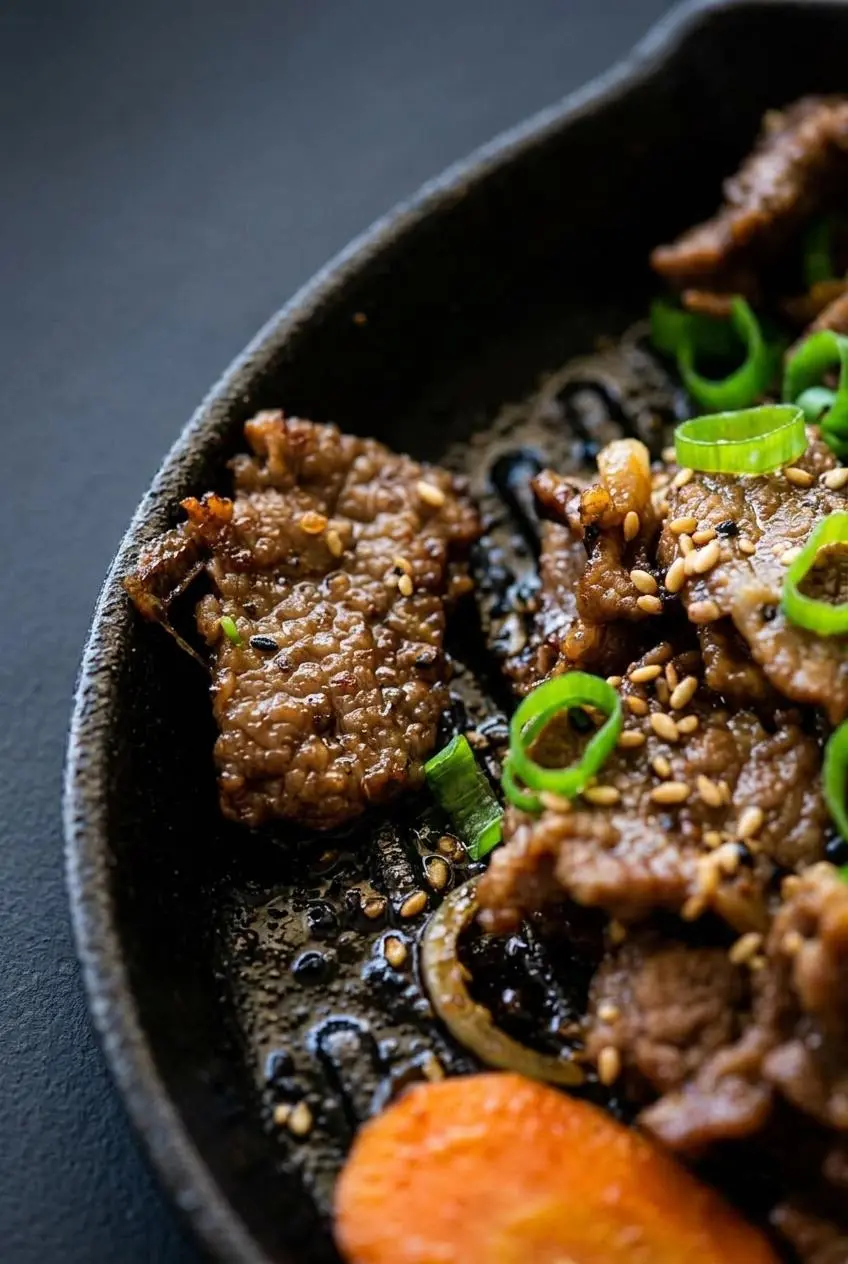
The key to caramelized bulgogi is keeping the pan hot enough that moisture evaporates quickly. A cast-iron skillet, wok, or grill works well, provided the cooking surface is thoroughly heated before the first batch goes in.
Wait for a fast sizzle and a faint wisp of smoke when the oil reaches the pan. Add only enough beef to form a loose single layer. If slices overlap in a crowded pile, they release liquid faster than the pan can evaporate it and begin to steam.
Lift the beef from the bowl rather than pouring all of the loose marinade into the skillet. Cook in batches, leaving space around each slice. During the final minute, the thinnest edges should form a crisp mahogany lace while the remaining marinade clings as a shiny glaze.
If using onion and carrot, add them with a batch of beef and keep them moving so their edges soften without burning. Between batches, wipe away any dark, sugary residue if it smells bitter, then reheat the pan before continuing.
Troubleshooting Common Bulgogi Cooking Mistakes
- Watery skillet: The pan is crowded or not hot enough, so the meat braises in its juices. Cook smaller single-layer batches and let excess marinade drip off before adding the beef.
- Scorched sugar residue: Fruit pulp or reduced sugar is catching on the pan. Blend the marinade until smooth, avoid adding pooled liquid, and carefully wipe the pan between batches when the residue turns very dark.
- Tough beef: The steak was cut with the grain, sliced too thickly, or a lean cut did not marinate long enough. Slice across the grain into thin ribbons and give the beef its full marinating time.
- Bland flavor: The marinade did not reach every slice. Massage the puree through the beef before adding sesame oil, making sure the pieces separate and coat evenly.
- Pale meat without browned edges: The skillet lost heat when the beef went in. Let the pan recover between batches and listen for a strong, immediate sizzle.
Essential Serving Ideas and Korean Table Accompaniments
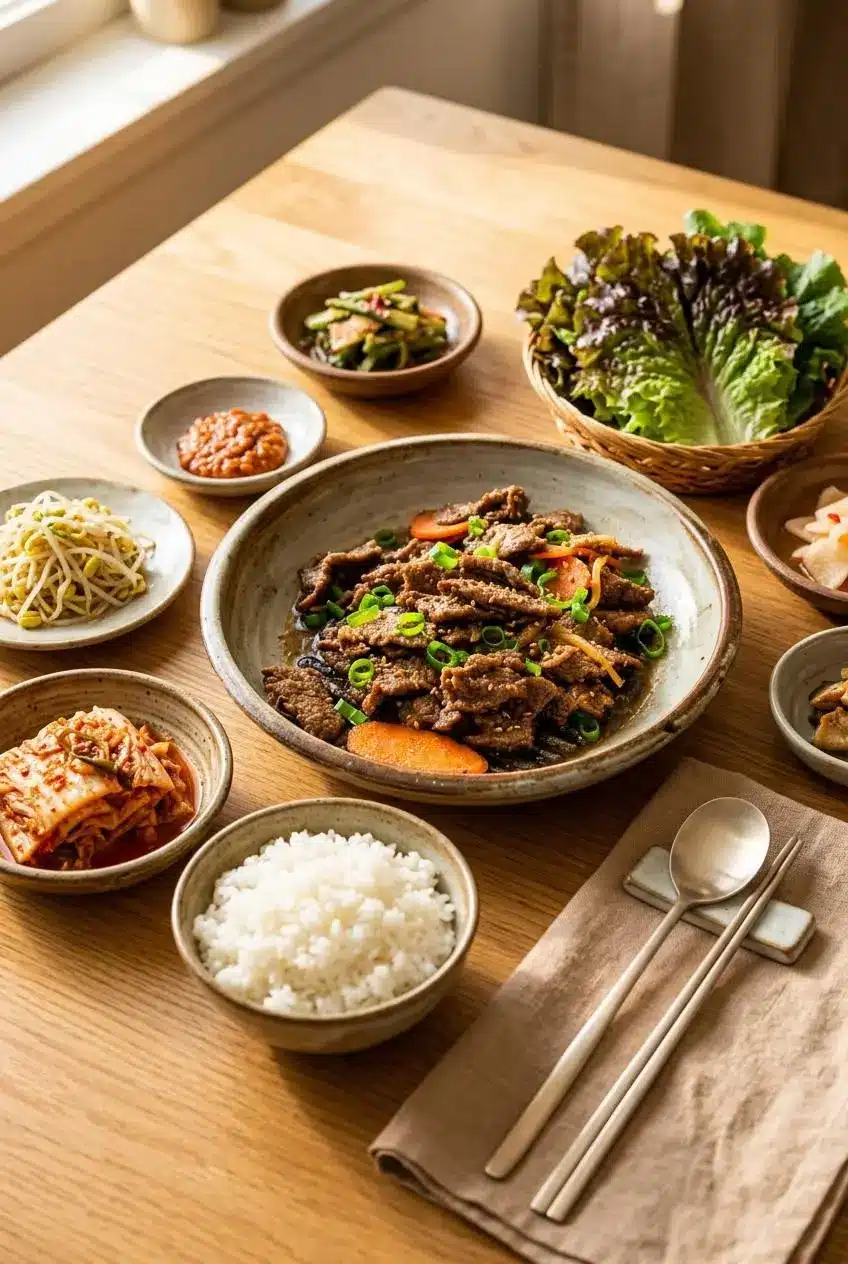
Bulgogi’s sweet-savory richness shines beside warm short-grain white rice and crisp, tangy accompaniments. Kimchi offers a bright fermented contrast, while seasoned soybean sprouts, cucumber salad, and pickled radishes bring freshness and crunch to the plate.
Set out rice, lettuce, ssamjang, and the bulgogi separately so everyone can build a bite to their liking. For leftovers, finely chop the beef and fold it into beef fried rice with cold rice for a fast skillet meal.
Traditional Ssam Lettuce Wraps with Ssamjang
For ssam, start with a fresh red leaf lettuce leaf or perilla leaf. Add a small bite of warm rice, top it with sizzling bulgogi, and finish with a dab of ssamjang, the savory Korean barbecue dipping sauce with a deep, pungent character.
Keep the wrap small enough to eat in one bite. The cool leaf, warm rice, rich beef, and bold sauce create the balance that makes bulgogi feel like a complete Korean BBQ meal rather than simply beef over rice.
Ground Beef Bulgogi Weeknight Variation
For a faster, budget-friendly variation, brown lean ground beef in a hot skillet, breaking it into small pieces. Stir in a pureed bulgogi-style mixture during the final minutes of cooking, then serve the glossy meat over rice with sliced green onions and sesame seeds.
This version has the same sweet-savory direction but a different texture from sliced steak bulgogi. For a fuller bowl, add crisp vegetables on the side, or use ground beef bulgogi bowls as a guide for turning the idea into a complete weeknight dinner.
Optional vegetables can shift the meal in a lighter direction. Toss sliced king oyster mushrooms into the pan for a meaty chew, or add julienned zucchini during the final 3 minutes so it stays tender with a little bite.
Make-Ahead Prep, Storage, and Reheating Instructions
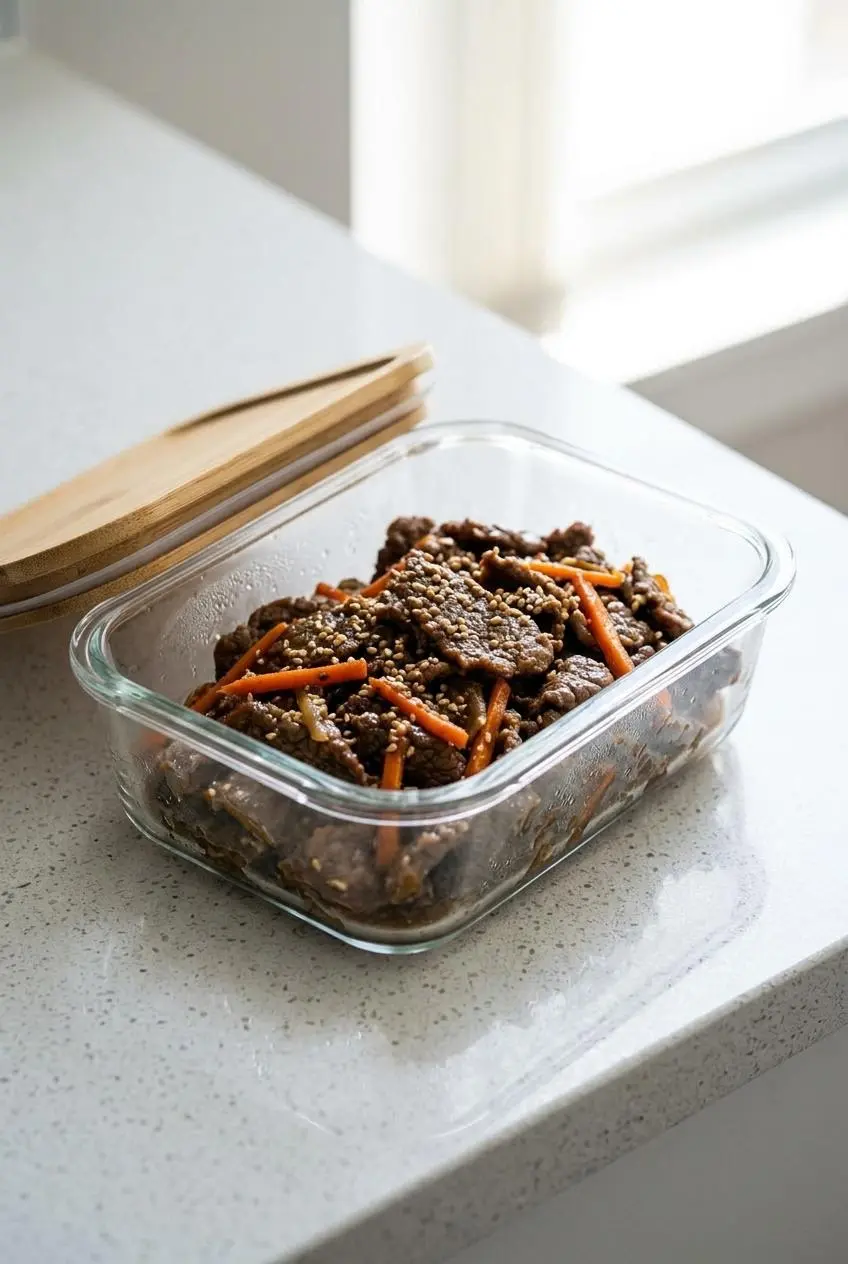
Prepare the marinade and slice the beef in advance, then keep the marinating meat covered and chilled until cooking time. For the best texture, cook the beef soon after its planned marinating period rather than leaving it in the fruit mixture too long.
Cool cooked bulgogi before transferring it to an airtight container and refrigerate it promptly. Reheat only the portion you plan to eat in a warm skillet with a small splash of water, stirring just until the glaze loosens and the beef is hot. Avoid blasting thin slices at high microwave power, which can make them chewy.
This recipe does not include freezer storage directions, so keep the marinated beef chilled and plan to cook it within the stated marinating window. Avoid refreezing raw beef that has already been thawed.
Conclusion
Homemade bulgogi delivers tender beef, a balanced sweet-savory glaze, and those irresistible caramelized edges in just a few minutes of cooking. Ribeye brings the richest result, while thinly sliced sirloin still makes a satisfying dinner.
Slice across the grain, let the marinade work, and sear in uncrowded batches. Once the pan starts sizzling, you are very close to a great Korean BBQ meal.
Frequently Asked Questions
What Is the Best Cut of Beef for Homemade Bulgogi?
Ribeye is the top choice because its marbling keeps the thin slices tender and flavorful over high heat. Choose top sirloin for a leaner option with a good beefy flavor. Use flank steak when sliced extremely thinly across the grain. Skip thick steak cuts, which will not cook with the same quick, tender texture.
Why Is Asian Pear Used in Authentic Bulgogi Marinade?
Asian pear adds gentle sweetness, moisture, and calpain, a natural enzyme that helps soften beef fibers. Its flavor stays mild enough to let the soy sauce and garlic come through. Red apple works well here as an accessible substitute with similar sweetness and freshness. Blend the fruit smoothly so it coats the meat evenly and does not burn in the pan.
How Do You Prevent Bulgogi From Releasing Too Much Water in the Pan?
Heat the skillet thoroughly, let loose marinade drain from the meat, and cook in small batches. Keep each batch in a single layer with room between slices. Do not pour the entire bowl of marinade into the pan. Let the skillet reheat between batches if the sizzling slows down.
Can I Freeze Raw Marinated Bulgogi for Easy Meal Prep?
This recipe does not provide freezer storage directions, so it is better to keep the marinated beef covered and chilled, then cook it within the recommended marinating period. Do not rely on freezing as part of this method. For advance prep, slice the beef and blend the marinade ahead, keeping them chilled separately until ready to combine. Cooked bulgogi reheats best gently in a skillet with a little water to loosen the glaze.
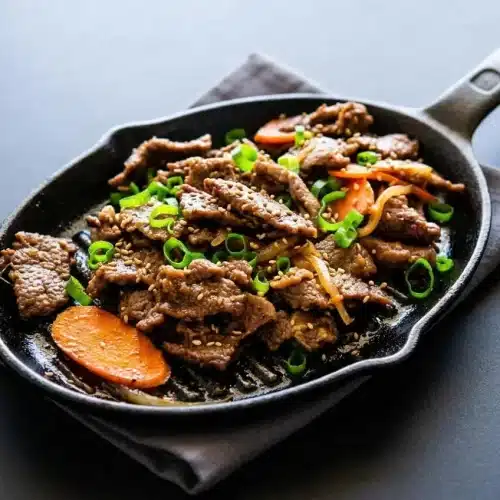
Beef Bulgogi Recipe

Equipment
- Food processor
- Skillet
Ingredients
MAIN
- 800 g rib eye ((1.76 pounds) or top sirloin (or any tender prime beef cut), thinly sliced, 2mm to 3mm (1/8 inch) thickness)
- 1 onion ((130 g / 4.6 ounces), optional, peeled & thinly sliced)
- 2 stalks green onion ((55 g / 2 ounces), optional, thinly sliced)
- 1/2 carrot ((55 g / 2 ounces), optional, peeled & thinly sliced)
- 1 Tbsp toasted sesame oil
- 1 Tbsp toasted sesame seeds
- 1 Tbsp cooking oil ((I used rice bran oil))
BULGOGI MARINADE
- 6 Tbsp soy sauce ((I use regular Kikkoman soy sauce))
- 3 Tbsp brown sugar
- 2 Tbsp rice wine ((mirin))
- 1 red apple (or asian pear (155 g / 5.5 ounces))
- 1/2 onion ((80 g / 2.8 ounces))
- 1 Tbsp minced garlic
- 1 tsp minced ginger
- 1/8 tsp ground black pepper
Instructions
- Blend the soy sauce, brown sugar, mirin, apple or Asian pear, onion, garlic, ginger, and black pepper in a food processor until completely smooth. The mixture should look fluid and evenly pureed, with no large fruit or onion pieces left behind.
- Put the sliced beef in a bowl, work in the blended marinade with clean hands, then fold in the toasted sesame oil after the meat is evenly coated; cover and refrigerate for at least 4 hours. After a gentle two-minute massage, the beef should feel supple and thoroughly coated rather than sitting in separated liquid.
- Heat a skillet or grill over medium-high heat until very hot, coat it with the cooking oil, then cook the beef and optional vegetables over medium-high to high heat for 3 to 5 minutes; quickly stir in the sesame seeds at the end. The meat should sizzle immediately, turn glossy, and show browned edges while the vegetables become tender.
- Transfer the cooked bulgogi from the heat as soon as it reaches your preferred doneness. The finished beef should have sweet, savory aroma and lightly crisped edges rather than a watery sauce.