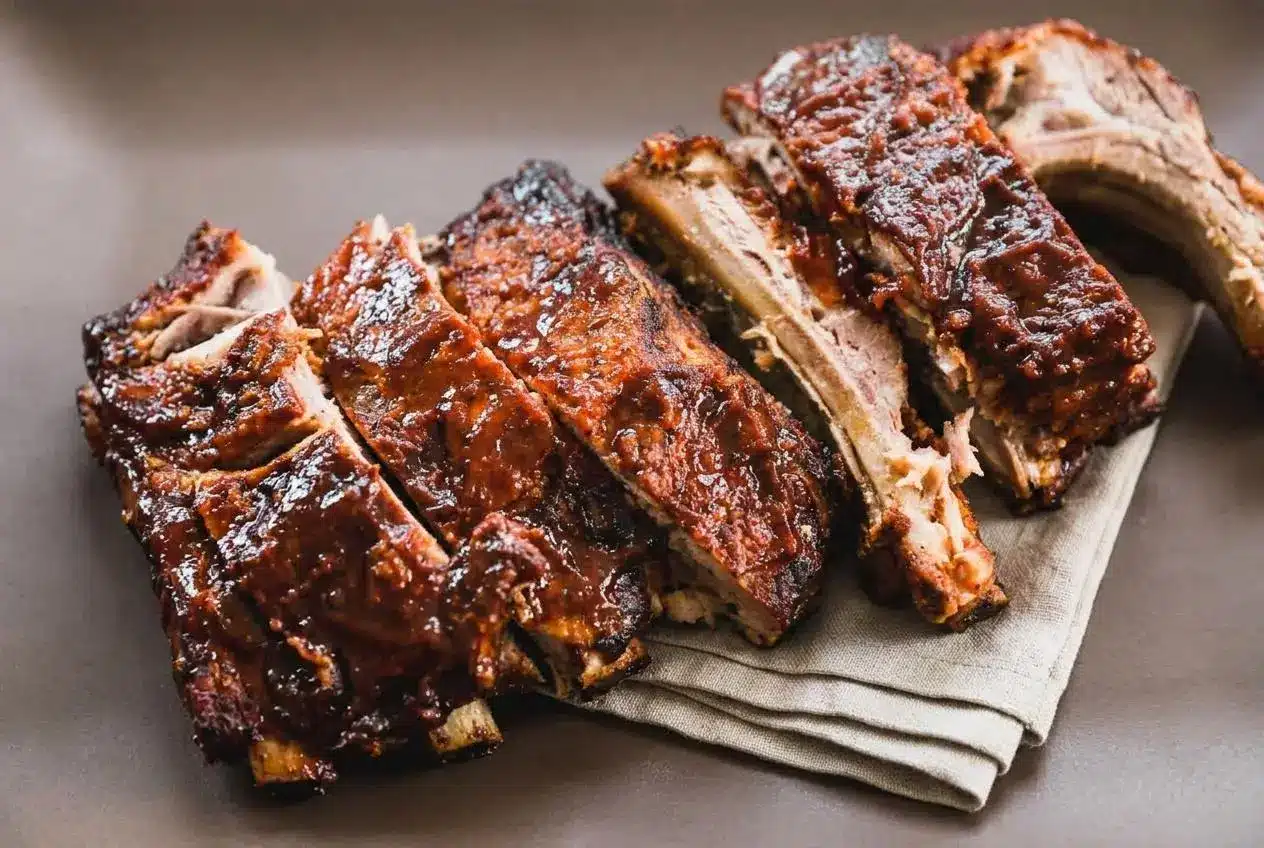
For tender ribs, season the rack with a dry rub, curve it around the slow cooker with the meat facing outward, cook on LOW until tender, then finish with barbecue sauce for a sticky crust.
This slow cooker ribs recipe starts with a quick oven bake, then lets gentle heat soften the pork while brown sugar, garlic, and onion perfume the kitchen. The result is tender meat with enough structure to slice and serve.
Keep some barbecue sauce aside for the finish so the final coating stays glossy and bold. That bubbling glaze is worth the wait.
Use a dry paper towel for a firm grip when pulling off the membrane. It makes the slippery job much easier.
Ingredients for These Slow Cooker Ribs
Each ingredient builds flavor and texture: pork provides richness, the dry seasonings create a savory crust, brown sugar encourages browning, and barbecue sauce brings moisture, tang, and shine.
- 1 rack pork ribs ((about 2 lbs))
- 32 ounces BBQ sauce
- salt and freshly ground black pepper
- 1 teaspoon garlic powder
- 1 teaspoon onion powder
- 1 teaspoon light brown sugar
Garlic powder and onion powder create a savory backbone without adding extra moisture to the surface. Light brown sugar rounds out those flavors and helps the sauce darken into a sticky finish. Salt and freshly ground black pepper wake up the natural richness of the pork.
Use barbecue sauce in two stages: coat the ribs for slow cooking, then reserve plenty for the final brush. Fresh sauce on the outside gives the ribs a brighter barbecue flavor than sauce that has spent the entire cook in the pot.
I find that peeling away the thin membrane from the bone side gives the seasonings better contact with the meat and avoids that chewy layer underneath.
How to Make Slow Cooker Ribs
- Heat the oven to 400 °F.
Have a large baking sheet ready with foil or parchment paper so the ribs can go straight into the oven. - Season both sides of the pork ribs with salt and freshly ground black pepper, then rub in the garlic powder, onion powder, and light brown sugar.
The surface should look evenly coated, with no large patches of bare meat. - Place the seasoned ribs on the lined baking sheet and bake for 15 minutes, then turn them over and bake for 15 minutes more.
The pork should sizzle lightly and develop early browning around the edges. - Curve the rack around the inside wall of the slow cooker with the meat facing outward, then coat it with barbecue sauce while reserving some for serving.
Cover and cook on LOW for 4 to 6 hours, until the meat is tender and has pulled back from the bone tips. - Serve the ribs warm with the reserved barbecue sauce spooned over the top.
The pork should bend easily when lifted but still hold together for slicing.
Arranging Ribs in the Pot
Standing the rack around the perimeter of the crock pot helps the meat face the warmer ceramic wall instead of pressing bone-side-down across the bottom. That position encourages more even cooking and leaves room for the rack to soften without sitting in a pool of diluted sauce.
If the rack does not fit comfortably, cut between the bones to make two or three manageable slabs. Keep the meat-facing-out arrangement as much as possible, and avoid adding water or broth. The ribs release their own juices as they cook.
Cooking Times: Low vs High
LOW heat is the better choice when tenderness matters most. The official cooking range is 4 to 6 hours on LOW, but begin checking near the 5-hour mark if you want ribs that are tender without collapsing into shreds.
Cooking on HIGH can work when time is tight, but it is less forgiving for lean baby back ribs. Gentle heat gives connective tissue more time to soften while keeping the meat fibers from tightening too quickly.
Choosing and Prepping Your Ribs
Good prep prevents the two most frustrating rib problems: a leathery membrane and an overly greasy slow cooker. Look for a rack with even thickness and trim only thick, hard patches of exterior fat. Leave a thin layer behind because it adds flavor and protects the pork as it cooks.
Baby Back vs Spare Ribs
Baby back ribs are smaller, leaner, and usually easier to curve inside a standard slow cooker. They tend to reach tenderness earlier in the cooking range, so check them before the full 6 hours.
Spare ribs and St. Louis-style ribs are larger and carry more fat. They can be especially flavorful in the slow cooker, but their wider racks often need to be cut into sections and generally benefit from cooking closer to the longer end of the LOW range.
How to Remove the Membrane
Turn the rack bone-side-up and look for the thin, papery layer stretched across the bones. Slide a dull butter knife under the membrane over a middle bone, gently lift a corner, and avoid digging into the meat.
Grip the loosened flap with a dry paper towel and pull steadily across the rack in one motion. If it tears, lift another edge and continue. Removing it allows the rub to reach the pork and keeps the underside from turning tough.
The Dry Rub and Seasoning Fundamentals
The rub works because each seasoning has a focused job. Garlic powder brings roasted savoriness, onion powder adds mellow sweetness, and light brown sugar balances both while encouraging the exterior to brown during the oven bake and broiler finish.
Season the ribs on every surface, including the curved edges, before they go into the oven. Press the spices in gently rather than leaving a loose layer that can slide off when the rack is moved.
Barbecue sauces vary widely in saltiness, sweetness, and smoke. Season the pork confidently with salt and pepper, but avoid making the rub too salty when using a strongly seasoned bottled sauce. You can always add more sauce at the table, but it is difficult to pull salt back out of the finished pork.
The Broiler Finish for Sticky Caramelized Ribs
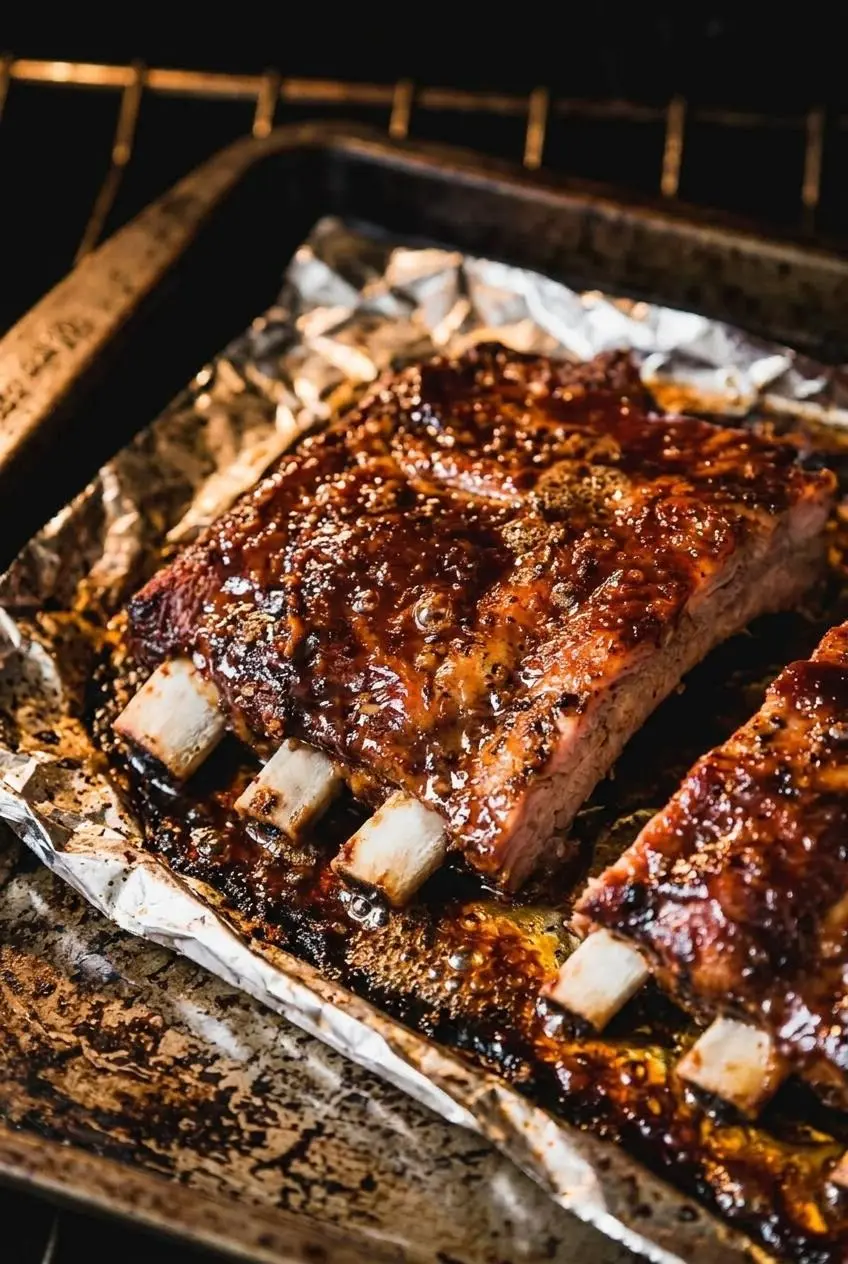
A brief broiler finish gives slow-cooked ribs the caramelized surface a covered cooker cannot create. This is the move that turns tender ribs into sticky barbecue ribs with a lacquered crust.
Lift the tender rack carefully onto a foil-lined baking sheet using sturdy tongs or two wide spatulas. Support the ribs from underneath because very tender meat can crack if the rack is lifted from one end.
Brush the top generously with reserved barbecue sauce, place the pan about 6 inches below a hot broiler, and watch closely for 3 to 5 minutes. The sauce should bubble, darken slightly, and look shiny. Stay nearby because sugars can go from caramelized to scorched quickly.
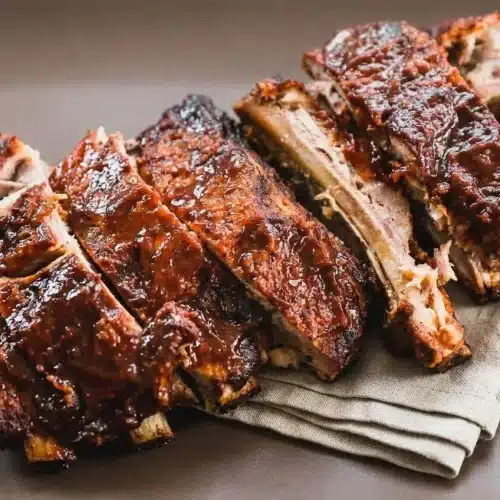
For a thicker coating, brush on another layer of sauce after broiling and serve immediately. The contrast between the tender pork and tacky, slightly charred glaze is the whole point.
Recipe Variations and Flavor Options
Keep the main method as written, then change the flavor direction when you want something different. These are optional approaches, so choose one rather than piling several bold seasonings onto the same rack.
Boneless Country-Style Pork Ribs
Country-style pork ribs are meatier and do not need to be curved around the pot. Arrange them in a single, flat layer where possible, coat with barbecue sauce, and begin checking them earlier than a bone-in rack so the thicker pieces stay juicy rather than dry.
They make a convenient option when you want barbecue flavor without bones, though the finished texture is more like tender pork pieces than traditional rib racks.
Spicy Cajun Barbecue Ribs
For a peppery, savory profile, replace part of the brown sugar in the rub with Cajun seasoning and add smoked paprika if desired. The spice blend plays especially well with a sweet barbecue sauce, creating a bolder finish without making the pork taste sugary.
- Honey garlic glaze: Brush the ribs with honey, fresh garlic, and soy sauce during the final broil for a sweet-savory coating with a punchier garlic aroma.
- Low-sugar barbecue: Use smoked sea salt and paprika in the rub, then finish with an unsweetened keto barbecue sauce for a less-sweet option.
- Oven alternative: If you prefer a fully oven-cooked rack, try these oven baked ribs for a different approach to caramelized pork.
What to Serve with Barbecue Ribs
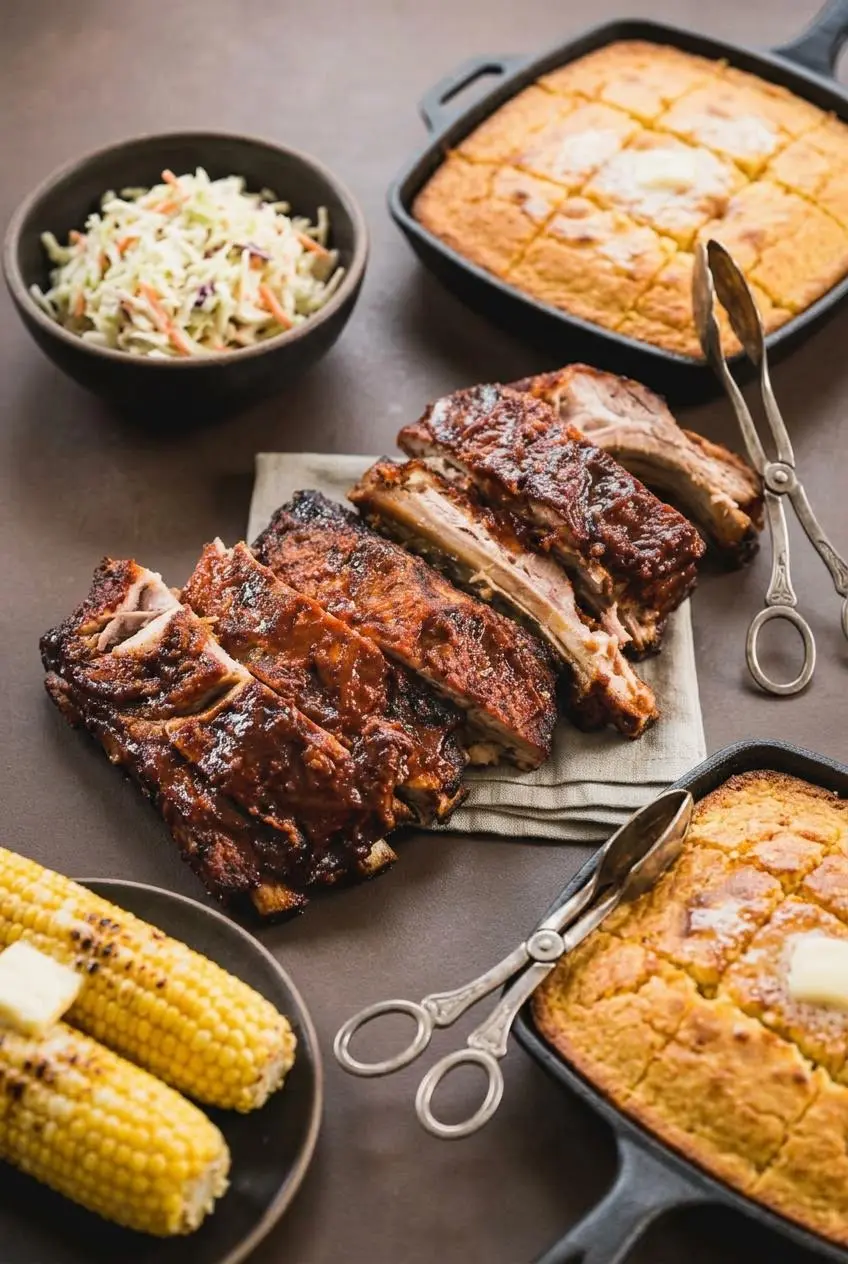
Rich, sticky ribs are at their best with sides that add crunch, creaminess, or a little sweetness. A crisp coleslaw with tangy dressing cuts through the barbecue sauce, while skillet cornbread gives you something warm to swipe through every last bit of glaze.
- Buttered corn on the cob brings sweetness and a juicy pop beside smoky pork.
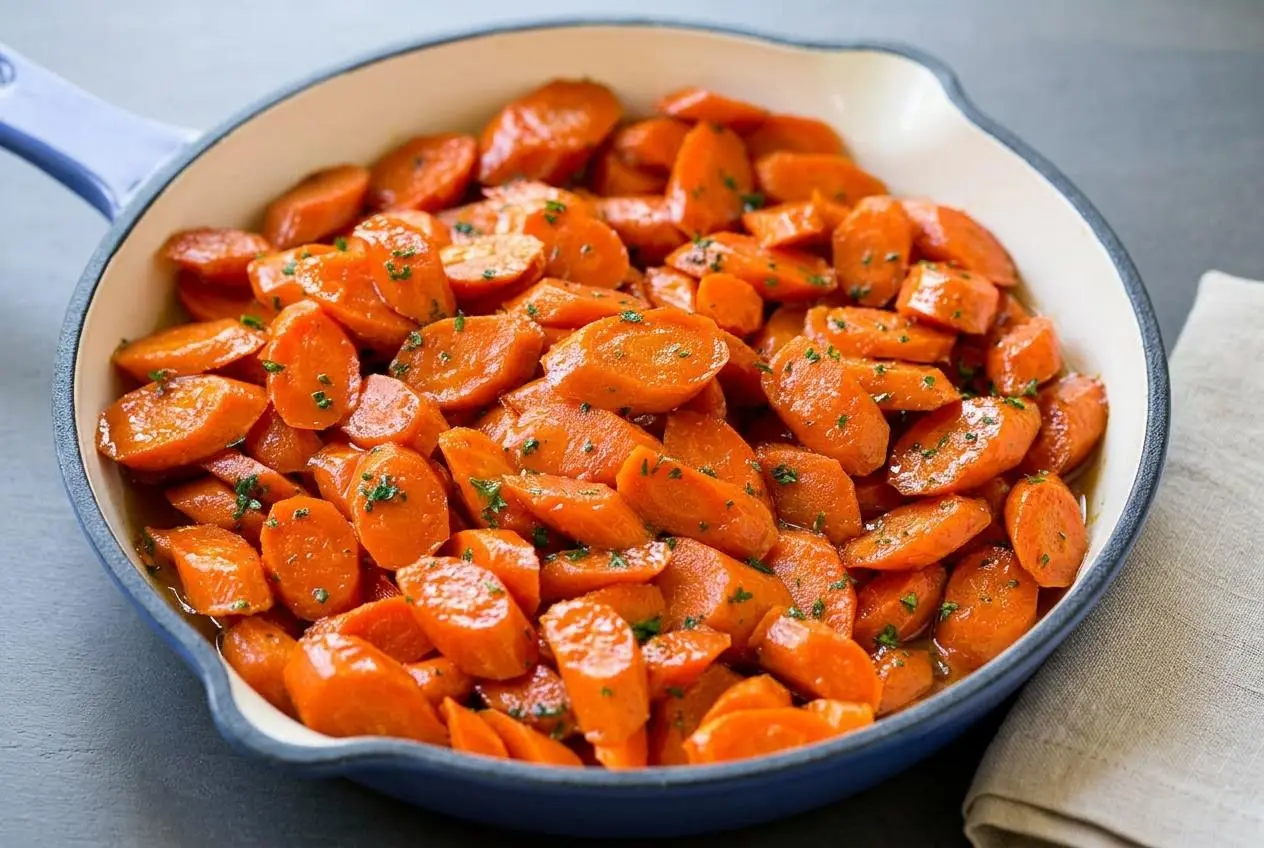
- Twice-baked potatoes make the meal feel extra hearty without competing with the ribs.
- A green salad with sharp vinaigrette keeps the plate fresh and balanced.
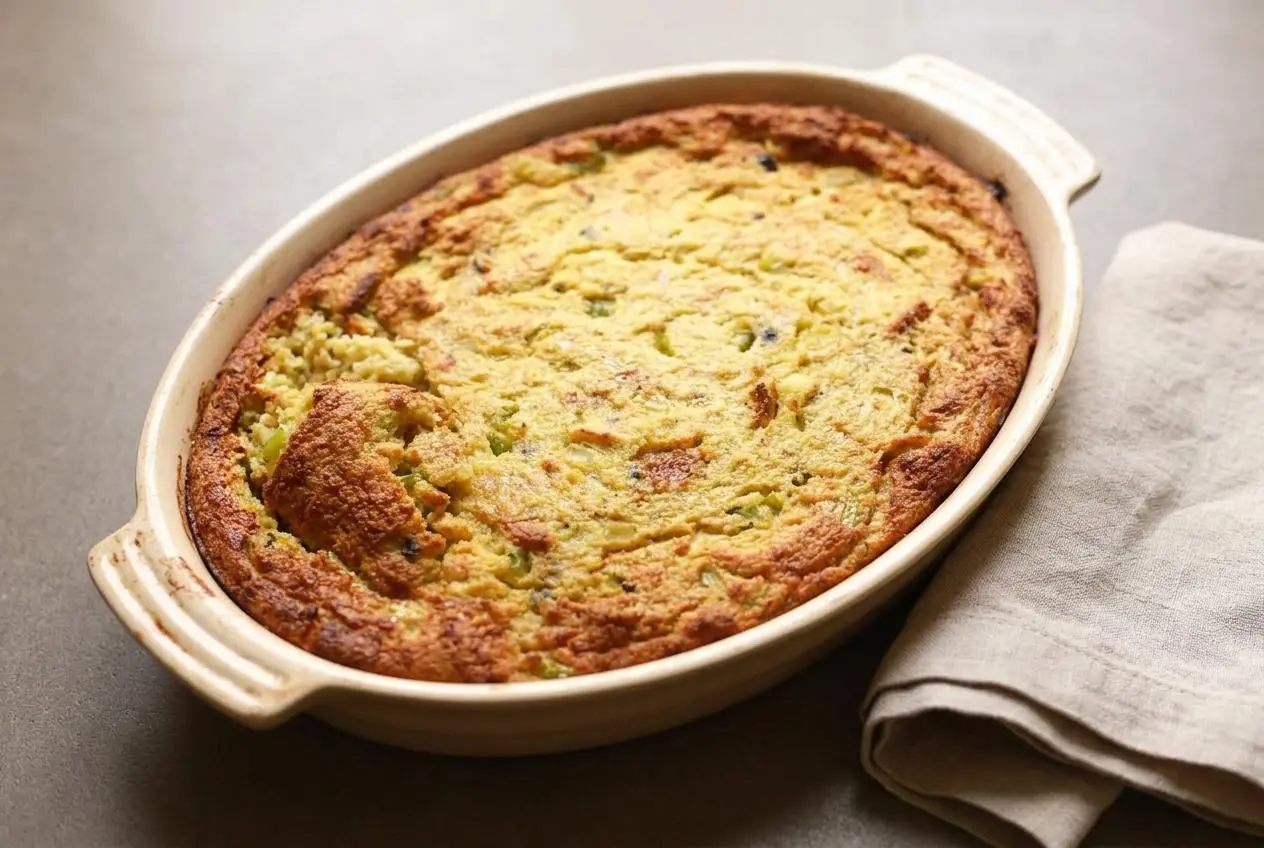
- For a warm, cheesy side, serve slow cooker cheddar corn alongside the ribs.
Troubleshooting Common Slow Cooker Rib Mistakes
Slow cooker ribs are forgiving, but a few small choices can affect the sauce and texture. These fixes keep the pork tender and the barbecue flavor concentrated.
Condensation Control and Sauce Thickness
The lid traps steam, and that condensation can drip back into the pot and thin the sauce. During the final part of cooking, place a clean kitchen towel under the lid to absorb excess moisture, keeping the cloth safely away from the heating base.
If the sauce still looks loose, pour the cooker juices into a small saucepan and simmer them until they look thicker and more concentrated. Spoon that reduced sauce over the ribs after broiling, rather than letting watery juices soak the finished crust.
Fixing Texture and Doneness Issues
- Mushy ribs: They likely cooked beyond the point of tenderness. Check around the 5-hour mark and remove the rack when it bends with gentle resistance instead of splitting apart.
- Tough ribs: The connective tissue needs more time. Keep cooking on LOW and test again when the meat has noticeably pulled back from the bone ends.
- Dry ribs: Lean baby backs can suffer from extended HIGH heat. Use LOW when possible and coat the rack well with barbecue sauce before cooking.
- Weak barbecue flavor: Reserve sauce for the finish. A fresh layer after broiling gives the ribs more tang, smoke, and shine.
Storing and Reheating Leftovers
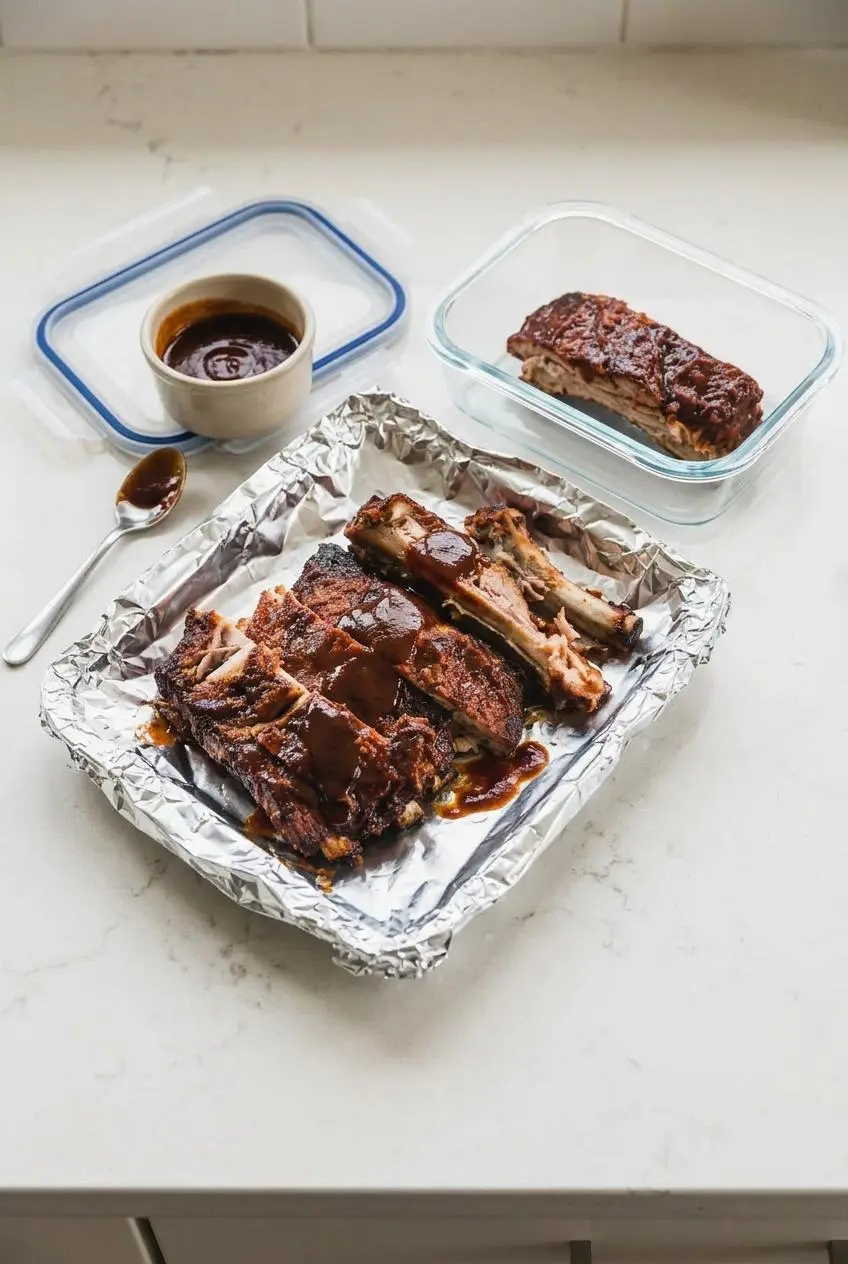
Let leftover ribs cool slightly, then seal them in an airtight container and keep them chilled. Store extra barbecue sauce separately when possible, since it is easier to refresh the pork with a new coating before reheating.
For the best texture, wrap rib portions in foil with a spoonful of barbecue sauce and warm them gently in the oven until heated through. Avoid blasting them on high in the microwave, which can make the pork edges dry and rubbery.
Pull leftover meat from the bones and use it in sliders or tacos, adding sauce just before serving. The shredded pork also works well with crunchy slaw for contrast.
Conclusion
Slow cooking gives pork ribs time to become tender, while the oven bake and broiler finish add the browned edges and sticky barbecue coating people expect from great ribs.
Remove the membrane, keep the rack curved meat-side-out, and save sauce for the end. Those small details make dinner feel special without making the day complicated.
Frequently Asked Questions
Should Ribs Be Covered in Liquid in a Slow Cooker?
No. Ribs release natural juices and fat as they cook, so extra water or broth can dilute the barbecue sauce and make the exterior soft. Coat the ribs with barbecue sauce, keep the lid on, and let the pork create its own cooking juices.
Can I Cook Ribs on HIGH Instead of LOW?
Yes, but LOW heat gives the most reliable tender texture. The recipe cooks on LOW for 4 to 6 hours, and the ribs are often at their best when checked around the 5-hour point. HIGH heat is useful when needed, but monitor lean baby back ribs closely so they do not dry out or become overly soft.
How Do I Keep My Slow Cooker Ribs From Getting Soggy?
Skip added broth or water, arrange the rack upright with the meat facing the pot wall, and manage excess condensation under the lid near the end of cooking. Finish the sauced ribs under the broiler for 3 to 5 minutes. That heat sets the sauce into a firmer, sticky crust.
How Do I Know When Slow Cooker Ribs Are Fully Cooked?
Look for meat that has pulled back from the bone tips by about one-half inch. The rack should bend easily when lifted from the center. For ribs with a tender bite, remove them before the bones slide free and the meat falls into shreds.
Can I Make Slow Cooker Ribs Ahead of Time and Reheat?
Yes. Cook the ribs, cool them slightly, and refrigerate them whole in an airtight container until you are ready to serve. Reheat portions gently in foil with barbecue sauce, then broil just before serving to restore the sticky finish.
Slow Cooker Ribs Recipe

Equipment
- Slow cooker
- Baking Sheet
- tinfoil or parchment paper
Ingredients
- 1 rack pork ribs ((about 2 lbs))
- 32 ounces BBQ sauce
- salt and freshly ground black pepper
- 1 teaspoon garlic powder
- 1 teaspoon onion powder
- 1 teaspoon light brown sugar
Instructions
- Heat the oven to 400 °F. Have a large baking sheet ready with foil or parchment paper so the ribs can go straight into the oven.
- Season both sides of the pork ribs with salt and freshly ground black pepper, then rub in the garlic powder, onion powder, and light brown sugar. The surface should look evenly coated, with no large patches of bare meat.
- Place the seasoned ribs on the lined baking sheet and bake for 15 minutes, then turn them over and bake for 15 minutes more. The pork should sizzle lightly and develop early browning around the edges.
- Curve the rack around the inside wall of the slow cooker with the meat facing outward, then coat it with barbecue sauce while reserving some for serving. Cover and cook on LOW for 4 to 6 hours, until the meat is tender and has pulled back from the bone tips.
- Serve the ribs warm with the reserved barbecue sauce spooned over the top. The pork should bend easily when lifted but still hold together for slicing.