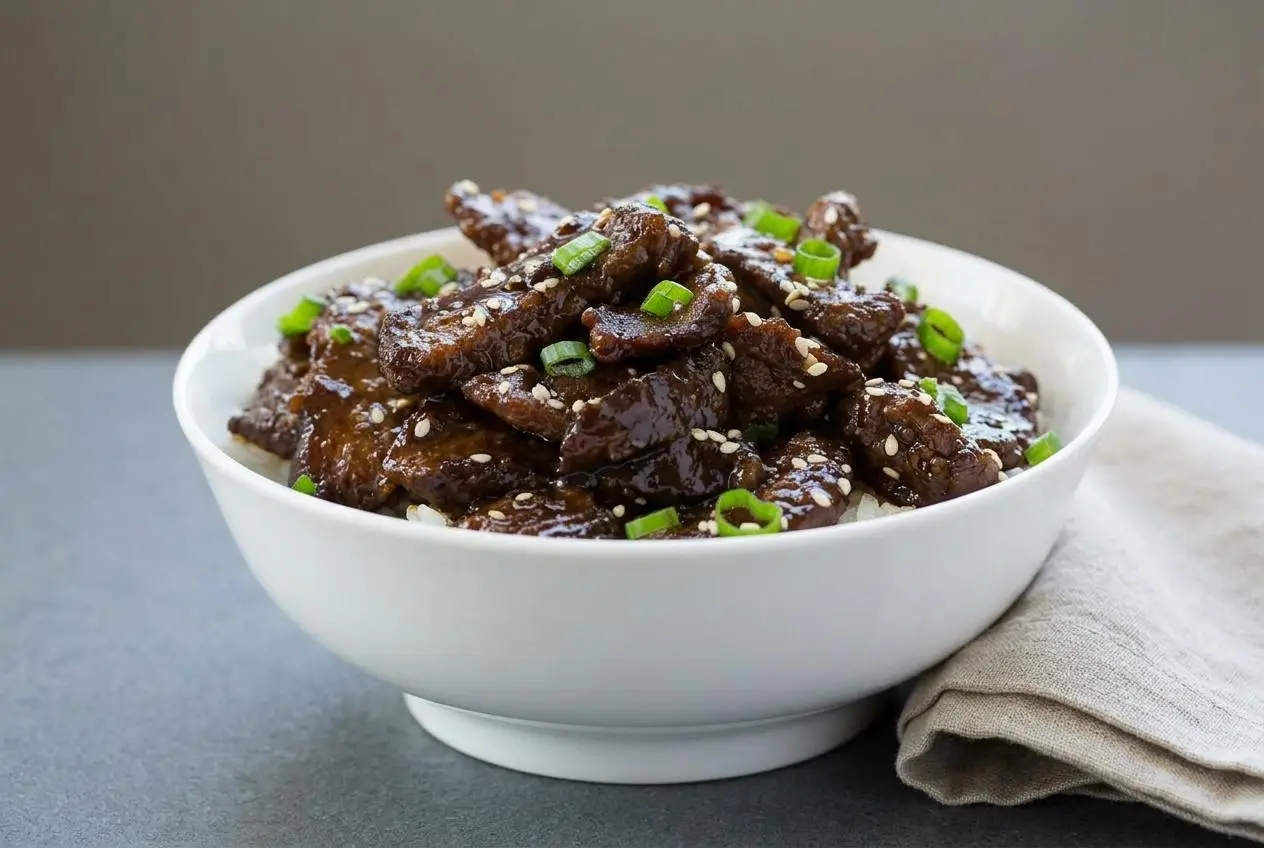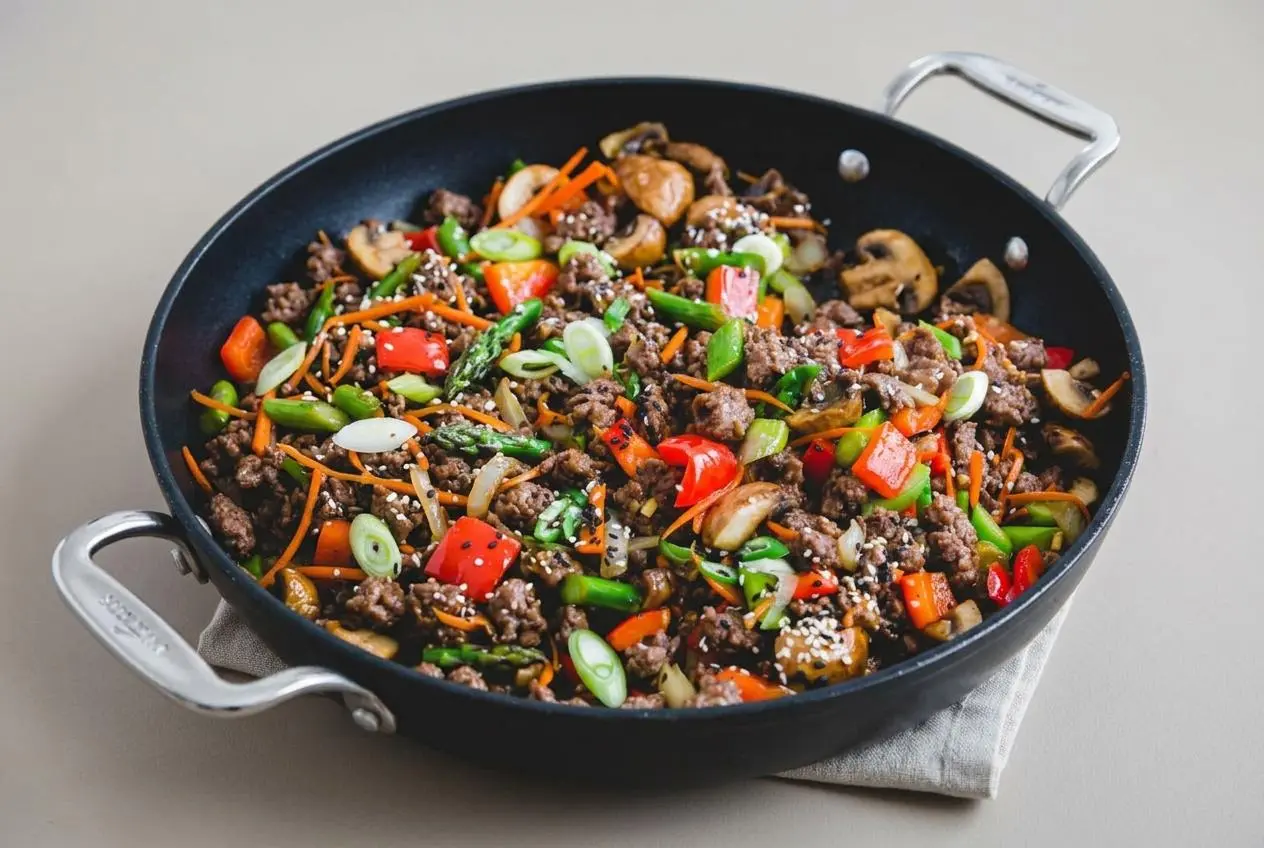
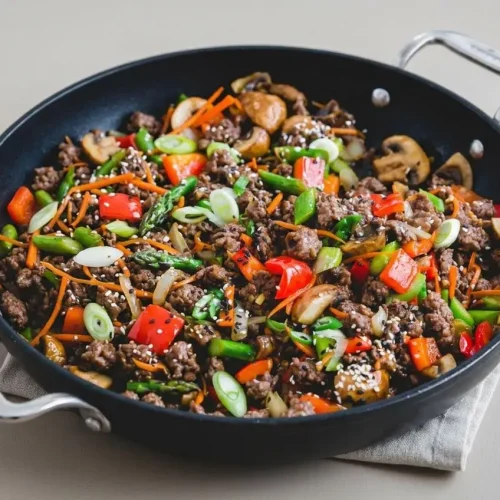
This ground beef stir fry combines browned beef and crisp-tender vegetables in a glossy garlic ginger sauce, all on the table in 30 minutes.
Ground beef cooks quickly, picks up plenty of caramelized flavor, and gives the sauce lots of craggy edges to cling to. It is a practical skillet dinner when sliced steak sounds like more prep than dinner needs.
The beef should sizzle as it hits the hot skillet, while the vegetables stay bright and lightly crisp instead of soft. The glossy sauce is the payoff.
Set out the sauce ingredients before heating the skillet so the starch mixture is ready the moment the beef and vegetables come together.
Why Ground Beef Makes the Ultimate Weeknight Stir Fry
Ground beef is especially good for a fast stir fry because it needs no trimming, slicing, or marinating. Break it into crumbles in a hot skillet and it develops browned edges quickly, creating plenty of surface area for the sauce to coat.
Choose 85/15 ground beef for a richer result with enough fat to carry flavor, or use 90/10 when you prefer less grease in the pan. Either works well, but drain any pooled fat after browning so the finished sauce stays glossy rather than oily.
Unlike a classic beef stir fry, this version does not require careful slicing across the grain or a separate marinade. The crumbled texture also catches bits of garlic, ginger, scallion, and sauce in every bite.
Ground beef is also easy to pair with whatever produce needs using. Bell pepper, carrots, asparagus, mushrooms, and onion bring sweetness, earthiness, and crunch, but the same cooking approach works with many firm vegetables.
Ingredients for Ground Beef Stir Fry
Each ingredient builds a distinct part of the dish: browned beef adds savoriness, vegetables bring color and bite, and the sauce supplies aromatic heat, sweetness, acidity, and a clingy finish.
- 1 pound ground beef
- 1 tablespoon extra virgin olive oil
- 1 red bell pepper (chopped)
- 1 large carrot (cut into matchsticks)
- 1/2 pound asparagus (ends trimmed, chopped)
- 8 ounces mushrooms (sliced or quartered)
- 1/2 a large yellow onion (chopped)
For the stir fry sauce
- 3 tablespoons coconut aminos (substitute tamari/soy sauce)
- 1 teaspoon minced garlic
- 1 teaspoon minced fresh ginger
- 1 teaspoon sriracha
- 1 teaspoon rice vinegar
- 1 tablespoon toasted sesame oil
- 1 1/2 tablespoons maple syrup
- 2 tablespoons water
- 1 tablespoon arrowroot powder (substitute tapioca starch or cornstarch)
For Garnish
- sesame seeds
- chopped scallions
The beef delivers the deep savory backbone, while carrots and asparagus hold their crunch against the sauce. Mushrooms add earthy umami, bell pepper adds gentle sweetness, and onion softens into the skillet juices. Maple syrup rounds out the sharp garlic, ginger, vinegar, and sriracha. Arrowroot gives the sauce a glossy cling instead of leaving a thin broth at the bottom of the pan.
I prefer slicing mushrooms on the thicker side here because they keep a meatier bite after their moisture hits the hot skillet.
How to Make Ground Beef Stir Fry
- Heat a large skillet over medium-high heat, then add the ground beef and break it into crumbles as it cooks.
Let the beef develop deep brown spots before moving it to a plate, which builds a fuller savory flavor. - Add the extra virgin olive oil to the empty skillet and heat it until it moves easily across the surface, then add the bell pepper, carrot, asparagus, mushrooms, and onion.
Sauté for about 5 minutes, keeping the vegetables uncovered until their colors brighten and they are softened but still crisp. - Whisk the coconut aminos, garlic, ginger, sriracha, rice vinegar, toasted sesame oil, maple syrup, water, and arrowroot powder together in a small bowl while the vegetables cook.
Whisk until the arrowroot disappears into the liquid so it thickens smoothly rather than forming sticky lumps. - Return the browned beef and any accumulated juices to the skillet with the vegetables.
Stir until the crumbles are evenly distributed and the skillet is sizzling again. - Pour in the sauce and stir immediately, coating the beef and vegetables from the bottom of the pan upward, then turn off the heat.
The sauce should quickly turn shiny and cling to the spatula and ingredients. - Scatter sesame seeds and chopped scallions over the stir fry before serving with cooked white rice.
The scallions should stay fresh and bright against the warm, savory skillet mixture.
Browning and Draining the Beef
Give the beef enough room to brown instead of stirring constantly. Once it is deeply browned, transfer it out of the skillet before cooking the vegetables. If a visible layer of fat remains, carefully drain it away, leaving only a light coating in the pan. This keeps the finished glaze from separating into a greasy slick.
A wide skillet is more useful than a deep, narrow pan for this job. The beef contacts more hot metal, moisture evaporates faster, and the crumbles develop browned edges rather than simmering in their own juices.
Staged Vegetable Searing
Vegetables do not all cook at the same speed. Carrots and onion need the earliest contact with the skillet because they are denser. Add asparagus after they begin to soften, then let mushrooms and bell pepper cook just until their surfaces look glossy and their color sharpens.
Keep the pan uncovered. A lid traps steam, and trapped steam turns a stir fry into a softer vegetable sauté. If the skillet looks crowded or liquid starts gathering around the vegetables, raise the heat slightly and stir less often so moisture can cook away.
Glazing and Emulsifying the Sauce
The sauce goes in at the end because garlic and ginger can turn harsh if they sit over high heat too long. Stir immediately once the sauce hits the skillet, then take the pan off the burner as soon as the mixture looks thick and shiny.
Arrowroot thickens quickly and gives a clear, bright glaze. Cornstarch can replace it, but it benefits from a brief simmer to reach its full thickening power. In either case, whisk the starch completely into the cool sauce mixture first. A dry spoonful of starch in a hot pan is almost guaranteed to clump.
Mastering the Homemade Garlic Ginger Stir Fry Sauce
Choosing the Right Ground Beef
An 85/15 blend gives the dish fuller beef flavor, while 90/10 leaves less fat to drain. Neither choice is wrong. The key is to remove excess grease after browning so the sauce can coat the beef instead of floating on top of fat.
Coconut aminos bring a mellow, savory saltiness. Tamari or soy sauce creates a more assertive salt profile, so taste before adding anything extra. Rice vinegar helps brighten the sauce, especially when using regular soy sauce, while toasted sesame oil gives the finish its nutty aroma.
Balancing Sweet and Savory Sauce Notes
Fresh ginger, garlic, and sriracha bring heat and sharpness. Maple syrup smooths those edges without making the dish taste sugary, and water keeps the sauce fluid enough to reach every part of the skillet before it thickens.
For more heat, add extra sriracha or a sprinkle of red pepper flakes as an optional change. Add gradually and taste after the sauce coats the beef, since the heat becomes more noticeable once the liquid reduces into a glaze.
Arrowroot vs. Cornstarch for Thickening
Arrowroot is ideal when you want the sauce to turn glossy quickly as the pan comes off the heat. Tapioca starch creates a similar cling, while cornstarch gives a slightly more opaque sauce with a classic takeout-style thickness.
If your sauce stays thin, the usual cause is a skillet that is overcrowded or vegetables that released too much water. Keep stirring over the remaining heat until the sauce coats the ingredients. If it thickens too much, remove the pan from heat promptly so it does not turn sticky.
Essential Cooking Tips to Avoid Soggy Vegetables and Greasy Sauce
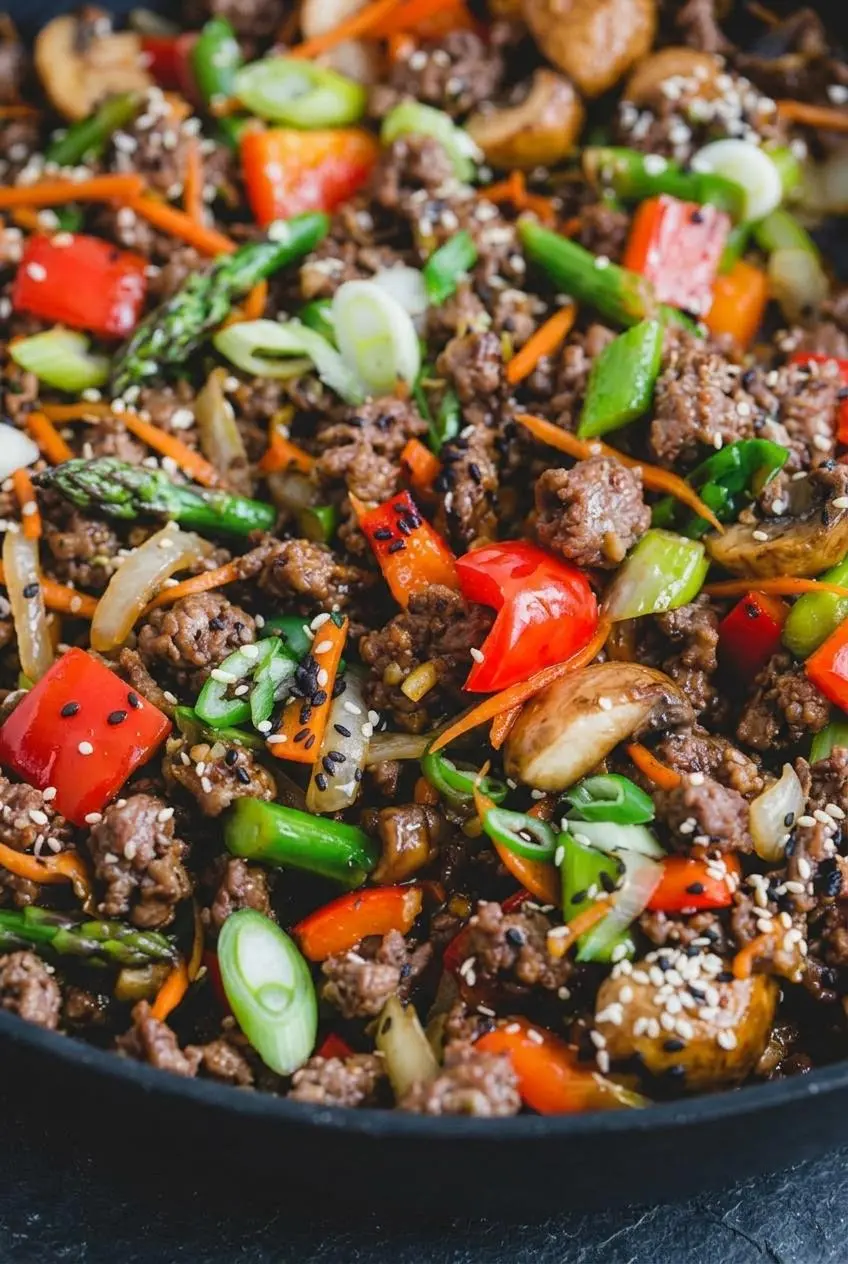
A few small decisions make the difference between a lively skillet dinner and a watery pan of vegetables.
- Problem: watery vegetables. High-moisture mushrooms can release liquid quickly. Use a wide skillet, keep it uncovered, and let the vegetables sit briefly between stirs so they can sear.
- Problem: soft carrots with undercooked asparagus. Start carrots and onion first, then add quicker-cooking vegetables once the dense pieces begin to soften.
- Problem: oily sauce. Beef fat was left in the skillet after browning. Transfer the beef out and drain pooled grease before adding the olive oil and vegetables.
- Problem: bitter garlic and ginger flavor. Do not add the sauce early. The aromatics stay smoother when they cook only briefly as the sauce thickens.
- Problem: salty glaze. Coconut aminos are milder than many soy sauces. When using tamari or soy sauce, avoid adding extra salt until the stir fry is finished and tasted.
- Problem: sauce clumps. Whisk the arrowroot or cornstarch into the sauce while it is still cool, then pour it into the skillet in one steady stream.
A wok can work well if it sits securely on your burner, but a broad heavy skillet is often easier for home cooking. The important part is surface area. Crowding makes the food steam, while space gives the beef and vegetables a chance to brown.
Serving Suggestions and Easy Flavor Variations
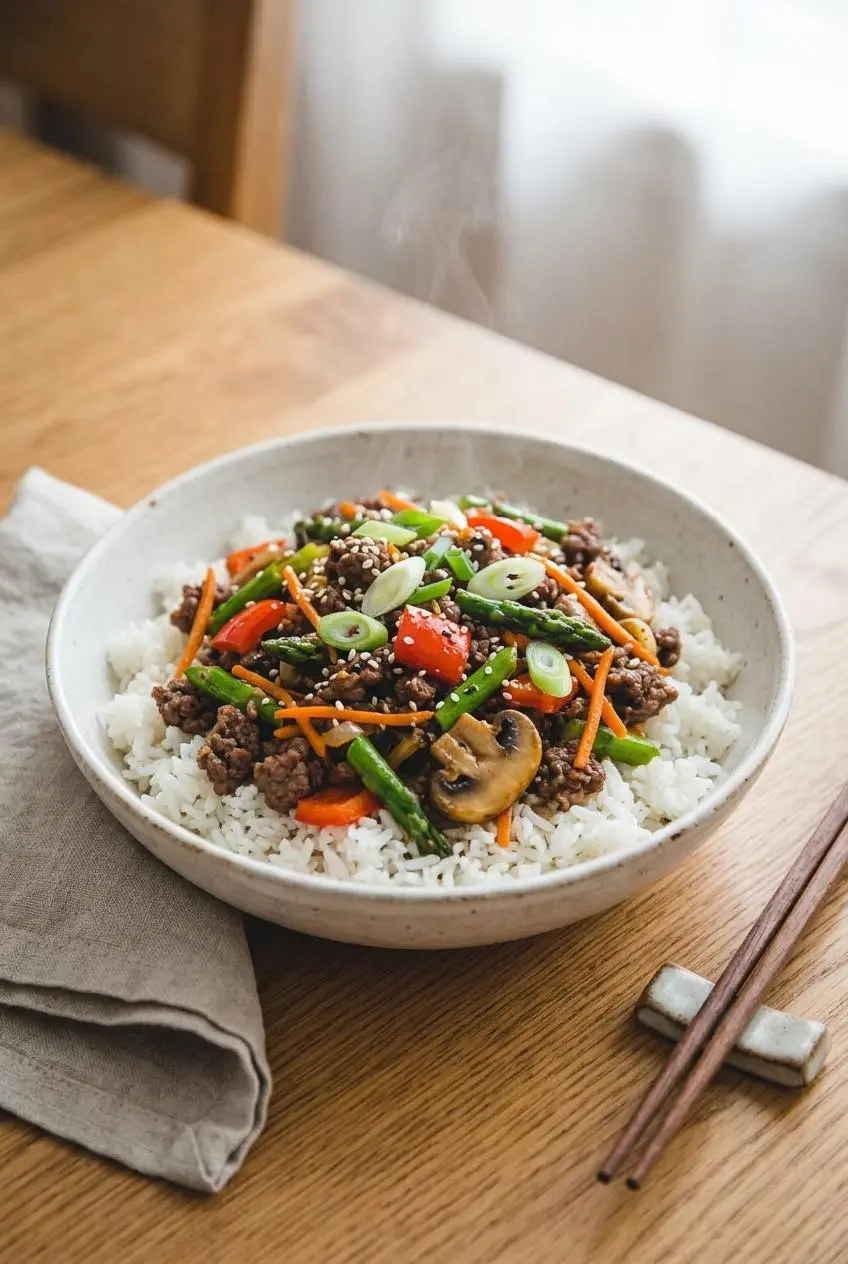
Serve this skillet dinner in the style that suits the rest of the meal. Keep all of these changes optional so the original garlic ginger flavor remains the starting point.
Korean-Style Beef Stir Fry
Stir a spoonful of gochujang into the sauce for a deeper chile flavor with gentle sweetness, then finish with extra toasted sesame oil. For another spicy-sweet dinner direction, try these Korean ground beef bowls.
Low-Carb Lettuce Wraps
Spoon the warm beef mixture into chilled butter lettuce or romaine leaves for a fresh crunch. Cauliflower fried rice also works well underneath, especially when you want the glossy sauce without a grain base.
Noodle and Grain Pairings
Warm jasmine rice catches every bit of sauce, while brown rice adds a nuttier chew. Tender ramen or udon noodles turn the stir fry into a heartier bowl. For an egg roll-inspired variation, fold pre-shredded coleslaw cabbage into the skillet near the end, cooking only until it softens slightly while retaining some crunch.
- Spicy chili garlic version: Add more sriracha or red pepper flakes for a sharper heat that still lets the ginger and sesame flavor come through.
- Citrus pepper finish: A pinch of crushed Sichuan peppercorns and fresh lime zest added off heat gives the rich beef a fragrant, bright edge.
- Extra vegetable option: Snap peas or shelled edamame fit the same quick-cooking style and add a firm pop of texture.
Storage and Skillet Reheating Guidelines
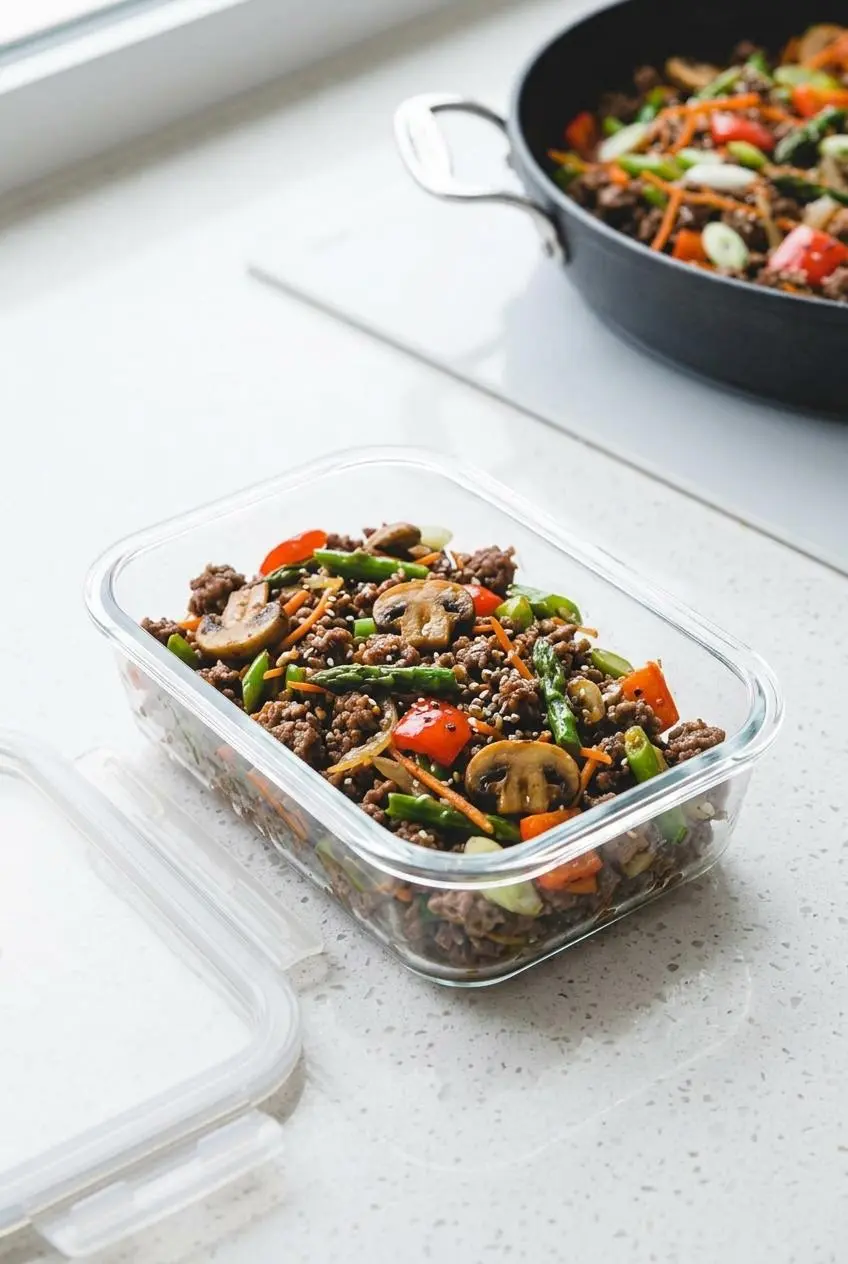
Cool leftovers promptly, then refrigerate them in an airtight container. Kept at 40°F or below, cooked ground beef leftovers can be refrigerated for up to 4 days as part of safe ground beef storage practices.
For the best texture, reheat a portion in a hot skillet over medium heat with a small splash of water. Stir just until the beef is hot and the sauce loosens again. This method is gentler on the vegetables than prolonged reheating and helps them keep more of their bite.
Mushrooms and asparagus become softer after chilling because they release moisture into the sauce. That is normal. Use a wide skillet and avoid covering the pan during reheating so excess moisture can evaporate instead of steaming the vegetables.
Conclusion
This 30-minute skillet meal brings together savory browned beef, bright vegetables, and a garlic ginger glaze that clings to every bite. The biggest texture win is simple: drain excess beef grease and keep the vegetables uncovered.
Take the skillet off heat as soon as the sauce turns glossy, then serve while the vegetables still have their crisp edges. Dinner can stay fast and still feel full of flavor.
Frequently Asked Questions
What Lean-to-Fat Ratio Is Best for Ground Beef Stir Fry?
Choose 85/15 or 90/10 ground beef. 85/15 has more richness and beef flavor. 90/10 produces less pooled fat in the skillet. Drain visible excess grease after browning, before the vegetables and sauce go in.
How Do You Keep Vegetables Crisp When Stir-Frying?
Preheat the skillet over medium-high heat and cook in an uncovered, uncrowded pan. Start dense vegetables, such as carrots and onion, before tender vegetables. Stir occasionally rather than continuously so the vegetables can sear. Add the sauce only after the vegetables are crisp-tender.
Can I Use Frozen Vegetables Instead of Fresh?
Yes, though they need extra moisture control. Partially thaw them first and pat them dry with paper towels. Cook them in a hot, wide skillet without a lid. Expect a softer texture than fresh carrots, asparagus, mushrooms, and bell pepper.
How Should Leftovers Be Stored and Reheated?
Keep leftovers chilled in an airtight container and follow the storage guidance above. Reheat portions in a skillet over medium heat rather than relying on prolonged microwave heating. Add a small splash of water if the sauce has tightened in the refrigerator. Leave the skillet uncovered so the vegetables do not steam.
Ground Beef Stir Fry

Equipment
- Large Skillet
- Plate
- Small bowl
- Whisk
Ingredients
- 1 pound ground beef
- 1 tablespoon extra virgin olive oil
- 1 red bell pepper chopped
- 1 large carrot cut into matchsticks
- 1/2 pound asparagus ends trimmed, chopped
- 8 ounces mushrooms sliced or quartered
- 1/2 large yellow onion chopped
For the stir fry sauce
- 3 tablespoons coconut aminos substitute tamari/soy sauce
- 1 teaspoon minced garlic
- 1 teaspoon minced fresh ginger
- 1 teaspoon sriracha
- 1 teaspoon rice vinegar
- 1 tablespoon toasted sesame oil
- 1 1/2 tablespoons maple syrup
- 2 tablespoons water
- 1 tablespoon arrowroot powder substitute tapioca starch or cornstarch
For Garnish
- sesame seeds
- chopped scallions
Instructions
- Heat a large skillet over medium-high heat, then add the ground beef and break it into crumbles as it cooks. Let the beef develop deep brown spots before moving it to a plate, which builds a fuller savory flavor.
- Add the extra virgin olive oil to the empty skillet and heat it until it moves easily across the surface, then add the bell pepper, carrot, asparagus, mushrooms, and onion. Sauté for about 5 minutes, keeping the vegetables uncovered until their colors brighten and they are softened but still crisp.
- Whisk the coconut aminos, garlic, ginger, sriracha, rice vinegar, toasted sesame oil, maple syrup, water, and arrowroot powder together in a small bowl while the vegetables cook. Whisk until the arrowroot disappears into the liquid so it thickens smoothly rather than forming sticky lumps.
- Return the browned beef and any accumulated juices to the skillet with the vegetables. Stir until the crumbles are evenly distributed and the skillet is sizzling again.
- Pour in the sauce and stir immediately, coating the beef and vegetables from the bottom of the pan upward, then turn off the heat. The sauce should quickly turn shiny and cling to the spatula and ingredients.
- Scatter sesame seeds and chopped scallions over the stir fry before serving with cooked white rice. The scallions should stay fresh and bright against the warm, savory skillet mixture.