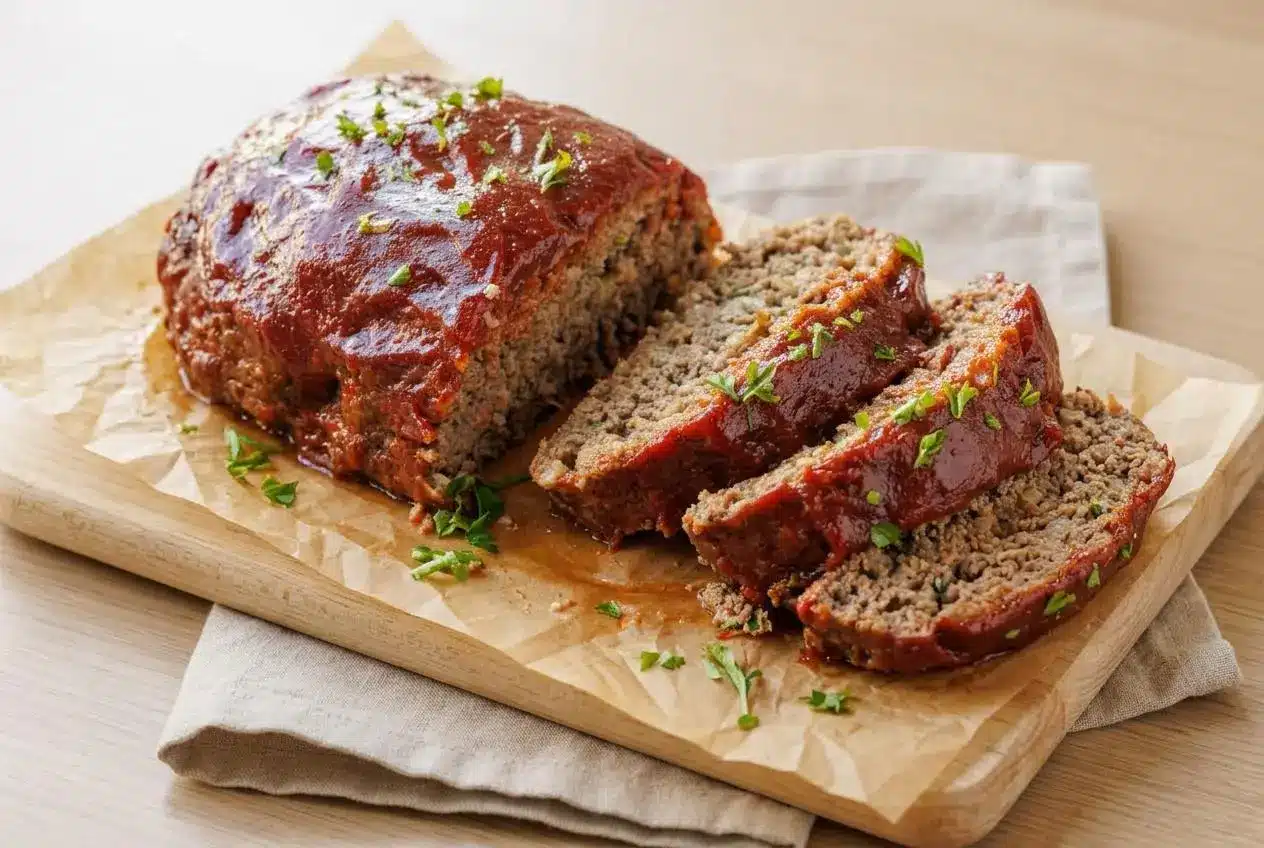
Classic meatloaf combines 80/20 or 85/15 ground beef, milk-soaked breadcrumbs, eggs, and seasonings, then bakes at 350°F until the center reaches 160°F.
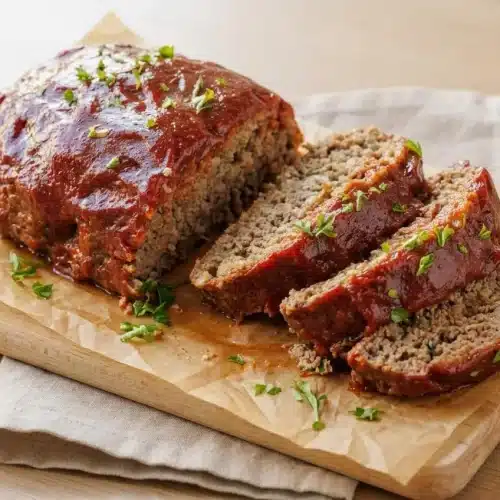
This Classic Meatloaf Recipe delivers tender, sliceable beef with softened golden onions and a sticky ketchup brown sugar glaze. The free-form shape helps the outside brown while excess fat drains away.
The mixture stays soft and cohesive instead of packed tight, which is the difference between a juicy slice and a dense one. That glossy glaze does the rest.
Cool the sautéed onions fully before mixing so they do not begin warming the ground beef.
Classic Meatloaf Ingredients and Their Roles
Each ingredient supports a specific part of the finished loaf, from beefy richness and moisture to firm slices, savory aroma, and a balanced sweet-tangy glaze.
Meatloaf Ingredients
- 2 lbs ground beef (85% or 80% lean*)
- 1 med onion ((1 cup), finely chopped)
- 1 tsp olive oil
- 2 large eggs
- 3 garlic cloves (minced)
- 2 Tbsp ketchup
- 3 Tbsp fresh parsley (finely chopped)
- 3/4 cup Panko breadcrumbs (or gluten-free bread crumbs)
- 1/3 cup milk
- 1 tsp salt (or to taste)
- 1 tsp Italian seasoning
- 1/2 tsp ground black pepper
Meatloaf Sauce Ingredients
- 3/4 cup ketchup
- 1 ½ tsp white vinegar
- 2 Tbsp brown sugar
- 1/2 tsp garlic powder
- 1/2 tsp onion powder
Choose 80/20 or 85/15 ground beef for enough fat to keep the loaf moist as it bakes. The eggs help the meat mixture set into neat slices, while parsley, garlic, ketchup, and Italian seasoning round out the savory flavor. Sautéing the onion first removes its raw bite and gives the loaf a softer, more even texture.
The Science of the Milk Panade
Milk and panko form a panade, a hydrated breadcrumb mixture that cushions the ground beef as it cooks. The moistened crumbs absorb juices and rendered fat, helping the meat proteins stay relaxed rather than tightening into a dry, shrunken loaf. It also helps hold the mixture together without making it heavy.
I stir the milk into the panko until every crumb looks evenly damp before adding the beef, which makes gentle mixing much easier.
Choosing Your Binder: Panko vs. Breadcrumbs
Panko gives this meatloaf a lighter, softer crumb because its flakes stay airy after soaking. Standard dry breadcrumbs make a slightly firmer slice, while crushed crackers can add a more compact, rich texture. Use the gluten-free bread crumb option listed above when needed, and keep the milk step so the binder stays hydrated.
How to Make Classic Meatloaf Step-by-Step
Free-form meatloaf cooks evenly when it is shaped gently, glazed late, and left alone briefly after baking. Keep raw-meat handling tidy, then wash hands and work surfaces well before moving on to the sauce and serving dishes.
- Heat the oven to 350°F and cover a rimmed baking sheet with parchment paper or foil.
The lined pan catches drippings and keeps cleanup from becoming the evening’s least appealing task. - Warm the olive oil in a medium skillet over medium heat, then cook the chopped onion for 5 to 7 minutes, stirring now and then; move it to a plate to cool.
The onion should look translucent with light golden edges and smell sweet, not dark or bitter. - Place the ground beef, cooled onion, and remaining meatloaf ingredients in a large bowl, then combine with clean hands just until no streaks remain.
The mixture should feel soft and tacky enough to hold together, without looking tightly compressed. - Set the mixture on the prepared baking sheet and form it into an even loaf about 8 inches long, 4 inches wide, and 3 inches tall; bake uncovered for 40 minutes.
The loaf should hold a smooth mound shape as the surface begins to brown. - Stir the ketchup, white vinegar, brown sugar, garlic powder, and onion powder together in a small bowl.
The glaze should be smooth, thick, and evenly blended with no pockets of brown sugar. - Coat the loaf with the glaze and continue baking for 20 minutes, checking the thickest center with an instant-read thermometer until it reads 160°F; rest before slicing.
The glaze should look glossy and lightly caramelized, and the loaf should feel springy when gently pressed after its 10 to 15 minute rest.
Gentle Hand Mixing and Free-Form Shaping
Mixing is where texture is won or lost. Fold and press the ingredients together with relaxed hands rather than kneading them. Heavy mixing compacts the beef and can leave the finished loaf chewy.
Shape the loaf into an even 8-by-4-by-3-inch mound. Keeping the thickness consistent helps heat reach the center at the same pace as the edges, so the exterior browns without leaving the middle underdone.
Two-Stage Glaze Application
Adding the glaze after the first 40 minutes protects the brown sugar from scorching. During the final 20 minutes, the ketchup mixture thickens into a shiny, sweet-savory coating that clings to each slice.
For a deeper layer of flavor, brush on a very thin film of glaze midway through the first bake, then use the remaining glaze for the final 20 minutes. Keep that first coating light so it does not darken too quickly.
Testing Doneness and the Critical Rest
Use an instant-read thermometer in the thickest center of the loaf rather than judging by color alone. Once it reaches 160°F, leave it on the warm pan for 10 to 15 minutes before cutting. That pause lets the juices settle back through the meat, giving you moist slices instead of a cutting board full of runoff.
Baking Sheet vs. Loaf Pan: Which Is Best?
Both pans work, but they produce distinctly different results. A rimmed baking sheet is the better choice when browned edges and cleaner fat drainage matter most.
- Rimmed baking sheet: Hot air reaches the loaf on all sides, encouraging a deeper brown crust. Fat can run away from the meat instead of collecting around it.
- Loaf pan: This creates a compact, uniform shape with softer sides. The loaf sits closer to its drippings, so the exterior has a more steamed texture.
- Foil sling for a loaf pan: Lay long overlapping strips of foil or parchment across the pan before adding the mixture, leaving overhang on both sides. After resting, use the overhang to lift the loaf clear of accumulated grease before transferring it.
Neither approach is wrong. Choose the baking sheet for more crust and a free-form look, or choose a loaf pan when you prefer squared edges and a taller profile.
Troubleshooting Common Meatloaf Problems
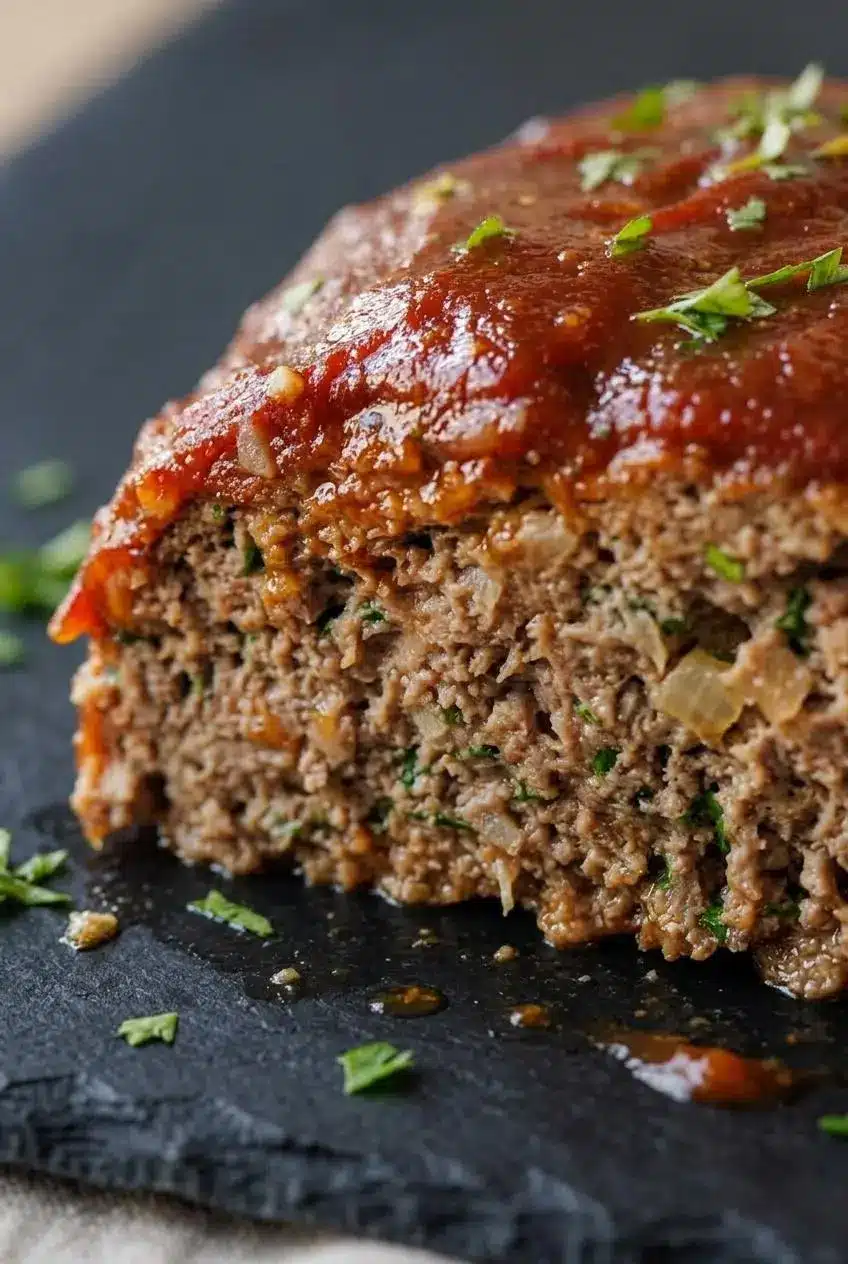
Most meatloaf troubles come down to moisture, handling, or slicing too soon. These fixes target the problem before it turns dinner into a crumbly mess.
Why Meatloaf Crumbles When Sliced
- It breaks apart at the knife: The egg and milk-soaked breadcrumb binder may not have been mixed through evenly. Combine until cohesive, but stop before packing the meat tight.
- It falls apart despite looking done: It likely needs its full 10 to 15 minute rest. The loaf firms as it settles, making slices much cleaner.
- There are loose onion pieces throughout: Finely chop and sauté the onion first. Large raw pieces can interrupt the meat mixture and create weak spots.
How to Avoid a Dense or Tough Texture
Dense meatloaf usually comes from overworking the ground beef. Mix with your fingers or loosely cupped hands, turning the ingredients together only until they are evenly distributed. Think of it as folding a soft mixture, not kneading bread dough.
Very lean beef can also produce a dry, tight loaf because it has less fat to protect the texture. Stick with the listed 80/20 or 85/15 range for the most tender result.
Managing Rendered Grease and Surface Residue
A small pool of rendered fat around a free-form loaf is normal. Let the loaf rest, then slide a wide spatula underneath and transfer it to a platter rather than dragging it through the drippings.
You may also spot pale protein residue on the surface or around the pan. It is a natural result of proteins cooking and coagulating. Lift it away gently if it affects the appearance, but avoid scraping off the glazed top.
Handling Leftovers and Reheating
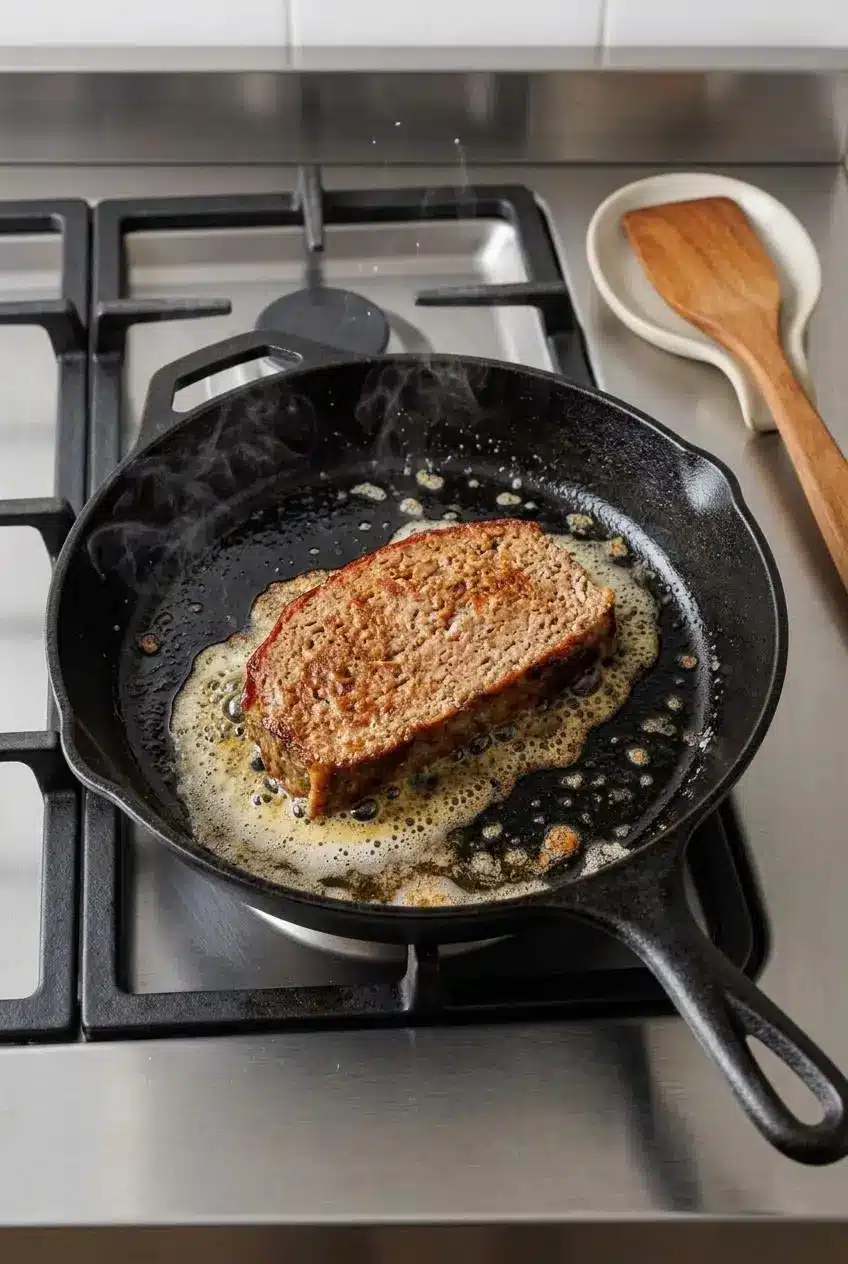
For the best texture, cool leftover meatloaf completely, keep it covered and chilled, and reheat only the portions you plan to serve. Avoid blasting slices with high microwave heat, which can make the beef tough around the edges.
Preparing the Meatloaf Before Baking
You can assemble and shape the loaf on parchment, cover it tightly without sauce, and keep it chilled until you are ready to bake. Add the glaze during baking as directed so the topping stays glossy rather than wet.
Saving Individual Cooked Slices
For easy portions, separate cooled slices with parchment before placing them in a tightly covered container. Keeping slices apart prevents the glaze from smearing and makes it easier to warm just what you need.
Reheating Leftovers for Skillet Sandwiches
Warm slices gently in a covered skillet with a small splash of broth to keep them tender. For a diner-style sandwich, sear cold slices in butter until crisp on both sides, then tuck them into toasted bread with sharp cheddar.
Flavorful Variations and Meat Blends
Keep the main method as written, then use these options when you want a different flavor direction. Each variation changes the character of the loaf without replacing the classic version.
The Classic Trio: Beef, Pork, and Veal
A traditional three-meat blend combines beef for structure, pork for richness, and veal for a delicate, tender texture. If you use this approach, keep the total meat amount at 2 lbs and use the same gentle mixing method. For an especially indulgent center, try a cheese-stuffed meatloaf on another night.
Lean Turkey and Poultry Adjustments
Ground turkey or chicken makes a lighter loaf, though it can dry out more readily than beef. Dark-meat turkey offers more forgiving richness, and a little extra milk in the panade can help protect moisture. Cook poultry versions until the center is fully cooked, using the thermometer as your guide.
Gluten-Free and Sauce Swaps
- Gluten-free panade: Use the gluten-free bread crumbs listed in the ingredient options, or choose crushed gluten-free crackers with the milk for a similarly tender binder.
- Barbecue bacon glaze: For a smokier finish, swap the ketchup glaze for barbecue sauce and add crisp crumbled bacon over the top after baking.
- Italian sausage blend: Replace part of the beef with Italian sausage for bolder seasoning and a richer texture, while keeping the total meat amount unchanged.
Serving Suggestions for a Complete Comfort Meal
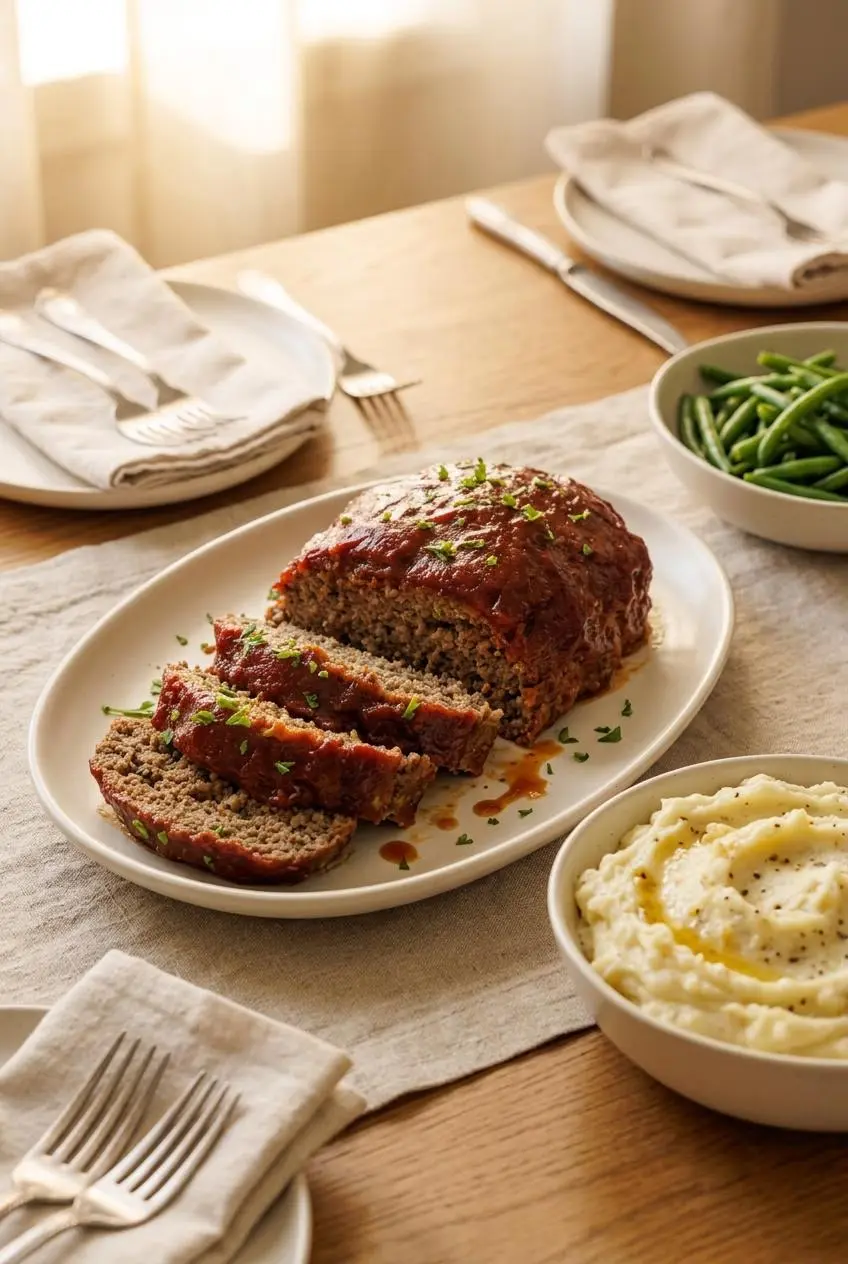
Meatloaf shines beside sides that either catch the glaze or brighten the plate. Roasted garlic mashed potatoes are ideal for the extra sauce, while buttery green beans and glazed carrots bring color without competing with the beef.
- Serve it with a sharp, crunchy crisp wedge salad when you want something cool and tangy beside the rich glaze.
- Pair thick leftover sandwiches with crispy steak fries or a dill pickle for an easy diner-inspired lunch.
- Set out a simple garden salad with vinaigrette when you want a lighter contrast to the sweet-savory meatloaf.
Cold slices also make excellent sandwiches. Layer them on toasted sourdough with sharp cheddar, then warm them in a skillet until the bread is crisp and the cheese softens.
Conclusion
A dependable meatloaf starts with beef that has enough fat, onions softened for sweetness, and a milk-soaked panade to keep every slice tender. Mix gently, bake free-form for browned edges, and give the loaf time to rest.
Once those habits become routine, this comfort-food dinner is easy to make your own with the sides you love most.
Frequently Asked Questions
How Do You Keep Meatloaf From Falling Apart When You Cut It?
Use the eggs and milk-soaked panko so the meat has a binder that holds each slice together. Cook the onion first and chop it finely to avoid large, crunchy pieces that disrupt the loaf. Rest the baked meatloaf for 10 to 15 minutes before slicing so the structure can firm up.
What Internal Temperature Should Meatloaf Reach?
Check the thickest center with an instant-read thermometer. This all-beef meatloaf is ready when it reaches 160°F. Poultry blends need to be cooked through completely before serving.
Why Do You Put Milk in Meatloaf?
Milk hydrates the panko into a panade. That soft breadcrumb mixture helps bind the beef while holding onto moisture, so the loaf stays tender rather than dry or crumbly.
Can Meatloaf Be Prepared Before Baking?
Yes. Shape the unglazed loaf on parchment, cover it tightly, and keep it chilled until baking. Apply the glaze during the bake so the topping caramelizes rather than soaking into the raw meat mixture.
Should Meatloaf Be Baked Covered or Uncovered?
Bake this meatloaf uncovered. Exposed heat browns the outside and gives the ketchup brown sugar glaze time to turn glossy and lightly caramelized during the final part of baking.
Classic Meatloaf Recipe

Equipment
- Rimmed baking sheet
- Parchment paper or foil
- Medium skillet
- large bowl
- Small bowl
- Instant-read thermometer
Ingredients
Meatloaf Ingredients
- 2 lbs ground beef (85% or 80% lean*)
- 1 med onion ((1 cup), finely chopped)
- 1 tsp olive oil
- 2 large eggs
- 3 garlic cloves (minced)
- 2 Tbsp ketchup
- 3 Tbsp fresh parsley (finely chopped)
- 3/4 cup Panko breadcrumbs (or gluten-free bread crumbs)
- 1/3 cup milk
- 1 tsp salt (or to taste)
- 1 tsp Italian seasoning
- 1/2 tsp ground black pepper
Meatloaf Sauce Ingredients
- 3/4 cup ketchup
- 1 ½ tsp white vinegar
- 2 Tbsp brown sugar
- 1/2 tsp garlic powder
- 1/2 tsp onion powder
Instructions
- Heat the oven to 350°F and cover a rimmed baking sheet with parchment paper or foil. The lined pan catches drippings and keeps cleanup from becoming the evening’s least appealing task.
- Warm the olive oil in a medium skillet over medium heat, then cook the chopped onion for 5 to 7 minutes, stirring now and then; move it to a plate to cool. The onion should look translucent with light golden edges and smell sweet, not dark or bitter.
- Place the ground beef, cooled onion, and remaining meatloaf ingredients in a large bowl, then combine with clean hands just until no streaks remain. The mixture should feel soft and tacky enough to hold together, without looking tightly compressed.
- Set the mixture on the prepared baking sheet and form it into an even loaf about 8 inches long, 4 inches wide, and 3 inches tall; bake uncovered for 40 minutes. The loaf should hold a smooth mound shape as the surface begins to brown.
- Stir the ketchup, white vinegar, brown sugar, garlic powder, and onion powder together in a small bowl. The glaze should be smooth, thick, and evenly blended with no pockets of brown sugar.
- Coat the loaf with the glaze and continue baking for 20 minutes, checking the thickest center with an instant-read thermometer until it reads 160°F; rest before slicing. The glaze should look glossy and lightly caramelized, and the loaf should feel springy when gently pressed after its 10 to 15 minute rest.