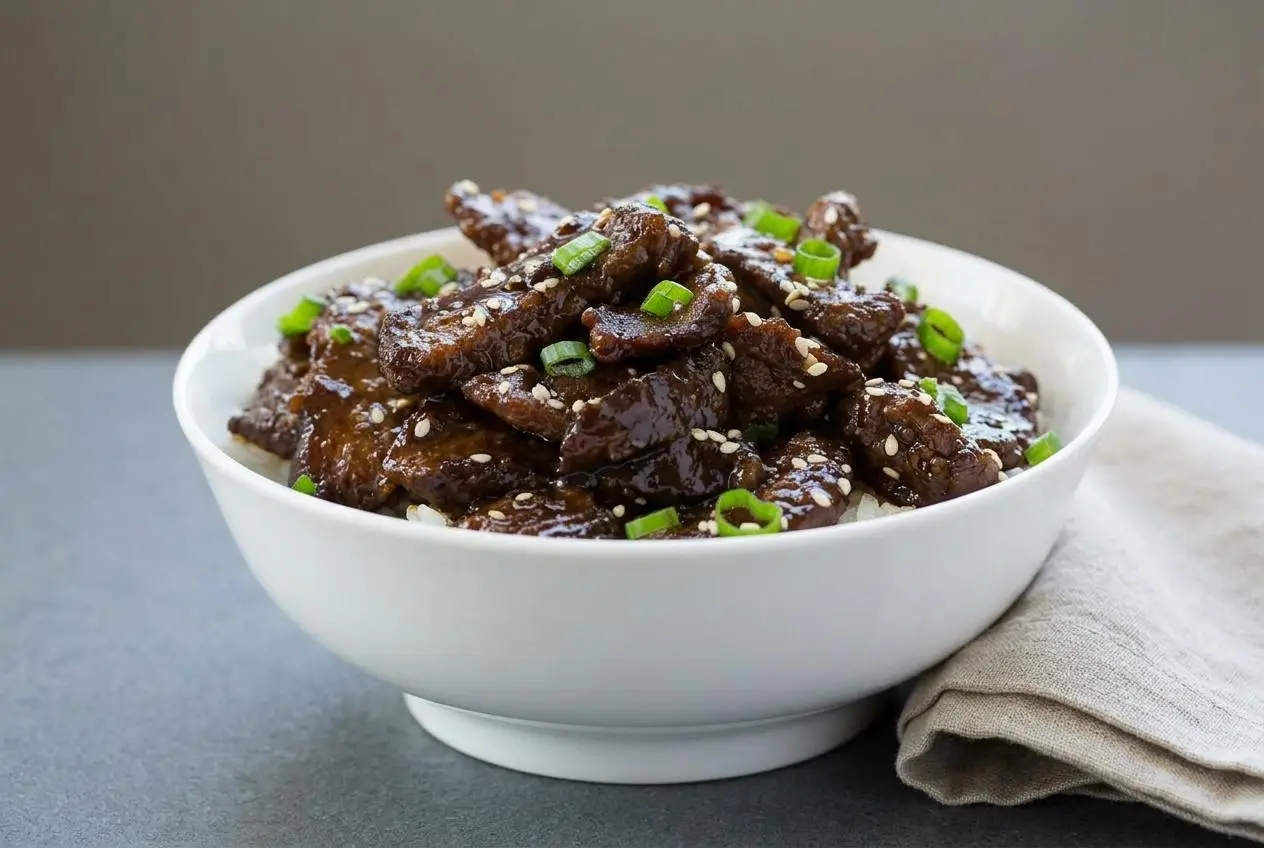
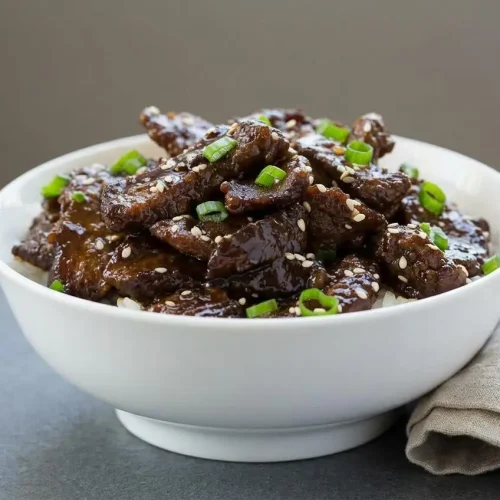
Beef teriyaki combines thin flank steak strips coated in cornstarch, quickly seared until crisp, then finished in a savory-sweet garlic ginger glaze.
This beef teriyaki recipe delivers sizzling beef, caramelized aromatics, and a glossy sauce without relying on a bottled teriyaki sauce. The key is a hot skillet, thin slices, and a quick finish in the glaze.
The beef gets crisp around the edges while the sauce clings in a shiny layer. That last-minute toss makes all the difference.
Wait for the oil to shimmer and the skillet to give a lively sizzle before the first strip of beef goes in.
Ingredients and Their Roles in This Beef Teriyaki Recipe
Each ingredient contributes to the final balance: beef provides richness, cornstarch creates texture and body, soy sauce brings savory depth, and the aromatics give the glaze its fresh, punchy character.
For the Meat
- 2 lbs flank steak
- 1/2 cup cornstarch
- 4-6 tablespoons coconut oil (or cooking oil of choice)
For the Sauce
- 1/2 cup soy sauce (use tamari for gluten-free)
- 1/2 cup brown sugar
- 1/4 cup water
- 1 tablespoon cornstarch
- 1/4 teaspoon red pepper flakes
- 3 green onions (white and green parts thinly sliced)
- 3 cloves garlic (mined)
- 1 tablespoon fresh ginger (grated)
Flank steak has a strong beefy flavor and cooks quickly when sliced thinly across the grain. Sirloin also works well when you want a naturally tender cut, while flat iron steak brings a richer texture and usually needs very little trimming.
Cornstarch does two jobs here. The coating on the steak forms a pale golden crust in the skillet, while the cornstarch in the sauce turns soy sauce, brown sugar, and water into a glaze that clings rather than pooling under the beef.
Soy sauce supplies the savory backbone, and brown sugar rounds out its saltiness with caramel-like sweetness. Fresh ginger, garlic, and green onions brighten the glaze so it tastes fragrant instead of overly heavy.
I like to grate the fresh ginger on a microplane directly over the bowl to catch every drop of flavorful juice.
How to Make Crispy Beef Teriyaki
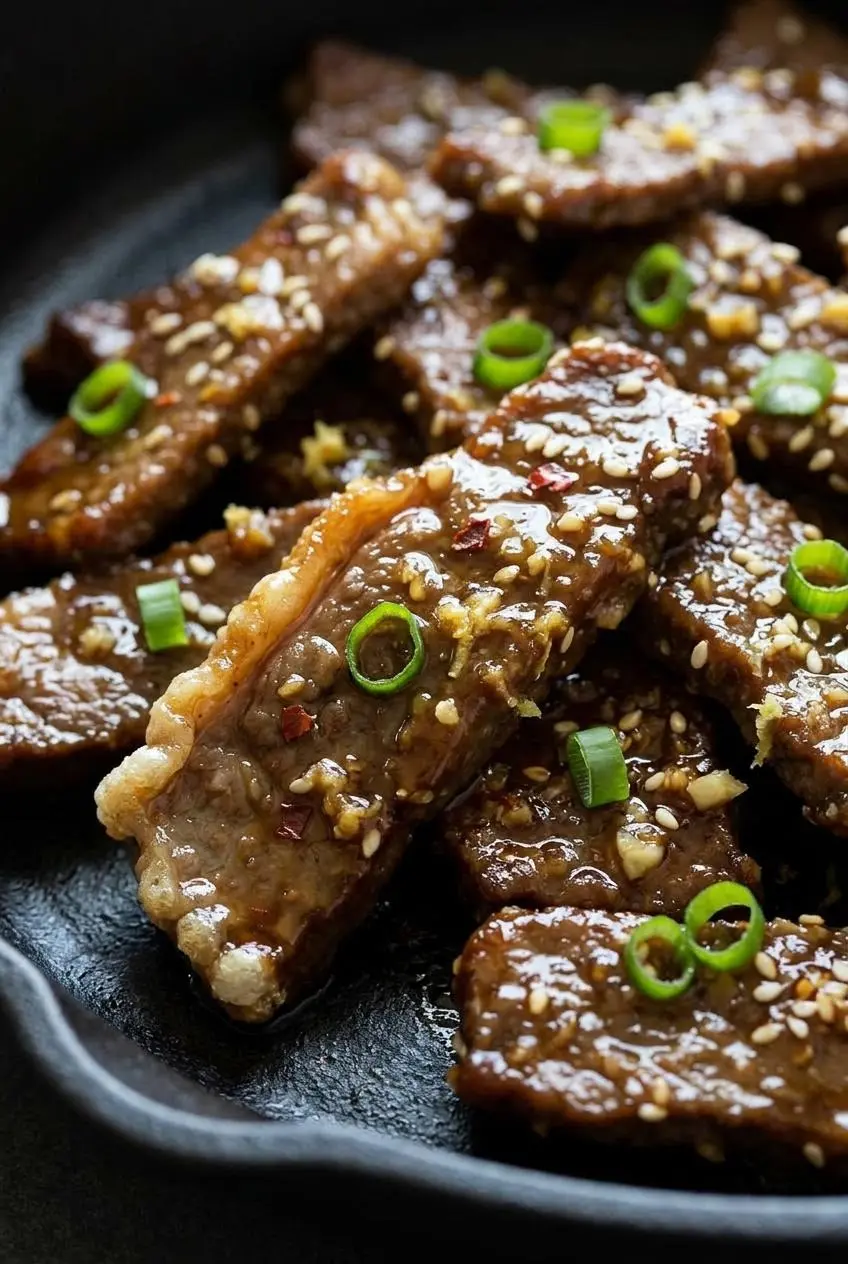
This method takes about 35 minutes from start to finish. Keep the meat and sauce separate until the end so the cornstarch crust stays crisp for as long as possible.
- Cut the flank steak into very thin strips against the grain, place it in a zip-top bag with the cornstarch, and shake until every piece is lightly coated.
Each strip should look dusted rather than heavily breaded, with no thick clumps of starch. - Whisk the soy sauce, brown sugar, water, cornstarch, and red pepper flakes in a small bowl until smooth.
Keep stirring until the sugar and cornstarch are fully dispersed and the mixture looks even. - Heat a large skillet over medium-high heat, add 2-3 tablespoons coconut oil, then sear half the beef in an even layer for 4-5 minutes before turning it and cooking for 2-3 minutes more; transfer it to a plate and repeat with the remaining oil and beef.
The first side should develop pale golden, crisp-looking edges, and the beef should sizzle steadily rather than releasing a puddle of moisture. - Reduce the heat to medium, add more oil if needed, cook the green onions, garlic, and ginger for 1-2 minutes, then add the sauce and simmer it for 4-5 minutes before returning the beef to the skillet and serving immediately.
The sauce is ready when its bubbles become slower and glossier and it coats the back of a spoon in a thin, shiny layer.
Prepping and Coating the Meat
Use the zip-top bag to coat the steak evenly without pressing the cornstarch into a paste. Before the beef reaches the skillet, lift out a small handful and shake it gently to remove loose starch. Excess cornstarch can settle in the oil, darken too quickly, and leave a gummy film on the pan.
Thin strips matter because they cook in minutes. Keep the slices similar in thickness so the first batch browns at the same pace and the second batch does not need extra time to catch up.
High-Heat Batch Searing
Batch searing is the difference between crispy-edged teriyaki beef and steamed steak strips. Give half the beef room in the skillet, then leave it alone for the first 4-5 minutes. Moving it too early interrupts browning and can pull the delicate starch crust away.
A crowded skillet loses heat fast as the cold meat hits the oil. Instead of browning, the beef releases moisture and turns gray around the edges. If your pan is smaller, work in more batches rather than piling the strips together.
Simmering the Glossy Sauce
Turn the heat down before adding the green onions, garlic, and ginger. These aromatics need only 1-2 minutes to soften and smell fragrant. Garlic can go from golden to bitter quickly, so stir steadily and watch the bottom of the skillet.
Add the prepared sauce only after the aromatics have softened. Let it bubble for the full 4-5 minutes until it thickens and shines, then fold in the seared beef right before serving. A long soak in the glaze softens the crust, so keep this final toss brief.
The Secret to Slicing Flank Steak for Tenderness
Flank steak has long, visible muscle fibers. Look for those parallel lines, then cut straight across them rather than in the same direction. Holding the knife at a 45-degree angle creates wider, thin slices and shortens the fibers in every bite, making the beef easier to chew.
For an extra-clear view of this high-heat steak technique, crispy Mongolian beef uses a similarly useful cross-grain slicing approach. The same principle applies here: thin slices across the fibers cook quickly and stay much more tender than strips cut with the grain.
Sirloin is a dependable substitution when flank steak is unavailable. Skirt steak has a bold flavor but needs especially careful cross-grain slicing, while flat iron steak is naturally more tender and works well in thin strips. Trim away any tough silver skin before slicing whichever cut you choose.
Common Mistakes and Practical Troubleshooting
Most teriyaki problems come down to heat, starch, or timing. These quick fixes can rescue the skillet without starting over.
- Chewy beef: Thin steak strips toughen when sliced with the grain or left too long in the skillet. Slice across the fibers, sear quickly, and return the beef to the finished glaze only long enough to coat it.
- Thick or gelatinous glaze: Cornstarch continues to tighten the sauce as it cools. Whisk in 1-2 tablespoons of warm water over low heat until the glaze loosens and becomes smooth again.
- Thin sauce: Let the sauce simmer until it coats a spoon before adding the beef. Adding the meat too early cools the skillet and slows the thickening process.
- Burned garlic or ginger: Lower the heat to medium after searing. Add the aromatics only when the skillet is no longer aggressively smoking, and stir them constantly for their brief cook time.
- Soggy coating: Do not let the crisp beef sit in sauce while you prepare the rest of dinner. Toss it into the glaze at the last moment and bring it straight to the table.
- Sticking beef: Let the oil heat fully before adding the first batch, and resist scraping at the strips while they form their crust. They release more easily once the browned surface develops.
Popular Variations: Vegetables, Heat, and Dietary Swaps
Keep the main skillet method intact, then use these options to steer the finished dish toward a vegetable-packed dinner, a gluten-free meal, or a spicier bowl.
Adding Fresh Stir-Fry Vegetables
For a vegetable teriyaki beef stir fry, cook broccoli florets, sliced bell peppers, or sugar snap peas separately before the sauce goes into the beef skillet. Flash-sear the vegetables until bright and crisp-tender, then fold them in after the beef has been coated. This protects their color and crunch instead of letting them soften in the glaze.
If you want a more vegetable-forward skillet dinner, this classic beef stir fry is another flavorful direction for broccoli, peppers, and quick-cooking greens.
Dietary and Allergen Adaptations
- Gluten-free teriyaki: Use tamari as listed, or choose coconut aminos for a milder, slightly sweeter flavor. Check individual labels when avoiding gluten or other allergens.
- Lower-sodium flavor: Choose a lower-sodium soy sauce if desired. Taste the finished glaze before adding any extra salty garnish.
- Spicy chili teriyaki: Add extra red pepper flakes or a little sriracha to the sauce mixture for a sweet-hot finish. Start gently because the heat becomes more noticeable as the glaze reduces.
- Ground beef alternative: Brown lean ground beef in the skillet, drain excess fat if needed, and coat it with the same homemade glaze. It will not have the crisp cornstarch exterior, but it makes a fast, budget-friendly dinner with the same sweet-savory profile.
A traditional Japanese-style teriyaki sauce is often reduced until naturally glossy, while this version uses cornstarch for a thicker, takeout-style glaze and crisp-coated beef. Both approaches are delicious, but this one is built for speedy skillet cooking.
Serving Suggestions and Side Dishes
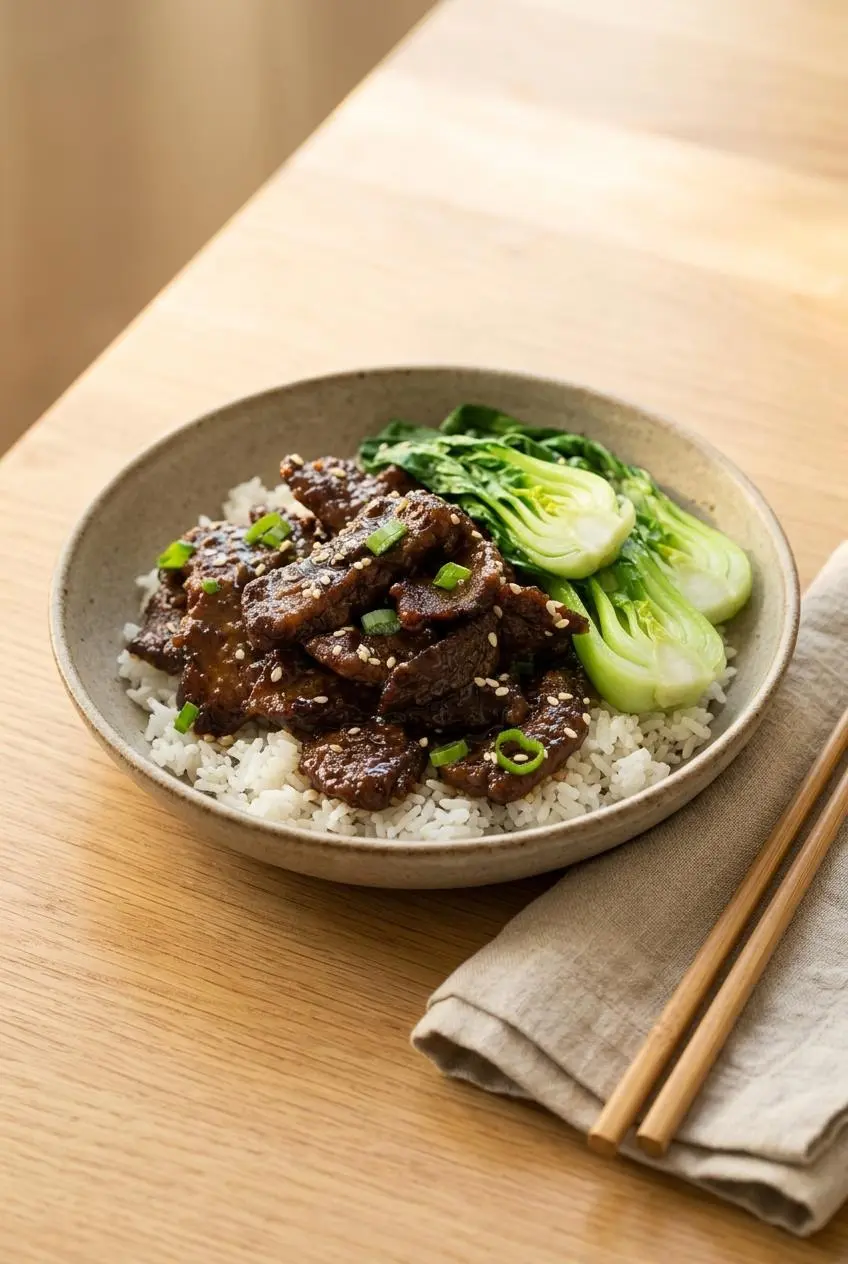
Serve the beef while the glaze is warm and the edges still have crunch. A mild side gives the sweet-savory sauce somewhere delicious to land.
- Jasmine rice: Its floral aroma and fluffy grains soak up the glaze without competing with the ginger and garlic.
- Brown rice: Choose it for a nuttier, heartier bowl that stands up well to the rich sauce.
- Cauliflower rice: A lighter option that keeps the beef and sauce in the spotlight.
- Steamed baby bok choy: Its tender stems and mild greens balance the sticky glaze.
- Sesame green beans: Their snap brings welcome contrast to the tender steak.
Finish with thinly sliced green onions and toasted sesame seeds for freshness and crunch. A light drizzle of toasted sesame oil and a little fresh orange zest are optional finishing touches when you want a brighter aroma.
For a more substantial rice-based meal, serve the teriyaki beef alongside beef fried rice instead of plain steamed rice.
Storing Leftovers and Gentle Reheating
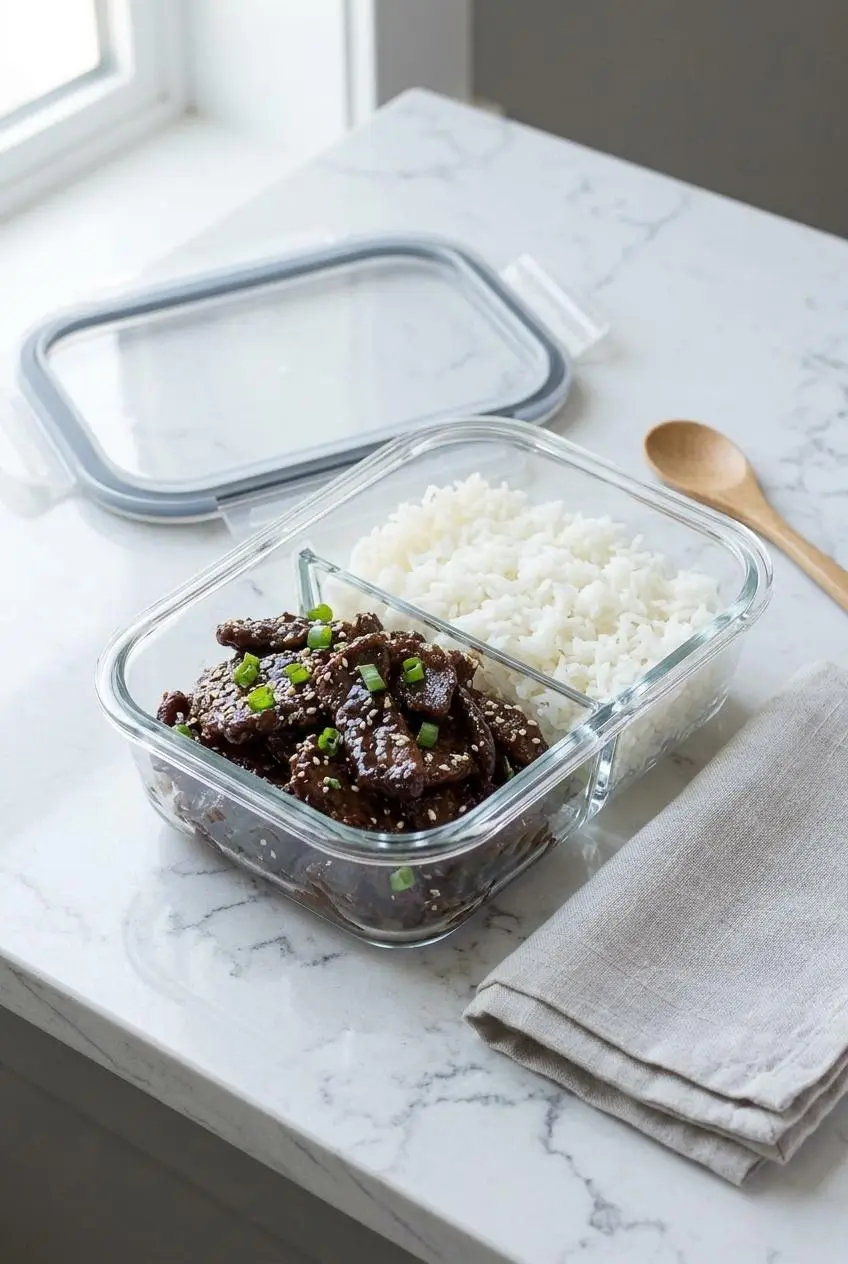
Cool leftover beef completely before placing it in an airtight container and keeping it chilled. The sauce will firm up as it sits, and the cornstarch coating will soften, so this dish is at its crispiest right after cooking.
Warm only the portion you plan to eat in a skillet over medium-low heat. Add a small splash of water as the beef warms, then stir gently until the glaze loosens and coats the meat again. Avoid blasting it with high microwave heat, which can tighten the thin steak strips and make them rubbery.
If you want to get a head start, slice the steak and whisk the sauce components shortly before cooking, keeping them separate until the skillet is hot. That preserves the best texture and prevents the cornstarch coating from becoming damp.
Conclusion
This beef teriyaki comes together in about 35 minutes with crisp-edged steak and a glossy homemade garlic ginger glaze. Slice across the grain and sear in uncrowded batches for the tenderest result.
Serve it straight from the skillet over warm rice, then add sesame, green onions, or a little orange zest if you want extra fragrance. Keep that final sauce toss quick, and dinner will have the shine and crunch you want.
Frequently Asked Questions
What Is the Best Cut of Beef for Beef Teriyaki?
Flank steak is an excellent choice because it has strong beef flavor and sears quickly. Slice it thinly across the grain for tender bites. Sirloin, skirt steak, and flat iron steak also work well when cut into thin strips.
Why Is My Teriyaki Beef Tough or Chewy?
Beef often turns chewy when it is sliced along the muscle fibers instead of across them. Overcrowding the skillet causes the meat to steam, which makes it harder to get a quick sear. Thin strips also toughen if they cook too long before going into the sauce.
Can I Make Homemade Beef Teriyaki Without Cornstarch?
Yes. Arrowroot powder can replace cornstarch as a thickener. Without a starch coating, the beef will not develop the same crisp outer layer. You can also simmer the sauce longer until it reduces naturally, though it will have a lighter texture.
How Do You Reheat Leftover Beef Teriyaki Without Drying It Out?
Warm it gently in a skillet over medium-low heat. Add a splash of water to loosen the thickened glaze as it warms. Heat only until the sauce is fluid and the beef is warmed through to avoid a rubbery texture.
Can I Prepare the Teriyaki Sauce Ahead of Time?
You can whisk the sauce ingredients together before you begin cooking. Stir the mixture again before adding it to the skillet because the cornstarch can settle at the bottom. For the brightest garlic and ginger flavor, cook the aromatics just before you add the sauce.
Beef Teriyaki Recipe

Equipment
- Large Skillet
- Tongs
- Ziploc bag
Ingredients
For the Meat
- 2 lbs flank steak
- 1/2 cup cornstarch
- 4-6 tablespoons coconut oil (or cooking oil of choice)
For the Sauce
- 1/2 cup soy sauce (use tamari for gluten-free)
- 1/2 cup brown sugar
- 1/4 cup water
- 1 tablespoon cornstarch
- 1/4 teaspoon red pepper flakes
- 3 green onions (white and green parts thinly sliced)
- 3 cloves garlic (mined)
- 1 tablespoon fresh ginger (grated)
Instructions
- Cut the flank steak into very thin strips against the grain, place it in a zip-top bag with the cornstarch, and shake until every piece is lightly coated. Each strip should look dusted rather than heavily breaded, with no thick clumps of starch.
- Whisk the soy sauce, brown sugar, water, cornstarch, and red pepper flakes in a small bowl until smooth. Keep stirring until the sugar and cornstarch are fully dispersed and the mixture looks even.
- Heat a large skillet over medium-high heat, add 2-3 tablespoons coconut oil, then sear half the beef in an even layer for 4-5 minutes before turning it and cooking for 2-3 minutes more; transfer it to a plate and repeat with the remaining oil and beef. The first side should develop pale golden, crisp-looking edges, and the beef should sizzle steadily rather than releasing a puddle of moisture.
- Reduce the heat to medium, add more oil if needed, cook the green onions, garlic, and ginger for 1-2 minutes, then add the sauce and simmer it for 4-5 minutes before returning the beef to the skillet and serving immediately. The sauce is ready when its bubbles become slower and glossier and it coats the back of a spoon in a thin, shiny layer.