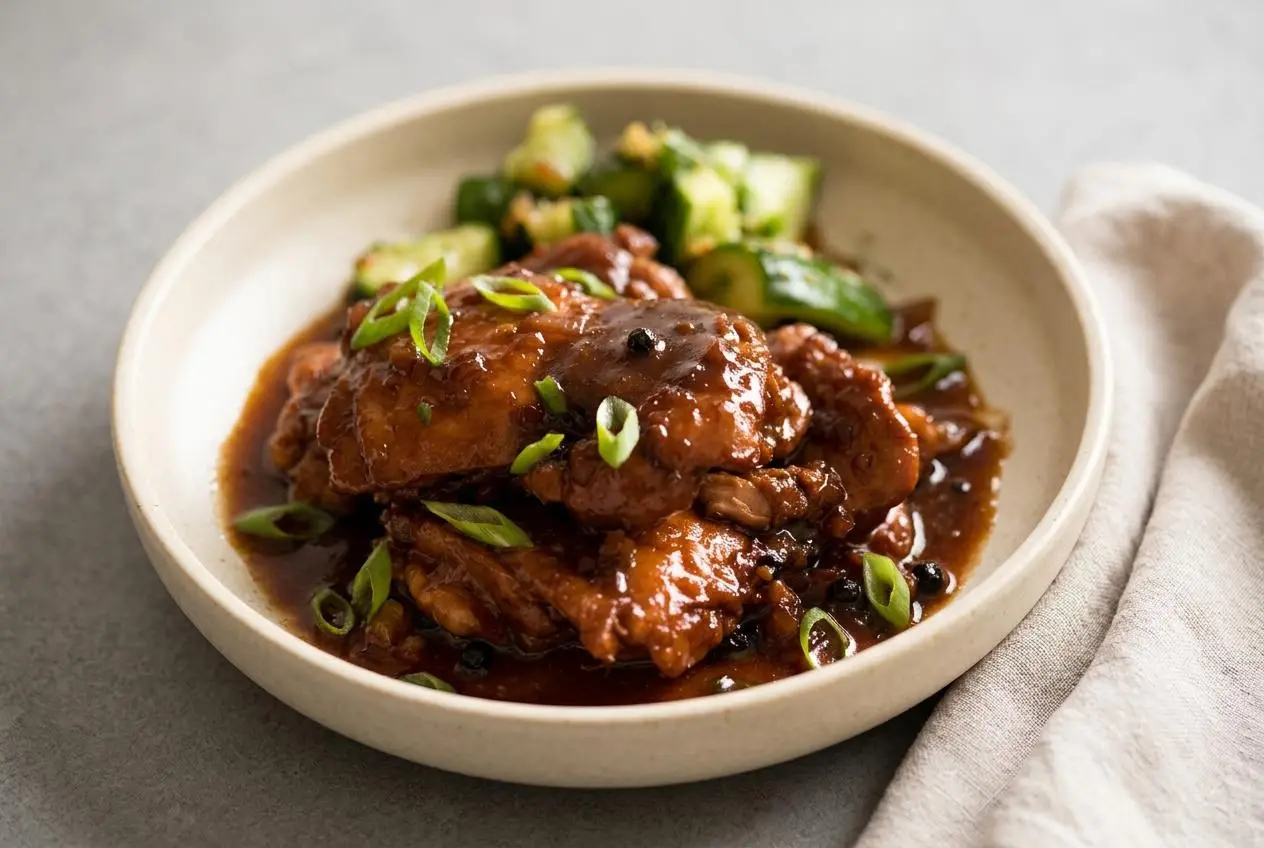
Chicken adobo is a classic Filipino braise of chicken, vinegar, soy sauce, garlic, bay leaves, and black pepper cooked until tender and coated in a glossy savory-tangy glaze.
This chicken adobo recipe starts with a quick marinade, then builds depth by browning the chicken before it simmers in its boldly seasoned braising liquid.
As the sauce cooks down, the sharp vinegar aroma softens into sweet-savory garlic richness. The glossy finish is worth the wait.
Keep the reserved marinade nearby before heating the skillet so the cooking moves smoothly once the chicken is browned.
Essential Ingredients for Filipino Chicken Adobo
Every ingredient earns its place here: chicken provides richness, soy sauce brings depth, vinegar gives lift, and aromatics build the dark, fragrant glaze.
Chicken and Marinade
- 750 g / 1.5 lb chicken thigh fillets (, boneless and skinless (5 – 6 pieces))
- 3 garlic cloves (, minced)
- 1/3 cup (85ml) soy sauce (, ordinary all purpose or light (not dark soy sauce))
- 1/3 cup + 2 tbsp white vinegar
- 4 bay leaves (fresh) or 3 dried
For cooking
- 2 tbsp oil (, separated (vegetable, canola or peanut))
- 3 garlic cloves (, minced)
- 1 small brown onion (, diced)
- 1 1/2 cups (375 ml) water
- 2 tbsp brown sugar
- 1 tbsp whole black pepper ((sub 2 tsp coarse cracked pepper))
Serving
- 2 green onions/scallions (, sliced (garnish))
Soy sauce forms the savory backbone, while vinegar cuts through that richness with a clean tang. Garlic perfumes both the marinade and skillet, bay leaves add a quiet herbal edge, and whole peppercorns give the braise woody warmth. Brown sugar softens the acidity without turning the sauce sweet.
Use ordinary all-purpose or light soy sauce as listed. Dark soy sauce is much more intense in color and flavor, and it can push this balanced braise toward heavy, overly salty territory.
I like to crush the peppercorns coarsely just before cooking because the broken pieces release more aromatic oils into the braise.
Choosing the Right Vinegar: Cane, Coconut, or Distilled
White vinegar gives this version its bright, direct tang, but other vinegars create slightly different results if you choose to vary the flavor later.
- Filipino cane vinegar: Often called sukang maasim, it has a mellow acidity with a subtle sweetness that fits traditional Filipino chicken adobo beautifully.
- Coconut vinegar: This option brings rounded acidity and a lightly cloudy look, with a gentler fermented character.
- Distilled white vinegar: It has a sharper edge but remains an accessible, clean-tasting choice for a soy sauce braise.
Whichever vinegar you use, let it boil undisturbed when it first enters the skillet. That brief hands-off simmer helps its raw pungency settle into the sauce.
Best Chicken Cuts: Thighs vs Breasts
Boneless thighs stay moist during the uncovered simmer and bring enough fat to make the glaze taste full rather than thin. Bone-in thighs and drumsticks also work well when you want deeper chicken flavor and a more substantial braising liquid, though they need a longer cook than the boneless fillets used here.
Chicken breast can work, but it needs closer attention. Add an extra spoonful of cooking oil and shorten the simmer once the breast meat is cooked through, since lean meat dries out before the sauce has fully reduced. Remove the chicken first if needed, then finish reducing the sauce on its own.
How to Make Authentic Chicken Adobo Step by Step
The method has three important moments: marinate for seasoning, sear for deep browned flavor, then reduce the braising liquid until it coats the chicken instead of pooling beneath it.
- Place the chicken, garlic, soy sauce, white vinegar, and bay leaves in a bowl, then marinate for at least 20 minutes or up to overnight.
The chicken should be evenly slicked with the dark marinade, and the garlic will begin to perfume the mixture. - Heat 1 tbsp oil in a skillet over high heat, lift the chicken from the marinade, and save all of the liquid for later.
Brown the chicken for about 1 minute per side until it develops a firm golden crust, without cooking it through. - Transfer the browned chicken to a plate.
Leave the browned bits in the skillet because they will dissolve into the sauce and deepen its flavor. - Add the remaining oil to the skillet, then cook the garlic and onion for 1 1/2 minutes.
The onion should soften and the garlic should smell fragrant without taking on a dark color. - Pour in the reserved marinade, water, brown sugar, and black pepper, bring the liquid to a simmer, then keep it at medium-high heat for 5 minutes.
Do not stir during this stage so the vinegar can simmer freely and lose its harsh raw edge. - Return the chicken to the skillet with the smooth side facing down and simmer uncovered for 20 to 25 minutes.
Turn the chicken at about 15 minutes, watching for the liquid to change from thin dark broth into glossy, thick bubbles. - Move the chicken to a plate if the sauce is still loose, then continue simmering the liquid by itself.
The sauce will reduce faster without the chicken and should become syrupy enough to cling to a spoon. - Return the chicken to the skillet and turn each piece through the reduced sauce before serving.
The finished glaze should coat the chicken in a shiny layer rather than run off immediately.
Check the thickest part of the chicken before serving. Poultry should reach an internal temperature of 165°F (74°C) to reduce food safety risks.
Success Tips for the Richest Adobo Glaze
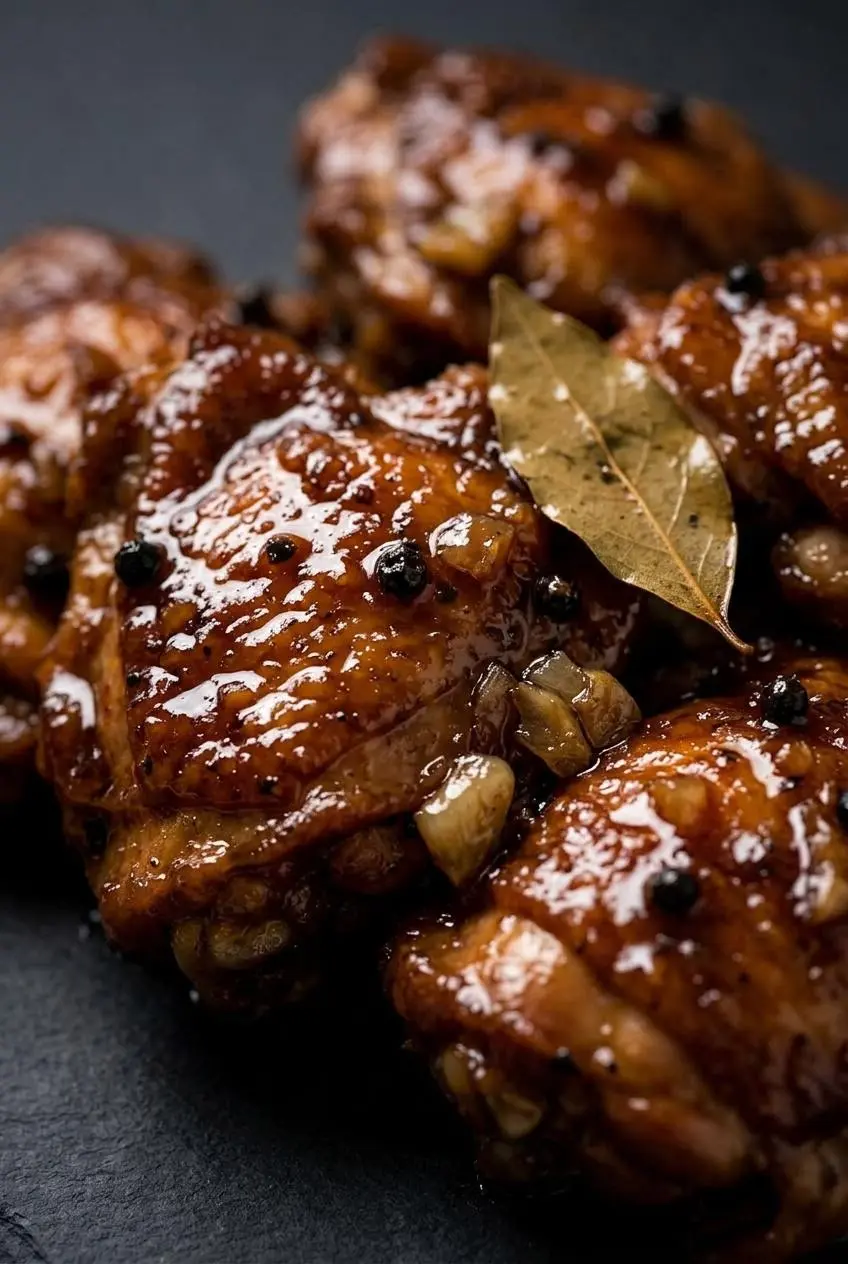
A proper adobo glaze comes from reduction, not a thickener. Keep the skillet uncovered so steam can escape, and let the liquid concentrate naturally around the chicken.
Once the chicken is cooked, pull it from the skillet if the sauce is still brothy. Let the liquid bubble over medium-high heat until it looks darker, thicker, and glossy. When a spoon leaves a brief trail across the skillet, the sauce is ready to coat the chicken.
Do not rush the first vinegar simmer with stirring. The aroma should shift from sharp and nose-tingling to warm, garlicky, and savory before the chicken returns to the skillet. That is the point where the soy sauce, sugar, pepper, and vinegar begin tasting like one sauce rather than separate ingredients.
Give the finished chicken a brief rest before plating. The glaze settles and clings more evenly as the chicken juices redistribute. For an optional finishing touch, scatter crispy golden garlic over the top and add a small splash of coconut vinegar for extra brightness.
Troubleshooting Common Adobo Mistakes
Most adobo problems come down to reduction, heat, or timing. These fixes keep the chicken tender while bringing the sauce back into balance.
- The sauce tastes harsh: Stirring vinegar too early can leave the flavor sharp and biting. Let the vinegar simmer quietly at the beginning, then allow the later reduction to round out the acidity.
- The sauce is watery: The chicken may be done before the liquid has reduced. Remove it to a plate and boil the sauce alone until it becomes thick and glossy, then coat the chicken at the end.
- The braise is too salty: Add a small splash of water and simmer again so the flavors blend. Avoid adding more soy sauce until you have tasted the reduced glaze.
- The braise is too sour: A pinch of brown sugar can soften the sharp edge. Add it gradually, then simmer long enough for the sauce to come together.
- Chicken breast turned dry: Lean breast meat needs a shorter simmer and extra oil. Take it out as soon as it is cooked, then reduce the sauce separately.
- The garlic is bitter: Garlic cooked over excessive heat can darken quickly. Keep an eye on it during the onion stage and add the liquid once it smells fragrant.
Popular Variations: Coconut Adobo and Fried Rice
These optional ideas change the character of the finished dish without altering the classic soy-vinegar method above.
- Saucy adobo: Stop reducing while there is still enough sauce to spoon generously over plain rice.
- Dry adobo: Continue reducing until the sauce nearly disappears and the chicken begins to fry gently in its rendered fat and concentrated glaze.
- Bone-in adobo: Use thighs and drumsticks for a deeper chicken flavor, allowing extra simmering time until the meat is tender.
Adobo sa Gata: Creamy Coconut Variation
For Adobo sa Gata, add a splash of unsweetened coconut milk during the final simmer. It creates a velvety sauce that softens the sharp vinegar and wraps the garlic, soy sauce, and pepper in a richer finish. Keep the coconut milk as an optional variation rather than part of the classic version.
Zero-Waste Adobo Garlic Fried Rice
Shred leftover chicken and toss it into a hot skillet with cold jasmine rice, concentrated adobo sauce, and crisp fried garlic. The rice absorbs the glaze while the chicken warms through, making a satisfying breakfast or lunch plate. For evenly pulled meat, start with tender shredded chicken before adding it to the rice.
Make-Ahead, Storage, and Reheating
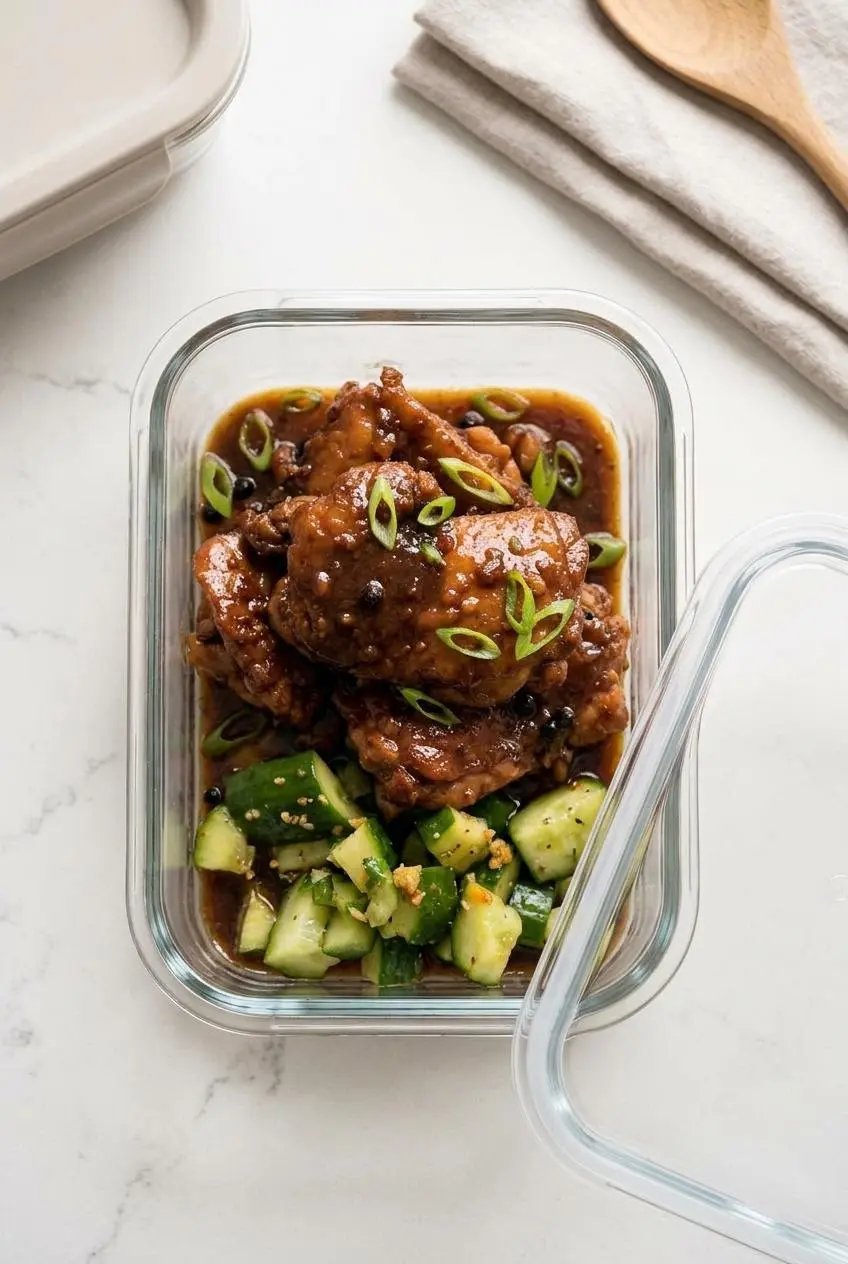
Marinating the chicken up to overnight gives the soy sauce, garlic, bay leaves, and vinegar more time to season the meat. The cooked dish also develops a fuller flavor after resting in its sauce, as the chicken continues to absorb the savory-tangy glaze.
Cool leftovers promptly, keep them chilled in a tightly covered container, and reheat only the portion you plan to serve. Warm the chicken gently in a covered skillet over medium-low heat with a splash of water to loosen the glaze. A microwave works too, but use lower heat and pause to stir the sauce around the chicken so the edges do not dry out.
What to Serve with Chicken Adobo
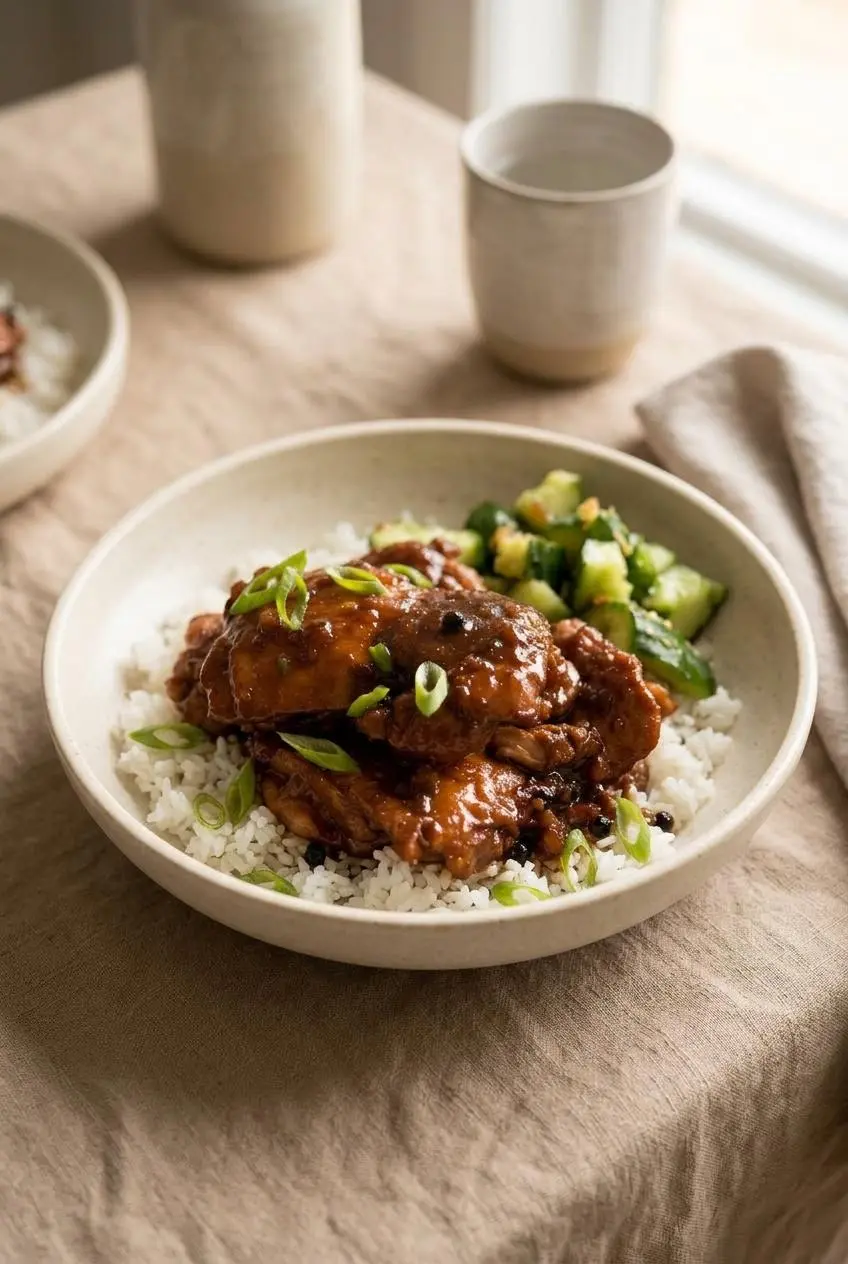
Steamed jasmine rice is the classic partner because it catches every drop of the dark, glossy sauce. Garlic sinangag is equally good when you want an extra layer of toasted garlic flavor.
- Smashed garlic cucumbers bring cool crunch against the rich braise.
- Fresh tomato slices add clean, juicy brightness.
- Pickled green papaya atchara gives a sweet-tart contrast that works especially well with dry-style adobo.
For a lighter meal, a crisp Asian chicken salad offers fresh vegetables and a refreshing counterpoint to the concentrated sauce.
Conclusion
This skillet adobo brings together savory soy sauce, mellowed vinegar, fragrant garlic, and tender chicken in one deeply satisfying glaze.
Give the sauce time to reduce, and let its glossy bubbles guide you. That patience turns a good braise into a memorable dinner.
Frequently Asked Questions
What Vinegar Is Best for Authentic Filipino Chicken Adobo?
Filipino cane vinegar, or sukang maasim, gives adobo a mellow traditional tang with a subtle sweetness. Coconut vinegar is another flavorful choice with gentle acidity and a rounded finish. Distilled white vinegar works well when you want a clean, direct, accessible option.
Why Shouldn’t You Stir the Vinegar Right After Adding It?
Letting the vinegar boil undisturbed gives its sharp raw aroma time to mellow. Stirring immediately can keep the flavor harsh and acrid rather than smooth and balanced. After the initial simmer, the vinegar blends more naturally with soy sauce, garlic, and brown sugar.
Can You Make Chicken Adobo with Boneless Skinless Breasts?
Yes, but breast meat is leaner than thighs and can dry out during a long simmer. Add an extra tablespoon of cooking oil and shorten the simmering time by several minutes. Remove the breast meat once cooked, then reduce the sauce separately until it reaches a clingy glaze.
How Do You Store and Reheat Chicken Adobo for Best Flavor?
Cool the chicken promptly and keep it tightly covered in the refrigerator. Reheat gently in a covered skillet over medium-low heat with a splash of water to restore the sauce. Warm only what you plan to eat so the chicken stays tender and the glaze remains smooth.
Chicken Adobo Recipe

Equipment
- Skillet
- bowl
Ingredients
Chicken and Marinade
- 750 g chicken thigh fillets 1.5 lb, boneless and skinless (5 – 6 pieces)
- 3 garlic cloves minced
- 1/3 cup soy sauce 85ml, ordinary all purpose or light (not dark soy sauce)
- 1/3 cup + 2 tbsp white vinegar
- 4 bay leaves fresh or 3 dried
For cooking
- 2 tbsp oil separated (vegetable, canola or peanut)
- 3 garlic cloves minced
- 1 small brown onion diced
- 1 1/2 cups water 375 ml
- 2 tbsp brown sugar
- 1 tbsp whole black pepper sub 2 tsp coarse cracked pepper
Serving
- 2 green onions/scallions sliced (garnish)
Instructions
- Place the chicken, garlic, soy sauce, white vinegar, and bay leaves in a bowl, then marinate for at least 20 minutes or up to overnight. The chicken should be evenly slicked with the dark marinade, and the garlic will begin to perfume the mixture.
- Heat 1 tbsp oil in a skillet over high heat, lift the chicken from the marinade, and save all of the liquid for later. Brown the chicken for about 1 minute per side until it develops a firm golden crust, without cooking it through.
- Transfer the browned chicken to a plate. Leave the browned bits in the skillet because they will dissolve into the sauce and deepen its flavor.
- Add the remaining oil to the skillet, then cook the garlic and onion for 1 1/2 minutes. The onion should soften and the garlic should smell fragrant without taking on a dark color.
- Pour in the reserved marinade, water, brown sugar, and black pepper, bring the liquid to a simmer, then keep it at medium-high heat for 5 minutes. Do not stir during this stage so the vinegar can simmer freely and lose its harsh raw edge.
- Return the chicken to the skillet with the smooth side facing down and simmer uncovered for 20 to 25 minutes. Turn the chicken at about 15 minutes, watching for the liquid to change from thin dark broth into glossy, thick bubbles.
- Move the chicken to a plate if the sauce is still loose, then continue simmering the liquid by itself. The sauce will reduce faster without the chicken and should become syrupy enough to cling to a spoon.
- Return the chicken to the skillet and turn each piece through the reduced sauce before serving. The finished glaze should coat the chicken in a shiny layer rather than run off immediately.