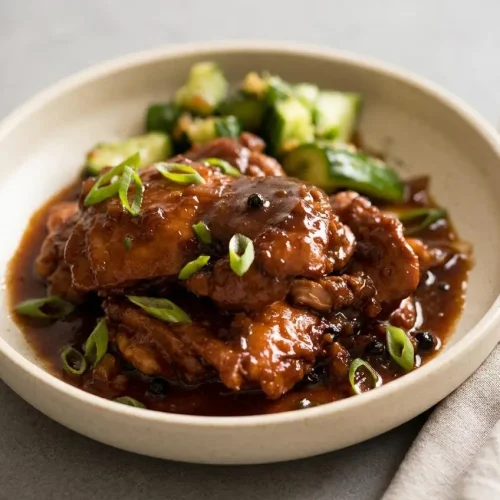
Chicken Adobo Recipe

Tender chicken thighs simmer in a fragrant garlic, soy sauce, and vinegar braise that cooks down into a rich, savory-tangy glaze in this easy, flavorful classic Filipino dinner.
Equipment
- Skillet
- bowl
Ingredients
Chicken and Marinade
- 750 g chicken thigh fillets 1.5 lb, boneless and skinless (5 - 6 pieces)
- 3 garlic cloves minced
- 1/3 cup soy sauce 85ml, ordinary all purpose or light (not dark soy sauce)
- 1/3 cup + 2 tbsp white vinegar
- 4 bay leaves fresh or 3 dried
For cooking
- 2 tbsp oil separated (vegetable, canola or peanut)
- 3 garlic cloves minced
- 1 small brown onion diced
- 1 1/2 cups water 375 ml
- 2 tbsp brown sugar
- 1 tbsp whole black pepper sub 2 tsp coarse cracked pepper
Serving
- 2 green onions/scallions sliced (garnish)
Instructions
- Place the chicken, garlic, soy sauce, white vinegar, and bay leaves in a bowl, then marinate for at least 20 minutes or up to overnight. The chicken should be evenly slicked with the dark marinade, and the garlic will begin to perfume the mixture.
- Heat 1 tbsp oil in a skillet over high heat, lift the chicken from the marinade, and save all of the liquid for later. Brown the chicken for about 1 minute per side until it develops a firm golden crust, without cooking it through.
- Transfer the browned chicken to a plate. Leave the browned bits in the skillet because they will dissolve into the sauce and deepen its flavor.
- Add the remaining oil to the skillet, then cook the garlic and onion for 1 1/2 minutes. The onion should soften and the garlic should smell fragrant without taking on a dark color.
- Pour in the reserved marinade, water, brown sugar, and black pepper, bring the liquid to a simmer, then keep it at medium-high heat for 5 minutes. Do not stir during this stage so the vinegar can simmer freely and lose its harsh raw edge.
- Return the chicken to the skillet with the smooth side facing down and simmer uncovered for 20 to 25 minutes. Turn the chicken at about 15 minutes, watching for the liquid to change from thin dark broth into glossy, thick bubbles.
- Move the chicken to a plate if the sauce is still loose, then continue simmering the liquid by itself. The sauce will reduce faster without the chicken and should become syrupy enough to cling to a spoon.
- Return the chicken to the skillet and turn each piece through the reduced sauce before serving. The finished glaze should coat the chicken in a shiny layer rather than run off immediately.
Notes
Glaze reduction: Keep the skillet uncovered so the braising liquid reduces naturally. If the chicken is cooked through before the sauce is syrupy, transfer it to a plate and boil the sauce alone until thick and glossy.
Vinegar simmer: Let the vinegar boil undisturbed during the first 5 minutes in the skillet. Avoid stirring early so the raw acidity softens naturally into the aromatics.
Reheating: Warm leftover chicken gently in a covered skillet over medium-low heat with a small splash of water to restore the glossy glaze without drying the meat.
Nutrition information is an estimate based on common ingredients and serving sizes. Values may vary depending on brands, portions, and substitutions.