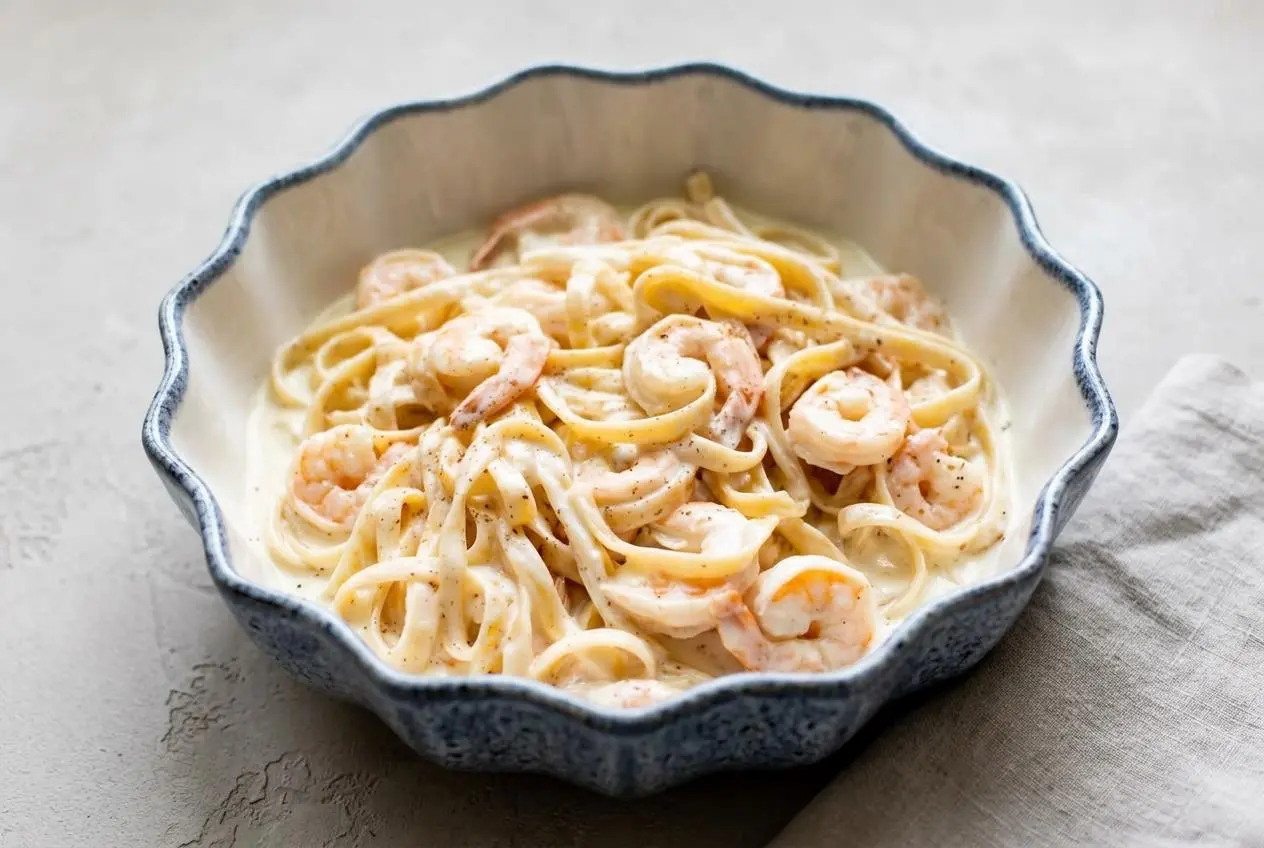
Shrimp Alfredo is a 30-minute skillet pasta with tender shrimp and al dente fettuccine coated in a velvety Parmesan garlic cream sauce.
This shrimp alfredo delivers rich, garlicky comfort without a complicated process. The sauce comes together in the same skillet while the pasta boils.
Butter, garlic, and cream create the kind of aroma that makes dinner feel nearly finished before the pasta is drained. Freshly grated cheese makes the difference.
Set the cream cheese out before starting so it softens while you prep the shrimp and pasta water.
Key Ingredients for Rich, Garlicky Shrimp Alfredo
Each ingredient contributes to the final balance: shrimp bring sweetness, fettuccine provides structure, dairy creates richness, garlic adds aroma, and broth keeps the sauce from tasting overly heavy.
- 1 pound uncooked (31-40/pound size) shrimp (thawed & peeled, tails optional)
- 8 ounces uncooked fettuccine
- 2 tablespoons butter
- 4 ounces cream cheese (I used 1/2 block Philly) (softened & cut into smaller pieces)
- 3/4 cup heavy/whipping cream
- 1/4 cup chicken broth
- 2 large cloves garlic (minced)
- 1 cup freshly grated parmesan cheese
- Salt & pepper (to taste)
Heavy whipping cream gives the sauce its lush body, while butter carries the garlic aroma through the skillet. Chicken broth lightens the dairy flavor, and broad fettuccine ribbons hold onto the thick, glossy sauce. Use raw peeled and deveined shrimp so they cook directly in the sauce without extra prep at the table.
I let the cream cheese sit at room temperature until soft because it blends into warm cream much more smoothly than a cold block.
The Power of Fresh Parmesan vs Canned
Grate Parmesan from a block while the sauce gently simmers. It melts into the cream with a smooth, savory finish. Pre-shredded and canned cheeses can contain anti-caking ingredients that interfere with melting, leaving the sauce grainy or clumpy instead of silky.
Parmigiano-Reggiano is lovely here, but any good block Parmesan works well. Use the fine side of a grater so the cheese disappears quickly into the warm sauce rather than sinking in stubborn little clumps.
Why Cream Cheese Stabilizes the Sauce
Softened cream cheese gives this Alfredo a little extra insurance. It adds body and helps the cream and butter stay blended, so you get a thick, cohesive sauce without needing flour or cornstarch. Cut it into small pieces so it melts before the sauce begins its gentle simmer.
How to Prep and Cook Juicy, Tender Shrimp
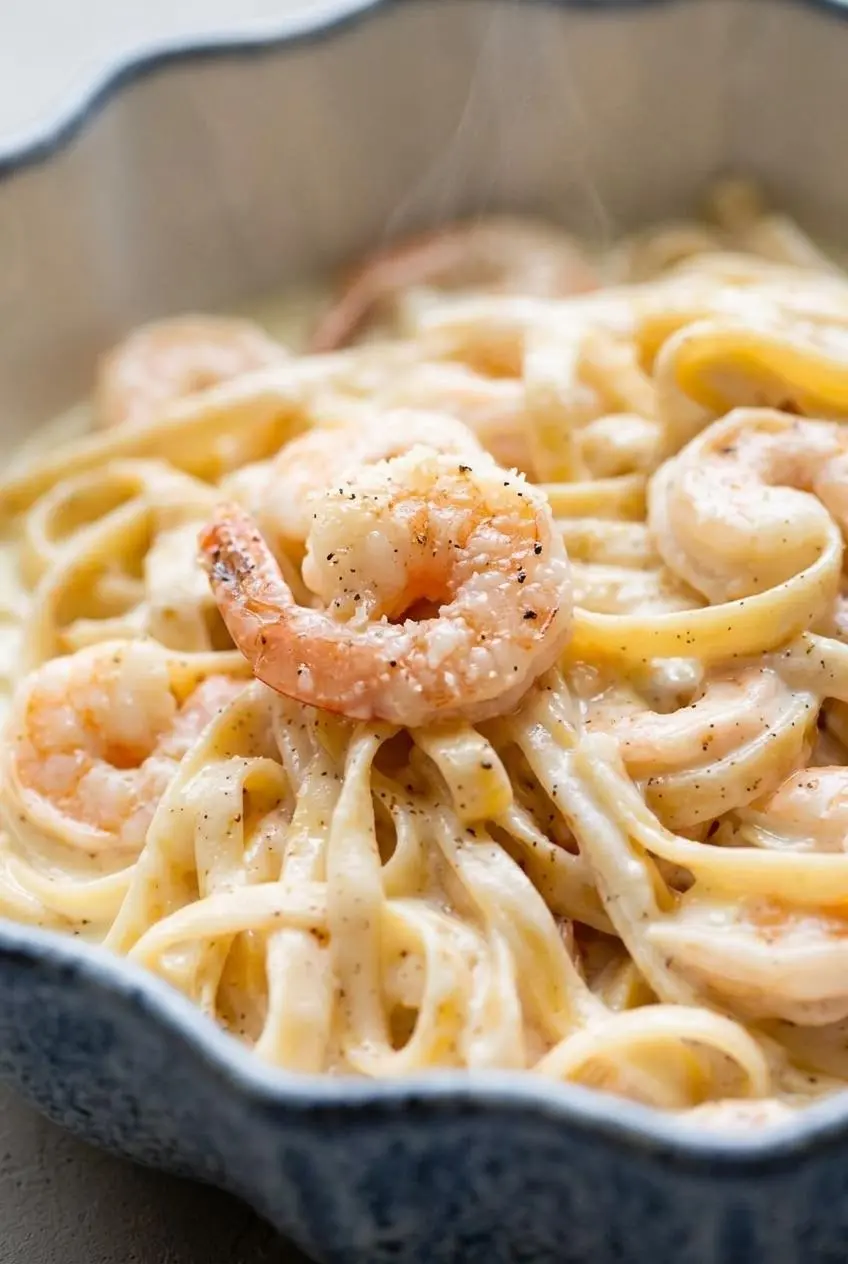
Dry shrimp is the key to a full-flavored sauce instead of a watery skillet. If using frozen shrimp, thaw it completely in a colander under cool running water, then pat every shrimp dry with paper towels before cooking.
Fresh shrimp should be peeled and deveined, with tails left on only if you enjoy the presentation. Whether fresh or thawed, keep the shrimp chilled until it is time to cook, and avoid letting raw seafood touch ready-to-eat foods. Careful handling, cold storage, and thorough cooking all help reduce foodborne illness risks with seafood.
Add the shrimp only after the Parmesan has melted into the sauce. During the 5 to 6 minutes in the skillet, stir occasionally and watch for opaque pink flesh with a loose C-shaped curve. A tight O-shaped curl means the shrimp has cooked too far and will be firmer and less tender.
For another fast garlic-and-butter seafood dinner, try garlic shrimp scampi. The same moisture-control habit helps shrimp brown rather than steam.
How to Make Shrimp Alfredo
Keep the pasta and sauce moving on the same timeline. The pasta cooks while the cream reduces, then a little hot starchy pasta water helps everything turn glossy when the fettuccine is tossed in.
- Thaw frozen shrimp in a colander under cool running water, then peel if needed and pat dry thoroughly.
Dry shrimp will cook in the sauce without releasing excess water into the skillet. - Bring a pot of salted water to a boil and cook the fettuccine until al dente, following the package directions.
Before draining, reserve a small cup of the hot pasta water for adjusting the sauce later. - Place the butter, softened cream cheese, heavy cream, chicken broth, and minced garlic in a skillet over medium heat.
Stir as the butter melts and the cream cheese softens until the sauce looks smooth and the garlic smells fragrant. - Lower the heat as needed and let the sauce bubble gently for 5 minutes, stirring now and then.
Look for light steam and small, quiet bubbles as the sauce reduces slightly without boiling hard. - Stir in the freshly grated Parmesan and cook for about 1 minute.
The cheese should melt into a smooth sauce with no dry shreds remaining around the edges. - Add the prepared shrimp and cook for 5 to 6 minutes, stirring occasionally.
The shrimp are ready when opaque and pink with a relaxed C-shaped curve. - Season with salt and pepper, then add the drained fettuccine and toss until coated.
Add a splash of reserved pasta water if needed until the sauce has a silky sheen and clings evenly to the noodles.
Serve right away while the sauce is loose and glossy. Alfredo thickens quickly as it stands, so the reserved pasta water is your best last-minute adjustment if the skillet looks dry.
Troubleshooting Common Alfredo Sauce Mistakes
Most Alfredo problems come down to heat and moisture. Keep the sauce at a gentle simmer, use freshly grated cheese, and make adjustments gradually rather than trying to force the sauce back into shape all at once.
- Grainy sauce: Cheese added to a very hot sauce can seize instead of melting. Lower the heat and stir steadily until the sauce calms down.
- Watery sauce: Thawed shrimp that were not dried can release water. Let the sauce simmer gently while stirring until it coats the back of a spoon.
- Garlic tasting harsh: High heat can scorch garlic before the dairy mixture is warm. Keep the skillet at medium heat and watch for a soft, savory garlic aroma.
- Rubbery shrimp: Shrimp kept in the skillet past a loose C shape tighten into an O. Pull the skillet from the heat as soon as they are opaque and curled.
How to Fix a Broken or Split Sauce
A hard boil can separate the butterfat from the cream, creating an oily surface. Move the skillet to low heat, then whisk gently while adding hot reserved pasta water a little at a time. The starch helps bring back a unified, glossy sauce.
If the sauce has already separated, patience helps more than extra heat. Keep whisking over low heat until it looks smooth again, then toss with the pasta promptly.
What to Do If the Sauce Is Too Thick or Thin
If the sauce becomes too thick, stir in warm reserved pasta water one splash at a time until the fettuccine moves easily in the skillet. Hot water blends in more smoothly than cold water and restores the sauce’s sheen.
If the sauce seems thin, keep it over medium-low heat and stir as it gently simmers until it reduces and coats the pasta. Avoid turning up the burner. Rapid boiling can make a creamy sauce look greasy.
Storing, Reheating, and Serving Later
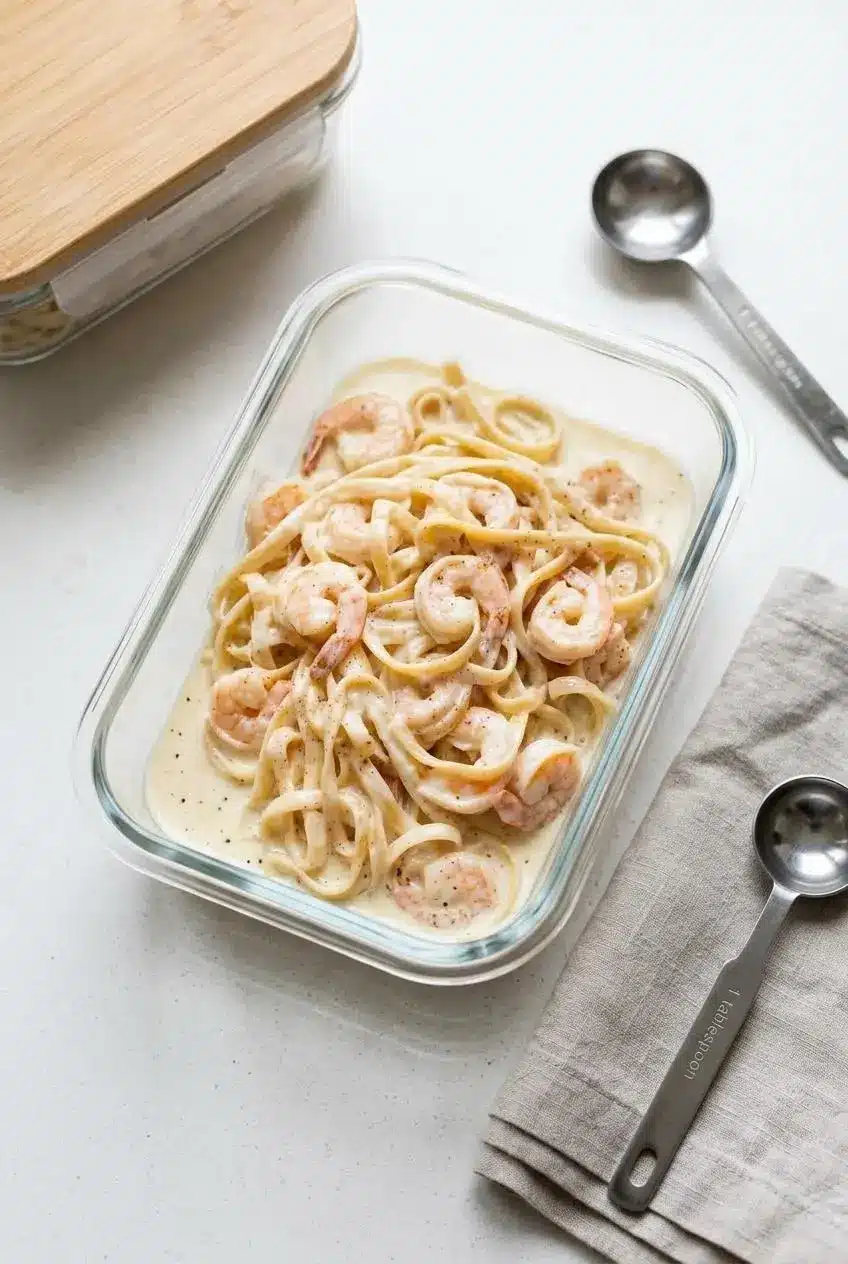
Cool leftovers promptly, transfer them to an airtight container, and keep them chilled. Creamy shrimp pasta is at its best when reheated gently rather than aggressively, since high heat can cause the sauce to separate.
Warm a portion in a skillet over low heat with a splash of milk or chicken broth. Stir continuously and add another small splash of liquid if the sauce looks tight. Stop heating when the pasta and shrimp are warmed through and the sauce looks creamy again.
A microwave can work in short, gentle bursts, but a low-heat skillet gives you more control over the sauce. Avoid high-power heating, which can leave a pool of butterfat around dry pasta.
Delicious Variations and Serving Suggestions
These optional changes keep the creamy garlic character intact while giving the dish a different color, texture, or level of heat.
- Shrimp and Broccoli Alfredo: Fold steamed broccoli florets into the pasta during the final toss for a fresh bite that balances the rich sauce.
- Spinach or Mushrooms: Add sautéed mushrooms for earthy flavor, or stir baby spinach into the hot pasta until just wilted.
- Spicy Cajun Shrimp Alfredo: Season the shrimp with Cajun spice before cooking for warm, peppery heat. If zesty cream sauces are your thing, cajun alfredo pasta is another satisfying option.
- Lemon and Parsley: Finish with lemon zest and chopped parsley for brightness that cuts through the richness without changing the sauce’s creamy texture.
- Gluten-Free Shrimp Alfredo: Use certified gluten-free fettuccine or another sturdy gluten-free pasta ribbon, then cook it according to its package directions before tossing with the sauce.
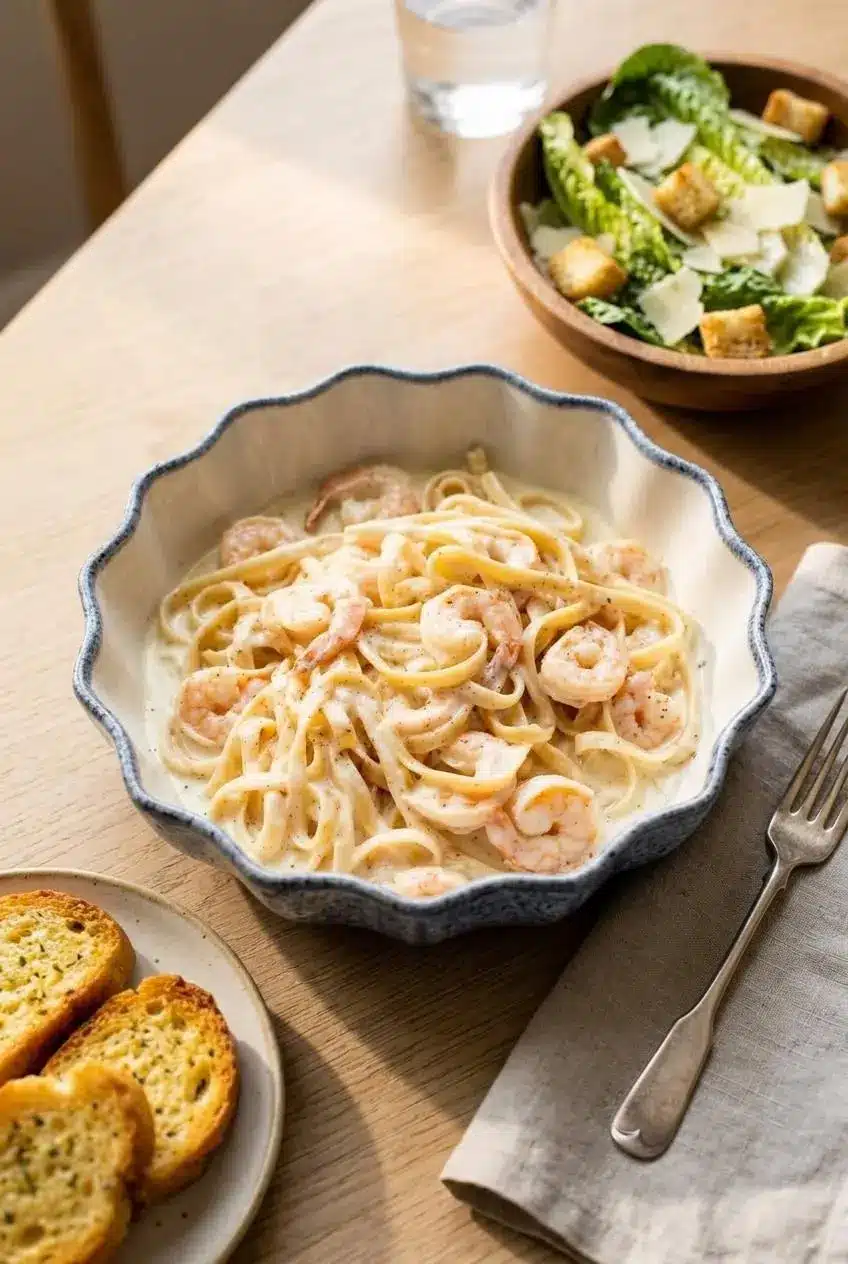
- Serving Ideas: Pair the pasta with toasted garlic bread and a crisp romaine Caesar salad. Serve while the sauce is hot and flowing.
Conclusion
This 30-minute skillet dinner brings together tender shrimp, fettuccine, and a creamy garlic Parmesan sauce that feels like restaurant comfort at home.
Keep the heat gentle, grate the Parmesan fresh, and save some pasta water for the final toss. Those small moves make every forkful creamy and satisfying.
Frequently Asked Questions
Why Did My Alfredo Sauce Turn Oily or Grainy?
High heat can split the cream and butter into a greasy sauce. Pre-shredded cheese may not melt smoothly because of anti-caking ingredients. Lower the heat, whisk gently, and add hot pasta water gradually to help the sauce come together.
Can I Use Frozen Cooked Shrimp for This Recipe?
Yes, thaw the cooked shrimp completely and pat it dry first. Add it at the very end, only long enough to warm through. Cooking it for the full raw-shrimp time can make it tough.
How Do I Reheat Leftover Shrimp Alfredo Without It Separating?
Use a skillet over low heat rather than high microwave heat. Stir in a splash of milk, broth, or reserved pasta water as the sauce warms. Keep stirring gently until the sauce looks creamy and coats the pasta again.
How Do I Know When the Shrimp Are Fully Cooked?
Look for shrimp that are opaque pink and curled into a loose C shape. A tight O-shaped curl usually signals overcooking and a chewier texture. Remove the skillet from the heat as soon as the shrimp reach that tender C shape.
Shrimp Alfredo

Equipment
- Cheese grater
- Garlic Press
- Kitchen Tongs
- Skillet
- Pot
Ingredients
- 1 pound uncooked (31-40/pound size) shrimp thawed & peeled, tails optional
- 8 ounces uncooked fettuccine
- 2 tablespoons butter
- 4 ounces cream cheese (I used 1/2 block Philly) softened & cut into smaller pieces
- 3/4 cup heavy/whipping cream
- 1/4 cup chicken broth
- 2 large cloves garlic minced
- 1 cup freshly grated parmesan cheese
- Salt & pepper to taste
Instructions
- Thaw frozen shrimp in a colander under cool running water, then peel if needed and pat dry thoroughly. Dry shrimp will cook in the sauce without releasing excess water into the skillet.
- Bring a pot of salted water to a boil and cook the fettuccine until al dente, following the package directions. Before draining, reserve a small cup of the hot pasta water for adjusting the sauce later.
- Place the butter, softened cream cheese, heavy cream, chicken broth, and minced garlic in a skillet over medium heat. Stir as the butter melts and the cream cheese softens until the sauce looks smooth and the garlic smells fragrant.
- Lower the heat as needed and let the sauce bubble gently for 5 minutes, stirring now and then. Look for light steam and small, quiet bubbles as the sauce reduces slightly without boiling hard.
- Stir in the freshly grated Parmesan and cook for about 1 minute. The cheese should melt into a smooth sauce with no dry shreds remaining around the edges.
- Add the prepared shrimp and cook for 5 to 6 minutes, stirring occasionally. The shrimp are ready when opaque and pink with a relaxed C-shaped curve.
- Season with salt and pepper, then add the drained fettuccine and toss until coated. Add a splash of reserved pasta water if needed until the sauce has a silky sheen and clings evenly to the noodles.