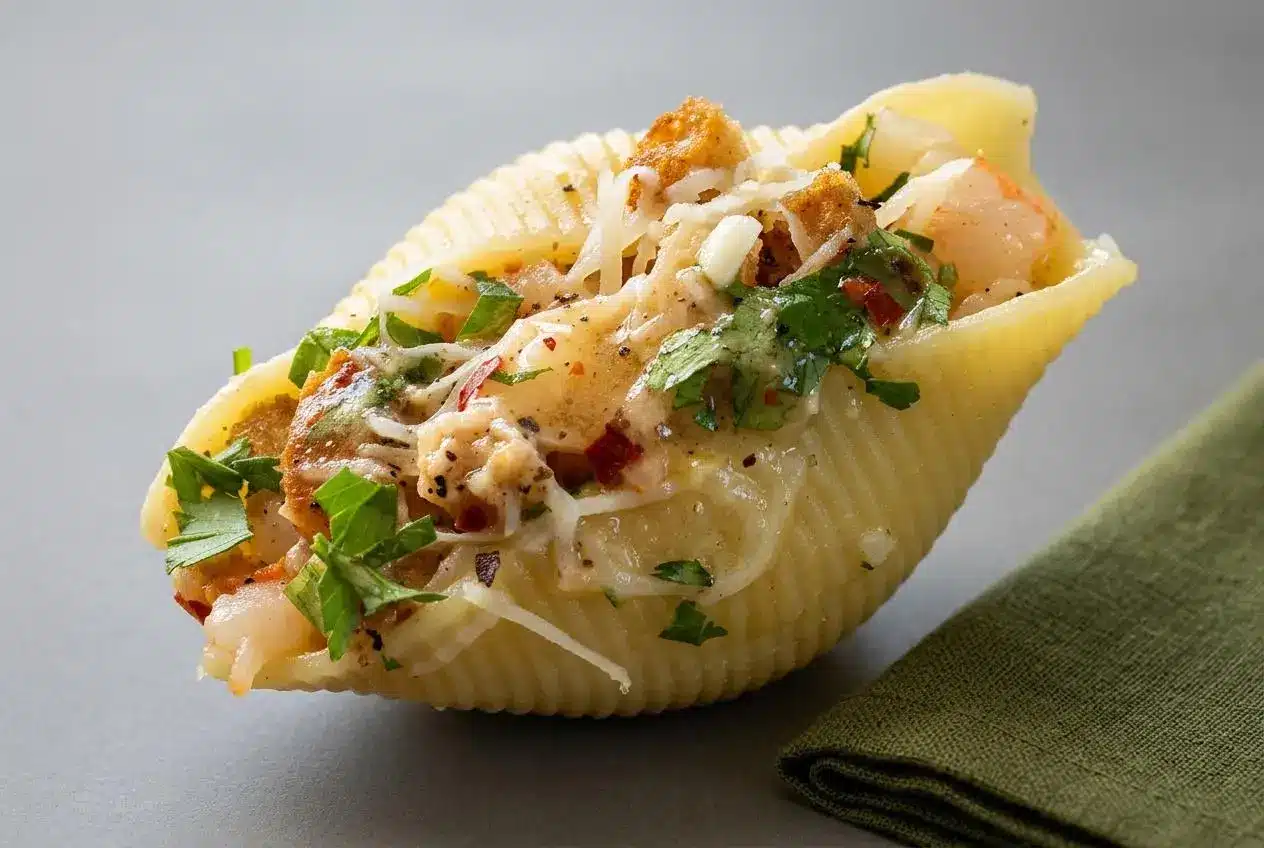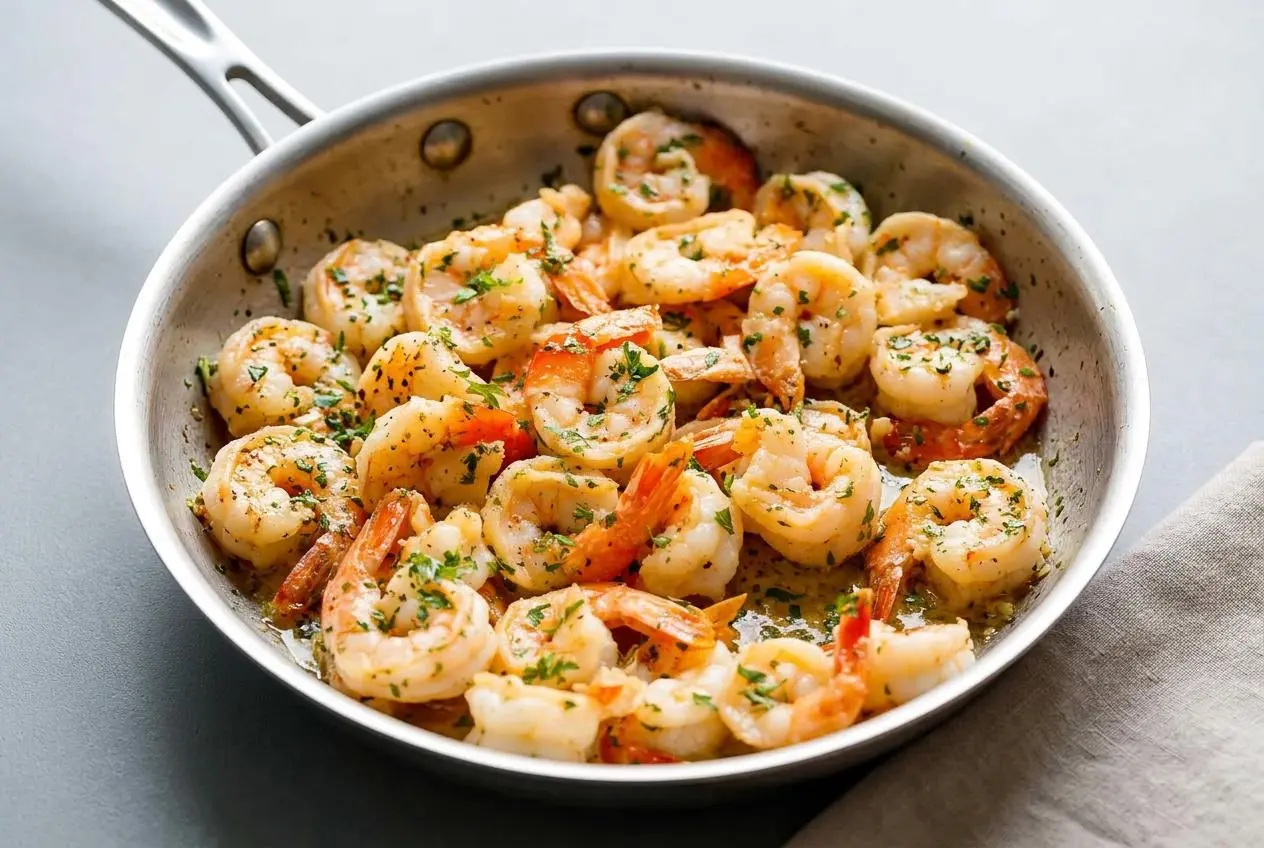
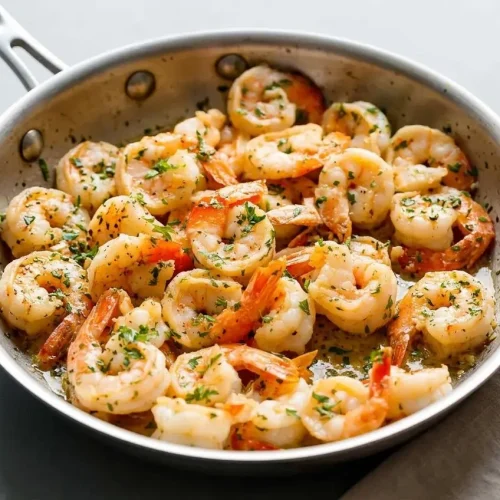
Shrimp scampi is a fast skillet dish of tender shrimp seared in olive oil and butter, finished with garlic, white wine, and lemon in an emulsified pan sauce. It comes together in around 10 minutes. This shrimp scampi recipe turns a handful of minutes into a dinner that tastes like it came from a real Italian-American kitchen.
Shrimp go into a hot pan with garlic, get a splash of wine, and finish in a glossy butter sauce loaded with lemon and parsley. You’ll like this one because it doesn’t demand much from you, just attention during a short window of cooking. The shrimp turn from translucent gray to pink and curled in a couple of minutes, and the sauce practically builds itself as it reduces in the same pan. Once that garlic hits the hot oil, your kitchen will smell like the inside of a good seafood trattoria.
Keep everything measured and ready by the stove before you start cooking, since this dish moves fast and there’s no time to chop garlic once the shrimp hit the pan.
Key Ingredients for an Authentic Shrimp Scampi Recipe
Each ingredient here pulls specific weight, from building richness in the sauce to keeping the shrimp tender and bright with acidity. Understanding these roles helps you adjust with confidence if you need to swap something.
- 2 tablespoons olive oil
- 4 tablespoons butter
- 4-5 cloves garlic large, minced, or 1 1/2 tablespoons minced garlic
- 1 1/4 pounds shrimp large prawns, shelled with tails on or off
- 1 pinch salt to taste
- 1 pinch cracked pepper to taste
- 1/4 cup dry white wine or broth
- 1/2 teaspoon red pepper flakes crushed, or to taste – optional
- 2 tablespoons lemon juice
- 1/4 cup fresh parsley chopped
Olive oil and butter work together rather than competing. The oil raises the smoke point so the butter doesn’t scorch, while the butter brings the rich, nutty flavor that makes scampi sauce feel indulgent. Freshly minced garlic matters here too. Jarred minced garlic tends to taste flat and slightly sour once it hits hot fat, while fresh cloves release a sharper, sweeter aroma that carries through the whole sauce.
Dry white wine adds acidity that cuts through the richness of the butter, brightening every bite instead of letting it taste heavy. Fresh lemon juice and parsley finish the job, lifting the sauce with citrus tang and a clean, herbal note right at the end. Pat the shrimp completely dry with paper towels before they touch the pan. Any surface moisture turns into steam, and steamed shrimp never get that light golden sear you want.
Selecting the Best Shrimp and Prep Steps
Large wild-caught shrimp give the best texture and a naturally sweeter flavor compared to farmed varieties, but good flash-frozen shrimp work well too since they’re often frozen within hours of harvest. If you’re starting from frozen, thaw shrimp quickly in a bowl of cold water for about 15 to 20 minutes rather than leaving them out at room temperature.
Peel them once thawed, choosing to leave tails on for a nicer presentation or removing them entirely for easier eating. Whichever you choose, the real key step is drying them thoroughly afterward. Excess moisture is the single biggest reason home cooks end up with a watery sauce instead of a rich one.
Dry White Wine vs Alcohol-Free Broth Substitutions
A crisp, dry white wine like Pinot Grigio or Sauvignon Blanc adds the acidity and depth this sauce depends on, and you don’t need an expensive bottle, just one that tastes good enough to drink. If you’d rather skip the wine entirely, swap in an equal amount of low-sodium chicken broth and stir in an extra teaspoon of fresh lemon juice. This combination replicates the acidity and savory depth wine normally provides, so the sauce still tastes balanced instead of flat.
How to Make Shrimp Scampi
- Warm the olive oil and 2 tablespoons of the butter in a large skillet over medium heat.
Add the minced garlic and stir constantly for 30 seconds to 1 minute, just until it turns fragrant and pale gold, never brown. - Add the shrimp in a single layer, season with salt and pepper, and let them sear undisturbed for 1 to 2 minutes.
Flip once the underside turns pink and slightly opaque, then cook the second side briefly until the shrimp start curling into a loose C-shape. - Pour in the wine or broth and add the red pepper flakes if using, then bring the liquid to a simmer.
Let it bubble for 1 to 2 minutes until it reduces by about half and the shrimp turn fully pink and opaque, watching closely so they don’t overcook. - Pull the pan off the heat immediately and stir in the remaining butter, lemon juice, and parsley.
Swirl the pan gently as the butter melts into the warm liquid, creating a glossy, emulsified sauce that clings to the shrimp. - Serve right away over rice, pasta, garlic bread, or steamed vegetables such as cauliflower, broccoli, or zucchini noodles.
Spoon extra sauce over the top so nothing gets left behind in the pan.
The garlic stage sets the tone for the entire dish. Thirty to sixty seconds is all it needs to smell fragrant and toasty. Push past that window and it turns bitter, which no amount of butter or lemon can fix afterward. Watch the shrimp closely during searing too. The moment they curl into a loose C-shape and turn opaque pink, they’re done, and pulling them at that exact point is what keeps this dish tender instead of chewy.
The final butter stage is where the magic actually happens. Adding cold, firm butter to a pan that’s off direct heat lets the fat melt slowly into the reduced wine and lemon juice, building a silky emulsion instead of a greasy, separated puddle.
Essential Recipe Tips and Troubleshooting
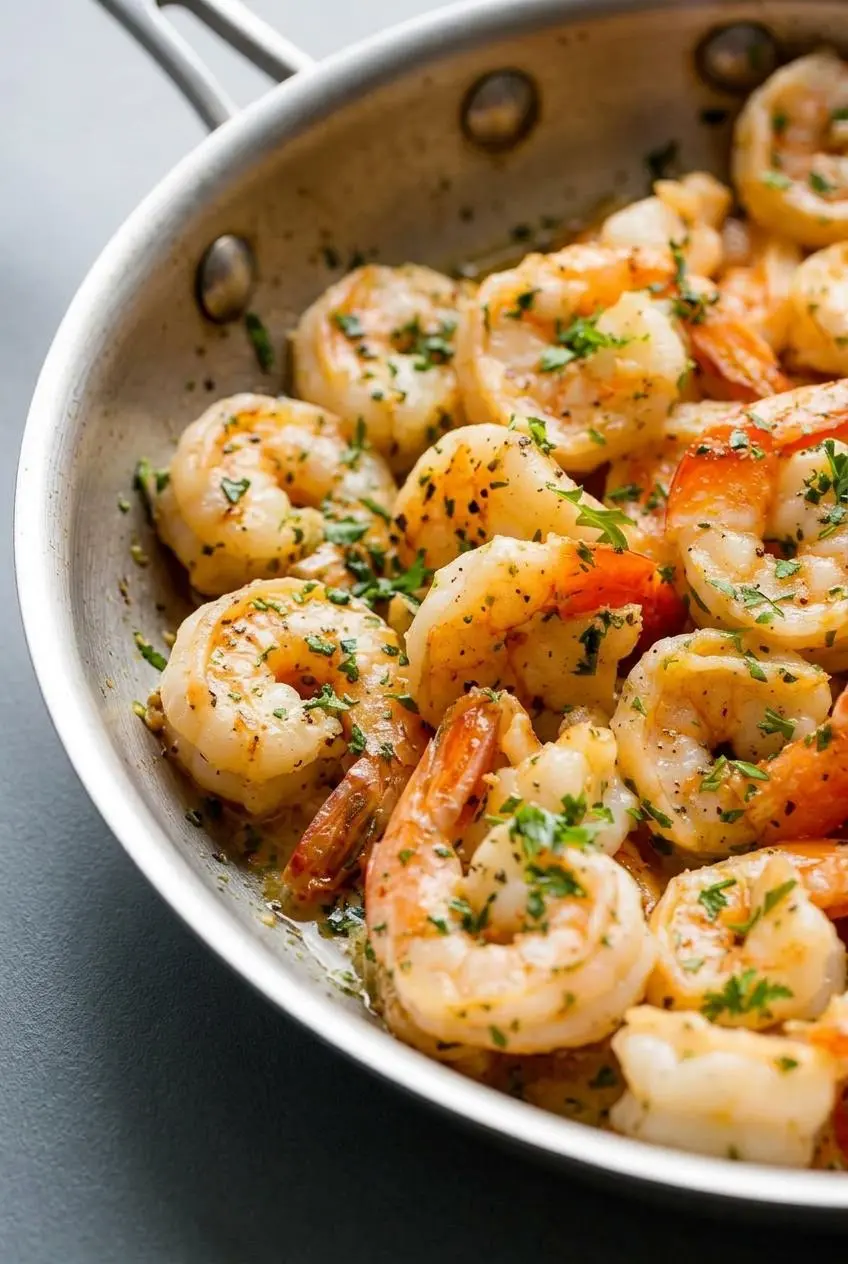
Most scampi problems trace back to one of three things: overcooked shrimp, burnt garlic, or a sauce that never quite comes together. Here’s how to sidestep each one.
Recognizing Visual Doneness Cues for Juicy Shrimp
Perfectly cooked shrimp curl gently into a loose C-shape, turn a solid opaque pink, and feel tender with just a little bounce when you bite in. Overcooked shrimp tell a different story. They tighten into a closed O-shape, feel rubbery, and lose that tender snap entirely. Total cooking time for shrimp this size rarely goes past 3 to 4 minutes from the moment they hit the pan, so keep tongs in hand and stay close by. For a side-by-side comparison of shellfish texture using a different cooking method, tender grilled shrimp offers useful doneness cues that translate well to stovetop cooking too.
Emulsifying Butter for a Glossy Pan Sauce
Once the wine has reduced and the shrimp are cooked through, pull the pan completely off the heat before adding the last of the butter. The residual warmth in the pan is enough to melt cold butter slowly, allowing the fat to blend into the reduced liquid instead of separating into an oily layer on top. Swirl or stir gently as it melts. You’re looking for a sauce that turns glossy and slightly thickened, coating a spoon rather than pooling as thin liquid or floating as loose fat.
Fixing Thin, Watery, or Oily Scampi Sauce
- If the sauce looks thin and watery, lift the shrimp out with tongs and let the liquid simmer alone for another minute or two to concentrate it before returning the shrimp.
- If the sauce looks oily or separated after adding butter, whisk in a tablespoon of cold water or broth off the heat to help pull the emulsion back together.
- If garlic starts browning too quickly, pull the pan off the heat right away and add the shrimp immediately to stop the cooking before it turns bitter.
Delicious Serving Suggestions and Variations
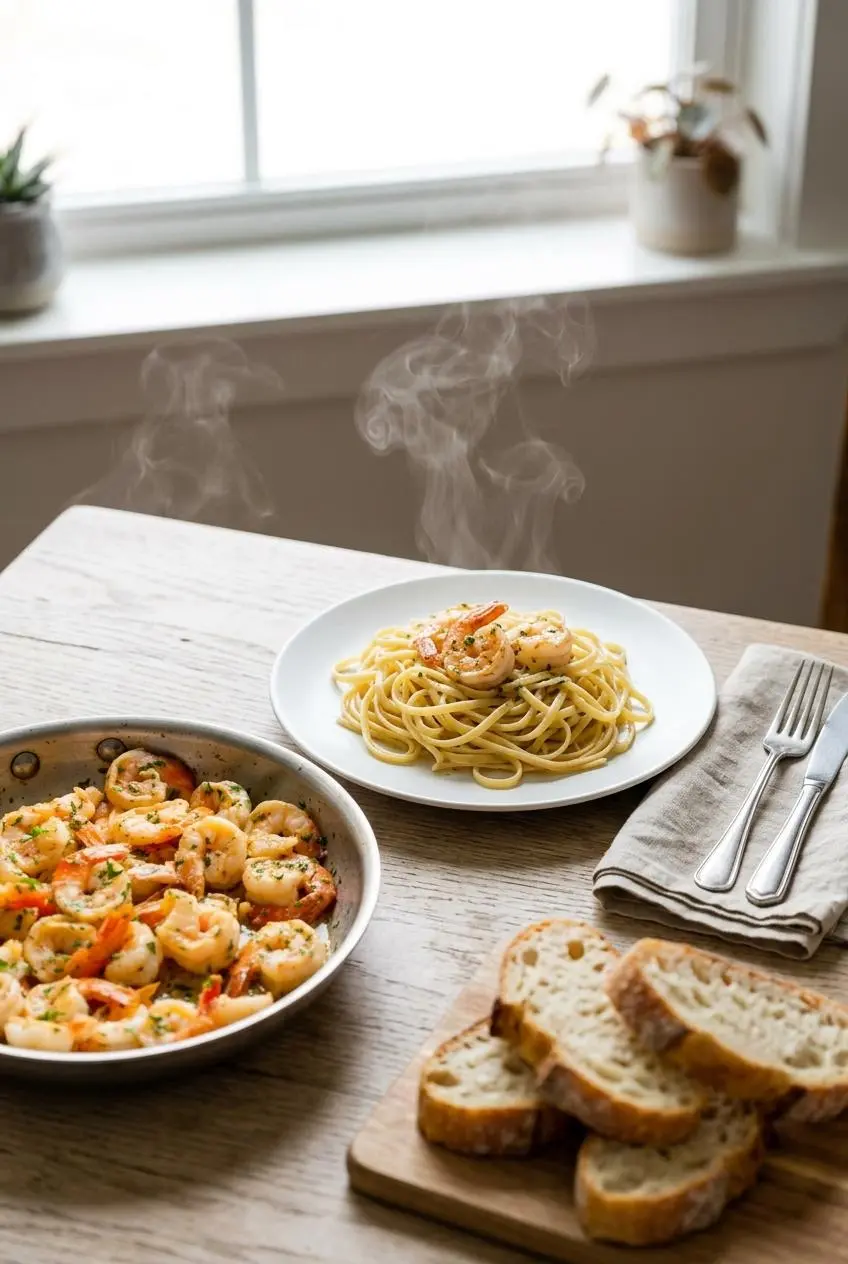
This dish adapts easily depending on what you’re craving that night, whether that’s a big bowl of pasta or something lighter and lower in carbs. A pinch of fresh lemon zest and a light dusting of smoked paprika stirred in off the heat can add another layer of aroma if you want to dress it up.
Tossing with Linguine or Angel Hair Pasta
Cook linguine or angel hair to al dente in well-salted water, then reserve about 1/4 cup of that starchy cooking water before draining. Add the drained pasta directly into the skillet with the finished scampi and toss everything together, splashing in the reserved pasta water a little at a time. The starch helps the garlic butter sauce grip the noodles instead of sliding off, giving you a silkier finished dish. If you’re in the mood for another rich, garlicky seafood pasta, marry me shrimp pasta follows a similar creamy, savory direction worth trying on a different night.
Low-Carb Pairings and Crusty Bread Dipping Ideas
Spoon the finished shrimp and sauce over warm zucchini noodles, roasted cauliflower, or steamed broccoli for a lighter, low-carb meal that still soaks up all that garlic butter flavor. If bread is more your style, warm sourdough or a crusty garlic loaf works beautifully for mopping up every last bit of sauce left in the pan. Craving shrimp again later in the week but want something different? Shrimp fried rice makes good use of leftover cooked shrimp in a completely different direction. For anyone at the table who prefers poultry over shellfish, easy chicken scampi uses the same garlic butter and wine foundation with chicken instead.
Storage, Reheating, and Make-Ahead Guidance
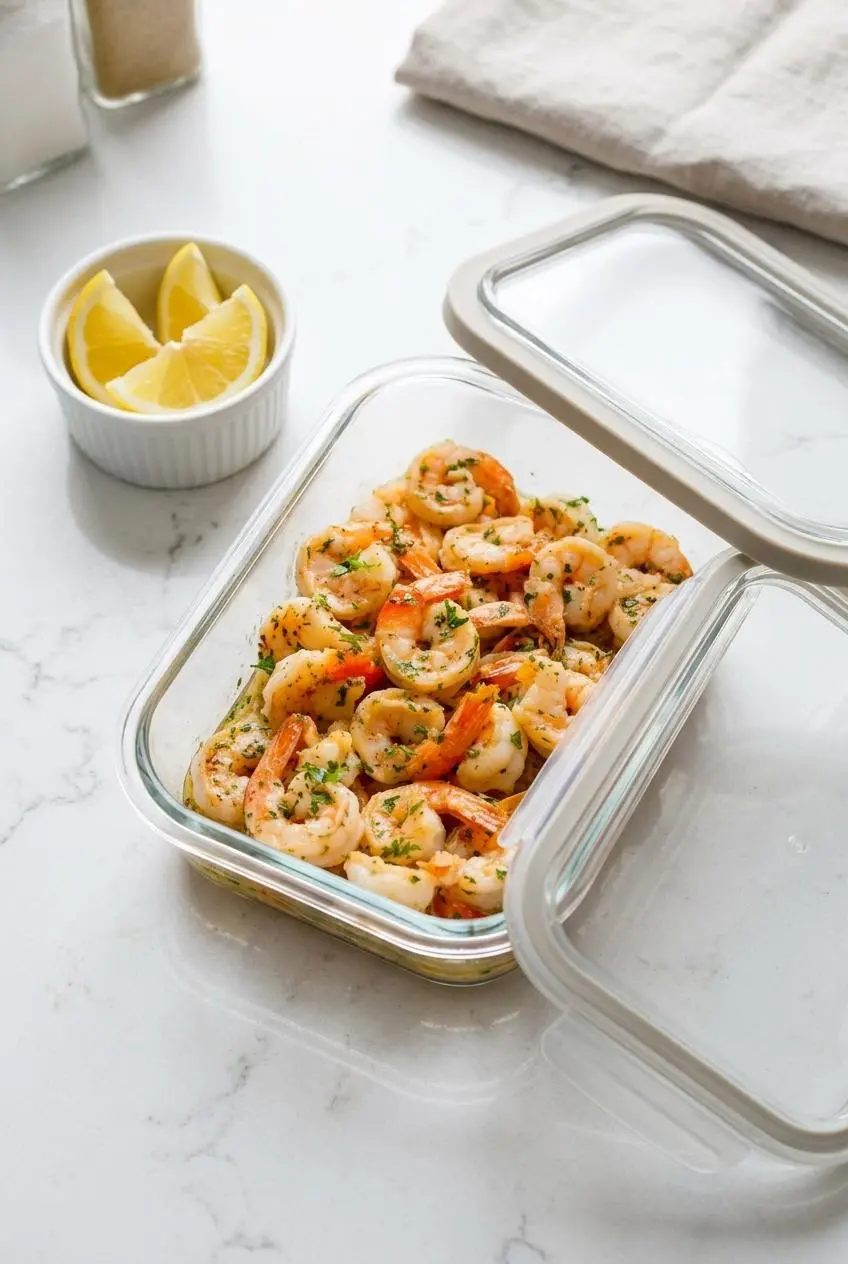
Cooked seafood is delicate, so how you store and reheat leftovers matters more than usual. Following safe handling guidance for fish and shellfish helps keep leftovers in good condition until you’re ready to eat them again. Transfer any leftover shrimp scampi to an airtight glass container and refrigerate promptly once it has cooled slightly. When you’re ready to reheat, warm it gently in a skillet over low heat with a small splash of broth or a pat of but
Shrimp Scampi Recipe

Equipment
- Large pan or skillet
Ingredients
- 2 tablespoons olive oil
- 4 tablespoons butter
- 4-5 cloves garlic large, minced, or 1 1/2 tablespoons minced garlic
- 1 1/4 pounds shrimp large prawns, shelled with tails on or off
- 1 pinch salt to taste
- 1 pinch cracked pepper to taste
- 1/4 cup dry white wine or broth
- 1/2 teaspoon red pepper flakes crushed, or to taste – optional
- 2 tablespoons lemon juice
- 1/4 cup fresh parsley chopped
Instructions
- Warm the olive oil and 2 tablespoons of the butter in a large skillet over medium heat. Add the minced garlic and stir constantly for 30 seconds to 1 minute, just until it turns fragrant and pale gold, never brown.
- Add the shrimp in a single layer, season with salt and pepper, and let them sear undisturbed for 1 to 2 minutes. Flip once the underside turns pink and slightly opaque, then cook the second side briefly until the shrimp start curling into a loose C-shape.
- Pour in the wine or broth and add the red pepper flakes if using, then bring the liquid to a simmer. Let it bubble for 1 to 2 minutes until it reduces by about half and the shrimp turn fully pink and opaque, watching closely so they don’t overcook.
- Pull the pan off the heat immediately and stir in the remaining butter, lemon juice, and parsley. Swirl the pan gently as the butter melts into the warm liquid, creating a glossy, emulsified sauce that clings to the shrimp.
- Serve right away over rice, pasta, garlic bread, or steamed vegetables such as cauliflower, broccoli, or zucchini noodles. Spoon extra sauce over the top so nothing gets left behind in the pan.