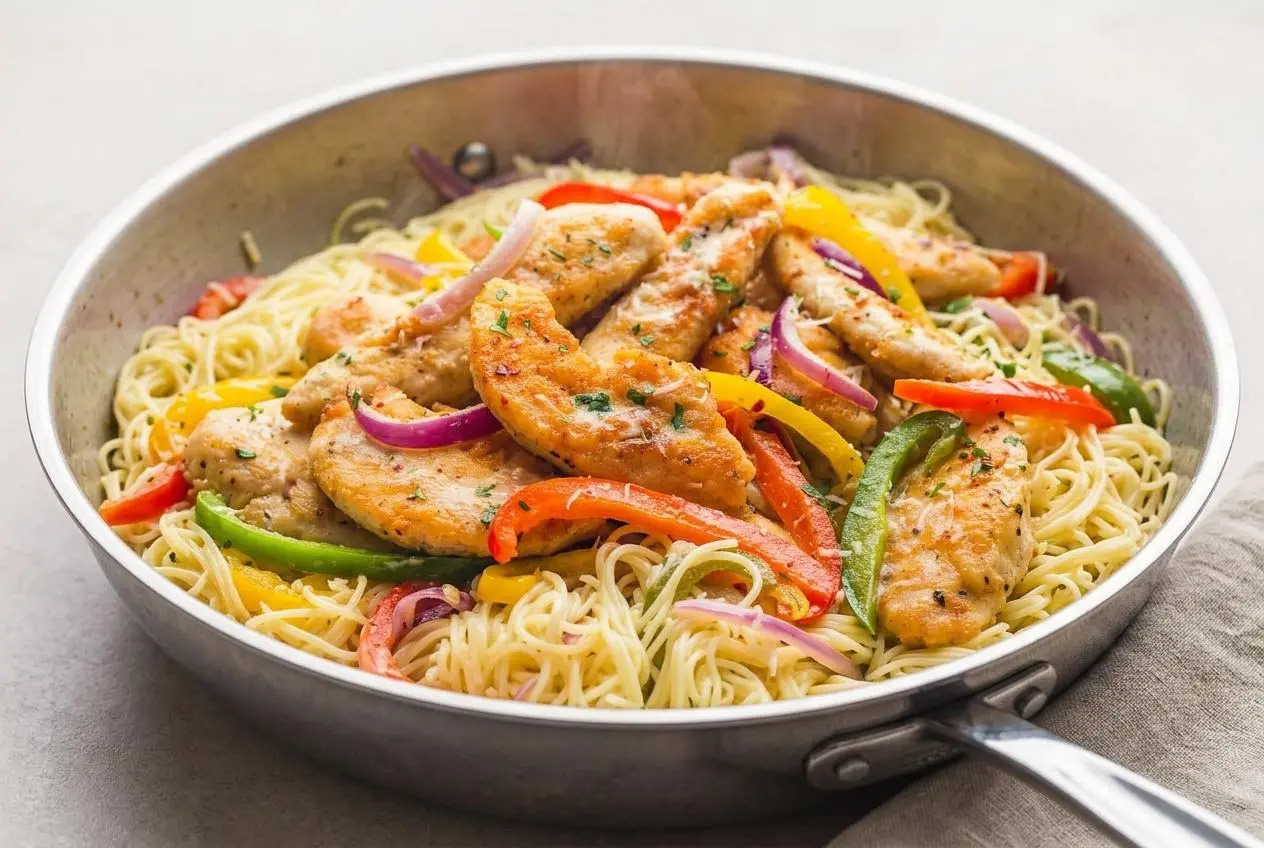
Chicken scampi is an Italian-American pasta dish with pan-seared chicken in a garlic butter and white wine sauce, usually served over angel hair. This version is the creamy, Olive Garden-style take with bell peppers, Parmesan, and a silky finish.
Chicken scampi lands right in that sweet spot between restaurant comfort food and doable weeknight dinner. You get golden chicken, sweet peppers, and a garlicky sauce that coats every strand of pasta.
This version stays true to the creamy American style, but it also shows you how to shift it toward the lighter classic version if that’s more your speed. The sauce is where the magic happens.
Have the pasta water reserved and your vegetables sliced before the skillet gets hot, because this dish moves quickly once the chicken starts cooking.
What Is Chicken Scampi?
Scampi originally refers to langoustines, but in American cooking it also describes a style of preparation built around garlic, butter, and white wine. So chicken scampi means chicken cooked in that same bright, savory style, usually with pasta to catch the sauce.
The version most people know from restaurant menus is creamy and a little richer. This one follows that familiar style with bell peppers, onion, cream, and Parmesan. The classic Italian-American version is lighter, usually skipping cream and peppers in favor of more lemon and parsley.
Olive Garden Style vs. Classic Scampi
If you’ve ever wondered why two chicken scampi recipes can taste so different, it usually comes down to the sauce.
| Creamy (Olive Garden Style) | Classic (Lemon-Garlic Style) |
|---|---|
| Cream and Parmesan form the sauce base | Butter, white wine, and lemon form the sauce base |
| Usually includes bell peppers and onion | Usually keeps the vegetables minimal, with parsley doing most of the fresh work |
| Rich, savory, and mellow | Light, zesty, and sharper |
Key Ingredients for Restaurant-Style Chicken Scampi
Each ingredient here plays a real role, from building a golden crust on the chicken to creating a creamy sauce with enough acidity, color, and balance to keep the dish lively.
- 8 ounces ounces angel hair pasta
- 1 ½ pound chicken tenderloins
- ½ cup all-purpose flour
- ¼ teaspoon Italian seasoning
- 2 teaspoon salt (divided)
- ¼ teaspoon ground black pepper
- 2 tablespoons olive oil
- 2 tablespoons butter
- 1 medium red onion (sliced into half-moons)
- ½ medium red bell pepper (sliced thinly)
- ½ medium yellow bell pepper (sliced thinly)
- ½ medium green bell pepper (sliced thinly)
- 4 cloves garlic (crushed)
- ½ cup dry white wine
- ½ cup whipping cream
- ½ cup parmesan cheese (grated)
- ¼ teaspoon red chili flakes (optional)
- 1 teaspoon chopped fresh parsley (chopped)
The flour does more than coat the chicken. It helps the tenders brown beautifully and leaves a little starch behind that helps the sauce come together. A dry white wine such as Sauvignon Blanc or Pinot Grigio adds acidity and depth, while the whipping cream gives this Olive Garden-style version its signature rich texture. Angel hair is traditional here because the thin strands catch the sauce easily, though other long pasta shapes can work if that’s what you have.
I always prep the onion, peppers, garlic, and cheese before starting, because once the pan sauce begins there’s no good moment to stop and chop.
How to Make Chicken Scampi Step-by-Step
- Bring a medium saucepot of water to a boil, salt it, and cook the angel hair according to the package directions.
Before draining, reserve 1 cup of the pasta water, since that starchy liquid helps the final sauce cling to the noodles. - Mix the flour with the Italian seasoning, 1 teaspoon of salt, and the black pepper, then coat the chicken tenderloins well on all sides.
The light dredge gives the chicken a delicate crust and helps it turn golden instead of pale. - Heat the olive oil in a skillet and cook the chicken for about 3 minutes per side, then remove it and keep it covered.
The tenders are ready when the outside has browned and the meat has changed from pink to opaque with golden sear spots; for doneness, chicken should reach 165°F. - Melt the butter in the same skillet, then add the red onion and all three bell peppers and cook until they begin to soften.
Once the vegetables lose their raw edge, stir in the crushed garlic and cook briefly until fragrant. - Pour in the dry white wine and scrape up the browned bits from the bottom of the pan, then let the liquid reduce for about 4 minutes.
You should hear a sharp sizzle at first, and by the end the wine should smell mellow rather than harsh. - Add the reserved pasta water and whipping cream, bring the sauce to a gentle simmer, then stir in the parmesan cheese, the remaining 1 teaspoon of salt, and the red chili flakes if using.
The sauce is ready for the pasta when it thickens enough to lightly coat the back of a spoon. - Add the drained pasta and toss until coated, then return the chicken to the skillet and finish with the chopped parsley.
Serve while warm, when the noodles look glossy and the sauce still moves smoothly around them.
This method works because every stage builds flavor in the same pan. First the chicken leaves browned bits behind, then the wine lifts them into the sauce, and finally the pasta water and cream pull everything together into that glossy scampi finish.
Tips for Perfect Chicken Scampi Every Time
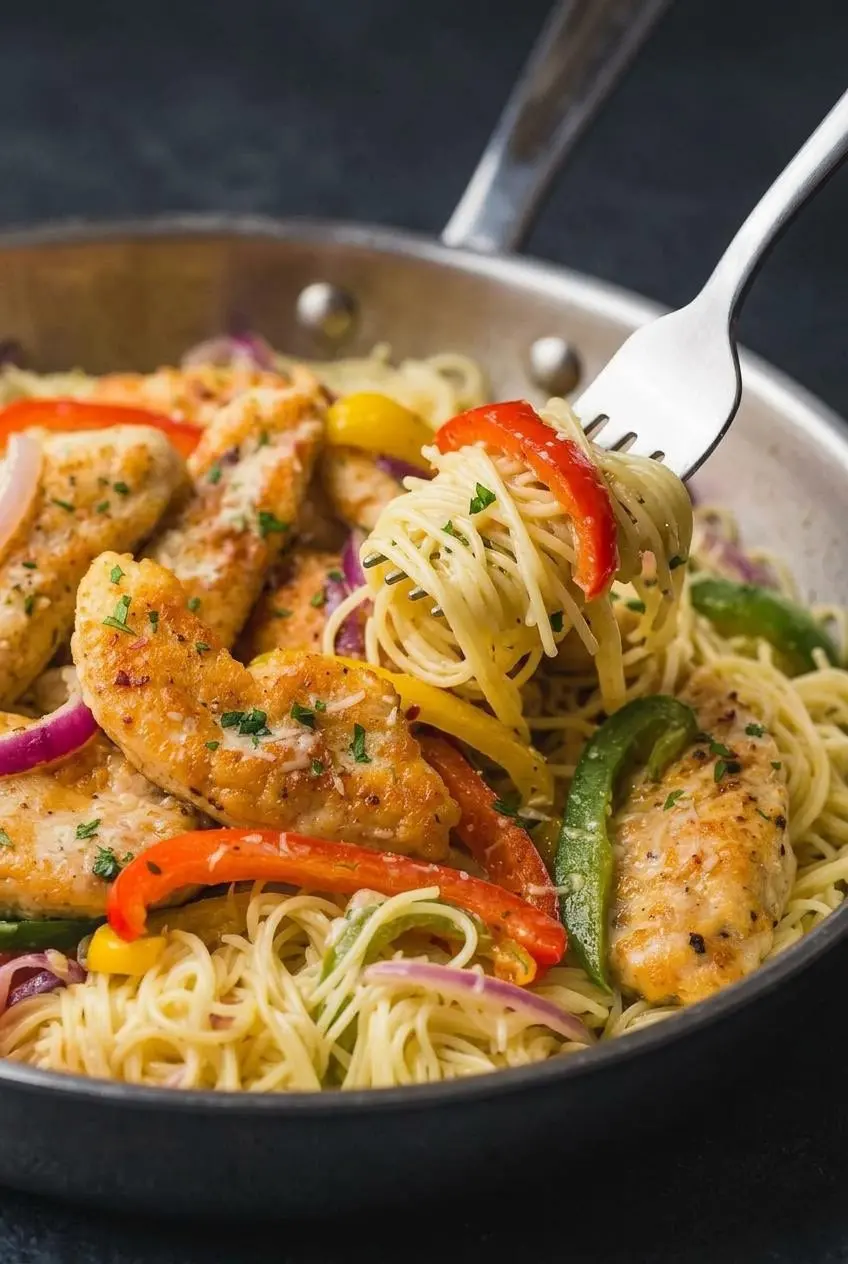
A few small choices make the difference between decent scampi and the kind you want to drag bread through.
- Dredge the chicken evenly. That flour coating helps with browning and gives the sauce a little extra body.
- Don’t crowd the skillet. If the chicken pieces are packed too tightly, they steam instead of sear, and you lose those flavorful browned spots.
- Reduce the wine enough before adding the cream. If it still smells sharp, give it another minute so the sauce tastes balanced.
- Keep the reserved pasta water nearby. A splash at the end can loosen a tight sauce and help it turn silky instead of heavy.
- Add the garlic after the peppers and onion have softened a bit. Garlic burns quickly, and bitter garlic can take over the whole pan.
- If you want a slightly deeper creamy flavor, add a tiny pinch of freshly grated nutmeg with the cream. It won’t taste like nutmeg, but it makes the dairy taste rounder.
Troubleshooting Common Issues
Most scampi problems are easy to fix once you know what caused them.
| Problem | Likely Cause | How to Fix It |
|---|---|---|
| Dry chicken | The tenders cooked too long | Sear just until done, then remove them from the pan right away and add them back only at the end. |
| Bitter garlic | The garlic went in too early or cooked over heat that was too high | Add it after the vegetables start to soften and cook it only until fragrant. |
| Thin sauce | The wine did not reduce enough or the sauce needs more starch | Let the pan sauce simmer a bit longer, then toss with the pasta so the reserved pasta water can help it emulsify. |
| Broken or oily sauce | The heat was too high when the cream and cheese were added | Take the pan off the heat and whisk or toss vigorously; a splash of hot pasta water can help bring it back together. |
Chicken Scampi Variations
The main recipe is the creamy restaurant-style version, but it adapts well if you want something brighter, lighter, or wine-free. If you enjoy rich pasta dinners in general, you might also like another creamy chicken recipe.
Classic Lemon-Garlic Scampi (No Cream)
For a more traditional scampi feel, leave out the whipping cream and the bell peppers. Finish the sauce with a generous squeeze of fresh lemon juice and extra parsley so the dish leans bright, buttery, and zesty instead of creamy. If that lemony pan-sauce style is your favorite, classic Chicken Piccata scratches a similar itch.
Alcohol-Free Chicken Scampi
If you want to skip the wine, use an equal amount of chicken broth in its place. Add 1 tablespoon of fresh lemon juice or white wine vinegar with the broth so the sauce keeps some of that sharp, balancing acidity that wine usually brings.
The flavor will be slightly rounder and less complex, but it still makes a very good scampi sauce when the garlic, butter, and Parmesan are doing their job.
Lighter Chicken Scampi
For a lighter version, reduce the butter and cream by half and add baby spinach or halved cherry tomatoes at the end. You’ll keep the same general character, but the sauce tastes fresher and a little less rich. Chicken thighs also work well here if you want more flavor and a bit more forgiveness during cooking.
What to Serve with Chicken Scampi
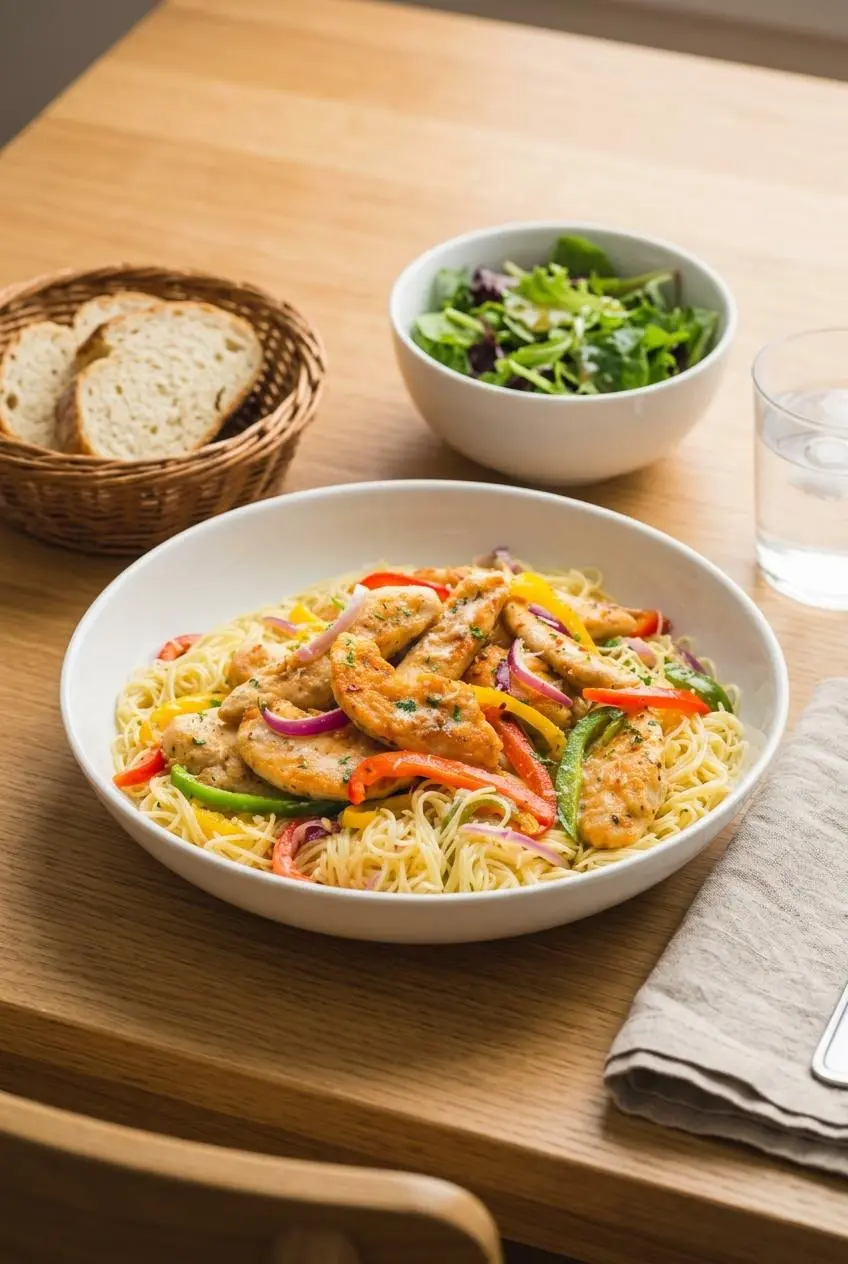
Because the sauce is rich and garlicky, the best sides either soak it up or balance it out.
- Crusty bread is perfect for catching every last bit of the garlic butter sauce.
- A simple green salad with a light vinaigrette cuts through the creaminess nicely.
- Roasted or steamed asparagus works especially well with the lemony notes in the sauce.
- Broccoli is another easy side if you want something hearty and green on the plate.
If this style of chicken-and-pasta dinner is your thing, spicy Chicken Arrabbiata is a good next one to try.
Storage and Reheating Instructions
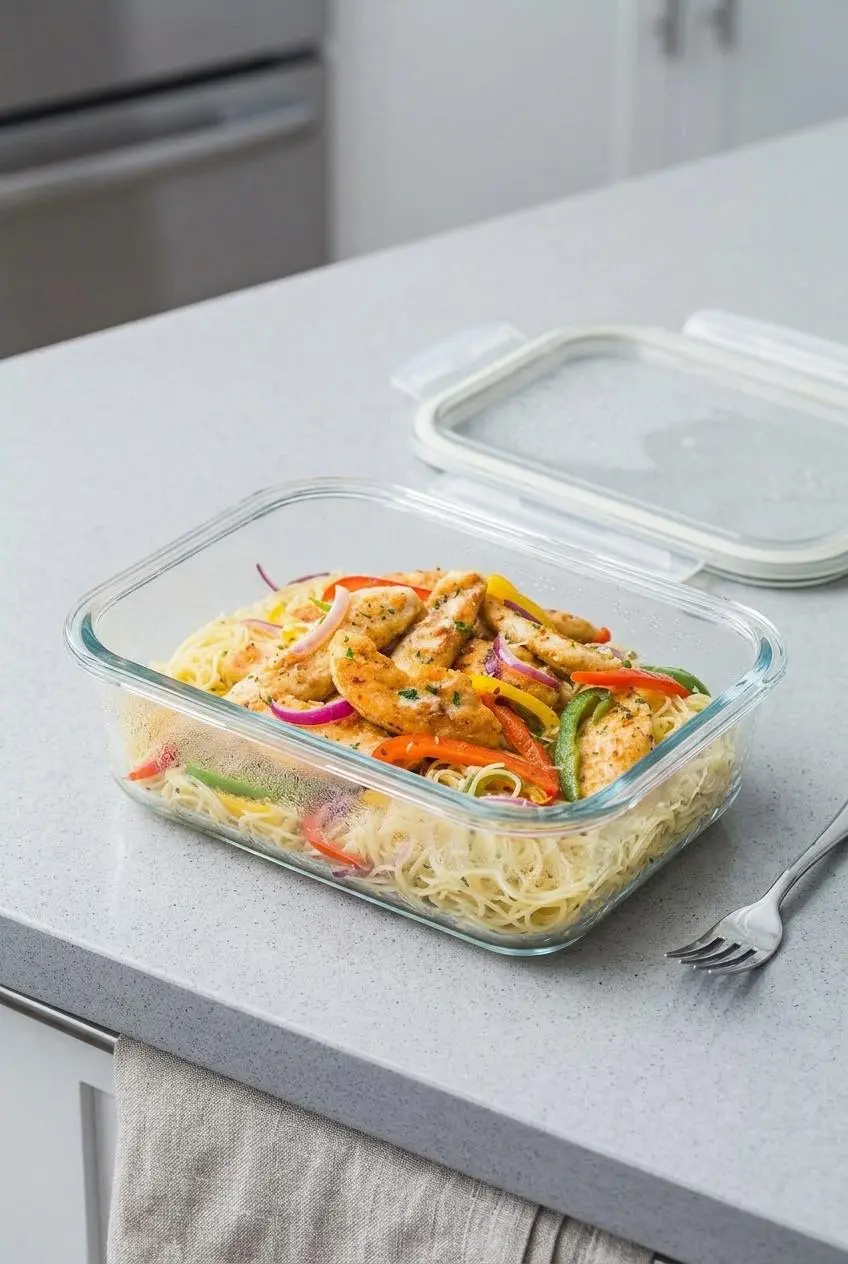
Let leftovers cool, then refrigerate them in an airtight container. For best quality and food safety, enjoy them within 3 days and follow USDA leftovers guidance.
Reheat gently in a skillet over low heat with a small splash of milk or broth to loosen the sauce. Stir often and stop as soon as everything is hot, since hard reheating can make the chicken tough and the cream sauce separate.
I don’t recommend freezing this version. Cream-based sauces often turn grainy and split after thawing, so this dish is much better fresh or from the fridge.
Conclusion
This chicken scampi gives you that restaurant-style payoff without much fuss, and the creamy garlic butter sauce makes it feel a little special even on an ordinary night.
If you remember one thing, make it the pasta water. That small step helps the sauce turn glossy, clingy, and much easier to love.
Frequently Asked Questions (FAQ)
What can I substitute for white wine in chicken scampi?
Chicken broth is the best substitute. Use the same amount of broth as the wine called for in the recipe. Add 1 tablespoon of fresh lemon juice or white wine vinegar to bring back some acidity. The sauce will taste a little less layered, but it will still be savory and balanced.
Can you freeze chicken scampi?
It’s better not to freeze this creamy version. The sauce can separate and turn grainy after thawing and reheating. If you’re planning for leftovers, refrigerating is the better option here. The texture is at its best when the dish is eaten fresh or gently reheated from the fridge.
Why did my scampi sauce separate or get oily?
The heat was probably too high when the cream or cheese went in. Fast reheating can also cause the sauce to break. Take the pan off the heat and whisk or toss firmly to bring it back together. A splash of hot pasta water or broth often helps re-emulsify the sauce.
Should I use chicken breast or thighs?
Either one works well, so it mostly comes down to the texture you prefer. Chicken breasts are leaner and a bit firmer. Chicken thighs bring more flavor and stay juicy more easily. Chicken tenders, which this recipe uses, are convenient and naturally tender.
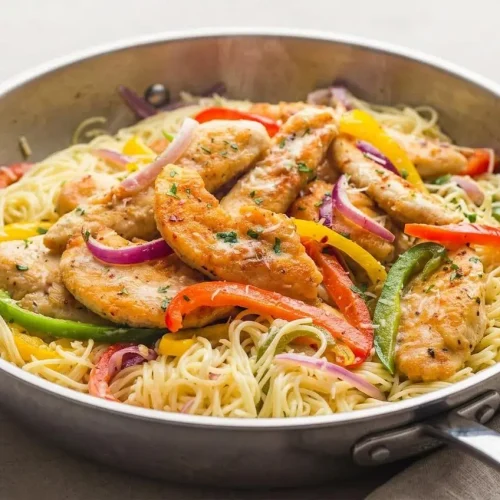
Chicken Scampi

Equipment
- Skillet
Ingredients
- 8 ounces angel hair pasta
- 1 ½ pound chicken tenderloins
- ½ cup all-purpose flour
- ¼ teaspoon Italian seasoning
- 2 teaspoon salt divided
- ¼ teaspoon ground black pepper
- 2 tablespoons olive oil
- 2 tablespoons butter
- 1 medium red onion sliced into half-moons
- ½ medium red bell pepper sliced thinly
- ½ medium yellow bell pepper sliced thinly
- ½ medium green bell pepper sliced thinly
- 4 cloves garlic crushed
- ½ cup dry white wine
- ½ cup whipping cream
- ½ cup parmesan cheese grated
- ¼ teaspoon red chili flakes optional
- 1 teaspoon fresh parsley chopped
Instructions
- Bring a medium saucepot of water to a boil, salt it, and cook the angel hair according to the package directions. Before draining, reserve 1 cup of the pasta water, since that starchy liquid helps the final sauce cling to the noodles.
- Mix the flour with the Italian seasoning, 1 teaspoon of salt, and the black pepper, then coat the chicken tenderloins well on all sides. The light dredge gives the chicken a delicate crust and helps it turn golden instead of pale.
- Heat the olive oil in a skillet and cook the chicken for about 3 minutes per side, then remove it and keep it covered. The tenders are ready when the outside has browned and the meat has changed from pink to opaque with golden sear spots; for doneness, chicken should reach 165°F.
- Melt the butter in the same skillet, then add the red onion and all three bell peppers and cook until they begin to soften. Once the vegetables lose their raw edge, stir in the crushed garlic and cook briefly until fragrant.
- Pour in the dry white wine and scrape up the browned bits from the bottom of the pan, then let the liquid reduce for about 4 minutes. You should hear a sharp sizzle at first, and by the end the wine should smell mellow rather than harsh.
- Add the reserved pasta water and whipping cream, bring the sauce to a gentle simmer, then stir in the parmesan cheese, the remaining 1 teaspoon of salt, and the red chili flakes if using. The sauce is ready for the pasta when it thickens enough to lightly coat the back of a spoon.
- Add the drained pasta and toss until coated, then return the chicken to the skillet and finish with the chopped parsley. Serve while warm, when the noodles look glossy and the sauce still moves smoothly around them.