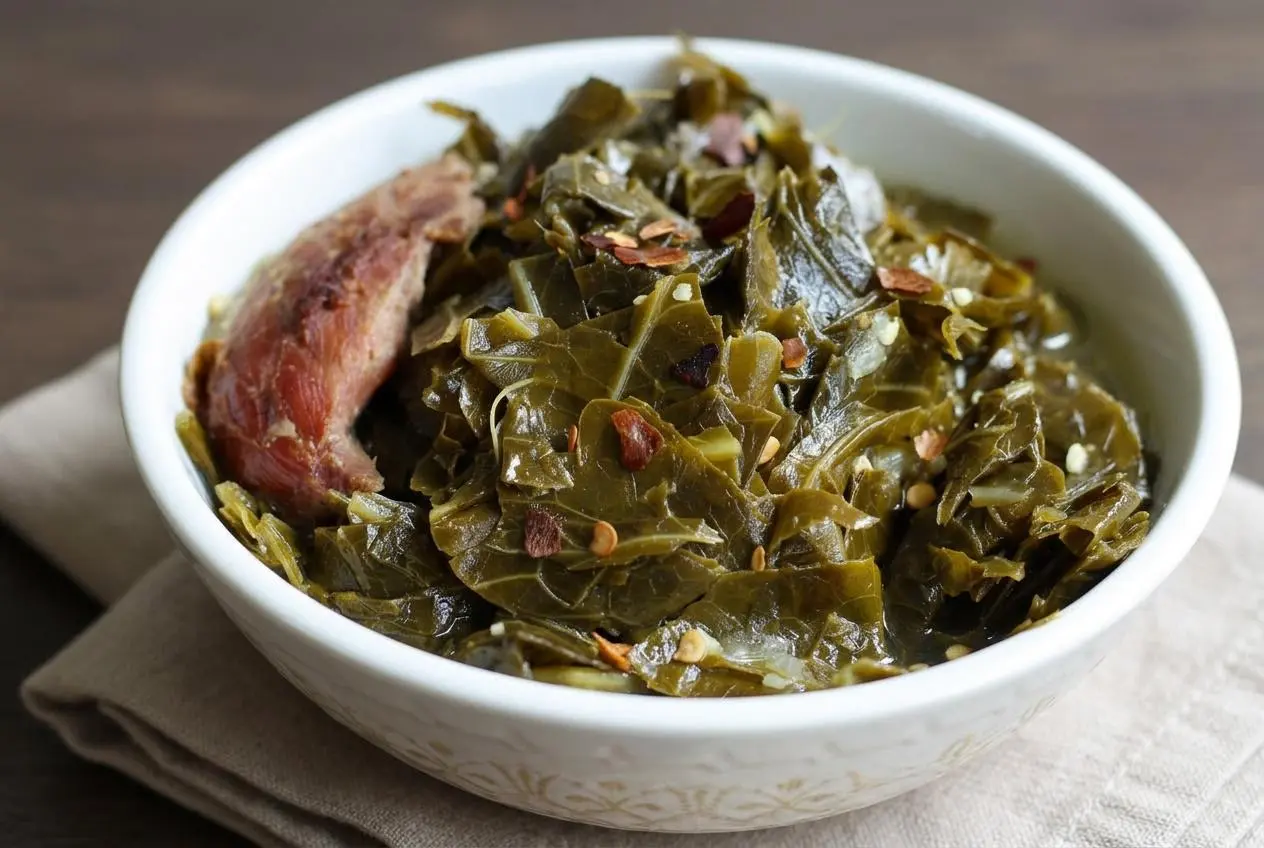
For the best collards, simmer them low and slow in seasoned broth with smoked turkey, onions, garlic, and vinegar until the leaves turn tender and deeply flavorful.
This collard greens recipe is a classic Southern side dish with smoky broth, silky greens, and that savory pot likker everyone reaches for with a piece of cornbread.
The aroma alone feels like dinner is headed in the right direction, and the little tricks that keep the greens tender instead of bitter are what make it shine.
Dry the washed greens well before they hit the pot so excess water doesn’t dilute the broth or cause hot oil to sputter.
Ingredients
Each ingredient has a job here, from building smoky depth and tender texture to brightening the broth so the greens taste full and balanced.
Collard Greens Wash Solution
- 1/2 cup white distilled vinegar
- 3 tablespoons salt
Southern Collard Greens
- 2 bunches fresh collard greens
- 1 tablespoon extra virgin olive oil
- 1/2 cup finely diced onions
- 1 tablespoon minced garlic
- 1/2 teaspoon red pepper flakes
- 4-5 cups chicken broth
- 1 fully-cooked smoked turkey leg or wing (about 13 oz)
- 1 tablespoon white distilled vinegar
- Applewood smoked salt & black pepper, to season
Chicken broth gives these greens a fuller pot likker than water because it brings body and savory depth from the start. Smoked turkey is a great pork-free choice that still delivers that deep Southern flavor, while the final splash of vinegar cuts through the rich broth and wakes everything up.
I always grab bunches with firm, deep green leaves and avoid any that look yellowed or limp, because the smaller, fresher leaves cook up sweeter and more tender.
How to Cook Southern Collard Greens
This method works because it builds flavor in stages, then gives the greens enough time to relax into the broth instead of fighting it.
Prep The Collard Greens
- Fill a clean sink or a very large basin with cool water, then stir in the vinegar and salt to make the wash bath.
The water should taste lightly seasoned and gives the leaves a better chance to release hidden grit. - Fold each collard leaf in half lengthwise and pull the leafy part away from the thick center stem.
The stem should separate cleanly, leaving two large leaf halves ready for washing. - Drop the leaves into the bath and swish them around with your hands, rubbing the textured surfaces as you go.
You’ll often see sand and soil loosen quickly and drift to the bottom. - Let the greens soak for 15-20 minutes, scrub again halfway through, then drain and repeat with plain water if the bath still looks dirty.
Keep going until the water stays mostly clear, then rinse each leaf front and back under cool water so no grit is left behind. - Tear the cleaned leaves into bite-sized pieces and keep them nearby for the pot.
The pieces should be easy to scoop and large enough to stay silky rather than shredded.
Cook The Greens
- Warm the olive oil in a large pot and cook the onions until they soften.
They should turn tender and smell sweet rather than sharp. - Stir in the garlic and red pepper flakes and cook briefly.
Once the garlic smells warm and fragrant, move on before it darkens. - Add the chicken broth and smoked turkey leg, then bring the pot up to a boil.
The broth will deepen in color as the smoky meat starts flavoring the liquid. - Pile in the collard greens and lower the heat to a gentle simmer.
At first the pot will look very full, but the greens will begin to collapse as they soften. - Cover and cook for 1 hour, stirring regularly as the greens braise.
By the end, the leaves should shift to a deep forest green and feel tender, not chewy. - Stir the greens well and taste both the broth and the leaves, adding a little water if the liquid tastes too concentrated.
The pot likker should taste savory and rounded, not harsh or overly salty. - Mix in the vinegar and season with smoked salt and black pepper if desired.
The final broth should taste brighter, with the smoky richness still leading the way. - Serve the greens with pieces of the smoked turkey leg and hot sauce if desired.
The meat should pull from the bone easily, which tells you it has fully flavored the pot.
The Essential Ingredients Explained
The best collards come from balance. You want sturdy greens, enough savory fat to mellow them, and just enough acid to keep the whole pot lively.
Choosing the Right Greens
Look for bunches with dark green leaves that feel crisp and firm. Smaller to medium leaves are usually more tender, while giant older leaves can lean tougher and more bitter. If the edges are yellowing, dry, or battered, skip them.
Fresh collard greens naturally have a sturdy texture, which is why they hold up so well to a long braise. That toughness is a strength, but only when the leaves start out fresh.
The Fat and Flavor Base
Smoked turkey leg or wing gives this pot deep savoriness without using pork, and it naturally seasons the broth as it simmers. That makes it one of the best options if you want classic flavor with a pork-free approach.
Traditional Southern cooks also build collards with bacon grease or ham hock, both of which add a richer, heavier backbone. If you want to change the style later, keep it as an optional variation rather than changing the main recipe. A quick bacon and onion version can be done by rendering diced bacon, softening onions in the drippings, and cooking the greens for a shorter stovetop side dish. It tastes smokier and saltier up front, while the turkey version gives a cleaner broth.
Acid and Seasonings to Balance
Vinegar matters here because collards are a brassica, and their earthy bitterness can linger if the pot is all smoke, salt, and fat. A splash of acid sharpens the broth and makes the greens taste brighter instead of heavy.
A tiny pinch of brown sugar can help if your bunches run bitter, especially with older leaves, but keep it optional and light. The goal is not sweetness. It is balance. Smoked salt and black pepper finish the pot by adding depth and a little edge without covering the greens themselves.
How to Properly Clean and Prep Collard Greens
If collards ever tasted gritty to you before, the washing step was probably the problem. These leaves trap sand in every wrinkle, so a quick rinse usually isn’t enough.
The Vinegar and Salt Bath
Start with a sink or large basin full of cool water, then add the vinegar and salt from the wash solution. The bath helps loosen dirt clinging to the rough surface of the leaves, especially near the center rib and folds.
Swish the greens well, rub the leaves with your hands, and let them soak for 15 to 20 minutes. Midway through, scrub them again. If the water looks cloudy or gritty, drain it and repeat with fresh water until the sediment stops showing up. Then rinse each leaf one last time under running water.
That last rinse is what saves the pot. No one wants perfect pot likker with a surprise crunch of sand.
Destemming and Ribbon-Cutting Techniques
The center stems are fibrous, so pull them out before cooking the main batch. Fold each leaf in half along the stem, then strip the leafy part away with your hands.
If you want neat ribbons instead of torn pieces, stack a few stemmed leaves, roll them tightly like a cigar, and slice across the roll into thin strips. That Brazilian-style cut is especially handy for faster cooking because the narrow ribbons soften quickly and cook more evenly.
Anti-Waste: Cooking the Stems
You do not have to throw the stems away. If you want to use them, slice them very thinly and add them early so they have time to soften fully.
They need longer than the leaves, so only include them if you do not mind a bit more simmering time. Once tender, they add a pleasant, slightly sweet vegetable depth to the pot.
Step-by-Step Southern Collard Greens Recipe
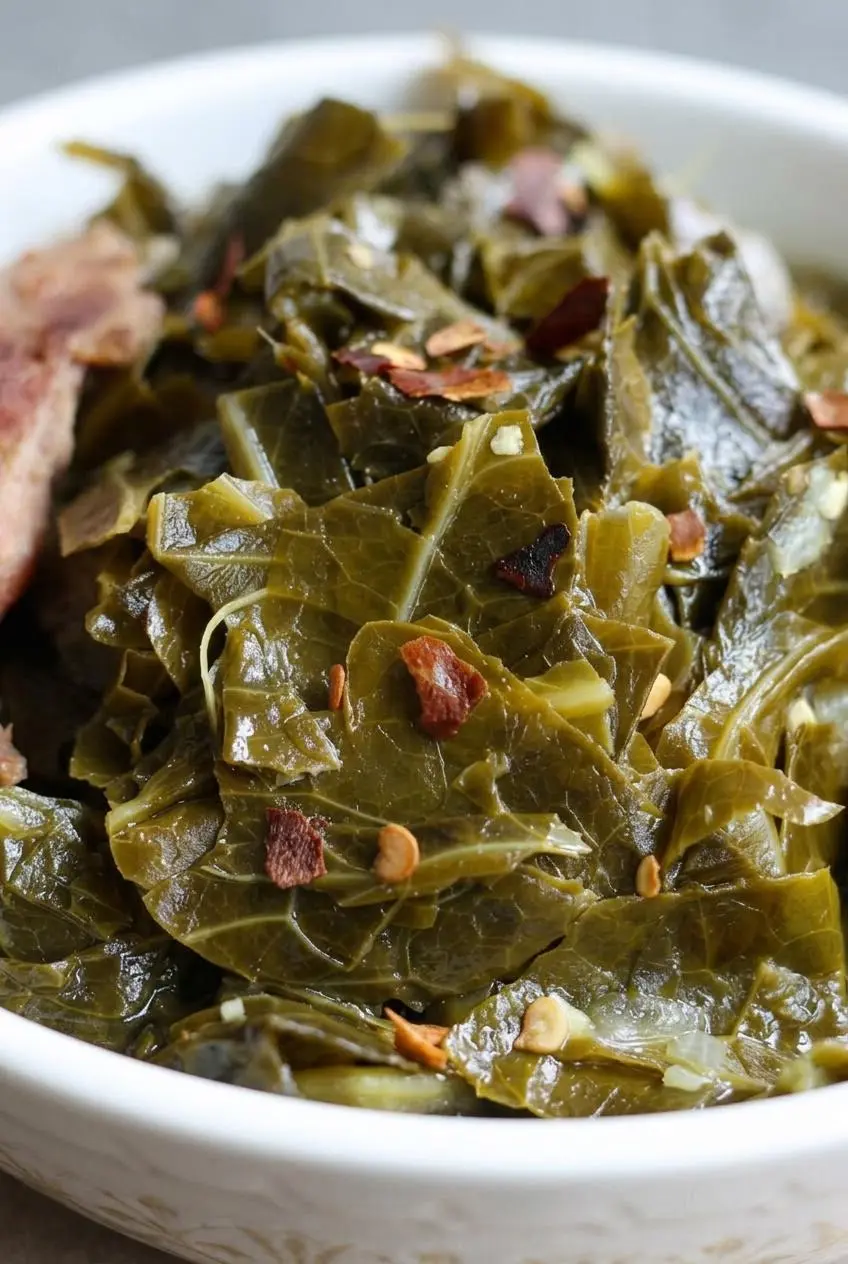
This is the slow-braised version most people picture when they think of soul food collards. The long simmer softens the sturdy leaves, seasons them from the inside out, and turns the broth into something worth sipping.
Start by building the aromatic base with onions, then garlic and red pepper flakes. When the onions smell sweet and the garlic turns fragrant, the pot is ready for broth and smoked turkey. That warm onion and smoked meat aroma is your sign that the pot likker is on the right track.
Once the greens go in, keep the heat low and steady. High heat can burn off too much liquid before the collards have time to soften, leaving you with tough greens and broth that tastes too strong. A gentle simmer lets the leaves slowly break down while staying silky.
Stir from time to time so the top greens rotate into the broth. By the end of the hour, the leaves should be a deep forest green and the turkey should shred easily. If you like your collards extra soft, you can keep simmering longer, as the recipe allows, until the texture lands where you want it.
The Secrets to a Rich, Silk-Like Pot Likker
Pot likker is the seasoned broth left in the pot after the greens cook, and it is one of the best parts of the dish. It picks up flavor from the onions, garlic, pepper flakes, broth, and smoky turkey, plus all the juices released by the collards as they braise.
When smoked meat simmers in broth, it gives the liquid body and savoriness, which is why chicken broth works better than plain water here. The result should taste full, slightly smoky, and brightened at the end with vinegar.
Use that broth wisely. Spoon it over the greens, dip cornbread into it, or save a little to enrich beans or soup the next day.
Quick Brazilian Sautéed Collard Greens
If you want collards on a weeknight, go with a fast sauté instead of the long Southern braise. The flavor is fresher, greener, and lighter, while the texture stays a bit toothsome.
Slice the stemmed leaves into very thin ribbons, heat olive oil, and cook garlic until fragrant before tossing in the greens. Stir constantly over fairly high heat just until the ribbons wilt and turn bright to deep green. Finish with a little lemon juice or vinegar. This style is great beside rice and beans, or with flavorful gallo pinto for an easy dinner.
Smoky Vegan Collard Greens
For a vegetarian or vegan version, keep the same overall idea but swap the chicken broth for vegetable broth and skip the turkey. Smoked salt can add some of the depth you would normally get from meat.
If you want more smoky character, a touch of liquid smoke or smoked paprika can help. Add them carefully so the greens still taste like greens, not a campfire. Finish with vinegar the same way to keep the broth bright and balanced.
Troubleshooting Tough or Bitter Greens
Collards are forgiving, but they do better when you adjust the pot based on what you taste and see.
- If the greens taste bitter: remove the tough stems next time, then balance the finished pot with a splash of vinegar and, if needed, a tiny pinch of brown sugar.
- If the greens are still tough: they usually need more time. Add a little more broth or water if the pot looks dry, cover again, and keep the simmer gentle.
- If the broth tastes too salty or too bold: loosen it with a bit of water or unsalted broth, then simmer briefly so the flavors settle.
- If the greens turned mushy: the heat was likely too high for too long, or they cooked well past tender. Aim for leaves that are soft and silky, not limp and slimy.
- If the pot tastes flat: finish with the vinegar and a final pinch of smoked salt or pepper. Collards often need that last bright note to wake up.
How to Store and Reheat Leftovers
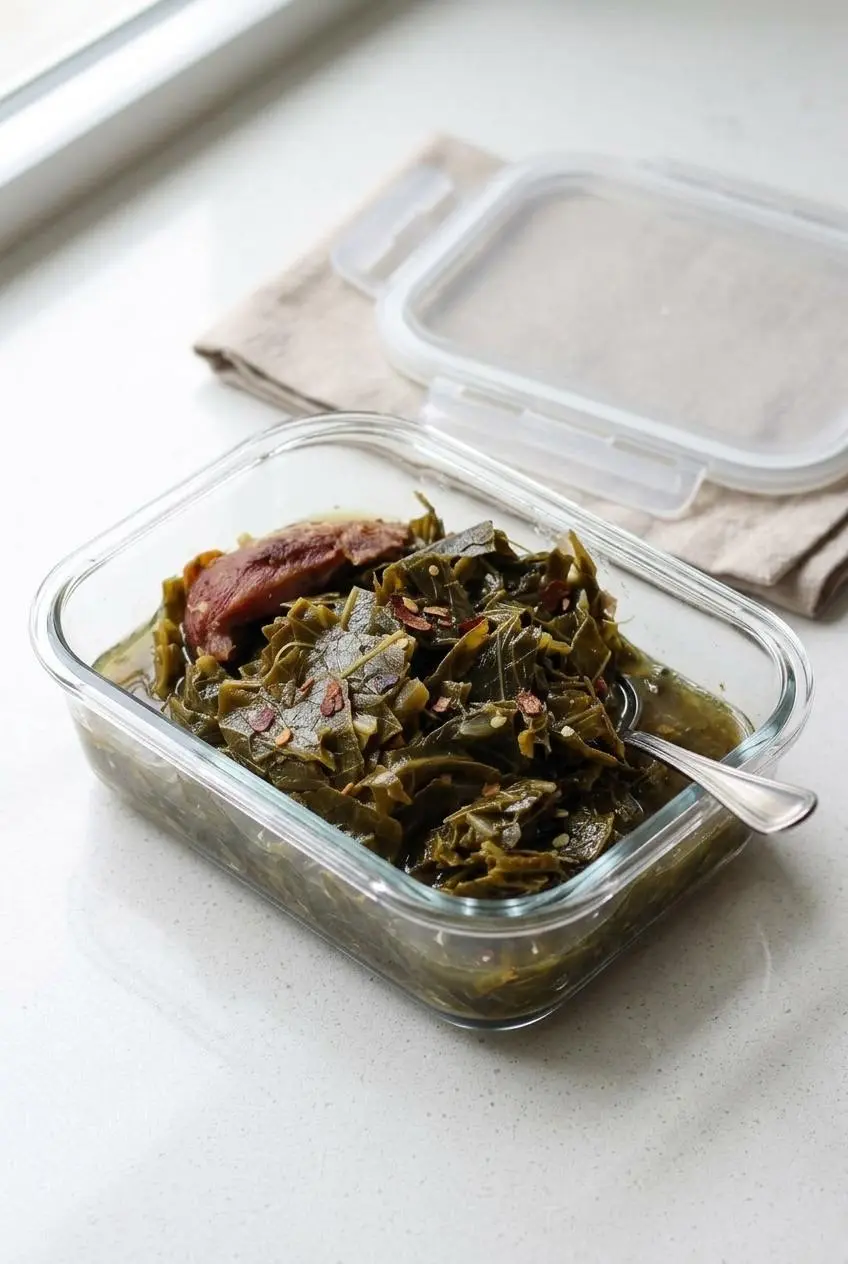
Leftover collards keep best when the greens stay with their pot likker, because the broth protects their texture and flavor. Let them cool, transfer them to an airtight container, and refrigerate them promptly.
For leftovers that include smoked turkey and broth, a good boundary is to keep them refrigerated for 3 to 4 days, which lines up with USDA leftover storage guidance for cooked poultry dishes.
To reheat, warm the greens gently on the stovetop over low to medium heat until hot throughout. Add a splash of water or broth if the pot likker has reduced too much in the fridge. Gentle heat keeps the leaves tender and the broth from turning harsh.
What to Serve with Southern Collard Greens
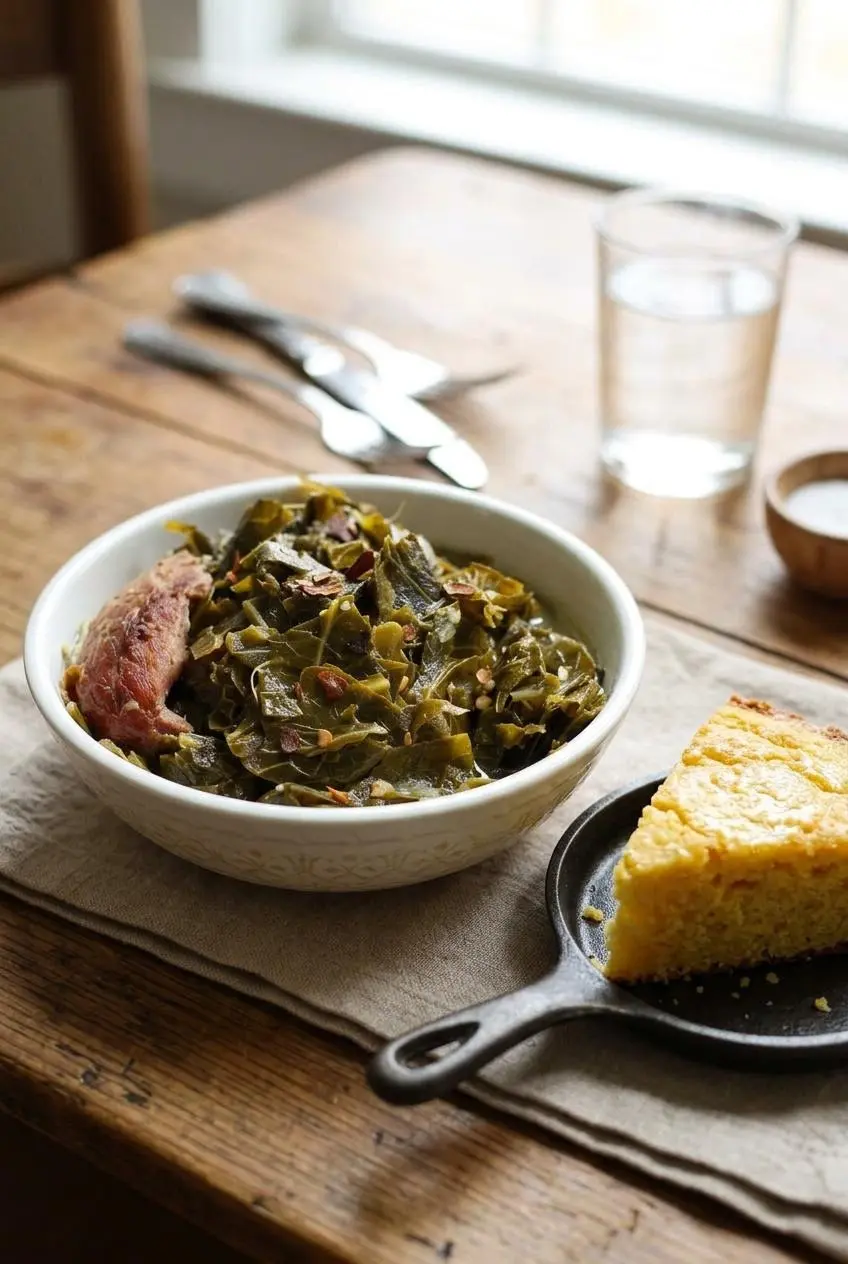
Collards love company, especially foods that can soak up the broth or contrast with its deep savoriness.
- Skillet cornbread is the classic move, especially when you want every drop of pot likker off the plate.
- Baked macaroni and cheese makes the meal richer and extra comforting.
- Crispy fried chicken brings crunch against the soft greens.
- Black-eyed peas fit right in for a New Year’s Day plate or a full Sunday dinner.
- A crunchy vegetable side like crispy okra tempura adds a nice texture contrast.
- For a cool sweet counterpoint at a holiday table, classic grape salad works well beside richer mains.
Conclusion
Good collards reward patience. When you clean them thoroughly, build a savory broth, and let them simmer low and slow, they turn tender, smoky, and deeply satisfying.
Whether you serve them for Sunday supper, a holiday table, or a simple weeknight meal, keep the pot likker close and the cornbread closer.
Frequently Asked Questions
How do you get the bitter taste out of collard greens?
Remove the thick stems before cooking. Cook the greens gently rather than rushing them over high heat. Finish with a splash of vinegar, and add a tiny pinch of brown sugar only if the batch still tastes sharp.
Can I use pre-washed bagged collard greens?
Yes, especially if you want to save prep time. Still check for tough stem pieces and give the greens another rinse, because bagged greens can still hide grit. If the pieces are already chopped, watch the texture closely since they can soften a little faster.
What exactly is pot likker and how do I use it?
Pot likker is the flavorful broth left after the greens simmer. It carries the smoky, savory taste of the turkey, broth, aromatics, and greens. Serve it with the collards, dip cornbread into it, or use a little to enrich beans or soup.
How long do cooked collard greens last in the fridge?
Keep them in an airtight container with their broth. For collards cooked with smoked turkey, use them within the same 3 to 4 day window used for cooked poultry leftovers in the storage guidance above.
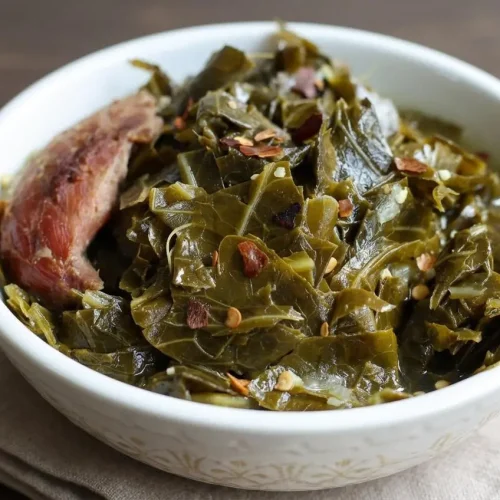
Collard Greens Recipe

Equipment
- Large Pot
- Colander
Ingredients
Collard Greens Wash Solution
- 1/2 cup white distilled vinegar
- 3 tablespoons salt
Southern Collard Greens
- 2 bunches fresh collard greens
- 1 tablespoon extra virgin olive oil
- 1/2 cup finely diced onions
- 1 tablespoon minced garlic
- 1/2 teaspoon red pepper flakes
- 4-5 cups chicken broth
- 1 fully-cooked smoked turkey leg or wing about 13 oz
- 1 tablespoon white distilled vinegar
- Applewood smoked salt & black pepper, to season
Instructions
Prep The Collard Greens
- Fill a clean sink or a very large basin with cool water, then stir in the vinegar and salt to make the wash bath. The water should taste lightly seasoned and gives the leaves a better chance to release hidden grit.
- Fold each collard leaf in half lengthwise and pull the leafy part away from the thick center stem. The stem should separate cleanly, leaving two large leaf halves ready for washing.
- Drop the leaves into the bath and swish them around with your hands, rubbing the textured surfaces as you go. You’ll often see sand and soil loosen quickly and drift to the bottom.
- Let the greens soak for 15-20 minutes, scrub again halfway through, then drain and repeat with plain water if the bath still looks dirty. Keep going until the water stays mostly clear, then rinse each leaf front and back under cool water so no grit is left behind.
- Tear the cleaned leaves into bite-sized pieces and keep them nearby for the pot. The pieces should be easy to scoop and large enough to stay silky rather than shredded.
Cook The Greens
- Warm the olive oil in a large pot and cook the onions until they soften. They should turn tender and smell sweet rather than sharp.
- Stir in the garlic and red pepper flakes and cook briefly. Once the garlic smells warm and fragrant, move on before it darkens.
- Add the chicken broth and smoked turkey leg, then bring the pot up to a boil. The broth will deepen in color as the smoky meat starts flavoring the liquid.
- Pile in the collard greens and lower the heat to a gentle simmer. At first the pot will look very full, but the greens will begin to collapse as they soften.
- Cover and cook for 1 hour, stirring regularly as the greens braise. By the end, the leaves should shift to a deep forest green and feel tender, not chewy.
- Stir the greens well and taste both the broth and the leaves, adding a little water if the liquid tastes too concentrated. The pot likker should taste savory and rounded, not harsh or overly salty.
- Mix in the vinegar and season with smoked salt and black pepper if desired. The final broth should taste brighter, with the smoky richness still leading the way.
- Serve the greens with pieces of the smoked turkey leg and hot sauce if desired. The meat should pull from the bone easily, which tells you it has fully flavored the pot.