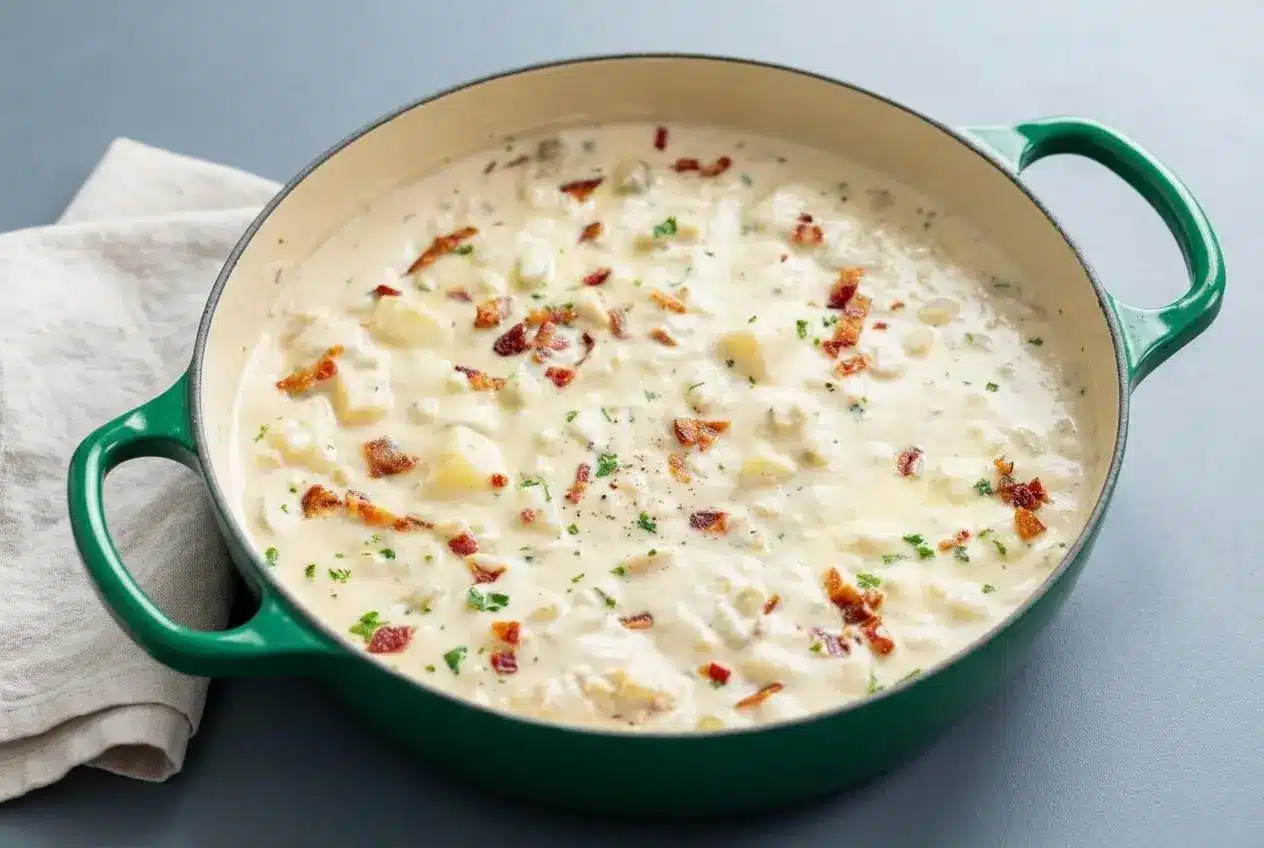
Classic New England clam chowder is a rich, creamy soup with tender clams, bacon, potatoes, onion, and celery in a smooth clam juice and Half and Half broth.
Clam chowder is cozy in the best way: smoky from bacon, briny from clam juice, and thick enough to feel hearty without turning gluey. It’s the kind of soup that tastes like cold-weather comfort but still feels a little coastal.
What makes this version work is the order. You build flavor slowly, cook the flour long enough to lose its raw taste, and add the clams right at the end so they stay tender. That last part matters.
Have the canned clam juices drained and ready before you start the roux so you can add the liquids steadily without scrambling.
Essential Clam Chowder Ingredients Explained
Each ingredient here has a job, from smoky depth and ocean flavor to body, silkiness, and a finish that stays balanced instead of heavy.
Main Ingredients
- 6 strips thick-cut bacon
- 2 tablespoons butter
- 1 medium yellow onion, diced
- 2 ribs celery, diced
- 3 cloves garlic, minced
- 1 teaspoon hot sauce, or 1/2 tsp tabasco sauce
- 1 teaspoon Worcestershire sauce
- 1/3 cup flour
- 1 cup chicken broth
- 3 cups Half and Half
- 8 oz. clam juice
- 1 chicken bouillon cube
- 1 bay leaf
- 1 1/4 lbs. potatoes
- 3 (6.5 oz. cans) chopped clams, juices reserved
- Fresh parsley & Freshly cracked pepper, for serving
Seasonings
- 1/2 teaspoon EACH: dried oregano, dried parsley
- 1/4 teaspoon EACH: dried thyme, salt
- 1/8 teaspoon EACH: smoked paprika, pepper
Thick-cut bacon does more than add crunch on top. As it renders, it leaves behind flavorful fat that becomes the smoky backbone of the soup base. Butter rounds that out and helps the vegetables soften evenly. Onion, celery, and garlic build the savory foundation, while Worcestershire and hot sauce deepen the flavor without making the chowder taste spicy.
The flour is what gives the broth structure, but it has to cook fully or the soup can taste chalky. Chicken broth keeps the base savory, and the clam juice plus the reserved juices from the canned clams bring the real shellfish flavor. That part is essential. Skipping the clam juice leaves the chowder flatter and less true to New England style.
Half and Half gives the soup its silky, creamy body without making it overly thick. Potatoes add heartiness and also release a little starch as they simmer, which helps the chowder feel naturally creamy. Chopped clams are the best fit here because they give you distinct bites, while minced clams can disappear into the broth.
I usually reach for chopped clams over minced because the texture stays more satisfying in each spoonful, especially once the soup thickens around them.
Fresh vs. Canned Clams
Both work, and the best choice depends on what kind of cooking day you’re having.
Canned clams are convenient, affordable, and very consistent. They also come with juices you can pour straight into the pot, which makes building the broth easier. For most home cooks, that combination is hard to beat.
Fresh clams bring a more traditional feel and a cleaner shellfish flavor, but they take more prep. If you use them, scrub the shells well and soak the clams in cold salted water for a while so they can release grit. Lift them out instead of pouring them out, since sand settles at the bottom. Steam them just until they open, then chop the meat and strain the cooking liquid through a fine sieve or cheesecloth before using it as part of your clam base.
If shellfish isn’t the right fit for your table, creamy corn chowder gives you the same cozy chowder mood with a sweet, rich finish.
Selecting the Right Potatoes
Potatoes do more here than fill the pot. They help control the final texture.
Yukon Gold potatoes are the top pick if you want a naturally creamy chowder. Their texture softens nicely and releases enough starch to make the broth feel a little richer as it cooks. Red potatoes hold their shape more cleanly, so they’re great if you prefer neat cubes in every bowl.
Russet potatoes can work, but they tend to break down faster. That can be useful if you like a thicker, more rustic chowder, but it can also leave you with a broth that turns pasty if the potatoes cook too long. Whatever potato you choose, the sweet spot is fork-tender pieces that hold together when stirred.
Gluten-Free and Dietary Substitutions
If you need to skip the flour, use a gluten-free all-purpose blend as a direct swap in the roux, or thicken the soup near the end with a cornstarch slurry. The slurry approach gives a slightly glossier finish, while a gluten-free flour blend feels closer to the classic chowder texture.
For a lighter version, you can swap the Half and Half for whole milk, but expect a looser broth and gentler richness. Keep the heat low once dairy goes in, and stir steadily so it stays smooth. If you want a vegetable-forward chowder with a lighter feel, zucchini corn chowder is a nice warm-weather change of pace.
How to Make Creamy New England Clam Chowder
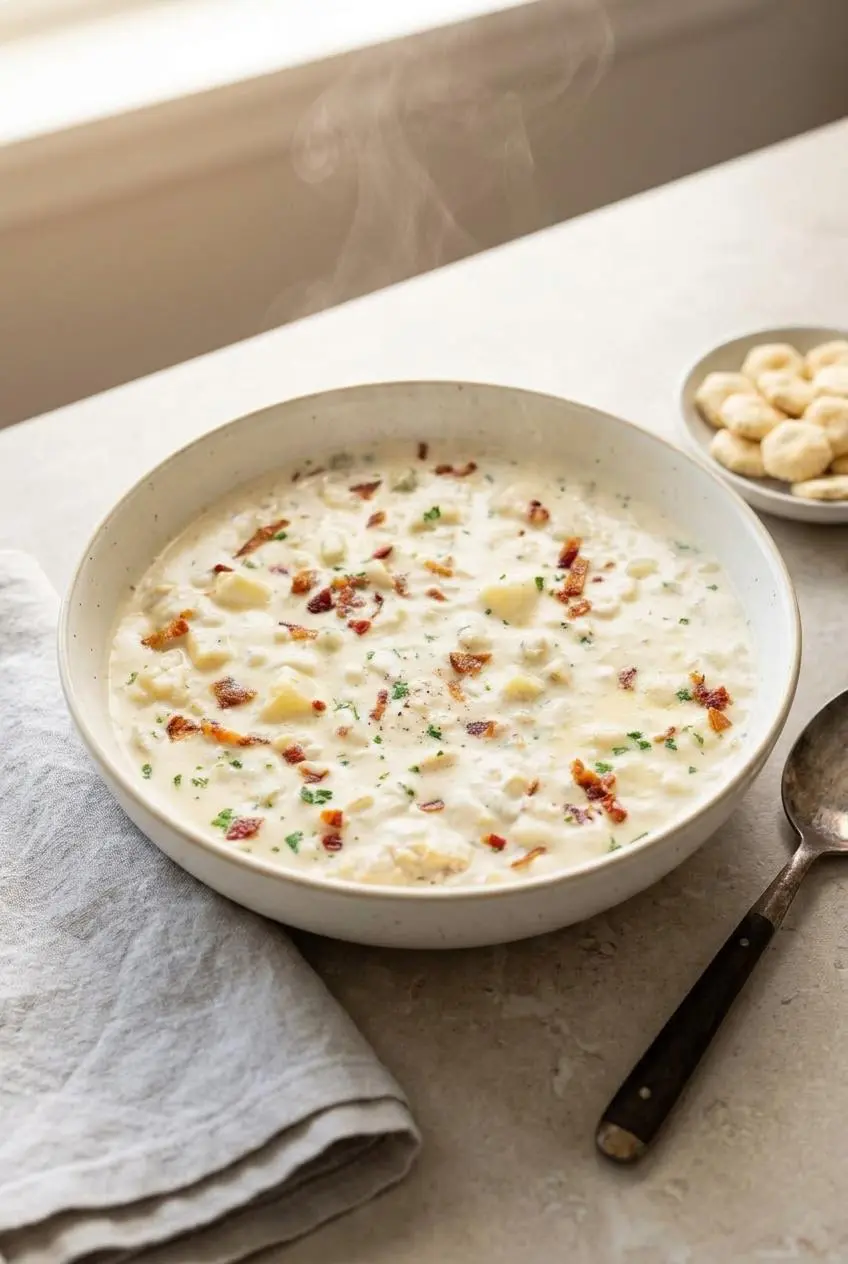
This method matters because good chowder is all about control. Slow bacon rendering, a properly cooked roux, and gentle heat after the dairy goes in are what keep the broth rich and smooth instead of greasy or separated.
Prep Work
- Cook the bacon slowly in a 4.5-quart soup pot over low heat until the fat renders and the strips are fully cooked, then transfer them to a paper towel lined plate.
Once cooled, chop the bacon and save 2 tablespoons of the drippings for the soup base.
Make the Chowder
- Place the reserved bacon drippings and butter in the pot over medium heat and scrape up any browned bits with a silicone spatula.
The fat should melt into a fragrant base with no scorched spots left stuck to the bottom. - Add the diced onion and celery and stir to coat them in the fat, then cook for 5 to 6 minutes.
They should soften and look glossy without taking on much color. - Stir in the garlic, hot sauce, Worcestershire sauce, and all the seasonings, then cook for 1 minute.
The mixture should smell savory and warm, with the garlic fragrant but not browned. - Sprinkle in the flour and stir constantly for 2 minutes.
The roux will look bubbly and foamy at first, then smoother, and the raw flour smell should disappear before you add any liquid. - Pour in the chicken broth a little at a time while stirring constantly, then add the Half and Half the same way.
The base should stay smooth as it loosens, so keep stirring especially while the cold cream meets the hot roux. - Add the chicken bouillon cube and bay leaf, then pour in the reserved juices from the canned clams along with the additional clam juice.
The broth should smell briny and smoky at this point, but leave the clam meat out for now. - Bring the chowder to a gentle boil, lower it to a simmer, and cook partially covered for 20 minutes, stirring from time to time.
You want a soft, steady bubble so the flavors concentrate without the dairy getting rough or grainy. - Peel and dice the potatoes, stir them into the broth, and return the pot to a very gentle bubble for 20 to 25 minutes.
The potatoes are ready when a fork slides in easily and the edges are tender but not falling apart, then reduce the heat to low. - Stir in the clams and heat them through for about 5 minutes, then remove the bay leaf.
The clams should stay plump and tender, not tight or chewy. - Ladle the chowder into bowls and finish with chopped bacon, fresh parsley, and freshly cracked pepper.
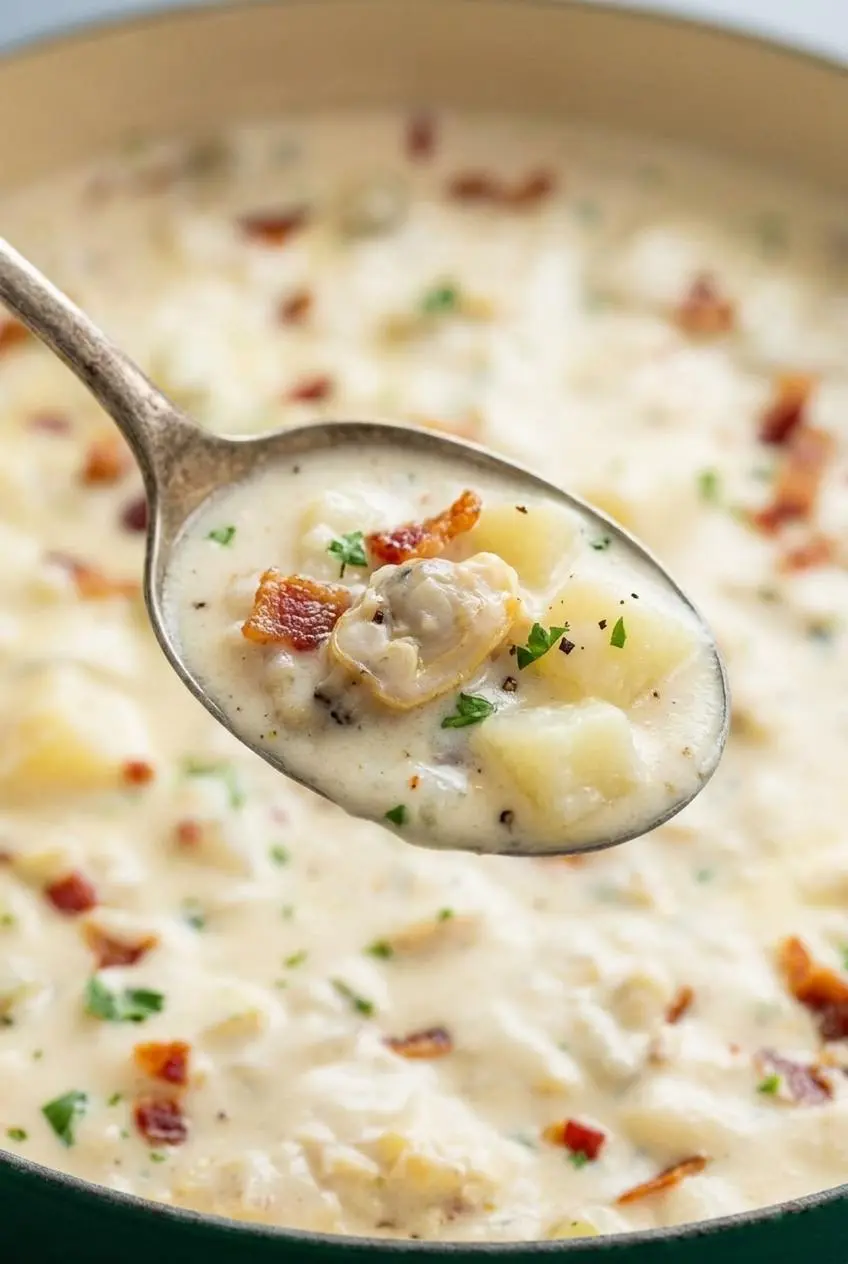
The finished soup should look creamy, dotted with potatoes and clams, and thick enough to lightly coat the spoon.
Secrets to Restaurant Quality Clam Chowder
A few small choices can make homemade chowder taste much deeper and smoother.
- Render the bacon slowly. If the heat is too high, the drippings can scorch before you even start the base, and that bitter taste sticks around.
- Scrape the bottom of the pot well after adding the broth. Those browned bacon bits dissolve into the soup and give the whole pot more savory depth.
- Cook the flour for the full 2 minutes. That short wait makes the difference between a creamy broth and one with a lingering raw flour taste.
- Add the liquids gradually. A slow pour while stirring keeps the roux smooth and helps prevent lumps.
- Keep the post-dairy simmer gentle. A rolling boil can cause the Half and Half to separate, and chowder really doesn’t need that kind of drama.
- If you want a more old-school coastal flavor, you can add a splash of dry white wine with the garlic and seasonings. It should stay an optional flourish, not a required step.
- Some cooks also like a pinch of Old Bay for extra savory spice. If that sounds good, use it lightly so it supports the clam flavor instead of crowding it.
If you enjoy chowders with a bit more heat and smoky edge, spicy corn chowder leans into that direction nicely.
Many home cooks also wonder how to fix texture issues once the pot is already on the stove. If the chowder is too thin, simmering alone may not get you there fast enough. A cornstarch slurry is the quickest rescue. If it gets too thick, loosen it with a splash of broth, clam juice, or Half and Half over low heat. If lumps sneak in because the flour went in too fast, whisk firmly and press the broth against the side of the pot until it smooths out. If the dairy starts to look slightly split, pull the heat down immediately and stir gently until it comes back together.
Regional Clam Chowder Variations
The creamy white version is the classic most people mean, but regional styles take the same idea in very different directions.
Manhattan Style Red Chowder
Manhattan chowder skips the dairy and builds the broth with tomatoes instead. The result is lighter, tangier, and more herb-forward, with the clam flavor sitting in a red, savory base rather than a creamy one. It feels less rich and more brothy, which some people prefer if they want the shellfish flavor to taste sharper and brighter.
Rhode Island Clear Broth Chowder
Rhode Island style leaves out both cream and tomato, leaning on clam juice and broth for a clear, savory soup. It has a cleaner, more delicate character and lets the clam flavor stay front and center. If New England style is plush and cozy, this version is cleaner and more understated.
Storing, Freezing, and Reheating Instructions
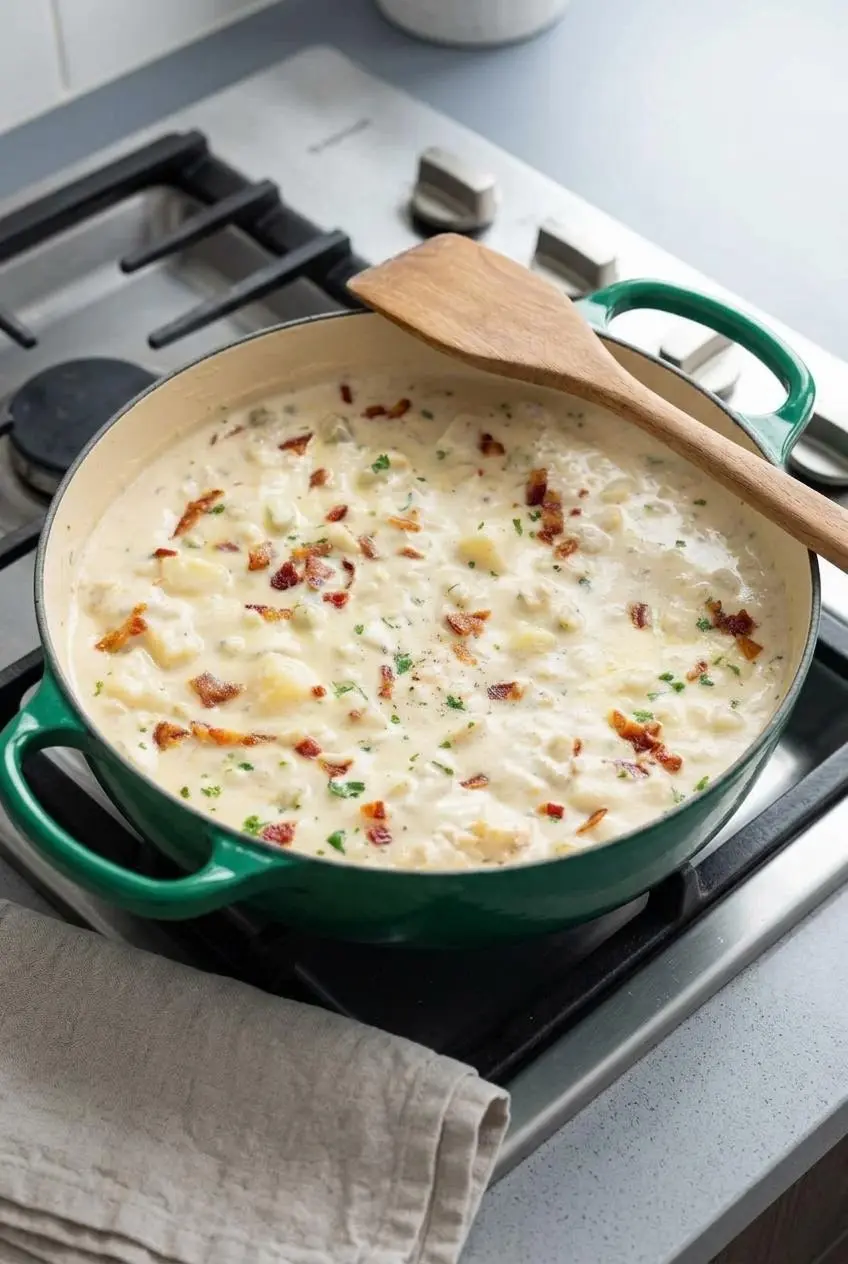
Clam chowder keeps best when you cool it promptly, transfer it to an airtight container, and refrigerate it for up to 3 days for leftover food safety.
Reheat it slowly on the stovetop over low heat and stir often. That gentle approach helps the dairy stay smooth and keeps the potatoes from breaking apart. If you use a microwave, avoid high heat and warm it in shorter bursts, stirring between each one.
Freezing is possible, but it is not ideal for texture. Dairy-based soups can separate after thawing, and potatoes often turn mealy. If you still want to freeze leftovers, expect some texture change and reheat the chowder very slowly while whisking or stirring often to help bring it back together.
Conclusion
This chowder delivers exactly what you want from the classic bowl: smoky bacon depth, real clam flavor, tender potatoes, and a creamy broth that feels rich without being heavy.
If you remember one rule, make it this one: add the clams at the end so they stay tender. Everything else gets much easier from there.
Frequently Asked Questions
Can I use fresh clams instead of canned clams?
Yes. Steam fresh clams just until they open, then remove the meat and chop it. Strain the cooking liquid well before adding it to the pot so grit stays out of the chowder. Add the chopped fresh clams at the end, just like canned clams, so they only heat through.
How do I thicken my clam chowder if it is too thin?
Mix equal parts cold water and cornstarch to make a slurry. Stir it gradually into the simmering chowder, not a boiling pot. Cook for about 2 minutes so the thickening power fully kicks in.
Can you freeze clam chowder?
You can, but the texture usually suffers. The dairy may separate and the potatoes can turn mealy after thawing. If you freeze it anyway, thaw it under refrigeration and reheat it very gently while stirring often.
Why are my clams rubbery?
They were cooked too long. Clams need only the final 5 minutes or so to warm through in the chowder. Keep the heat low after adding them so they stay tender instead of tightening up.
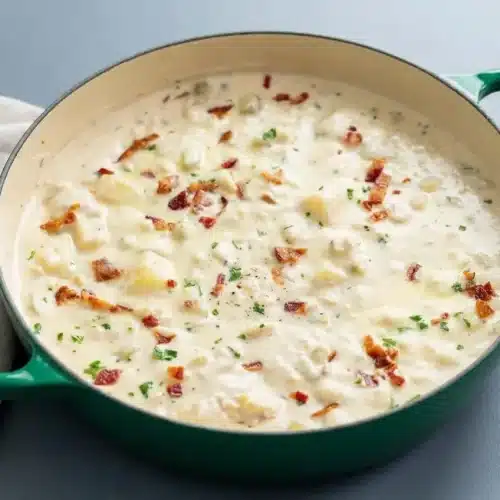
Clam Chowder

Equipment
- 4.5 Quart Dutch Oven
- Silicone spatula
- Soup Ladle
Ingredients
Main Ingredients
- 6 strips thick-cut bacon
- 2 tablespoons butter
- 1 medium yellow onion diced
- 2 ribs celery diced
- 3 cloves garlic minced
- 1 teaspoon hot sauce or 1/2 tsp tabasco sauce
- 1 teaspoon Worcestershire sauce
- 1/3 cup flour
- 1 cup chicken broth
- 3 cups Half and Half
- 8 oz. clam juice
- 1 chicken bouillon cube
- 1 bay leaf
- 1 1/4 lbs. potatoes
- 3 6.5 oz. cans chopped clams juices reserved
- Fresh parsley & Freshly cracked pepper for serving
Seasonings
- 1/2 teaspoon EACH: dried oregano, dried parsley
- 1/4 teaspoon EACH: dried thyme, salt
- 1/8 teaspoon EACH: smoked paprika, pepper
Instructions
Prep Work
- Cook the bacon slowly in a 4.5-quart soup pot over low heat until the fat renders and the strips are fully cooked, then transfer them to a paper towel lined plate. Once cooled, chop the bacon and save 2 tablespoons of the drippings for the soup base.
Make the Chowder
- Place the reserved bacon drippings and butter in the pot over medium heat and scrape up any browned bits with a silicone spatula. The fat should melt into a fragrant base with no scorched spots left stuck to the bottom.
- Add the diced onion and celery and stir to coat them in the fat, then cook for 5 to 6 minutes. They should soften and look glossy without taking on much color.
- Stir in the garlic, hot sauce, Worcestershire sauce, and all the seasonings, then cook for 1 minute. The mixture should smell savory and warm, with the garlic fragrant but not browned.
- Sprinkle in the flour and stir constantly for 2 minutes. The roux will look bubbly and foamy at first, then smoother, and the raw flour smell should disappear before you add any liquid.
- Pour in the chicken broth a little at a time while stirring constantly, then add the Half and Half the same way. The base should stay smooth as it loosens, so keep stirring especially while the cold cream meets the hot roux.
- Add the chicken bouillon cube and bay leaf, then pour in the reserved juices from the canned clams along with the additional clam juice. The broth should smell briny and smoky at this point, but leave the clam meat out for now.
- Bring the chowder to a gentle boil, lower it to a simmer, and cook partially covered for 20 minutes, stirring from time to time. You want a soft, steady bubble so the flavors concentrate without the dairy getting rough or grainy.
- Peel and dice the potatoes, stir them into the broth, and return the pot to a very gentle bubble for 20 to 25 minutes. The potatoes are ready when a fork slides in easily and the edges are tender but not falling apart, then reduce the heat to low.
- Stir in the clams and heat them through for about 5 minutes, then remove the bay leaf. The clams should stay plump and tender, not tight or chewy.
- Ladle the chowder into bowls and finish with chopped bacon, fresh parsley, and freshly cracked pepper. The finished soup should look creamy, dotted with potatoes and clams, and thick enough to lightly coat the spoon.