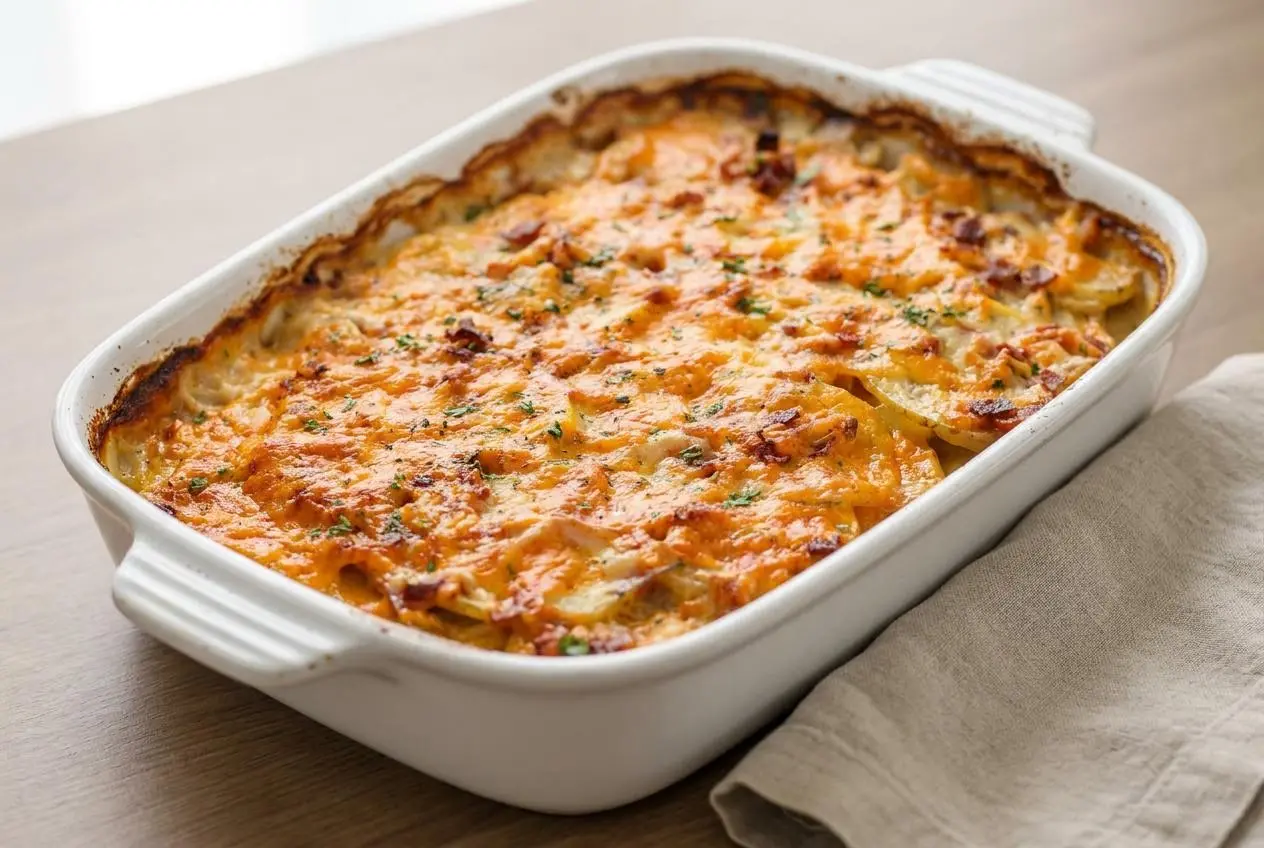
Make scalloped potatoes and ham by layering thin Yukon Gold potatoes with diced ham and a creamy onion sauce, then bake at 350 °F until bubbly, tender, and set after a short rest.
Scalloped potatoes and ham is one of those casseroles that turns leftover ham into a full, comforting dinner. You get soft potato layers, savory bites of ham, and a sauce that bakes up rich without feeling too heavy.
The smell alone does a lot of the work here, especially once the onions, thyme, and ham start mingling in the oven. The key is in the slice thickness and the sauce.
Set your baking dish on the center rack so the top browns gently while the bottom cooks through without scorching.
Ingredients for Scalloped Potatoes and Ham
Each ingredient pulls its weight here, building creamy texture, savory depth, gentle onion sweetness, and the starch structure that helps the casserole slice neatly after resting.
- 1/3 cup butter
- 1 small onion, diced
- 1/3 cup all-purpose flour
- 1/2 teaspoon dried thyme leaves
- 3 cups milk
- 1/2 cup chicken broth
- 3 pounds Yukon gold potatoes, sliced about 1/8 inch thick
- salt and black pepper, to taste
- 2 cups diced cooked ham
- 1 cup shredded sharp cheddar cheese, optional
Butter, flour, and milk form the roux-based sauce, which matters because it keeps the casserole creamy instead of loose and brothy. The onion softens into the sauce and adds sweetness, while thyme gives the whole dish a deeper baked flavor without shouting.
Yukon Gold potatoes are especially good here because they hold their shape better than russets while still releasing enough starch to help thicken the sauce. The chicken broth trims some of the dairy richness and adds savory backbone, which helps the ham taste even meatier.
If you use the cheddar, grate it from a block if possible. Pre-shredded cheese often carries anti-caking starches that can make the top melt a little less smoothly.
I like to warm the milk slightly before whisking it into the pan, because cold milk can make the sauce seize up and turn lumpy at the worst possible moment.
How to Make Scalloped Potatoes and Ham Step-by-Step
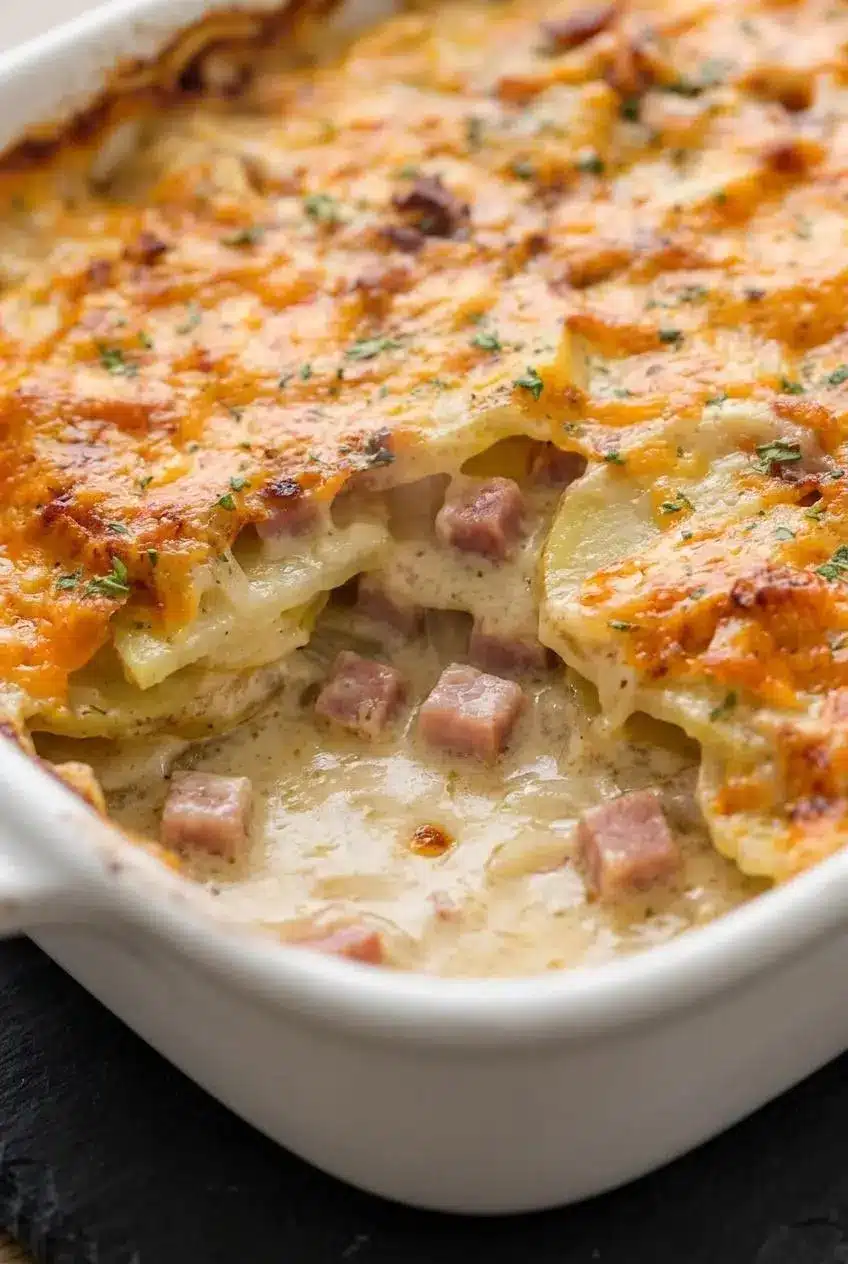
- Heat the oven to 350 °F and grease a 9×13-inch baking dish.
The dish should be fully coated so the creamy edges release easily after baking. - Melt the butter with the diced onion over medium-low heat and cook until the onion turns soft and translucent, then stir in the thyme and flour.
The flour should lose its raw look after 1 to 2 minutes and the mixture should look pale blond, not browned. - Lower the heat and whisk in the milk gradually, adding a little at a time until the mixture is smooth before each new addition, then stir in the chicken broth, salt, and black pepper.
The sauce should thicken as it comes to a boil and coat the back of a spoon after 1 minute of bubbling. - Layer one-third of the sliced potatoes in the baking dish, scatter over one-third of the ham, and spoon over one-third of the sauce.
Repeat the layers twice more, finishing with sauce on top so the upper potatoes stay moist while baking. - Cover the dish and bake for 50 minutes, then uncover and continue baking for 25 to 35 minutes more, adding the cheddar during the last 15 minutes if using.
It is ready when the edges bubble in slow pops and a knife slides through the center potatoes with very little resistance. - Let the casserole rest for at least 15 minutes before serving and add parsley if you like.
The resting time helps the sauce settle so the layers hold together instead of running across the plate.
The layering order matters more than it seems. Potatoes first, then ham, then sauce gives every layer contact with moisture and starch, which helps the casserole bake evenly from top to bottom.
This is also a smart way to use leftover holiday ham. Diced cooked ham tucks into the layers without adding extra work, and those salty, smoky bits season the potatoes as they bake.
The Best Potatoes for Scalloped Casseroles
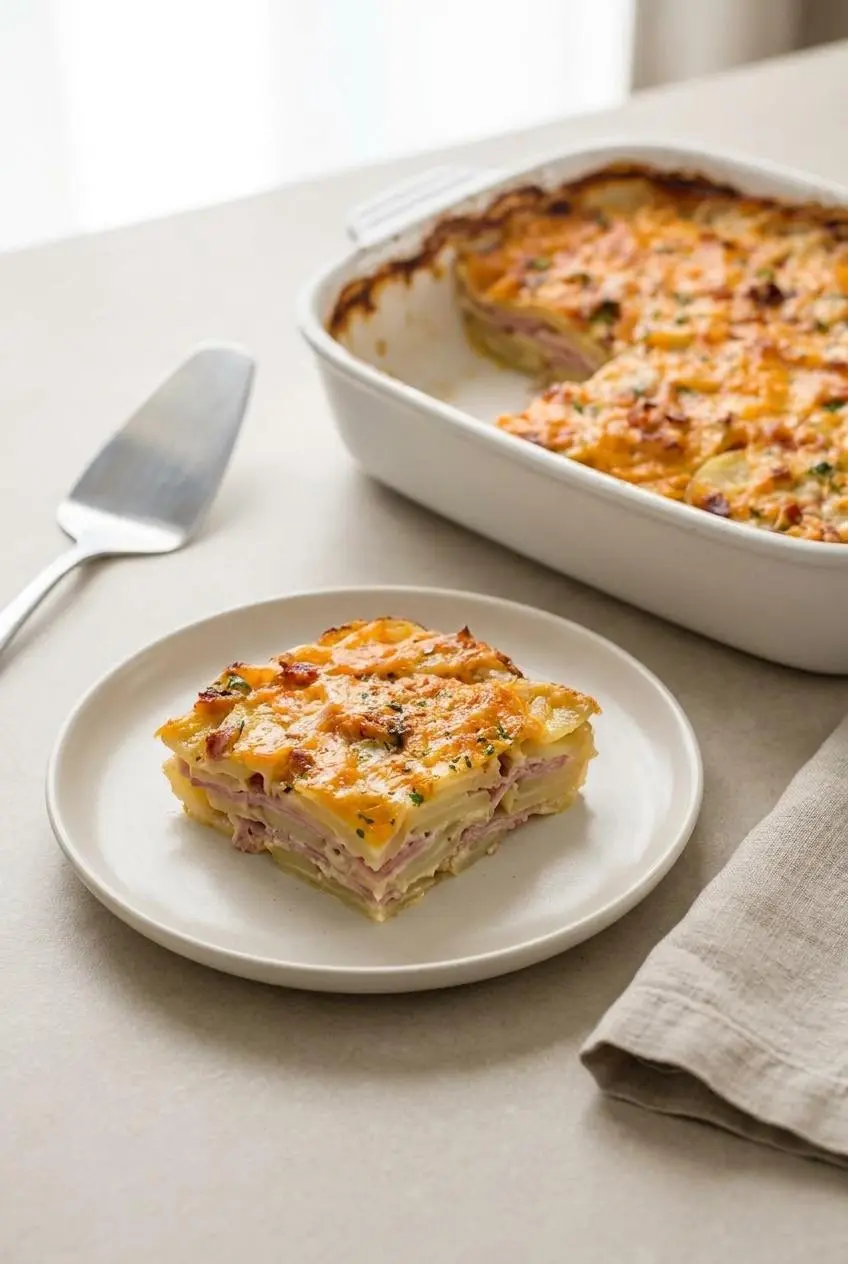
Potato choice decides whether this casserole bakes up silky and sliceable or thin and watery. For this dish, you want a potato that keeps its shape but still releases enough starch to help the sauce bind.
Why Yukon Golds Reign Supreme
Yukon Golds hit the sweet spot. They have enough starch to support the sauce, but they are waxier than russets, so they stay in defined layers instead of collapsing into a mash.
Russets can work, but they break down faster and can make the layers feel softer and more fragile. Red potatoes keep their shape well, though they do not contribute as much starch, so the casserole may set a little less firmly.
If you already love how Yukon Gold mashed potatoes turn out, that same naturally buttery texture is exactly why they shine here too.
The Golden Slicing Rule
Slice the potatoes to about 1/8 inch thick and keep those slices as even as you can. A mandoline is the easiest way to get there, and consistency matters because every slice needs to soften at the same pace.
Do not rinse the slices after cutting. That dusty surface starch is useful. As the casserole bakes, it mingles with the roux and helps tighten the sauce around the potatoes. If you wash it away, you lose part of the natural thickening power built right into the vegetable.
Thicker slices cause two problems at once. They take longer to soften, and they release starch more slowly, which can leave you with firm centers and a sauce that still looks too loose.
Troubleshooting Watery or Curdled Sauce
Most problems with this casserole come down to heat, starch, or slice thickness. The good news is that each one has a practical fix.
- Watery casserole: The usual cause is potatoes sliced too thick or unevenly. Thin 1/8-inch slices release starch faster and cook through before the sauce has a chance to separate.
- Loose sauce after baking: Sometimes the casserole simply needs its full 15-minute rest. The bubbling dish is still moving when it comes out of the oven, and that settling time helps the starches firm up the sauce.
- Curdled or grainy sauce: High heat can push dairy too hard and split the fat from the liquid. Baking at 350 °F keeps the sauce in a gentler range, and adding the milk slowly to the roux helps form a stable base before the casserole ever hits the oven.
- Lumpy stovetop sauce: That usually means the milk went in too fast. Whisk each addition smooth before adding more so the flour hydrates evenly.
- Too much salt: Ham varies a lot. Season the sauce lightly at first, then let the ham do some of the work.
If the sauce starts looking split partway through baking, do not panic. Keep the dish covered for a bit longer so the surface heat softens, then continue baking until the potatoes are tender. Once it comes out, rest it fully before serving. That pause often helps the sauce come back together enough for a much creamier scoop.
The science is pretty simple. Potato starch absorbs liquid and helps hold the dairy in suspension, while excess heat can push milk proteins and fat apart. That is why this recipe leans on both a roux and the starch from unwashed potato slices.
Make-Ahead, Storage, and Reheating Guide
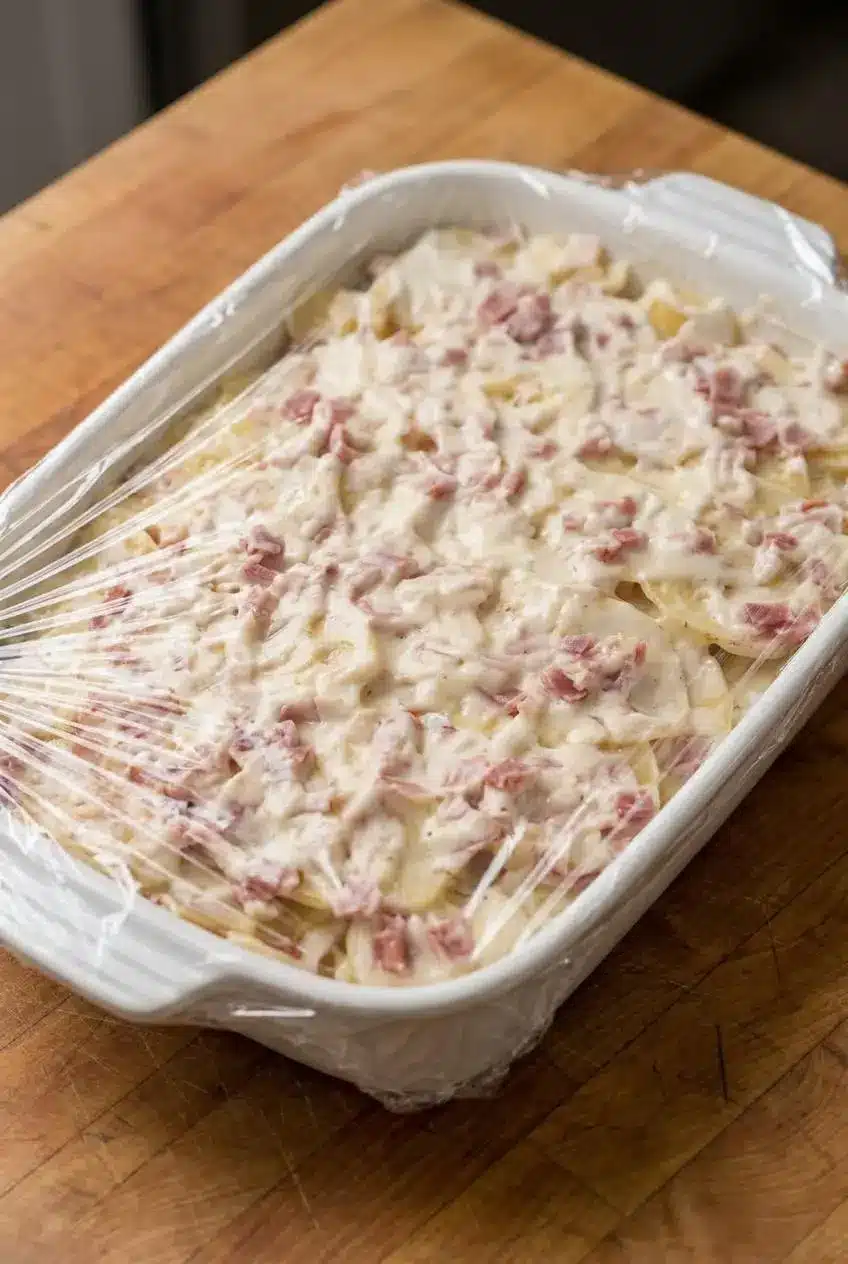
This casserole is very manageable for busy dinners or holiday leftovers, but texture stays best when you handle the dairy and potatoes gently.
Prepping 24 Hours Ahead
You can assemble the casserole up to 24 hours ahead, cover it tightly, and refrigerate it until baking. Let it sit at room temperature for 30 minutes before it goes into the oven so the center is not ice-cold, then expect to add 5 to 10 minutes to the bake if needed.
If you prep ahead, keep the dish well covered so the potatoes do not dry out or discolor. Since the sauce contains milk, it also helps to keep your dairy chilled at 40 °F or below during prep and storage, in line with USDA refrigeration guidance for dairy foods.
Reheating Without Drying Out
For larger portions, reheat the casserole in the oven rather than the microwave. Cover the dish with foil to trap moisture, then warm it until the center is hot and the sauce loosens back up.
If you are reheating leftovers with ham, warm them thoroughly and check that the center reaches 165 °F for reheated cooked ham dishes. For smaller servings, a covered oven-safe dish helps prevent the edges from drying before the middle is ready.
I would skip freezing advice here because potato-and-dairy casseroles often lose their smooth texture once thawed. For the best result, make what you need and reheat gently.
Savory Variations and Cheese Swaps
Once you know the base method, it is easy to nudge the flavor in a different direction without changing the structure of the casserole.
A more classic cheesy version starts to lean toward potatoes au gratin, where cheese plays a bigger role throughout the dish rather than just finishing the top.
The Gourmet Gruyere Twist
Swap the cheddar for grated Gruyere or Swiss if you want a nuttier, deeper finish. Gruyere melts especially well and gives the top a more savory, almost toasted flavor.
You can also stir a little Dijon mustard and a pinch of ground nutmeg into the sauce for extra depth. Keep it subtle so the onion, thyme, and ham still lead. Because some alpine-style cheeses brown faster, start checking the top a bit earlier during the final uncovered stretch.
Gluten-Free Adaptation
To make the sauce gluten-free, use cornstarch instead of flour as the thickener. The texture usually sets a little more glossy and slightly less creamy than a flour-based roux, but it still works well if whisked in carefully.
Since cornstarch thickens differently, watch the sauce for body rather than relying on habit alone. You want it thick enough to coat a spoon before layering so the casserole bakes up structured instead of loose.
Conclusion
This casserole earns its place with creamy layers, golden edges, and that bubbling top that tells you dinner is almost ready. When the knife slips through the center and the sauce settles after resting, you know it worked.
If you have leftover ham in the fridge, this is one of the most satisfying ways to use it. Serve it hot and let those soft, savory layers do their thing.
Frequently Asked Questions
Why did my milk curdle or separate in the oven?
High heat is the usual culprit, because it can split the dairy fat and leave the sauce looking grainy or broken. Salt from the ham can also pull moisture into the sauce and make separation more noticeable. Use whole milk if possible, add it slowly to the roux, and bake at 350 °F for a steadier result.
How can I prevent my scalloped potatoes from being watery?
Slice the potatoes thinly and evenly, about 1/8 inch thick, so they cook through and release starch at the right pace. Do not rinse the slices after cutting, because that surface starch helps thicken the sauce as the casserole bakes. Let the dish rest for 15 minutes before serving so the sauce can settle and firm up.
Can I prepare this casserole a day in advance?
Yes. Assemble it, cover it tightly, and refrigerate it up to 24 hours ahead. Take the chill off for 30 minutes before baking so the center warms more evenly. You may need an extra 5 to 10 minutes in the oven if it is still quite cold when it goes in.
What is the difference between scalloped and au gratin potatoes?
Traditional scalloped potatoes are baked in a milk or cream sauce and may or may not include a little cheese. Au gratin potatoes lean much more heavily on cheese, often layered throughout and finished with a more pronounced cheesy top. This version sits close to classic scalloped potatoes, with the cheddar kept optional.
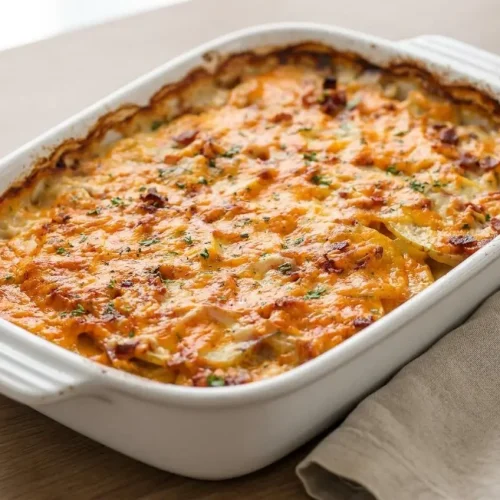
Scalloped Potatoes and Ham

Equipment
- 9×13 Baking Dish
- Whisk
- Saucepan
- Mandoline slicer
Ingredients
- 1/3 cup butter
- 1 small onion, diced
- 1/3 cup all-purpose flour
- 1/2 teaspoon dried thyme leaves
- 3 cups milk
- 1/2 cup chicken broth
- 3 pounds Yukon gold potatoes, sliced about 1/8 inch thick
- salt and black pepper, to taste
- 2 cups diced cooked ham
- 1 cup shredded sharp cheddar cheese, optional
Instructions
- Heat the oven to 350 °F and grease a 9×13-inch baking dish. The dish should be fully coated so the creamy edges release easily after baking.
- Melt the butter with the diced onion over medium-low heat and cook until the onion turns soft and translucent, then stir in the thyme and flour. The flour should lose its raw look after 1 to 2 minutes and the mixture should look pale blond, not browned.
- Lower the heat and whisk in the milk gradually, adding a little at a time until the mixture is smooth before each new addition, then stir in the chicken broth, salt, and black pepper. The sauce should thicken as it comes to a boil and coat the back of a spoon after 1 minute of bubbling.
- Layer one-third of the sliced potatoes in the baking dish, scatter over one-third of the ham, and spoon over one-third of the sauce. Repeat the layers twice more, finishing with sauce on top so the upper potatoes stay moist while baking.
- Cover the dish and bake for 50 minutes, then uncover and continue baking for 25 to 35 minutes more, adding the cheddar during the last 15 minutes if using. It is ready when the edges bubble in slow pops and a knife slides through the center potatoes with very little resistance.
- Let the casserole rest for at least 15 minutes before serving and add parsley if you like. The resting time helps the sauce settle so the layers hold together instead of running across the plate.