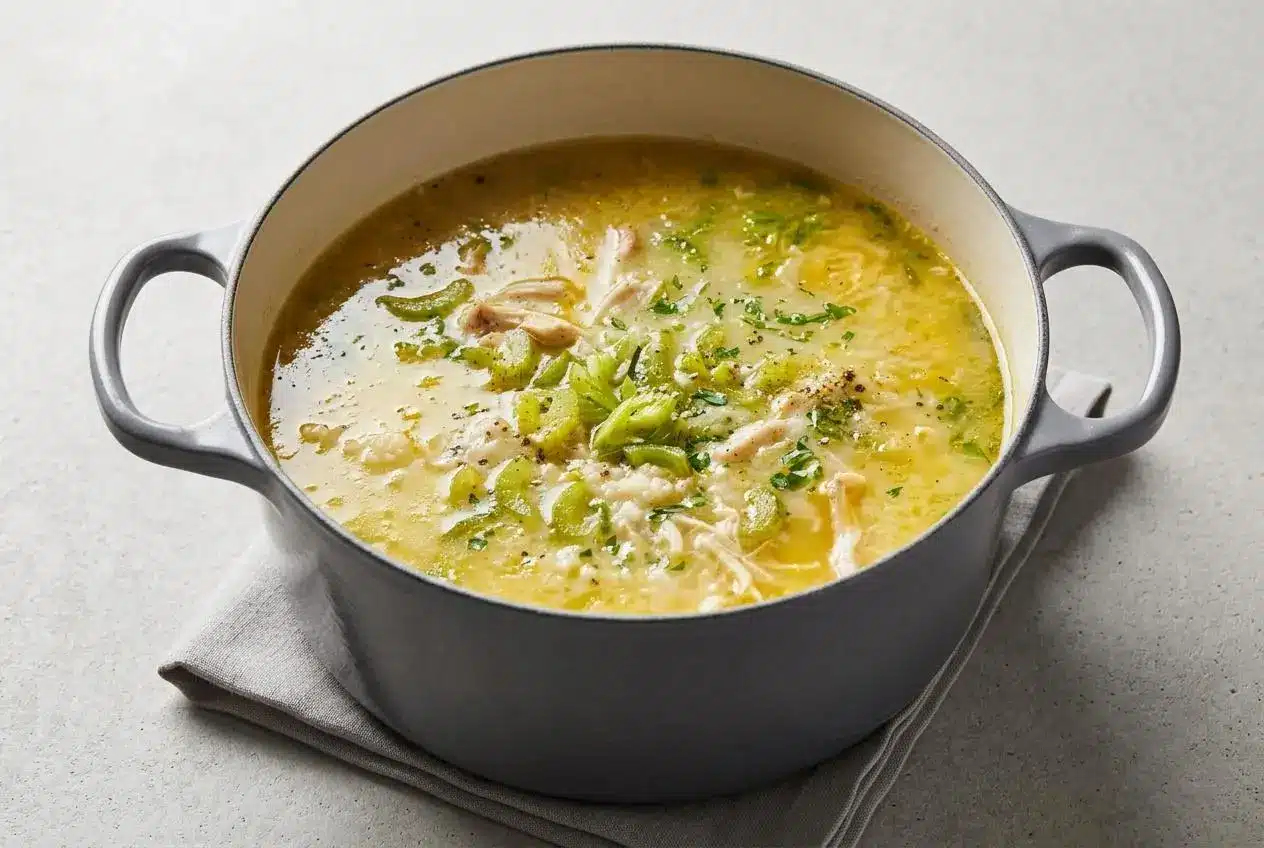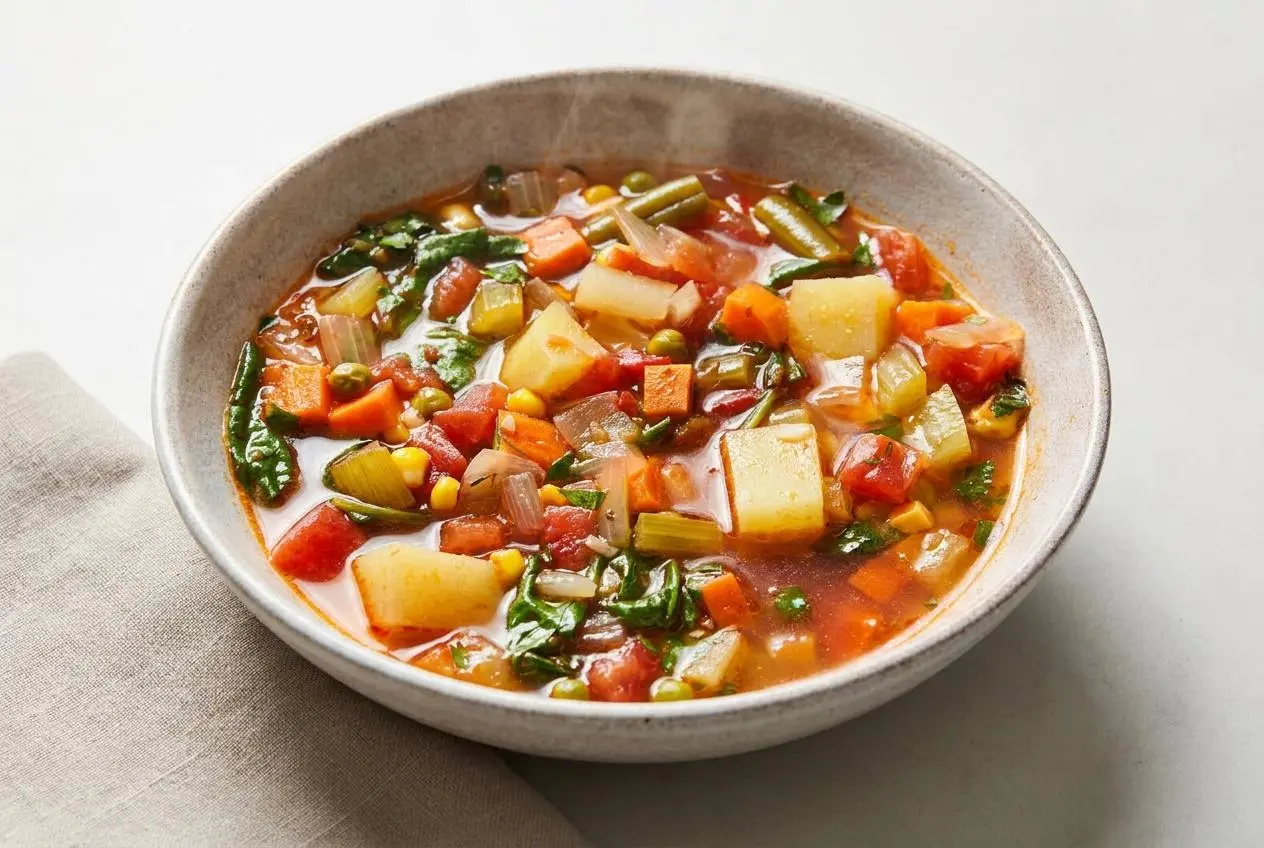
Build a rich vegetable soup by sweating the mirepoix gently, browning the tomato paste, adding vegetables in stages, and finishing with red wine vinegar for brightness.
This vegetable soup recipe is a classic pot of broth, herbs, potatoes, tomatoes, and green vegetables that tastes hearty without feeling heavy. It relies on simple sequencing so each ingredient keeps its texture and the broth picks up real depth.
You’ll like how adaptable it is, especially when you need dinner that feels warm and practical. The small finishing touches make the whole pot taste livelier.
Cut the carrots, celery, and potatoes to a similar size so they cook on the same timeline and the spoonfuls feel balanced.
Why This Vegetable Soup Works
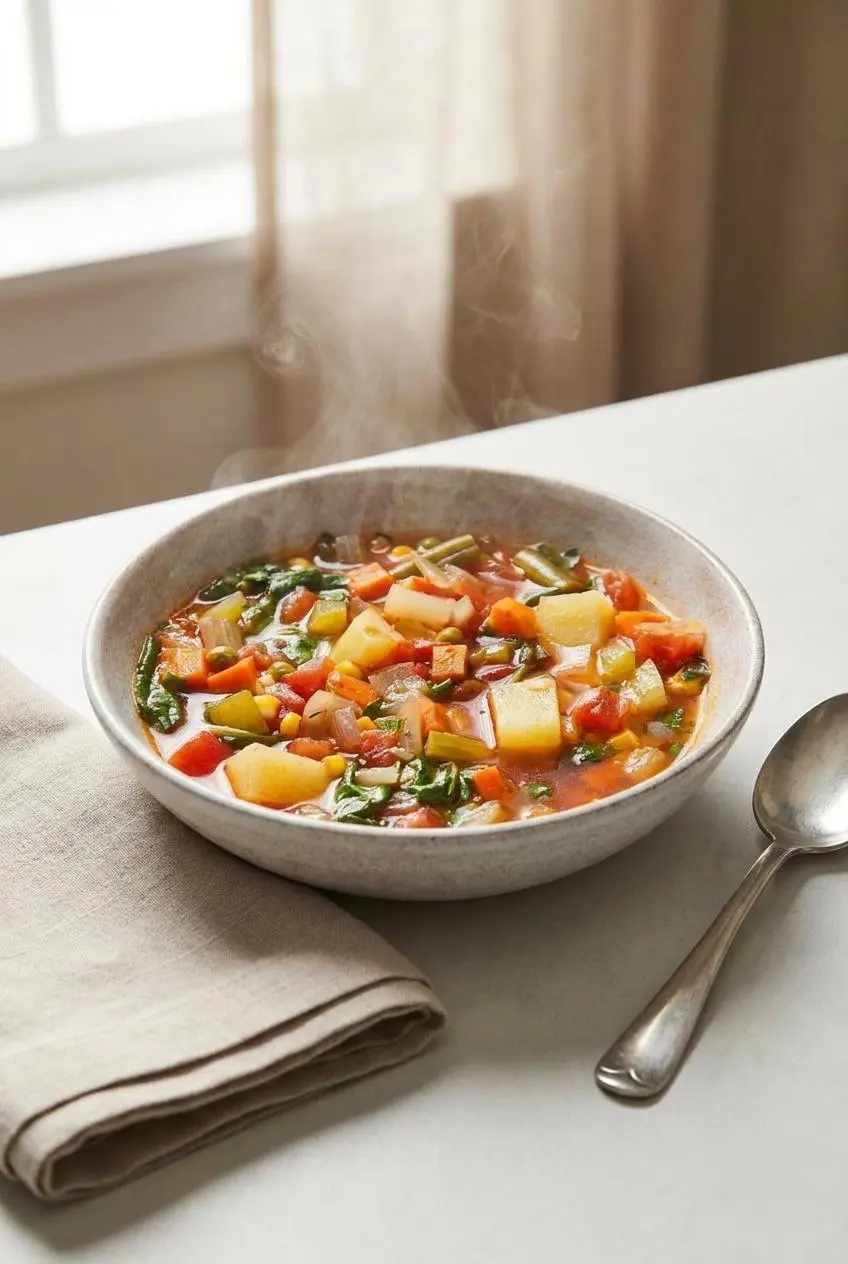
This soup works because it builds flavor in layers instead of asking the broth to do all the work. Onion, carrot, and celery create a sweet savory base, potatoes soften into the liquid and give it a light velvety body, and tomatoes add acidity so the pot tastes bright rather than flat.
The cooking order matters just as much as the ingredients. Potatoes need time to turn tender, while green beans, corn, and peas only need a short simmer to keep some bite. Spinach and parsley go in off the heat, which keeps the color fresh and the flavor clean instead of cooked out.
It also gives you enough backbone to handle a few optional twists. If you want more savory depth, a spoonful of white miso or a Parmesan rind can round out the broth without changing the character of the soup.
Fresh Ingredients for This Soup
Each ingredient has a job here, from building savory depth and gentle sweetness to adding starch, color, freshness, and a bright final balance.
- 3 tablespoons extra-virgin olive oil
- 1 large yellow onion, chopped
- 3 medium carrots, diced (about 2 cups)
- 2 to 3 large celery stalks, diced (about 1 1/2 cups)
- 4 garlic cloves, minced (about 2 tablespoons)
- 2 teaspoons fresh thyme, or 1 teaspoon dried
- 1 1/2 teaspoons dried oregano
- Pinch of crushed red pepper
- Kosher salt and black pepper
- 2 to 3 Yukon Gold potatoes, diced (about 2 cups)
- 1 tablespoon tomato paste
- 8 cups (2 quarts) vegetable broth
- 1 (15-ounce) can diced tomatoes
- 1 cup frozen or fresh chopped green beans
- 1 cup frozen or fresh corn kernels
- 1 cup frozen or fresh green peas
- 2 cups baby spinach
- 1/3 cup chopped fresh parsley, plus more for serving
- 1 tablespoon red wine vinegar
The onion, carrots, and celery form the mirepoix, which gives the broth its savory backbone and a gentle natural sweetness. Yukon Gold potatoes release a little starch as they simmer, so the soup feels fuller and slightly silky without any cream. Diced tomatoes and tomato paste bring acidity and depth, while spinach, parsley, and vinegar wake everything up at the end.
I like to chop the vegetables to a fairly even dice so the soup cooks more predictably and every spoonful gets a bit of everything.
How to Make Classic Vegetable Soup
- Warm the olive oil in a large pot or Dutch oven over medium heat, then add the onion, carrots, and celery and cook for about 10 minutes, stirring now and then.
The vegetables should soften and smell sweet while still holding a little firmness, not turn deeply brown. - Stir in the garlic, thyme, oregano, crushed red pepper, 1 teaspoon salt, or 2 teaspoons if you are using low-sodium broth, and 1 teaspoon black pepper, then cook for about 1 minute.
Stop as soon as the garlic smells fragrant and the herbs bloom in the oil. - Add the diced potatoes and tomato paste and cook for 2 to 3 minutes, stirring often to coat everything well.
The tomato paste is ready when it darkens slightly and you catch that caramelized aroma from the bottom of the pot. - Pour in the vegetable broth and diced tomatoes with their juices, bring the pot to a boil over medium-high heat, then lower the heat and simmer partially covered for 20 to 25 minutes.
The potatoes should be fork tender with just a little resistance left in the center before they fully give way. - Mix in the green beans, corn, and peas, return the soup to a simmer, and cook for 3 to 5 minutes more.
The green beans should lose their raw edge but still keep shape and color. - Take the pot off the heat and stir in the spinach, parsley, and red wine vinegar, then taste and adjust with more salt and pepper if needed.
The spinach should turn a bright deep green and wilt quickly into the hot broth without overcooking.
This method stays friendly for weeknights, but it still rewards a little patience. The biggest flavor jump happens before the broth even goes in, so give the aromatics and tomato paste the time they need.
Choosing Your Vegetable Soup Base and Aromatics
A good soup base should taste sweet, savory, and fragrant before the liquid ever hits the pot. That starts with the classic mirepoix of onion, carrot, and celery. Here, the rough balance is onion first, then plenty of carrot and celery for body and sweetness.
The goal is to sweat the vegetables over medium heat, not rush them into browning. Sweating means the vegetables soften and release moisture while staying glossy and gently sweet. If the heat is too high, the onion can brown before the carrots and celery have softened, and the base will taste sharper and less rounded.
Garlic and dried herbs go in only after the first vegetables have had time to soften. That timing matters. Garlic needs about a minute to turn fragrant, while thyme and oregano bloom quickly in the warm oil. Add them too early and the garlic can scorch before the soup base is ready.
If you’re using fresh produce, give it a quick rinse under running water and skip soaps or produce washes, which matches USDA advice for washing fruits and vegetables.
The Step-by-Step Staged Cooking Method
If your soup ever ends up with mushy peas and still-firm carrots, the timing is the problem. This recipe works because each vegetable joins the pot when it can cook properly, not all at once.
- Start with the aromatics: onion, carrots, and celery need the first stretch of cooking so they can soften and flavor the oil.
- Add the flavor builders next: garlic, dried herbs, crushed red pepper, salt, and black pepper only need a brief minute to bloom.
- Bring in the sturdy vegetables: potatoes go in before the broth simmers so they can cook long enough to become tender and lightly thicken the soup.
- Simmer the base: broth and tomatoes create the cooking liquid, and this is the main window for the potatoes to turn fork tender.
- Save quick-cooking vegetables for the end: green beans, corn, and peas need only a short simmer to keep their shape and bite.
- Finish off the heat: spinach and parsley wilt from the residual heat, which keeps them green and fresh tasting.
That last step makes a real difference. Spinach goes from raw to perfectly wilted fast, and if it keeps simmering, it loses color and turns limp. The same logic applies to frozen vegetables. Add frozen peas, corn, or green beans near the end so they heat through without going dull or mushy.
If your carrots ever stay too firm, it usually means they were cut larger than the potatoes or the simmer stayed too low. A steady gentle simmer, not a sleepy barely-moving pot, helps the hard vegetables cook through on time.
The Secret to Making Soup Flavorful No More Bland Broth
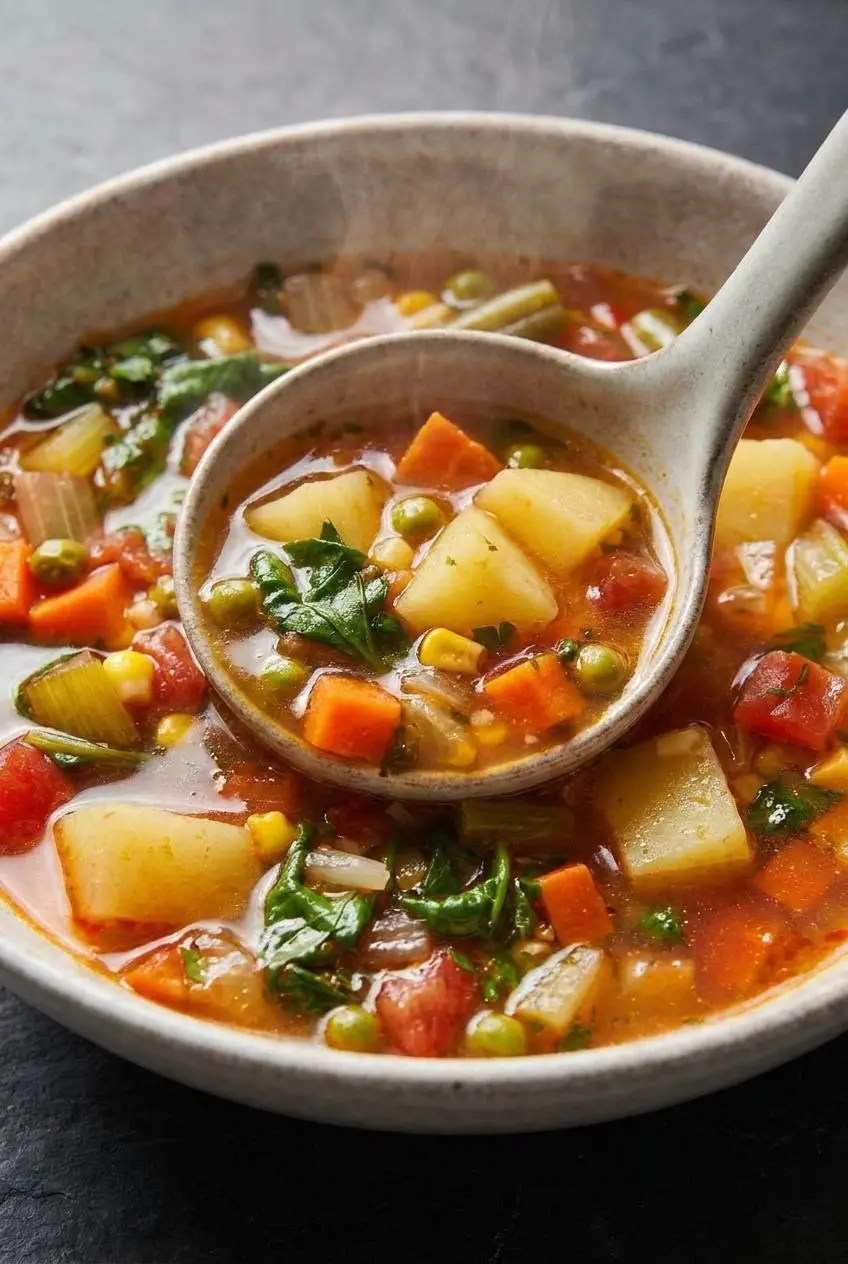
The biggest fix for bland vegetable soup is depth before dilution. In other words, do not skip browning the tomato paste. When it cooks against the bottom of the pot for a couple of minutes, it darkens, smells sweeter, and leaves behind flavorful fond that enriches the whole broth.
Seasoning early helps too. Salt, black pepper, thyme, oregano, and crushed red pepper all wake up in the oil and spread through the soup more evenly than if they were stirred in at the end. If your broth is low sodium, the extra salt listed in the method helps the vegetables taste like themselves instead of just hot water with company.
The final splash of red wine vinegar matters more than it looks. A little acidity cuts through the earthy sweetness of potatoes, carrots, and broth so the soup tastes brighter and more balanced.
For extra savory depth, you can whisk in a little white miso at the end or simmer a Parmesan rind in the broth, then remove it before serving. If you enjoy that kind of deep, rounded broth, this approach works for more than just a bowl of savory miso soup.
- Soup tastes flat: add a pinch more salt and a touch of vinegar after tasting.
- Broth tastes harsh: the garlic or tomato paste may have cooked too hot, so keep the next batch at medium and stir more often.
- Flavor feels muddy: too much simmering after the greens go in can dull the finish, so add spinach and parsley off the heat.
How to Store, Freeze, and Reheat Vegetable Soup
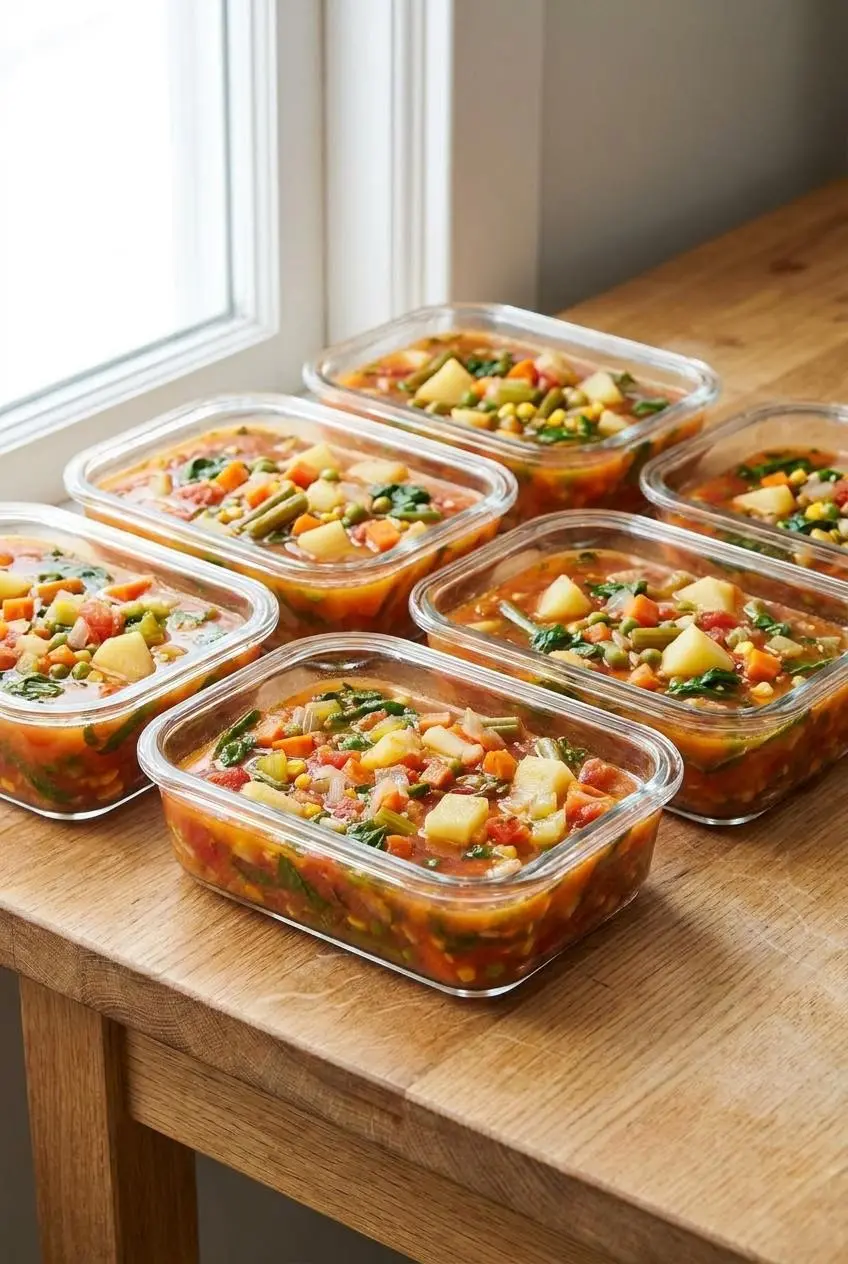
Soup is great for meal prep, but texture holds best when you cool and store it thoughtfully. Let the soup cool down enough that it stops steaming heavily, then transfer it to airtight containers so the vegetables do not keep overcooking in the hot pot.
If you want to freeze it, cool it completely first and use freezer-safe containers with a little headspace for expansion. For safe handling, leftovers should be chilled within two hours during cooling, and soup should be thawed in the refrigerator, in the microwave, or heated from frozen rather than thawed at room temperature.
Reheat gently on the stovetop over low to medium heat so the potatoes and green vegetables stay intact. A hard boil can rough up the texture and push the peas and spinach past their best point.
If you know you want frozen portions later, hold back any optional pasta and add it fresh when serving. That keeps the broth from disappearing into the noodles.
Easy Recipe Variations and Add-Ins
This soup is flexible, so it’s a good place to use what you have without losing the basic structure. Keep the base method the same, then swap by texture and cooking time.
- Summer vegetables: zucchini can replace part of the green beans for a softer, sweeter finish.
- Cool-weather vegetables: butternut squash adds extra sweetness and a fuller body, though it should go in with the potatoes.
- Fresh herb changes: basil gives a softer, sweeter finish than parsley, especially if you want a more tomato-forward bowl.
Protein-Packed Bean and Chickpea Soup
If you want a heartier pot, stir in canned chickpeas or white beans during the final simmer so they warm through and absorb the seasoned broth. They make the soup feel more dinner-worthy without changing the overall flavor too much.
For a variation built around legumes, a hearty chickpea soup is a natural next stop.
Pasta or Grain Infused Soup
Cooked ditalini, orzo, quinoa, or farro can make the soup more filling. Add them to serving bowls or stir them into the pot right before eating so they do not soak up too much broth.
If you plan to freeze leftovers, keep pasta out of the stored soup and add it after reheating. For a similar direction, classic minestrone soup shows how well vegetables and pasta fit together.
Conclusion
This soup earns its place with layered flavor, a broth that tastes lively instead of flat, and vegetables that stay distinct from first spoonful to last.
Once you know the rhythm, it becomes an easy template for using extra vegetables and odds and ends from the fridge. Keep the stages, trust the finish of vinegar, and the pot will treat you well.
Frequently Asked Questions
What Is the Secret to Making Vegetable Soup Taste Good?
Brown the tomato paste until it smells caramelized and deep. Bloom the herbs and garlic in oil so the broth starts with more flavor. Finish with red wine vinegar or lemon juice off the heat to brighten the earthy vegetables. If you want extra savoriness, stir in a little white miso or simmer a Parmesan rind.
Can I Freeze Vegetable Soup?
Yes, this soup freezes well when it is cooled completely first. Use freezer-safe containers and leave a little space at the top for expansion. Thaw it in the refrigerator, in the microwave, or reheat it from frozen rather than leaving it out on the counter. Reheat gently so the vegetables keep their texture.
Why Are My Vegetables Mushy in the Soup?
They were probably all added at once or simmered too long after becoming tender. Add potatoes early, but save peas, corn, and green beans for the final few minutes. Stir in spinach off the heat so it wilts quickly without collapsing. Keep the soup at a gentle simmer, not a rolling boil.
Can I Use Frozen Vegetables Instead of Fresh?
Yes, especially for peas, corn, and green beans. Add them near the end so they heat through and still keep some texture. Frozen vegetables are most helpful for the quick-cooking parts of the soup, not the aromatics. You may still want fresh onion, carrot, celery, and potatoes for the best base.
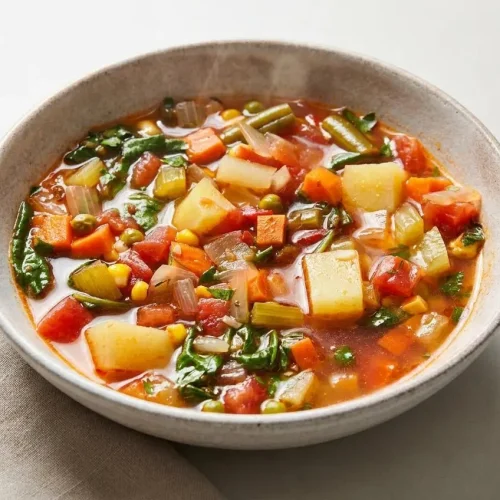
Vegetable Soup Recipe

Equipment
- Large pot or Dutch oven
- Chef knife
- Cutting board
- Wooden Spoon
Ingredients
- 3 tablespoons extra-virgin olive oil
- 1 large yellow onion chopped
- 3 medium carrots diced (about 2 cups)
- 2-3 large celery stalks diced (about 1 1/2 cups)
- 4 cloves garlic minced (about 2 tablespoons)
- 2 teaspoons fresh thyme or 1 teaspoon dried
- 1 1/2 teaspoons dried oregano
- 1 pinch crushed red pepper
- Kosher salt and black pepper
- 2-3 medium Yukon Gold potatoes diced (about 2 cups)
- 1 tablespoon tomato paste
- 8 cups vegetable broth (2 quarts)
- 1 can diced tomatoes (15-ounce)
- 1 cup frozen or fresh chopped green beans
- 1 cup frozen or fresh corn kernels
- 1 cup frozen or fresh green peas
- 2 cups baby spinach
- 1/3 cup chopped fresh parsley plus more for serving
- 1 tablespoon red wine vinegar
Instructions
- Warm the olive oil in a large pot or Dutch oven over medium heat, then add the onion, carrots, and celery and cook for about 10 minutes, stirring now and then. The vegetables should soften and smell sweet while still holding a little firmness, not turn deeply brown.
- Stir in the garlic, thyme, oregano, crushed red pepper, 1 teaspoon salt, or 2 teaspoons if you are using low-sodium broth, and 1 teaspoon black pepper, then cook for about 1 minute. Stop as soon as the garlic smells fragrant and the herbs bloom in the oil.
- Add the diced potatoes and tomato paste and cook for 2 to 3 minutes, stirring often to coat everything well. The tomato paste is ready when it darkens slightly and you catch that caramelized aroma from the bottom of the pot.
- Pour in the vegetable broth and diced tomatoes with their juices, bring the pot to a boil over medium-high heat, then lower the heat and simmer partially covered for 20 to 25 minutes. The potatoes should be fork tender with just a little resistance left in the center before they fully give way.
- Mix in the green beans, corn, and peas, return the soup to a simmer, and cook for 3 to 5 minutes more. The green beans should lose their raw edge but still keep shape and color.
- Take the pot off the heat and stir in the spinach, parsley, and red wine vinegar, then taste and adjust with more salt and pepper if needed. The spinach should turn a bright deep green and wilt quickly into the hot broth without overcooking.