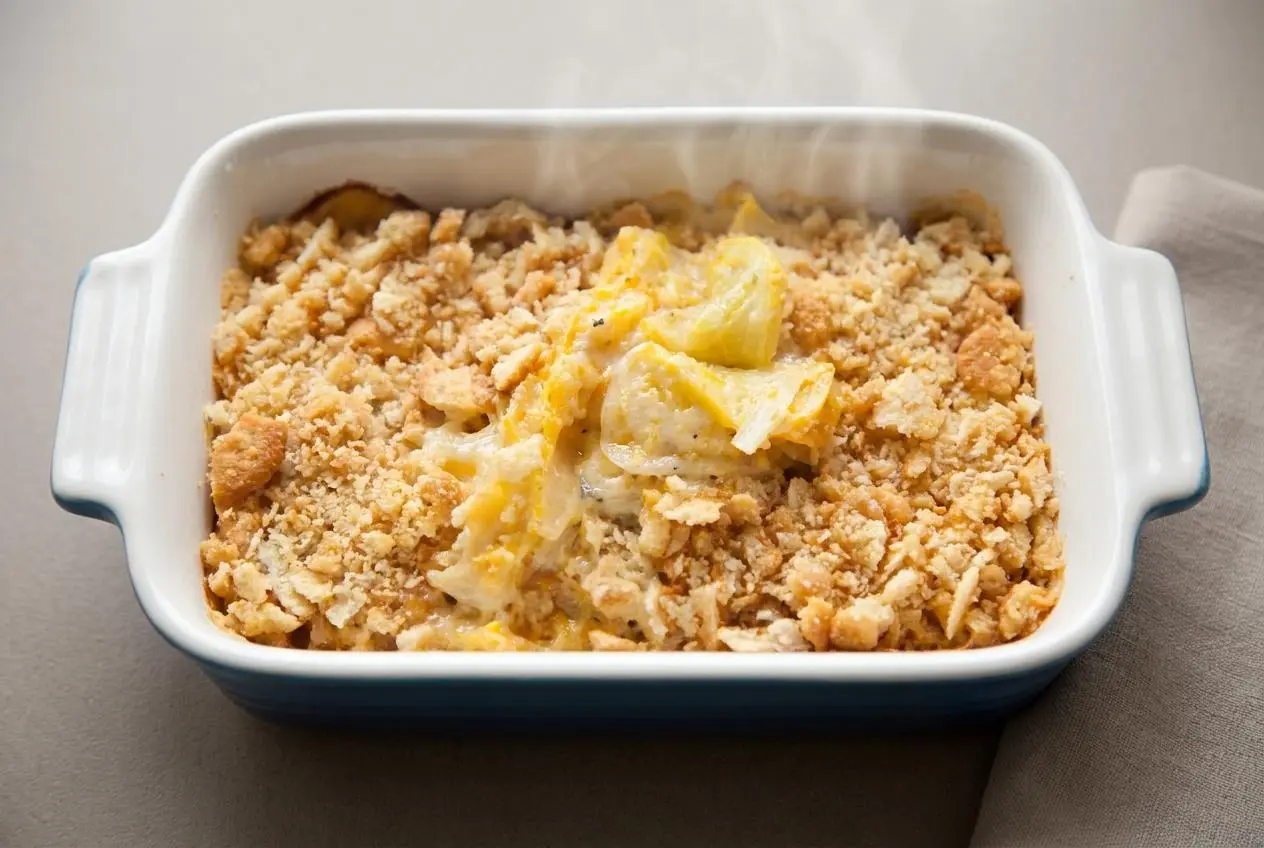
A classic squash casserole is made by sautéing sliced yellow squash and onion, mixing them with sour cream and cheese, then baking everything in a 2-quart dish with buttery cracker crumbs until golden and bubbly.
This squash casserole recipe is pure comfort food, with soft summer squash, sweet onion, sharp cheddar, and a buttery cracker top that turns crisp in the oven.
It’s especially good when you want that creamy center without a watery mess. The trick is in the skillet, and it makes all the difference.
Slice the squash evenly so it softens at the same pace and bakes up tender instead of mushy.
Ingredients You Need for Southern Squash Casserole
Each ingredient has a job here, from building a creamy filling to giving the top its toasted crunch and savory balance.
- 1 tablespoon Vegetable oil
- 6 medium thinly sliced yellow squash
- 1 large thinly sliced vidalia onion
- 1 tablespoon Butter
- 1/2 cup grated Parmesan cheese
- 1 cup shredded sharp cheddar cheese
- 1/2 cup Sour cream
- 1 sleeve crushed medium to fine buttery crackers
Yellow squash is the tender base, and thin slices help it cook down quickly in the skillet. Vidalia onion brings gentle sweetness that rounds out the squash instead of overpowering it. Sharp cheddar gives the casserole a bolder, tangier cheese flavor, while Parmesan adds saltiness and a deeper savory edge. Sour cream smooths everything together so the filling stays creamy under that buttery cracker crust.
I like to keep the squash slices close in thickness so the pan cooks evenly and you don’t end up with some pieces collapsing while others stay too firm.
If you’re planning a full holiday spread, the crunchy topping here fits right in with an easy green bean casserole.
The Best Summer Squash to Use
Look for medium yellow summer squash with smooth skin and a firm feel. Very large squash usually hold more water and more developed seeds, which can make the casserole looser and less pleasant.
Thin slices are important. They soften quickly, release moisture more evenly, and keep the finished casserole tender instead of chunky. If you want to use frozen squash, thaw it completely and squeeze out as much moisture as you can before it ever hits the skillet.
Choosing the Right Cheese Blend
Sharp cheddar works better than mild cheddar here because the sour cream softens the flavor of the filling. A mild cheese can fade into the background, while sharp cheddar still tastes cheesy after baking.
Parmesan gives the mixture savory backbone and helps keep the richness from tasting flat. If possible, shred the cheddar from a block. Pre-shredded cheese often melts less smoothly because of the anti-caking coating, so the filling may look a little grainier.
How to Make Squash Casserole Step-by-Step
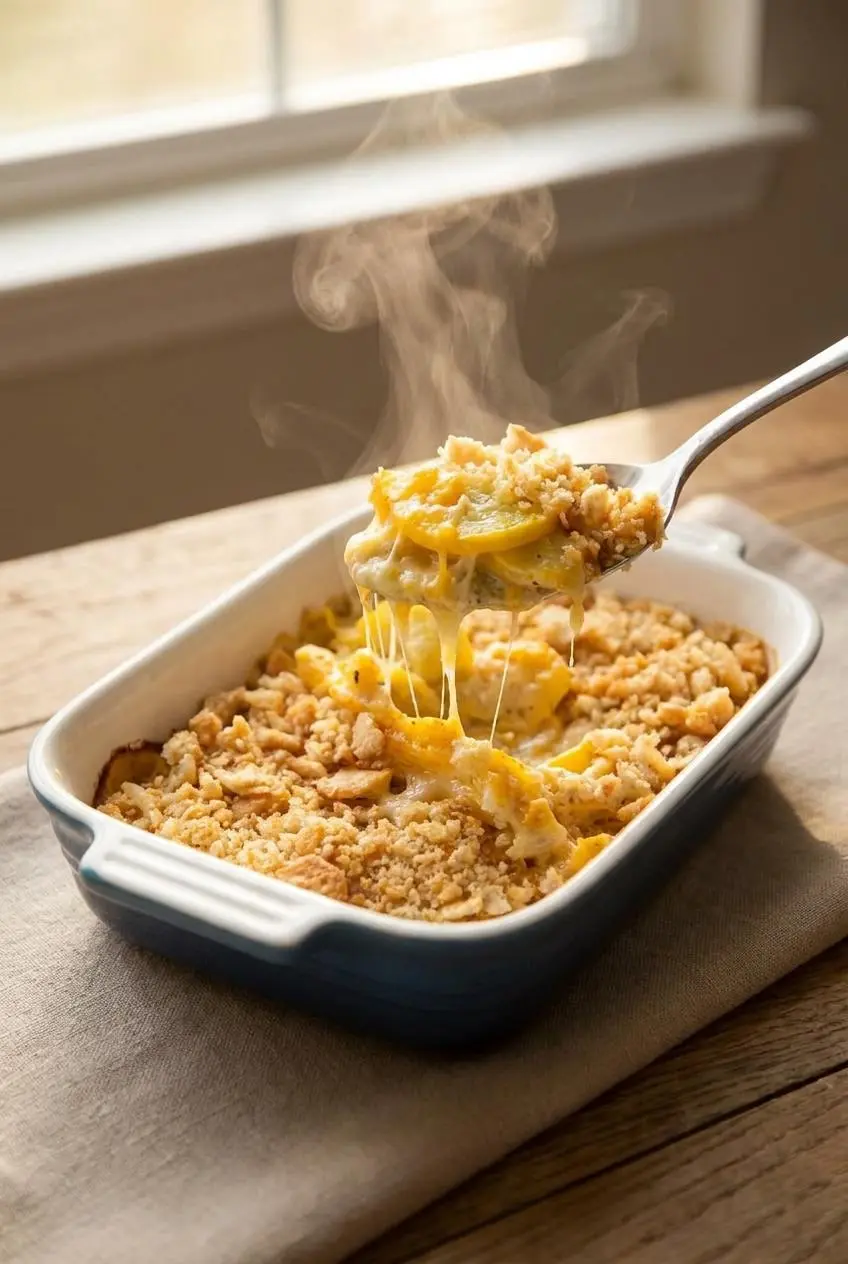
This method is straightforward, but the skillet stage matters most because it softens the vegetables and cooks off extra moisture before baking.
- Heat the oven to 350 degrees F and lightly grease a 2-quart casserole dish.
The dish should be ready before the filling is mixed so the warm squash goes straight from bowl to oven dish. - Warm the vegetable oil in a large skillet over medium heat, then add the yellow squash, vidalia onion, and butter.
Cook until the onions look translucent and the squash turns tender but still holds its shape instead of falling apart. - Move the cooked squash mixture to a bowl and stir in the Parmesan cheese, sharp cheddar cheese, and Sour cream, then season with salt and pepper to taste.
The residual heat should start melting the cheese, and the mixture will smell buttery and savory. - Spoon the mixture into the prepared casserole dish and scatter the crushed buttery crackers evenly over the top.
A level topping helps the casserole brown evenly instead of leaving pale patches and dark corners. - Bake for 20 minutes.
The casserole is ready when the cheese is bubbling around the edges and the cracker topping is golden brown.
For even more crunch, you can toss the cracker crumbs with a little melted butter before topping the casserole. Keep that move optional, though, because the recipe already bakes up rich and crisp.
How to Keep Squash Casserole from Getting Watery
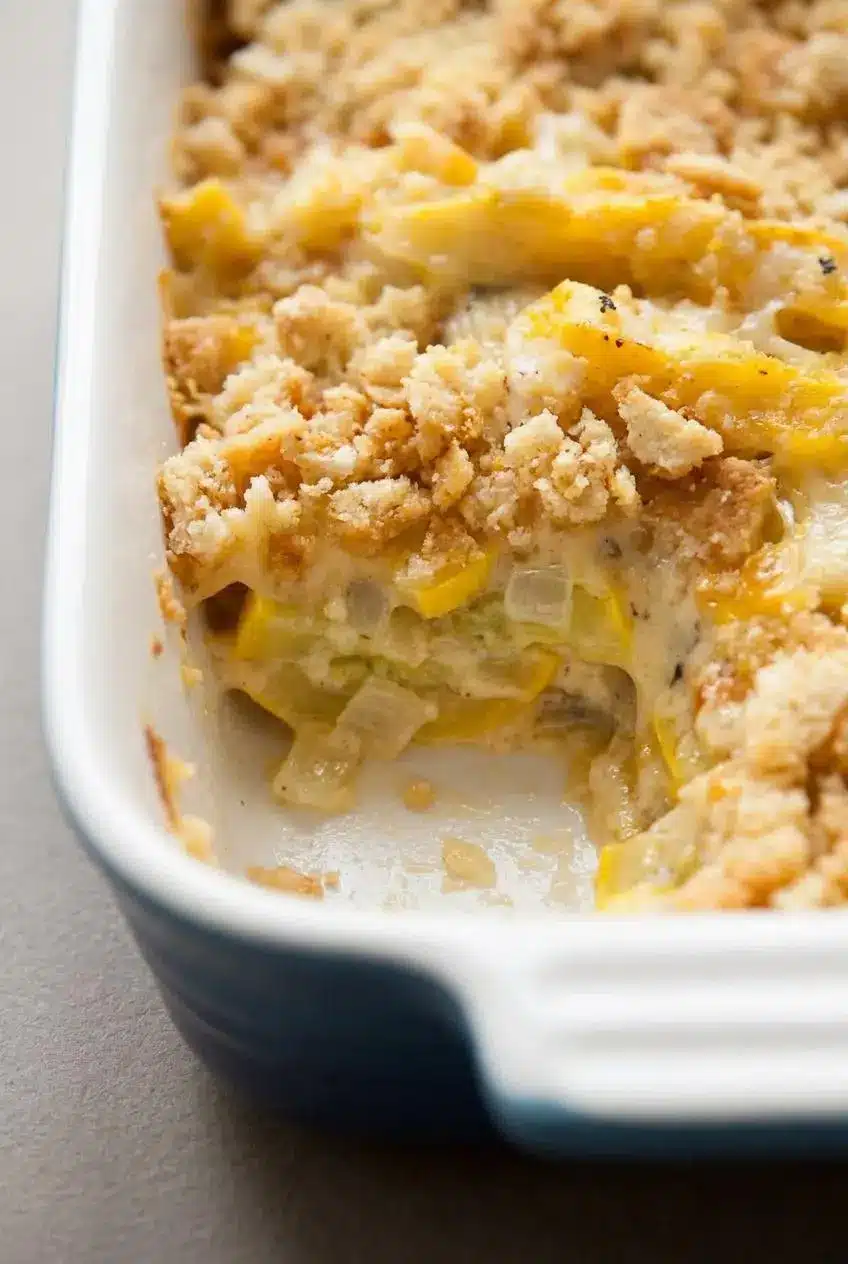
If your casserole has ever turned soupy, the squash is usually the reason. Yellow squash carries a lot of water, and that moisture rushes out once heat hits the pan and the oven.
The best fix starts before the casserole is mixed. As the squash and onion cook in the skillet, give them enough time to soften and release steam. You want the onions translucent and the squash tender-crisp, not raw-looking and not collapsing into mush.
- Salt lightly in the skillet if you want to draw out moisture faster. A small pinch helps the squash sweat, which makes it easier for extra liquid to evaporate.
- Do not rush the sauté. If the vegetables still look glossy and wet, keep cooking a bit longer so more moisture cooks off.
- Drain the squash mixture before adding the dairy if you see liquid pooled in the pan. A colander works well, and a gentle press helps without smashing the squash.
- Let the hot vegetables stop steaming heavily before stirring in sour cream and cheese. That keeps the filling creamy instead of loose.
- Do not use oversized squash unless that’s all you have. Bigger squash tends to carry more water and more seeds.
A watery casserole can also happen when it bakes uncovered too long. The topping may darken before the center sets properly, leaving you with burnt crackers and a thin filling. Pull it once the top is golden and the edges bubble.
Make-Ahead, Storage, and Reheating Guide
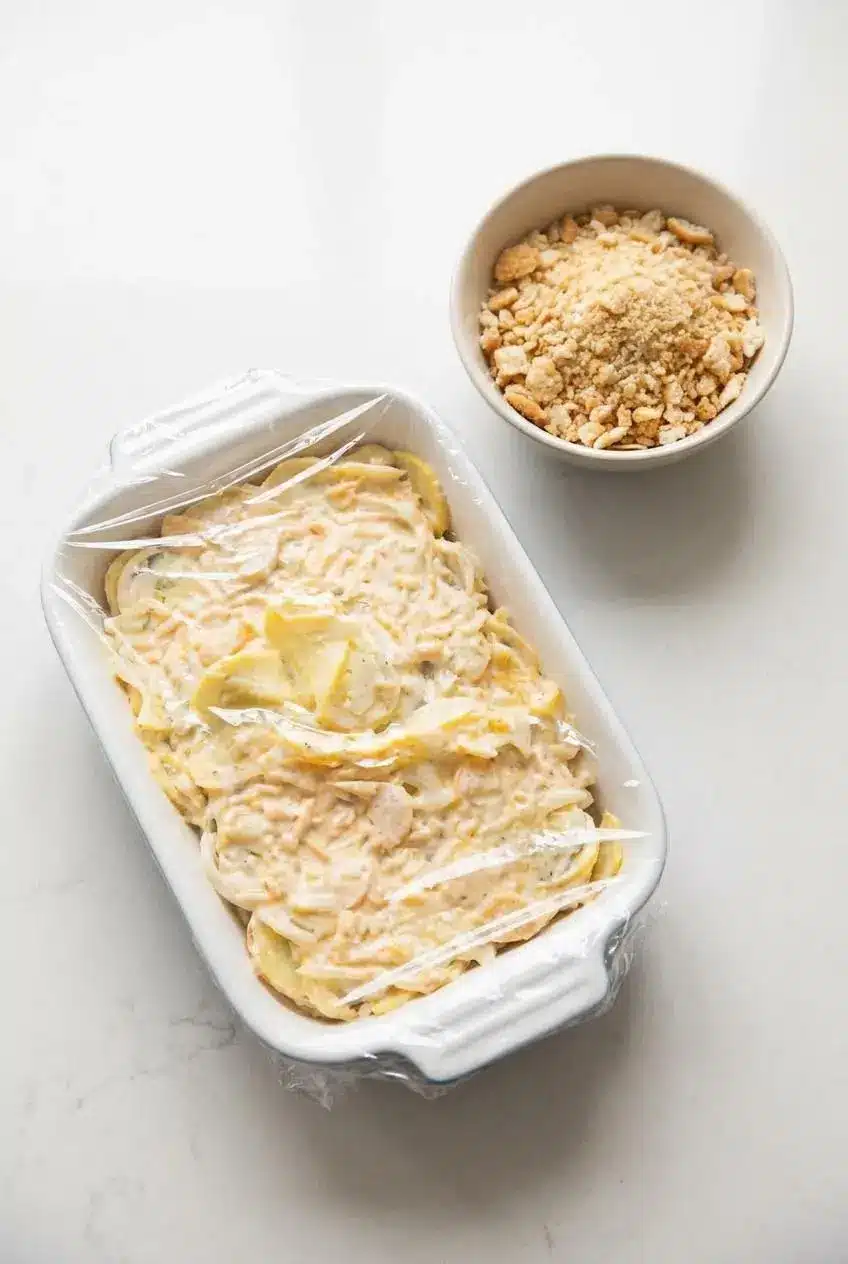
This casserole is easy to prep in stages, which is useful when the oven is crowded and the holiday sides keep lining up.
You can assemble the filling ahead and spread it in the casserole dish, but hold back the cracker topping until right before baking. That keeps the top from soaking up moisture and losing its crunch in the refrigerator.
If you want to stash leftovers, cool the casserole, cover it well, and keep it chilled. For dairy ingredients like cheese and sour cream, keep your refrigerator at 40 °F or below for safe refrigerated storage.
To reheat, warm portions in the oven rather than the microwave when you can. The oven helps the topping crisp back up, while the microwave tends to soften it.
If the top is already brown enough, loosely cover the dish for part of the reheating time so the crackers do not overdarken before the center is hot again. This casserole is happiest when reheated gently.
Southern Squash Casserole Variations
The classic version is rich and nostalgic, but a few optional changes can steer it in a different direction without changing the heart of the dish.
Fresh thyme leaves and a pinch of garlic powder pair nicely with the sweet Vidalia onion if you want a little more savory depth. You can also stir in cooked bacon for a smoky edge, swap Greek yogurt for sour cream for a tangier lighter feel, or add jalapeños if you want a little heat.
If you’d rather use green summer squash, this same method works beautifully in a cheesy zucchini casserole.
Gluten-Free Cracker Swaps
Regular buttery crackers usually contain gluten, so use a gluten-free buttery cracker if you need the casserole to fit gluten-sensitive guests. Crushed gluten-free crackers give the closest texture and flavor to the classic topping.
Crushed potato chips also work if you want a salty, crisp top with a little extra richness. Add them just before baking so they stay crunchy.
Dolly Parton-Style Squash Casserole
This variation leans heartier and a little more old-school Southern. It often includes cooked sliced carrots and stuffing mix, which makes the casserole feel fuller and slightly sweeter.
Because that version heads into stuffing territory, it’s a nice companion to a Southern cornbread casserole spread for potlucks and holiday meals. Keep it as a separate variation, though, since the texture and flavor are different from this cheddar-and-cracker style.
Conclusion
This casserole hits that sweet spot between creamy comfort and crisp topping, with tender squash, sweet onion, and plenty of cheesy flavor in every scoop.
It’s the kind of side dish that fits both summer suppers and holiday gatherings without fuss. Bring it to a potluck, pass it with roast turkey or pork chops, and don’t expect leftovers to linger.
Frequently Asked Questions
Can you make squash casserole ahead of time?
Yes. Assemble the squash and cheese mixture in the baking dish, cover it, and wait to add the cracker topping until just before baking. That keeps the top from turning soft in the refrigerator. It also helps the casserole bake up with better texture.
How do you keep squash casserole from getting soggy?
Cook the squash and onion thoroughly in a skillet first. That step releases moisture before it gets trapped in the casserole. If liquid collects in the pan, drain it off before mixing in the sour cream and cheeses. Using medium squash instead of very large ones also helps.
Can you freeze yellow squash casserole?
If you want the best texture, this recipe is better chilled and baked fresh than frozen. The cracker topping especially loses some of its crispness after freezing and thawing. If you need longer holding, keep the topping separate and add a fresh layer before baking or reheating.
Can I use zucchini instead of yellow squash?
Yes. Zucchini works as a direct substitute and cooks in much the same way. Treat it exactly like yellow squash in the skillet and drain it well, because zucchini can also release a lot of water.
Squash Casserole Recipe

Equipment
- 2-quart casserole dish
- Large Skillet
- Mixing Bowl
Ingredients
- 1 tablespoon Vegetable oil
- 6 medium thinly sliced yellow squash
- 1 large thinly sliced vidalia onion
- 1 tablespoon Butter
- 1/2 cup grated Parmesan cheese
- 1 cup shredded sharp cheddar cheese
- 1/2 cup Sour cream
- 1 sleeve crushed medium to fine buttery crackers
Instructions
- Heat the oven to 350 degrees F and lightly grease a 2-quart casserole dish. The dish should be ready before the filling is mixed so the warm squash goes straight from bowl to oven dish.
- Warm the vegetable oil in a large skillet over medium heat, then add the yellow squash, vidalia onion, and butter. Cook until the onions look translucent and the squash turns tender but still holds its shape instead of falling apart.
- Move the cooked squash mixture to a bowl and stir in the Parmesan cheese, sharp cheddar cheese, and Sour cream, then season with salt and pepper to taste. The residual heat should start melting the cheese, and the mixture will smell buttery and savory.
- Spoon the mixture into the prepared casserole dish and scatter the crushed buttery crackers evenly over the top. A level topping helps the casserole brown evenly instead of leaving pale patches and dark corners.
- Bake for 20 minutes. The casserole is ready when the cheese is bubbling around the edges and the cracker topping is golden brown.