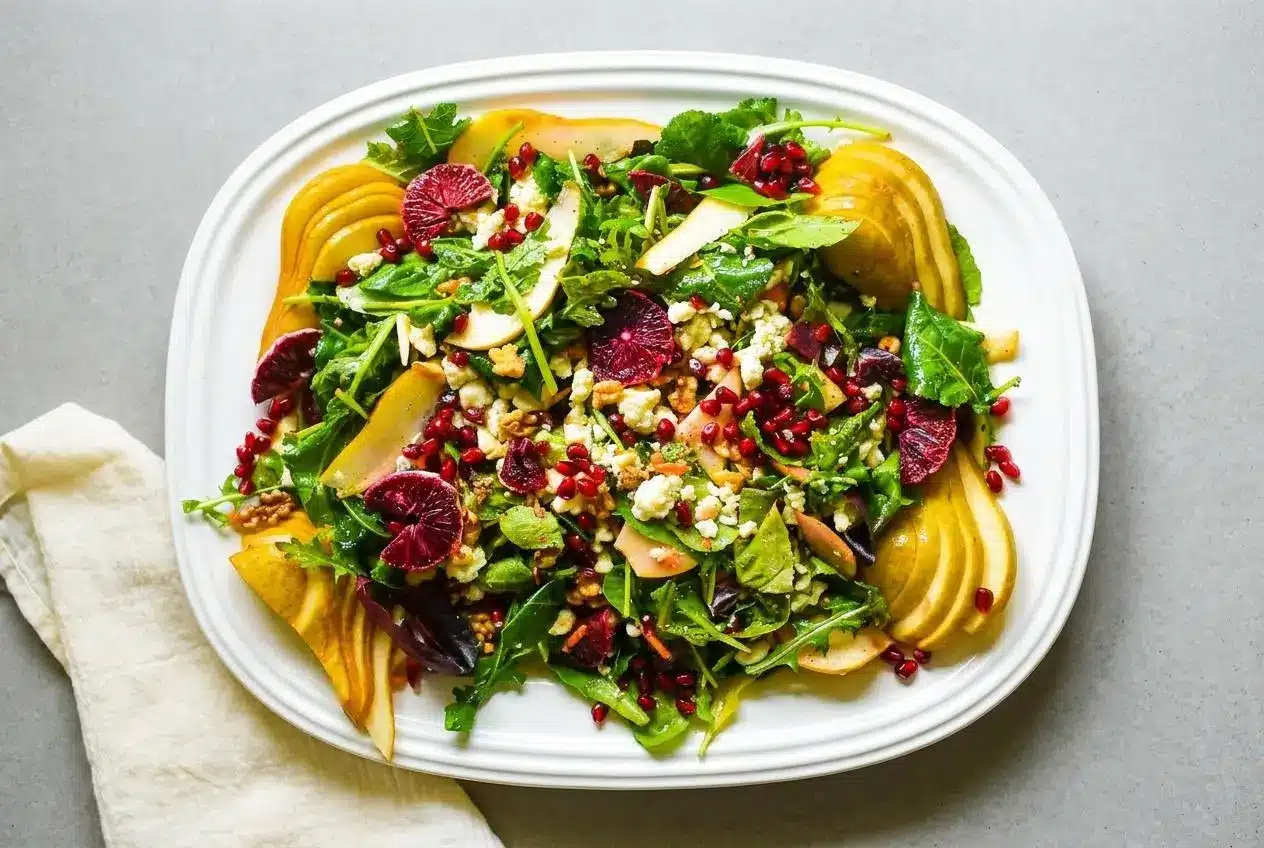
This blood orange salad combines juicy citrus, crisp greens, pears, gorgonzola, walnuts, and a sweet tangy poppy seed vinaigrette for a bright winter side that feels special but comes together fast.
Blood orange salad works so well because every bite hits a different note: sweet fruit, peppery greens, creamy cheese, bursts of pomegranate, and crunchy nuts. It looks fancy on the table, but the method is very doable.
The homemade dressing is the part that makes it sing, especially once the juice, oil, and poppy seeds turn silky and glossy. The color alone is worth pulling out the salad bowl.
Chill the oranges before cutting if you can, because cold citrus is easier to slice neatly and stays tidier on the board.
Why This Is the Best Blood Orange Salad
This version earns its place because it balances contrast in every direction. The blood oranges and pears bring sweetness and juiciness, the arugula adds a peppery edge, baby kale gives the bowl more body, and the gorgonzola brings savory richness that keeps the fruit from feeling too delicate.
The walnuts and pomegranate finish the job. You get crunch, little pops of tartness, and enough texture to keep the salad interesting from first forkful to last. Then the blood orange vinaigrette pulls everything together with bright citrus, a little sweetness from maple syrup, and a gentle nutty note from poppy seeds.
Key Ingredients for a Perfect Salad
If you want a blood orange salad that tastes balanced instead of flat, the key is choosing ingredients that each do a real job.
Blood oranges are the star. They’re usually sweeter and a little less sharp than standard oranges, with a berry-like note that makes the salad taste more layered. Their deep red flesh also makes the whole dish look striking without any extra effort. Different varieties can taste slightly different, from darker and bolder to more floral and mild, but any ripe blood orange will work beautifully here.
The greens matter just as much. Baby kale gives the salad some chew and structure, which helps it hold up under the dressing. Arugula adds a peppery bite that keeps the fruit from taking over. If you prefer a softer salad, spinach or a spring mix can stand in for one of the greens, but the kale and arugula combination gives the best balance of tender and lively.
The crunch comes from walnuts, and they do more than add texture. Their slight bitterness plays well with sweet citrus and pears, especially if you toast them first. Pistachios are another great optional choice in the variations section, but walnuts fit the savory direction of this version especially well.
For the creamy salty element, gorgonzola is bold and a little funky, which sounds dramatic but works here because the fruit is so fresh and sweet. If gorgonzola feels too assertive, feta gives a briny pop and goat cheese brings tangy creaminess. Those options are easy swaps when you want a different mood.
Ingredients for Blood Orange Salad
Each ingredient brings something useful here, whether that’s sweetness, peppery bite, creamy richness, juicy freshness, bright color, or the kind of crunch that keeps the salad lively.
For the Salad
- 2 blood oranges
- 2 pears
- 1 cup matchstick carrots
- 5 ounces baby kale
- 5 ounces arugula (or lettuce blend of your choice)
- 1 cup crumbled gorgonzola cheese
- 1/2 cup pomegranate arils
- 1 cup walnuts (halves or pieces)
For the Dressing
- 3 blood oranges
- 1/4 cup olive oil
- 3 tablespoons maple syrup (or sweetener of your choice)
- 3 tablespoons white vinegar
- 1 1/2 teaspoon poppy seeds
- 1/4 teaspoon ground ginger
- sea salt (to taste)
I like to chill the oranges before juicing and slicing because the segments stay firmer and the cuts come out cleaner.
The pears soften the sharper edge of the greens, while the carrots add a fresh snap and a little earthiness. Pomegranate arils brighten the whole bowl with tart little bursts, and the dressing uses blood orange juice instead of bottled citrus so the flavor tastes rounder and more vivid.
How to Make Blood Orange Salad
The best texture comes from building the salad in stages. Make the dressing first, coat the greens lightly, then fold in part of the toppings so every serving gets a little of everything.
- Juice the 3 blood oranges into a mason jar, then add the olive oil, maple syrup, white vinegar, poppy seeds, and ground ginger.
Seal and shake until the dressing looks evenly blended and lightly thickened, then taste and season with sea salt as needed. - Peel and slice 2 blood oranges, slice or chop the pears, and roughly chop the matchstick carrots if you want shorter pieces in the finished salad.
The fruit should look neat and juicy, and the smaller carrot pieces will distribute more evenly through the bowl. - Add the baby kale and arugula to a large mixing bowl and toss with enough dressing to coat the leaves.
The greens should look lightly glossy, not weighed down or puddled with dressing. - Add half of the blood orange slices, pears, carrots, gorgonzola, pomegranate arils, and walnuts, then toss again with tongs or two large spoons.
Lift from the bottom as you mix so the smaller ingredients don’t settle in one spot. - Transfer the salad to a shallow serving dish and scatter the remaining blood orange, pear, carrot, cheese, pomegranate, and walnuts over the top.
This last layer gives the salad a fuller look and makes sure the best pieces are visible in every serving.
How to Supreme an Orange (Step by Step)
If you want clean, tender pieces of citrus in salad, supreming is the best method. It removes the peel, pith, and membranes so you get juicy segments without bitterness or chewy edges.
Start by slicing a thin piece off the top and bottom of the orange so it sits flat on the cutting board. Stand it upright, then cut downward with a sharp knife, following the curve of the fruit to remove the peel and all the white pith.
Once the orange is fully peeled, hold it over a bowl or board and cut between each membrane to release the segments. Let the knife glide close to the membrane on both sides so the sections fall out cleanly. If you see white pith left behind, trim it away. That’s usually the source of bitterness.
Don’t toss the membrane bundle right away. Give it a squeeze over the dressing jar to catch the extra juice. It’s a tidy little bonus.
Homemade Dressings for Blood Orange Salad
A great dressing gives this salad its personality. The blood orange version is the natural match for the main recipe, but a couple of simple variations can take the same salad in totally different directions.
Poppy Seed Blood Orange Vinaigrette
This is the main dressing for the recipe, and it has a lot going for it. Blood orange juice gives it sweetness and tang, olive oil rounds it out, maple syrup smooths the edges, and white vinegar sharpens the finish so it doesn’t taste sugary. The poppy seeds add a light nuttiness and a tiny bit of texture.
When it’s properly mixed, the dressing turns from separate streaks of juice and oil into a unified, glossy vinaigrette. That visual cue matters. If it still looks split, shake or whisk a little longer.
The ground ginger works quietly in the background, adding warmth without making the dressing taste spicy. If you love citrus and ginger together, this salad also pairs nicely with orange and ginger cake for dessert.
Classic Balsamic Vinaigrette
If you want a darker, more savory dressing, balsamic is a good switch. Whisk balsamic vinegar with olive oil, a little mustard, and maple syrup or honey until smooth. The result is deeper, tangier, and slightly sweeter in a richer way than the blood orange version.
This option works especially well if you swap the gorgonzola for feta or add shaved fennel. It gives the salad more of a bistro feel.
Spicy Ginger & Cayenne Vinaigrette
For a sharper contrast, add extra ginger and a pinch of cayenne to a citrus vinaigrette. The sweet fruit keeps the heat from feeling aggressive, and the warmth makes the salad especially nice in cooler months.
Use a light hand with the cayenne. You want a little lift at the end of each bite, not a dressing that bulldozes the oranges. If you like adventurous flavor twists, a soy sesame dressing with chili threads can also work as an optional variation, though it takes the salad in a very different direction.
Tips for Perfect Results
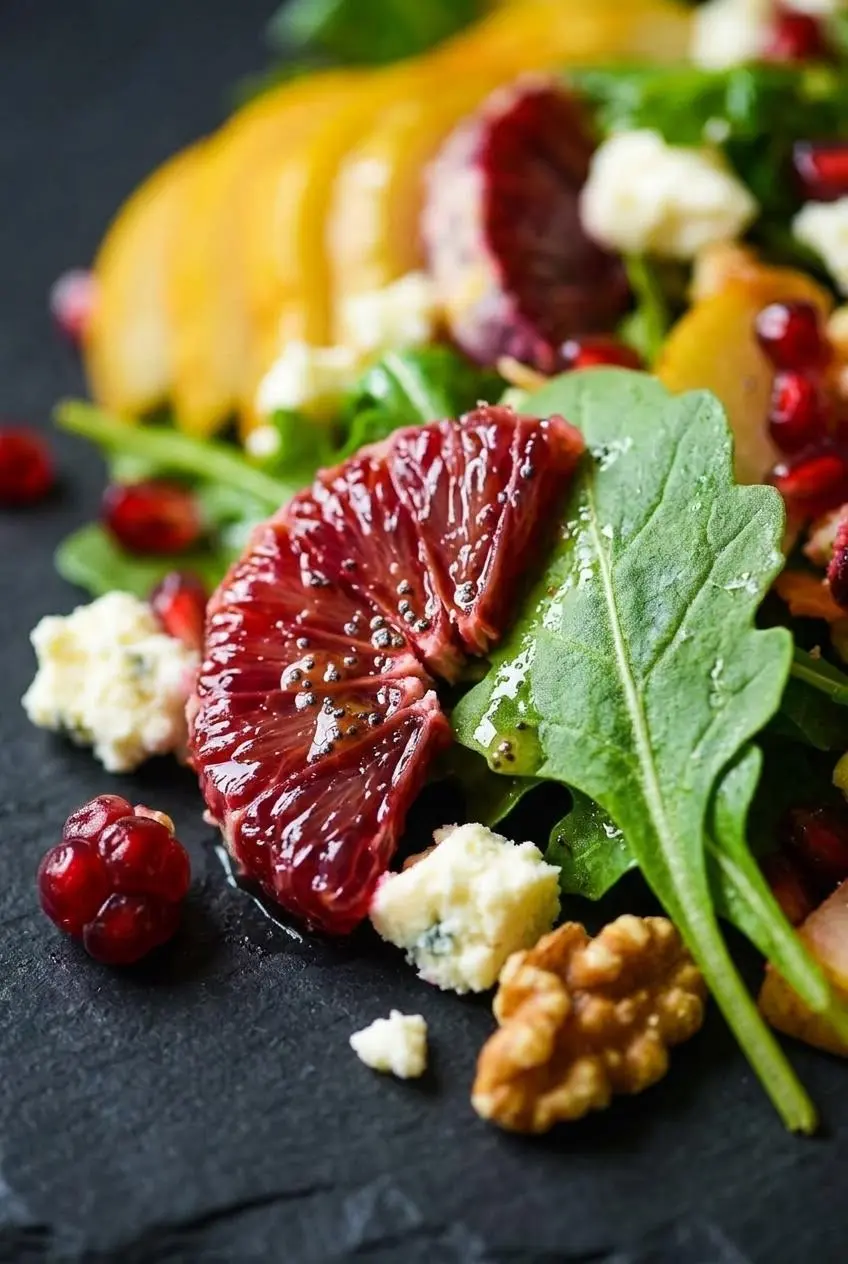
These small details make the difference between a crisp, balanced salad and one that turns watery or heavy.
| Issue to avoid | What causes it | How to fix it |
|---|---|---|
| Watery salad | Wet greens dilute the dressing | Wash the greens well, then dry them thoroughly before tossing. The FDA recommends washing produce under running water before prep, and good produce handling also includes clean hands and tools in the kitchen when washing fresh produce under running water. |
| Soggy greens | Dressing the salad too early | Toss the greens with dressing close to serving time so they stay lively and crisp. |
| Bitter citrus bites | Too much white pith left on the oranges | Supreme the oranges or trim them carefully so only the juicy flesh goes into the salad. |
| Flat flavor | Dressing needs better balance | Taste before using and adjust the salt or sweetness until the citrus tastes bright, not harsh. |
| Weak crunch | Untoasted walnuts | Toast the nuts briefly in a dry skillet until fragrant. You’ll hear a more brittle crunch when they hit the bowl. |
One more thing: don’t overdress. The leaves should glisten, not slump. You can always add another spoonful, but rescuing a flooded salad is much less fun.
Variations and Customizations
This salad is easy to steer in different directions without changing the core method. Keep the base recipe as written, then use these ideas when you want a different texture, flavor profile, or serving style.
Choosing the Best Cheese
The cheese sets the tone of the whole salad, so choose one that matches the mood you want.
| Cheese | Flavor | Texture | Best match |
|---|---|---|---|
| Gorgonzola | Bold, savory, a little pungent | Creamy and crumbly | Great with pears and walnuts |
| Feta | Salty and briny | Firm and crumbly | Nice if you want a brighter, sharper finish |
| Goat cheese | Tangy and mild | Soft and creamy | Lovely with citrus and avocado |
| Pan-seared halloumi | Salty and savory | Warm and chewy | Best when you want the salad to feel heartier |
Classic Blood Orange and Fennel Salad
Fennel is one of the best classic pairings for blood oranges. It adds a crisp, cool bite with a gentle anise note that makes the citrus taste even brighter. Slice it as thinly as possible so it blends into the salad instead of sitting in stiff chunks.
A mandoline is especially helpful here. Add the fennel as an optional extra along with the pears and carrots, or use it to replace the carrots if you want a more classic citrus-and-fennel feel.
Simple Sicilian Blood Orange Salad (No Greens)
This version goes in a totally different direction, and it’s worth knowing about. Skip the kale, arugula, pears, cheese, and walnuts. Arrange sliced or supremed blood oranges on a plate, add very thin red onion, drizzle with olive oil, then finish with salt, black pepper, and a little mint or basil if you like.
The result is clean, juicy, and fruit-forward. It’s especially good when the oranges are at their peak and you want the citrus to do all the talking.
Blood Orange Salad with Avocado and Feta
If you want a softer, creamier salad, avocado is the move. It smooths out the sharper edges of the greens and dressing, while feta adds a salty pop that keeps the whole thing from feeling too rich.
This is also a nice place to add a garnish of homemade candied orange peel if you want a sweet chewy finish and a little extra orange character on top.
What to Serve with Your Salad
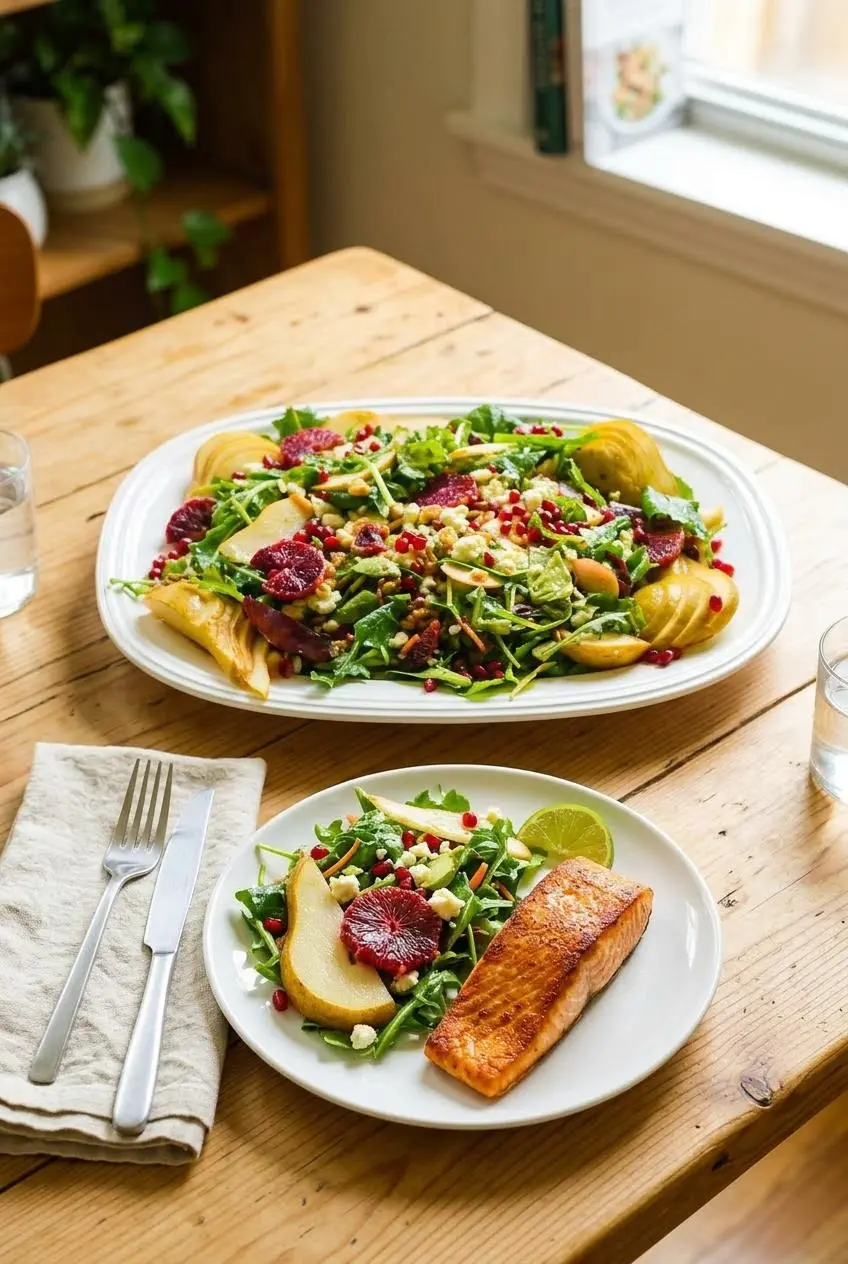
This salad plays well with mains because it’s bright enough to cut through richer dishes but still substantial enough to hold its own on the plate.
For a hearty dinner, serve it with roasted chicken, seared salmon, or grilled pork chops. The sweet citrus and peppery greens are especially good next to anything browned and savory. If you want to turn the salad into the main event, adding protein works beautifully.
| Protein | What it adds | Best for |
|---|---|---|
| Grilled chicken | Mild savory flavor and extra substance | Lunch or easy dinner |
| Sautéed shrimp | Quick-cooking sweetness and a lighter feel | A more elegant main course |
| Chickpeas | Earthy bite and a plant-based option | Meal-sized vegetarian salad |
For a cozy cold-weather meal, serve a smaller portion alongside a creamy vegetable soup and a side of cranberry orange bread. If you’re planning dessert, Orange Olive Oil Cake keeps the citrus theme going without feeling heavy.
Storage and Make-Ahead Instructions
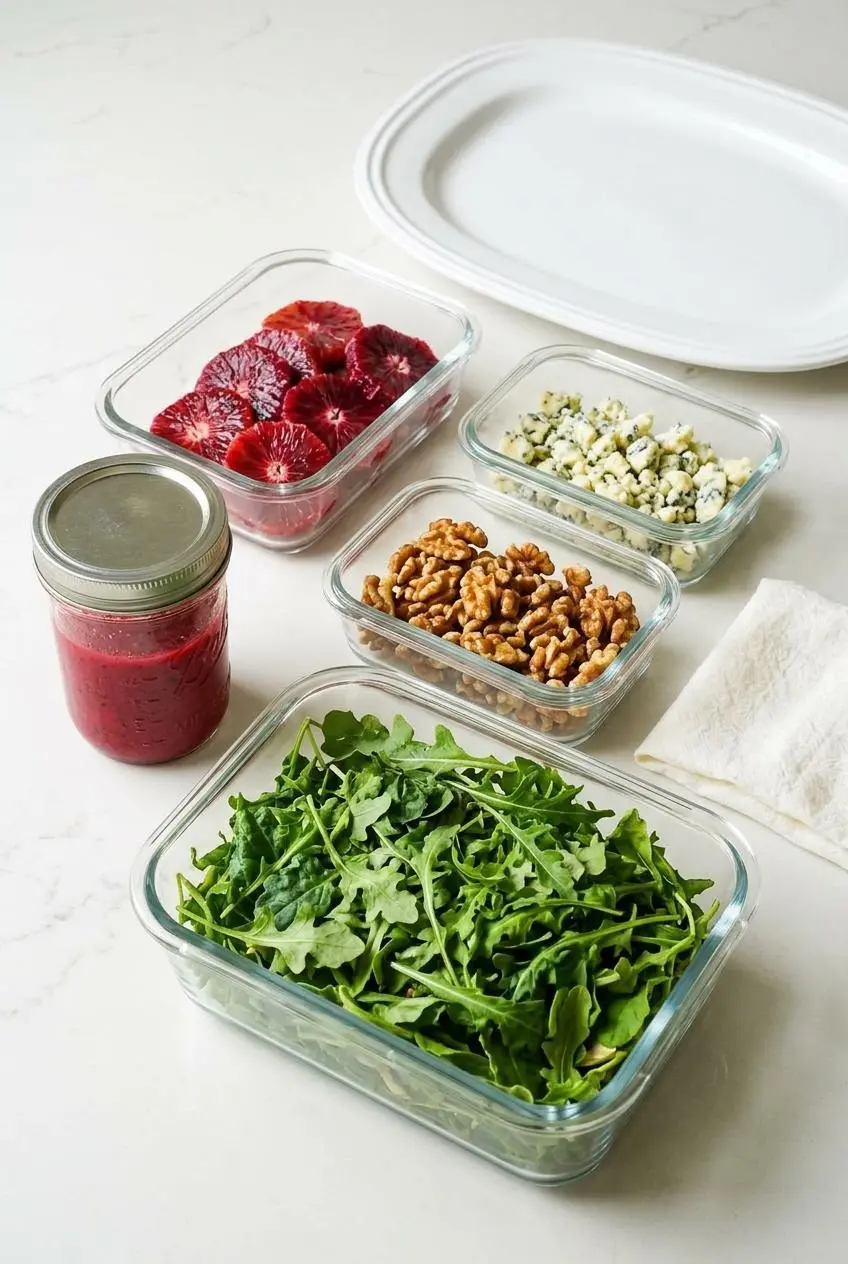
This salad is easiest to manage when you store the components separately and assemble close to serving time.
- Keep the dressing in a sealed jar in the refrigerator. If it separates, shake it again before using.
- Wash and dry the greens well, then refrigerate them in a container lined with a dry towel or paper towel to help protect their texture.
- Slice the fruit, prep the carrots, and portion the cheese and walnuts ahead if needed, but store each component separately so the salad stays fresh and crisp.
- Once dressed, the salad is at its best the same day. Leftovers should be kept chilled, and the greens will soften as they sit.
Conclusion
This is the kind of salad that looks dramatic on the table but stays refreshingly practical in the kitchen. Fresh citrus, balanced greens, and a homemade dressing do most of the work for you.
If you remember one thing, make it this: keep the greens dry and dress the salad right before serving. That one move keeps every bite bright, crisp, and worth coming back for.
Frequently Asked Questions
What cheese goes best with blood orange salad?
Salty and tangy cheeses are the best match. Feta adds a briny bite. Goat cheese makes the salad softer and creamier. Gorgonzola gives bold savory depth, especially with pears and walnuts. Pan-seared halloumi is a great warm option when you want a heartier salad.
How do you cut a blood orange for a salad?
The best way is to supreme it. Slice off the top and bottom. Cut away the peel and white pith by following the curve of the fruit. Slice between the membranes to release the segments. This gives you juicy pieces without the bitter pith or chewy membrane.
Can I make this salad ahead of time for a party?
Yes, with one important rule: keep the parts separate until close to serving. Make the dressing ahead and keep it chilled. Wash and dry the greens thoroughly before storing them. Prep the fruit, cheese, and nuts separately. Toss everything together right before serving so the greens stay crisp.
What is the season for blood oranges?
Blood oranges are generally considered a winter citrus. You’ll usually spot them in the colder months. The exact timing can vary by variety and growing region. Look for oranges that feel heavy for their size and have richly colored flesh when cut. If they taste sweet with a slight berry note, they’re ready for salad duty.
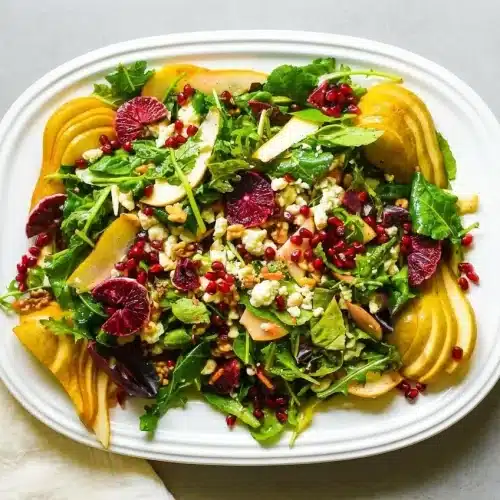
Blood Orange Salad

Equipment
- Cutting board
- Knife
- Mason jar or airtight container
- Mixing Bowl
- kitchen tongs or two kitchen spoons
- shallow serving dish
Ingredients
For the Salad
- 2 blood oranges
- 2 pears
- 1 cup matchstick carrots
- 5 ounces baby kale
- 5 ounces arugula or lettuce blend of your choice
- 1 cup crumbled gorgonzola cheese
- 1/2 cup pomegranate arils
- 1 cup walnuts halves or pieces
For the Dressing
- 3 blood oranges
- 1/4 cup olive oil
- 3 tablespoons maple syrup or sweetener of your choice
- 3 tablespoons white vinegar
- 1 1/2 teaspoon poppy seeds
- 1/4 teaspoon ground ginger
- sea salt to taste
Instructions
- Juice the 3 blood oranges into a mason jar, then add the olive oil, maple syrup, white vinegar, poppy seeds, and ground ginger. Seal and shake until the dressing looks evenly blended and lightly thickened, then taste and season with sea salt as needed.
- Peel and slice 2 blood oranges, slice or chop the pears, and roughly chop the matchstick carrots if you want shorter pieces in the finished salad. The fruit should look neat and juicy, and the smaller carrot pieces will distribute more evenly through the bowl.
- Add the baby kale and arugula to a large mixing bowl and toss with enough dressing to coat the leaves. The greens should look lightly glossy, not weighed down or puddled with dressing.
- Add half of the blood orange slices, pears, carrots, gorgonzola, pomegranate arils, and walnuts, then toss again with tongs or two large spoons. Lift from the bottom as you mix so the smaller ingredients don’t settle in one spot.
- Transfer the salad to a shallow serving dish and scatter the remaining blood orange, pear, carrot, cheese, pomegranate, and walnuts over the top. This last layer gives the salad a fuller look and makes sure the best pieces are visible in every serving.