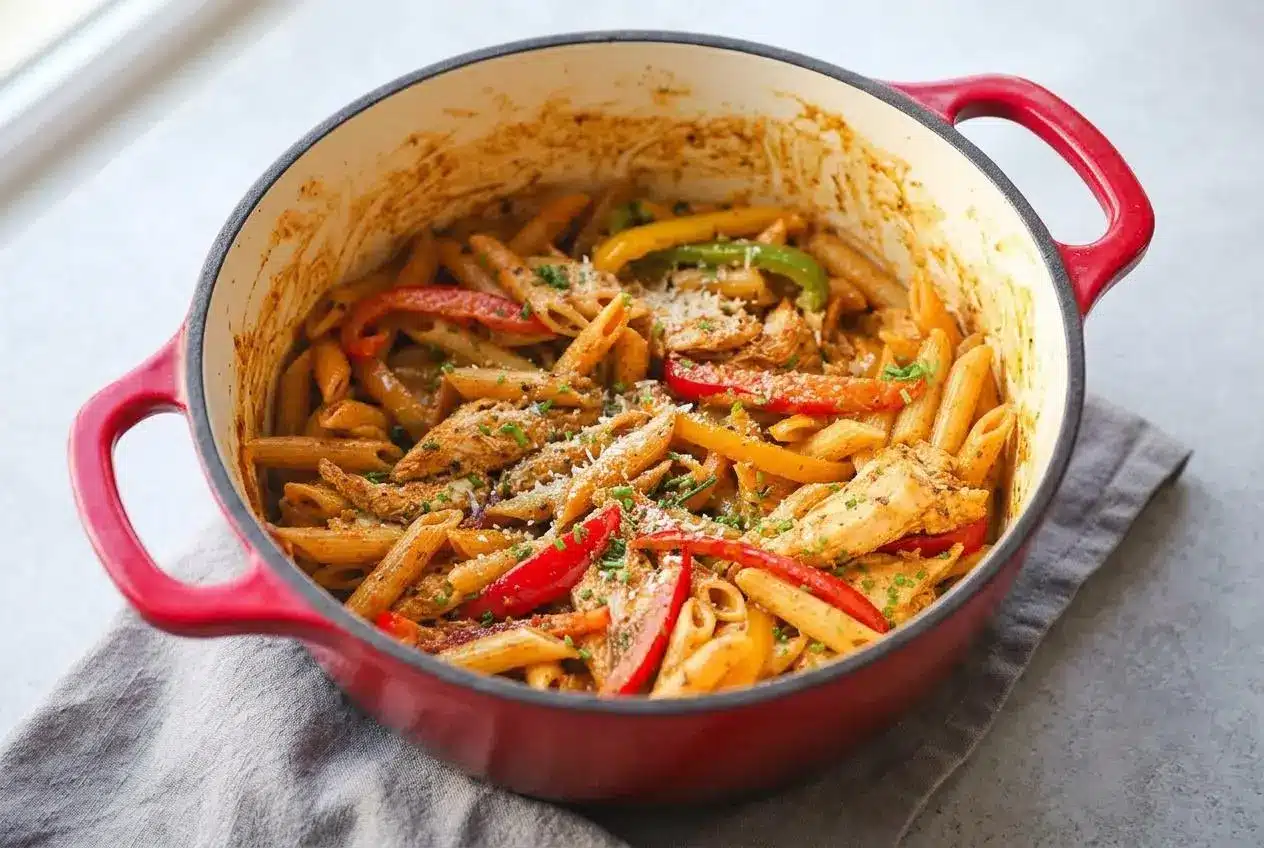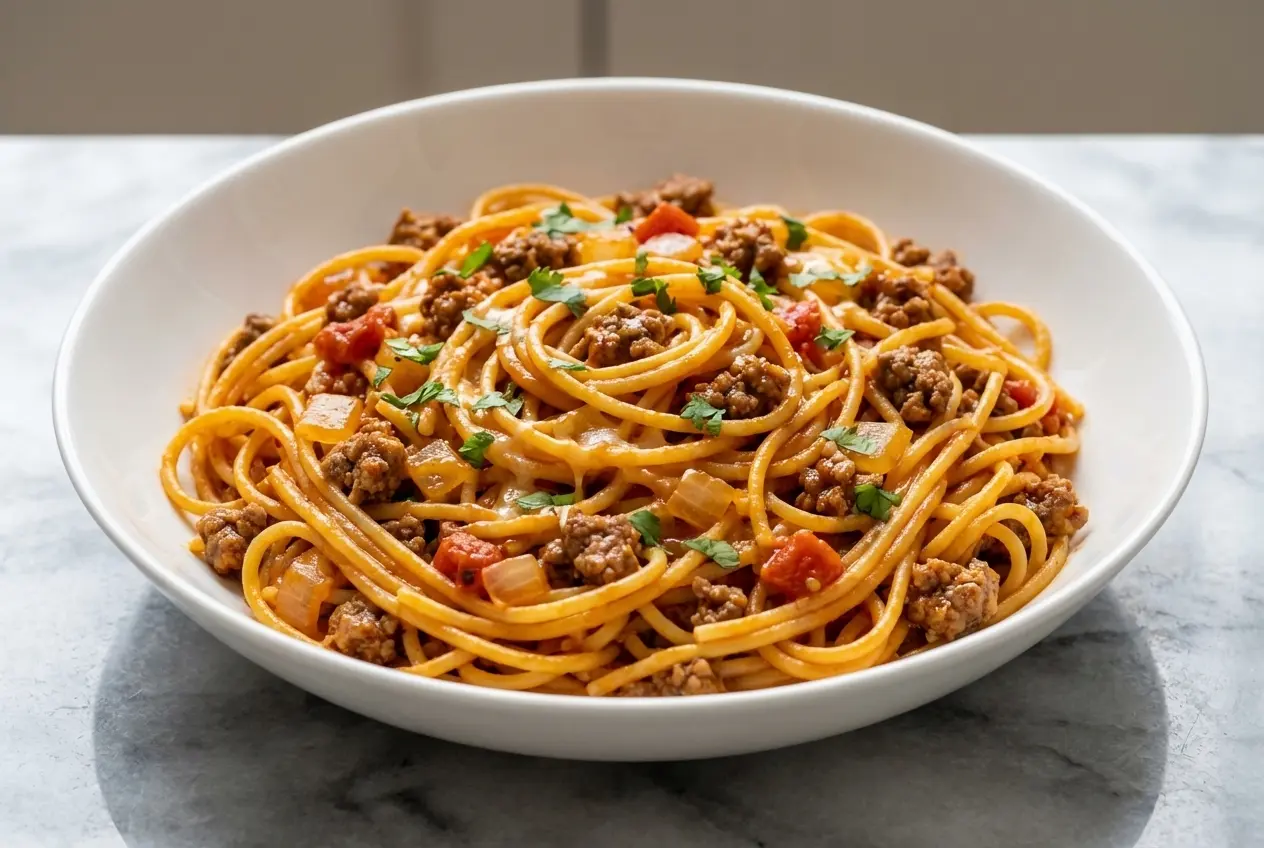
Some nights, dinner needs to do two jobs at once, it has to taste like comfort food and still come together fast enough for a real weeknight. That is exactly where One Pot Taco Spaghetti shines in my kitchen, especially when everyone wants bold taco flavor but also craves a creamy bowl of pasta.
This version leans into smoky depth and a richer finish, so it feels a little more thoughtful than the usual quick skillet dinner. It is perfect for busy families, hungry teenagers, and anyone who loves a one-pot meal that tastes hearty, zesty, and far more special than the effort suggests.
Why You’ll Love This Recipe
Big smoky flavor: A little smoked paprika gives the taco seasoning a deeper, almost chorizo-like edge. I discovered that this small addition makes the ground beef taste fuller and more savory without making the dish complicated.
The secret deglaze: A splash of Mexican lager loosens the browned bits from the Dutch oven and folds all that flavor back into the sauce. In my kitchen, this is the difference between a good taco pasta and one with real depth.
True one-pot ease: The spaghetti cooks right in the same pot as the beef, tomatoes, and seasoning, so cleanup stays blissfully simple. That starch released from the pasta also helps build a creamier texture.
Creamy but balanced: Rotel tomatoes bring brightness and a little zip, while cream cheese gives the sauce a velvety finish. The result is cheesy and cozy, but never heavy or flat.
Ingredients and Substitutions
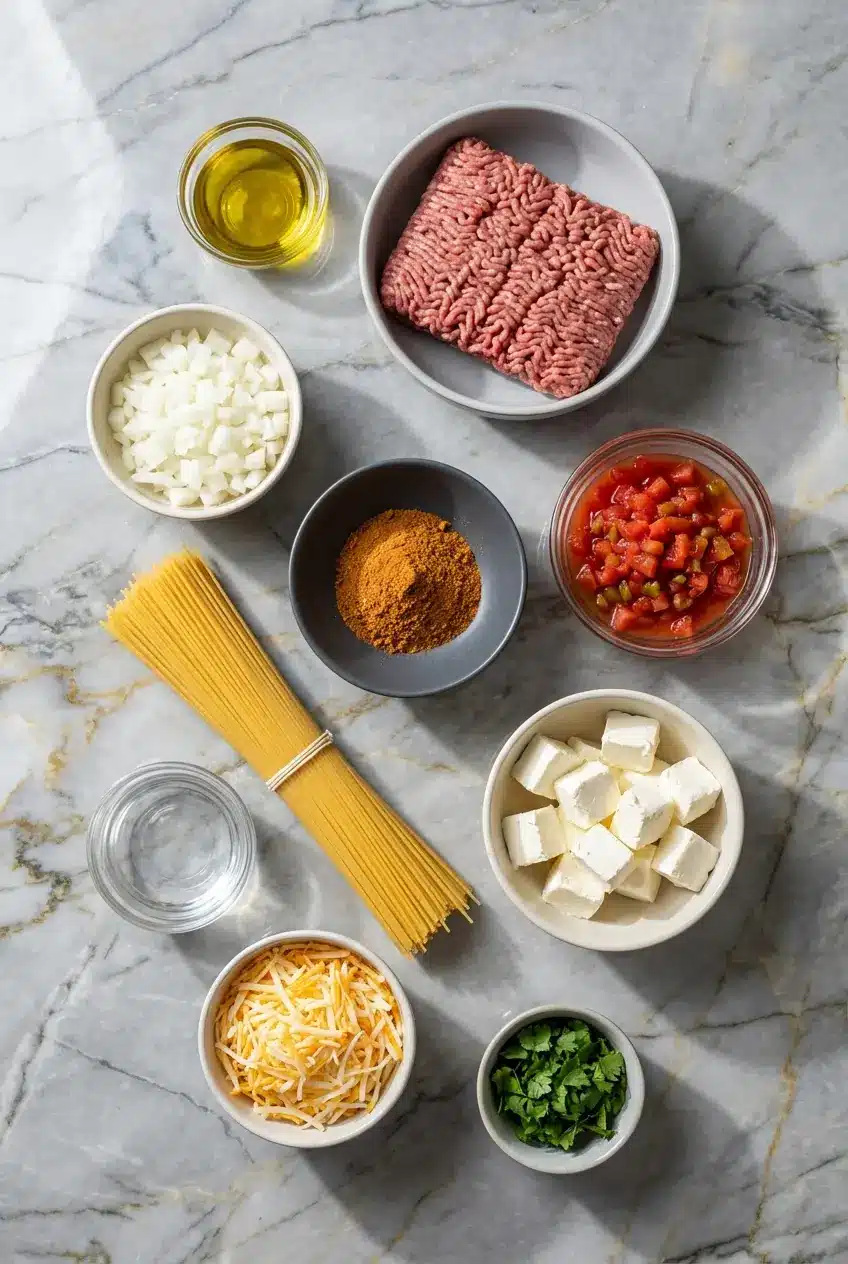
This pantry-friendly lineup keeps dinner easy, but each ingredient still pulls its weight, from the seasoned beef base to the creamy cheese finish and fresh cilantro on top.
Ingredients
- 1 tablespoon olive oil
- 1 pound lean ground beef
- 1/2 cup onion (diced)
- 1 1 oz package taco seasoning
- 10 ounce can diced tomatoes and chilies
- 8 ounces spaghetti noodles
- 3 cups water
- 4 ounces cream cheese (softened, cut into cubes)
- 1/2 cup Mexican blend cheese (shredded)
- 2 tablespoons fresh cilantro (chopped)
Ingredient Notes & Substitutions
Ground beef: I like 90/10 or 92/8 lean ground beef for this kind of one-pot pasta because it gives you enough flavor without leaving a greasy film in the sauce. If you use a fattier blend, the final texture can feel heavier than you want.
Spaghetti: Traditional spaghetti gives this dish its signature look, but rotini or penne can work if that is what you have on hand. Just keep an eye on the pot, because short pasta shapes can absorb liquid a little differently and may need a small splash more or less.
Taco seasoning: Store-bought seasoning is the shortcut that makes this weeknight-friendly, and it works beautifully here. If your blend is especially salty or spicy, taste the finished sauce before adding any extra cheese or garnishes.
Diced tomatoes and chilies: Rotel tomatoes are my usual pick because they bring acidity, mild heat, and enough liquid to brighten the beefy base. If you want a gentler version for kids, choose the mild or original style.
Cream cheese: This is what gives the sauce its creamy, clingy finish. For a dairy-free version, unsweetened cashew cream or a dairy-free cream cheese alternative can step in, though the final sauce may be a touch looser.
Mexican blend cheese: A blend with Monterey Jack melts smoothly and adds that classic taco-night feel. If needed, cheddar and Monterey Jack on their own also work well, as long as you melt them in after the pot comes off the heat.
Optional twist ingredients: I often add 1/2 teaspoon smoked paprika with the taco seasoning and deglaze the pot with 1/4 cup Mexican lager before the tomatoes go in. If you prefer to skip alcohol, use a little extra beef broth with a squeeze of lime for brightness.
Vegetarian swap: Black beans or crumbled tempeh make a solid meat-free variation when you still want that taco-style profile. A tiny splash of soy sauce can help replace some of the savory depth you lose without beef fat.
How to Make One Pot Taco Spaghetti
Brown the Beef Base
- Set a large Dutch oven over medium-high heat and warm the olive oil until it looks fluid and shimmery. Add the ground beef, diced onion, and taco seasoning, then cook for 3 to 5 minutes, breaking the meat into small pieces as it browns.
- Keep cooking until the beef is no longer pink and some bits start to take on deeper brown edges rather than staying gray. If you are using the smoked paprika twist, stir it in here so it toasts briefly in the beef fat and smells warm and smoky.
- If you want the extra layer of flavor, pour in the Mexican lager once the meat is nicely browned. Scrape the bottom of the pot with a wooden spoon so all those caramelized bits dissolve back into the pan.
Simmer the Pasta
- Stir in the diced tomatoes and chilies so the beef mixture turns saucy and glossy. Break the spaghetti noodles in half, nestle them into the pot, and pour in the 3 cups of water.
- Bring everything to a boil, then cover the pot and lower the heat to medium-low. Let it simmer for 12 minutes, stirring at least twice during that time so the noodles do not clump and the starch can help thicken the sauce.
- By the end of the simmer, the spaghetti should be nearly cooked through and tender with just a little bite left in the center. If the pot looks dry before the pasta is ready, add a small splash of warm water and continue gently.
Finish the Sauce
- Add the cubed cream cheese, cover again, and let the pasta simmer for another 2 minutes until the cubes look softened and ready to melt into the sauce.
- Take the pot off the heat and stir until the cream cheese disappears into a creamy coating. Mix in the shredded Mexican blend cheese while the pasta is hot but no longer boiling, so it melts smooth instead of turning oily.
Rest and Serve
Let the One Pot Taco Spaghetti sit for 2 to 3 minutes before serving. That short rest helps the sauce emulsify and tighten around the noodles, giving you a glossy, creamy finish instead of a loose pool at the bottom of the bowl, then top with fresh cilantro and extra cheese if you like.
Chef’s Secrets for the Perfect Creamy Sauce
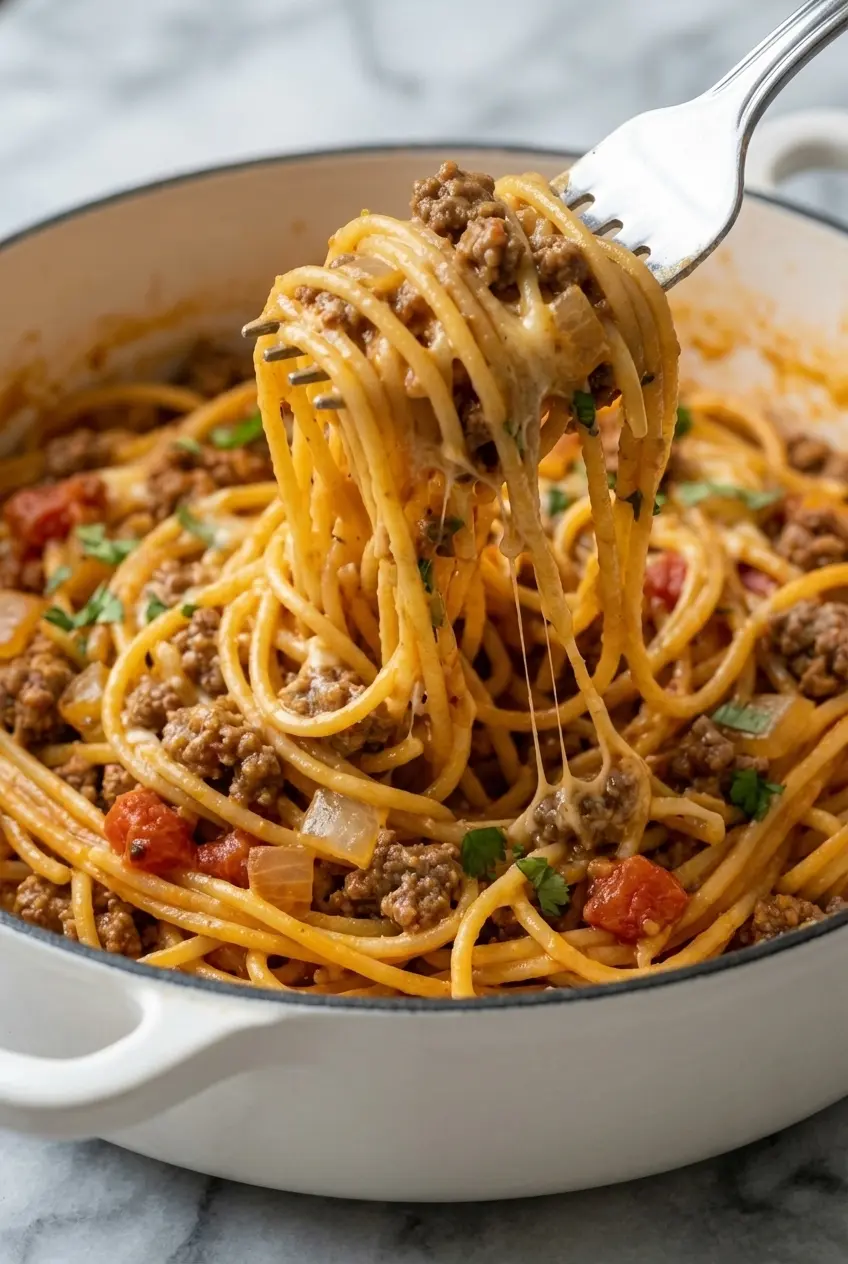
The biggest trick with one-pot pasta is managing the liquid at the end, not just at the start. If your sauce looks too thin after the cheese goes in, let it sit uncovered for about 2 minutes or return it to a gentle simmer briefly, but if it gets too thick, loosen it with a splash of warm water or broth.
Starch is doing a lot of heavy lifting here, so do not skip stirring during the 12-minute simmer. Those quick stirs help keep the spaghetti separate, prevent sticking on the bottom of the Dutch oven, and encourage the sauce to cling instead of sliding off the noodles.
The final cheese should always go in off the boil. If the pot is bubbling hard when you add shredded cheese, the fat can separate and leave the sauce grainy or slick rather than creamy.
The Science of One-Pot Pasta Emulsification
When spaghetti cooks directly in the seasoned liquid, it releases starch into the pot instead of sending it down the drain. That starch acts like a quiet helper, binding the moisture from the tomatoes with the fat from the beef and cheese into a sauce that feels silky and cohesive.
This is why a one-pot meal often tastes fuller than a version made with separately boiled pasta. The same idea shows up in dishes like chicken parmesan pasta, where the starch stays in the pan and naturally thickens the sauce rather than being lost with the cooking water.
In practical terms, emulsification is what gives you that creamy coating on every strand instead of watery liquid underneath. There is even a scientific study on starch-based emulsification that helps explain why starch and cheese behave so much better together when the heat is controlled and the liquid ratio is right.
Selecting the Best Ground Beef for One-Pot Meals
In a skillet recipe, you can always drain off extra fat, but in a one-pot pasta that fat stays in the sauce. That is why I reach for 90/10 or 92/8 ground beef here, because it keeps the flavor rich while letting the tomatoes, taco seasoning, and cheese stay clean and balanced.
The choice matters in other fast dinners too, and the same logic applies in a simple ground beef bowl, where too much fat can muddy the final flavor. Leaner beef gives you better control, especially once starch and dairy come into play.
Another advantage of the right beef is how well it carries spices. When taco seasoning blooms in a little rendered beef fat, the aroma becomes rounder and more pronounced, and both understanding meat labels and current flavor enhancement research support how fat level and spice use can shape the overall eating experience.
Pro Tips & Troubleshooting
Pro Tips
- Break the spaghetti in half before adding it so the noodles fully submerge and cook evenly.
- Stir the pasta at least twice during the 12-minute simmer to release starch and keep it from sticking together.
- Use beef broth instead of water when you want a stronger, more savory backbone.
- Let the pasta rest for 2 to 3 minutes before serving so the sauce can tighten around the noodles.
- Finish with fresh cilantro and a squeeze of lime if you want to cut through the richness of the cheese.
Common Mistakes to Avoid
- Stopping the browning too soon. The beef should have some crisp, browned spots for the best flavor, not just a dull gray color.
- Keeping the heat too high during the simmer, which can evaporate the liquid before the spaghetti turns tender.
- Adding shredded cheese while the pot is still boiling, which can make the sauce greasy instead of smooth.
- Overcooking the pasta. Pull it when it is nearly al dente because residual heat will keep softening the noodles.
- Ignoring the sauce consistency at the end. If it looks thin, simmer briefly uncovered, and if it looks tight, stir in a splash of warm liquid.
Serving & Storage
Serving Ideas
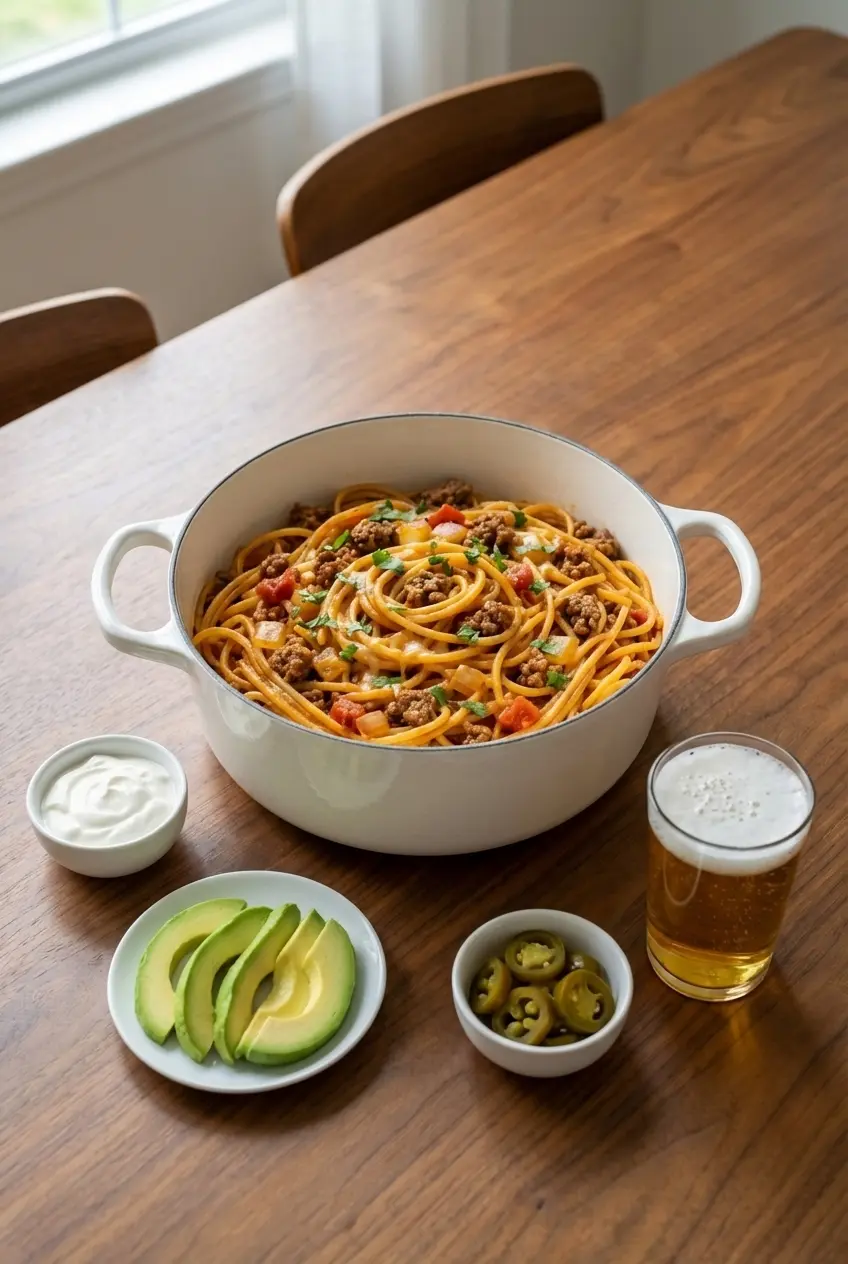
This creamy taco spaghetti loves a cool, fresh finish. I often top it with sour cream, sliced avocado, pickled jalapeños, or crushed tortilla chips for contrast, because that crunchy layer makes the creamy noodles even more satisfying.
For a fuller spread, I like pairing it with something sweet and savory on the side, like cornbread poppers, which balance the smoky spices beautifully. If the meal is part of a casual game night or family gathering, a warm appetizer such as jalapeno corn dip fits right in without stealing the spotlight from the main dish.
Storage & Reheating
Store leftovers in an airtight container in the fridge for up to 3 days. The noodles will keep absorbing sauce as they sit, so do not be surprised if it looks thicker the next day.
For reheating, I always add about 1 tablespoon of milk, water, or broth before microwaving. That little splash wakes the starches back up and helps restore the creamy consistency instead of leaving the pasta dry and tight.
Freezing is possible, but cream-based sauces tend to lose their smooth texture after thawing. In my experience, this dish is best fresh or from the fridge, where the sauce still holds together nicely.
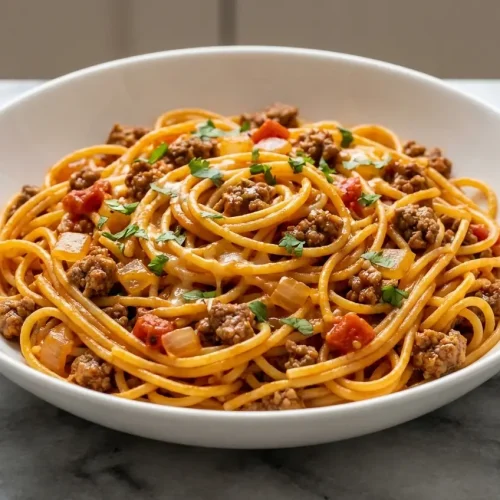
One Pot Taco Spaghetti

Equipment
- Dutch oven
- Wooden Spoon
Ingredients
- 1 tablespoon olive oil
- 1 pound lean ground beef
- 1/2 cup onion (diced)
- 1 1 oz package taco seasoning
- 10 ounce can diced tomatoes and chilies
- 8 ounces spaghetti noodles
- 3 cups water
- 4 ounces cream cheese (softened, cut into cubes)
- 1/2 cup Mexican blend cheese (shredded)
- 2 tablespoons fresh cilantro (chopped)
Instructions
Brown the Beef Base
- Warm the olive oil in a large Dutch oven over medium-high heat. Add the ground beef, diced onion, and taco seasoning. Cook for 3 to 5 minutes while breaking the meat into small pieces.
- Continue cooking until the beef is no longer pink and begins to develop browned edges. If using smoked paprika, stir it in now to toast it briefly in the beef fat.
- Optional: Pour in a splash of Mexican lager to deglaze the pot, scraping the bottom with a wooden spoon to release any flavorful caramelized bits.
Simmer the Pasta
- Stir in the diced tomatoes and chilies. Break the spaghetti noodles in half, place them in the pot, and pour in 3 cups of water.
- Bring the mixture to a boil, then cover and reduce heat to medium-low. Simmer for 12 minutes, stirring at least twice to prevent the noodles from clumping and to help the sauce thicken.
- Check the pasta; it should be nearly tender. If the pot seems too dry, add a small splash of warm water.
Finish the Sauce
- Place the cubed cream cheese into the pot, cover, and simmer for an additional 2 minutes until softened.
- Remove from heat and stir until the cream cheese is fully incorporated. Mix in the shredded Mexican blend cheese until smooth.
Rest and Serve
- Allow the spaghetti to rest for 2 to 3 minutes to let the sauce tighten around the noodles. Garnish with fresh cilantro before serving.
Notes
Nutrition
Conclusion
One Pot Taco Spaghetti is the kind of dinner that earns a regular spot in the rotation, because it is fast, comforting, and full of personality. The smoked paprika twist and that optional beer deglaze turn a simple pantry meal into something richer, smokier, and far more memorable.
If your weeknight menu needs a little spark, this is a great place to start. Once you make it once, it is easy to play with the toppings, the heat level, or even the broth, and still keep that easy one-pot magic.
Frequently Asked Questions
How do I prevent the spaghetti from sticking together in one pot?
Can I substitute the cream cheese for something else?
How much liquid do I need if I double the recipe?
Why did my noodles come out mushy?
Is taco spaghetti spicy enough for adults but mild enough for kids?
What is the best way to reheat one-pot pasta without it drying out?