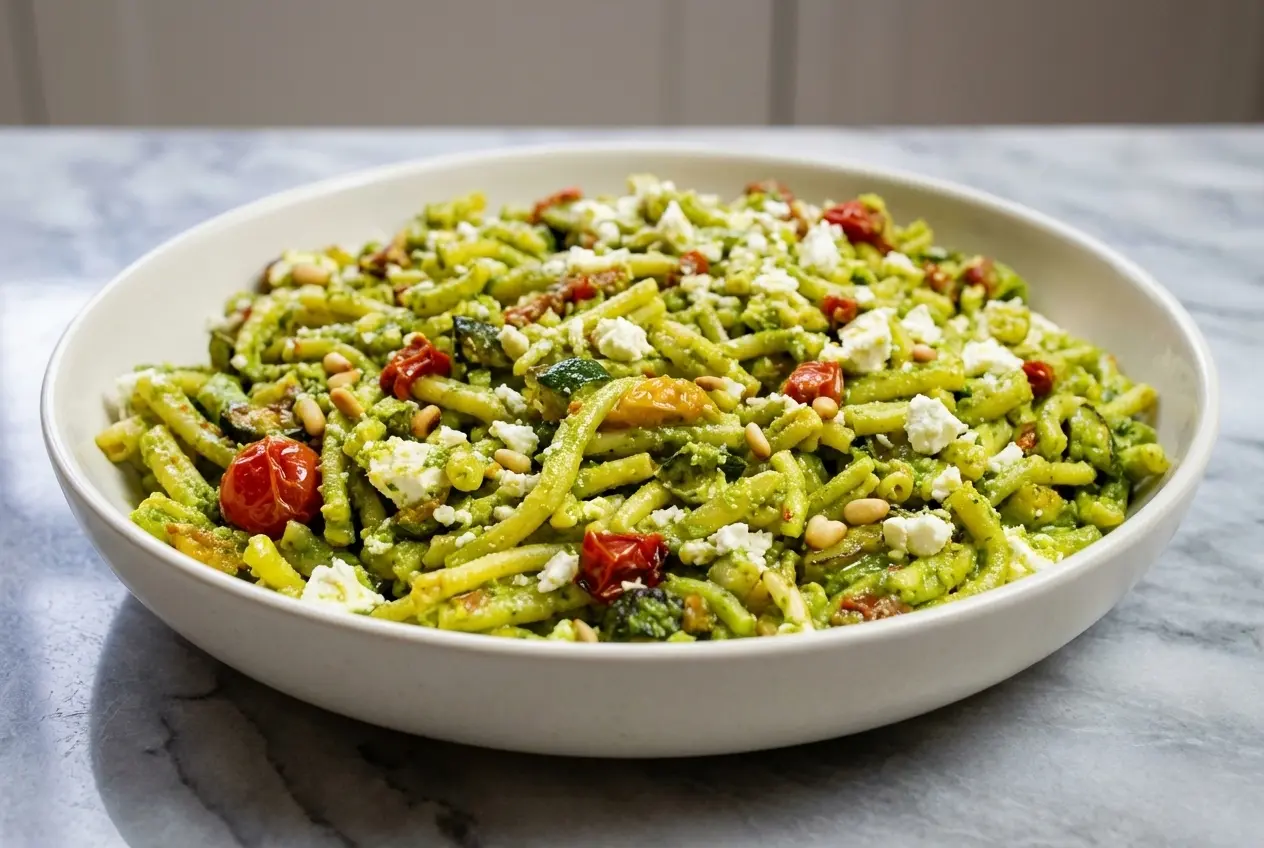
Some pasta salads look pretty for ten minutes, then turn dull and dry by the time dinner rolls around. In my kitchen, this Pesto Pasta Salad earns a permanent spot because it stays lively, glossy, and full of flavor, even after a night in the fridge.
It is the kind of dish I lean on for backyard cookouts, easy lunches, and those evenings when I want something that tastes a little special without making a fuss. Between the roasted zucchini, briny feta, and a clever splash of sun-dried tomato oil, every bite lands bright, savory, and deeply satisfying.
Why You’ll Love This Recipe
Big flavor, no flat bites: Roasting the tomatoes and zucchini brings out their sweetness and gives this salad a deeper, more savory backbone than raw vegetable versions. I love how the edges caramelize and tuck a little richness into all that fresh basil.
The secret twist: A spoonful of sun-dried tomato oil stirred into the pesto dressing adds instant umami and a mellow tang. In my kitchen, that little trick bridges the gap between the herbaceous pesto and the roasted vegetables beautifully.
Better texture for days: Using a short, twisty pasta and keeping it firmly Al dente makes a real difference. The ridges catch the pesto, the Pine nuts, and the Parmigiano Reggiano, so the salad stays coated instead of going dry.
Made for real life: This is one of those dishes that works just as well for meal prep as it does for a summer potluck. With Extra virgin olive oil, kosher salt, fresh basil, and feta doing the heavy lifting, it tastes polished without feeling fussy.
Ingredients and Substitutions
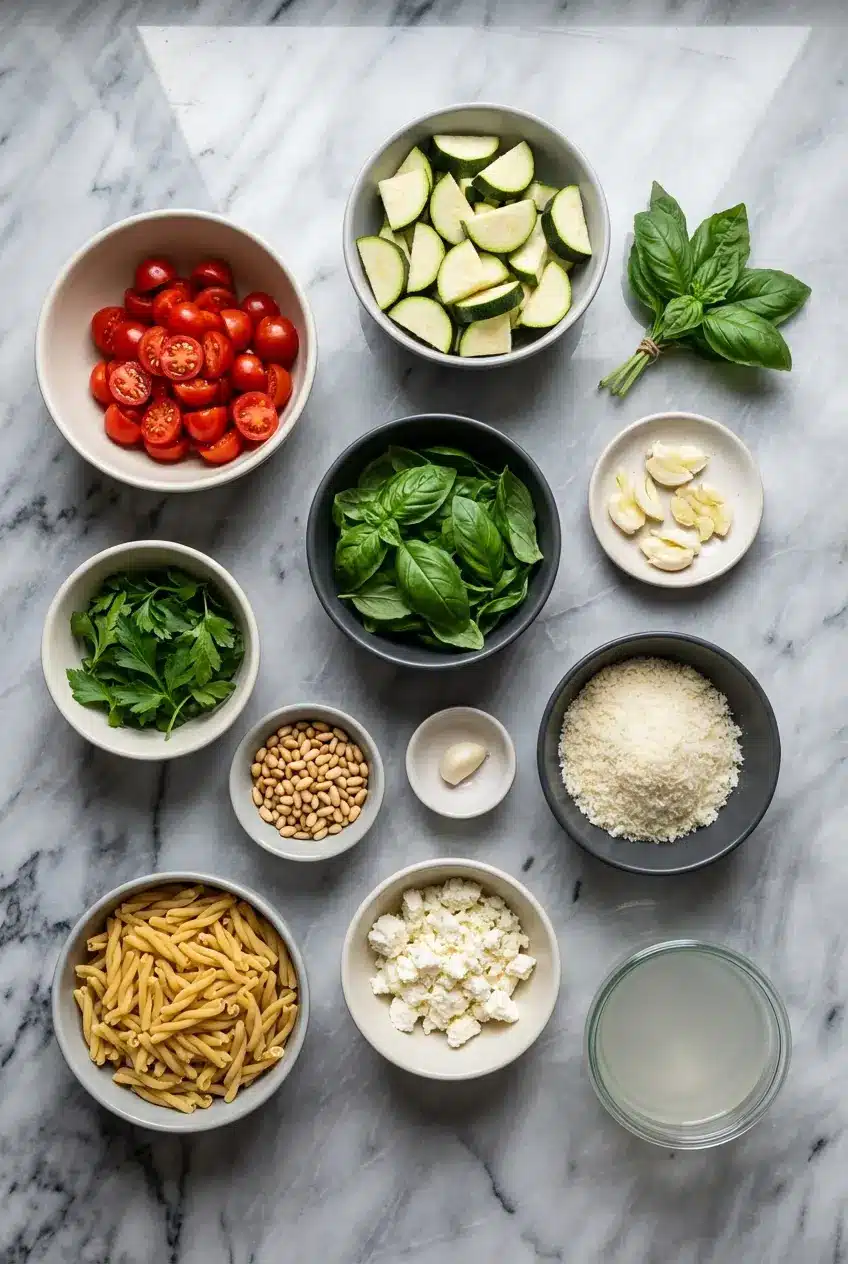
These ingredients build a pasta salad that tastes layered and fresh, with roasted vegetables for sweetness, a bold pesto for lift, and feta for that salty finish that keeps you coming back for one more forkful.
Ingredients
For the Tomatoes and Zucchini:
- 2 containers cherry tomatoes, halved
- 3 medium zucchini, quartered, seeds removed and cut into 1/2 inch pieces
- 4 sprigs basil
- 4 cloves garlic, smashed and peeled
- 3 tablespoons olive oil
- 1 teaspoon kosher salt
- 1/4 teaspoon Calabrian chili paste or red pepper flakes
For the Dressing:
- 2 1/2 cups packed basil leaves
- 1 cup Italian parsley leaves
- 1/4 cup toasted pine nuts
- 1 small clove garlic
- 3/4 cup extra virgin olive oil
- 3/4 teaspoon kosher salt
- 1 cup freshly grated Parmigiano Reggiano cheese
For the Salad:
- 1 pound short pasta such as Strozzapreti or Caserecce
- 1 block feta cheese, crumbled
- 1/4 cup reserved pasta water
Ingredient Notes & Substitutions
Pasta Shapes: Strozzapreti and Caserecce are excellent here because their twists and grooves grab onto oil-based pesto better than smooth noodles. Fusilli or Rotini also work well, especially if you are making the salad ahead and want it to stay well coated for up to 48 hours.
Basil and Parsley: Fresh herbs matter in this recipe, and I always look for basil leaves that are deeply green and not bruised. If you like to play with the pesto base, a blend with softer greens can work too, much like the flavor direction you get in spinach pesto, which brings a slightly earthier note.
Pine Nuts: Toasted pine nuts give classic pesto its buttery, delicate nuttiness, but walnuts or almonds are perfectly good swaps if that is what you have on hand. I toast any nut I use until fragrant, because that extra minute wakes up the flavor in a big way.
Cheese Options: Parmigiano Reggiano gives the dressing a salty, savory depth, while feta adds a creamy, briny finish at the end. If you want a milder bite, fresh mozzarella pearls can step in for the feta and turn the whole bowl in a more Caprese-style direction.
Zucchini: Removing the seeds is not busywork, it is the little detail that keeps the salad from turning watery after it sits. The flesh roasts more cleanly, browns better, and keeps its shape once tossed with the pasta.
Sun-Dried Tomato Oil: This is the quiet hero of the recipe, so use the oil from a good jar of sun-dried tomatoes packed in olive oil if you can. It brings concentrated savory flavor without changing the bright basil profile too much.
How to Make Pesto Pasta Salad
Roast the vegetables
- Heat your oven to 450°F so the vegetables roast hard and fast instead of steaming. On a rimmed baking sheet, toss the cherry tomatoes, zucchini, basil sprigs, smashed garlic, olive oil, kosher salt, and Calabrian chili paste until everything is evenly slicked with oil.
- Roast for about 30 minutes, giving the pan a stir halfway through, until the tomatoes slump, the zucchini turns tender, and you see browned edges developing. That browning is part of the Maillard reaction, which is exactly what gives the vegetables their sweeter, deeper roasted flavor. Set the tray aside to cool, then remove and discard the basil sprigs and whole garlic cloves.
Build the pesto dressing
- Add the basil leaves, parsley, toasted pine nuts, and small garlic clove to a food processor. Pulse until the mixture looks finely chopped and shaggy, with little flecks of green and nut still visible.
- With the machine running, slowly stream in the extra virgin olive oil and salt so the mixture turns smooth and loose. Scrape it into a bowl, stir in the Parmigiano Reggiano, then whisk in 1 tablespoon of sun-dried tomato oil for that extra savory layer and a subtle boost to the bioavailability of lycopene when tomatoes are cooked with olive oil.
Cook and cool the pasta
- Boil the pasta in generously salted water and stop cooking 2 minutes before the package says it is done, about 9 minutes. You want it firm in the center, not chalky, because it will continue to settle as it cools.
- Before draining, scoop out 1/4 cup of the pasta water. Spread the drained pasta on a rimmed baking sheet and let it cool to room temperature, keeping the surface starch intact by not rinsing it under water.
Assemble the salad
- In a large bowl, combine the pesto, the cooled pasta, and the roasted vegetables. Toss well so the sauce slips into the curves and ridges of the pasta instead of sitting at the bottom of the bowl.
- Add the reserved pasta water if the mixture needs loosening, then fold in the crumbled feta gently so it stays creamy and distinct. Serve at room temperature, when the basil smells freshest and the olive oil tastes round and full.
The Secrets to a Perfectly Emulsified Pasta Salad
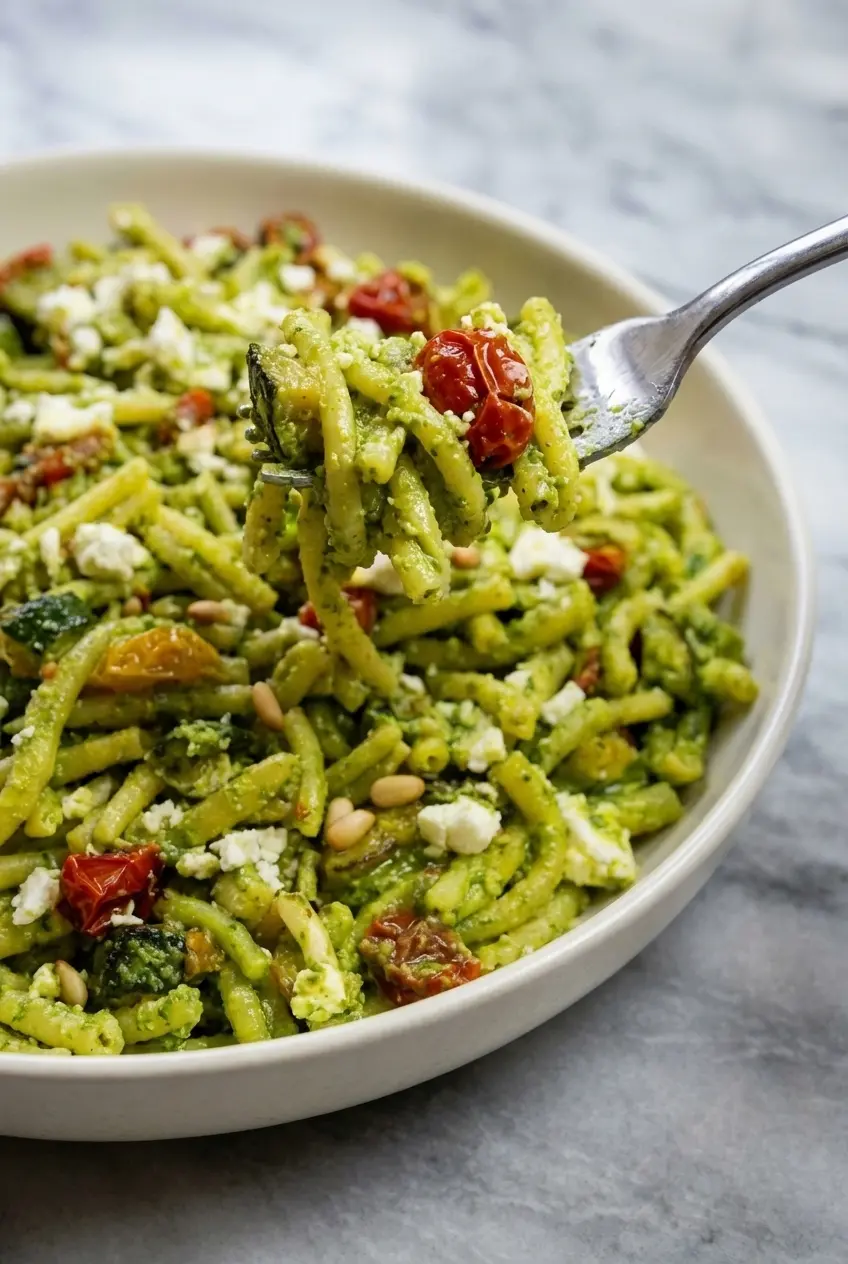
A good pesto pasta salad should look glossy and lightly creamy, not oily or separated. That happens when the starch left on the pasta meets the olive oil and cheese, helping everything bind into a smooth coating instead of a puddle at the bottom of the bowl.
There is real kitchen science behind that texture, and the physics of starch-stabilized emulsions explains why reserved pasta water is such a powerful trick. I use just enough to loosen the pesto, and the result is a dressing that clings to every curve of the pasta.
Temperature matters too. If you add feta or delicate greens to hot pasta, they soften too fast and lose their clean texture, which is why I always let the pasta cool to room temperature before tossing everything together.
If you are serving this the next day, the flavors can mute a little in the fridge. A small splash of white balsamic vinegar or a squeeze of lemon right before serving wakes the whole bowl back up and makes the basil taste bright again.
The Science of Starch Retrogradation: Why Pasta Texture Changes
Cold pasta always feels firmer than warm pasta, and that is not your imagination. As cooked starch cools, the starch molecules begin to realign and tighten, a process called starch retrogradation, which is why yesterday’s noodles can seem a bit harder even when they were cooked properly.
This is exactly why I cook the pasta 2 minutes less than the package suggests for a cold salad. Starting with a firm Al dente texture gives the noodles enough structure to hold the pesto and roasted vegetables without turning soft or breaking once the salad sits.
The cooling method matters just as much. Spreading the pasta on a baking sheet cools it quickly and evenly, so it stops cooking without trapping steam, which helps avoid gummy spots and keeps the surface ready to grab onto the dressing.
If pasta has been sitting long enough that the texture is no longer ideal for salad, it still does not need to go to waste. I often turn truly tired noodles into a skillet meal using leftover pasta, where the firmer texture actually becomes an advantage instead of a flaw.
Choosing the Best Pasta Shape for Pesto Adhesion
When I make Pesto Pasta Salad, I skip smooth shapes unless I have no other choice. Pesto is full of tiny herb bits, cheese, and nuts, so it needs ridges, twists, and grooves to cling to if you want flavor in every bite.
Strozzapreti is a lovely option because its twisted shape traps the dressing in little folds. Caserecce is even more of a pro move, thanks to its curved center groove, which holds onto oil-based sauces especially well over a 48-hour stretch in the fridge.
Fusilli and Rotini are dependable substitutes because their spirals catch pesto beautifully. Penne can work in a pinch, but it tends to let more sauce slide away, especially after chilling.
If you are planning ahead, shape really does affect storage quality. In my experience, Fusilli, Caserecce, and other curly short cuts stay pleasantly coated longer than smoother pasta, which is one of the reasons this salad keeps its texture and flavor so well.
Pro Tips & Troubleshooting
Pro Tips
- Seed the zucchini before roasting so the finished salad stays concentrated and not watery after a few hours in the fridge.
- Salt the pasta water until it tastes pleasantly briny, because cold pasta needs seasoning from the inside out.
- Cool the drained pasta on a baking sheet instead of in a bowl, which helps it stop cooking fast without losing the starch that helps the pesto cling.
- If you are making the salad ahead, hold back about 20% of the pesto and stir it in just before serving to restore color and moisture.
- Toast the pine nuts until fragrant and lightly golden for a fuller, nuttier pesto with more depth.
Common Mistakes to Avoid
- Overcooking the pasta, because once it is tossed with dressing and vegetables, soft noodles quickly drift into mushy territory.
- Rinsing the pasta under cold water, which washes away the starch that helps create a silky emulsion.
- Adding feta while the pasta is still warm, since the cheese can soften too much and lose its pleasant crumbly texture.
- Serving the salad straight from the refrigerator, because chilled olive oil tastes muted and can feel slightly firm on the tongue.
- Using only basil if your bunch is tired or undersized, when a mixed-herb approach can still taste fresh and balanced, much like the green, savory profile found in spinach pesto recipes.
Serving & Storage
Serving Ideas
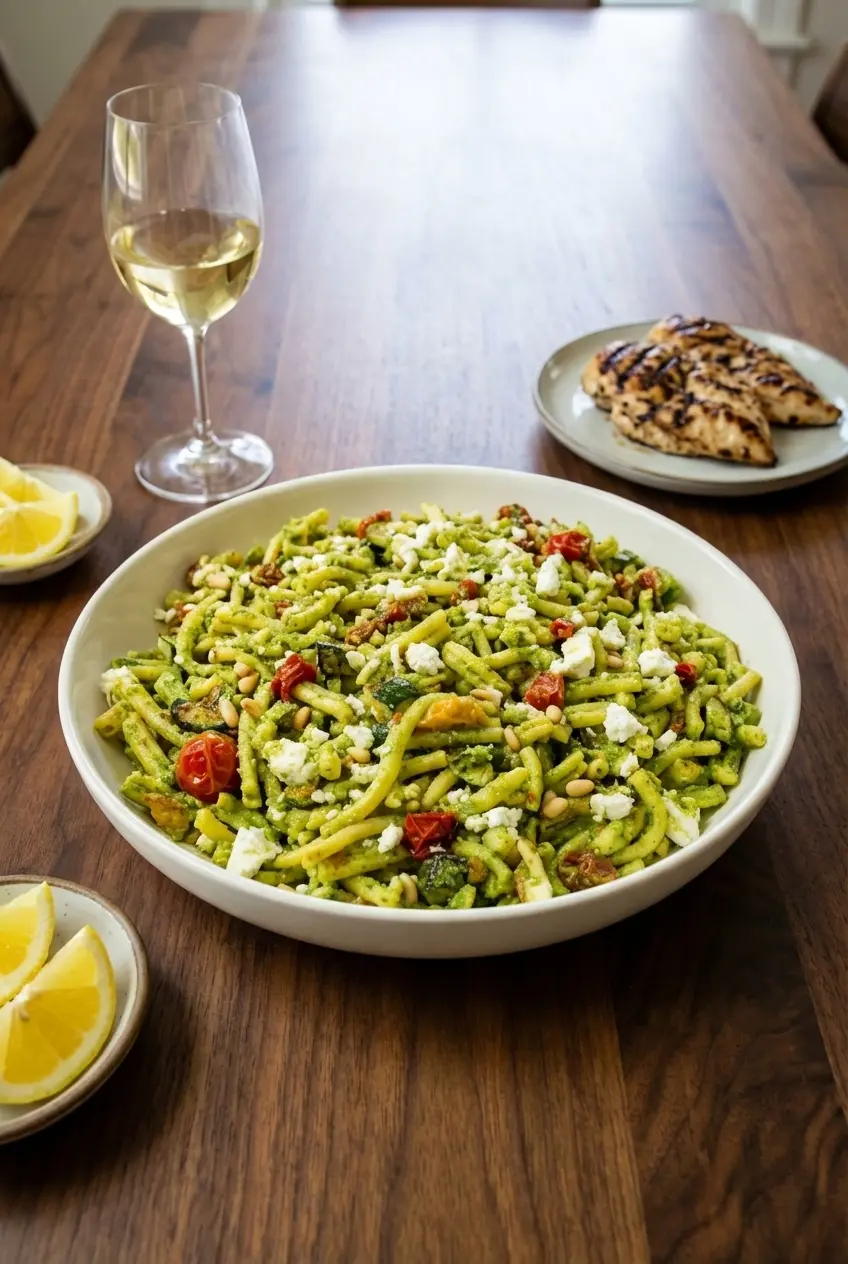
This salad shines best at room temperature, when the pesto smells grassy and fresh and the feta tastes creamy instead of cold and tight. I like to finish it with a little lemon zest and a pinch of red pepper flakes right before it hits the table.
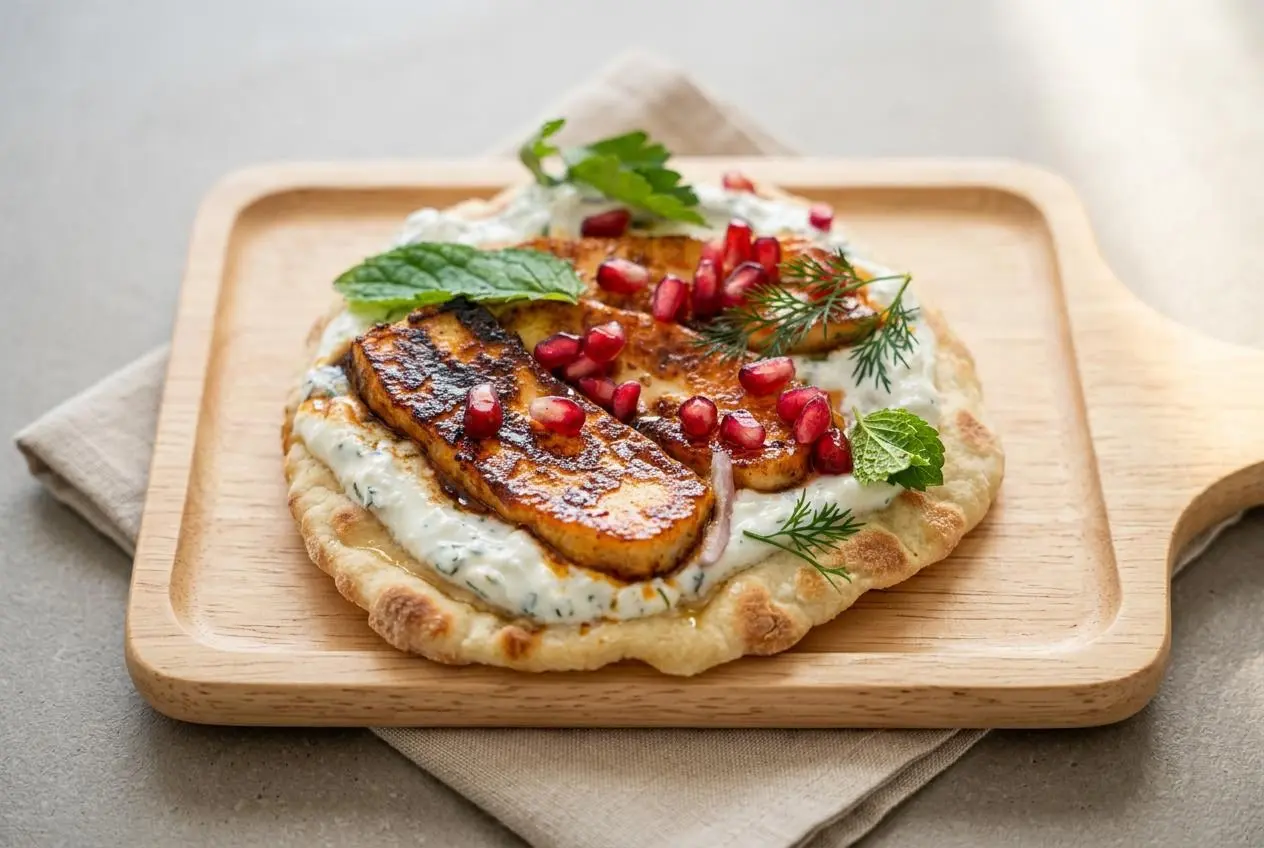
For a fuller spread, it pairs beautifully with grilled balsamic chicken, simple burgers, or an easy Italian-style appetizer spread. On summer tables, I also like setting it beside a crisp white wine, and something like pesto flatbread makes the whole meal feel a little festive without much extra work.
Storage & Make-Ahead
Store the pasta salad in an airtight container in the refrigerator for up to 3 days. For the freshest look and texture, I prefer it within the first 48 hours, especially when using shapes like Caserecce or Fusilli that hold dressing better than smoother pasta.
If you are making it 24 hours in advance, reserve a portion of the pesto and stir it in just before serving. That simple step brings back the bright green color and gives the noodles the moisture they may have absorbed overnight.
Right before serving leftovers, let the bowl sit out for about 15 minutes so the olive oil softens again. If it still feels a bit tight, loosen it with a spoonful of reserved pesto, a splash of white balsamic, or a squeeze of lemon.
Freezing is not a good fit for this recipe. The pasta texture turns grainy after thawing, and the pesto can separate, leaving the salad dull instead of silky.
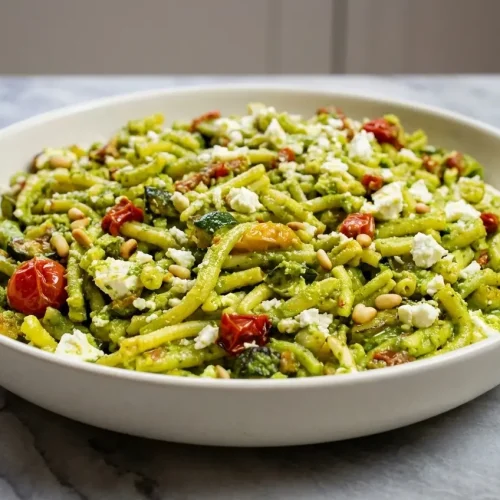
The Best Pesto Pasta Salad With Roasted Vegetables

Equipment
- Rimmed baking sheet
- Food processor
- Large Pot
- Large Mixing Bowl
Ingredients
For the Tomatoes and Zucchini:
- 2 containers cherry tomatoes, halved
- 3 medium zucchini, quartered, seeds removed and cut into 1/2 inch pieces
- 4 sprigs basil
- 4 cloves garlic, smashed and peeled
- 3 tablespoons olive oil
- 1 teaspoon kosher salt
- 1/4 teaspoon Calabrian chili paste or red pepper flakes
For the Dressing:
- 2 1/2 cups packed basil leaves
- 1 cup Italian parsley leaves
- 1/4 cup toasted pine nuts
- 1 small clove garlic
- 3/4 cup extra virgin olive oil
- 3/4 teaspoon kosher salt
- 1 cup freshly grated Parmigiano Reggiano cheese
For the Salad:
- 1 pound short pasta such as Strozzapreti or Caserecce
- 1 block feta cheese, crumbled
- 1/4 cup reserved pasta water
Instructions
Roast the vegetables
- Heat your oven to 450°F. On a rimmed baking sheet, toss the cherry tomatoes, zucchini, basil sprigs, smashed garlic, olive oil, kosher salt, and Calabrian chili paste until evenly coated.
- Roast for approximately 30 minutes, stirring halfway through, until the tomatoes slump and the zucchini is tender with browned edges. Set aside to cool, then discard the basil sprigs and whole garlic cloves.
Build the pesto dressing
- In a food processor, combine the basil leaves, parsley, toasted pine nuts, and the small clove of garlic. Pulse until the mixture is finely chopped and shaggy.
- While the food processor is running, slowly stream in the extra virgin olive oil and salt until smooth. Scrape into a bowl and stir in the Parmigiano Reggiano and 1 tablespoon of sun-dried tomato oil.
Cook and cool the pasta
- Boil the pasta in salted water for about 9 minutes, or 2 minutes before the package directions suggest. You want it to be firmly al dente.
- Reserve 1/4 cup of the pasta water before draining. Spread the drained pasta onto a rimmed baking sheet to cool to room temperature without rinsing.
Assemble the salad
- In a large bowl, toss the cooled pasta with the pesto dressing and the roasted vegetables. Use the reserved pasta water to loosen the mixture if needed.
- Gently fold in the crumbled feta cheese. Serve at room temperature to ensure the olive oil and herbs are fragrant and flavorful.
Notes
Conclusion
This Pesto Pasta Salad has all the things I want in a make-ahead dish, bright herbs, roasted vegetables, creamy feta, and a texture that actually holds up. That spoonful of sun-dried tomato oil and the baking sheet cooling method are the two little tricks that make it taste far more polished than the effort suggests.
If you have your own favorite twist, a different nut, a new pasta shape, or even extra pesto tucked away for morning pesto eggs, this recipe gives you plenty of room to play. Once you make it once, it tends to become the pasta salad you bring everywhere.
Frequently Asked Questions
How do you keep pesto pasta salad from getting dry?
Is it better to serve pesto pasta salad cold or at room temperature?
Which pasta shapes work best for this recipe?
Do I have to rinse the pasta for a cold salad?
Can I use store-bought pesto instead of making it fresh?
Can I freeze pesto pasta salad?