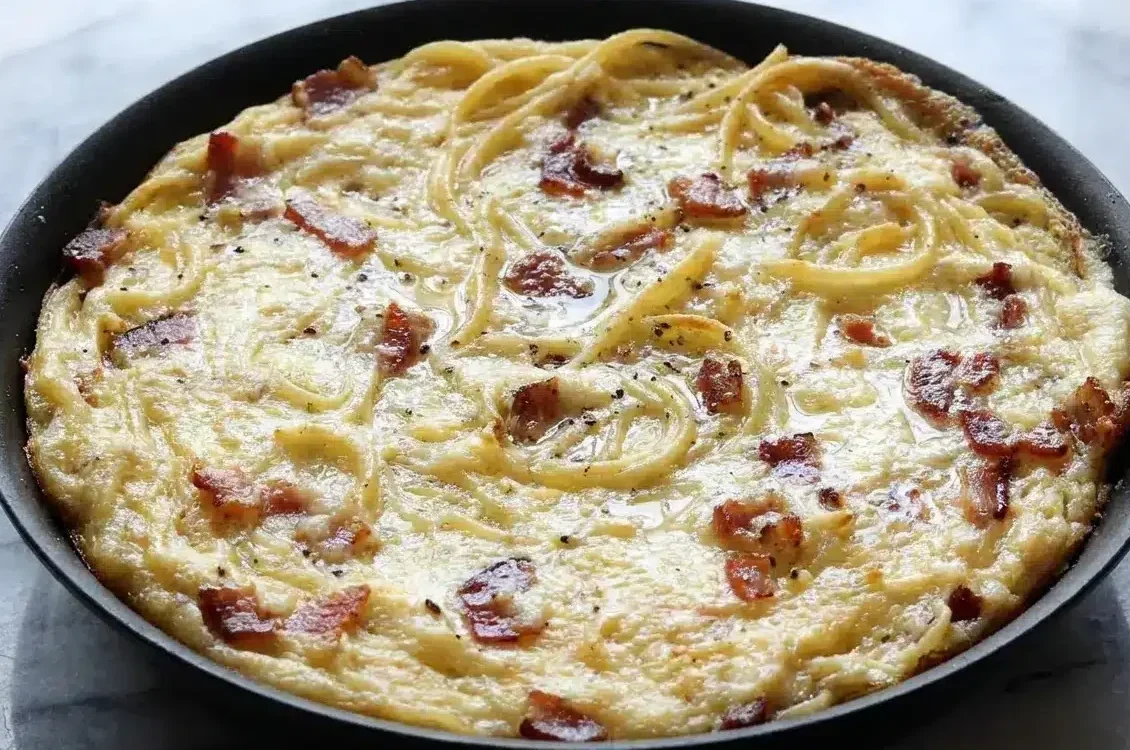
Every home cook knows that moment, you open the fridge, spot a container of yesterday’s pasta, and wonder whether it is headed for lunch or the trash. In my kitchen, that is exactly when a Leftover Pasta Frittata earns its place, because it turns odds and ends into something golden, crisp, and genuinely craveable.
This old-school Italian idea, known as Frittata di maccheroni, is practical, budget-friendly, and perfect for families, meal prep, or a lazy weekend brunch. What I love most is that this version feels polished and intentional, not like a patched-together leftovers dinner.
Why You’ll Love This Recipe
Crispy top, tender center: The best bite gives you three textures at once, soft egg custard, pleasantly chewy pasta, and a deeply savory crust that crackles when your fork goes through it.
The secret twist: In my kitchen, a Parmesan-Panko brulée crust changes everything. It toasts into a brittle, salty layer that makes this humble skillet meal feel restaurant-worthy.
Built for real life: Whether you use plain noodles or last night’s spaghetti, this recipe is forgiving and economical. A good non-stick skillet and an oven-safe pan make the whole process easy and reliable.
Italian comfort with a smart upgrade: I love how this method honors the spirit of Frittata di maccheroni while adding a little extra drama on top. It is the kind of leftover meal that never tastes like second best.
Ingredients and Substitutions
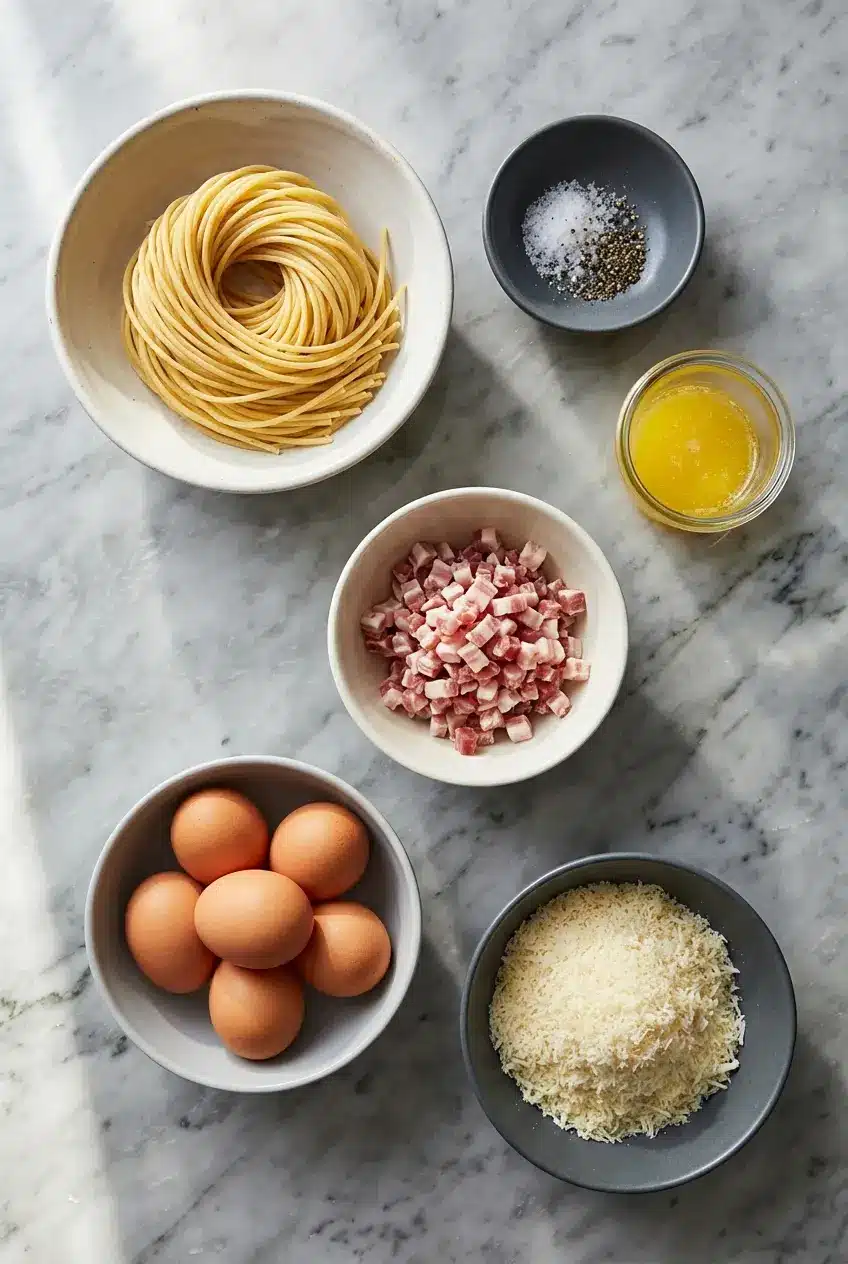
These simple staples come together quickly, and each one has a job, from giving the eggs body to creating that salty, golden finish.
Ingredients
- 1/4 pound spaghetti, linguine, fettuccine or other long pasta (or about 1/2 pound cooked pasta)
- Salt and pepper to taste
- 4 tablespoons butter or extra virgin olive oil
- 1/4 cup minced pancetta, bacon or prosciutto, optional
- 6 eggs
- 1 cup fresh grated Parmesan cheese
Ingredient Notes & Substitutions
Pasta: Plain pasta is the easiest to season because the egg mixture stays clean and balanced. If your leftover noodles already have sauce on them, they still work beautifully, just go lighter on the salt so the final frittata does not taste overly seasoned.
Long noodles: Spaghetti, linguine, and fettuccine give you that classic tangle associated with Frittata di maccheroni. I usually chop long strands into roughly 2-inch lengths so the slices hold together neatly and nobody ends up twirling a fork at the table.
Cheese: Freshly grated Parmesan melts more evenly and gives the richest savory finish, especially if you use a good Parmigiano-Reggiano. For a deeper, more assertive flavor, a little Scamorza, Pecorino-Romano, or Provolone can be swapped in for part of the cheese.
Meat: Pancetta brings a clean pork flavor and lovely crisp bits, but bacon and prosciutto work too. If you skip the meat, the recipe still has plenty of character, and I often add sautéed spinach, caramelized onions, or a few chopped sun-dried tomatoes for a vegetarian spin.
Gluten-free pasta: Gluten-free noodles can absolutely be used here, but they tend to be more delicate once cooked. Toss them gently with the egg mixture so they do not break apart too much, and expect a slightly softer, more fragile slice.
How to Make Leftover Pasta Frittata
Prepare the pasta and pan
- If you are starting with leftover cooked pasta, chop it into shorter pieces so it mixes easily and slices neatly later. If you are cooking pasta from dry, bring a large pot of water to a boil, salt it well, and cook the noodles until just barely tender, a little firmer than your usual al dente, then drain and toss immediately in a wide bowl with half the butter or oil so the strands stay glossy and separate as they cool slightly.
- Heat the oven to 350°F. Add the remaining butter or oil to a large non-stick skillet or other oven-safe pan over medium-high heat, and if you are using pancetta, bacon, or prosciutto, cook it for 3 to 5 minutes, stirring now and then, until the fat renders and the pieces are crisp and fragrant.
Mix and shape the frittata
- In a large bowl, whisk the eggs with about half of the Parmesan, plus salt and pepper, using a lighter hand with the salt if your meat is already salty. Fold in the pasta so the strands are evenly coated, then pour everything into the hot skillet over medium-low heat.
- Smooth the top gently with a spoon if needed, but do not press down too much. I like to leave a few pasta ends poking up above the egg, because those exposed tips become beautifully crunchy as the frittata cooks.
Finish with the crust and bake
Before the pan goes into the oven, scatter the remaining Parmesan over the top along with a 50/50 mixture of Parmesan and Panko for that signature brulée-style crust. Let the base cook on the stove just until it starts to firm on the bottom, then transfer the skillet to the oven and bake for about 10 minutes, until the top is golden and the center is just set, then serve hot or let it cool to room temperature.
Secrets for a Perfectly Set Frittata
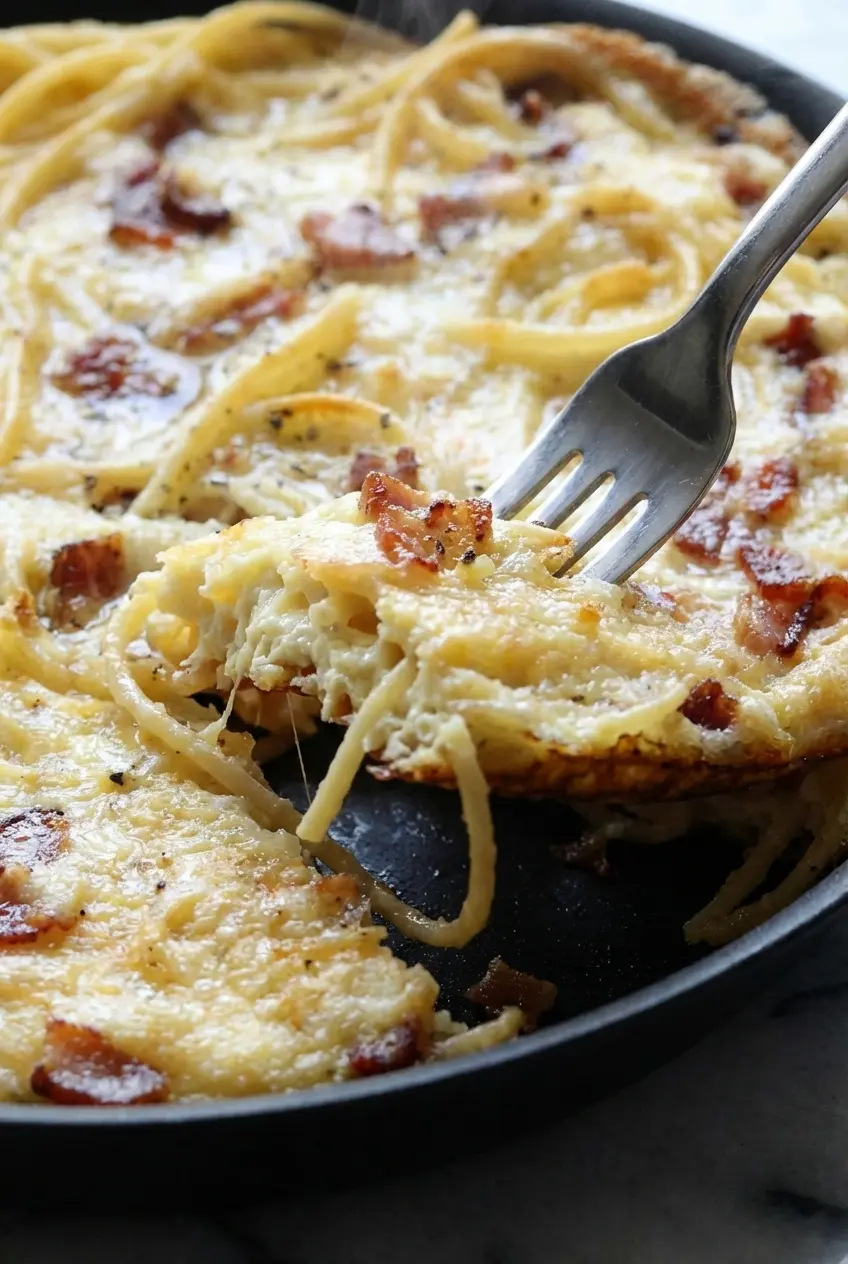
The difference between silky and rubbery eggs often comes down to temperature. I aim for an internal temperature of 160°F, or 71°C, which gives you a safe, properly set center without pushing the eggs so far that they turn tough.
The room temperature rule matters more than most people think. When very cold leftover pasta hits the eggs, the mixture can tighten unevenly, so I like to take the pasta out of the fridge ahead of time and let it lose its chill before mixing.
The stovetop-to-oven method is what gives this Leftover Pasta Frittata its structure. Starting on the burner helps the bottom set into a stable base, and the gentle oven finish gives the middle that soft egg custard texture instead of a harsh, overcooked bite.
The Art of Reheating Leftover Eggs
Reheating eggs is where many good frittatas go wrong, because high heat turns a tender slice dry and rubbery in a hurry. For the best texture, I either warm a piece in the microwave at 50% power in short bursts or set it in a covered non-stick skillet over low heat with a teaspoon of water so a little steam keeps it supple.
That second method is especially good if you cooked the frittata in an oven-safe pan and want to preserve the crisp edges. Practical food safety guidance on how to reheat without making the eggs rubbery also supports gentle reheating and checking that leftovers are thoroughly warmed through without blasting them at full power.
From Naples to Your Kitchen: A Brief History
Frittata di maccheroni comes from the frugal brilliance of Neapolitan cuisine, where yesterday’s pasta was never seen as a problem to solve but as the start of a new meal. The dish grew out of cucina povera, the kind of practical cooking that turns humble staples into something filling, portable, and unexpectedly delicious.
That spirit still feels very modern to me. The same resourceful instinct behind the Neapolitan roots of ‘Frittata di maccheroni’ is what makes so many traditional home dishes endure, much like mashed potato pancakes, where simple leftovers become a meal you would gladly make on purpose.
Pro Tips & Troubleshooting
Pro Tips
- Use a high-quality non-stick skillet so the frittata releases cleanly and keeps its shape when sliced.
- Cut long pasta into shorter lengths before mixing, especially spaghetti, so each wedge is easier to serve and eat.
- Let a few noodle ends stick up from the egg mixture, those exposed bits toast into crisp, irresistible little edges.
- Bring chilled pasta closer to room temperature before combining it with the eggs for more even cooking.
- For brunch, I like serving this with peppery greens and something rich and savory on the side, and cheesy garlic cruffins make the whole spread feel a little extra without much fuss.
Common Mistakes to Avoid
- Using too much fat can leave the finished frittata greasy, especially if the meat renders a lot. If your pan is truly non-stick, 2 tablespoons is often plenty.
- Leaving the skillet over heat too long before baking can burn the underside and toughen the eggs, so keep the stovetop at medium-low once the mixture is in.
- Skipping the chop on long noodles can make the frittata messy to slice and awkward to eat.
- Pulling it from the oven too soon may leave the middle soggy, while overbaking dries it out. Look for a set center and lightly golden top.
Serving & Storage
Serving Ideas
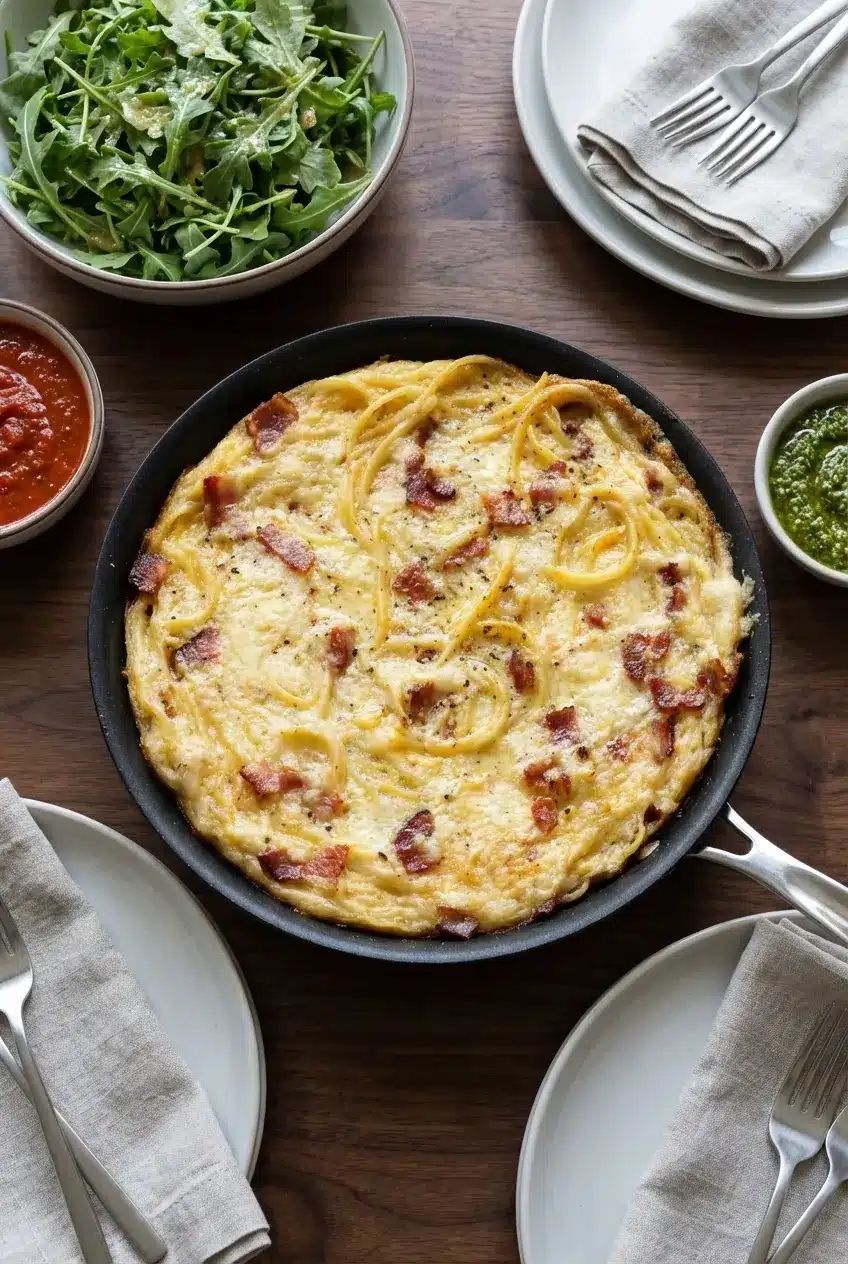
This dish is excellent warm, but I honestly love it just as much at room temperature, especially for picnics, lunchboxes, or an easy make-ahead brunch. A crisp arugula salad with lemon vinaigrette cuts through the richness beautifully, and a spoonful of marinara or pesto adds a welcome burst of moisture and brightness.
If you are using mixed leftovers, this recipe plays well with all kinds of cozy, carb-friendly meals. It is the same practical genius that makes dishes built from leftover fried rice so appealing, because a well-seasoned leftover can become something fresh and satisfying the next day.
Storage & Make-Ahead
Once cooled, store slices in an airtight container in the refrigerator for up to 3 to 4 days. This is one of those rare egg dishes that still tastes terrific cold, which is why I often make it with weekday lunches in mind.
For make-ahead cooking, bake the frittata, cool it completely, and portion it before chilling. Reheat gently if you want it warm again, but do not underestimate how good it is straight from the fridge with a little salad on the side.
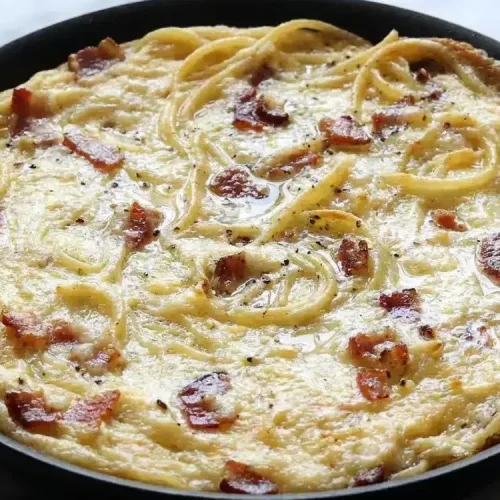
Easy Leftover Pasta Frittata (crispy & Cheesy)

Equipment
- Non-stick skillet
- Oven-safe pan
Ingredients
- 1/4 pound spaghetti, linguine, fettuccine or other long pasta (or about 1/2 pound cooked pasta)
- Salt and pepper to taste
- 4 tablespoons butter or extra virgin olive oil
- 1/4 cup minced pancetta, bacon or prosciutto, optional
- 6 eggs
- 1 cup fresh grated Parmesan cheese
Instructions
Prepare the pasta and pan
- If using leftover pasta, chop it into shorter pieces. If cooking from dry, boil in salted water until just firmer than al dente, then drain and toss with half the butter or oil.
- Preheat your oven to 350°F. In an oven-safe non-stick skillet, melt the remaining butter or oil over medium-high heat. If using pancetta or bacon, sauté for 3 to 5 minutes until crisp.
Mix and shape the frittata
- In a large bowl, whisk the eggs with half the Parmesan cheese, salt, and pepper. Fold the pasta into the egg mixture until well coated.
- Pour the mixture into the hot skillet. Smooth the top gently, leaving a few pasta ends poking up to create crunchy edges during baking.
Finish with the crust and bake
- Scatter the remaining Parmesan over the top. Cook on the stovetop over medium-low heat just until the bottom begins to firm up.
- Transfer the skillet to the oven and bake for 10 minutes until the center is set and the top is golden. Serve hot or at room temperature.
Notes
Conclusion
A good Leftover Pasta Frittata proves that leftovers can be the beginning of something better, not a compromise. Between the tender eggs, chewy pasta, and that crisp Parmesan-Panko top, it has the kind of contrast that makes every bite feel special.
Once you make it once, the basic idea becomes wonderfully flexible. A different cheese, a handful of greens, or a few crispy bits of pancetta can take it in a new direction while keeping the soul of the dish intact.
Frequently Asked Questions
Can I use sauced pasta?
Do I have to flip the frittata?
Is it better hot or cold?
How do I prevent the eggs from sticking?
Can I use short pasta like penne or rigatoni?
How long does leftover pasta frittata last in the fridge?
Why is my frittata soggy in the middle?