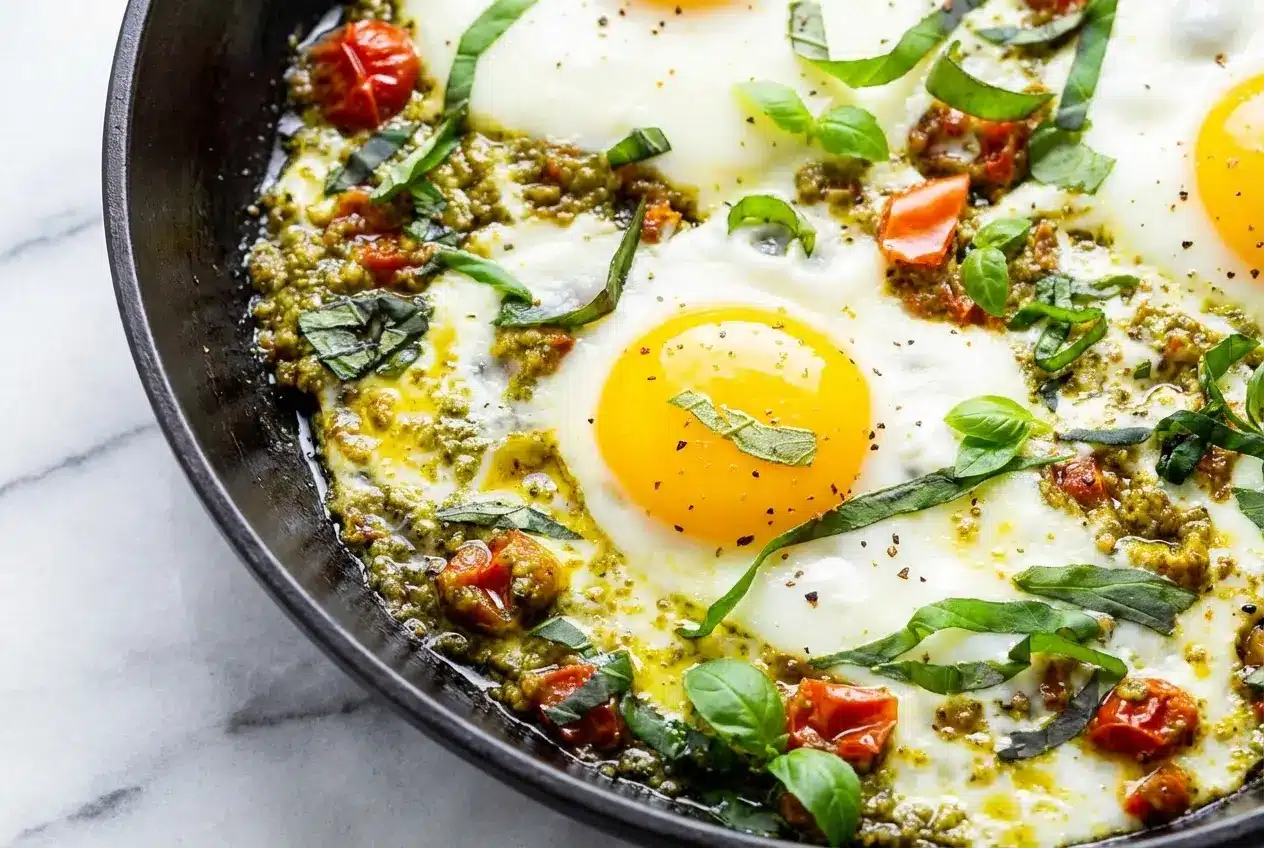
The first time I saw pesto eggs take over the TikTok food trend, I knew the idea had legs. Cooking eggs in basil pesto instead of plain oil is already a smart move, but this Pesto Eggs Recipe turns that viral breakfast into something you will actually crave again and again.
In my kitchen, the upgrade that made all the difference was a crispy feta skirt and a light hot honey drizzle. It is quick enough for a busy weekday, flashy enough for brunch, and easy to master once you know how to keep the pesto bright, fragrant, and never bitter.
Why You’ll Love This Recipe
Big flavor, fast: This breakfast comes together in about 10 minutes, but it tastes layered and restaurant-worthy. The basil pesto perfumes the pan, the tomatoes soften into the sauce, and the sunny side up eggs stay rich with a gorgeous runny yolk.
The crispy feta twist: I discovered that a halo of feta around the eggs creates a lacy, golden frico edge with the best savory crunch. That crisp bite keeps the creamy pesto and tender eggs from feeling one-note.
Balanced, not heavy: A little hot honey wakes everything up. It cuts through the salty parmesan cheese, briny feta, and pine nuts in the pesto with just enough sweet heat to keep you coming back for another forkful.
Reliable technique: The steam-basting method makes these eggs especially foolproof. In my experience, it gives you set whites and glossy yolks without flipping, which means the vibrant green pesto stays front and center.
Ingredients and Substitutions
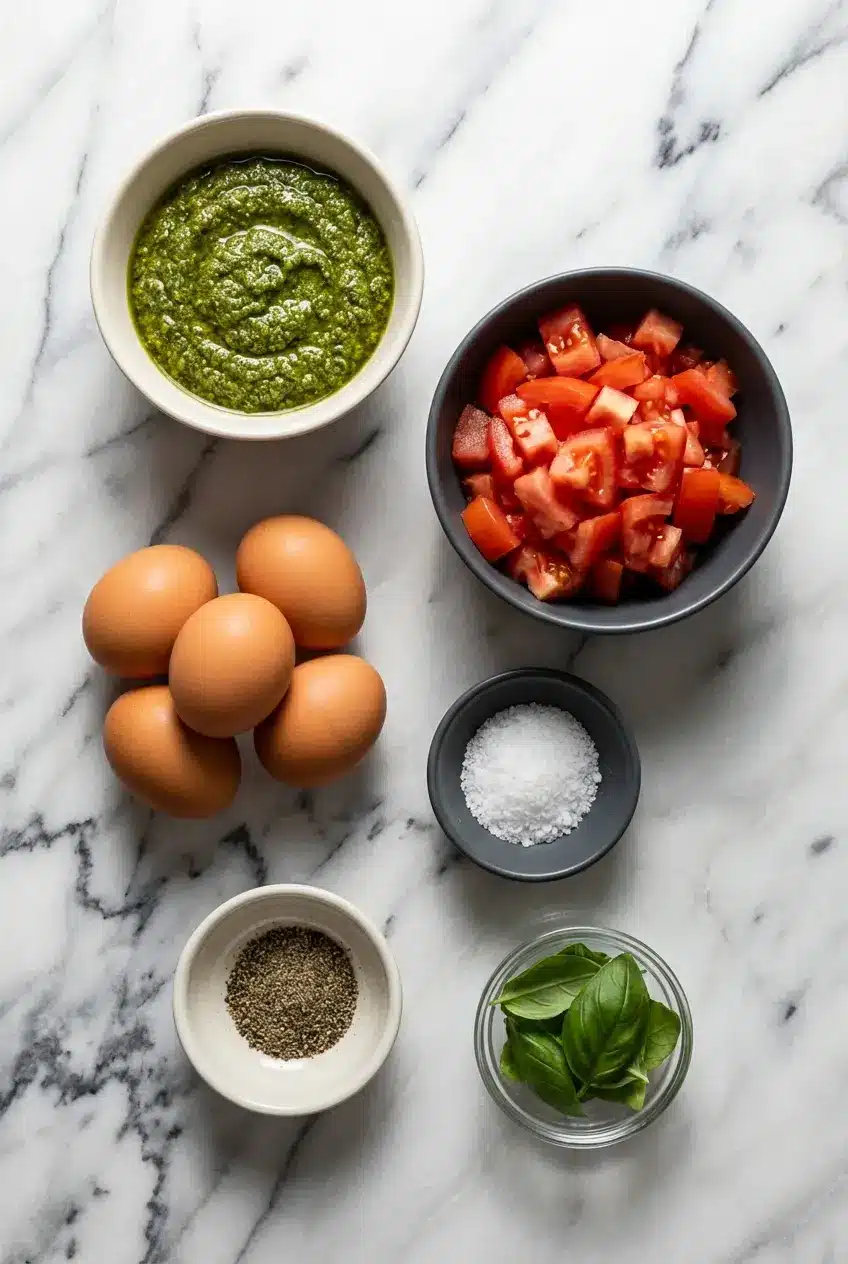
You only need a handful of ingredients for this recipe, and each one pulls its weight. The pesto acts as both cooking fat and sauce, while the eggs and tomato create a rich, juicy base.
Ingredients
- 0.5 cup Basil pesto
- 1 medium Roma tomato, diced
- 4 large Eggs
- 1 pinch Sea salt
- 1 pinch Black pepper
- 1 tablespoon Fresh basil, for garnish
Ingredient Notes & Substitutions
Basil pesto: Homemade pesto usually has a looser texture and more visible olive oil, which helps it fry the eggs beautifully. Store-bought pesto works very well too, but if it looks thick and paste-like, I add a small splash of olive oil so the parmesan cheese and pine nuts do not catch and scorch.
Feta cheese: This is the secret ingredient for the crispy skirt. Crumbled feta melts, sizzles, and turns lacy around the edges, giving the eggs a salty crunch that plays beautifully against the soft center.
Hot honey: A light drizzle at the end is all you need. If you like a different kind of heat, chili crunch gives a similar spicy finish with more texture.
Eggs: Large eggs are ideal here because they fill the skillet evenly and cook at the same pace. I like to set them on the counter for 15 to 20 minutes before cooking so they warm slightly and settle into the pesto without tightening up too fast.
Tomato: Roma tomato is a great choice because it softens without flooding the pan. If you want a sweeter, tangier spin, this recipe is also lovely with sun-dried tomato pesto, often called Pesto Rosso.
How to Make Pesto Eggs Recipe
Build the Pesto Base
- Spread the basil pesto in a thin, even layer across the bottom of a large non-stick skillet or well-seasoned cast iron pan. Set it over medium heat for 1 to 2 minutes, just until the pesto loosens and gives off a gentle sizzle and fresh, garlicky aroma.
- Scatter the diced Roma tomato over the pesto in a single layer. Let it cook undisturbed for 2 to 3 minutes so the pieces soften and lightly collapse, then press them down with a spatula to create a jammy, juicy layer.
Add the Feta and Eggs
- Turn the heat down to low. Sprinkle a ring of crumbled feta around the outer edge of the pesto and tomato base so it can begin to melt and fry into a crisp, lacy border.
- Crack the 4 large eggs directly into the center of the skillet, spacing them so the whites can spread and cook evenly without crowding.
Steam-Baste for Jammy Yolks
Cover the pan with a lid and let the eggs cook for 2 to 4 minutes over low heat, until the whites are fully set and the yolks are still beautifully runny. If you prefer a firmer yolk, leave them a little longer, but keep the heat gentle so the pesto stays green and fragrant.
Finish and Serve
Season with sea salt and black pepper to taste, then drizzle lightly with hot honey. Serve right away with fresh basil over the top, while the feta edges are still crisp and the yolks are ready to spill into the pesto.
Chef’s Secrets For Flawless Pesto Eggs
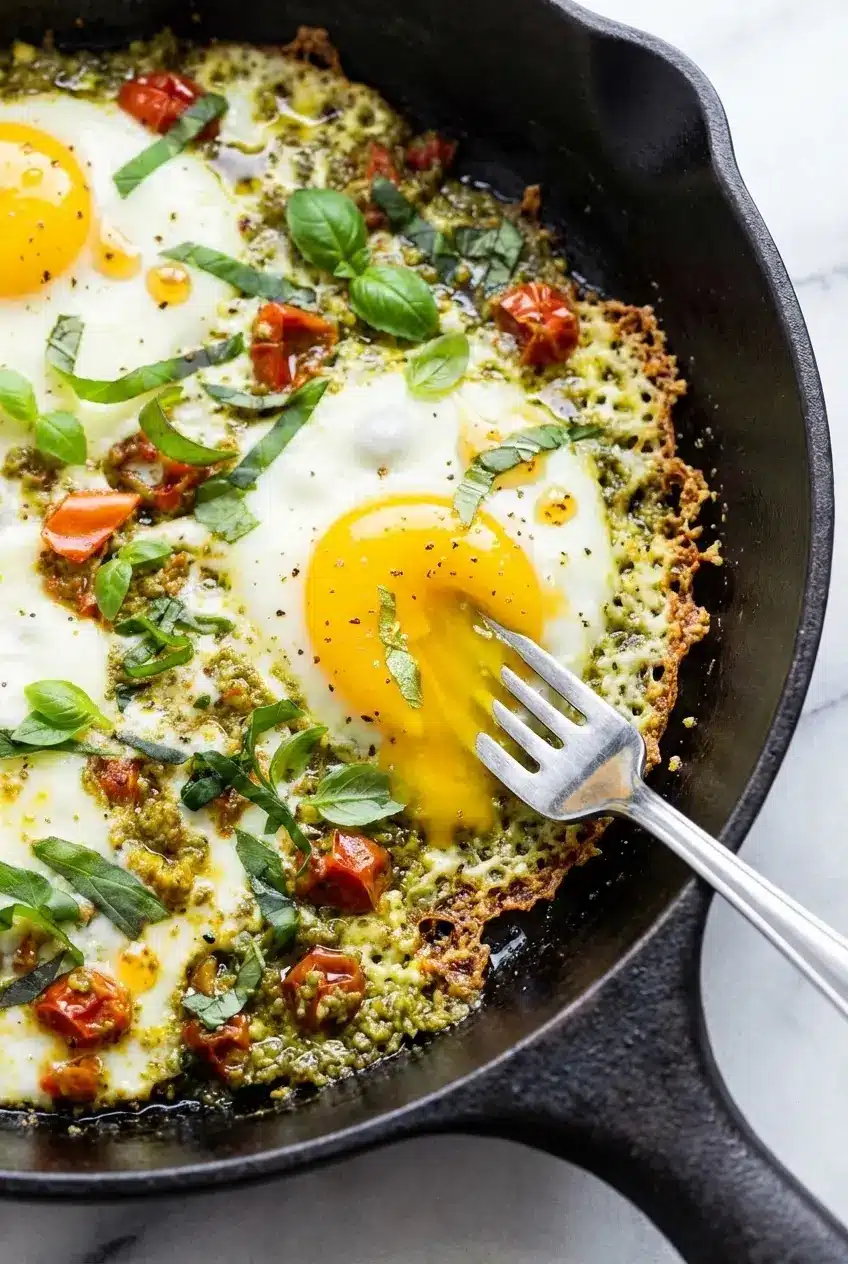
The biggest trick is heat control. Once the eggs go into the pan, I always lower the heat immediately because the residual warmth in the olive oil is enough to gently fry the bottoms while protecting the basil and garlic from allowing the Maillard reaction to go too far, which is exactly when pesto turns dark and bitter.
The lid matters more than people think. Steam-basting traps heat above the eggs, so the tops set softly without ever needing to flip them, and that keeps the sunny side up eggs looking vivid and glossy instead of smearing the green pesto into a muddy layer.
I also swear by room-temperature eggs for this recipe. Letting them sit out for 15 to 20 minutes helps them cook more evenly, and the whites settle into the pan faster instead of tightening from the shock of refrigerator-cold eggs hitting hot pesto.
Choosing The Best Pesto For Frying
Not all pesto behaves the same in a skillet. Fresh homemade pesto often has more separated olive oil, while many store-bought jars are thicker and tighter, so they need a little help before they can fry eggs properly.
If your pesto looks dense or dry, add a small splash of olive oil to the pan before warming it. That extra fat keeps the parmesan cheese and pine nuts from sticking, and it helps the pesto loosen into a glossy layer that can cradle the eggs instead of scorching underneath them.
When I make pesto from scratch, I like it slightly loose for recipes like this because it cooks more evenly and coats the pan better. The same kind of rich, oil-forward pesto also works beautifully in dishes like spinach pesto pizza, where you want the sauce to stay lush instead of drying out in the oven.
Adapting For Keto And Low Carb Diets
This recipe fits naturally into a keto diet and makes an excellent low-carb breakfast. Eggs, pesto, olive oil, and feta bring plenty of protein and satisfying fat, with very few carbs in the pan.
If you want to keep the meal fully low carb, skip traditional toast and serve the eggs over greens, roasted zucchini, cauliflower, or a simple bed of sautéed spinach. The runny yolk and warm pesto become their own sauce, so you do not need much else.
For a higher-protein plate, I sometimes add a spoonful of cottage cheese or whipped ricotta underneath. It gives you a cool, creamy contrast and turns a quick breakfast into something substantial enough for brunch.
Pro Tips & Troubleshooting
Pro Tips
- Let the eggs sit at room temperature for 15 to 20 minutes before cooking so they heat through more evenly and do not shock the pan.
- Crack each egg into a small ramekin first. It makes it much easier to spot shell fragments and place the eggs exactly where you want them.
- Use a non-stick skillet or a very well-seasoned cast iron pan. The cheese in both the pesto and the feta can cling stubbornly to stainless steel.
- Lower the heat as soon as the eggs go in. That gentle finish is what keeps the basil pesto herbaceous instead of bitter.
- If you want a spicier finish, swap the hot honey for chili crunch or chili crisp for extra snap and heat.
Common Mistakes to Avoid
- Cooking over high heat, which can make the olive oil smoke, turn the basil brown, and push the garlic into a bitter edge.
- Salting too soon or too heavily. Parmesan cheese in the pesto and feta both bring plenty of salt, so taste first before adding even a pinch more.
- Using a pan that is too dry when the pesto is very thick. A little olive oil can save the texture and prevent sticking.
- Skipping the lid, which often leaves you with undercooked whites or forces you to flip the eggs and lose the pretty green base.
Serving & Storage
Serving Ideas
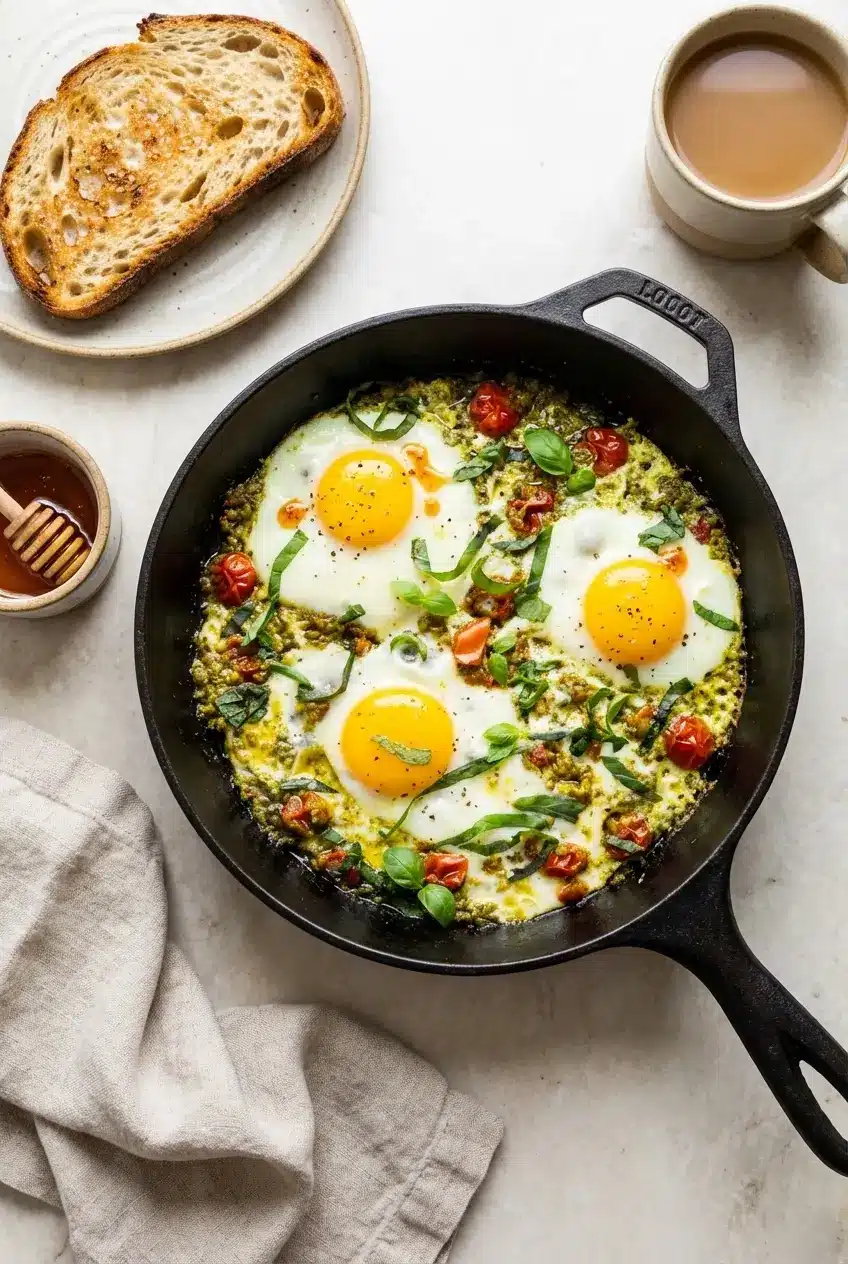
These eggs are fantastic spooned over toasted sourdough with a thick swipe of whipped ricotta or cottage cheese underneath. The bread catches every bit of runny yolk and pesto, and the creamy layer softens the salty edge of the feta.
For a heartier brunch, tuck them into a toasted Everything Bagel or slide them over crispy breakfast potatoes or sweet potato hash. The contrast between the jammy yolks and those crunchy, browned edges is hard to beat.
Storage & Make-Ahead
Pesto eggs are at their absolute best straight from the skillet, when the whites are tender and the feta skirt is still crackly. If you do have leftover pesto, though, keep it in an airtight container in the fridge and use it within a few days.
That extra pesto never goes to waste in my kitchen, especially when it can be repurposed later in the week for something like a quick chicken pesto flatbread. It is one of the easiest ways to stretch a jar into another fast meal without making the same breakfast twice.
I do not recommend freezing cooked eggs because the texture turns rubbery once thawed. Pesto itself freezes beautifully in ice cube trays, and if you need to reheat cooked eggs, use very low heat just until warmed through.
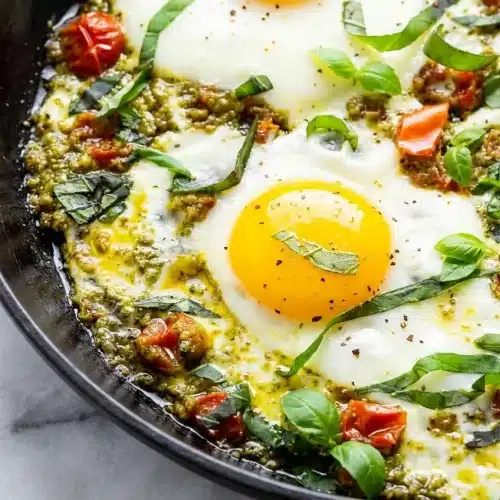
Crispy Pesto Eggs Recipe

Equipment
- Non-stick skillet or cast iron pan
- Spatula
Ingredients
- 0.5 cup Basil pesto
- 1 medium Roma tomato diced
- 4 large Eggs
- 1 pinch Sea salt
- 1 pinch Black pepper
- 1 tablespoon Fresh basil for garnish
Instructions
Build the Pesto Base
- Spread the basil pesto in a thin, even layer across the bottom of a large non-stick skillet or well-seasoned cast iron pan. Set it over medium heat for 1 to 2 minutes, just until the pesto loosens and gives off a gentle sizzle and fresh, garlicky aroma.
- Scatter the diced Roma tomato over the pesto in a single layer. Let it cook undisturbed for 2 to 3 minutes so the pieces soften and lightly collapse, then press them down with a spatula to create a jammy, juicy layer.
Add the Feta and Eggs
- Turn the heat down to low. Sprinkle a ring of crumbled feta around the outer edge of the pesto and tomato base so it can begin to melt and fry into a crisp, lacy border.
- Crack the 4 large eggs directly into the center of the skillet, spacing them so the whites can spread and cook evenly without crowding.
Steam-Baste for Jammy Yolks
- Cover the pan with a lid and let the eggs cook for 2 to 4 minutes over low heat, until the whites are fully set and the yolks are still beautifully runny. If you prefer a firmer yolk, leave them a little longer, but keep the heat gentle so the pesto stays green and fragrant.
Finish and Serve
- Season with sea salt and black pepper to taste, then drizzle lightly with hot honey. Serve right away with fresh basil over the top, while the feta edges are still crisp and the yolks are ready to spill into the pesto.
Notes
Conclusion
This Pesto Eggs Recipe proves that a viral idea can become a genuinely great breakfast with just a couple of thoughtful touches. The crispy feta skirt brings the crunch, the hot honey brings balance, and the steam-basted eggs keep every bite rich, herbaceous, and satisfying.
If you give it a try, make it your own with little variations and serve it while the skillet is still hot. And if you enjoy playful internet-famous bakes as much as savory brunches, the flaky, sweet TikTok cookie croissant has the same fun energy in dessert form.