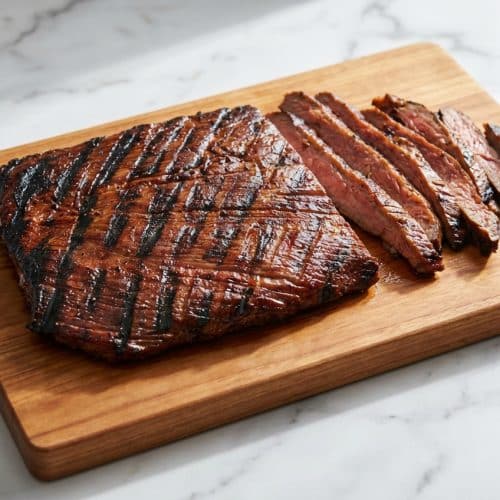
Nothing makes my kitchen feel more alive than the scent of a hot grill and the sound of a steak hitting the grates. This marinated flank steak is my go-to when I want that charred edge, juicy center, and a rosy slice that looks like it came from a steakhouse.
Flank steak has big flavor, but it can turn tough and chewy fast if you treat it like a tenderloin. The little trick I lean on is the Diamond Score technique, a shallow cross-hatch that helps the marinade sink in and sets you up for a tender bite every time.
Why You’ll Love This Recipe
Diamond-Score Tenderness: In my kitchen, a shallow cross-hatch is the difference between “chewy” and “butter-knife tender,” because it breaks up those long fibers flank steak is known for.
Deeper Marinade Flavor: That scoring gives the soy sauce and brown sugar marinade more places to cling, so you taste savory, sweet, and citrus in every slice, not just on the surface.
Fast, Weeknight-Friendly: The active work is quick, and a 30-minute marinade already gives you a noticeable boost in tenderness and aroma.
Cook It Your Way: Whether you grill, broil, or use a screaming-hot cast iron, you can still chase that Maillard reaction crust and a reliable internal temperature.
Ingredients and Substitutions

This ingredient list stays lean on purpose, because flank steak already brings plenty of beefy character. The marinade balances fat, salt, acid, and a touch of sweetness for a bold, glossy crust.
Ingredients
For the marinade:
- 1/3 cup extra-virgin olive oil
- 1/4 cup reduced-sodium soy sauce
- 2 Tbsp. lime (or lemon) juice
- 2 Tbsp. packed light brown sugar
For the steak:
- 2 lb. flank steak
- Kosher salt
- Freshly ground black pepper
Ingredient Notes & Substitutions
Soy sauce: Tamari works beautifully if you need gluten-free, and coconut aminos will give a slightly sweeter, gentler saltiness.
Acidity: Lime (or lemon) juice acts as an acidic tenderizer, and it brightens the beef in a way that feels “clean.” Apple cider vinegar or balsamic vinegar also work, just expect a different aroma and finish.
Brown sugar: This is your friend for browning and that sticky, savory-sweet edge. Honey or maple syrup can stand in, but keep an eye on the heat since sugars can darken quickly.
Spice and depth: Red pepper flakes or cayenne bring heat, and a little minced garlic adds that steakhouse perfume, especially if you’re serving it with tacos or fajitas.
How to Make marinated flank steak
Mix the Marinade
In a large bowl, whisk the olive oil, reduced-sodium soy sauce, lime (or lemon) juice, and packed light brown sugar until the sugar looks mostly dissolved and the mixture turns glossy and cohesive.
Coat and Marinate
- Slip the flank steak into the bowl and turn it a few times so every corner gets slicked with marinade, especially along any natural seams in the meat.
- Let it marinate for at least 30 minutes, or up to 2 hours, so the flavor has time to soak in and the surface begins to smell bright and savory.
Dry, Season, and Cook
- Lift the steak out of the marinade and pat it very dry with paper towels, you want the exterior to feel tacky, not wet, so it sears instead of steaming. Season lightly with Kosher salt and freshly ground black pepper, remembering the soy sauce already brings salt.
- For grilling, preheat to medium-high, then cook about 5 minutes per side for medium-rare, using 130°F as your internal temperature target. You’re looking for deep browning and a little char, with a gentle spring when you press the center.
- For broiling, set the oven broiler to high, place the steak on a sheet pan, and broil 5 minutes per side, flipping once halfway through. Watch for fast caramelization from the sugar, the surface should look bronzed, not burnt.
Rest, Then Slice
Rest the steak before slicing and serving, so the juices settle back into the meat and your cutting board stays clean instead of flooded.
Secrets for Perfect Tenderness

The Science of Scoring: Flank steak, sometimes sold as London Broil and similar to bavette in spirit, is built from long, hardworking fibers. My Diamond Score technique is simply a shallow cross-hatch on both sides, it disrupts those surface fibers so the bite eats softer.
Dry Meat Searing: A wet surface turns into steam, and steam is the enemy of crust. That post-marinade towel-dry, paired with brown sugar in the marinade, sets you up for a proper caramelized crust on high heat.
Finding the Grain: Before you cook, look for the long lines running across the meat like wood grain. After resting, angle your knife so you slice perpendicular to these lines, which shortens the fibers and keeps each piece tender.
Resting Makes It Juicy: When the steak comes off the heat, the muscle fibers are tight and pushing juices outward. A short rest helps allow juices to redistribute, so every slice stays succulent.
Pro Tips & Troubleshooting
Pro Tips
- Let the steak sit out about 30 minutes before cooking, it helps the center cook evenly without overcooking the edges.
- A digital thermometer is my non-negotiable for flank steak, pull at 130°F for medium-rare or 135°F for medium, then let carryover heat finish the job.
- If you want to use leftover marinade as a sauce, it must be boiled vigorously for several minutes for safety.
- For indoor cast iron, ventilate well and expect a little smoke, the sugars that make great crust also brown fast.
Common Mistakes to Avoid
- Marinating longer than 4 hours, the acid can go too far and turn the surface soft and oddly mushy.
- Skipping the towel-dry step, because wet steak steams and loses that bold sear.
- Slicing with the grain, which leaves long fibers intact and makes even perfectly cooked steak feel rubbery.
Serving & Storage

Serving Ideas
I love this marinated flank steak with chimichurri or cowboy butter, because that fresh herbal bite cuts the richness. Thin slices also disappear fast in tacos and fajitas, especially with a squeeze of citrus.
A lighter side like marinated cherry tomatoes keeps the plate bright and punchy. On hungrier nights, stuffed baked potatoes turn it into the kind of dinner that makes everyone linger at the table.
Storage & Meal Prep
Fridge: Store cooked leftovers in an airtight container for up to 3 days, and rewarm gently so the steak stays tender instead of tightening up.
Freezing raw in the marinade: The scored steak can be frozen right in the marinade in a freezer bag. As it thaws later, it marinates at the same time, which is a weeknight gift to your future self.
Leftover ideas: Sliced steak is excellent tossed into pasta, and something like steak tortellini makes those leftovers feel like a brand-new meal.
Tender Marinated Flank Steak

Equipment
- Grill or Broiler
- large bowl
- Whisk
- Tongs
- Digital thermometer
Ingredients
For the marinade
- 1/3 cup extra-virgin olive oil
- 1/4 cup reduced-sodium soy sauce
- 2 Tbsp. lime (or lemon) juice
- 2 Tbsp. packed light brown sugar
For the steak
- 2 lb. flank steak
- Kosher salt
- Freshly ground black pepper
Instructions
Mix the Marinade
- In a large bowl, whisk the olive oil, reduced-sodium soy sauce, lime (or lemon) juice, and packed light brown sugar until the sugar looks mostly dissolved and the mixture turns glossy and cohesive.
Coat and Marinate
- Slip the flank steak into the bowl and turn it a few times so every corner gets slicked with marinade, especially along any natural seams in the meat.
- Let it marinate for at least 30 minutes, or up to 2 hours, so the flavor has time to soak in and the surface begins to smell bright and savory.
Dry, Season, and Cook
- Lift the steak out of the marinade and pat it very dry with paper towels. You want the exterior to feel tacky, not wet, so it sears instead of steaming. Season lightly with Kosher salt and freshly ground black pepper.
- For grilling, preheat to medium-high, then cook about 5 minutes per side for medium-rare, using 130°F as your internal temperature target. Look for deep browning and a little char.
- For broiling, set the oven broiler to high, place the steak on a sheet pan, and broil 5 minutes per side, flipping once halfway through. Watch for fast caramelization from the sugar.
Rest, Then Slice
- Rest the steak before slicing and serving so the juices settle back into the meat and your cutting board stays clean.
Notes
Nutrition
Conclusion
This is the kind of marinated flank steak that gives you bold flavor and a tender chew without fuss, and the Diamond Score technique is the quiet hero behind it. Keep the sear hot, rest the meat, then slice against the grain and you’ll taste the payoff.
If you love that savory-sweet soy sauce vibe, Mongolian beef noodles hits a similar comfort note with a different shape and slurp.