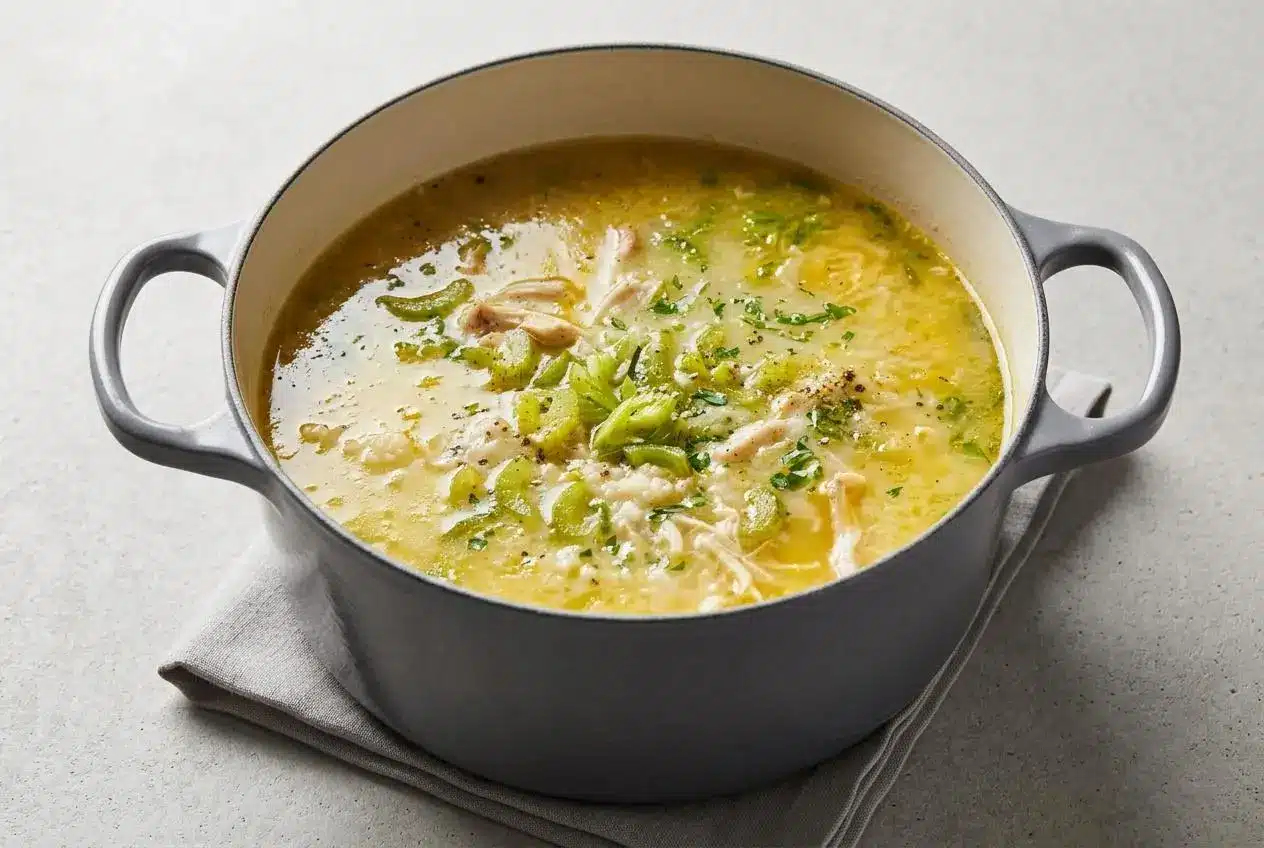
When I was growing up, the minute someone started sniffling, a pot came out and the kitchen smelled like garlic, thyme, and comfort. That is the spirit behind Italian Penicillin Soup, a simple pastina soup that feels like a warm blanket you can sip. It is gentle on the stomach, deeply savory, and surprisingly satisfying for how light it looks.
In my kitchen, I give it a small wellness twist with ginger and turmeric, so the broth turns a sunny gold and the aroma feels extra soothing. This version is perfect for busy weeknights, post-travel fatigue, or any day you just want real comfort food without heaviness.
Why You Will Love This Recipe
Golden wellness twist: Ginger and turmeric bloom in the steam, giving the broth a warm, bright perfume and that “liquid gold” look I always crave when I feel run down.
Velvety without cream: Blending the soffritto style base, your mirepoix, makes the soup silky and full-bodied, even though it is just broth and vegetables.
Pastina perfection: Whether you use Stelline or another Pastina shape, the method keeps the tiny pasta tender and comforting, not soggy and sad.
Umami that tastes like Nonna simmered it all day: A Parmigiano-Reggiano rind quietly melts flavor into the pot, turning everyday chicken broth into something deeply savory.
Ingredients and Substitutions

These ingredients keep the soup simple and restorative, with broth, aromatics, tiny pasta, and a Parmesan finish. The technique is what makes it taste slow-simmered, even on a weeknight.
Ingredients
- 8 cups lower-sodium chicken broth
- 2 cups chopped sweet onion
- 1 1/2 cups peeled and coarsely chopped carrots
- 2 celery ribs, coarsely chopped
- 6 garlic cloves, smashed and peeled
- 3/4 teaspoon kosher salt
- 4 thyme sprigs
- 2 fresh bay leaves
- 2 ounce Parmigiano-Reggiano cheese rind
- 4 ounces uncooked pastina pasta
- 2 cups shredded rotisserie chicken
- fresh flat-leaf parsley leaves
- grated Parmigiano-Reggiano cheese
Ingredient Notes & Substitutions
The Wellness Twist: Ginger and turmeric are the two quiet heroes here, they bring a gentle warmth and that unmistakable golden hue. I stir them in right with the vegetables so they perfume the entire pot, not just the last spoonful.
The Pastina: Stelline gives you that classic “little stars” comfort, while Acini di Pepe feels like tiny pearls and eats a touch more “bouncy.” They are interchangeable, but I watch closely because cook time can vary by 1 to 2 minutes depending on shape.
The Broth: Lower-sodium chicken broth matters because the Parmigiano-Reggiano rind and the grated cheese at the table add plenty of salinity. If your broth is already salty, the soup can tip over the edge fast.
The Chicken: Rotisserie chicken makes this a true weeknight remedy, and it stays tender because it only warms at the end. If you want deeper chicken flavor, poaching fresh breasts in the broth also works, then shred and add them back.
Parmesan rind: This is pure umami, and it is the reason the soup tastes “restaurant good” with humble ingredients. If you do not have a rind, the soup still works, you just lose that long-simmered savoriness.
Comforty variations: A vegan-friendly version can use vegetable broth and a vegan Parmesan alternative, and a veggie-forward pot loves a handful of baby spinach in the last 2 minutes. When you want extra heat for a stuffy day, a pinch of red pepper flakes is lovely.
How to Make Italian Penicillin Soup
Build the aromatic base
- Set out everything so you are not hunting for thyme with wet hands. I like to keep the pastina and chicken nearby because things move quickly once the pot starts bubbling.
- In a large saucepan or small Dutch oven over high heat, combine the broth, onion, carrots, celery, garlic, and salt. Add the freshly grated ginger and ground turmeric now, then bring it to a lively boil.
- Reduce the heat to medium-low and simmer about 10 minutes, until the vegetables look softened and tired, and the steam smells sweet, garlicky, and lightly spicy.
Blend for that silky “healing” texture
- With a slotted spoon, lift the vegetables into a blender and pour in 1 cup of the hot broth. The mixture should look bright and glossy, with carrots leading the color.
- Secure the lid, then remove the blender’s center piece so steam can escape. Hold a clean towel over the opening, then blend about 30 seconds, until perfectly smooth and vividly golden.
- Stir the purée back into the pot and watch the broth turn velvety, almost like it was enriched, even though it is just vegetables doing their magic.
Infuse, simmer, and cook the pastina
- Add the thyme sprigs, bay leaves, and the Parmigiano-Reggiano rind. Bring the soup back to a boil over medium-high, and you will smell that savory, cheesy depth start to bloom.
- Add the pastina, then reduce to medium-low and keep it at a gentle simmer for 18 to 20 minutes. Stir occasionally, because tiny pasta loves to cling to the bottom when you are not looking.
- In the last 3 minutes of cooking, fold in the shredded rotisserie chicken so it warms through without drying out. The soup should look thickened and silky, with tender little bites throughout.
Rest and finish
- Remove the pot from the heat, then fish out and discard the thyme, bay leaves, and the cheese rind. Give it one final stir, and taste carefully before adding anything extra.
- Let the soup rest 5 minutes so the flavors settle and the pastina plumps to that perfect spoonable tenderness. Serve hot with parsley and a generous snowfall of grated Parmigiano-Reggiano.
Secrets for the Perfect Golden Broth

Emulsification is the real “cream”: When you blend the mirepoix, you are suspending vegetables in the broth, which gives body and a soft, silky feel on the tongue. In other words, it eats like comfort food, not like plain broth.
When I want to lean into that cheese-driven savoriness, I think about how the rind behaves here, slowly seasoning the pot as it warms. The same idea shows up in this Italian sausage soup where Parmesan depth makes everything taste fuller.
The resting period matters: A short rest keeps the soup from tasting “separate,” and it helps the Pastina finish absorbing broth evenly. For a thicker bowl, let it sit closer to 10 minutes, and for a looser sip, serve right at 5.
Liquid-gold science: Turmeric brings that unmistakable yellow glow, and ginger adds a warm, peppery lift that feels especially comforting when you are stuffed up. Together, they make the soup look as nourishing as it tastes.
Pro Tips & Troubleshooting
Pro Tips
- Keep leftover Parmesan rinds in the freezer, they turn soups into umami bombs.
- A gentle simmer is your friend, hard boiling can break the pastina down.
- An immersion blender works beautifully, just avoid blending the herbs and rind.
- Hold off on extra salt until the end, the rind seasons quietly as it simmers.
Common Mistakes to Avoid
- Pasta turning to mush usually means it went in too early, or boiled too hard.
- Hot-blender accidents happen when steam cannot vent, always remove the center piece.
- Over-salting is easy here because Parmesan and broth stack, so taste at the finish.
Serving & Storage

Serving Ideas
A little lemon zest right at the table wakes everything up, especially with the turmeric and Parmesan. A drizzle of good olive oil is also gorgeous if you want extra silkiness.
If you love having something to twirl alongside soup night, garlic butter pasta gives that same cozy pasta comfort. It is a simple option when you want a second bowl-friendly carb.
Storage and Reheating
This soup thickens as it sits because pastina keeps drinking broth like a sponge. In the fridge, it can turn into a soft, delicious porridge by the next day, so plan for that texture shift.
When reheating, add a splash of chicken broth or water, then warm gently until it loosens back into soup. I stir slowly and stop as soon as it is steaming, so the pasta does not overcook.
For food safety, quick cooling matters with big pots of soup. Guidance on storage and reheating helps prevent bacteria growth during chilling.
Freezing works best if you freeze the blended broth and vegetable base, then cook fresh pastina when you are ready to eat. Frozen soup with pasta in it is still fine, but the texture will be much softer after thawing.
Summary of Healing Benefits
Italian Penicillin Soup is comfort first, and that matters when you are not feeling your best. It is warm, hydrating, easy to digest, and the broth, ginger, and turmeric make it feel especially soothing.
People call it a home remedy for a reason, and the effect is gentle, not magical. Research often cited around a traditional home remedy suggests chicken soup may have mild anti-inflammatory activity, which fits the way it can feel calming on a sore, sniffly day.

Italian Penicillin Soup

Equipment
- Large Saucepan or Dutch Oven
- Blender
- Slotted spoon
Ingredients
- 8 cups lower-sodium chicken broth
- 2 cups chopped sweet onion
- 1 1/2 cups peeled and coarsely chopped carrots
- 2 celery ribs, coarsely chopped
- 6 garlic cloves, smashed and peeled
- 3/4 teaspoon kosher salt
- 4 thyme sprigs
- 2 fresh bay leaves
- 2 ounce Parmigiano-Reggiano cheese rind
- 4 ounces uncooked pastina pasta
- 2 cups shredded rotisserie chicken
- fresh flat-leaf parsley leaves
- grated Parmigiano-Reggiano cheese
Instructions
Build the aromatic base
- In a large saucepan or small Dutch oven over high heat, combine the chicken broth, chopped onion, carrots, celery, garlic, and salt. Bring the mixture to a lively boil.
- Reduce the heat to medium-low and simmer for about 10 minutes until the vegetables are softened and the broth is fragrant.
Blend for that silky texture
- Using a slotted spoon, lift the softened vegetables out of the pot and place them into a blender. Pour in 1 cup of the hot broth from the pot.
- Secure the blender lid and remove the center piece to let steam escape. Cover the opening with a clean towel and blend for about 30 seconds until the mixture is perfectly smooth.
- Stir the puréed vegetables back into the pot to create a velvety, full-bodied broth.
Infuse, simmer, and cook the pastina
- Add the thyme sprigs, bay leaves, and the Parmigiano-Reggiano rind to the pot. Bring the soup back to a boil over medium-high heat.
- Add the pastina, then reduce the heat to medium-low. Keep at a gentle simmer for 18 to 20 minutes, stirring occasionally to prevent the pasta from sticking to the bottom.
- In the last 3 minutes of cooking, fold in the shredded rotisserie chicken to warm it through.
Rest and finish
- Remove the pot from the heat. Fish out and discard the thyme sprigs, bay leaves, and the cheese rind.
- Let the soup rest for 5 minutes to allow the flavors to settle and the pastina to finish plumping. Serve hot, garnished with fresh parsley and grated Parmigiano-Reggiano.
Notes
Nutrition
Frequently Asked Questions
What is the best substitute for pastina?
How do I reheat leftovers without them becoming mushy?
Why is it called Italian Penicillin?
Can I make this in an Instant Pot?
Conclusion
This Italian Penicillin Soup is the kind of bowl I make when I want comfort that tastes like care, especially with that ginger and turmeric glow. Keep it classic, or add a little spinach at the end, the method will still carry you.
On nights when you want the same chicken-and-Parmesan mood in a heartier dinner, chicken parmesan pasta fits right into the same cozy family of flavors. Either way, a warm pot on the stove never hurts.