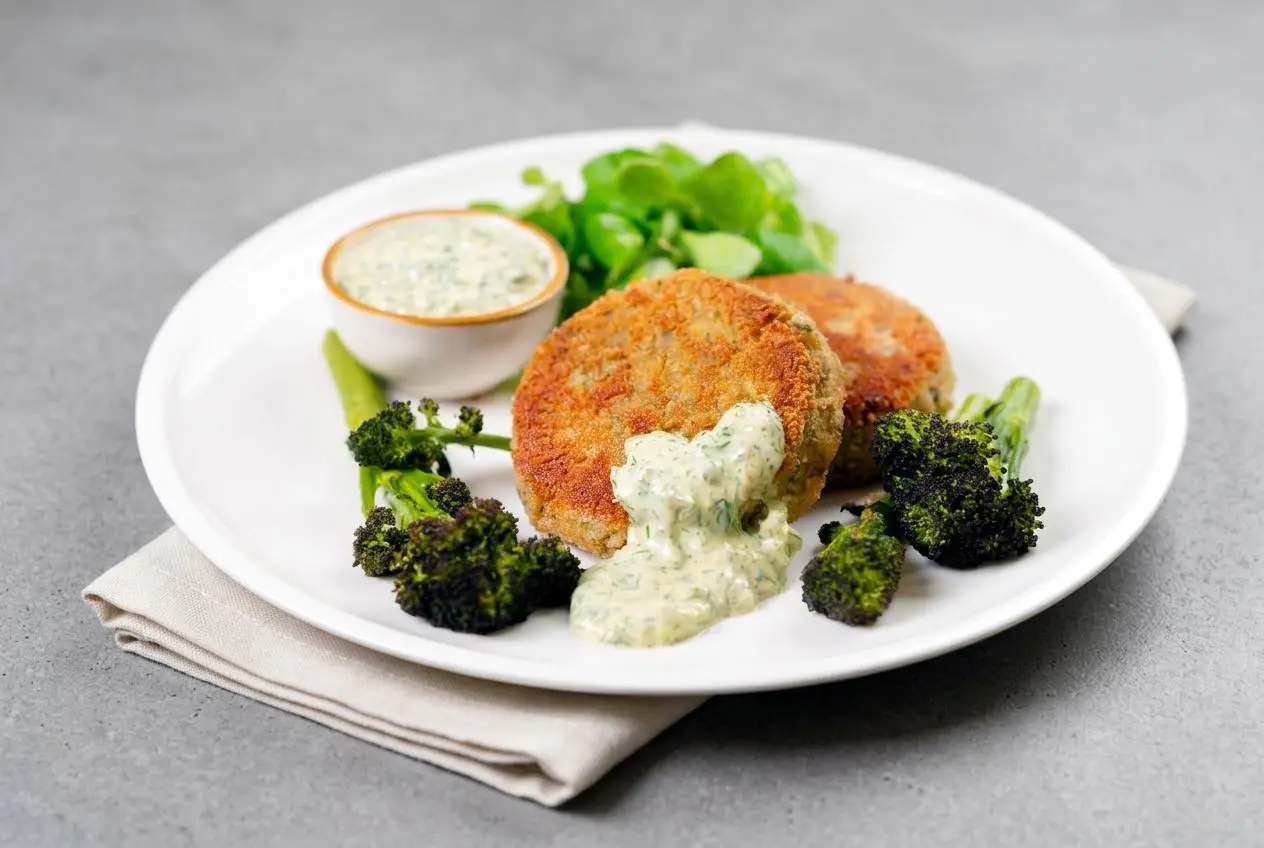
Tinned mackerel fish cakes combine drained mackerel with dry mashed potato, capers, parsley, and a fennel-scented crumb coating, then pan-fry until crisp and golden outside and tender in the middle.
Tinned Mackerel Fish Cakes Recipe is a smart way to turn canned fish into a proper meal with real crunch, good structure, and bold savory flavor. The potato keeps the cakes tender while helping everything hold together.
You get a crispy crust, a moist flaky center, and plenty of sharp, herby contrast from capers and parsley. The small tricks matter here, especially drying the potatoes well and chilling the patties twice.
Drain the fish thoroughly and let the potatoes steam off their moisture before mashing, or the mixture can turn soft fast.
Why Tinned Mackerel Is a Pantry Staple
Tinned mackerel earns its keep because it is fast, flavorful, and ready when fresh fish is not. It has a deeper, richer taste than many mild canned fish, so it stands up well to frying, herbs, and a crunchy coating.
It is also flexible. You can flake it into fish cakes, stir it through rice, or use it anywhere you might want a savory seafood shortcut. If you are after another classic seafood dinner, crispy fried fish is a good fresh-fish route, but tinned mackerel wins on convenience.
The type of tin matters. Mackerel packed in olive oil brings fuller flavor and a softer texture, but it needs thorough draining so the cakes do not fry up greasy. Mackerel packed in water tastes a bit leaner and cleaner. Mackerel in tomato or another sauce can work for other dishes, though it changes the flavor balance too much for this version, where capers, parsley, and fennel already do the heavy lifting.
Mackerel is also often chosen for its omega-3 fatty acids, but here the real kitchen advantage is practical: it already has enough richness to stay moist inside the cakes while the crumb turns crisp outside.
Essential Ingredients and Their Roles
Each ingredient pulls its weight here, building structure, freshness, richness, aroma, and that crisp golden contrast that makes fish cakes so satisfying.
- 2 Small-Medium Potato 350 g
- 1 1/2 teaspoon Salt
- 2 Tins Mackerel in Olive Oil 125 g or 4 oz each
- 50 g Capers 1/4 Cup
- 20 g Fresh Parsley 1 Cup
- 1 teaspoon Fennel Seeds
- 4 tablespoon Plain Flour
- 1 Large Egg
- 50 g Dried Breadcrumbs 1/2 Cup
- 1 tablespoon Cooking Oil
- 50 g Butter 3 tablespoon
The potatoes are doing more than filling out the mixture. Once boiled, drained, and allowed to steam dry, their starch becomes the main binder that keeps the fish cakes together. That is especially useful if you need a fish cake mixture that holds without becoming dense. Wet, creamy mash works against you here, but a dry mash gives the patties structure.
The mackerel brings the main savory flavor and enough natural richness to keep the center from tasting dry. Because this recipe uses mackerel in olive oil, draining really matters. Oil-packed fish tastes fuller than water-packed fish, but extra oil left in the tin can loosen the mixture. A sauce-packed version is usually too assertive for this balance and can make seasoning harder to control.
Capers and parsley are the lift. Capers bring salinity and acidity that cut through the oily fish, while parsley freshens the whole mixture so it does not feel heavy. Without that contrast, the cakes can taste flat.
Fennel seeds are a quiet but clever detail. Crushed into the flour, they perfume the coating with a sweet anise note that works beautifully with mackerel. It is not overpowering, just bright enough to make the crust more interesting.
The dredging trio matters too. Flour helps dry the surface and gives the egg something to grip. Egg acts like glue. Breadcrumbs create the shell that turns crisp in the pan.
I like to mash the potatoes while they are still warm, because they smooth out more easily and stay dry and fluffy instead of turning gluey.
How to Make Mackerel Fish Cakes
- Peel the potato, cut it into 2 cm cubes, and boil it in salted water for 12 to 15 minutes until tender.
The pieces should yield easily to a knife without breaking down into mush. - Drain the potato well, leave it to steam dry for a minute or two, then mash it in a medium mixing bowl.
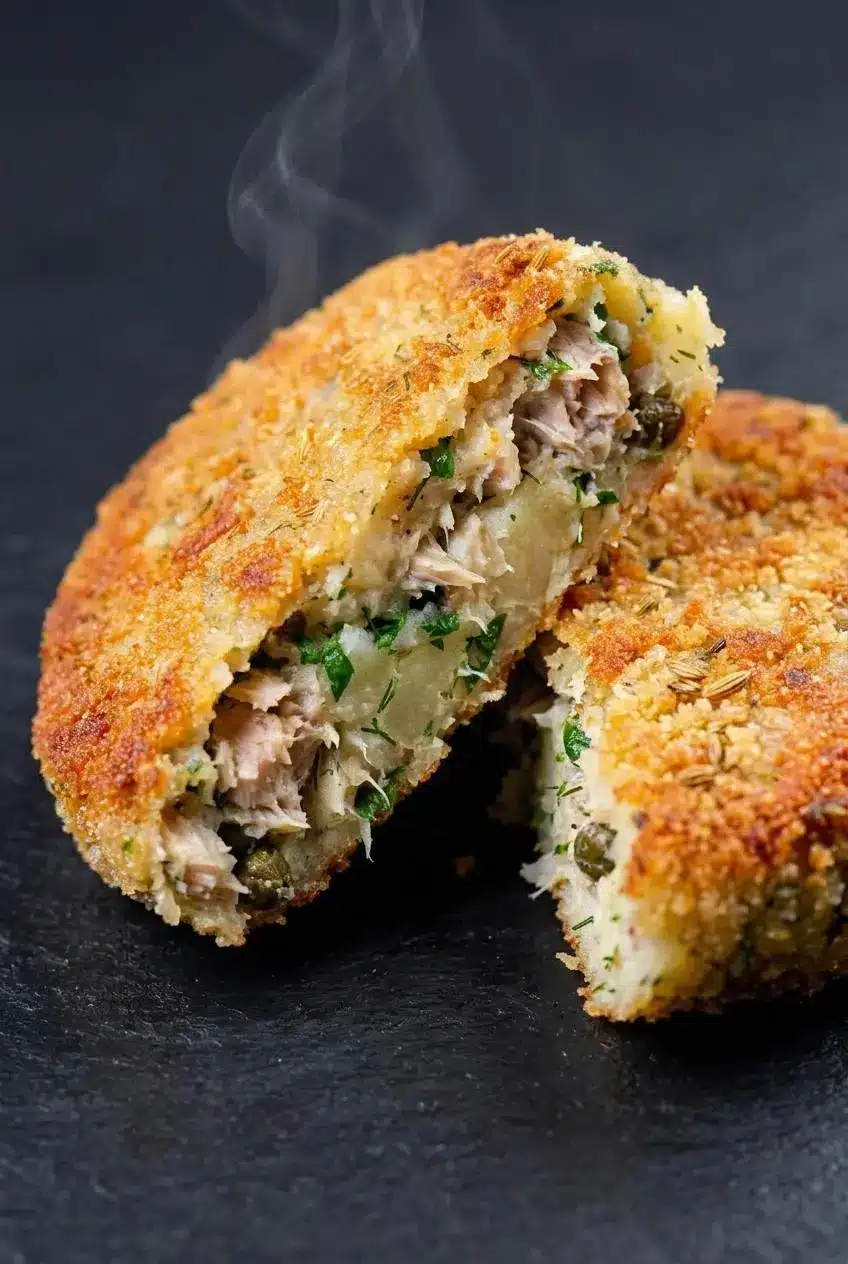
The mash should look dry and a little crumbly rather than creamy or glossy. - Drain the tins of mackerel thoroughly, flake the fish, and fold it into the warm mashed potato.
The fish should break up evenly through the mash without making it wet. - Roughly chop the capers, finely chop the parsley, add both to the bowl, and season to taste.
The mixture should smell fresh and savory, with the capers giving it a sharp briny edge. - Shape the mixture into 4 fish cakes and chill them in the fridge for 10 minutes.
They should feel firmer and easier to handle after this first chill. - Put the flour in one shallow bowl, the beaten egg in a second, and the breadcrumbs in a third, then crush the fennel seeds into the flour.
The dredging line should be ready before you coat the cakes so the crust stays neat and even. - Dip each cake in the flour, then the egg, then the breadcrumbs, and return them to the fridge for another 10 minutes.
The coating should fully cover the surface and look dry, not patchy. - Heat the cooking oil and butter in a frying pan over medium-high heat.
When the butter foams across the pan, the fat is hot enough for the cakes to go in. - Fry the cakes for 2 to 3 minutes per side, basting with the butter as they cook.
The crust should turn deep golden and crisp while the center stays tender and hot.
The main texture checkpoint comes right after mashing. If the potato looks fluffy and a bit dry, you are in great shape. If it looks slick or loose, pause before mixing in the fish and let a little more steam escape.
How to Keep Mackerel Fish Cakes from Falling Apart
If fish cakes break in the pan, the problem is usually moisture, weak chilling, or a pan that was not hot enough. This recipe avoids all three, but each one matters.
Start with the potatoes. After boiling, they need a brief steam-dry so excess water can evaporate. That dry finish is what gives the starch a better chance to bind the flaked fish. The same basic starch logic shows up in German potato pancakes, where moisture control makes the difference between crisp patties and soft ones.
The two chilling stages are not optional fussiness. The first 10-minute chill firms the shaped cakes so they are less delicate during coating. The second 10-minute chill helps the dredging set and gives the outer layer a better shot at staying intact once it hits the hot pan.
Pan heat matters just as much. If the butter and oil are only warm, the crumbs start absorbing fat before the crust sets. When the butter foams, the outside seals quickly, which helps the cakes keep their shape and pick up that golden crust instead of going greasy.
The Three-Step Dredging Station
A clean dredging order gives you better crunch and fewer cracks in the crust.
- Flour first. This dries the surface and gives the egg something to cling to.
- Egg second. This is the adhesive layer that helps the breadcrumbs stay put.
- Breadcrumbs last. This outer layer fries into the crisp shell that protects the soft center.
Crushed fennel seeds belong in the flour stage, not the egg or crumb bowl. That helps their aroma spread evenly around the cakes instead of clumping in patches.
Troubleshooting Wet or Crumbly Batter
- If the mixture feels wet, the usual cause is under-dried potatoes or poorly drained fish. Add a tablespoon of fine breadcrumbs or flour, then reshape gently.
- If the mixture seems too soft to form, chill it before trying to fix anything else. Cold mixture is easier to judge accurately.
- If the mixture feels crumbly and dry, it likely needs a little more binding. Add a tiny bit of whisked egg until it just holds together.
- If the crust falls off during frying, the cakes probably missed the second chill or went into the pan too soon. Keep the coating dry and let it firm up first.
- If you enjoy working with savory potato fillings, stuffed potato pancakes are another good reminder that shape and moisture control go hand in hand.
Oven and Air Fryer Instructions
Pan-frying gives the richest crust, but the oven and air fryer both work well if you want a lighter hands-off method. The trick is helping the coating brown well in drier heat.
Crunchy Oven-Baked Method
Bake the breaded cakes at 350 °F for 12 to 15 minutes. For better color and crunch, toast the breadcrumbs in a dry pan before dredging so they already have a head start before the cakes go into the oven.
A light coating of oil on the outside helps too. The cakes are ready when the crumb looks golden and the center is heated through.
Healthy Air Fryer Settings
Air fry the breaded cakes at 375 °F for 8 to 10 minutes, flipping halfway through. Spray the basket and both sides of the patties lightly with cooking oil so the crust browns evenly instead of drying out in spots.
This method gives a nice crisp finish, though the color is usually a touch less rich than the butter-basted skillet version.
Keto and Low-Carb Alternatives
If you want the flavor of these fish cakes without potato, you can still get a solid patty. The texture changes a little, but the idea works well when you build the binder differently.
Coconut and Almond Flour Binders
For a potato-free version, use coconut flour and almond flour as the binding base, along with a medium egg. Almond flour gives body and tenderness, while coconut flour absorbs moisture more aggressively, so you need much less of it than you might expect.
Because those flours behave differently from potato starch, add them gradually until the mixture feels shapeable rather than wet. The finished patties will be slightly less fluffy than the potato version, but they can still be crisp outside and tender within.
This is also the best place for optional flavor spins. A little gochujang-style heat works nicely if you want a spicy edge, and lemon zest, cracked pepper, and dill give the cakes a fresher, brighter profile.
Selecting the Right Fats for Low-Carb Frying
For low-carb patties, choose fats that brown well and suit the richer fish. Avocado oil, ghee, or butter all work, and each gives a slightly different finish.
- Avocado oil gives clean browning and a more neutral flavor.
- Ghee handles heat well and adds a nutty edge.
- Butter gives the best classic flavor, but watch the heat so the solids do not darken too fast.
Serving and Pairing Suggestions
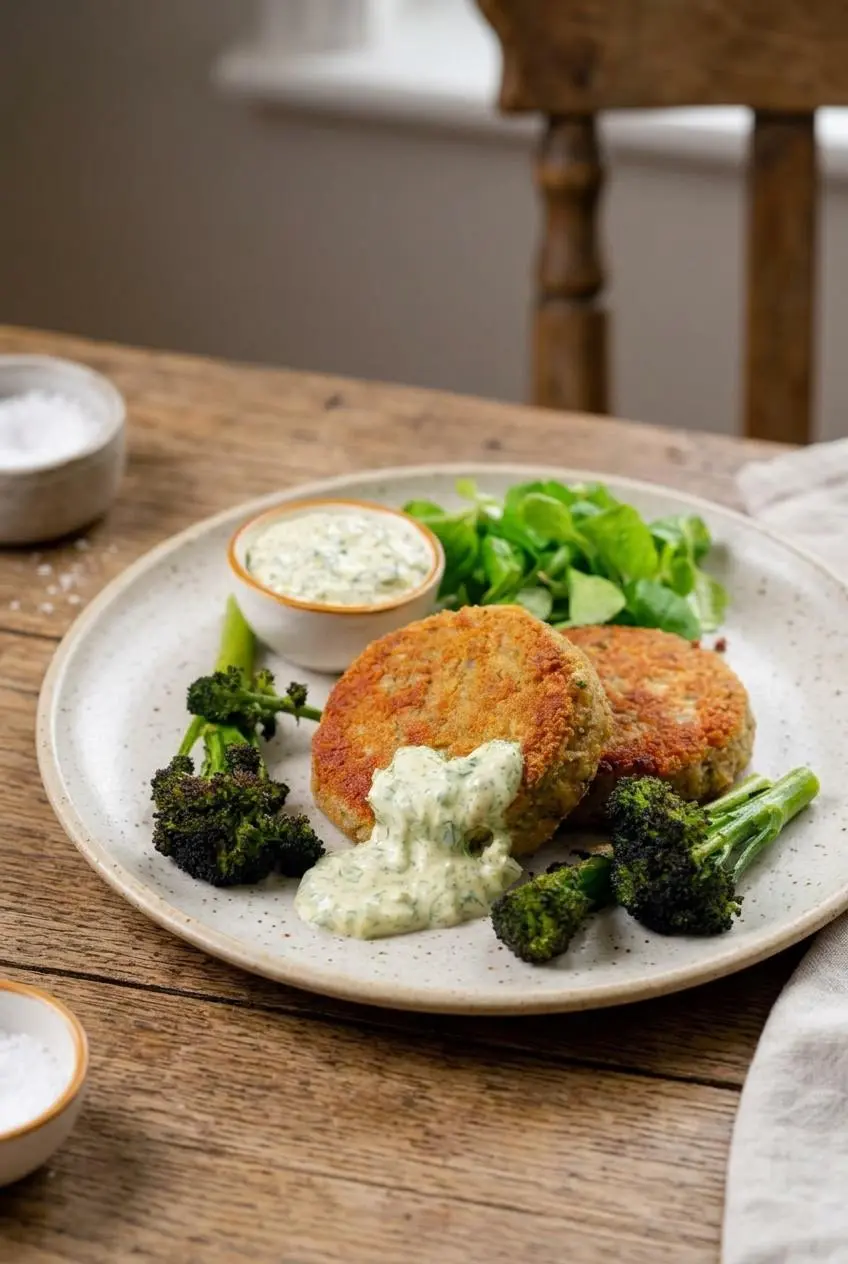
These fish cakes are at their best with something sharp, green, or creamy alongside them. Rich fish and crisp crumbs love contrast.
- Serve them with tartare sauce for a classic cool, tangy pairing.
- Add roasted broccoli for a warm, sturdy side that does not compete with the fish.
- Try a pickled fennel salad if you want something fresh and bright with a little crunch.
- Set them on toasted brioche buns with cheddar and lettuce for an easy fish burger lunch.
Storage, Freezing, and Reheating Guide
These hold up best when you protect the crust and keep the patties chilled promptly after cooling. For cooked leftovers, refrigerate them in a covered container and use them within 3 days; when reheating fish dishes, warming the center to 145 °F for seafood safety is the useful benchmark.
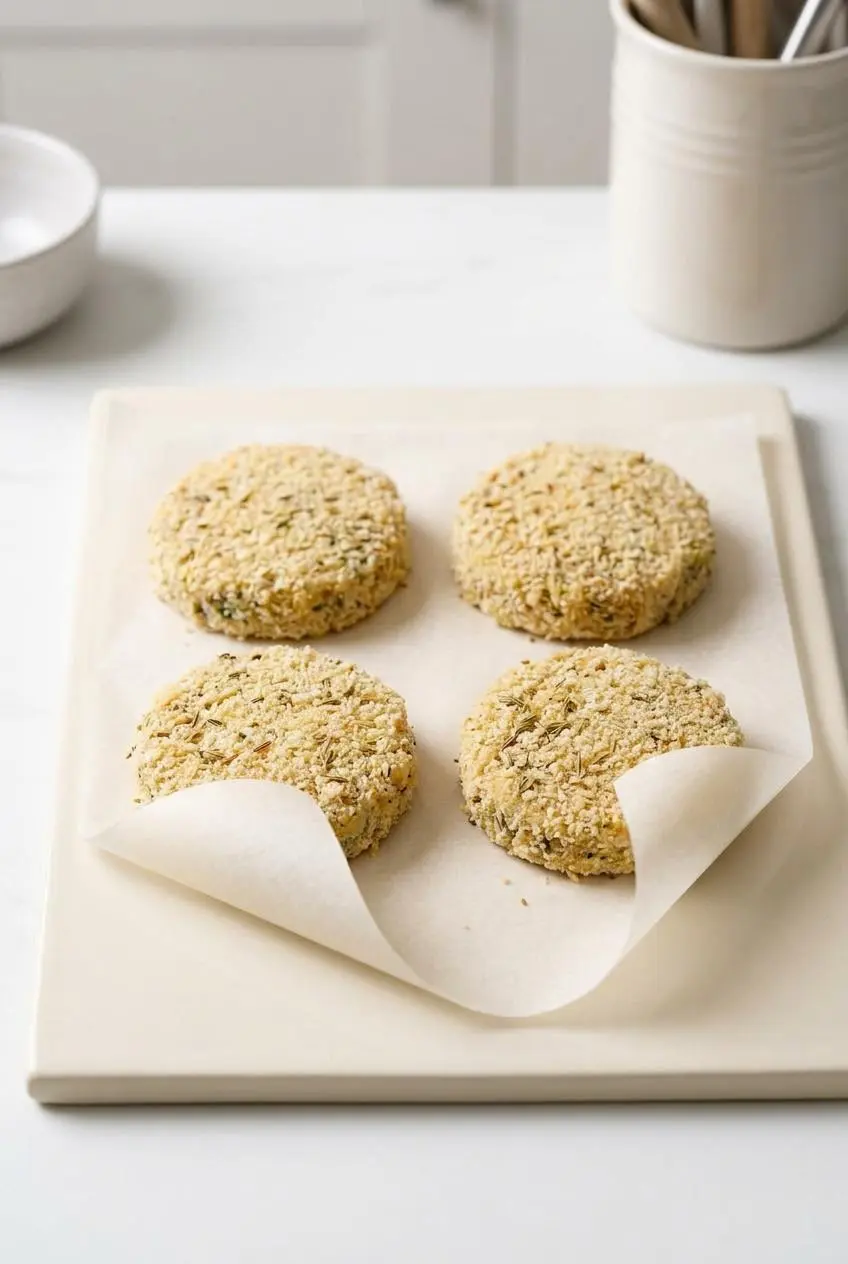
For uncooked breaded patties, set them on a parchment-lined tray in a single layer and freeze until firm, then transfer them to a freezer bag with parchment between layers. They can be kept frozen for up to 3 months.
Cook frozen patties by starting them in a skillet to brown the outside, then finish them in a hot oven so the middle heats through without over-darkening the crust. It is better not to freeze fully cooked patties here, because the crumb loses too much of its crisp texture.
Conclusion
These fish cakes turn a couple of tins of mackerel into something properly comforting, with a crisp crust, savory center, and enough freshness from parsley and capers to keep every bite lively.
If you remember one thing, make it this: dry the potatoes well and do not skip the two chilling pauses. That is what keeps the cakes tidy in the pan and beautifully golden on the plate.
Frequently Asked Questions
How do you keep mackerel patties from falling apart?
Dry the potatoes well after boiling so the starch can bind the mixture properly. Chill the shaped cakes once before dredging and again after coating. Fry them only when the butter and oil are properly hot, so the crust sets quickly.
Can I use leftover mashed potatoes for fish cakes?
Yes, as long as the mash is not too rich or loose. Heavily buttered or creamy mashed potatoes can make the mixture too soft to shape well. If the leftover mash is a bit wet, add a little flour or fine breadcrumbs until the mixture holds together.
Do I need to remove the skin and bones from canned mackerel?
Usually not. Most tins are already skinless and boneless, or close to it. If you find tiny soft bones, you can mash them in or remove them if you prefer. Check the fish as you flake it so you can catch any larger bits before mixing.
Can I bake these in the oven instead of frying?
Yes. Bake them at 350 °F for 12 to 15 minutes. Toast the breadcrumbs in a dry pan first if you want deeper color and better crunch. A light brush or spray of oil on the outside also helps the coating brown more evenly.
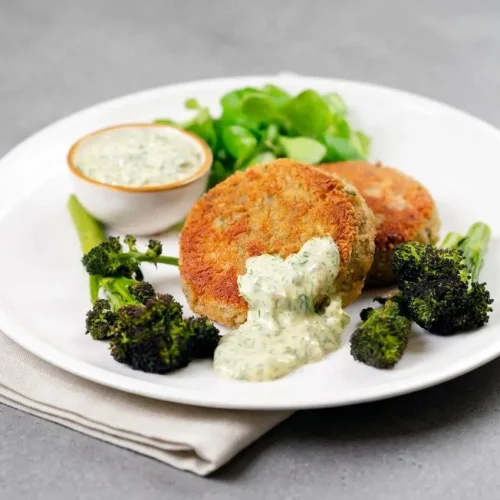
Tinned Mackerel Fish Cakes Recipe

Equipment
- 20cm saucepan
- Medium mixing bowl
- Three shallow prep bowls
- 30cm frying pan
- Spatula
Ingredients
- 2 Small-Medium Potato 350 g
- 1 1/2 teaspoon Salt
- 2 Tins Mackerel in Olive Oil 125 g or 4 oz each
- 50 g Capers 1/4 Cup
- 20 g Fresh Parsley 1 Cup
- 1 teaspoon Fennel Seeds
- 4 tablespoon Plain Flour
- 1 Large Egg
- 50 g Dried Breadcrumbs 1/2 Cup
- 1 tablespoon Cooking Oil
- 50 g Butter 3 tablespoon
Instructions
- Peel the potato, cut it into 2 cm cubes, and boil it in salted water for 12 to 15 minutes until tender. The pieces should yield easily to a knife without breaking down into mush.
- Drain the potato well, leave it to steam dry for a minute or two, then mash it in a medium mixing bowl. The mash should look dry and a little crumbly rather than creamy or glossy.
- Drain the tins of mackerel thoroughly, flake the fish, and fold it into the warm mashed potato. The fish should break up evenly through the mash without making it wet.
- Roughly chop the capers, finely chop the parsley, add both to the bowl, and season to taste. The mixture should smell fresh and savory, with the capers giving it a sharp briny edge.
- Shape the mixture into 4 fish cakes and chill them in the fridge for 10 minutes. They should feel firmer and easier to handle after this first chill.
- Put the flour in one shallow bowl, the beaten egg in a second, and the breadcrumbs in a third, then crush the fennel seeds into the flour. The dredging line should be ready before you coat the cakes so the crust stays neat and even.
- Dip each cake in the flour, then the egg, then the breadcrumbs, and return them to the fridge for another 10 minutes. The coating should fully cover the surface and look dry, not patchy.
- Heat the cooking oil and butter in a frying pan over medium-high heat. When the butter foams across the pan, the fat is hot enough for the cakes to go in.
- Fry the cakes for 2 to 3 minutes per side, basting with the butter as they cook. The crust should turn deep golden and crisp while the center stays tender and hot.