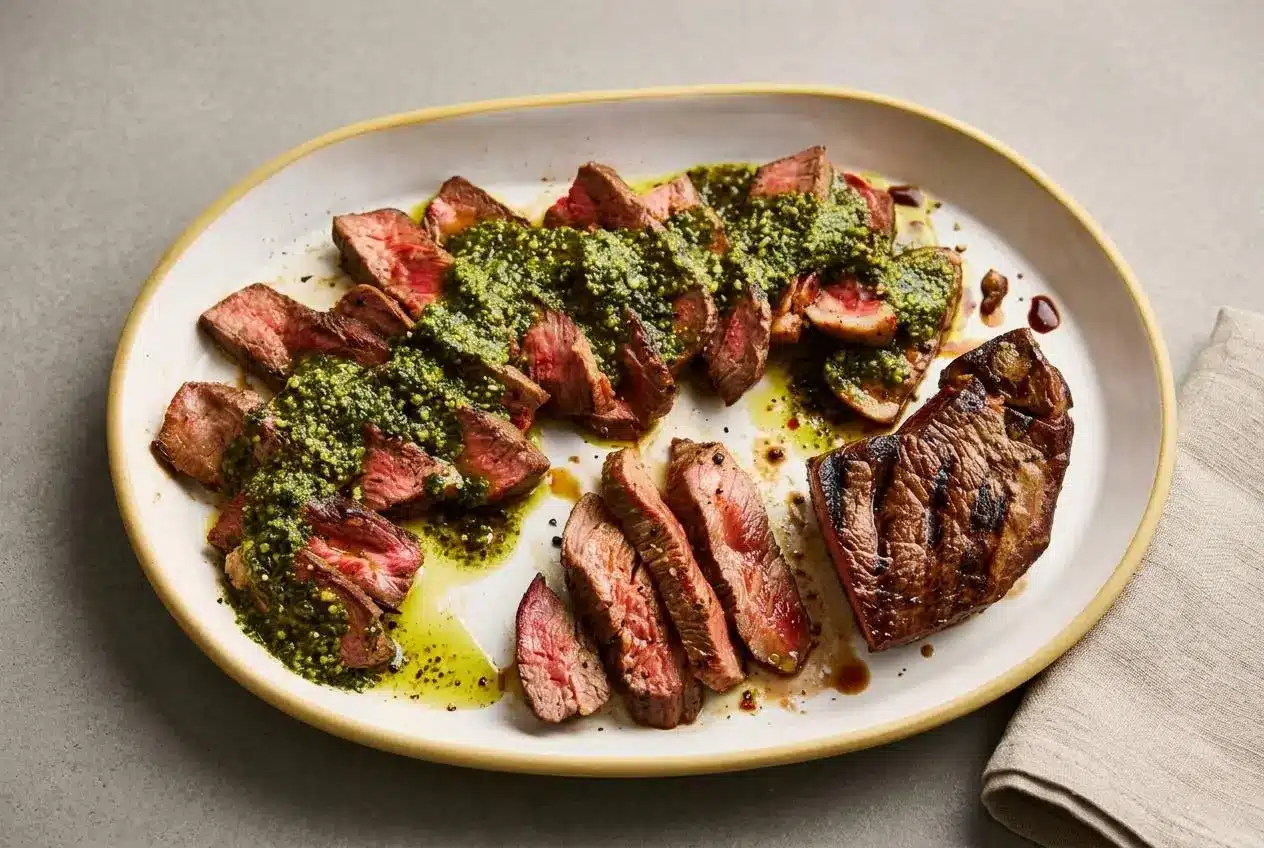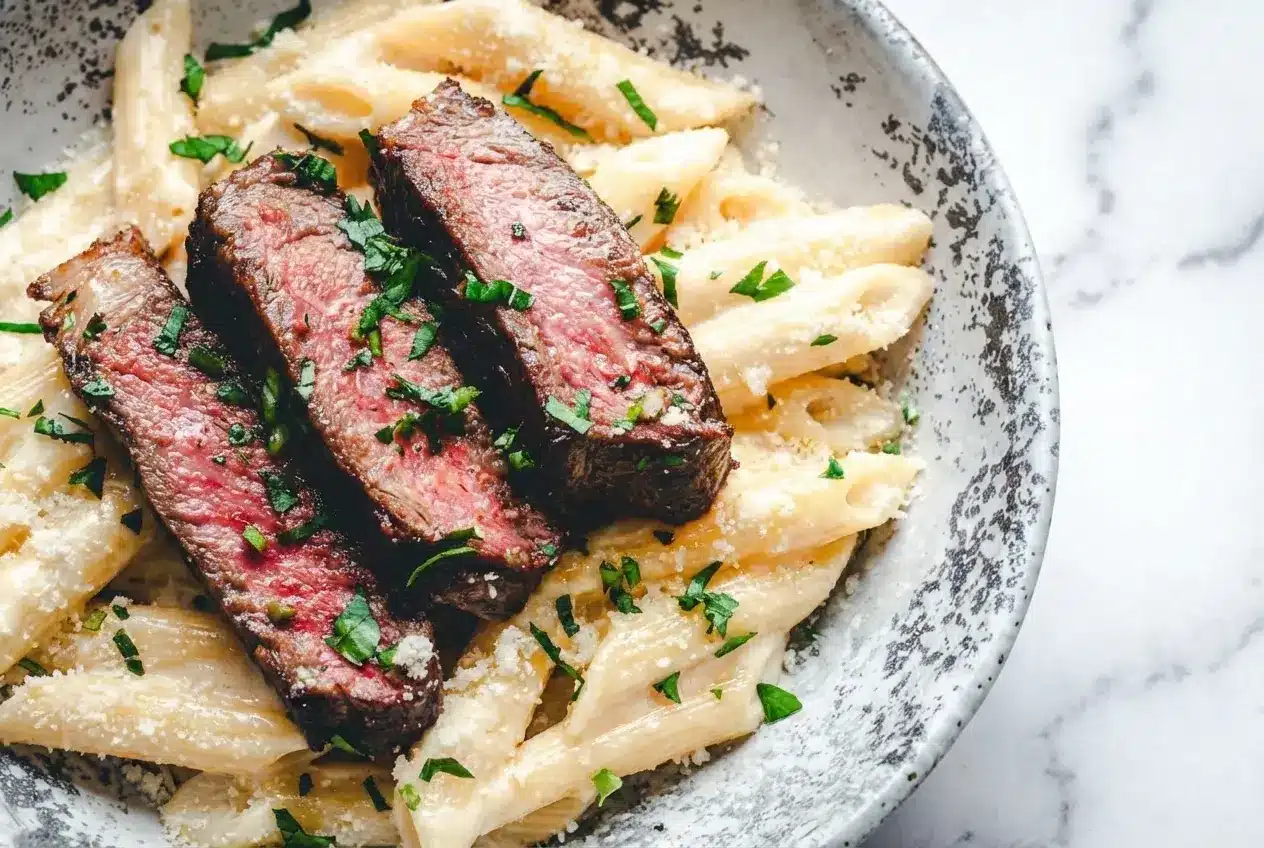
There is something deeply comforting about the moment steakhouse flavors meet a bowl of pasta at home. This steak pasta recipe brings together juicy ribeye, tender penne, and a silky garlic cream sauce in a way that feels special enough for date night, but easy enough for a busy weeknight.
In my kitchen, the little trick that turns this into a true restaurant-style dinner is balance. I will show you how to get perfectly tender steak, build an unbroken pan sauce from the flavorful browned bits in the skillet, and finish the whole dish so it tastes rich, savory, creamy, and never too heavy.
Why You’ll Love This Recipe
Steakhouse comfort, smarter balance: This dish has all the cozy richness you want from ribeye steak, heavy cream, and Parmesan cheese, but it never feels flat or overloaded. The flavors land with that polished, restaurant-quality finish that makes each bite feel complete.
The secret twist: I deglaze the fond with a splash of dry white wine or dry sherry before the cream goes in, and that bright acidity wakes up the whole pan. Right at the end, a light drizzle of balsamic glaze adds a tart-sweet edge that cuts through the richness beautifully.
Reliable texture: When the pasta water meets the cream sauce, it helps everything turn glossy and smooth instead of greasy or broken. It reminds me of the same silky payoff you get in a well-made chicken orzo recipe, where rich ingredients still feel balanced and elegant on the plate.
Easy enough for home cooks: Once you understand the sear, the butter basting, and the timing, this becomes a foolproof dinner. I have made it enough times to know that a cast iron skillet and a little patience do most of the heavy lifting.
Ingredients and Substitutions
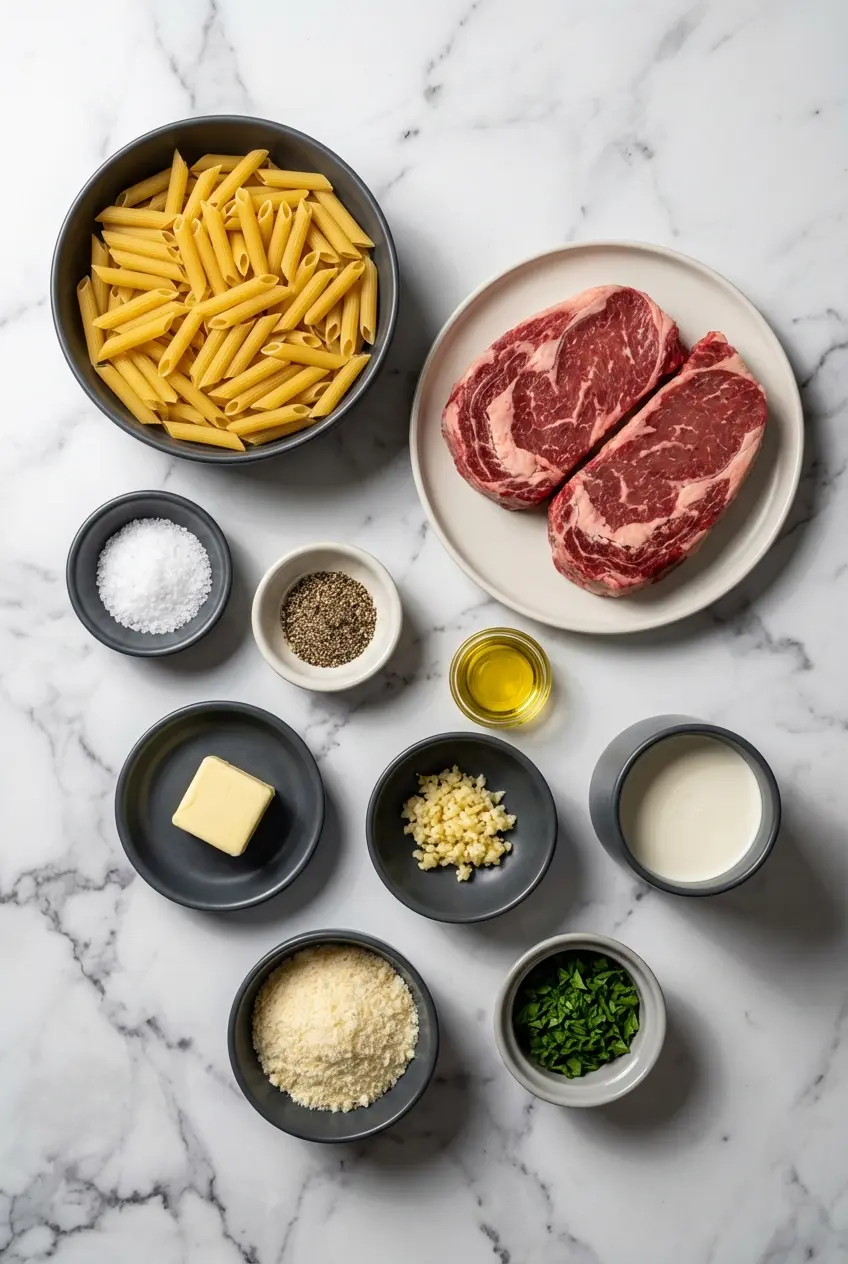
A short ingredient list does the job here, as long as each piece pulls its weight. Good steak, fresh Parmesan, and a splash of acidity are what give this pasta its steakhouse personality.
Ingredients
- 8 ounces penne pasta or other short pasta, like fusilli
- 16 ounces ribeye steak 2 8-ounce steaks, 1 1/4 to 1 1/2-inches thick
- kosher salt and freshly ground black pepper to taste
- 1 tablespoon avocado oil or other high heat oil
- 3 tablespoons butter divided
- 2 large garlic cloves minced
- 1 cup heavy cream
- 2 ounces grated parmesan cheese plus more for serving
- chopped fresh parsley for garnish, optional
Ingredient Notes & Substitutions
Ribeye steak: Ribeye is my first choice because the marbling keeps the meat tender and flavorful, even with a hard sear. Sirloin and flank steak can work too, but they need careful cooking and must be sliced against the grain so they stay tender instead of turning chewy.
Parmesan cheese: Freshly grated Parmesan from a block is non-negotiable if you want a smooth sauce. Pre-shredded cheese usually carries anti-caking agents, and those can leave your cream sauce grainy instead of glossy.
Pasta shape: Penne is great because the sauce slips inside each tube, but fusilli and other short pasta shapes are just as good at catching the creamy sauce. I would skip long noodles here because the sliced steak and short pasta are easier to eat together.
Dry white wine or dry sherry: This is the quiet hero of the dish. Just a splash loosens the fond and adds acidity that keeps the cream from tasting too heavy, which is exactly what makes the final bowl feel polished rather than one-note.
Balsamic glaze: A small drizzle at the end gives the plate that steakhouse finish. It is not there to make the pasta sweet, it is there to add a tart-sweet contrast that sharpens the flavor of the ribeye and heavy cream.
Easy variations: For a puttanesca-style version, leave out the cream and use cherry tomatoes, Kalamata olives, capers, and garlic for a briny, lighter finish. For a steakhouse spin, swap the Parmesan for 2 to 3 ounces of Gorgonzola or blue cheese, or add cremini mushrooms, spinach, roasted bell peppers, or crushed red pepper flakes if you want more depth or heat.
How to Make steak pasta recipe
Cook the Pasta and Prep the Steak
- Bring a large pot of well-salted water to a boil and cook the penne until al dente, meaning it should still have a little bite in the center. Drain it and be sure to save at least 1 cup of the starchy pasta water, because that liquid is your insurance policy for a silky sauce later.
- While the pasta cooks, pat the steaks completely dry with paper towels until the surface feels dry, not damp. Season both sides generously with kosher salt and freshly ground black pepper so the crust builds properly once the meat hits the hot skillet.
Sear and Butter Baste the Steak
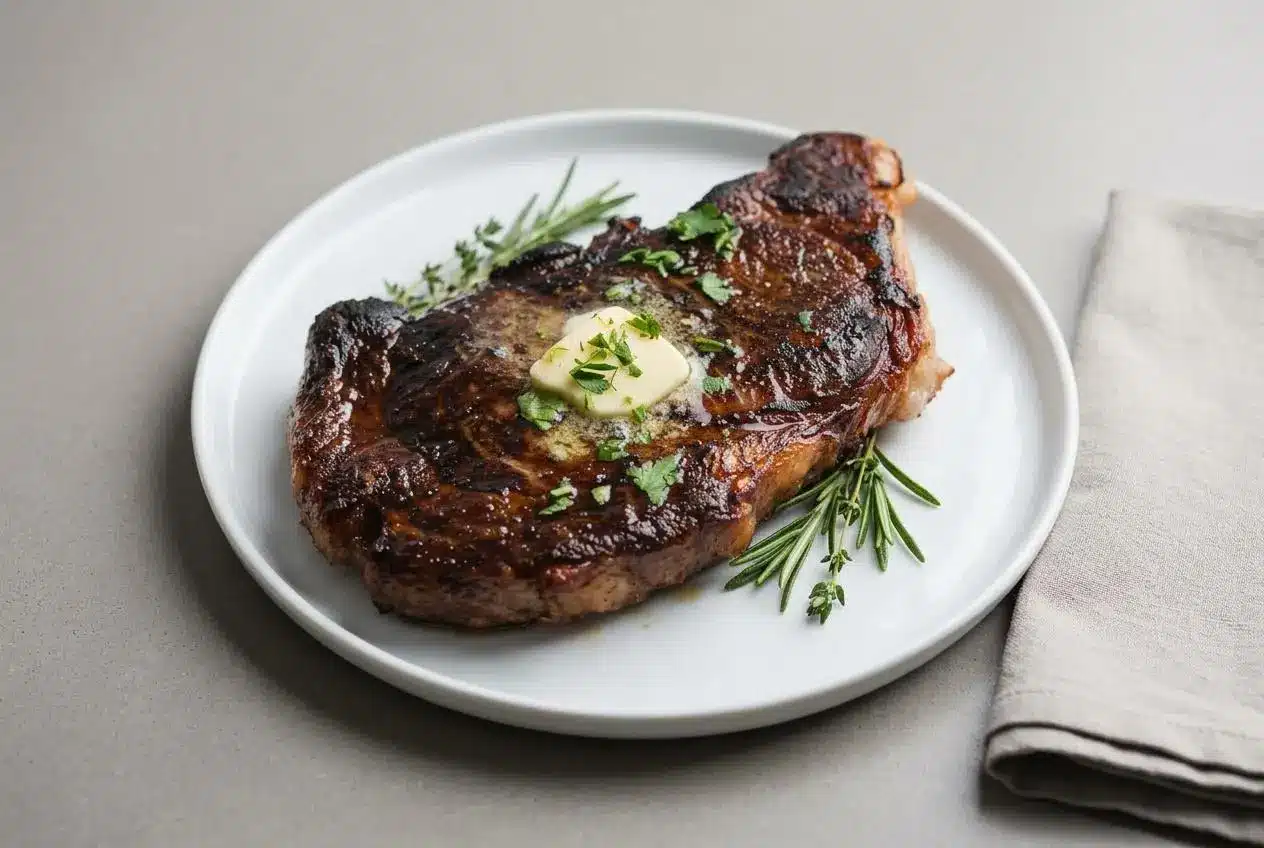
- Heat the avocado oil in a large cast iron skillet over medium-high heat until it is very hot and shimmering, then swirl to coat the pan. Lay the steaks in a single layer and let them sear undisturbed for 3 to 5 minutes on the first side, until a deep golden-brown crust forms, then flip and cook the second side for 3 to 4 minutes more.
- Lower the heat to medium and add 1 tablespoon of butter to the skillet. As the butter foams and sizzles, tilt the pan and spoon it over the steaks again and again until the internal temperature reaches 130-135F for medium-rare on an instant-read meat thermometer.
- Move the steaks to a cutting board, tent loosely with foil, and let them rest for 5-10 minutes so the juices settle back into the meat. Slice across the grain into 1/2 to 1-inch slices for the most tender bite.
Build the Sauce
- Keep the same skillet on the stove and add a splash of dry white wine or dry sherry before anything else. Scrape up the browned bits from the bottom, then add the remaining 2 tablespoons of butter over medium heat and let it melt until sizzling.
- Stir in the minced garlic and cook for about 30 seconds, just until fragrant and no longer raw. Pour in the heavy cream, bring it to a gentle simmer, and keep stirring as the sauce thickens slightly over about 3 minutes.
- Add the grated Parmesan cheese and stir until fully melted and smooth. The sauce should look glossy and coat the spoon, not feel thick and heavy.
Finish and Serve
- Add the drained pasta to the skillet and toss until the noodles are heated through and coated in the cream sauce. If it looks too thick, stir in the reserved pasta water a tablespoon at a time until the sauce clings luxuriously to the pasta, then season with salt and pepper to taste.
- Spoon the pasta into bowls or onto a platter, arrange the sliced steak on top, and finish with more Parmesan and chopped parsley if you like. For the final restaurant touch, add a light drizzle of balsamic glaze right before serving.
Secrets for a Perfect Sear and Sauce
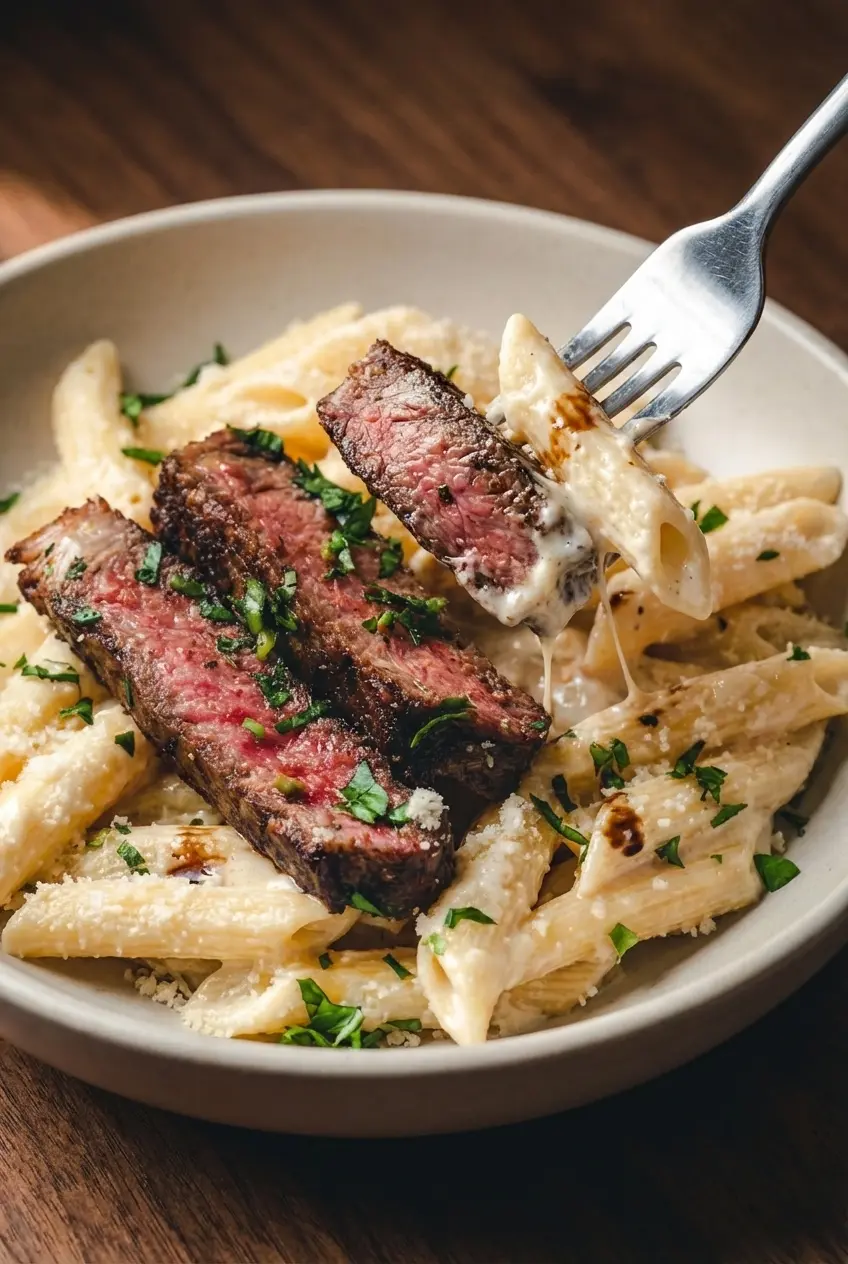
A great crust starts with the Maillard reaction, which is the browning process that creates deep, savory flavor when the surface of meat gets hot enough. If the steak is wet, that moisture has to steam away first, so instead of browning quickly, the meat sits there and steams, which is why patting it completely dry matters so much.
The fond left behind in the cast iron skillet is where the pan sauce really begins. Those browned bits are concentrated flavor, and when you loosen them with wine or sherry before adding the cream, they melt right into the sauce and give it that steakhouse depth you cannot fake.
Starchy pasta water is the other secret weapon. It helps the butter, heavy cream, and cheese emulsify into a smooth sauce, much like the technique that gives a classic pasta carbonara its silky finish, so the pasta looks glossy instead of greasy.
Mastering Steak Doneness Temperatures
If you want consistent results, a meat thermometer is the easiest way to get there. The most important thing to remember is carryover cooking, which means the steak keeps rising about 5 to 10 degrees after it leaves the skillet, especially while it rests under foil.
- Rare: Pull at 120-125F, final resting temperature about 125-130F
- Medium-Rare: Pull at 130-135F, final resting temperature about 135-140F
- Medium: Pull at 140-145F, final resting temperature about 145-150F
- Well-Done: Pull at 155-160F, final resting temperature about 160-165F
For this pasta, I like medium-rare because the steak stays juicy and tender against the creamy sauce. If you do not have a thermometer, the hand test can help in a pinch, but for a cut like ribeye, an instant-read thermometer removes the guesswork and saves dinner.
Pro Tips and Troubleshooting
Pro Tips for Success
- Let the steak sit at room temperature for 20 to 30 minutes before cooking so it sears more evenly and develops a better crust.
- Reserve at least 1 cup of pasta water every time, even if you think you will not need it. A few spoonfuls can completely transform the texture of the sauce.
- Use fresh grated Parmesan cheese from a block for the smoothest sauce and the cleanest flavor.
- If you do not have a meat thermometer, use the hand test as a backup, but watch the sear closely and do not skip the resting time.
Common Mistakes to Avoid
- Slicing the steak right away, which lets the juices run out onto the board instead of staying in the meat.
- Cutting with the grain instead of against the grain, which makes even a good steak feel tougher than it should.
- Washing or wiping out the skillet after searing, because that means throwing away the fond that gives the sauce its best flavor.
- Boiling the heavy cream too hard, which can make the sauce separate instead of staying smooth and velvety.
Serving and Storage
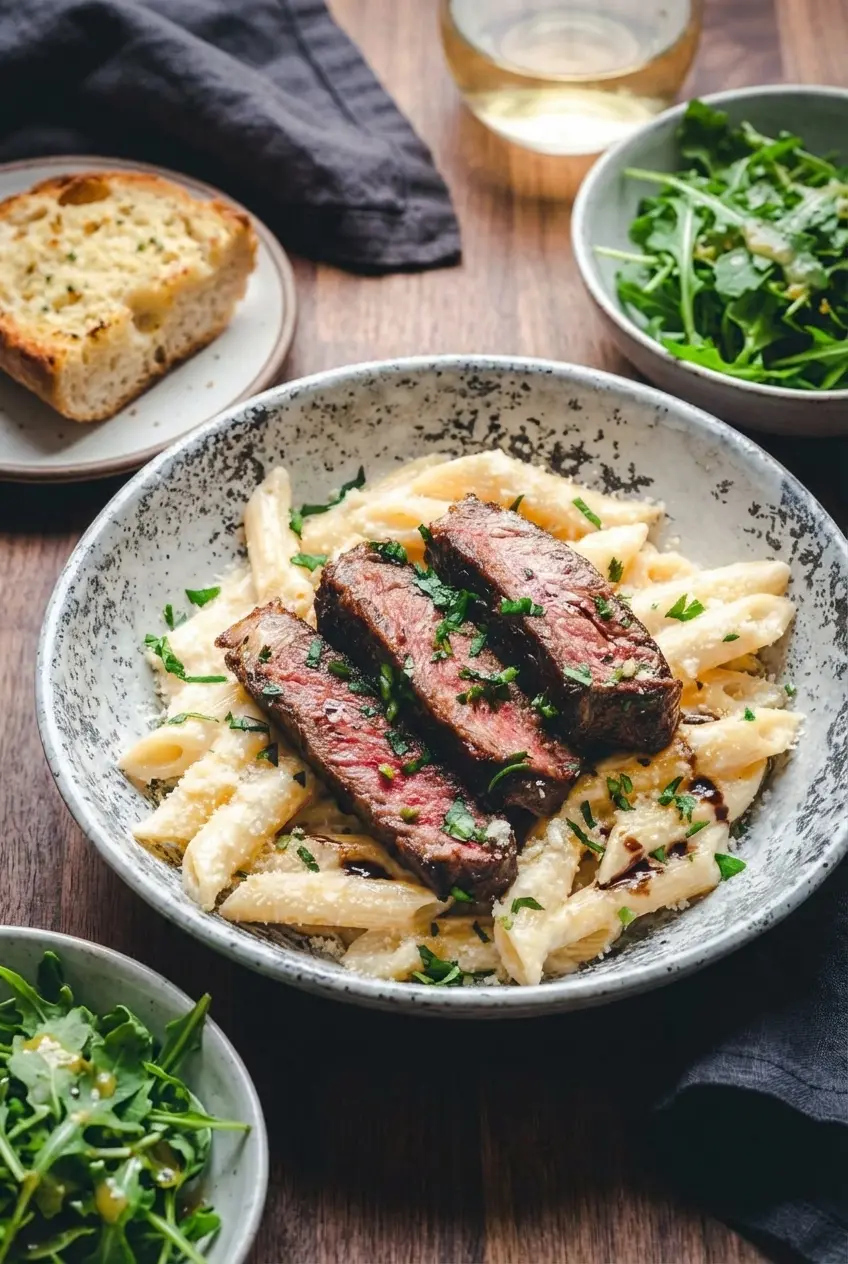
Serving Ideas
This pasta is rich, so I like to serve it with something crisp and bright, such as a Little Gem or arugula salad tossed in a light lemon vinaigrette. That fresh bite keeps the meal feeling balanced, the same way a good steakhouse plate always pairs richness with a little contrast.
Crusty garlic bread is a natural fit here because no one wants to leave that sauce behind. If you are leaning into comfort food territory, a side of mashed potato puffs also plays nicely with the classic American steakhouse mood without feeling overdone.
Right before serving, I like a final shower of Parmesan and a pinch of flaky sea salt directly over the sliced steak. That tiny finishing touch wakes up the meat and makes the whole plate taste a little more polished.
Storage and Make-Ahead Instructions
Cream-based pasta is always a little fussy the next day because the sauce can split when reheated too aggressively. The microwave often pushes the dairy too fast, so the butter and cream separate instead of warming back into a smooth emulsion.
If possible, store the pasta and steak separately in the refrigerator. That way the steak does not overcook during reheating, and the sauce has a better chance of staying creamy.
To reheat, place the pasta and sauce in a skillet or saucepan over low heat and add a small splash of milk or some of the leftover pasta water. Stir gently until the sauce loosens and turns creamy again, then warm the steak separately just enough to take the chill off before laying it over the top.
Easy Steak Pasta Recipe

Equipment
- Cast Iron Skillet
- Meat Thermometer
- Large Pot
Ingredients
- 8 ounces penne pasta or other short pasta, like fusilli
- 16 ounces ribeye steak 2 8-ounce steaks, 1 1/4 to 1 1/2-inches thick
- kosher salt and freshly ground black pepper to taste
- 1 tablespoon avocado oil or other high heat oil
- 3 tablespoons butter divided
- 2 large garlic cloves minced
- 1 cup heavy cream
- 2 ounces grated parmesan cheese plus more for serving
- chopped fresh parsley for garnish, optional
Instructions
Cook the Pasta and Prep the Steak
- Bring a large pot of well-salted water to a boil and cook the penne until al dente. Drain the pasta, making sure to save at least 1 cup of the starchy pasta water to help build a silky sauce later.
- While the pasta cooks, pat the steaks completely dry with paper towels. Season both sides generously with kosher salt and freshly ground black pepper so a proper crust can build.
Sear and Butter Baste the Steak
- Heat the avocado oil in a large cast iron skillet over medium-high heat until it is very hot and shimmering. Swirl to coat the pan, lay the steaks in a single layer, and let them sear undisturbed for 3 to 5 minutes on the first side. Flip and cook the second side for 3 to 4 minutes more.
- Lower the heat to medium and add 1 tablespoon of butter to the skillet. As the butter foams, tilt the pan and constantly spoon it over the steaks until the internal temperature reaches 130-135F for medium-rare on a meat thermometer.
- Move the steaks to a cutting board, tent loosely with foil, and let them rest for 10 minutes so the juices settle back into the meat. Slice across the grain into 1/2 to 1-inch slices.
Build the Sauce
- Keep the same skillet on the stove. If desired, add a splash of dry white wine or dry sherry to scrape up the browned bits from the bottom. Add the remaining 2 tablespoons of butter over medium heat and let it melt until sizzling.
- Stir in the minced garlic and cook for about 30 seconds until fragrant and no longer raw. Pour in the heavy cream, bring to a gentle simmer, and keep stirring as the sauce thickens slightly over about 3 minutes.
- Add the grated Parmesan cheese and stir until fully melted and smooth. The sauce should look glossy and coat the spoon.
Finish and Serve
- Add the drained pasta to the skillet and toss until the noodles are heated through and coated in the cream sauce. If the sauce looks too thick, stir in the reserved pasta water a tablespoon at a time until it clings perfectly. Season with salt and pepper to taste.
- Spoon the pasta into bowls, arrange the sliced steak on top, and finish with extra Parmesan and chopped parsley. For a restaurant touch, add a light drizzle of balsamic glaze right before serving.
Notes
Nutrition
Conclusion
This is the kind of dinner that proves a great steak pasta recipe does not need a long list of ingredients, just good technique and a few smart finishing touches. The splash of wine or sherry and that final balsamic glaze are what turn it from heavy comfort food into something balanced and memorable.
If you make it, I hope you put your own spin on it, whether that means mushrooms, blue cheese, or a little heat. I would love to hear how it turned out in your kitchen.