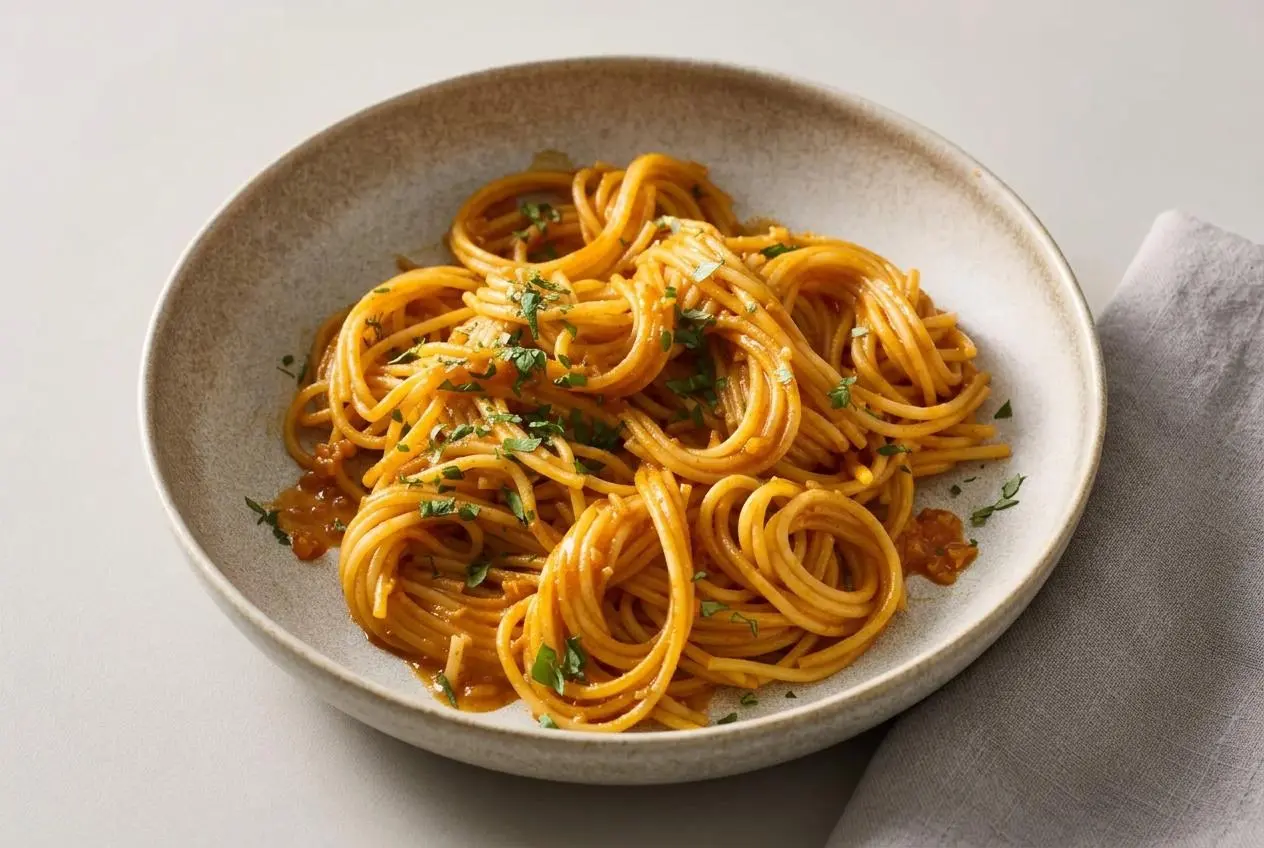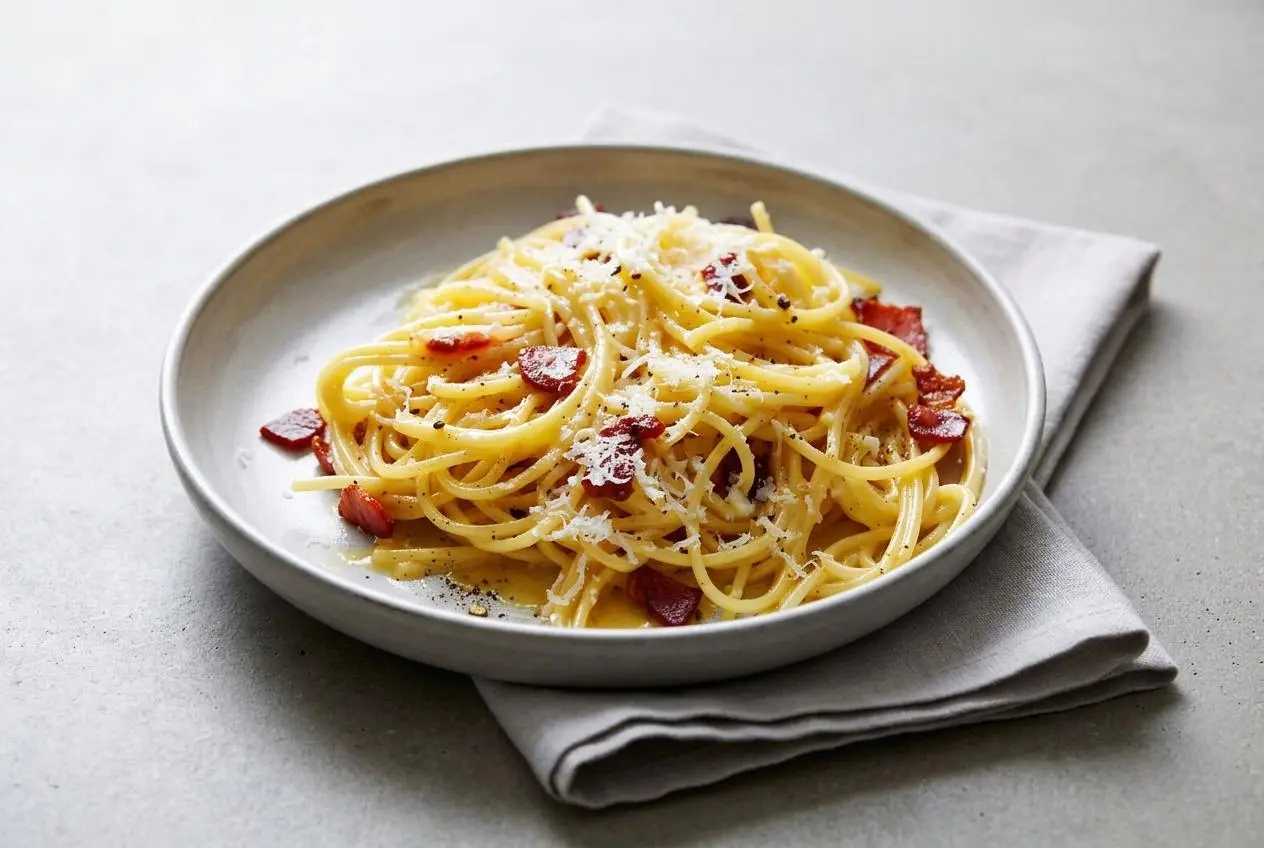
Traditional Roman carbonara relies on eggs, hard cheese, rendered cured pork fat, and starchy pasta water to create a glossy sauce without cream.
This spaghetti carbonara recipe turns a hot bowl of pasta into something silky, peppery, and deeply savory. The key is moving quickly once the spaghetti is cooked, so the eggs and cheese become a sauce rather than scrambled bits.
The gentle sizzle of cured pork and the aroma of coarse black pepper make the kitchen feel instantly more inviting. That glossy coating is closer than it looks.
Set out the serving bowl, egg mixture, tongs, and reserved-water cup before draining the pasta so the final toss stays calm and quick.
Essential Ingredients and Their Role in the Sauce
Every ingredient contributes to carbonara’s balance: eggs build body, cheese brings salt and savoriness, pork adds richness, pepper adds warmth, and pasta water helps everything cling to the spaghetti.
- Salt
- 2 large eggs and 2 large yolks, room temperature
- 1 ounce (about ⅓ packed cup) grated pecorino Romano, plus additional for serving
- 1 ounce (about ⅓ packed cup) grated Parmesan
- Coarsely ground black pepper
- 1 tablespoon olive oil
- 3 ½ ounces of slab guanciale, pancetta or bacon, sliced into pieces about ¼ inch thick by 1⅓ inch square
- 12 ounces spaghetti (about ¾ box)
The two whole eggs give the sauce enough fluidity to coat the spaghetti, while the extra yolks provide a richer, custard-like texture. Pecorino Romano brings a sharp, salty edge; Parmesan rounds it out with nuttiness. As the pasta is tossed, its starchy cooking water helps bind the rendered pork fat, egg, and cheese into a smooth glaze.
I bring the eggs to room temperature because they blend into hot pasta more readily and do not cool the mixture as much during the final toss.
Pork Substitutions: Guanciale, Pancetta, and Bacon
Guanciale, made from cured pork jowl, is the traditional choice. Its generous fat melts into the skillet and gives carbonara a distinctive cured pork richness. Pancetta is an excellent alternative with a cleaner, meatier profile.
- Guanciale: The most traditional option, with silky rendered fat and pronounced cured flavor.
- Pancetta: Unsmoked and savory, with a balanced pork flavor that lets the cheese and pepper stand out.
- Slab bacon: A practical substitute. Choose thick-cut, unsmoked bacon when possible and render it slowly so smoke does not take over the dish.
Whichever pork you use, cook it over medium heat until the fat has melted and the edges are crisp but the pieces still have a little chew. For a vegetable-based alternative that uses the same egg-and-cheese idea, try spaghetti squash carbonara.
Balancing Pecorino Romano and Parmigiano-Reggiano
Pecorino Romano gives carbonara its assertive tang, while Parmesan softens that intensity with mellow, aged savoriness. Together, they make the sauce full-bodied without becoming harsh.
Grate both cheeses finely by hand. Packaged shredded cheese often contains anti-caking additives that can keep it from melting smoothly, leaving small clumps instead of a velvety sauce.
Whole Eggs Versus Egg Yolks
This ratio of two whole eggs and two extra yolks gives the sauce its balance. Egg whites add moisture and help the sauce flow around the strands, while yolks contain emulsifying fats that make the finished coating richer and more opaque.
The goal is not a thick custard. The sauce should drape over the spaghetti and leave a glossy trail when you lift a bundle with tongs.
How to Make Spaghetti Carbonara
Carbonara comes together quickly once the pasta is ready. Focus on moderately salted water, gently rendered pork, and a fast off-heat toss that turns the egg mixture into a clinging sauce.
- Bring a large pot of water to a boil over high heat, seasoning it lightly with no more than 1 tablespoon salt; fill a large serving bowl with hot water and set it aside.
The bowl should feel thoroughly warm, which helps the pasta stay hot while the sauce comes together. - Whisk the eggs, yolks, pecorino Romano, and Parmesan in a mixing bowl, then season with a pinch of salt and plenty of coarsely ground black pepper.
The mixture should look thick and grainy from the cheese, with pepper distributed throughout. - Heat the olive oil in a large skillet over medium heat and cook the guanciale, pancetta, or bacon until its fat has melted and the edges are lightly crisp.
Listen for a steady, gentle sizzle and stop before the pork turns hard or deeply browned. - Boil the spaghetti until it is slightly firmer than al dente, then reserve 1 cup of the cooking water before draining; warm the pork briefly if needed, add the pasta to the skillet over low heat, and toss for about 1 minute.
The strands should offer gentle resistance and become slick with rendered fat. - Pour out and dry the warmed serving bowl, transfer in the pasta and pork, then vigorously toss with the egg-and-cheese mixture, adding reserved pasta water as needed.
The sauce should shift from loose and translucent to opaque, glossy, and evenly clinging to each strand; finish with extra pecorino and black pepper.
Why Real Carbonara Never Uses Cream
Carbonara gets its creaminess from technique, not heavy cream. Egg yolks, finely grated cheese, rendered pork fat, and starchy water form an emulsion that feels rich while keeping the pepper, pecorino, and pork in clear focus.
Heavy cream adds another layer of dairy fat, which can soften pecorino’s sharpness and blur the flavor of the cured pork. The sauce should taste direct and savory, not muted.
The same cream-free approach works across pasta shapes, though long spaghetti makes the coating especially satisfying. For another take on that style, see classic pasta carbonara.
The Science of a Silky Carbonara Emulsion
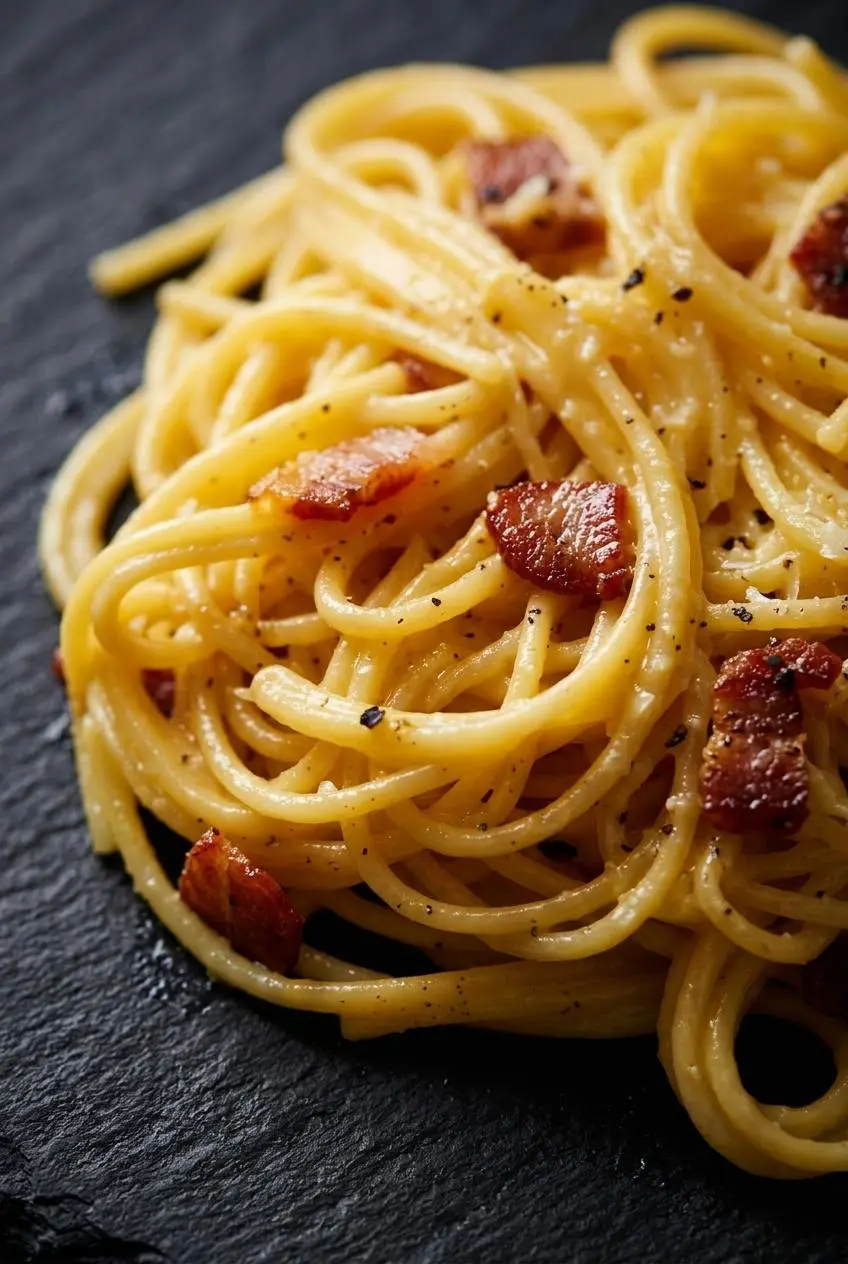
The secret to a smooth sauce is heat control plus constant movement. Hot pasta carries enough residual warmth to loosen the cheese and gently thicken the eggs, but direct burner heat can make the eggs set in little curds.
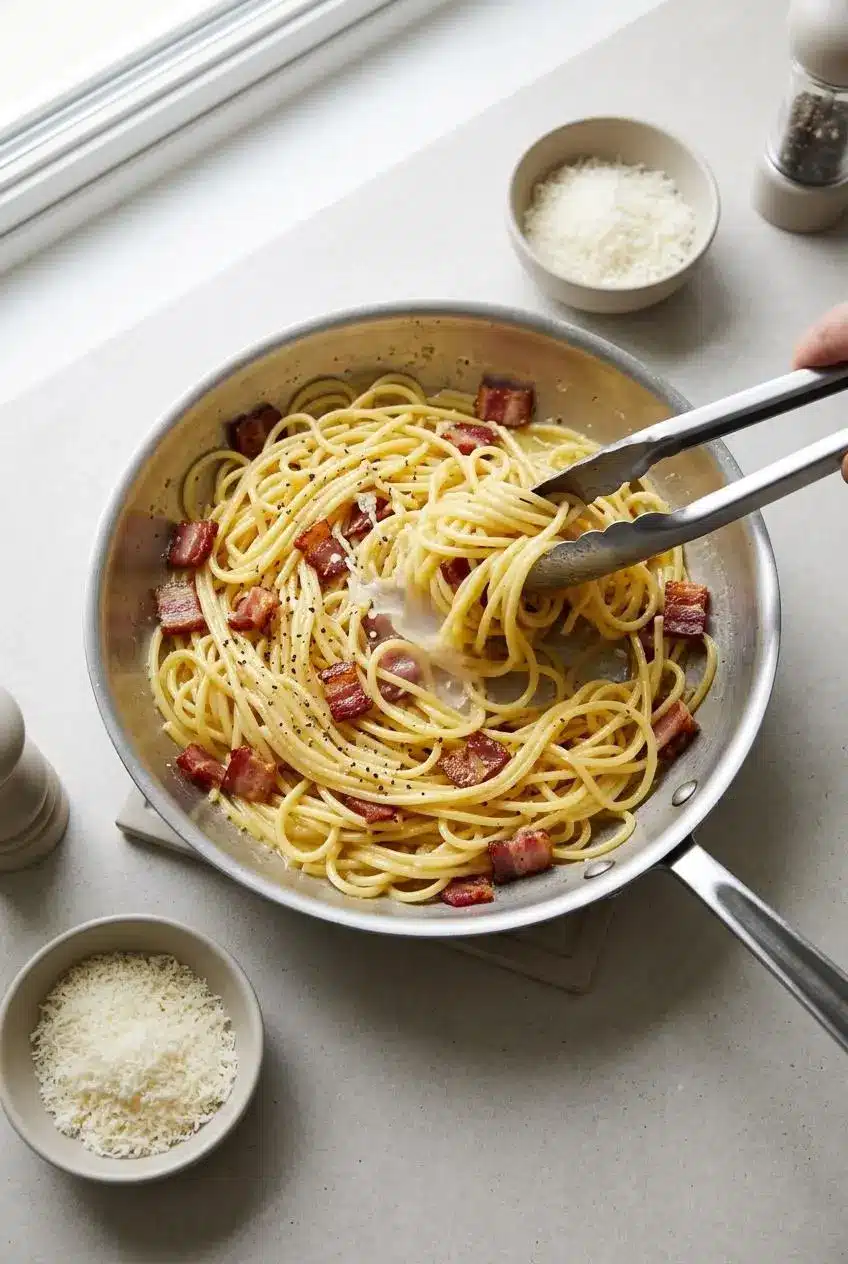
Keep the skillet off active heat before adding the egg mixture. Toss firmly with tongs or a wooden spoon, lifting and turning the pasta so rendered pork fat, cheese, and starchy water disperse through the strands instead of pooling at the bottom.
Add reserved pasta water gradually. The starch in that water helps the fat and cheese stay suspended, turning the mixture into a shiny coating rather than an oily puddle. If the sauce looks thin at first, keep tossing for a moment before adding more water.
For people who need extra caution with lightly cooked egg dishes, pasteurized eggs are a sensible option; the FDA’s egg safety information explains safe egg handling and pasteurization.
Common Carbonara Mistakes and Troubleshooting
Most carbonara problems come down to too much heat, too little pasta water, or salt that builds up from the cheese and cured pork. The good news is that many issues can be corrected while the pasta is still warm.
How to Prevent and Fix Scrambled Eggs
- Problem: Small egg curds appear in the sauce. Cause: The pan was too hot when the egg mixture went in. Fix: Move everything off residual heat immediately and toss hard with a splash of hot reserved pasta water.
- Problem: The sauce looks uneven and grainy. Cause: Cheese did not melt evenly or the pasta was not tossed enough. Fix: Keep tossing until the sauce smooths out, adding water gradually only if it remains too tight.
Letting the skillet sit off the burner briefly before the final toss gives you more control. The pasta should still be hot, but the pan should no longer be aggressively heating the eggs.
Fixing Dry or Overly Sticky Sauce
- Problem: The pasta seems sticky or stiff. Cause: Cheese and starch have tightened as the pasta cools. Fix: Add hot reserved pasta water a splash at a time and toss until the strands loosen.
- Problem: A layer of fat gathers in the bowl. Cause: The emulsion has separated. Fix: Toss more vigorously with a little starchy water to bring the fat back into the sauce.
- Problem: The sauce seems watery. Cause: Too much pasta water went in before the cheese had time to thicken it. Fix: Keep tossing over the warm bowl until the sauce turns glossy and clings to the spaghetti.
Managing Salt Levels Accurately
Carbonara has several naturally salty elements: cured pork, Pecorino Romano, Parmesan, and pasta water. Keep the boiling water moderately salted, using no more than 1 tablespoon, then taste only after the pork and cheese have been incorporated.
A generous amount of black pepper adds character without increasing saltiness. Grind it coarsely so it gives small aromatic bursts instead of disappearing into the sauce.
Storing, Reheating, and Serving Carbonara
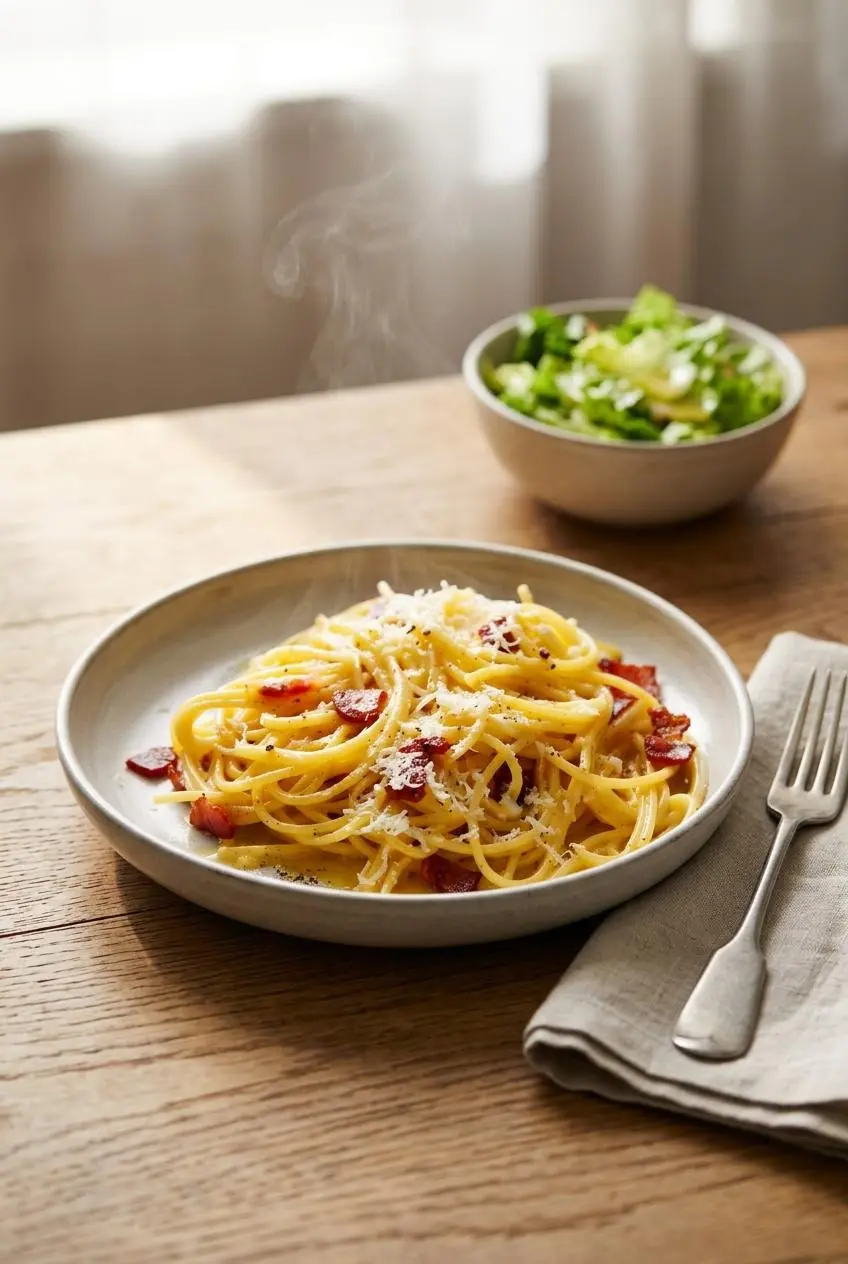
Carbonara is at its best immediately, when the sauce is loose, glossy, and warm. Pre-warmed bowls make a noticeable difference because they prevent the sauce from tightening the moment it leaves the skillet.
For serving, add extra pecorino and fresh black pepper at the table. A crisp green salad dressed with lemon vinaigrette is a welcome contrast to the rich, savory pasta.
If there are leftovers, transfer them to an airtight container and keep them chilled. Reheat gently in a skillet over very low heat with a splash of water, tossing continuously until the pasta loosens. Avoid high-power microwave reheating, which can quickly turn the egg-based sauce grainy and dry.
Conclusion
Great carbonara depends on three things: freshly grated hard cheese, starchy pasta water, and controlled residual heat. Render the pork patiently, reserve the cooking water, and toss the egg mixture only when the pasta is off direct heat.
Have the warmed bowls and finishing cheese ready before draining the spaghetti, then serve it while the sauce is still glossy and peppery. That first forkful is the reward.
Frequently Asked Questions
How Do I Prevent the Eggs From Scrambling in Carbonara?
Take the skillet completely off the burner before adding the egg and cheese mixture. Let the pan settle briefly, then toss the hot pasta vigorously with the eggs and reserved pasta water. Constant movement spreads the heat and helps the sauce stay smooth.
Why Is Traditional Carbonara Made Without Cream?
Traditional carbonara becomes silky through egg yolks, rendered pork fat, grated cheese, and starchy pasta water. Cream would make the sauce heavier and can cover the sharp pecorino and savory pork flavors that define the dish.
Can I Use Bacon Instead of Guanciale?
Yes. Thick-cut, unsmoked bacon or pancetta works well when guanciale is unavailable. Render it gently over medium heat so the fat melts fully and the edges crisp without becoming brittle or overly smoky.
How Much Pasta Water Should I Reserve and Add?
Reserve 1 full cup before draining the spaghetti. Add it gradually, starting with 2 to 4 tablespoons at a time, and toss between additions until the sauce looks glossy and coats the pasta without pooling in the bowl.
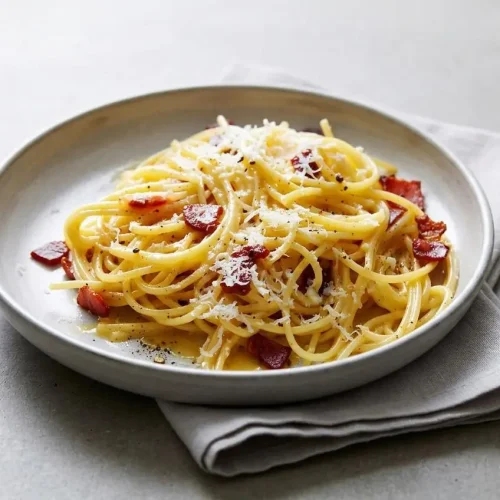
Spaghetti Carbonara Recipe

Equipment
- Large Pot
- Mixing Bowl
- Large Skillet
- Whisk
- Tongs
Ingredients
- Salt
- 2 large eggs and 2 large yolks room temperature
- 1 ounce grated pecorino Romano about ⅓ packed cup, plus additional for serving
- 1 ounce grated Parmesan about ⅓ packed cup
- Coarsely ground black pepper
- 1 tablespoon olive oil
- 3 ½ ounces slab guanciale, pancetta or bacon sliced into pieces about ¼ inch thick by 1⅓ inch square
- 12 ounces spaghetti about ¾ box
Instructions
- Bring a large pot of water to a boil over high heat, seasoning it lightly with no more than 1 tablespoon salt; fill a large serving bowl with hot water and set it aside. The bowl should feel thoroughly warm, which helps the pasta stay hot while the sauce comes together.
- Whisk the eggs, yolks, pecorino Romano, and Parmesan in a mixing bowl, then season with a pinch of salt and plenty of coarsely ground black pepper. The mixture should look thick and grainy from the cheese, with pepper distributed throughout.
- Heat the olive oil in a large skillet over medium heat and cook the guanciale, pancetta, or bacon until its fat has melted and the edges are lightly crisp. Listen for a steady, gentle sizzle and stop before the pork turns hard or deeply browned.
- Boil the spaghetti until it is slightly firmer than al dente, then reserve 1 cup of the cooking water before draining; warm the pork briefly if needed, add the pasta to the skillet over low heat, and toss for about 1 minute. The strands should offer gentle resistance and become slick with rendered fat.
- Pour out and dry the warmed serving bowl, transfer in the pasta and pork, then vigorously toss with the egg-and-cheese mixture, adding reserved pasta water as needed. The sauce should shift from loose and translucent to opaque, glossy, and evenly clinging to each strand; finish with extra pecorino and black pepper.