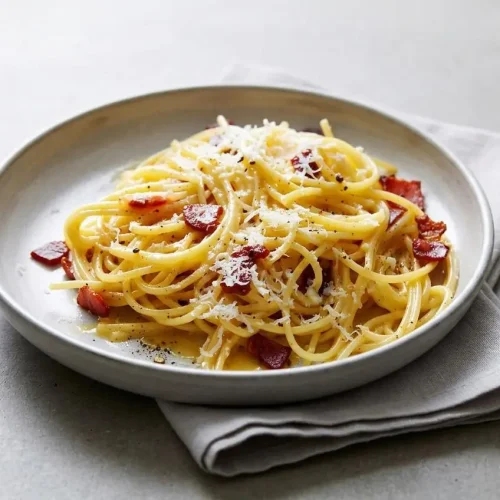
Spaghetti Carbonara Recipe

A classic Italian spaghetti carbonara made without cream, using eggs, pecorino, Parmesan, and crisp cured pork to create a silky, glossy, and savory pasta glaze.
Equipment
- Large Pot
- Mixing Bowl
- Large Skillet
- Whisk
- Tongs
Ingredients
- Salt
- 2 large eggs and 2 large yolks room temperature
- 1 ounce grated pecorino Romano about ⅓ packed cup, plus additional for serving
- 1 ounce grated Parmesan about ⅓ packed cup
- Coarsely ground black pepper
- 1 tablespoon olive oil
- 3 ½ ounces slab guanciale, pancetta or bacon sliced into pieces about ¼ inch thick by 1⅓ inch square
- 12 ounces spaghetti about ¾ box
Instructions
- Bring a large pot of water to a boil over high heat, seasoning it lightly with no more than 1 tablespoon salt; fill a large serving bowl with hot water and set it aside. The bowl should feel thoroughly warm, which helps the pasta stay hot while the sauce comes together.
- Whisk the eggs, yolks, pecorino Romano, and Parmesan in a mixing bowl, then season with a pinch of salt and plenty of coarsely ground black pepper. The mixture should look thick and grainy from the cheese, with pepper distributed throughout.
- Heat the olive oil in a large skillet over medium heat and cook the guanciale, pancetta, or bacon until its fat has melted and the edges are lightly crisp. Listen for a steady, gentle sizzle and stop before the pork turns hard or deeply browned.
- Boil the spaghetti until it is slightly firmer than al dente, then reserve 1 cup of the cooking water before draining; warm the pork briefly if needed, add the pasta to the skillet over low heat, and toss for about 1 minute. The strands should offer gentle resistance and become slick with rendered fat.
- Pour out and dry the warmed serving bowl, transfer in the pasta and pork, then vigorously toss with the egg-and-cheese mixture, adding reserved pasta water as needed. The sauce should shift from loose and translucent to opaque, glossy, and evenly clinging to each strand; finish with extra pecorino and black pepper.
Notes
Heat control: Combine the pasta and egg-and-cheese mixture away from direct burner heat using the residual warmth of the pre-warmed bowl to prevent the eggs from curdling.
Sauce texture: Add the starchy pasta cooking water a splash at a time while tossing vigorously so the rendered fat and cheese form a smooth, clinging glaze.
Reheating: Warm leftover pasta gently in a skillet over very low heat with a small splash of water, stirring continuously. Avoid high-heat microwaving to keep the sauce from drying out.
Nutrition information is an estimate based on common ingredients and serving sizes. Values may vary depending on brands, portions, and substitutions.