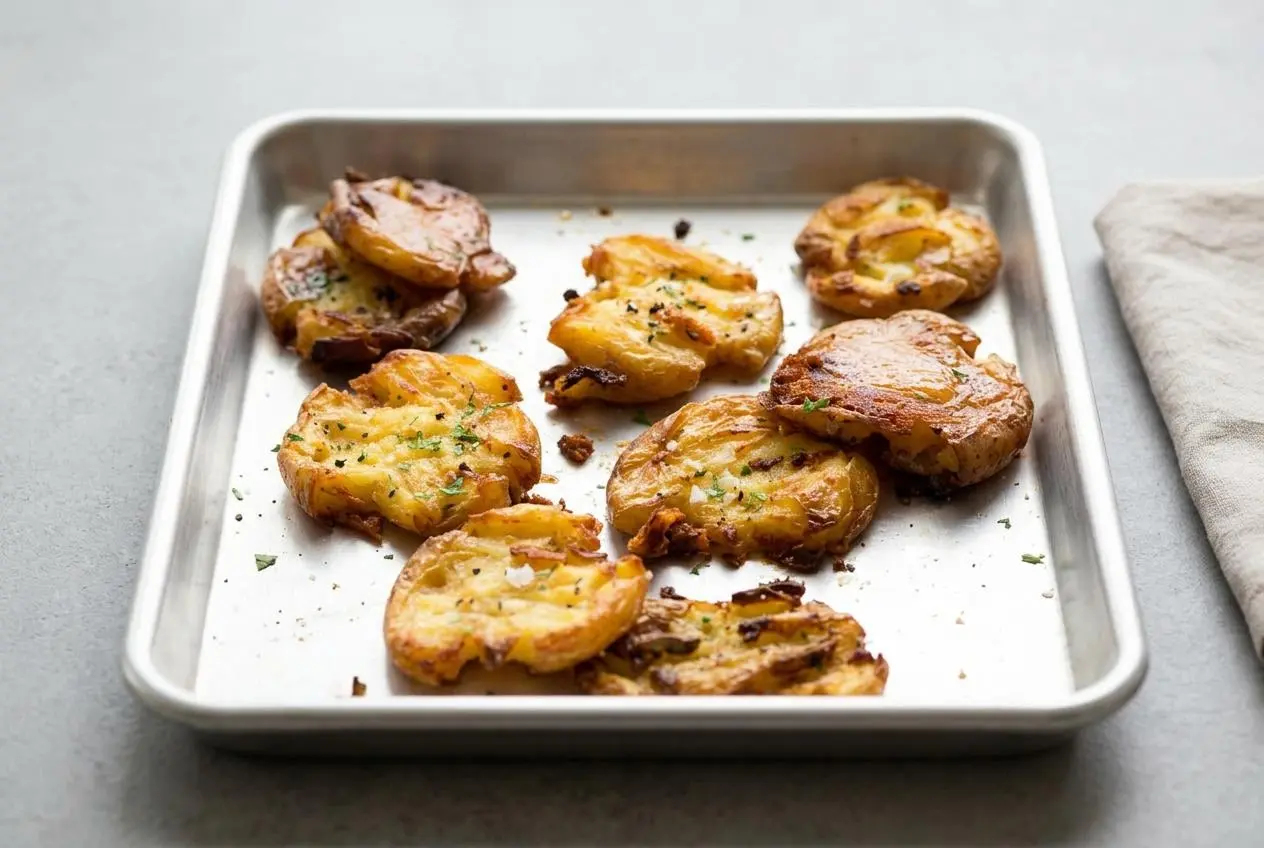
For the crispiest potatoes, use small waxy potatoes, boil them until tender, let them dry well, smash them on an oiled pan, then roast at high heat with butter and olive oil until deeply golden.
Smashed Potatoes are the happy middle ground between roasted potatoes and mash. You get crunchy edges, creamy centers, and plenty of salty, buttery flavor in every bite.
They’re great for weeknights, holidays, and snacky dinners because the method is straightforward once you know the few steps that matter most. The second drying step is where the magic happens.
Boil until a fork slides in with almost no resistance, or the potatoes will crack instead of flattening neatly.
Why This Smashed Potato Recipe Works
If you want potatoes that actually crisp instead of just looking rustic, three things matter most: the potato type, the drying, and the fat.
Small waxy potatoes like Yukon Gold or baby reds hold together better after boiling and smashing. They have thin skins that roast beautifully, and their texture stays creamy inside instead of turning dry or crumbly.
The real crisping trick is getting rid of surface moisture twice. First, the potatoes steam-dry in the colander after boiling. Then, after smashing, they sit again on the tray so even more steam can escape. Less moisture means more roasting and less steaming.
Using both butter and olive oil gives you the best balance. Butter brings rich flavor and better browning, while olive oil handles high heat well and helps the bottoms crisp. That combination gives you crispy golden edges, fluffy creamy centers, and a better shot at success than using just one fat alone.
Ingredients You’ll Need
Each ingredient pulls its weight here, from creamy potato centers to crisp edges, savory browning, and the final hit of salt, pepper, and fresh green finish.
Potatoes – choose:
- 700g / 1.4 lb small potatoes (12 – 14)
- 1 – 1.2kg / 2 – 2.4lb medium potatoes (6 – 8)
Cooking:
- 1 tbsp salt (for boiling)
- 30g / 2 tbsp unsalted butter, melted
- 1 tbsp olive oil
- 3/4 tsp salt (for sprinkling)
- 1/4 tsp black pepper
- Finely chopped parsley, optional garnish
I always grab the smallest potatoes available when I can, because more skin around each piece means more crisp, craggy edges after roasting.
Which Potatoes are Best for Smashing?
The best choice is a small waxy potato that stays intact after boiling and gives you a crisp skin. Here’s how the main options compare.
| Potato Type | Texture & Sturdiness | Flavor | Best For |
|---|---|---|---|
| Yukon Gold | Creamy inside, sturdy enough to smash neatly | Buttery and rich | Best overall balance of crisp exterior and fluffy center |
| Red Potatoes | Firm and waxy, hold their shape very well | Mild and slightly sweet | Excellent when you want tidy smashed potatoes with crisp skins |
| Russet Potatoes | Starchier and more fragile after boiling | Earthy and classic baked potato flavor | Better for mash than smashing because they tend to fall apart |
How to Make Crispy Smashed Potatoes
- Bring a pot of water to a boil, add 1 tbsp salt, then cook the potatoes until tender, about 20 to 25 minutes for small potatoes or about 30 minutes for medium ones.
A fork should slide in with almost no resistance, and split skins are fine. - Heat the oven to 200 °C/390 °F (180 °C fan).
Starting with a fully hot oven helps the potatoes roast instead of slowly drying out. - Drain the potatoes in a colander and leave them there for about 5 minutes.
This first steam-dry lets excess moisture escape, which sets up better crisping later. - Transfer the potatoes to a tray and press each one with a large fork or potato masher until flattened but still in one piece.
Go thinner for crisper edges or leave them a bit thicker for fluffier centers, and keep those rough edges because they brown best. - Let the smashed potatoes sit on the tray for about 5 minutes before seasoning.
This second steam-dry helps the surface lose even more moisture so the edges can turn deeply crisp. - Drizzle over the melted butter and olive oil, then sprinkle with 3/4 tsp salt and 1/4 tsp black pepper.
Try to coat the tops and craggy edges well, since those little ridges become the crunchiest parts. - Bake for 45 minutes if using small potatoes or 55 minutes if using medium potatoes, and do not flip them.
They’re ready when the bottoms and edges are deep golden and the tops look dry and craggy. - Serve hot and finish with parsley if desired.
The texture is best straight from the oven while the edges are crisp and the centers stay creamy.
Tips for the Crispiest Smashed Potatoes
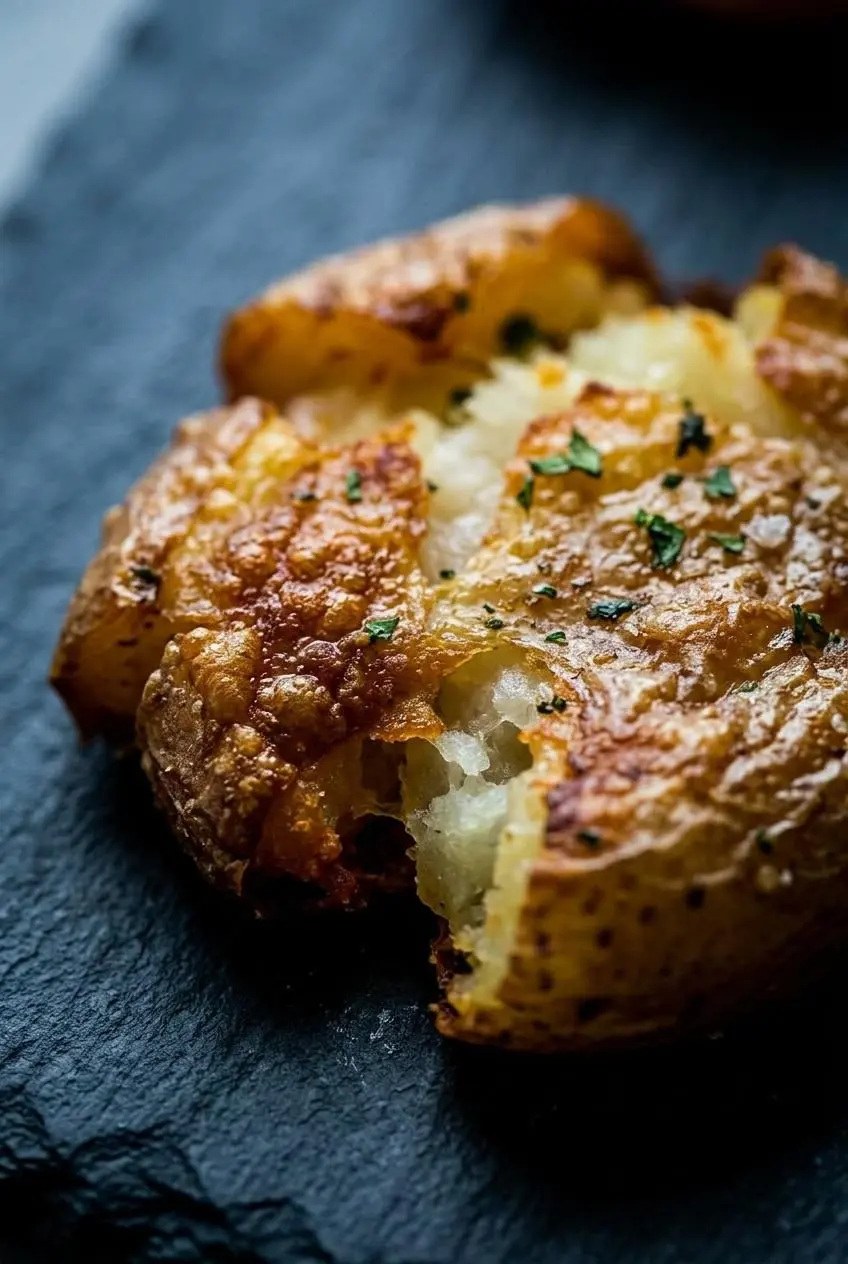
This is where good smashed potatoes turn into great ones. A few small choices make the difference between crisp and a little floppy.
Do not skip either drying step. Wet potatoes steam in the oven, and steaming softens the surface instead of crisping it. Giving them time to dry in the colander and again on the tray removes enough moisture for real browning.
Use a bare, well-oiled baking sheet instead of parchment. Direct contact with the hot metal gives you a much better crust on the bottom, while parchment tends to soften that contact. If sticking has been a problem for you before, a generous film of oil on the pan matters.
Preheat the baking sheet while the oven heats. When the potatoes hit a hot pan, they start sizzling and browning right away instead of warming up slowly. That first contact helps build the crispy base.
Leave space between the potatoes. If they are crowded together, hot air cannot move around them properly and they trap steam. Give each one room so the edges can roast.
Smash gently. You want flattened potatoes with rough edges, not a pile of mash. If you actually want a silky, spoonable texture, creamy mashed potatoes are the better lane.
And don’t flip them. Leaving the top side exposed to the oven gives you those craggy, ultra-crisp edges, while the bottom gets beautifully browned from the pan. Best of both worlds.
Smashed Potato Variations
Once you’ve got the base method down, it’s easy to change the flavor without messing with the texture. Keep these as optional add-ons after the main recipe is set.
For the Ultimate Garlic Flavor
If you love deep garlic flavor but hate bitter burnt bits, roast a whole head of garlic alongside the potatoes until the cloves are soft. Squeeze the roasted garlic into the melted butter, mash it smooth, then brush or spoon it over the hot potatoes before serving. You get mellow, sweet garlic flavor that tastes rich instead of sharp.
Garlic Parmesan Smashed Potatoes
For a sharper garlic note, stir a little minced garlic into the melted butter just before using it, or use garlic powder if you want zero risk of burning during roasting. Add freshly grated Parmesan in the last 5 to 10 minutes of baking, or right after the potatoes come out, so it melts onto the hot surface without turning bitter.
Air Fryer Smashed Potatoes
After boiling, drying, and smashing the potatoes, arrange them in the air fryer basket in a single layer, brush or drizzle with the butter and oil, then cook at 400 °F / 200 °C for 15 to 20 minutes. Flip halfway through for even browning, and work in batches so the potatoes crisp instead of steaming.
Loaded Smashed Potatoes
Turn them into a loaded version after baking with sour cream, shredded cheddar, crumbled bacon, and fresh chives. If you love that flavor combo in a softer style, loaded mashed potatoes scratch the same itch.
What to Serve with Smashed Potatoes
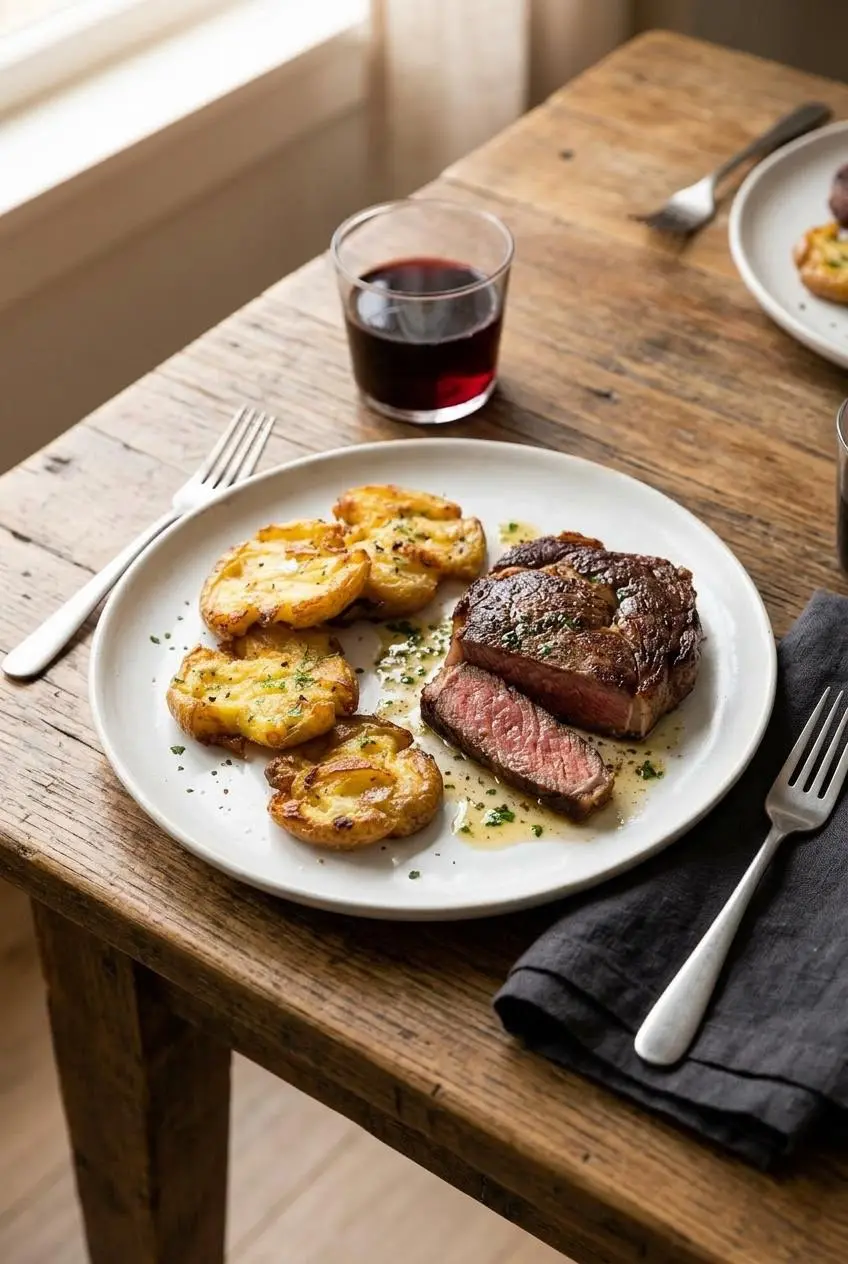
These potatoes are flexible enough to be dinner side dish, party snack, or holiday favorite.
For a full meal, serve them with roasted chicken, steak, or pork chops. They’re especially good next to garlic butter steak bites when you want a dinner that feels a little extra without much fuss.
They also work really well as an appetizer or snack with dips on the side. Garlic aioli, romesco, or a quick chive and sour cream dip all play nicely with the crunchy edges.
If you’re building out a holiday spread, these fit right in. They hold their own next to richer mains because the crisp texture cuts through everything else on the plate.
Storing, Freezing, and Reheating
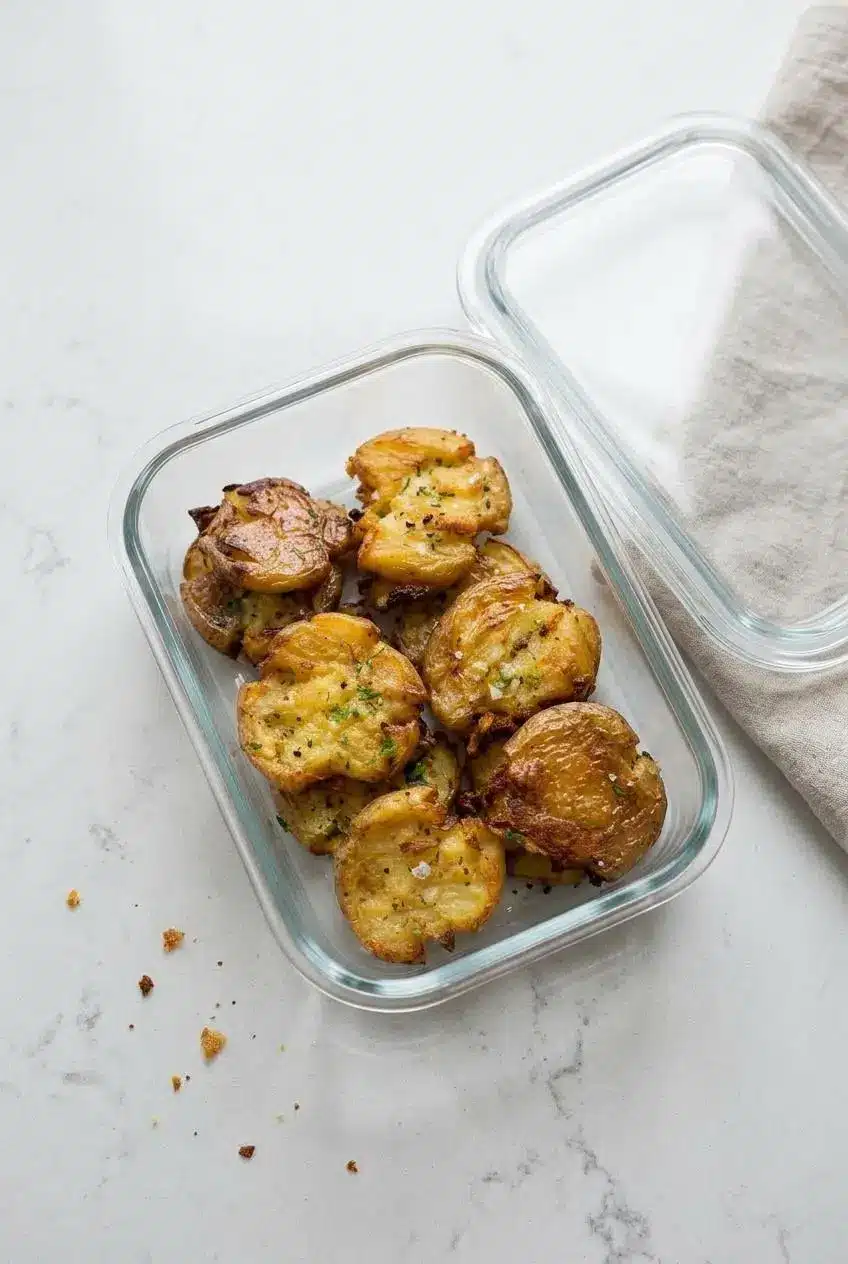
This recipe is best fresh, but leftovers can still be very good if you cool and reheat them the right way.
Make-Ahead Instructions
You can boil the potatoes up to 2 days in advance, then cool and refrigerate them until you’re ready to smash and roast. That makes this recipe especially handy when oven space and timing get tight.
How to Store Leftovers
Let the potatoes cool completely before packing them away. For safe leftovers, refrigerate them within 2 hours and keep them in a covered container for 3 to 4 days, as outlined in USDA leftover storage and reheating guidance.
How to Freeze and Reheat
If you want to freeze them, let the baked potatoes cool completely, then place them on a tray so they firm up separately before transferring them to a freezer-safe bag or container. Freezing them in a single layer first helps keep them from sticking together and makes it easier to reheat only what you need.
To bring back the crisp texture, reheat in a hot oven or air fryer rather than the microwave. When reheating leftovers, warm them until hot all the way through, and for food safety bring them to 165 °F as part of safe leftover reheating.
Troubleshooting Common Problems
If something went sideways, it was probably one of these very fixable issues.
| The Problem | The Easy Fix |
|---|---|
| My potatoes are soggy, not crispy. | They likely held too much moisture or were packed too closely together. Steam-dry them twice and give each potato space on the tray. |
| My potatoes fell apart when I smashed them. | They may have been over-boiled or pressed too hard. Cook only until fork-tender and flatten gently instead of mashing down aggressively. |
| My potatoes stuck to the pan. | The tray probably needed more oil, or it did not get hot enough first. Use a well-oiled bare pan and preheat it for better release and browning. |
| The garlic burned and tasted bitter. | Garlic was added too early in a form that cooks fast. Use roasted garlic, garlic powder, or stir fresh garlic into butter near the end instead. |
Conclusion
If you remember just two things, make them these: use waxy potatoes and dry them twice. That’s what gives you the crisp outside and soft center that makes smashed potatoes so satisfying.
Once you’ve made them once, the method feels easy and repeatable. Keep the pan hot, give the potatoes space, and enjoy every craggy golden edge.
Frequently Asked Questions
What’s the best potato for smashed potatoes?
Small waxy potatoes are the best choice, especially Yukon Gold or baby red potatoes. They hold their shape after boiling, smash neatly, and their thin skins crisp up beautifully. Russets can work, but they tend to break apart more easily because they’re starchier.
Why did my smashed potatoes fall apart?
The two most common reasons are overcooking and over-smashing. If the potatoes get too waterlogged, they break apart easily, and if you press too hard, they turn from smashed into mashed. Boil only until fork-tender, then flatten with a gentle but firm press.
Can I make smashed potatoes without boiling them first?
Yes, you can microwave the potatoes until tender if you want a faster option. You still need the potatoes soft before smashing them, or they won’t flatten properly. Roasting raw potatoes and then trying to smash them won’t give you the same creamy center.
How do you reheat smashed potatoes so they are crispy again?
Use a hot oven or an air fryer. Both methods bring back the crisp edges much better than a microwave, which tends to soften them. Reheat just until hot and crisp again.
What’s the difference between smashed potatoes and mashed potatoes?
Smashed potatoes are boiled whole, flattened, and roasted, so they keep their skins and develop crispy edges with fluffy centers. Mashed potatoes are fully mashed until smooth and creamy, usually with added dairy for a softer texture throughout.
Should I peel the potatoes before making smashed potatoes?
No. The skin helps the potatoes stay together after you smash them, and it becomes one of the crispiest, most flavorful parts after roasting.
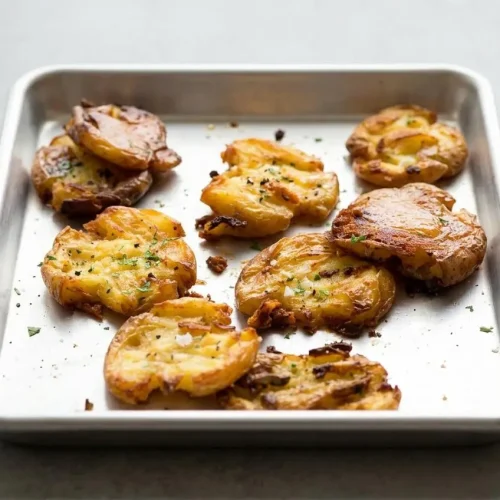
Smashed Potatoes

Equipment
- Large Pot
- Colander
- Baking Sheet
- Potato masher or large fork
Ingredients
Potatoes – choose:
- 700 g small potatoes (12 – 14) (about 1.4 lb)
- 1 kg medium potatoes (6 – 8) (about 2 – 2.4 lb)
Cooking:
- 1 tbsp salt for boiling
- 30 g unsalted butter, melted (about 2 tbsp)
- 1 tbsp olive oil
- 3/4 tsp salt for sprinkling
- 1/4 tsp black pepper
- Finely chopped parsley optional garnish
Instructions
- Bring a pot of water to a boil, add 1 tbsp salt, then cook the potatoes until tender, about 20 to 25 minutes for small potatoes or about 30 minutes for medium ones. A fork should slide in with almost no resistance, and split skins are fine.
- Heat the oven to 200 °C/390 °F (180 °C fan). Starting with a fully hot oven helps the potatoes roast instead of slowly drying out.
- Drain the potatoes in a colander and leave them there for about 5 minutes. This first steam-dry lets excess moisture escape, which sets up better crisping later.
- Transfer the potatoes to a tray and press each one with a large fork or potato masher until flattened but still in one piece. Go thinner for crisper edges or leave them a bit thicker for fluffier centers, and keep those rough edges because they brown best.
- Let the smashed potatoes sit on the tray for about 5 minutes before seasoning. This second steam-dry helps the surface lose even more moisture so the edges can turn deeply crisp.
- Drizzle over the melted butter and olive oil, then sprinkle with 3/4 tsp salt and 1/4 tsp black pepper. Try to coat the tops and craggy edges well, since those little ridges become the crunchiest parts.
- Bake for 45 minutes if using small potatoes or 55 minutes if using medium potatoes, and do not flip them. They’re ready when the bottoms and edges are deep golden and the tops look dry and craggy.
- Serve hot and finish with parsley if desired. The texture is best straight from the oven while the edges are crisp and the centers stay creamy.