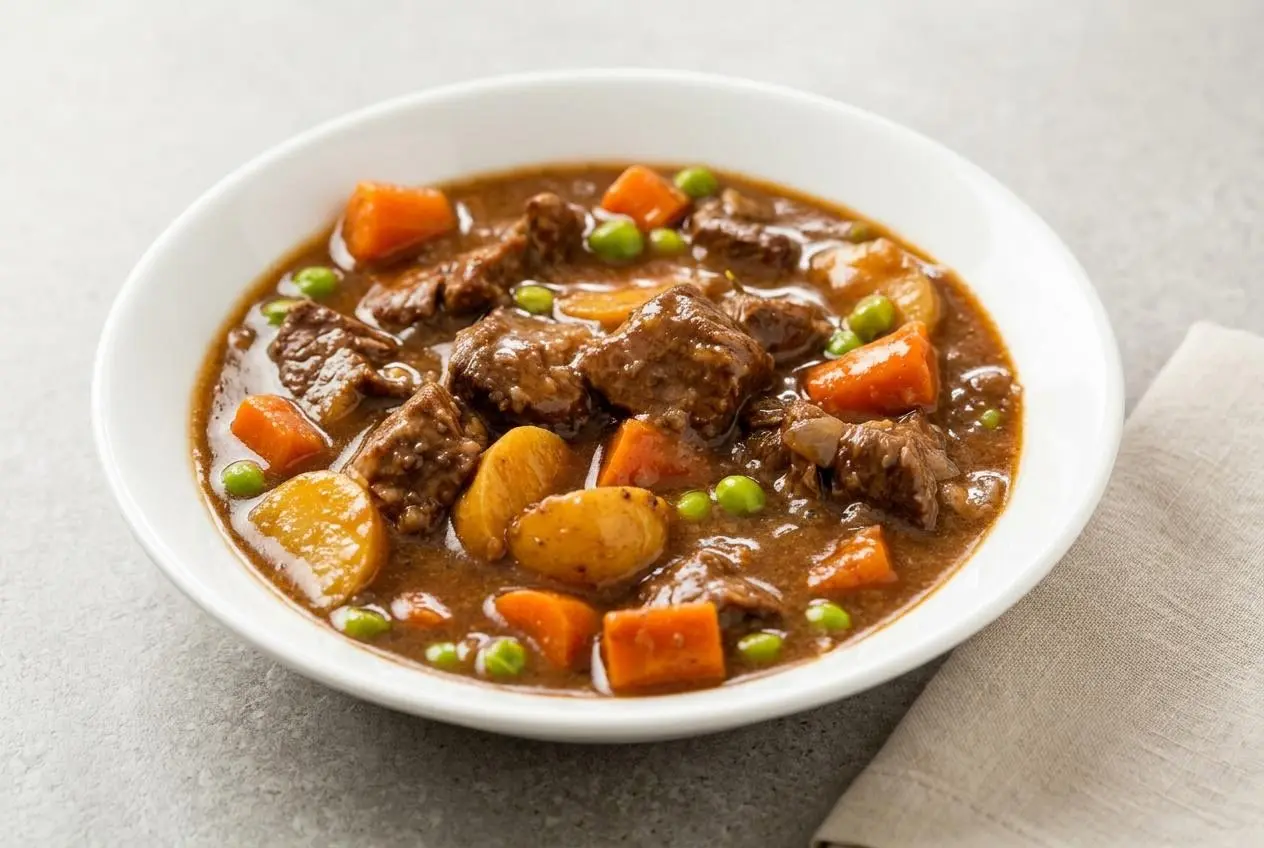
This slow cooker beef stew turns out tender, savory, and deeply flavorful when you brown the beef first, build the broth in the skillet, and finish with a quick thickener at the end.
Slow cooker beef stew is classic comfort food done right: beef that softens beautifully, potatoes that hold their shape, and a rich gravy instead of a thin broth. It’s the kind of dinner that feels generous without being fussy.
The smell alone is worth it once the onions, garlic, wine, and beef start mingling in the pot. The final spoonful is even better.
If your skillet starts looking crowded while browning the meat, stop and work in smaller batches so the beef actually sears instead of steaming.
Why This Is the Best Slow Cooker Beef Stew
A great beef stew needs three things: tender meat, vegetables that stay intact, and a broth with enough body to coat the spoon. This one gets all three by building flavor in layers before the slow cooker does the quiet work.
The biggest difference is in the early steps. Browning the beef creates a dark crust that adds depth, and deglazing the pan pulls every browned bit into the stew instead of leaving that flavor behind in the skillet.
You also finish the stew with two smart moves: peas added near the end so they stay bright, and cold butter stirred in off heat for a glossy, velvety gravy. It tastes hearty, but it also tastes polished.
Key Ingredients for Perfect Beef Stew
Each ingredient earns its place here, from the beefy backbone of the broth to the potatoes that keep their shape and the butter that gives the gravy a smooth finish.
- 2 ½ pounds stew meat
- ½ teaspoon EACH: black pepper, garlic salt, celery salt
- 1/4 cup flour
- 3-6 tablespoons olive oil
- 3 tablespoons cold butter (divided)
- 2 cups yellow onions (diced)
- 4 cloves garlic (minced)
- 1 cup cabernet sauvignon (or merlot.)
- 4 cups beef broth
- 2 beef bouillon cubes
- 2 tablespoons Worcestershire Sauce
- 3 tablespoons tomato paste
- 5 medium carrots (cut into 1-inch chunks)
- 1 lb. baby Yukon gold potatoes (halved or quartered)
- 2 bay leaves
- 1 sprig rosemary
- 1 cup frozen peas
- 1/4 cup Cold Water + 3 tablespoons Corn Starch (Optional)
- 2-3 drops Gravy Master (*Optional*- Adds a richer, darker color.)
I always reach for Cabernet Sauvignon or Merlot here because the wine adds a deeper, rounder flavor once it cooks into the broth.
The seasoning blend gives the beef a head start before it ever hits the pan. Worcestershire, tomato paste, bouillon, broth, bay leaves, and rosemary round out the savory base, while the peas bring a little sweetness and color at the very end.
The Best Cut of Beef for Stew
The best beef for stew is chuck roast, and that matters more than people think. Chuck has marbling and connective tissue that slowly melt down during a long cook, which gives you beef that turns tender instead of dry.
Lean cuts don’t have that same built-in cushion. They can tighten up and stay chewy, especially in a slow cooker where the magic comes from time and gentle heat rather than quick roasting.
If your package is labeled stew meat, it can still work well, but chuck is the most reliable choice because you know it’s built for low-and-slow cooking. Another collagen-rich option for stewing is using beef cheeks, which become silky and rich after a long braise.
| Cut | What It’s Like | Best Use |
|---|---|---|
| Chuck roast | Well marbled, flavorful, softens beautifully | Best all-around choice for classic stew |
| Stew meat | Convenient, but can vary depending on the mix of cuts | Good if it’s mostly chuck |
| Beef cheeks | Very rich in collagen, deeply beefy | Excellent for ultra-tender results |
| Round roast | Leaner and firmer | Less ideal for a lush, fall-apart stew |
The Best Potatoes for Stew
Baby Yukon gold potatoes are a smart pick because they stay creamy inside while holding their shape in the slow cooker. That means you get distinct potato pieces in the bowl instead of a cloudy, starchy mash.
Red potatoes also work well for the same reason. Russets are better saved for mashed potatoes, since they tend to break down more easily during long cooking.
The Role of Red Wine & Broth
The wine does more than add flavor. It loosens the browned bits from the skillet and brings a little acidity, which keeps the stew from tasting flat or heavy.
Beef broth is the main body of the gravy, so quality matters. The broth, bouillon, tomato paste, and Worcestershire work together to create that deep, savory spoonful you want in a hearty stew.
How to Make Slow Cooker Beef Stew
- Cut the meat into 1-inch cubes and trim away any large pieces of fat, leaving the marbled bits in place.
The smaller, even pieces cook more evenly and the marbling helps the beef stay tender. - Season the beef with black pepper, garlic salt, and celery salt, then toss it with the flour until coated.
A light flour coating helps the meat brown and gives the stew a better base for thickening later. - Heat 3 tablespoons olive oil in a large skillet over medium-high heat and brown the beef in batches for 45 seconds per side, adding more oil if needed, then transfer it to the slow cooker.
Look for browned edges instead of gray meat, because that color means real flavor has developed. - Lower the heat to medium, melt 1 tablespoon of butter, and cook the onions for 5 minutes before adding the garlic for 1 minute.
The onions should soften and smell sweet, and the garlic should turn fragrant without browning hard. - Pour a splash of wine into the skillet and scrape up the browned bits with a silicone spatula, then transfer the onions, garlic, and remaining wine to the slow cooker.
The pan should loosen easily and the liquid will turn darker as it picks up all that built-up flavor. - Add the beef broth, bouillon cubes, Worcestershire Sauce, tomato paste, carrots, potatoes, bay leaves, and rosemary to the slow cooker.
Once stirred together, the stew should look brothy and well seasoned, with the vegetables tucked into the liquid. - Cover and cook on low for 7 ½ to 8 hours or on high for 3½ to 4 hours.
The stew is ready for the final steps when the carrots are softened and the potatoes are fork tender. - Stir in the peas during the last 15 minutes of cooking, then remove the bay leaves and rosemary stem.
The peas stay bright and sweet this way instead of fading into the background. - If you want a thicker gravy, stir together 1/4 cup Cold Water + 3 tablespoons Corn Starch (Optional), then slowly mix it into the stew.
The broth will go from loose to glossy and will keep thickening a bit as it stands. - Turn off the heat and swirl in the remaining 2 tablespoons of cold butter, then add 2-3 drops Gravy Master if desired.
The gravy should look smooth and shiny, clinging gently to the beef and vegetables instead of running thin.
That final butter step is a classic restaurant trick. It softens the edges of the broth and gives the stew a silky finish without making it taste greasy.
The stew often tastes even better after it rests and is rewarmed, because the flavors settle together and the gravy takes on even more depth.
Tips for the Most Tender Beef
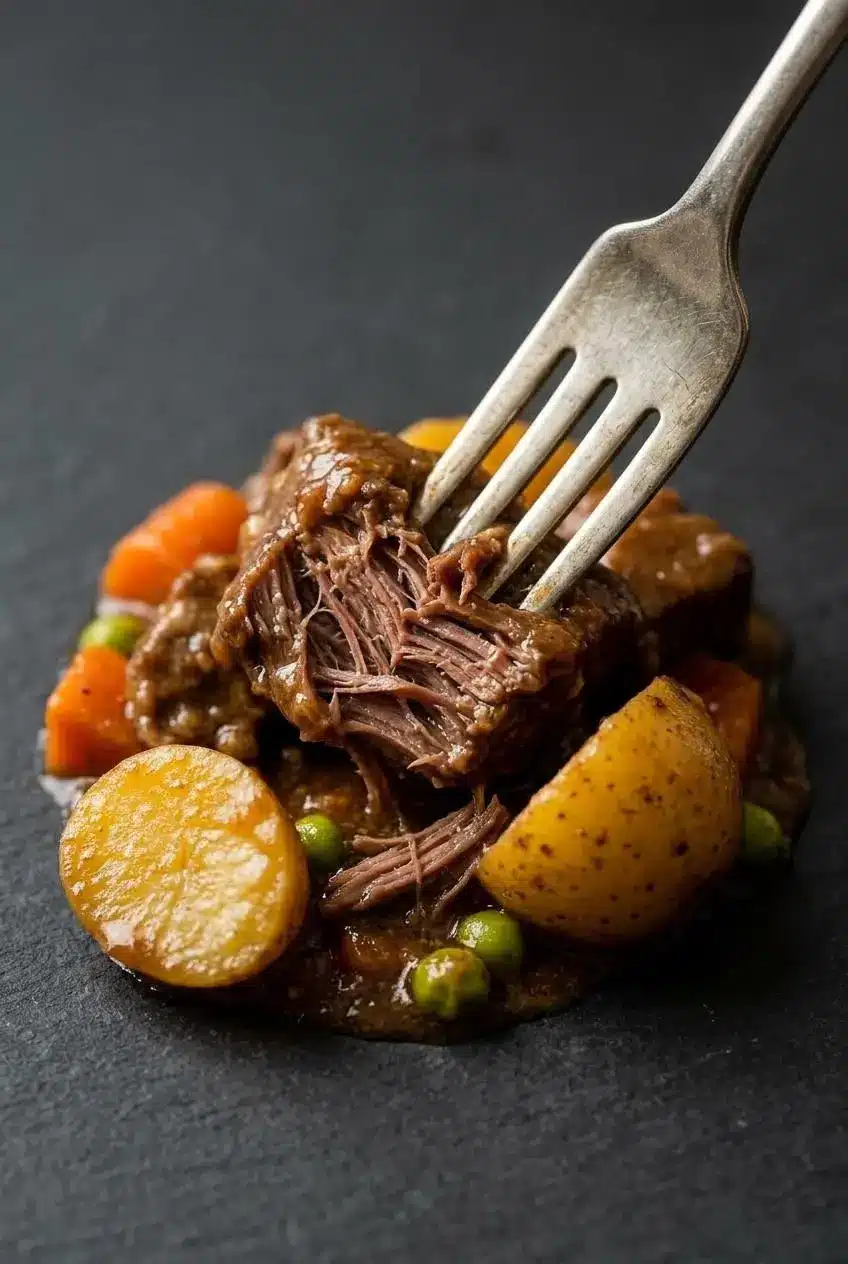
If tender beef is your main goal, a few small choices make a big difference.
- Sear, don’t steam. Brown the beef in batches and leave space in the skillet. If the pan is packed, moisture gets trapped and the meat turns gray instead of forming a crust.
- Choose the right cut. Chuck roast is the gold standard because its marbling and connective tissue soften during a long cook. Leaner cuts are much more likely to stay firm.
- Cook low and slow when you can. The low setting gives collagen more time to break down, which is what creates that fall-apart texture.
- Give the stew enough time. Tough beef often just needs longer. If the meat still feels chewy, it usually hasn’t finished softening yet.
- Use the right vessel size. A 6-quart slow cooker or larger gives the stew room to cook evenly without crowding.
If you like comparing methods, a classic stovetop beef stew can give you similar depth with more hands-on control, but the slow cooker wins for an easier all-day simmer.
Troubleshooting Common Stew Problems
Even a cozy pot of stew can go sideways now and then. The good news is that the usual problems have clear causes and pretty simple fixes.
| Problem | Likely Cause | How to Fix It |
|---|---|---|
| Tough beef | The cut was too lean, or the stew needed more time | Use chuck when possible and keep cooking until the connective tissue fully softens, especially on low. |
| Watery gravy | Not enough reduction or no final thickener | Stir in the cornstarch slurry near the end and let the stew sit briefly so the gravy can tighten up. |
| Mushy vegetables | The potatoes or carrots cooked too long, or the potatoes were too starchy | Stick with Yukon gold or red potatoes and avoid cooking far past the recommended range. |
Common mistakes are easy to spot once you know them: skipping the sear, crowding the pan, choosing a lean cut, and serving the stew before the broth has had a chance to thicken. Fix those, and the whole pot improves.
Beef Stew Variations
The classic version is hard to beat, but it also gives you room to change the flavor or adapt it to different needs without losing the soul of the dish.
Paleo & Whole30 Beef Stew
For a Paleo or Whole30-style version, skip the flour and sear the beef as-is. Swap the potatoes for more carrots or add parsnips, and use arrowroot instead of cornstarch if you want to thicken the broth.
You’ll still get a rich, hearty stew, just with a slightly lighter texture and a different mix of vegetables.
Beef Stew with Dumplings
If you want a cozier finish, top the stew with spoonfuls of biscuit-style dumpling dough during the last 30 to 45 minutes of cooking. Keep the slow cooker covered so the dumplings can puff up and cook through in the steam.
This turns the stew into something even more comforting, with soft dumplings soaking up the savory gravy on top.
Other Flavor Twists
You can give the stew an Irish-style feel by using stout in place of the wine, or stir in tomatoes and Italian herbs for a more Tuscan direction. For a shortcut version, some cooks like the extra savory boost of onion soup mix. If you love this style of hearty slow-cooked beef dinner, Slow Cooker Pot Roast is another great one to keep on rotation.
What to Serve with Beef Stew
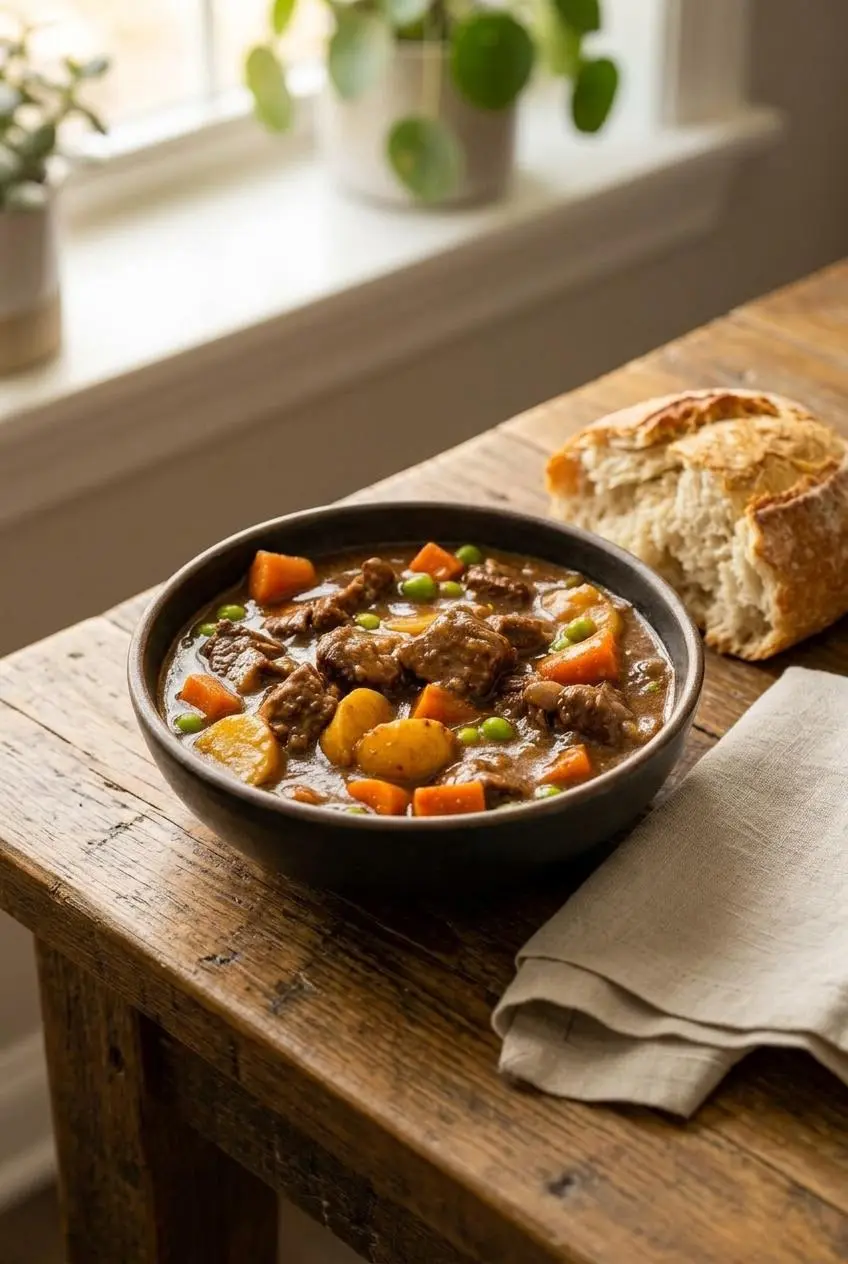
A hearty stew doesn’t need much on the side, but the right pairing makes dinner feel complete.
- Serve it over creamy mashed potatoes for an extra comfort-food dinner.
- Spoon it over buttered egg noodles when you want something cozy and filling.
- Add crusty bread for dunking into the rich gravy.
- Set out buttermilk biscuits or cornbread for a softer, homey side.
- Balance the richness with a simple green salad.
- Finish each bowl with a little fresh parsley if you want a brighter edge.
Storing and Reheating Instructions
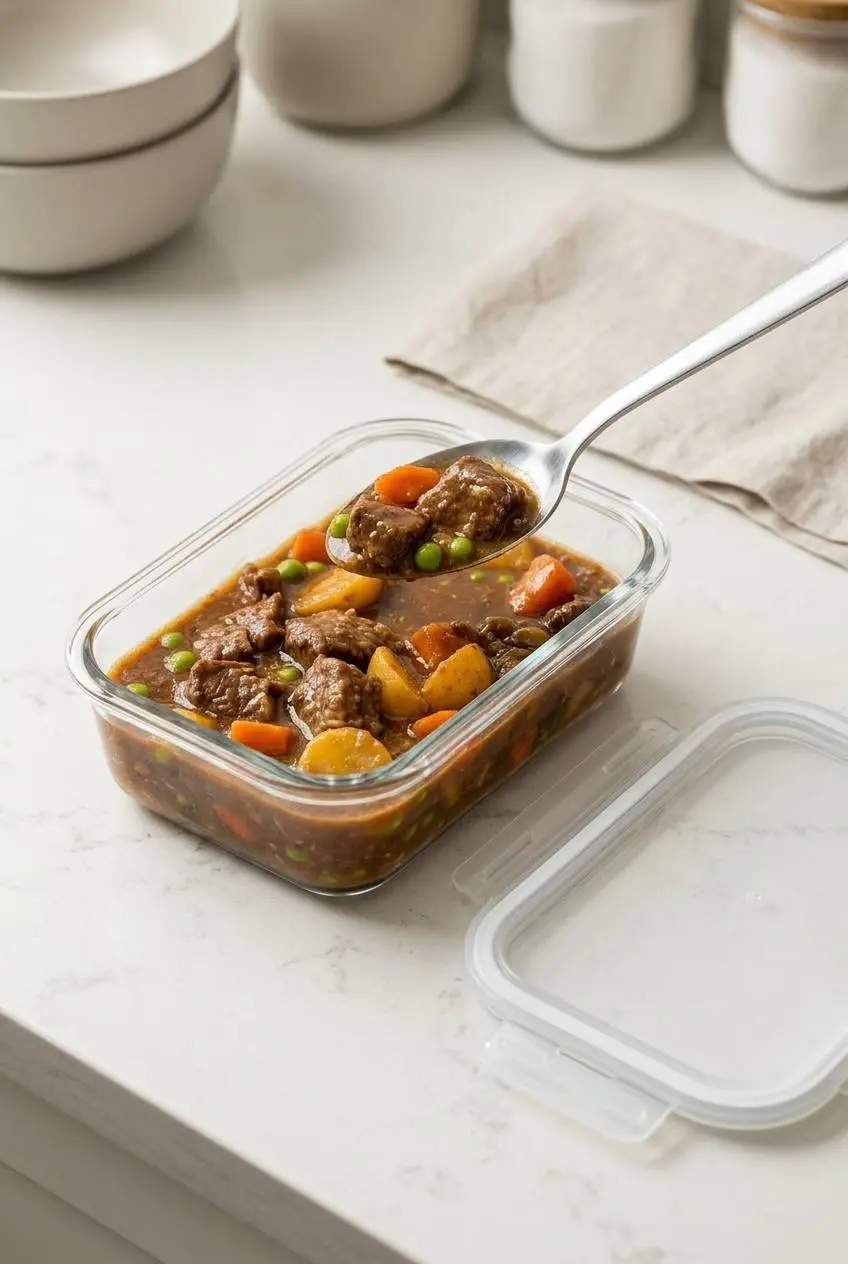
This stew reheats beautifully, and the flavor often deepens after it sits because the broth, herbs, and beef have more time to come together.
Let the stew cool before transferring it to an airtight container and keep it chilled. For food safety, leftovers should be refrigerated within 2 hours, and beef should reach a safe minimum internal temperature of 145°F for whole cuts, as shown in safe slow cooking and leftover handling guidance.
Reheat gently on the stovetop over medium-low heat, stirring now and then so the gravy warms evenly. The microwave also works well for individual portions. If the stew thickens too much after chilling, add a small splash of broth while reheating to loosen it.
Potatoes may soften a bit more after reheating, so avoid boiling the stew hard once it is warmed through. A gentle simmer keeps the texture nicer.
Conclusion
This is the kind of meal that rewards a little early effort with a very cozy payoff later. Brown the beef well, build the broth in the skillet, and let the slow cooker do the rest.
Once you’ve made it this way, that glossy gravy and tender beef are hard to forget. It’s a solid dinner to keep in your cold-weather rotation.
Frequently Asked Questions (FAQ)
Why Did My Beef Turn Out Tough in the Slow Cooker?
Tough beef usually means the cut was too lean or the stew needed more cooking time. Chuck is the best choice because it softens as its connective tissue breaks down, and the low setting gives that process more time to happen.
How Do You Thicken a Watery Beef Stew?
Mix equal parts cornstarch and cold water, then stir that slurry into the stew near the end of cooking. The gravy will thicken more as it stands, so give it a few minutes before deciding if it needs more help.
Can I Use Frozen Beef for Stew?
It’s better to thaw the beef first. Frozen beef won’t sear properly, and that searing step adds a lot of the deep flavor that makes this stew so satisfying.
What Can I Serve with Beef Stew?
Crusty bread, biscuits, cornbread, mashed potatoes, egg noodles, or a simple green salad all work well. Pick one that can catch some of that gravy and you’re in good shape.
Is It Better to Cook Beef Stew on Low or High in a Slow Cooker?
Low is the better choice when you have the time. The longer, gentler cook usually gives you more tender beef and a better texture overall, while high is useful when you need dinner sooner.
Can You Overcook Beef Stew in a Slow Cooker?
Yes, especially when it comes to the vegetables. The beef may stay tender, but the potatoes and carrots can become too soft if the stew goes well past the recommended cooking range.
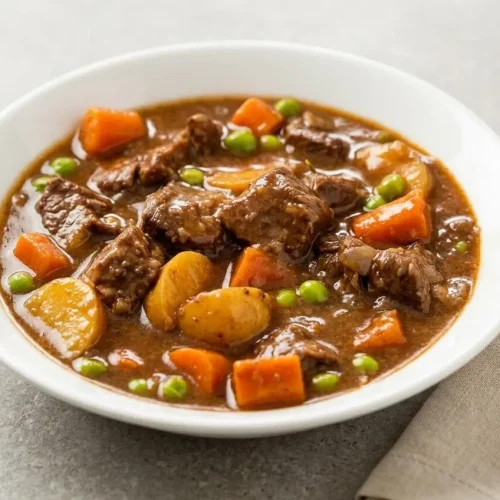
Slow Cooker Beef Stew

Equipment
- 6-Quart Slow Cooker or larger
Ingredients
- 2 ½ pounds stew meat
- ½ teaspoon EACH: black pepper, garlic salt, celery salt
- 1/4 cup flour
- 3-6 tablespoons olive oil
- 3 tablespoons cold butter (divided)
- 2 cups yellow onions (diced)
- 4 cloves garlic (minced)
- 1 cup cabernet sauvignon (or merlot.)
- 4 cups beef broth
- 2 beef bouillon cubes
- 2 tablespoons Worcestershire Sauce
- 3 tablespoons tomato paste
- 5 medium carrots (cut into 1-inch chunks)
- 1 lb. baby Yukon gold potatoes (halved or quartered)
- 2 bay leaves
- 1 sprig rosemary
- 1 cup frozen peas
- 1/4 cup Cold Water + 3 tablespoons Corn Starch (Optional)
- 2-3 drops Gravy Master (*Optional*- Adds a richer, darker color.)
Instructions
- Cut the meat into 1-inch cubes and trim away any large pieces of fat, leaving the marbled bits in place. The smaller, even pieces cook more evenly and the marbling helps the beef stay tender.
- Season the beef with black pepper, garlic salt, and celery salt, then toss it with the flour until coated. A light flour coating helps the meat brown and gives the stew a better base for thickening later.
- Heat 3 tablespoons olive oil in a large skillet over medium-high heat and brown the beef in batches for 45 seconds per side, adding more oil if needed, then transfer it to the slow cooker. Look for browned edges instead of gray meat, because that color means real flavor has developed.
- Lower the heat to medium, melt 1 tablespoon of butter, and cook the onions for 5 minutes before adding the garlic for 1 minute. The onions should soften and smell sweet, and the garlic should turn fragrant without browning hard.
- Pour a splash of wine into the skillet and scrape up the browned bits with a silicone spatula, then transfer the onions, garlic, and remaining wine to the slow cooker. The pan should loosen easily and the liquid will turn darker as it picks up all that built-up flavor.
- Add the beef broth, bouillon cubes, Worcestershire Sauce, tomato paste, carrots, potatoes, bay leaves, and rosemary to the slow cooker. Once stirred together, the stew should look brothy and well seasoned, with the vegetables tucked into the liquid.
- Cover and cook on low for 7 ½ to 8 hours or on high for 3½ to 4 hours. The stew is ready for the final steps when the carrots are softened and the potatoes are fork tender.
- Stir in the peas during the last 15 minutes of cooking, then remove the bay leaves and rosemary stem. The peas stay bright and sweet this way instead of fading into the background.
- If you want a thicker gravy, stir together 1/4 cup Cold Water + 3 tablespoons Corn Starch (Optional), then slowly mix it into the stew. The broth will go from loose to glossy and will keep thickening a bit as it stands.
- Turn off the heat and swirl in the remaining 2 tablespoons of cold butter, then add 2-3 drops Gravy Master if desired. The gravy should look smooth and shiny, clinging gently to the beef and vegetables instead of running thin.