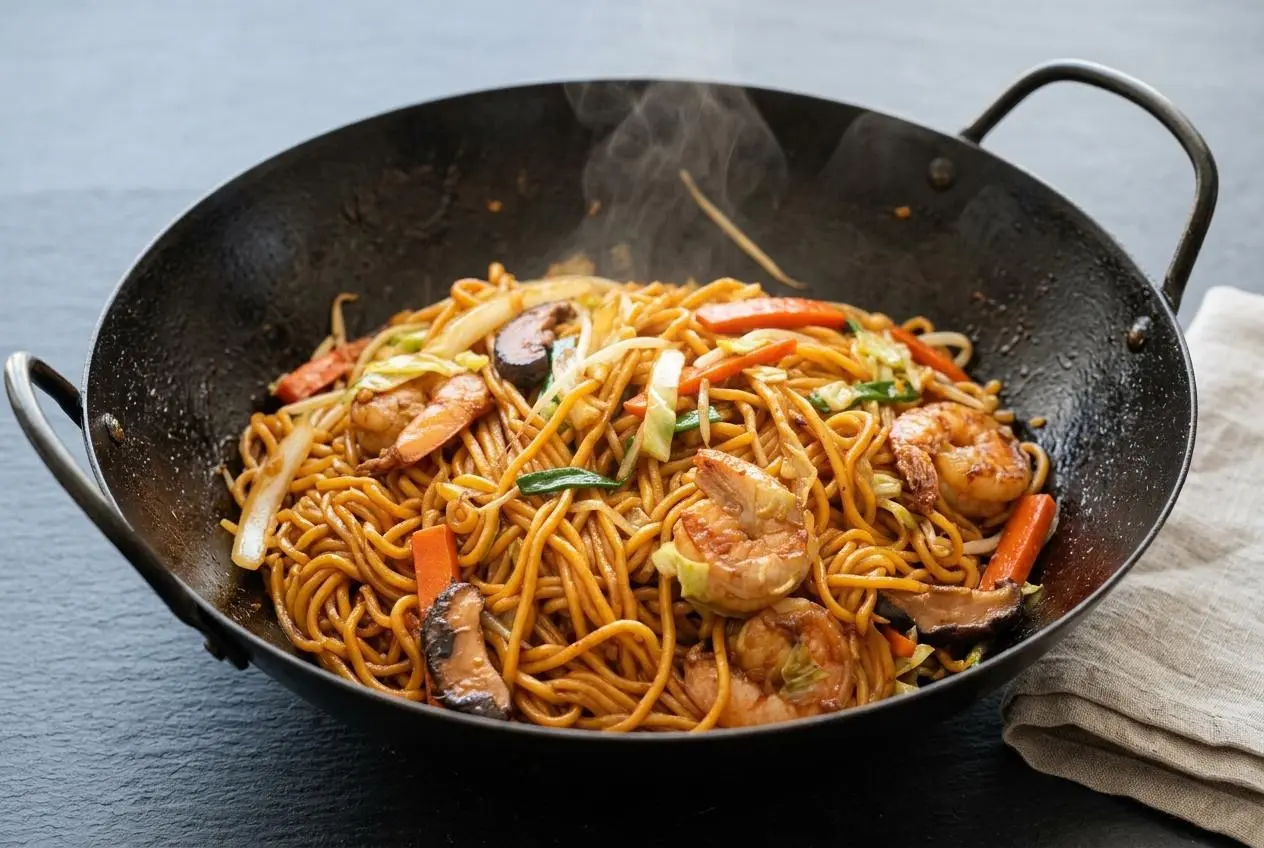
Shrimp lo mein is a fast, takeout-style noodle stir-fry with tender shrimp, chewy noodles, crisp vegetables, and a glossy savory sauce. This version comes together in 30 minutes and stays weeknight-friendly.
Shrimp lo mein is one of those dinners that feels a little special without asking much from you. The sauce is balanced, the noodles stay springy, and the shrimp cook quickly enough to keep the whole pan lively instead of heavy.
You’ll like this one if you want reliable texture and bold flavor without juggling a dozen complicated steps. Get everything chopped before the heat goes on, and it gets very fun, very fast.
Have the sauce mixed and the vegetables sliced before you start cooking, because once the wok gets hot, this moves in a hurry.
Ingredients
These ingredients are grouped the same way I prep them at the stove, which makes the final stir-fry much easier to manage.
Shrimp
- 1 lb shrimp
- 1/2 tsp salt
- 1/4 tsp white pepper
- 1 tbsp light soy sauce, low sodium
- 1/4 tsp baking soda
- 1 tsp shaoxing wine
- 1/2 tbsp cornstarch
- 1/2 tbsp neutral oil, I used avocado oil
Lo Mein Sauce
- 2 tbsp light soy sauce, low sodium
- 1 tbsp oyster sauce
- 1 tbsp dark soy sauce
- 1 tbsp shaoxing wine
- 1 tsp sesame oil
- 1/4 tsp white pepper
- 1/2 tbsp sugar
- 1 tbsp water
- 1/2 tbsp cornstarch
- 1/4 tsp msg, optional
Noodles
- 16 oz lo mein noodles, fresh or dried
- 1/2 tsp sesame oil, optional
Oil & Vegetables
- 3 tbsp neutral oil, I used avocado oil
- 5 cloves garlic, minced
- 1 tbsp ginger, minced
- 5 scallions, chopped, greens and whites separated
- 1 carrot, medium, cut to strips
- 3 cups cabbage, sliced
- 1/2 white onion, sliced
- 6 shiitake mushrooms, sliced
- 2 cups bean sprouts
Why these ingredients work
Light soy sauce brings the main salty, savory backbone. Dark soy sauce is less about salt and more about that deeper brown color that makes lo mein look glossy and restaurant-style. Oyster sauce adds body and savory depth, while shaoxing wine gives the sauce a subtle aroma that makes the whole dish taste more rounded.
Sesame oil is the finishing note. It is small, but you’d miss it if it were gone. Cornstarch is what helps the sauce cling to the noodles instead of pooling at the bottom of the pan.
In my kitchen, I really notice the difference when I use both light and dark soy sauce instead of treating them as interchangeable. One seasons, one colors. For noodles, fresh lo mein gives the softest chew, while dried lo mein works very well and is easier to keep on hand. If you can’t find either, spaghetti or plain ramen can work in a pinch, though the texture will shift a bit.
If you need a substitute for shaoxing wine, dry sherry is the closest easy swap. It will still give you that little lift in the sauce without changing the spirit of the dish.
How to Make shrimp lo mein
This method is quick, so the big win is staying organized. I like to set the shrimp, sauce, noodles, and vegetables in separate zones before the pan even heats.
- Pat the shrimp dry with a paper towel and place them in a bowl. Marinate with salt, white pepper, light soy sauce, baking soda, shaoxing wine, cornstarch and oil. Let marinate for 15 minutes while you prepare the rest of your ingredients.
I always make sure the shrimp are fairly dry before they hit the marinade, because surface moisture can dilute the coating. After 15 minutes, they should look lightly glossy and a little velvety rather than wet and drippy.
- In a small bowl, make the sauce by adding soy sauce, oyster sauce, dark soy sauce, shaoxing wine, sesame oil, white pepper, sugar, water, cornstarch and msg. Mix until the cornstarch and sugar is dissolved.
Give this a really good stir so you do not end up with cornstarch hiding at the bottom. The sauce should look smooth and thin at this stage, almost too thin, but it thickens fast once it hits the hot pan.
- Bring a large pot of water to a boil over high heat. Cook the lo mein noodles 2 minutes less than package directions, drain, then rinse with cold water and drain dry. Coat the noodles with sesame oil to prevent sticking.
This undercooking step matters. You want the noodles to still have a noticeable bite in the center, because they finish in the wok. After rinsing, drain them well so you are stir-frying noodles, not steaming them.
- In a large wok or pan, heat 3 tbsp of oil over high heat until just smoking. Sear the shrimp for 2-3 minutes or until cooked through and set aside.
You should hear an immediate sizzle. The shrimp are ready when they turn opaque and curl into a loose C shape. If they tighten into little O’s, they have gone a bit too far. For food safety, shrimp are done at 145°F and opaque throughout.
- In the same oil, sauté the garlic and ginger for 15 seconds over medium high heat. Add the scallion whites, carrot, cabbage, white onion, and mushrooms. Turn the heat to high and sauté for a 2-3 minutes until slightly wilted, then add the noodles, shrimp, and sauce and mix thoroughly. Continue cooking for 1-2 minutes until the sauce has thickened and is evenly coated. Add scallion greens and bean sprouts, mix and stir fry for another minute and enjoy!
The garlic and ginger should smell sharp and fragrant almost immediately, so do not wander off here. Once the noodles and sauce go in, keep everything moving until the noodles turn glossy and evenly bronzed. I personally love separating the scallion whites and greens because the whites build flavor early, while the greens stay fresh and bright at the end.
A secret flavor boost
If you like a slightly tangier finish, some cooks stir a small splash of Chinese black vinegar into the sauce. Keep it optional and subtle so the savory noodle flavor still leads.
Why the sauce works so well
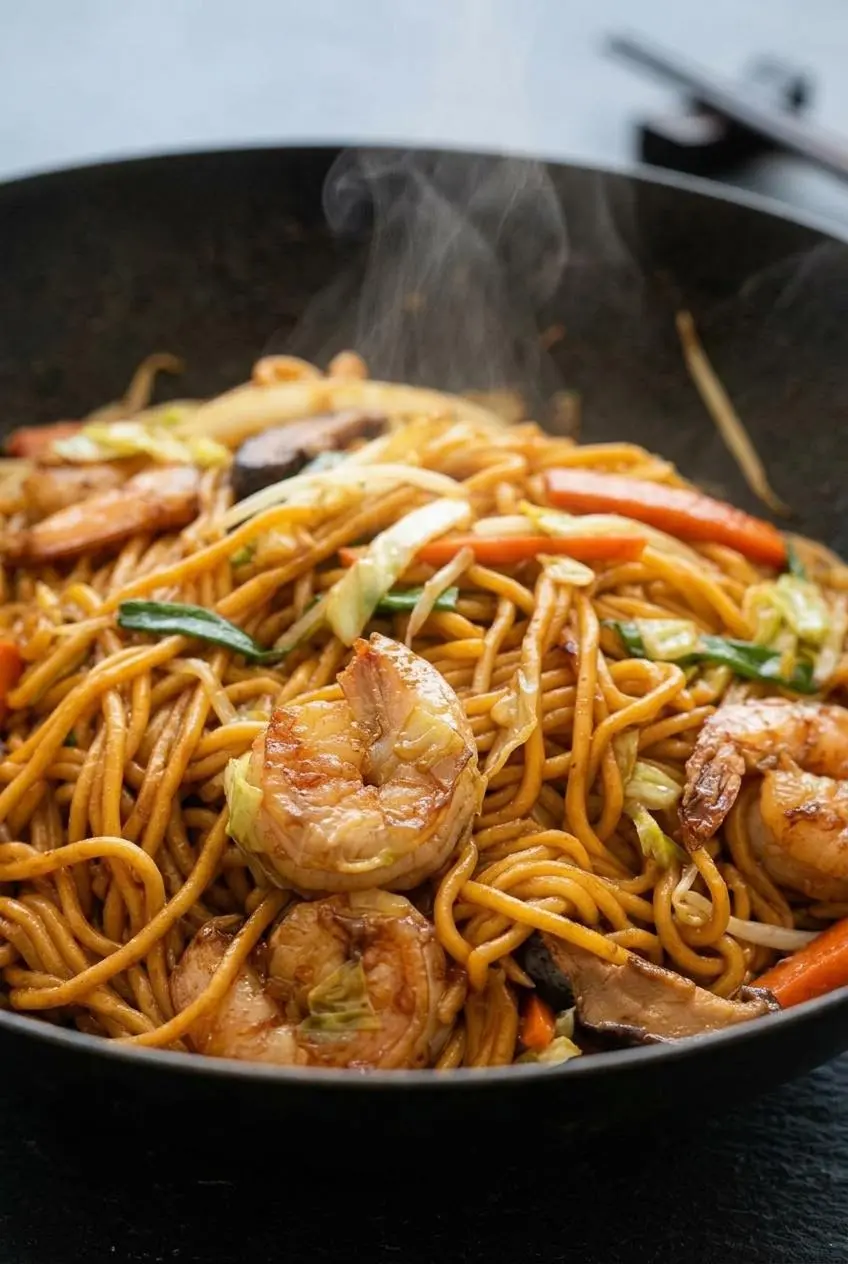
If you have ever wondered what shrimp lo mein sauce is made of, this one keeps it focused and balanced. Nothing fussy, just ingredients that each do a clear job.
Light soy sauce handles the main seasoning. Dark soy sauce deepens the color and gives the noodles that classic takeout sheen. Oyster sauce adds savory depth and a fuller mouthfeel, so the sauce tastes rich instead of flat.
Shaoxing wine brings aroma that lifts the whole stir-fry, especially once it hits the heat. Sesame oil rounds things out at the end with a toasty finish. Then cornstarch ties it all together by thickening the sauce just enough to coat the noodles and shrimp rather than slipping off.
The bit of sugar matters too. It does not make the dish sweet. It simply smooths the edges so the soy and oyster sauce taste more integrated. Honestly, that small balance is what keeps the sauce from tasting sharp or overly salty.
The noodle guide for the best texture
The noodle choice changes the final feel of the dish more than most people expect. Here is the quick version.
| Noodle | Texture | How it handles sauce | What to expect |
|---|---|---|---|
| Fresh lo mein noodles | Soft, chewy, springy | Excellent cling | The closest to classic takeout texture |
| Dried lo mein noodles | Chewy with a firmer bite | Very good cling | Great pantry option, just avoid overcooking |
| Spaghetti | Smoother and a little less bouncy | Good, but less absorbent | Works in a pinch, though it feels less like egg noodles |
| Ramen | Soft and springy | Good if handled gently | Can work well, but it cooks fast and can go too soft quickly |
Fresh and dried lo mein noodles are still the best fit here because they hold their chew while absorbing the sauce. If you use spaghetti or ramen, keep the same recipe and method, but watch the noodle texture closely so it does not cross into mushy territory.
How to keep lo mein from turning soggy
A lot of home cooks ask this, and the fix is mostly about noodle prep and heat.
- Cook the noodles 1 to 2 minutes under the package time so they finish in the sauce instead of overcooking in it.
- Rinse with cold water right after draining to stop the cooking.
- Drain well before they go into the pan. Extra water is the enemy here.
- Coat lightly with sesame oil so they stay loose instead of clumping.
- Use high heat once the vegetables and noodles hit the wok.
- Do not crowd the pan, or the noodles will steam instead of stir-fry.
Wok or skillet, both can work
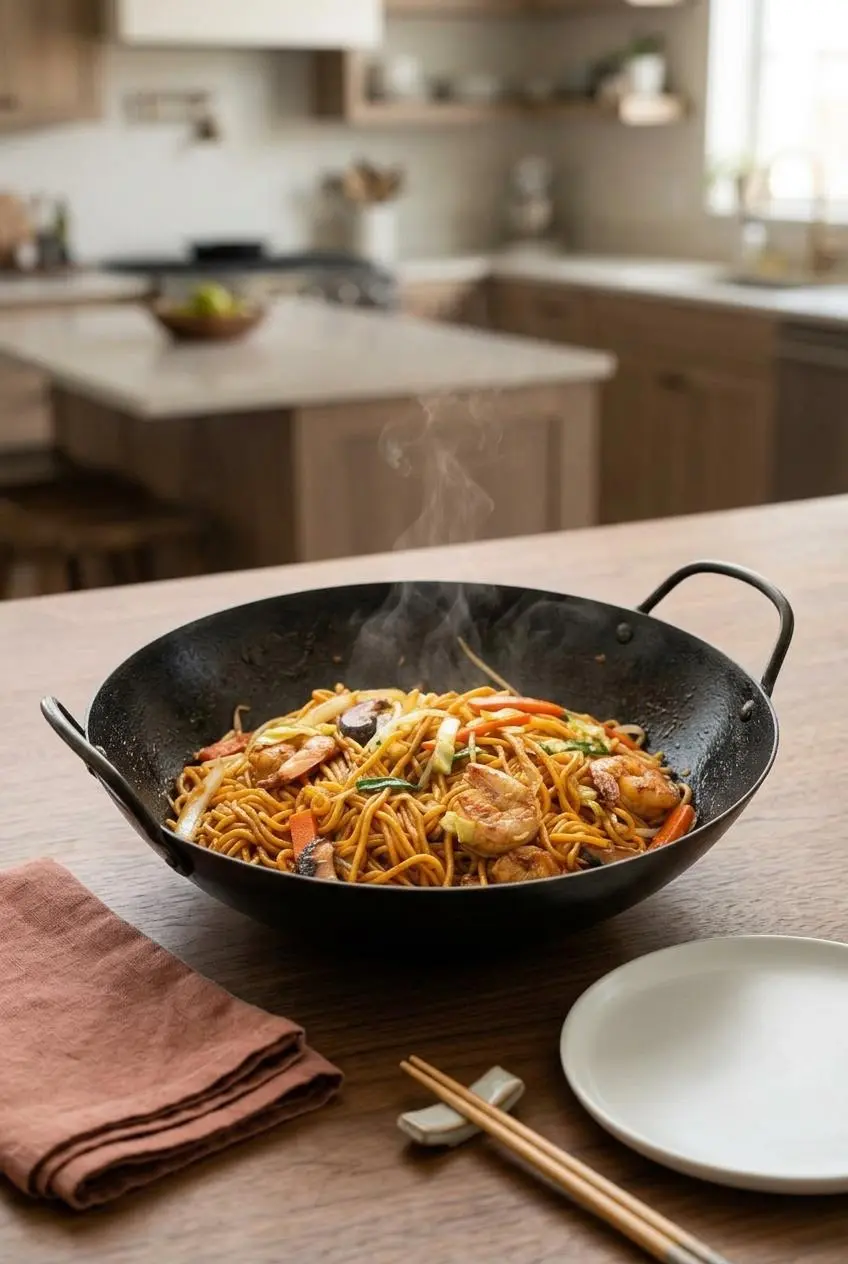
You do not need a restaurant burner to make this work. A wok gives you more room and faster evaporation, but a large skillet can still produce glossy, flavorful noodles.
If you are using a skillet, preheat it well before adding the oil. You want the pan hot enough that the shrimp sizzle right away and the vegetables soften without dumping out their water all at once.
The biggest challenge with a skillet is crowding. If your pan feels packed, cook in batches rather than forcing everything in at once. Trust me, a crowded pan turns stir-fry into a damp vegetable pile with noodles attached. Not the dream.
Keep the vegetables moving and give them space where you can. That helps them stay crisp-tender instead of limp. Once the sauce goes in, toss quickly and confidently so the noodles get coated before the pan cools down.
Fixing dry noodles, soggy vegetables, or rubbery shrimp
This is the save-dinner section. Most problems come from heat, timing, or too much moisture.
| Problem | Likely cause | Best fix next time |
|---|---|---|
| Dry lo mein | Sauce did not fully coat the noodles or the pan heat was too low during tossing | Mix the sauce thoroughly before adding and toss while the pan is hot so it thickens evenly |
| Watery sauce | Noodles were not drained well or vegetables released too much moisture | Drain the noodles very well and avoid crowding the pan |
| Mushy noodles | Noodles were boiled too long before stir-frying | Undercook them by 2 minutes and rinse with cold water right away |
| Pale color | Sauce was not fully mixed or dark soy sauce was not evenly distributed | Stir the sauce again just before pouring it in |
| Rubbery shrimp | Shrimp cooked too long | Sear just until opaque and remove promptly before finishing the rest |
The shrimp point is the one I watch most closely. They cook fast, and once they cross the line, there is no magic fix. A loose C shape is your friend.
Make ahead, leftovers, and freezing
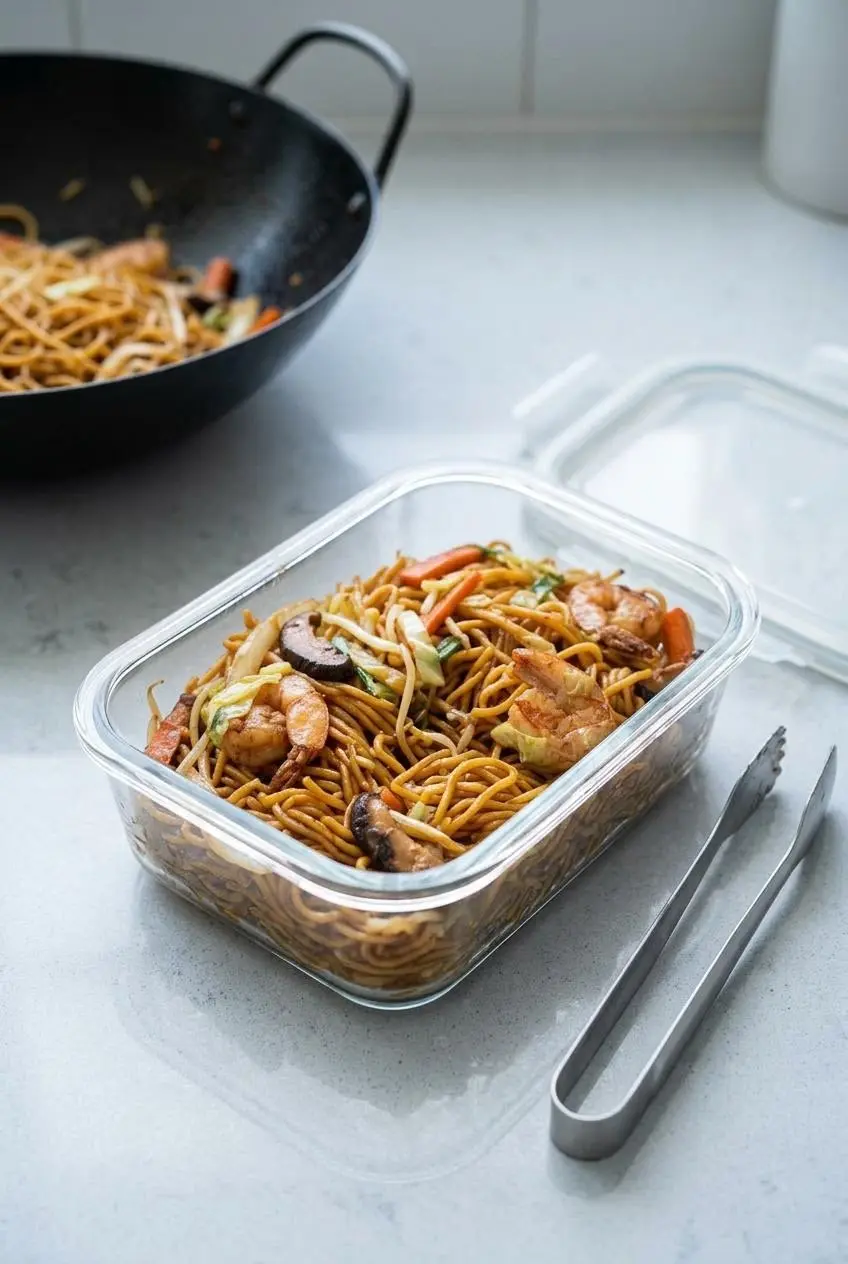
This recipe is easy to prep ahead in pieces, which makes weeknight cooking much calmer. You can chop the vegetables and mix the sauce ahead of time, then marinate the shrimp shortly before cooking so everything stays fresh and fast.
Leftovers keep well for a short stretch if you refrigerate them promptly in an airtight container. For a precise storage reference, see this safe food storage guidance. When reheating, a hot skillet usually gives the best texture. Add a small splash of water if the noodles seem tight or sticky.
You can also reheat in the microwave if that is what your day allows. Cover loosely and stop to stir once or twice so the center warms through without turning the edges rubbery.
Freezing is possible, but the texture changes. The noodles soften more after thawing, and the vegetables lose some snap, so I think this dish is best fresh or from the fridge rather than the freezer.
Shrimp Lo Mein

Equipment
- wok
Ingredients
Shrimp
- 1 lb shrimp
- 1/2 tsp salt
- 1/4 tsp white pepper
- 1 tbsp light soy sauce low sodium
- 1/4 tsp baking soda
- 1 tsp shaoxing wine
- 1/2 tbsp cornstarch
- 1/2 tbsp neutral oil I used avocado oil
Lo Mein Sauce
- 2 tbsp light soy sauce low sodium
- 1 tbsp oyster sauce
- 1 tbsp dark soy sauce
- 1 tbsp shaoxing wine
- 1 tsp sesame oil
- 1/4 tsp white pepper
- 1/2 tbsp sugar
- 1 tbsp water
- 1/2 tbsp cornstarch
- 1/4 tsp msg optional
Noodles
- 16 oz lo mein noodles fresh or dried
- 1/2 tsp sesame oil optional
Oil & Vegetables
- 3 tbsp neutral oil I used avocado oil
- 5 cloves garlic minced
- 1 tbsp ginger minced
- 5 scallions chopped, greens and whites separated
- 1 carrot medium, cut to strips
- 3 cups cabbage sliced
- 1/2 white onion sliced
- 6 shiitake mushrooms sliced
- 2 cups bean sprouts
Instructions
- Pat the shrimp dry with a paper towel and place them in a bowl. Marinate with salt, white pepper, light soy sauce, baking soda, shaoxing wine, cornstarch and oil. Let marinate for 15 minutes while you prepare the rest of your ingredients.
I always make sure the shrimp are fairly dry before they hit the marinade, because surface moisture can dilute the coating. After 15 minutes, they should look lightly glossy and a little velvety rather than wet and drippy. - In a small bowl, make the sauce by adding soy sauce, oyster sauce, dark soy sauce, shaoxing wine, sesame oil, white pepper, sugar, water, cornstarch and msg. Mix until the cornstarch and sugar is dissolved.
Give this a really good stir so you do not end up with cornstarch hiding at the bottom. The sauce should look smooth and thin at this stage, almost too thin, but it thickens fast once it hits the hot pan. - Bring a large pot of water to a boil over high heat. Cook the lo mein noodles 2 minutes less than package directions, drain, then rinse with cold water and drain dry. Coat the noodles with sesame oil to prevent sticking.
This undercooking step matters. You want the noodles to still have a noticeable bite in the center, because they finish in the wok. After rinsing, drain them well so you are stir-frying noodles, not steaming them. - In a large wok or pan, heat 3 tbsp of oil over high heat until just smoking. Sear the shrimp for 2-3 minutes or until cooked through and set aside.
You should hear an immediate sizzle. The shrimp are ready when they turn opaque and curl into a loose C shape. If they tighten into little O’s, they have gone a bit too far. For food safety, shrimp are done at 145°F and opaque throughout. - In the same oil, sauté the garlic and ginger for 15 seconds over medium high heat. Add the scallion whites, carrot, cabbage, white onion, and mushrooms. Turn the heat to high and sauté for a 2-3 minutes until slightly wilted, then add the noodles, shrimp, and sauce and mix thoroughly. Continue cooking for 1-2 minutes until the sauce has thickened and is evenly coated. Add scallion greens and bean sprouts, mix and stir fry for another minute and enjoy!
The garlic and ginger should smell sharp and fragrant almost immediately, so do not wander off here. Once the noodles and sauce go in, keep everything moving until the noodles turn glossy and evenly bronzed. I personally love separating the scallion whites and greens because the whites build flavor early, while the greens stay fresh and bright at the end.
Notes
Nutrition
Easy ways to lighten the salt and change the vegetables
If you want a lighter feel, start with the choices already built into the recipe. The low-sodium light soy sauce helps, and keeping the sauce amount exactly as written prevents the noodles from getting weighed down.
For vegetables, quick-cooking options work best. Bok choy, snow peas, or bell peppers fit the same general style and keep the stir-fry bright and crisp. Just cut everything evenly so it cooks at about the same pace.
If you cook shrimp often and want another fast dinner idea, my pick would be honey garlic shrimp. It scratches the same quick-weeknight itch in a totally different flavor direction.
You can also make the dish feel a little lighter by going heavy on the cabbage, mushrooms, and bean sprouts in each serving rather than piling up only noodles. Small shift, big payoff.
Conclusion
This shrimp lo mein gives you tender shrimp, chewy noodles, and a glossy savory sauce without dragging out dinner. The biggest success tip is simple: prep everything first, then cook over high heat.
If you want to play a little, that optional splash of black vinegar can add a nice tangy edge. But even as written, this one is deeply satisfying and very worth keeping in your weeknight rotation.
FAQ
What is the best sauce for shrimp lo mein?
The best sauce is a balanced mix of light soy sauce, dark soy sauce, oyster sauce, shaoxing wine, sesame oil, sugar, water, and cornstarch. In this recipe, each one has a job, so the sauce tastes savory, smells aromatic, and clings to the noodles instead of sliding off.
What’s the secret to flavorful, non soggy lo mein noodles?
Undercook the noodles by 2 minutes, rinse them with cold water, and drain them well. After that, high heat matters most. A hot pan keeps the noodles chewy and helps the sauce coat them quickly without turning everything soft.
What’s the difference between lo mein and chow mein?
Lo mein is softer and more sauce-coated, while chow mein is usually drier or crisper. They can use similar sauces and add-ins, but the final noodle texture is what really sets them apart.
Can I use frozen shrimp for this recipe?
Yes, as long as you thaw them first and pat them very dry. Then marinate them as written. Extra moisture from partially thawed shrimp can water down the stir-fry and make it harder to sear them well.
What vegetables go well in shrimp lo mein?
Cabbage, carrot, onion, mushrooms, bean sprouts, and scallions all work beautifully here. Other quick-cooking vegetables like bok choy, snow peas, or bell peppers also fit well. The main thing is cutting them evenly so they cook fast and stay crisp-tender.
How do I store and reheat leftover shrimp lo mein?
Store leftovers in the fridge in an airtight container and reheat them in a hot skillet or in the microwave with a small splash of water if needed. The noodles will soften a bit over time, which is normal for lo mein.