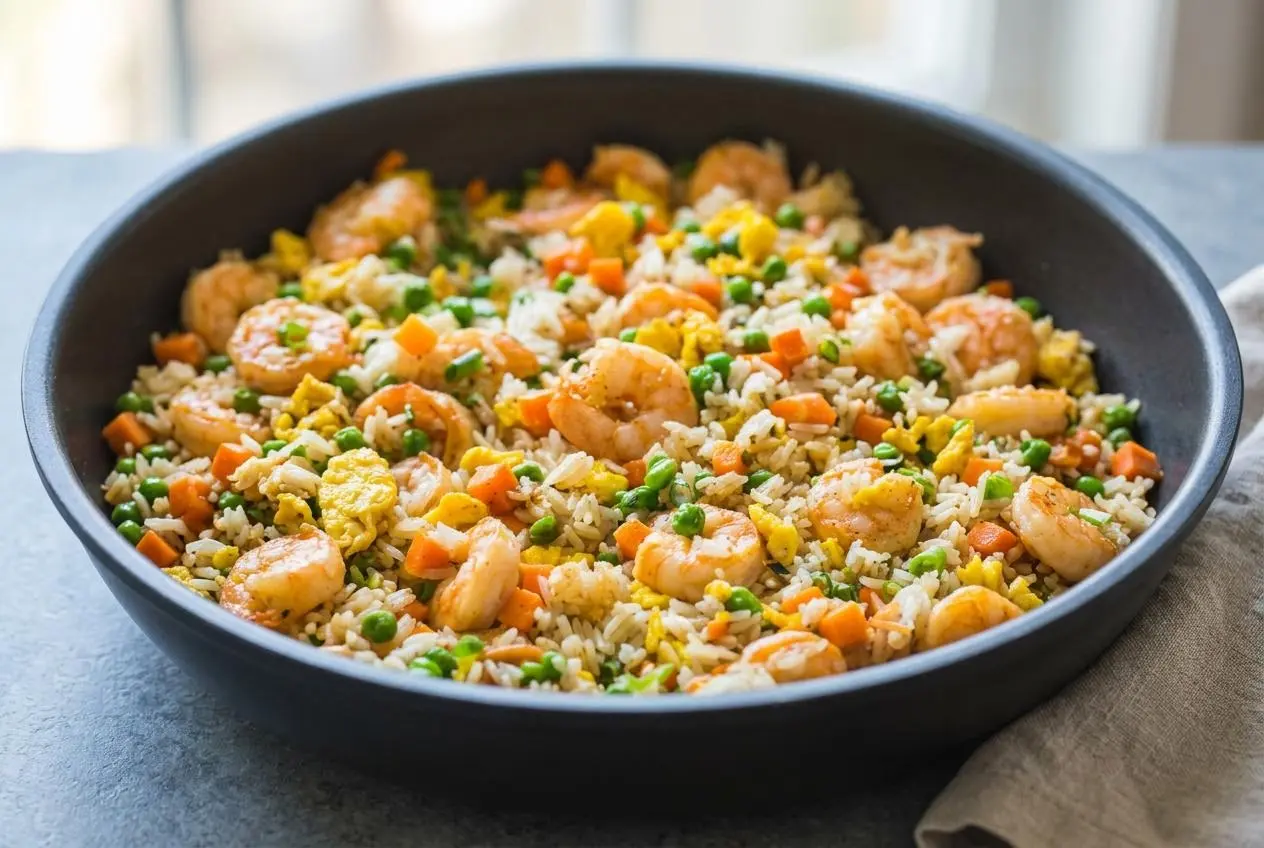
Shrimp Fried Rice is a fast, takeout-style dinner with juicy shrimp, fluffy rice, savory eggs, and big flavor from a hot skillet and cold rice.
Shrimp Fried Rice is the kind of meal that feels special without turning your kitchen upside down. It cooks quickly, uses chilled rice for the best texture, and gives you that savory, sizzly finish people crave.
You’ll like how reliable it is once you know the order: shrimp first, eggs next, rice after that. Get the pan hot, and it all clicks.
Have everything chopped, thawed, and within arm’s reach before the skillet heats up because this one moves fast.
Ingredients
Each ingredient pulls its weight here, building tender shrimp, separate grains, rich eggy bites, color from the vegetables, and that nutty finish from sesame oil.
- 1 lb 26-30 count uncooked shrimp, (peeled and deveined)
- 1 tsp corn starch
- 1/4 tsp sea salt
- 1/4 tsp freshly ground black pepper
- 3 Tbsp LIGHT olive oil, or canola
- 4 large eggs, beaten
- 1/4 cup green onion, finely chopped
- 5 cups leftover chilled white rice, (rinse rice before cooking)
- 12 oz frozen carrots and peas, thawed
- 2 Tbsp soy sauce or coconut aminos, or added to taste
- 1 1/2 tsp sesame oil
I personally buy peeled and deveined shrimp for fried rice because the cooking is so quick. It keeps the whole dish weeknight-friendly and lets me focus on getting the rice texture right.
Why cold rice matters so much here
This matters more than almost anything else. Chilled leftover rice has drier surfaces, so the grains stay separate instead of turning sticky or gummy when they hit the pan.
If your rice is freshly cooked, it can still work, but it needs time to cool and dry out first. Spread it out so steam can escape, then chill it until the grains feel firmer and less steamy. If you want help with cooking jasmine rice ahead of time, that route works well for fried rice.
What kind of shrimp works best in this dish
The 26-30 count shrimp in this recipe are a sweet spot for fried rice. They’re large enough to stay juicy, but small enough to cook fast and mix evenly through the rice.
Peeled and deveined means the shell is off and the dark digestive tract has been removed, so they’re ready to season and cook. Frozen shrimp are also a great option here as long as you thaw them first and blot away excess moisture so they sear instead of steam.
How to Make the Shrimp Fried Rice
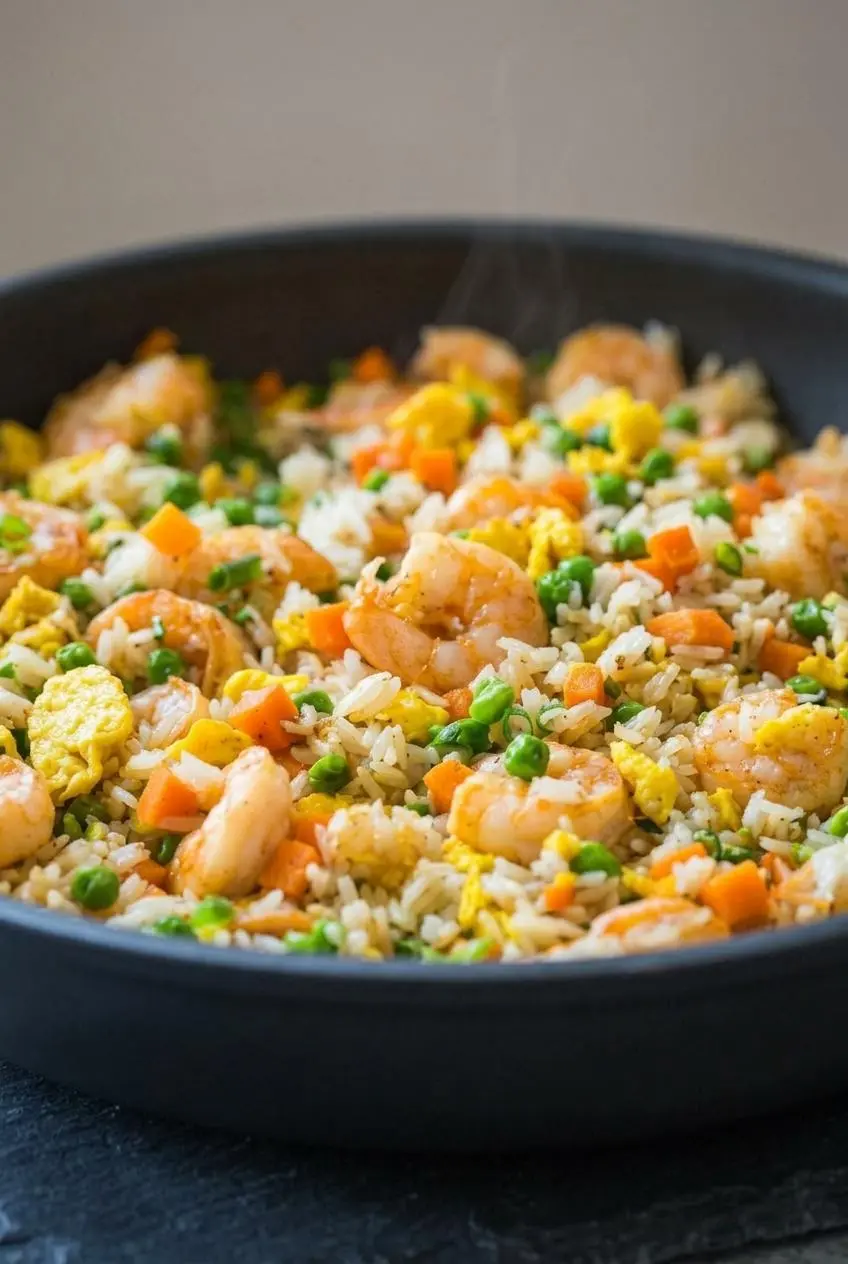
- Combine the shrimp, corn starch, sea salt, and black pepper in a medium bowl, then let the shrimp sit at room temperature for 10 minutes.
The cornstarch helps the surface cook up a little silkier, and the shrimp should look lightly coated rather than wet or pasty. - Heat a large non-stick skillet over medium/high heat until a bead of water sizzles and disappears, then swirl in 2 Tbsp of oil. Add the shrimp in a single layer and cook for 1 minute per side, until cooked through and opaque, then transfer them to a bowl.
I watch for a plump C-shape and a fully opaque center. Pull them as soon as they’re done so they stay juicy. - Reduce to medium heat and pour the beaten eggs into the same skillet. Break them up with a spatula and cook until they are no longer runny, then move them to a bowl.
You want soft curds here, not dry egg confetti. - Wipe the skillet with a paper towel, return it to medium/high heat, add the remaining 1 Tbsp oil and the green onion, and cook for 30 seconds.
The onion should smell fragrant almost immediately, with no browning needed. - Stir in the chilled rice, spread it out evenly across the pan, and leave it undisturbed for 1 to 2 minutes. Then stir and sauté for another 1 to 2 minutes.
Listen for that satisfying sizzle. That sound means the rice is frying instead of steaming. - Drizzle in the soy sauce or coconut aminos and stir well. Add the sesame oil and thawed carrots and peas, then mix until everything is evenly combined.
The rice should turn glossy and lightly seasoned, not wet. - Return the cooked shrimp and eggs to the skillet and stir frequently until the rice is hot and sizzling. Add more soy sauce to taste, if desired.
Once the shrimp are warmed through and the eggs are tucked into the rice, it’s ready to hit the table.
A quick way to get deeper takeout-style flavor
If you want a richer, more restaurant-style finish, stir in 1 tablespoon of Shaoxing wine during the final toss and add 1 to 2 teaspoons of oyster sauce with the soy sauce. Both are optional, but together they give the rice a deeper, rounder savory note.
The best rice for fried rice and how to prep it right
The rice choice shapes the whole dish. For the best texture, go with chilled jasmine rice or another long-grain white rice that holds its shape well in the skillet.
Jasmine rice gives you a slightly softer, more aromatic result. Long-grain white rice stays a touch firmer and a little more distinct. Both work beautifully, so it really comes down to whether you want a tender takeout-style bite or a drier, more separated texture.
Rinsing the rice before cooking helps remove excess surface starch, which makes the grains less likely to clump later. Once the rice is cooked, cool it uncovered so steam can escape. If you’re making rice the same day, spread it out on a sheet pan and chill it until it feels cold and dry to the touch. Warm rice is the fast lane to mush.
A lot of home cooks ask if fresh rice can work. Yes, but it needs that cooling step. If it’s still steamy, it will soften too much in the pan and soak up sauce unevenly. Cold rice gives you that fried, lightly chewy texture instead of a soft pile.
How to get wok style flavor in a regular skillet
You do not need a restaurant wok burner to make this taste good. You need heat, space, and a little patience.
Use a large skillet and let it get properly hot before the oil goes in. When the rice hits the pan, it should sizzle right away. That contact with the hot surface creates lightly browned bits and a faint smoky edge that makes homemade fried rice taste more like takeout.
Don’t crowd the pan. If the ingredients pile up too thickly, they trap steam and the rice turns soft instead of toasty. Cooking the shrimp and eggs separately helps a lot because the rice gets its own moment in the heat.
And resist the urge to stir nonstop. Giving the rice a brief undisturbed stretch lets the bottom toast a little. That’s where the best flavor lives.
Common problems and how to fix them fast
This is where most fried rice frustration shows up. The good news is the fixes are usually simple.
| Problem | Likely cause | Quick fix |
|---|---|---|
| Soggy rice | Warm rice, too much sauce, or low heat | Use chilled rice, add sauce lightly, and keep the pan hot |
| Tough shrimp | Overcooking | Cook shrimp first, just until opaque, then add back at the end |
| Bland flavor | Not enough seasoning or missing sesame oil | Taste at the end and adjust soy sauce; don’t skip sesame oil |
| Sticking | Pan not hot enough or ingredients not ready | Preheat well and have everything prepped before you start |
If you want to branch out once you’ve got the method down, Beef Fried Rice is another good way to use the same skillet-first mindset with a different protein.
Why the rice turns soggy
Soggy fried rice usually starts with warm rice. Freshly cooked rice holds more surface moisture, so it steams in the pan instead of frying.
Too much soy sauce can also weigh it down fast. Add enough to season the rice, then taste. Low heat causes the same issue, because the grains never get a chance to dry out and toast.
Why the shrimp turns rubbery
Shrimp cooks quickly, and it goes from juicy to rubbery in a blink. That’s why this recipe cooks it first, removes it, and adds it back only at the end.
Once shrimp are opaque, they’re done. Keep them in the skillet much longer and they tighten up. Fast cooking is your friend here.
Why the pan starts sticking
Usually the pan either wasn’t hot enough to begin with, or the ingredients weren’t ready and things sat too long between steps. Fried rice is not the moment to hunt for the soy sauce in the back of the fridge.
A crowded pan can also cause sticking because moisture builds up instead of cooking off. Preheat well, keep the rice moving when needed, and start with a skillet that’s ready for action.
What to serve with Shrimp Fried Rice
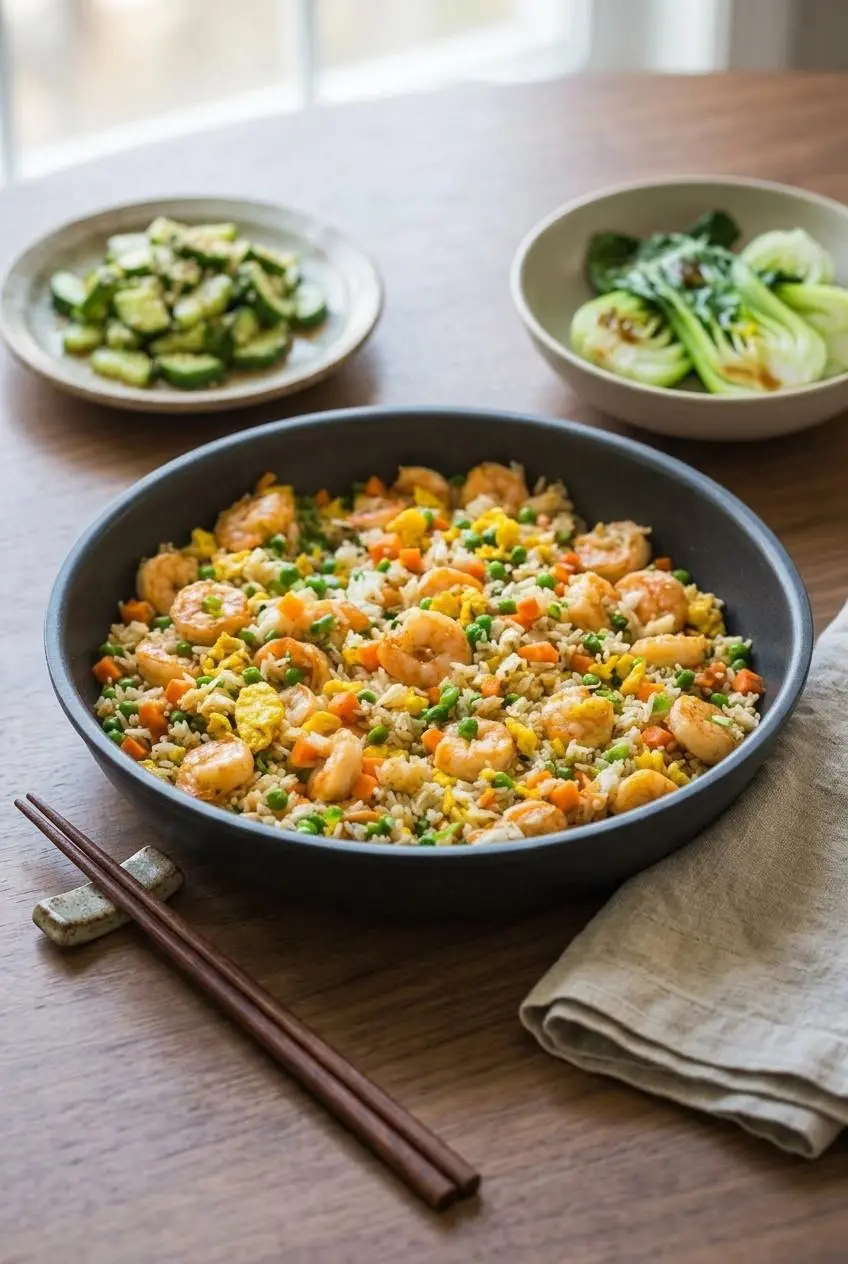
This dish can absolutely be dinner all on its own, but a crisp or savory side makes it feel complete.
Garlic cucumber salad is great if you want something cold and fresh next to the warm rice. Egg rolls, scallion pancakes, bok choy, or simple broccoli all fit naturally too. And if you’re in the mood for another quick shrimp dinner later in the week, easy Shrimp Lo Mein is a good one to keep on deck.
How to store, reheat, and freeze leftovers
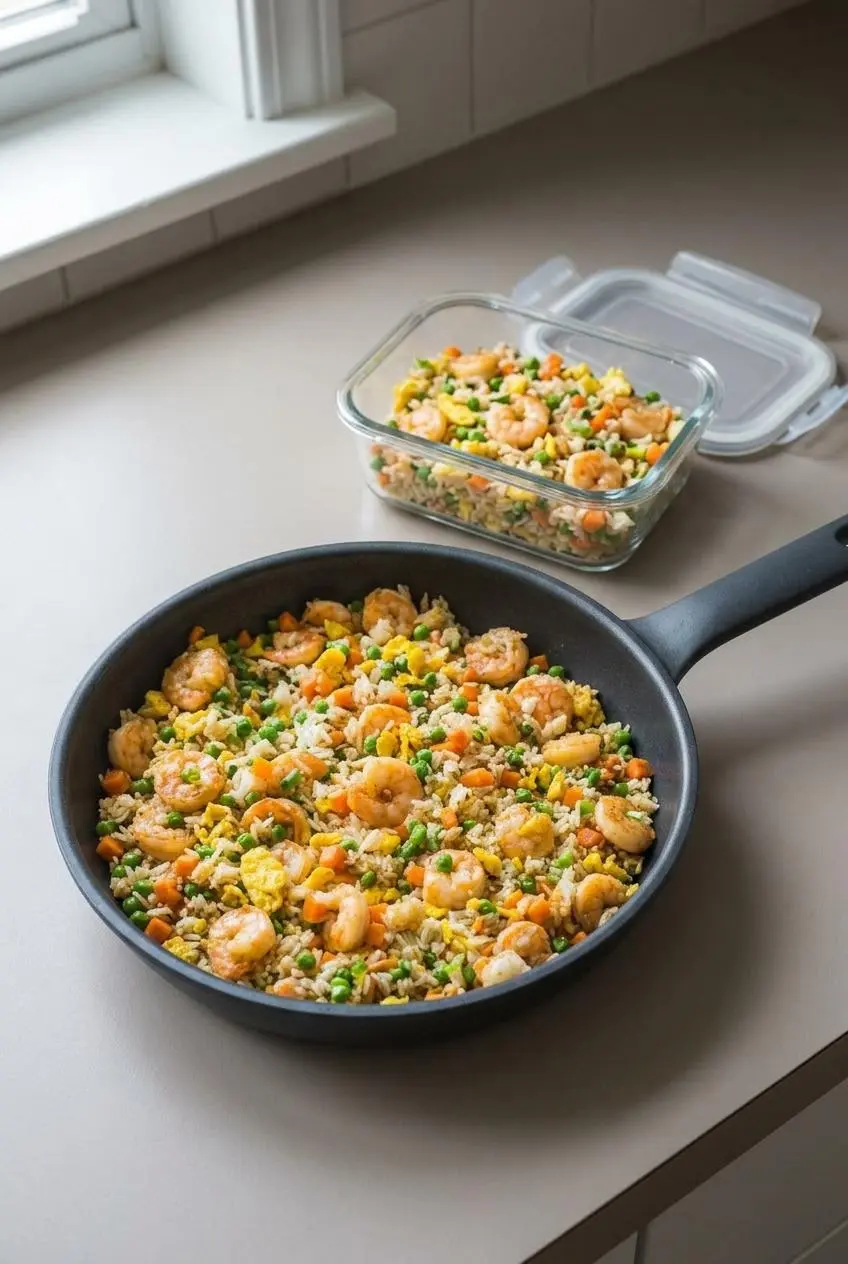
Leftovers keep best when you cool them promptly and transfer them to a covered container once they’re no longer piping hot. Refrigerate them and use your judgment with smell, texture, and overall freshness before reheating.
For the best texture, reheat in a skillet over medium heat and stir until the rice is hot all the way through. The stovetop helps bring back some of the original sizzle, while the microwave tends to soften the grains more. Freezing is possible too, though the rice and shrimp may lose a bit of their best texture after thawing.
Conclusion
This is the kind of fast one-pan dinner that really delivers: juicy shrimp, fluffy rice, savory eggs, and plenty of flavor in about 30 minutes. The biggest win is sticking with cold rice and a hot pan.
If you want to play with the flavor later, the optional Shaoxing wine and oyster sauce give it a deeper takeout feel. But even as written, it’s a solid skillet dinner you’ll want to make again.
FAQ
What is the best rice to use for shrimp fried rice?
Day-old chilled jasmine rice or long-grain white rice works best. Both fry up well, stay more separate than warm rice, and give you a better texture in the skillet.
How do you cook shrimp for fried rice so it’s not tough?
Cook the shrimp first over medium/high heat for about 1 minute per side, just until opaque. Then take it out and add it back at the end so it warms through without overcooking.
Can I make shrimp fried rice with frozen shrimp?
Yes. Frozen shrimp works very well here. Thaw it first, pat off excess moisture if needed, and peeled and deveined shrimp will make the prep much easier.
My fried rice is soggy, what did I do wrong?
The usual causes are warm rice, too much sauce, low pan heat, or crowding the skillet. Cold rice and a hot pan make the biggest difference.
What can I add for more restaurant-style flavor?
Start with the sesame oil because it adds a lot of that familiar takeout aroma. For an extra savory boost, you can also add a little Shaoxing wine and some oyster sauce during the final stir-fry.
How do I properly store and reheat leftover fried rice?
Cool it promptly, keep it covered in the refrigerator, and reheat it in a skillet until hot. That method helps the rice stay less soggy and keeps the texture closer to fresh.
Shrimp Fried Rice

Equipment
- Large non-stick skillet
- Medium bowl
- Spatula
- Paper towel
Ingredients
- 1 lb 26-30 count uncooked shrimp (peeled and deveined)
- 1 tsp corn starch
- 1/4 tsp sea salt
- 1/4 tsp freshly ground black pepper
- 3 Tbsp LIGHT olive oil or canola
- 4 large eggs beaten
- 1/4 cup green onion finely chopped
- 5 cups leftover chilled white rice (rinse rice before cooking)
- 12 oz frozen carrots and peas thawed
- 2 Tbsp soy sauce or coconut aminos or added to taste
- 1 1/2 tsp sesame oil
Instructions
- Combine the shrimp, corn starch, sea salt, and black pepper in a medium bowl, then let the shrimp sit at room temperature for 10 minutes. The cornstarch helps the surface cook up a little silkier, and the shrimp should look lightly coated rather than wet or pasty.
- Heat a large non-stick skillet over medium/high heat until a bead of water sizzles and disappears, then swirl in 2 Tbsp of oil. Add the shrimp in a single layer and cook for 1 minute per side, until cooked through and opaque, then transfer them to a bowl. I watch for a plump C-shape and a fully opaque center. Pull them as soon as they’re done so they stay juicy.
- Reduce to medium heat and pour the beaten eggs into the same skillet. Break them up with a spatula and cook until they are no longer runny, then move them to a bowl. You want soft curds here, not dry egg confetti.
- Wipe the skillet with a paper towel, return it to medium/high heat, add the remaining 1 Tbsp oil and the green onion, and cook for 30 seconds. The onion should smell fragrant almost immediately, with no browning needed.
- Stir in the chilled rice, spread it out evenly across the pan, and leave it undisturbed for 1 to 2 minutes. Then stir and sauté for another 1 to 2 minutes. Listen for that satisfying sizzle. That sound means the rice is frying instead of steaming.
- Drizzle in the soy sauce or coconut aminos and stir well. Add the sesame oil and thawed carrots and peas, then mix until everything is evenly combined. The rice should turn glossy and lightly seasoned, not wet.
- Return the cooked shrimp and eggs to the skillet and stir frequently until the rice is hot and sizzling. Add more soy sauce to taste, if desired. Once the shrimp are warmed through and the eggs are tucked into the rice, it’s ready to hit the table.