There is something especially irresistible about a cupcake that tastes a little more grown-up, the kind you bring out for birthdays, showers, or a Saturday dinner when you want dessert to feel just a bit fancy. In my kitchen, salted caramel cupcakes always disappear first, especially when the caramel is deep and buttery instead of simply sweet.
These beauties lean into that balance of cozy American baking and French pastry flair, thanks to brown butter, gooey caramel centers, and a finish of flaky sea salt. If you want a complete guide that walks you through flavor, texture, and technique, this is the batch to bake.
Why You’ll Love This Recipe
Brown butter magic: I discovered long ago that beurre noisette changes everything. When the butter is browned for both the cupcakes and the frosting, those toasted milk solids bring a warm, nutty depth that plain butter just cannot deliver.
Deeper caramel flavor: The real charm here is how the browned butter plays with caramelization and the Maillard reaction. You get roasted, toffee-like notes that make these cupcakes taste like they came from a boutique bakery case.
Soft, bakery-style crumb: Full-fat sour cream keeps the cake tender and moist, while the creaming method builds lift without making the texture heavy. In my kitchen, this combination stays fresh and plush for days.
That polished finish: A gooey caramel center, silky frosting, and a final pinch of flaky salt make these feel special without being fussy. The same nutty richness is what makes bakery-style brown butter bread so memorable, and it works just as beautifully here.
Ingredients and Substitutions
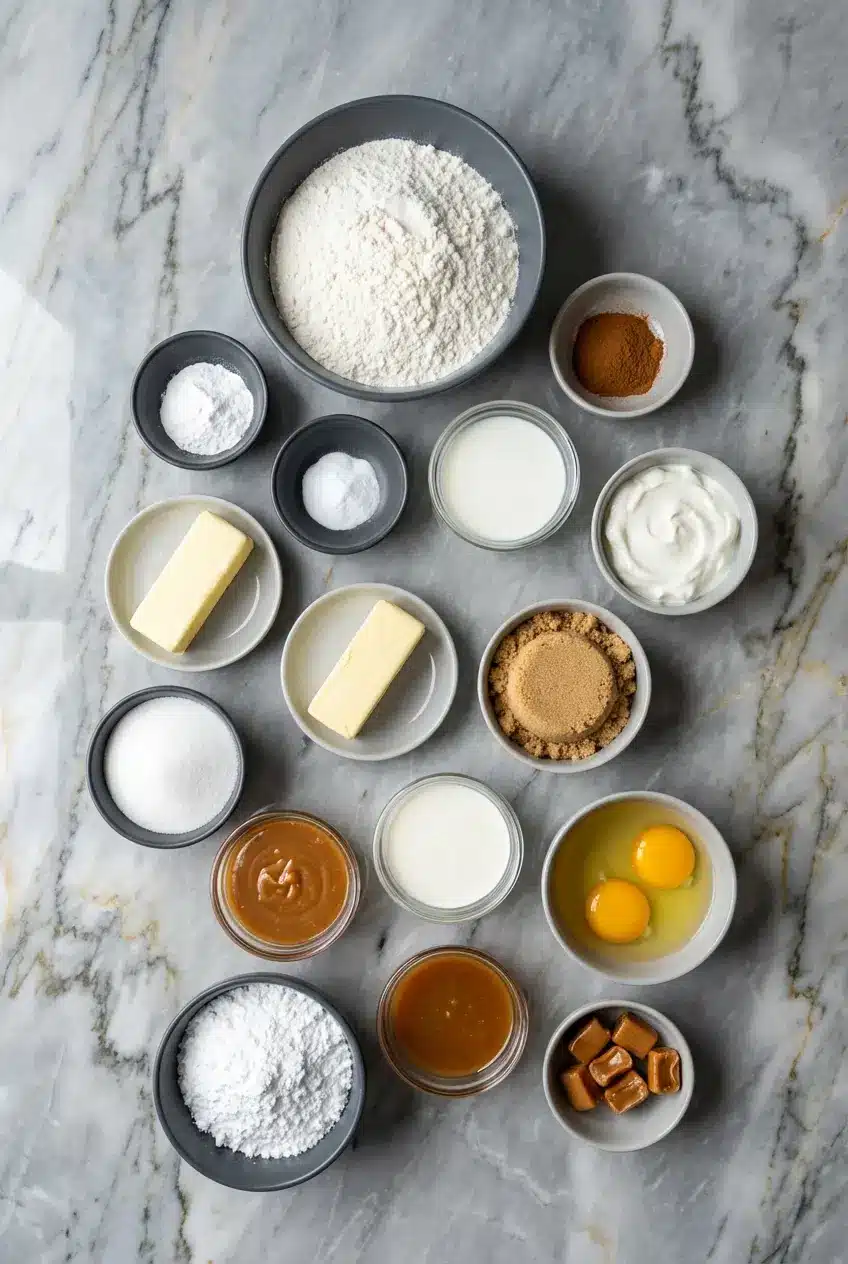
Each ingredient here has a job, from building a tender crumb to creating that glossy caramel finish and salty-sweet bite.
Ingredients
For the cupcakes:
- 2 cups all-purpose flour
- 1 teaspoon baking powder
- 1/2 teaspoon baking soda
- 1/2 teaspoon salt
- 1/2 teaspoon ground cinnamon
- 1/2 cup whole milk
- 1/2 cup full-fat sour cream
- 1 stick unsalted butter, at room temperature
- 1/4 cup granulated sugar
- 3/4 cup packed light brown sugar
- 2 large eggs plus one large egg yolk, at room temperature
- 1/4 cup boiling hot water
- 1/2 cup thick, creamy caramel sauce
For the frosting:
- 1/2 cup (1 stick) unsalted butter
- 1/2 cup heavy cream
- 1 cup packed light brown sugar
- 3/4 teaspoon salt
- 3 1/4 cups confectioners’ sugar, sifted
Decoration:
- 1/4 cup liquid caramel sauce, for drizzling
- 1 teaspoon flaky sea salt
- 6 chewy caramel candies, cut in half
Ingredient Notes & Substitutions
Butter: Choose a good-quality unsalted butter with a rich fat content if you can. Since we are browning it, better butter gives you a fuller hazelnut aroma and deeper flavor in both the cake and frosting.
Full-fat sour cream: This is one ingredient I would not skimp on. Full-fat sour cream gives the batter body and moisture, and its acidity helps the baking soda do its work so the cupcakes rise with a tender, even crumb.
Flaky sea salt: Maldon sea salt and Fleur de sel give you a clean burst of salt and a delicate crunch on top. Table salt disappears too quickly and tastes harsher, so it is better saved for baking inside the batter or frosting.
Confectioners’ sugar: For the smoothest frosting, sift it very well, and if your pantry sugar tends to clump, sift twice. That small step is the difference between silky caramel frosting and a texture that feels slightly sandy on the tongue.
Caramel sauce: A thick, creamy sauce works best for the filling because it stays tucked inside the cupcake instead of soaking downward. Store-bought is perfectly fine if it is rich and spoonable, and for a flavor twist, a teaspoon of bourbon or almond extract can be stirred into homemade caramel.
Dairy swaps: If you need a substitute in a pinch, plain full-fat Greek yogurt can stand in for sour cream with a similar tang. I would still stick with whole milk and heavy cream here, because lower-fat swaps make the cupcakes and frosting taste thinner.
How to Make salted caramel cupcakes
Brown the butter and prep your pans
- Start by browning the butter for the cupcakes and frosting separately in a light-colored saucepan so you can watch the color change. Cook over medium heat until the milk solids turn golden brown and the butter smells nutty and toasted, then let it cool back to room temperature before using so the batter and frosting stay properly balanced.
- Preheat your oven to 350 degrees F. Line a 12-cup cupcake pan with paper cupcake liners, then give the liners a light mist of nonstick spray so the cakes release cleanly after baking.
Mix the batter
- In a large bowl, whisk together the flour, baking powder, baking soda, salt, and cinnamon until the dry mixture looks evenly blended and there are no concentrated pockets of leavening.
- In a small bowl, stir the milk and full-fat sour cream together until smooth. Keeping the dairy well mixed now helps it blend into the batter without streaks later.
- In a separate large bowl, beat the cooled brown butter with the granulated sugar and brown sugar for about 4 minutes, using a hand mixer or stand mixer. You want the mixture to look lighter in color and a little fluffy, which tells you the creaming method has added air.
- Add the eggs and the extra yolk one at a time, beating well after each addition. Room temperature eggs matter here because they blend more easily into the fat, encouraging smooth emulsification instead of a curdled-looking batter.
- Reduce the mixer speed to low and add the flour mixture in 2 additions, alternating with the milk and sour cream mixture, beginning and ending with the flour. Mix only until the batter comes together, because overworking it at this stage can make the cupcakes dense.
- Pour in the boiling hot water last and beat just until combined. The batter will loosen slightly and turn silky, which is exactly what gives these cupcakes their soft, moist crumb.
Bake and fill the cupcakes
- Divide the batter among the liners, filling each about 3/4 full. Bake for 20 to 22 minutes, until the tops are domed and a toothpick inserted in the center comes out clean.
- Let the cupcakes rest in the pan for 10 minutes, then move them to a wire rack and cool completely. Patience pays off here, because warm cakes are too fragile to fill neatly.
- Once cooled, cut a small hole in the center of each cupcake with a small sharp knife or corer. Spoon 2 teaspoons of caramel sauce into each center, then gently place the little cake piece back on top to seal in that gooey middle.
Cook the frosting and assemble
- For the frosting, place the butter, heavy cream, brown sugar, and salt in a medium saucepan over medium heat. Stir now and then until the sugar melts and the mixture reaches a low simmer, about 4 minutes, with a glossy, caramel scent.
- Take the pan off the heat and let the mixture stand for 2 minutes. Transfer it to the bowl of a mixer fitted with the whisk attachment, add 2 cups of the confectioners’ sugar, and beat on medium-low until blended.
- Add the remaining confectioners’ sugar, beat until smooth, then increase the speed to medium and whip for 5 full minutes. That long whisking time matters, because it aerates the frosting into a lighter, cloud-like texture rather than a heavy paste.
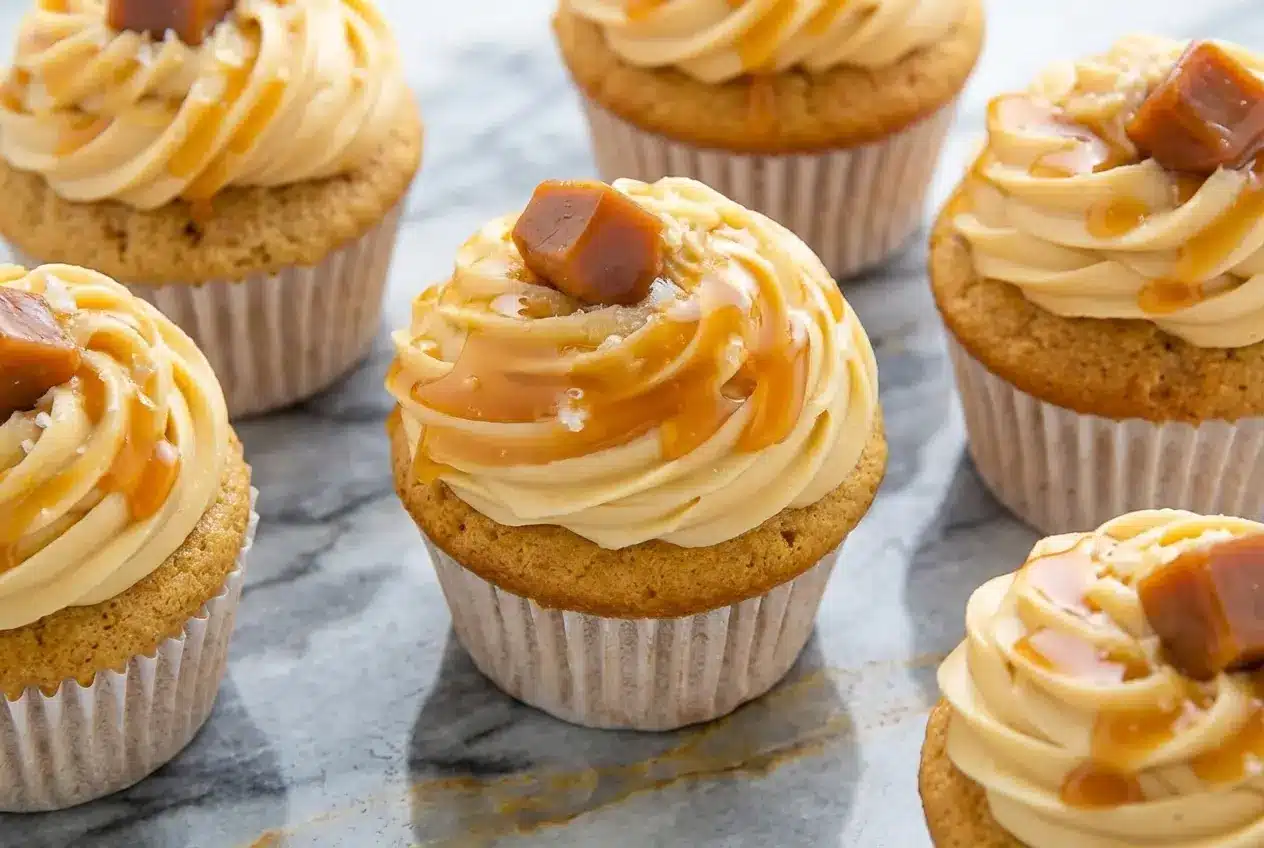
- Chill the frosting for 15 minutes, then give it a stir and frost the completely cooled cupcakes. Finish each one with a drizzle of caramel sauce, a pinch of flaky sea salt, and half of a chewy caramel candy.
The nutty depth in browned butter comes from the same flavor-building chemistry that gives seared meats, toasted bread, and roasted nuts their complexity. If you enjoy the science side of baking, Kansas State University has a clear explanation of the Maillard reaction, and it is exactly why these cupcakes smell so rich before they even leave the oven.
Secrets for the Perfect Salted Caramel Cupcake
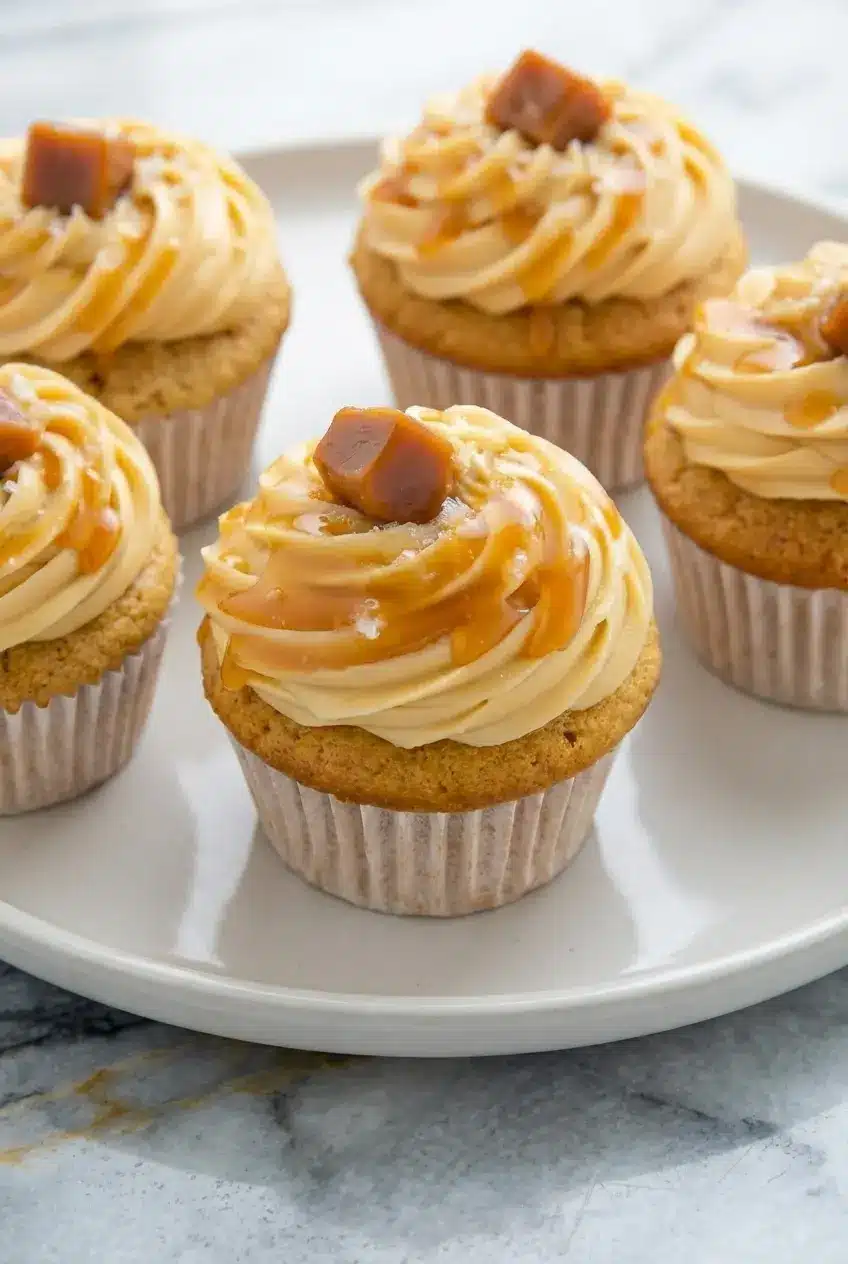
Use a scale when you can: Measuring flour by weight instead of volume is one of the easiest ways to avoid dense or dry cupcakes. A packed measuring cup can add more flour than you think, and in a tender cake like this, even a little excess changes the crumb.
Sift more than once: When I want frosting that pipes like silk, I sift the confectioners’ sugar twice. It sounds old-fashioned, but it keeps tiny lumps from surviving the mixing bowl and creating a grainy finish.
Respect the temperatures: Cool cupcakes and room-temperature caramel are the sweet spot for filling. Warm caramel can sink into the base and make it soggy, while warm cake tends to collapse as soon as you core it.
Keep the crumb tender: Mix just until the flour disappears and no more. If you love filled desserts with that same soft center and bakery-style texture, these cinnamon roll cupcakes play with similar ideas in a different, cozy direction.
The Difference Between Caramel Frosting and Caramel Buttercream
A cooked caramel frosting, like the one used here, is built by heating butter, cream, brown sugar, and salt together first. That extra stovetop step gives it a deeper, candy-like flavor and a richer caramel backbone than a standard frosting with sauce stirred in at the end.
Caramel buttercream is usually a vanilla-style buttercream, sometimes even similar in spirit to Swiss Meringue Buttercream, with caramel added for flavor. It can be lovely, but it tastes lighter and often sweeter, with less of that toasted, almost fudgy finish.
The texture is different too. Cooked caramel frosting tends to set with a little structure, which makes it stable for swoops and classic piping, while caramel buttercream stays softer and more buttery on the palate.
If you want your salted caramel cupcakes to taste unmistakably like caramel from the first bite to the last, the cooked version wins every time in my book. It also stands up beautifully to the sea salt garnish because the flavor underneath is bold enough to carry it.
Troubleshooting Your Homemade Caramel Sauce
Runny caramel usually comes down to balance. If the sauce has too much liquid or it never reached the proper amber stage, it will taste sweet but not thick, so give it enough time to develop color and body before cooling.
A split caramel looks oily because the fat and sugar mixture have lost their emulsion. Gentle heat and steady stirring can often bring it back together, and if you are making your own from scratch, understanding caramelization and deglazing with cream makes the process much more predictable.
Crystallized caramel, the one that turns grainy or seizes around the edges, often starts with stray sugar crystals on the side of the pan. A spoonful of water, or even a few drops of lemon juice in some recipes, can help reduce that problem by encouraging a smoother syrup.
Color matters more than a timer when you are learning caramel. Pale gold tastes mild and milky, medium amber gives you that classic buttery candy flavor, and dark amber brings the slightly bitter edge that makes salted caramel so compelling.
For bakers who want a deeper walkthrough, this guide to salted caramel sauce covers the little details that keep homemade caramel glossy, balanced, and spoonable enough for filling and drizzling.
Pro Tips & Troubleshooting
Pro Tips
- Use an apple corer if you have one, because it makes evenly sized holes that are easy to fill and gives every cupcake the same gooey center.
- Whisk the frosting for the full 5 minutes. That extra time aerates the sugar and transforms the texture from heavy to smooth and fluffy.
- Bring the eggs, milk, sour cream, and browned butter back to room temperature before mixing. Smooth batter starts with proper emulsification of the fats, and the ingredient science behind that is explained well by the University of Nebraska-Lincoln in its guide to proper emulsification of the fats.
Common Mistakes to Avoid
- Overmixing once the flour goes in. Too much mixing develops gluten and turns a tender cupcake into something closer to sweet bread.
- Leaving out the salt in the frosting. With this much sugar, the salt is what keeps the flavor balanced instead of cloying.
- Filling warm cupcakes or using warm caramel. Both can make the center sink and the cake around it damp.
- Using cold eggs or dairy straight from the fridge. They do not blend as smoothly into the fat, and the batter can turn lumpy or gummy.
Serving & Storage
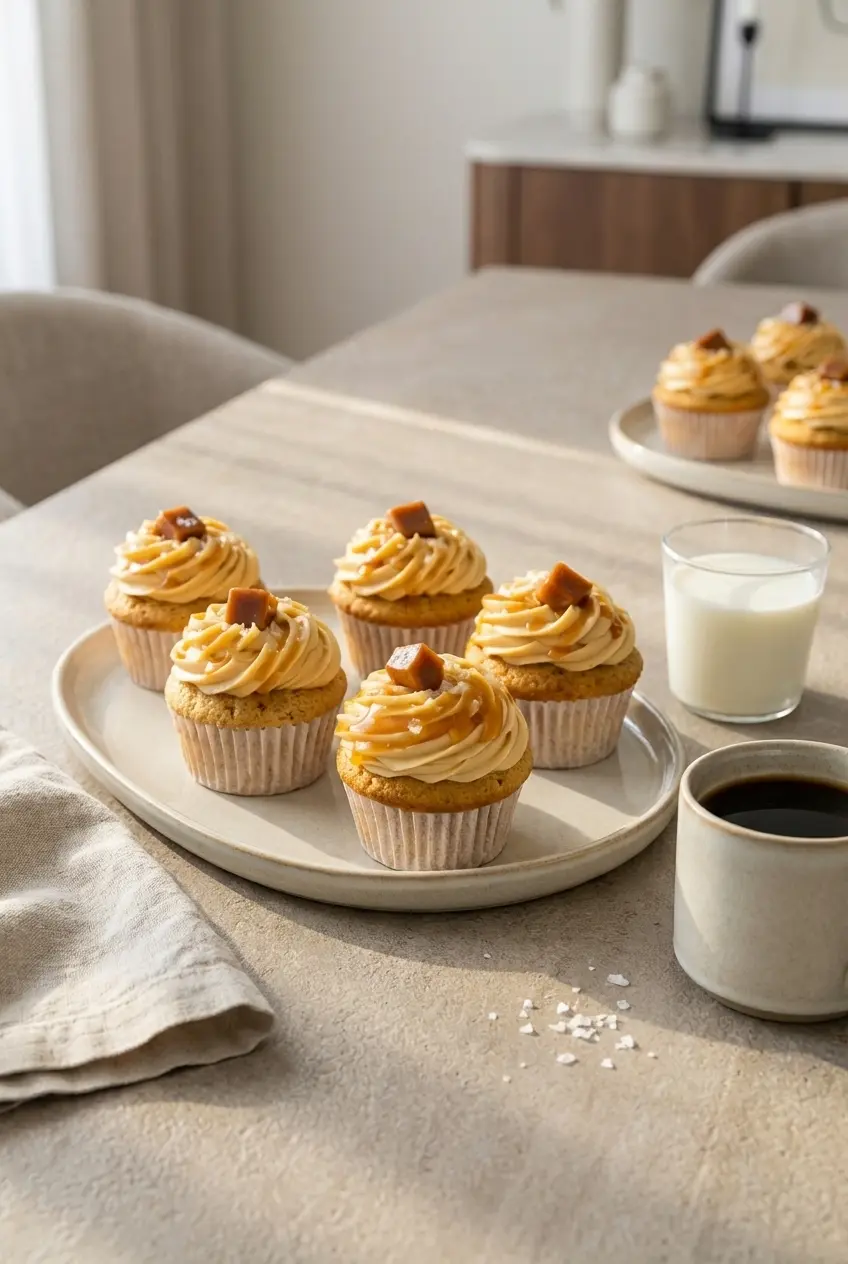
Serving Ideas
These cupcakes shine on a dessert table with a little contrast, so I love topping them with a piece of crunchy caramel corn just before serving. A dark roast coffee or a cold glass of milk cuts through the richness beautifully and keeps the salty-sweet finish from feeling too heavy.
They also pair well with other caramel desserts when you are building out a party spread. On a holiday tray or birthday table, these sit especially nicely beside caramel cheesecake cookies, where the creamy cookie texture balances the fluffy cake.
Storage & Make-Ahead
Store filled cupcakes in an airtight container at room temperature for up to 2 days if your kitchen is cool. For longer storage, refrigerate them for up to 4 days, then let them sit out a bit before serving so the frosting softens and the caramel center loosens up.
To keep the caramel from leaking into the base, make sure both the cupcakes and the filling are fully cool before assembly. I also like to use a thick caramel sauce rather than a thin drizzle-style one, because it stays right in the center where you want it.
The caramel sauce can be made up to 1 week ahead and kept in the refrigerator. Warm it very gently until spoonable before filling, and if you enjoy this same rich flavor family in other bakes, a classic kentucky butter cake carries that buttery caramel mood beautifully.
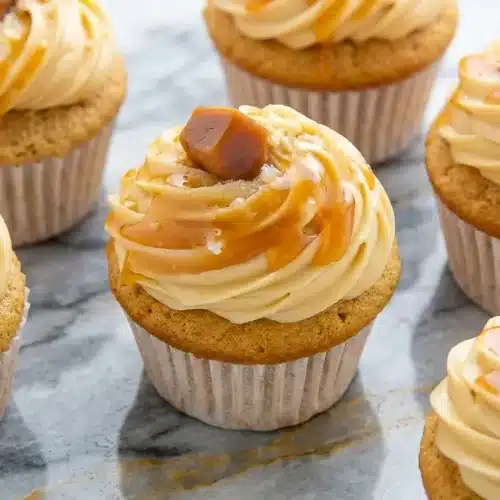
Best Salted Caramel Cupcakes

Equipment
- 12-cup cupcake pan
- Light-colored saucepan
- Hand Mixer or Stand Mixer
- Cupcake corer or small knife
- Wire rack
Ingredients
For the cupcakes:
- 2 cups all-purpose flour
- 1 teaspoon baking powder
- 1/2 teaspoon baking soda
- 1/2 teaspoon salt
- 1/2 teaspoon ground cinnamon
- 1/2 cup whole milk
- 1/2 cup full-fat sour cream
- 1 stick unsalted butter, at room temperature
- 1/4 cup granulated sugar
- 3/4 cup packed light brown sugar
- 2 large eggs plus one large egg yolk, at room temperature
- 1/4 cup boiling hot water
- 1/2 cup thick, creamy caramel sauce
For the frosting:
- 1/2 cup (1 stick) unsalted butter
- 1/2 cup heavy cream
- 1 cup packed light brown sugar
- 3/4 teaspoon salt
- 3 1/4 cups confectioners’ sugar, sifted
Decoration:
- 1/4 cup liquid caramel sauce, for drizzling
- 1 teaspoon flaky sea salt
- 6 chewy caramel candies, cut in half
Instructions
Brown the butter and prep your pans
- Brown the butter for the cupcakes and frosting separately in a light-colored saucepan over medium heat until the milk solids turn golden brown and the butter smells nutty. Let it cool to room temperature before using.
- Preheat your oven to 350 degrees F. Line a 12-cup cupcake pan with paper liners and lightly mist with nonstick spray.
Mix the batter
- In a large bowl, whisk together the flour, baking powder, baking soda, salt, and cinnamon until evenly blended.
- In a small bowl, stir the milk and sour cream together until smooth.
- In a separate large bowl, beat the cooled brown butter with the granulated and brown sugars for about 4 minutes until light and fluffy.
- Add the eggs and extra yolk one at a time, beating well after each addition to ensure proper emulsification.
- Reduce mixer speed to low and add the flour mixture in two parts, alternating with the milk mixture. Mix only until just combined.
- Pour in the boiling hot water and beat just until the batter is silky and smooth.
Bake and fill the cupcakes
- Divide the batter among the liners, filling each 3/4 full. Bake for 20 to 22 minutes until a toothpick comes out clean.
- Cool in the pan for 10 minutes, then transfer to a wire rack to cool completely.
- Core the center of each cooled cupcake. Fill each with 2 teaspoons of caramel sauce and replace the cake top to seal.
Cook the frosting and assemble
- In a medium saucepan, combine butter, heavy cream, brown sugar, and salt over medium heat. Simmer for about 4 minutes until glossy.
- Off the heat, let it stand for 2 minutes. Transfer to a mixer bowl, add 2 cups of confectioners’ sugar, and beat on medium-low.
- Add the remaining confectioners’ sugar and whip on medium for 5 full minutes until light and cloud-like.
- Chill the frosting for 15 minutes, then frost the cupcakes. Finish with a drizzle of caramel, flaky salt, and a caramel candy half.
Notes
Conclusion
Brown butter is the little luxury that turns these salted caramel cupcakes from simply sweet into something layered, nutty, and memorable. Add the gooey center and that pinch of flaky sea salt, and every bite feels bakery-worthy.
If you are baking for a celebration, or just want a weekend project that tastes special, this recipe is worth every step. Once you make it once, it is hard not to start dreaming up your own twist, maybe a splash of bourbon, a touch of almond, or an extra flourish of Fleur de sel on top.
Frequently Asked Questions
Why should I use room temperature ingredients for cupcakes?
What is the best way to fill cupcakes without them falling apart?
Can I make the caramel sauce ahead of time?
How do I fix frosting that is too runny to pipe?
What kind of salt is best for ‘Salted’ Caramel?