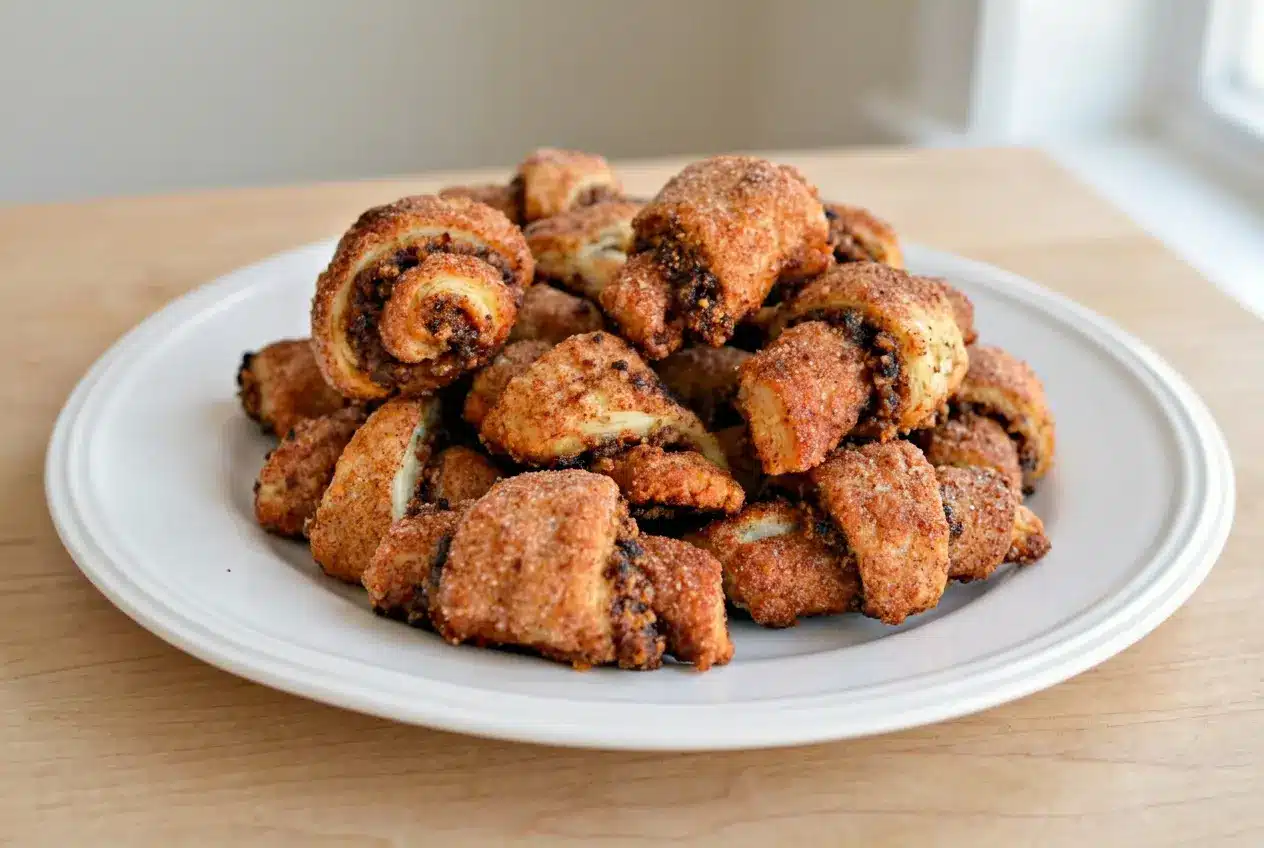
This rugelach recipe makes 48 buttery, flaky crescents with cream cheese and sour cream pastry wrapped around cinnamon-spiced pecans and raisins. A food processor handles the dough and filling, while chilling makes the pastry easier to roll and shape.
Rugelach are small Jewish pastries with a sweet filling tucked into a rolled crescent. This American-style version uses an unleavened dough, so there’s no yeast or rising stage between you and those tender layers.
The filling brings together nutty crunch, chewy raisins, and warm cinnamon without overpowering the pastry. Four dough discs keep the shaping manageable. The cinnamon-sugar rolling surface adds the finishing touch.
I’d keep the unused dough discs refrigerated while shaping each batch; soft, sticky pastry makes rolling harder than it needs to be.
Ingredients You’ll Need for Rugelach
Flour gives the pastry structure, butter adds richness, and full-fat dairy supplies moisture and tenderness. Pecans and raisins provide contrasting textures, while brown sugar and cinnamon flavor the filling. The separate cinnamon sugar sweetens and spices the pastry’s exterior.
- 2 cups all purpose flour
- 1 cup unsalted butter
- 8 ounces cream cheese (full fat)
- 1/2 teaspoon salt
- 1/3 cup sour cream (full fat)
- 1/2 cup brown sugar
- 1 cup pecan halves
- 1/2 cup raisins
- 1 tablespoon cinnamon
- 1/2 cup granulated sugar
- 1 tablespoon ground cinnamon
Choose full-fat block cream cheese rather than a whipped spread. Its consistency suits a pastry that needs to hold together when rolled thin. Sour cream contributes moisture and a gentle tang, while unsalted butter lets the measured salt control the seasoning.
Keep the filling and rolling mixture distinct. Brown sugar belongs with the pecans, raisins, and cinnamon inside the crescents; granulated sugar and the final measure of ground cinnamon belong on the rolling surface.
How to Make Rugelach Step by Step
Allow time for chilling as well as shaping. Prep takes 40 minutes and baking takes 25 minutes, with the dough’s refrigerator rest and the cooling period additional.
- Use brief food-processor pulses to bring the flour, butter, cream cheese, salt, and sour cream to a crumbly texture, then gather equal portions into four discs, wrap them individually in plastic, and refrigerate for 2 hours to overnight.
Look for small, pebble-like crumbs before gathering the dough rather than a fully blended paste. - Process the brown sugar, pecans, raisins, and cinnamon together with pulses until the pieces become fine and evenly distributed.
The finished filling should have no large nut or fruit pieces that would make the pastry difficult to roll. - Stir the granulated sugar and ground cinnamon together in a small bowl.
The mixture should look evenly speckled with cinnamon rather than streaky. - Dust a large cutting board and the dough’s upper surface with cinnamon sugar, roll each disc into a 9-inch circle, distribute the filling with a 1/4-inch border uncovered, cut 12 equal wedges with a pizza cutter, and curl each wedge from its broad edge toward its point.
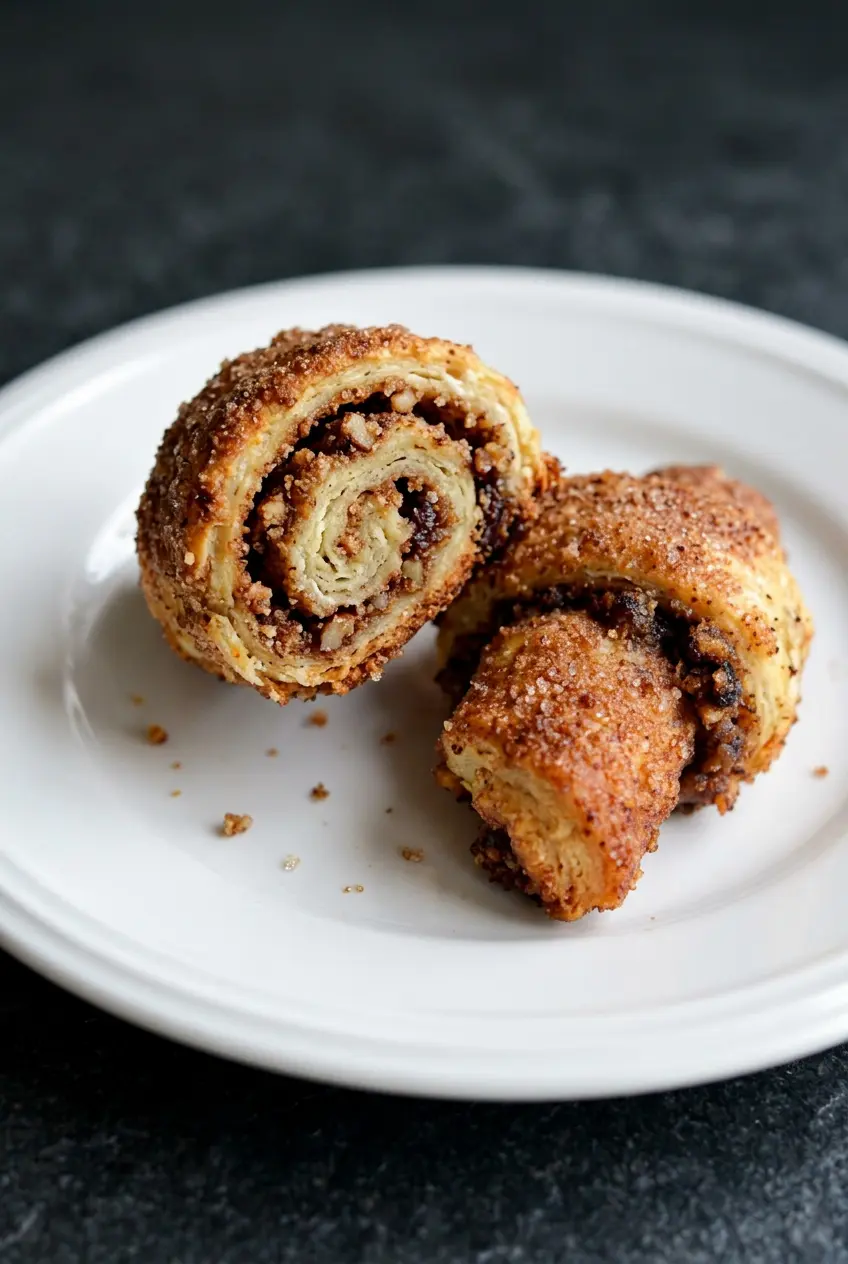
Each crescent should enclose a spiral of filling, with the narrow dough tip finishing the roll. - Arrange the crescents with their seams underneath on parchment-lined baking sheets, leaving space between them.
The pointed ends should sit against the parchment to help the rolls hold their shape. - Bake at 350°F for 25 minutes or until golden brown, leave the pastries on their baking sheets for 10 minutes, then transfer them to wire racks to finish cooling.
Golden pastry tops are the doneness cue, and the initial cooling period gives the delicate crescents time to firm before moving.
Expert Tips for Flaky, Leak-Free Rugelach
Most shaping problems start with overly soft dough or filling crowded against the edge. A little attention to those details keeps assembly tidier.
- Sticky or tearing dough: Warm pastry becomes harder to handle, so work with one chilled disc while the others remain refrigerated.
- Filling falling out: Large pieces make uneven rolls; aim for the finely chopped texture specified in the method and preserve the uncovered rim.
- Crescents opening: An exposed tip can lift during baking, so keep the seam underneath each cookie.
- Broken or stuck bottoms: Hot pastries are fragile, and escaped sugar can stick; use parchment and follow the cooling interval before transferring them.
Why Rolling on Cinnamon Sugar Beats Flour
Cinnamon sugar serves two purposes here: it helps with rolling and gives the exterior a sweet, spiced finish. A heavily floured surface can leave a floury coating and work extra flour into an already delicate dough.
Waxed paper offers a different way to limit contact with the work surface, but it doesn’t supply the cinnamon-sugar coating. These surfaces aren’t identical finishing choices. The method above uses cinnamon sugar throughout.
Can You Use a Mixer Instead?
Some rugelach doughs use a hand or stand mixer, but that doesn’t make the methods interchangeable. Ingredient temperature and mixing technique affect how the fats combine with flour.
For these proportions, follow the food-processor method and its crumbly texture cue. If a mixer is your only option, choose a rugelach formula with a complete mixer method rather than guessing at settings or mixing order.
Optional Toasted-Nut and Fruit-Preserve Accents
Toasted pecans offer a deeper roasted aroma than untoasted nuts. Apricot or raspberry preserves bring a fruity contrast to the brown sugar and cinnamon. These are optional flavor directions, separate from the pecan-raisin filling above, rather than necessary fixes for leakage.
Delicious Rugelach Filling Variations
The classic filling balances sweetness, spice, and texture. For a future batch, consider one of these optional flavor directions without treating it as a change to the official ingredient list.
Apricot or Raspberry Preserve Rugelach
Apricot preserves add mellow stone-fruit flavor; raspberry brings a brighter, more tart contrast. Both complement cinnamon and nuts. For another stone-fruit option, homemade peach jam offers a softer, rounded fruit flavor.
Walnut & Cranberry (or Cherry) Rugelach
- Walnuts or sliced almonds: Walnuts taste earthier than pecans, while almonds offer a milder nut flavor.
- Dried cranberries or cherries: Either gives the filling a tart counterpoint to its sweetness.
- Dried apricots: Their tangy stone-fruit character suits a cinnamon-and-nut filling.
Chocolate Chip or Bittersweet Chocolate Rugelach
- Mini chocolate chips: A familiar chocolate option with small pockets of sweetness.
- Bittersweet chocolate: A deeper cocoa flavor that contrasts with the sweet pastry coating.
- Chocolate-hazelnut spread: A richer, smoother direction with a distinct hazelnut flavor.
Traditional Yeasted Rugelach and Rogaliki
This American-style cream cheese pastry contains no yeast and emphasizes tender, flaky layers. Yeasted Eastern European crescents, often called rogaliki, have a softer, breadier texture and may feature a powdered-sugar finish. They require a different dough formula and method.
Make-Ahead Planning for Rugelach
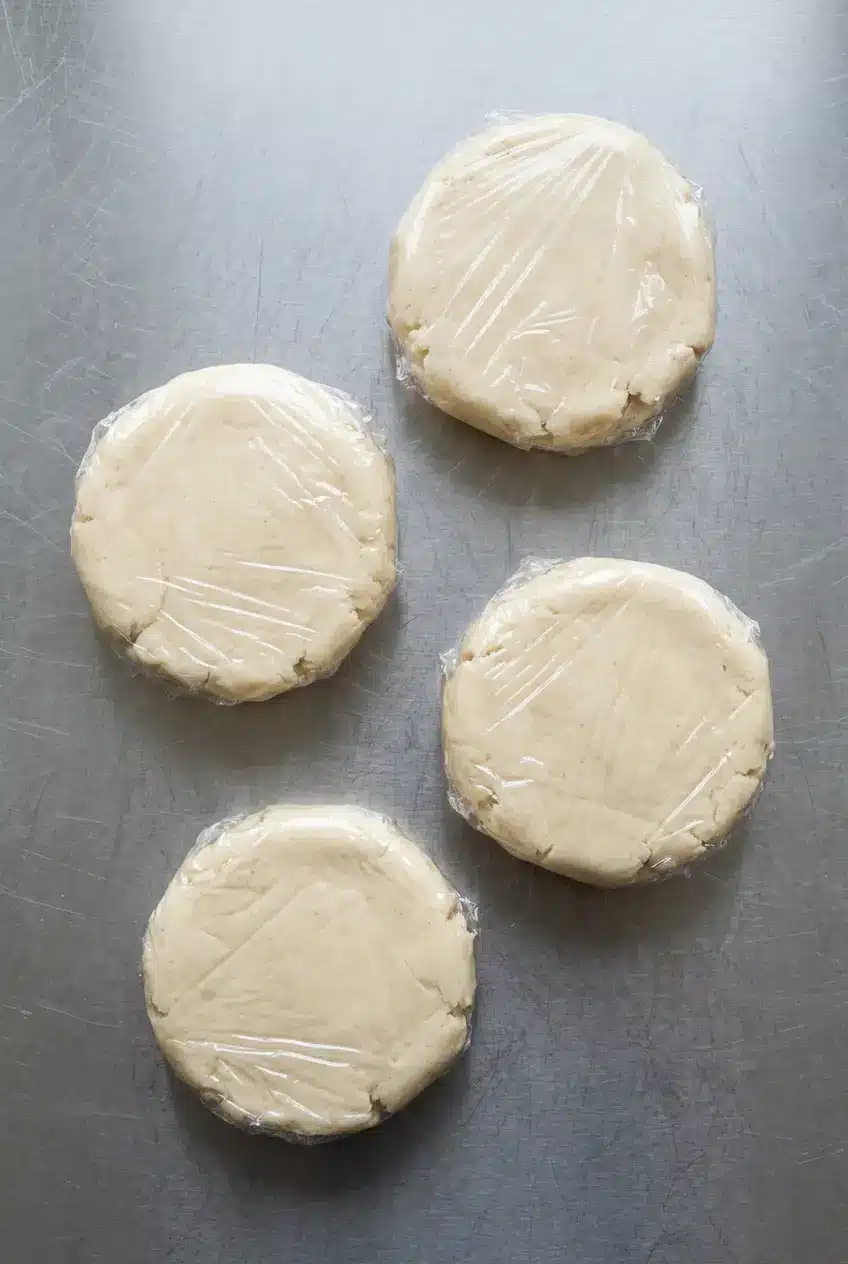
The wrapped dough discs can take their refrigerator rest overnight, making dough preparation a useful stopping point before a baking session.
Keep each disc individually wrapped and refrigerated until you’re ready to work with it. Plan the next stage around rolling, filling, shaping, and baking; the dough’s chilling allowance doesn’t establish a storage period for shaped crescents or finished pastries.
How to Serve Rugelach for Holidays and Gatherings
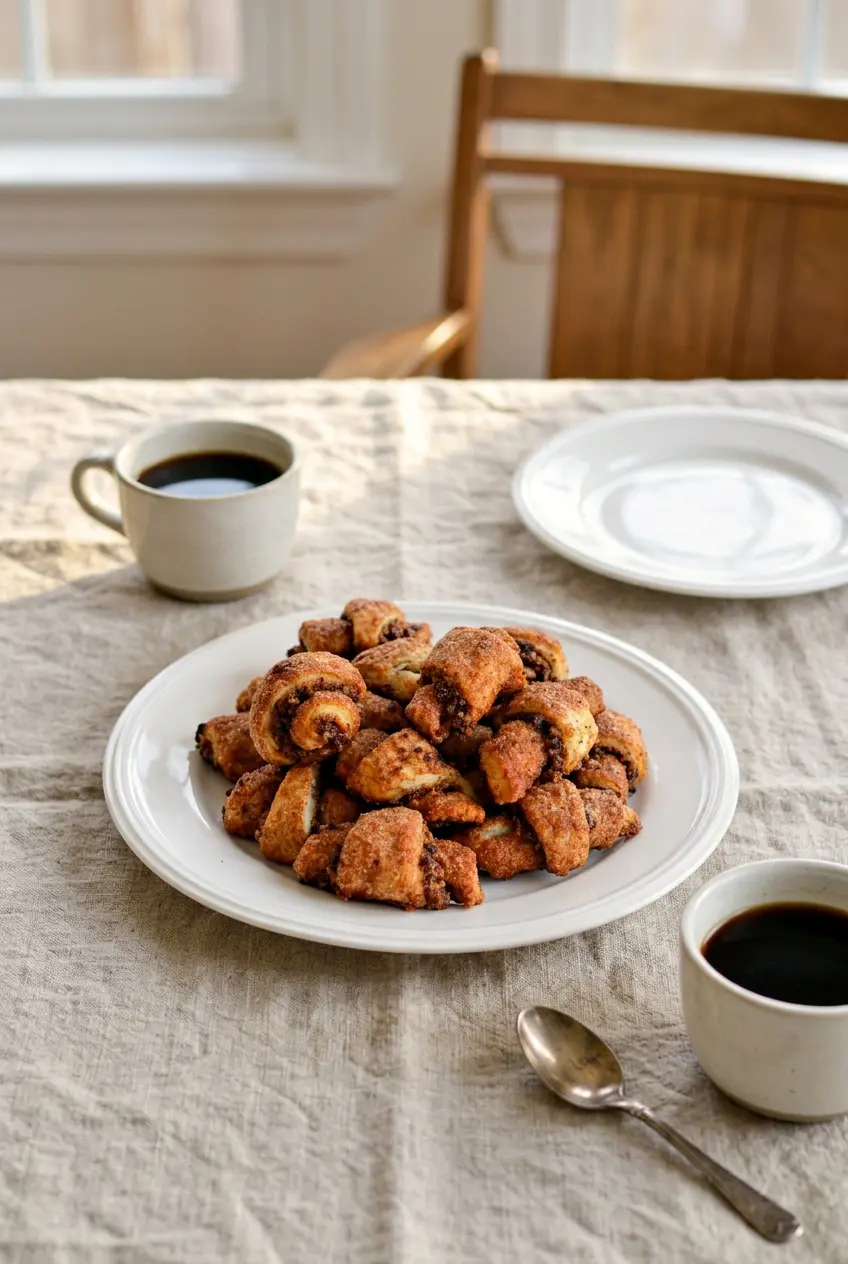
These bite-sized crescents fit comfortably on both a holiday dessert table and an afternoon coffee tray.
- Holiday platters: Include them on Hanukkah dessert tables or Christmas cookie assortments.
- Coffee or tea: Their buttery pastry and cinnamon filling pair well with coffee, espresso, or hot tea.
- Homemade gifts: Let the crescents cool fully before arranging them in decorative tins or bakery boxes.
For a contrasting confection on a holiday platter, rich Texas fudge brings a smooth texture alongside the flaky pastry. Powdered sugar or an egg-wash-and-coarse-sugar finish are other optional presentation styles, separate from this cinnamon-sugar version.
Final Thoughts on Homemade Rugelach
Crumbly food-processor dough, a proper chill, and finely chopped filling set up these buttery crescents for success. Watch for golden pastry rather than judging by the filling alone.
Start with the pecan-raisin-cinnamon combination to enjoy its balance of crunch, chew, and spice. Give the warm crescents their cooling time, and those delicate layers will be easier to handle.
Frequently Asked Questions
What Is the Significance of Rugelach?
Rugelach is a Jewish pastry with Eastern European roots. It’s commonly enjoyed at Hanukkah, Shabbat gatherings, and family celebrations, as well as on holiday cookie trays.
What Are the Ingredients for Cream Cheese Rugelach?
The dough contains flour, unsalted butter, full-fat cream cheese, salt, and full-fat sour cream. This filling uses brown sugar, pecans, raisins, and cinnamon, with separate cinnamon sugar for rolling.
Can I Make Rugelach Without a Food Processor?
Mixer-made rugelach exists, but this method uses a food processor for both dough and filling. For another mixing approach, use a formula with complete instructions for that equipment.
How Do I Stop Rugelach Filling From Leaking and Burning?
Keep the filling finely chopped and leave the specified uncovered border rather than filling to the edge. Place crescents seam-side down and use parchment to help manage escaped sugar and sticking.
Can You Make Rugelach Ahead of Time?
Yes, the individually wrapped dough discs can complete their chilling stage before you begin shaping. Keep them refrigerated and follow the make-ahead planning above.
What Is the Difference Between Cream Cheese Rugelach and Yeasted Rugelach?
Cream cheese rugelach uses an unleavened pastry dough with a tender, flaky texture. Yeasted versions have a softer, breadier crumb and require a different preparation method.

Rugelach Recipe

Equipment
- Food processor
- Pizza Cutter
- Baking Sheets
- Wire Racks
Ingredients
- 2 cups all purpose flour
- 1 cup unsalted butter
- 8 ounces cream cheese full fat
- 1/2 teaspoon salt
- 1/3 cup sour cream full fat
- 1/2 cup brown sugar
- 1 cup pecan halves
- 1/2 cup raisins
- 1 tablespoon cinnamon
- 1/2 cup granulated sugar
- 1 tablespoon ground cinnamon
Instructions
- Use brief food-processor pulses to bring the flour, butter, cream cheese, salt, and sour cream to a crumbly texture, then gather equal portions into four discs, wrap them individually in plastic, and refrigerate for 2 hours to overnight. Look for small, pebble-like crumbs before gathering the dough rather than a fully blended paste.
- Process the brown sugar, pecans, raisins, and cinnamon together with pulses until the pieces become fine and evenly distributed. The finished filling should have no large nut or fruit pieces that would make the pastry difficult to roll.
- Stir the granulated sugar and ground cinnamon together in a small bowl. The mixture should look evenly speckled with cinnamon rather than streaky.
- Dust a large cutting board and the dough’s upper surface with cinnamon sugar, roll each disc into a 9-inch circle, distribute the filling with a 1/4-inch border uncovered, cut 12 equal wedges with a pizza cutter, and curl each wedge from its broad edge toward its point. Each crescent should enclose a spiral of filling, with the narrow dough tip finishing the roll.
- Arrange the crescents with their seams underneath on parchment-lined baking sheets, leaving space between them. The pointed ends should sit against the parchment to help the rolls hold their shape.
- Bake at 350°F for 25 minutes or until golden brown, leave the pastries on their baking sheets for 10 minutes, then transfer them to wire racks to finish cooling. Golden pastry tops are the doneness cue, and the initial cooling period gives the delicate crescents time to firm before moving.