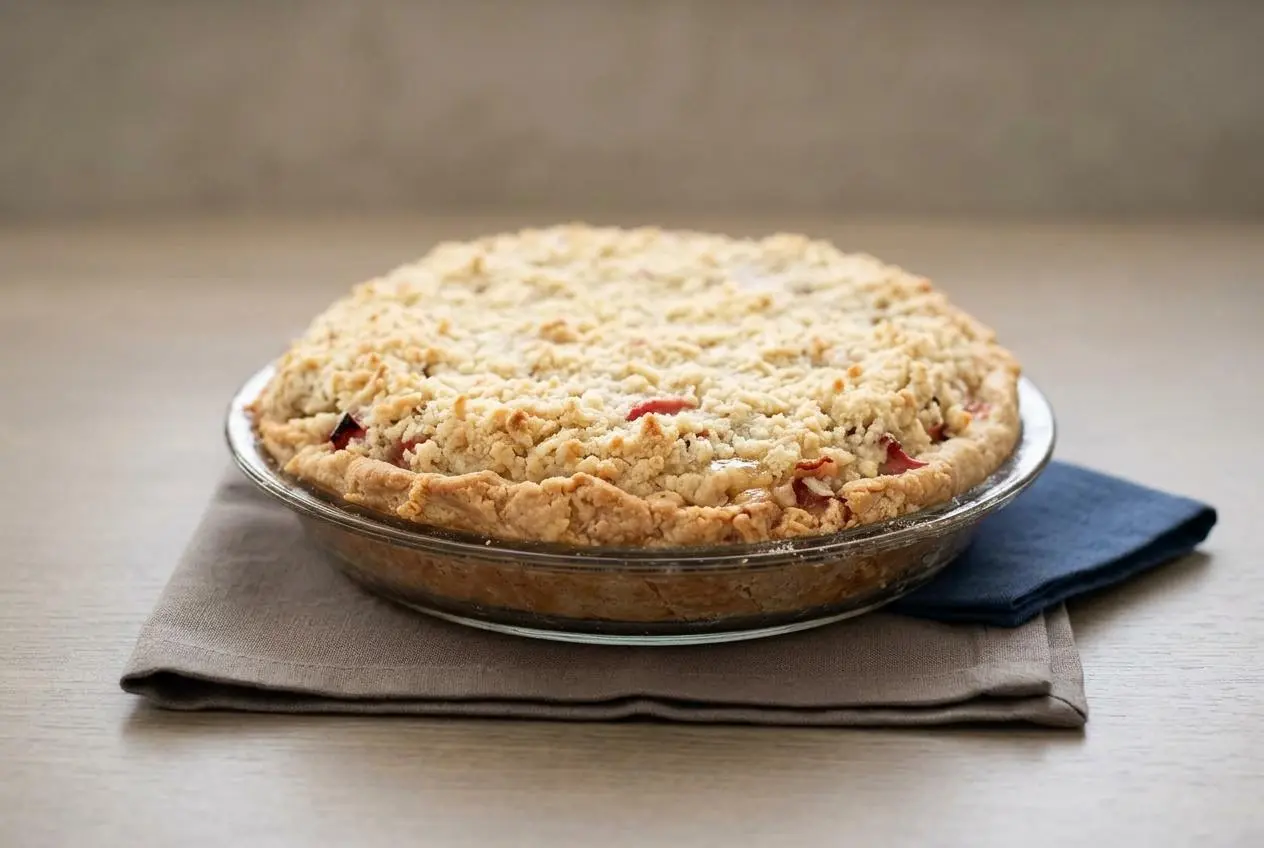
Rhubarb sour cream pie is an old-fashioned spring dessert with tart rhubarb folded into a rich sour cream custard, baked in a single crust, and finished with a sweet buttery crumb topping.
Rhubarb Sour Cream Pie lands right in that sweet spot between creamy custard pie and fruit pie. The filling tastes bright and tangy, while the streusel top adds the kind of buttery crunch that makes each slice feel a little special.
It’s especially worth making if you love contrast in desserts: cool custard, tender rhubarb, and a crisp top. The bottom-rack bake is the small trick that makes a big difference.
Use a 9 inch glass pie plate if you can, since it makes it much easier to spot when the bottom crust is actually browning.
Why This Recipe Works
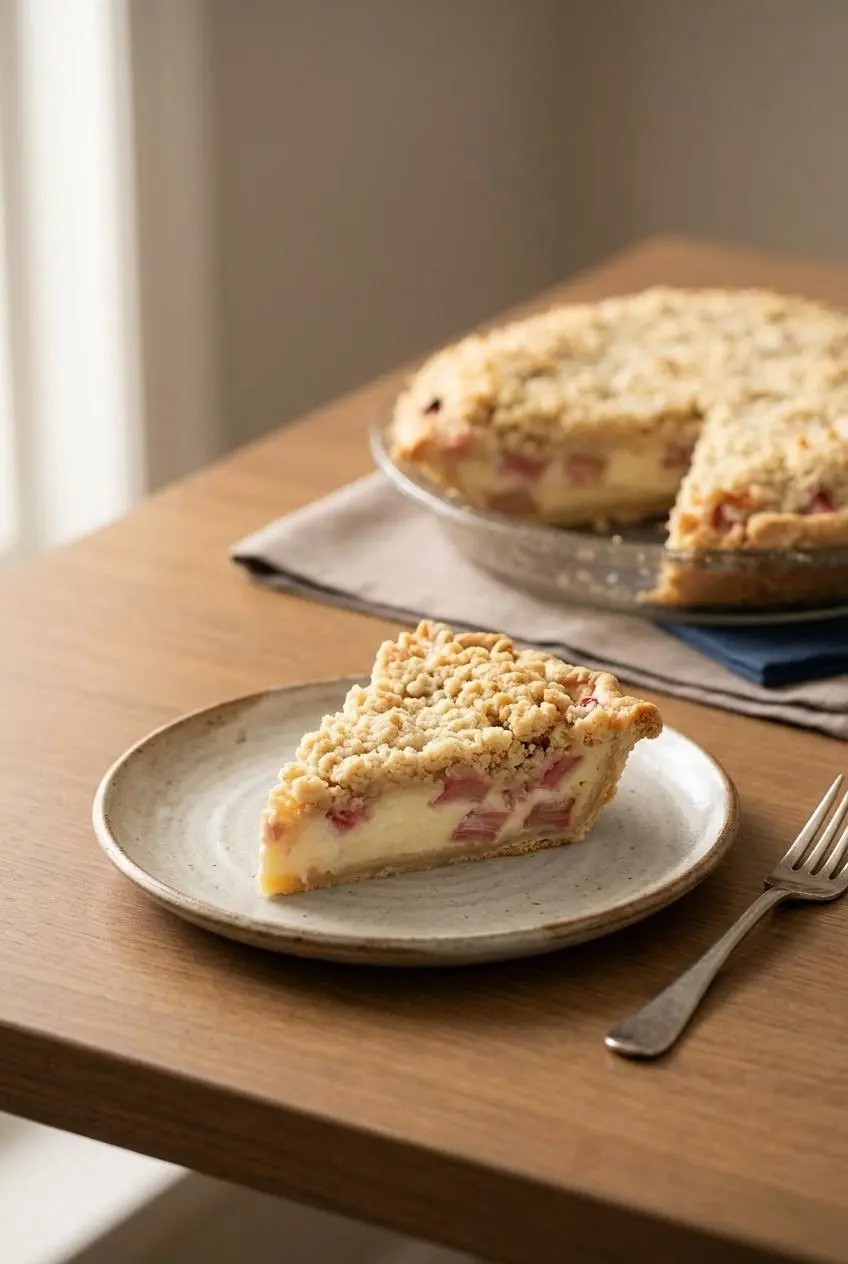
This pie works because each part solves a specific baking challenge. Rhubarb is sharp and juicy, sour cream is rich and tangy, and eggs bring the whole filling together so it bakes into a sliceable custard instead of a loose puddle.
Full-fat sour cream softens rhubarb’s edge and gives the filling body. That fat helps the custard bake up smooth and creamy, which is why low-fat versions tend to taste thinner and can turn watery more easily.
The eggs handle the structure. As the pie bakes, they thicken the filling and help the sugar, sour cream, and rhubarb settle into a custard that holds its shape after cooling. You do not need to chase an exact internal number here. What matters in the kitchen is the visual cue: the center should still have a gentle jiggle, like soft gelatin, not a liquid slosh.
The crumb topping brings the contrast that makes this pie memorable. Under the spoon, the topping starts sandy and bakes into crisp golden clusters. On the fork, that crunch against the silky sour cream custard is the whole point.
If you already like the way tangy dairy rounds out old-school bakes such as sour cream coffee cake, this pie has that same balancing effect, just in custard form.
Ingredients
Each ingredient has a job here, from building custard structure to keeping the rhubarb bright and the topping crisp and buttery.
Crust
- Enough pastry for a single 9 inch pie
Rhubarb Custard Filling
- 1 1/4 cups granulated sugar
- 3 tablespoons flour
- 1/2 teaspoon salt
- 2 large eggs
- 1 cup sour cream
- 1 teaspoon pure vanilla extract
- 4 cups fresh or frozen rhubarb, cut into 1/2 inch pieces
Crumb Topping
- 1/3 cup granulated sugar
- 1/2 cup flour
- 1/2 teaspoon salt
- 1/4 cup butter, at room temperature cut into small pieces
Full-fat sour cream matters here because it gives the custard enough richness and stability to bake up smooth instead of weepy. The flour and eggs can only do so much if the dairy is too lean.
I always slice my rhubarb stalks into uniform half-inch pieces to help the custard cook evenly and prevent pockets of raw fruit.
Ingredients Explained by Role
This is the section that saves you from the most common pie mistakes. A custard pie can go from creamy to runny fast if the fruit is too wet or the dairy is too light.
Sugar does more than sweeten. It softens rhubarb’s tartness and helps the custard taste round instead of sharp. Flour in the filling gives the pie an old-fashioned opaque body that supports the fruit and stands up well under a crumb topping. Vanilla smooths the tart edges, and salt keeps the filling from tasting flat.
The rhubarb itself brings the pie’s signature sweet-tart bite. If you have extra stalks after baking, moist rhubarb muffins are another good way to use that same bright flavor in a softer breakfast-style bake.
Fresh vs Frozen Rhubarb
Fresh rhubarb gives you the cleanest texture, but frozen rhubarb works very well too. The big rule is simple: do not thaw it first. Thawed rhubarb dumps off extra liquid before the pie has a chance to set, and that can leave the custard loose.
If you use frozen pieces, add them straight from the freezer. A light toss with a little of the recipe flour helps absorb some of the moisture released during baking without changing the pie’s character.
Fresh rhubarb usually keeps a slightly firmer bite in the finished slice. Frozen rhubarb softens more, which is not a bad thing in a custard pie, but it does make careful thickening and full baking more important.
Selecting the Right Thickeners
Flour is the best fit for this pie because it gives the filling a sturdy, traditional custard texture. It bakes up a bit cloudier than other starches, but that soft opaque look suits this style of pie and supports the crumb topping well.
Cornstarch can set a custard more cleanly, but it creates a slightly different finish and is not the thickener built into this formula. Tapioca gives a clearer, glossier set and can work nicely in fruit pies, though it feels a little less classic here.
For this recipe, flour is the safe choice. It matches the sour cream filling, handles rhubarb juice well, and gives a dependable slice once the pie cools fully.
Choosing the Best Pie Crust: Lard vs Butter
The best crust depends on what you value most. If you want maximum flake and a crust that holds its shape easily under a heavy custard filling, lard has the edge. If you want deeper flavor, butter wins.
A lard crust usually rolls smoothly and stays neatly crimped, which helps when you need a high edge to contain a fluid filling. An all-butter crust tastes richer and browns beautifully, but it can soften faster while you work, so chilling matters more.
Either crust can work well in this pie. If your kitchen runs warm or pie dough tends to slump on you, lard is forgiving. If flavor is your top priority and you do not mind a little extra fuss, butter gives the pie a classic bakery-style taste.
Whichever route you choose, avoid overworking the dough. Tough crust is usually the result of too much mixing or too much warm handling, not bad luck.
How to Bake Rhubarb Sour Cream Pie
This method is straightforward, but the timing matters. The early high heat helps start the bottom crust, and the topping goes on later so it stays crisp instead of sinking into the custard.
Preparation
- Roll the pastry and fit it into a 9 inch glass pie plate, then crimp the edge high all the way around.
The taller rim helps catch the custard as it puffs and bubbles so it does not spill over the sides. - Heat the oven to 400 degrees F before filling the pie.
A fully preheated oven gives the crust a strong start instead of letting it slowly soften under the wet filling.
Rhubarb Custard Filling
- Stir the sugar, flour, and salt together in a large mixing bowl until evenly combined.
This keeps the flour from clumping later and helps the custard thicken more evenly. - Whisk the eggs in a separate bowl, then blend in the sour cream and vanilla until smooth.
The mixture should look creamy and uniform, with no visible streaks of egg or dairy. - Pour the sour cream mixture into the dry ingredients and whisk just until the filling is smooth.
You want a pourable custard with no dry pockets hiding at the bottom of the bowl. - Scatter the rhubarb into the prepared crust and spread it into an even layer.
Even fruit placement helps the custard cook at the same rate across the pie. - Pour the custard over the rhubarb, making sure it reaches the edges of the crust.
The filling should settle around the fruit rather than mound in the center. - Set the pie on the bottom rack and bake for 10 minutes at 400 degrees F, then lower the oven to 350 degrees F and continue baking for 30 minutes without removing the pie.
This two-stage bake helps the bottom crust firm up first while the custard begins to thicken.
Crumb Topping and Assembly
- While the pie bakes, prepare the topping so it is ready when the first baking stage is done.
Having it mixed ahead keeps the custard from cooling too much while you work. - Whisk the flour, sugar, and salt together in a small bowl.
The dry mix should look even before the butter goes in. - Cut in the butter with a pastry blender until the mixture forms coarse crumbs.
By hand, the crumbs feel a bit more rustic, while a pastry blender usually gives more even pebbly pieces. - After the 30 minute bake at 350 degrees F, take the pie out and spread the crumb topping evenly over the surface.
At this point the custard should look partly set around the edges, which keeps the topping from sinking. - Return the pie to the oven and bake for 30 to 40 minutes more.
The top should turn nicely browned, and the center should jiggle gently rather than ripple like liquid.
Bakery Tips for Shaping a High Edge
A tall crust edge is more than decoration here. Before baking, the filling is loose, and rhubarb pies have a habit of bubbling enthusiastically once they get hot.
Build the edge higher than you might for an apple pie. Crimp firmly so the rim stands up instead of folding outward. If the dough feels soft while you shape it, chill it briefly, then finish the crimp once it firms back up.
A high edge also buys you a little insurance when you add the topping halfway through. You can spread the crumbs comfortably without nudging custard over the sides.
Signs of a Perfectly Set Custard
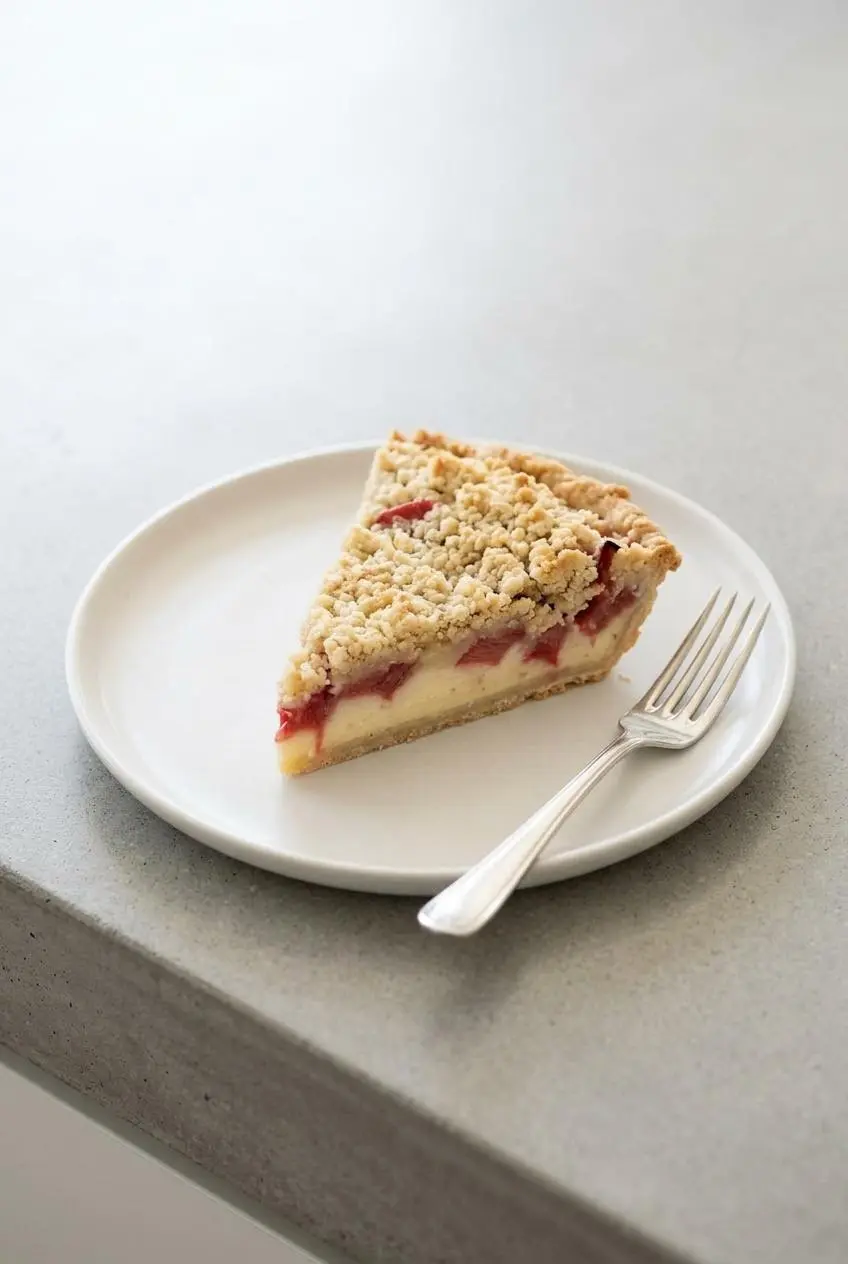
This is the doneness cue most home bakers want, and it matters more than staring at the clock. A finished custard pie should be set around the outer ring, lightly puffed, and still softly wobbly in the center.
Look for a gentle jiggle about the size of a few inches in the middle. It should move as one soft mass, not slosh. As the pie cools, that center firms up into a smooth sliceable texture.
The topping helps too. When it is fully baked, the crumbs smell buttery and a little toasty, with a warm earthy sweetness rather than raw flour. If the streusel smells pale, the pie probably needs a bit more time.
The Amish Secret: Oats and Zest in Streusel
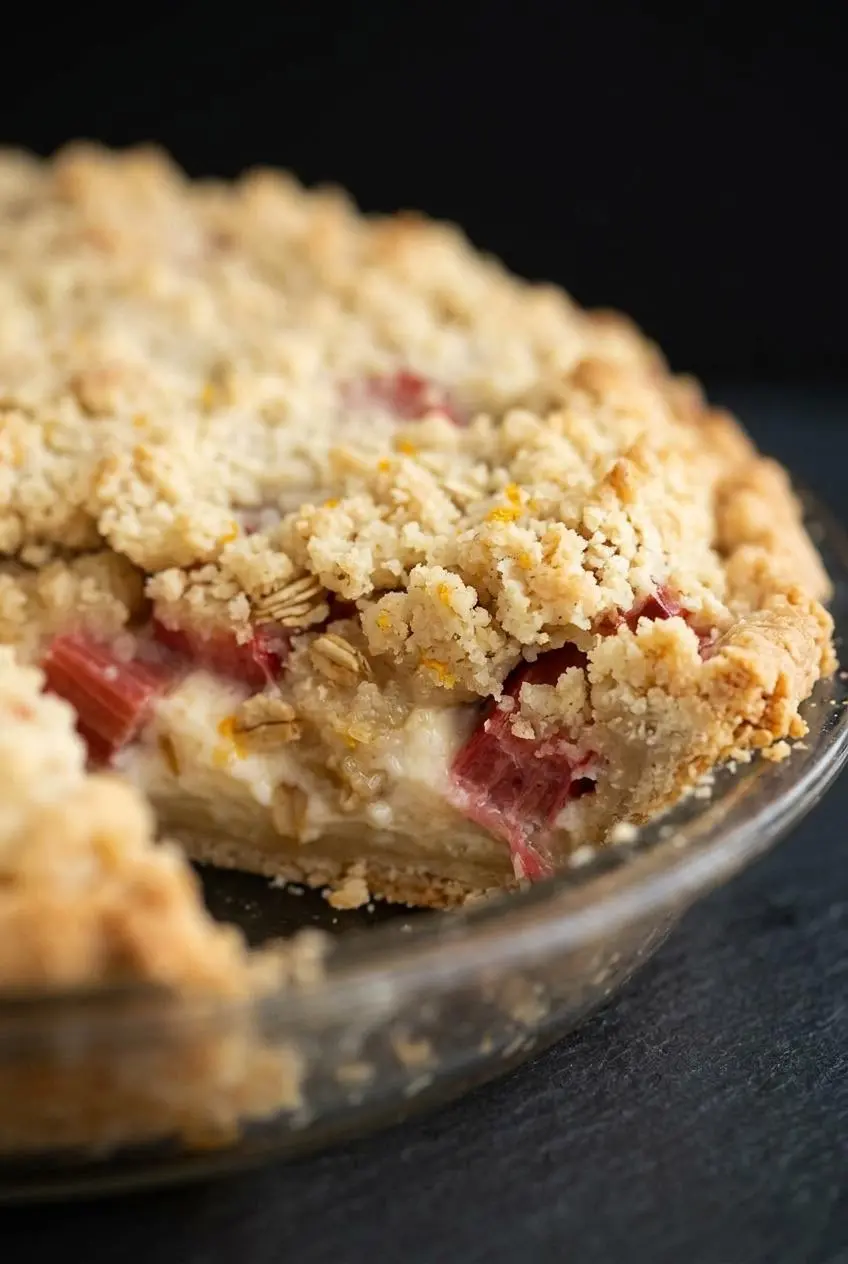
If you want a more rustic version, this is a smart optional twist. Adding quick oats to the crumb topping gives it a heartier crunch, and a small pinch of fresh orange zest brightens the buttery crumbs without covering up the rhubarb.
The orange note works especially well with sour cream because it lifts the richness and makes the pie smell even more spring-like as it bakes. Keep the zest light. Too much citrus can take over a filling that is meant to taste primarily of rhubarb.
This style of streusel is a good fit if you like old-fashioned farmhouse desserts with a little extra texture. It is optional, but it suits this pie beautifully.
Creative Fruit Swaps and Variations
The base pie stands on its own, but it also handles a couple of optional changes very well if you want a different fruit balance or a richer custard feel.
- Blueberry rhubarb custard pie: swap 1 cup of rhubarb for fresh blueberries for a softer, sweeter berry note that rounds out the tart fruit.
- Cream cheese variation: blend a little cream cheese character into the filling style if you want a denser, tangier dessert, similar in spirit to a cream cheese pie.
- Extra rhubarb to use up: if pie feels like more project than you want for the next batch, tangy rhubarb bars are a great simpler bake.
Keep these as optional paths, not changes to the core recipe. The classic version already has a very good balance of sweet, tart, creamy, and crisp.
Troubleshooting Common Custard Pie Issues
Custard pies can be a little fussy, but the fixes are usually simple once you know what went wrong. Most problems come down to moisture, oven position, or pulling the pie too early.
Preventing Runny Custard
- A watery filling often starts with low-fat or fat-free sour cream. Use full-fat sour cream so the custard has enough richness and structure to set properly.
- Frozen rhubarb can loosen the pie if it is thawed first. Add it while still frozen so the extra juice releases in the oven, where the flour and eggs can handle it better.
- An underbaked center will look loose and shiny. Bake until the edges are set and the center gives that soft gel-like wobble instead of a wet wave.
- Slicing too soon can make a baked pie seem runny when it is simply warm. Let it cool completely so the custard can finish firming up.
Fixing Burnt Streusel Toppings
- If the crumb topping browns too fast, loosely tent the pie with foil during the final stretch of baking. That protects the crumbs while the center finishes setting.
- If the top is dark but the pie still jiggles like liquid, your oven may run hot. Keep the foil on and continue baking just until the center reaches the proper wobble.
- If the bottom crust seems pale after baking, cool the pie fully, then rewarm it briefly on a lower oven rack to help the crust dry out a bit more.
Storage and Reheating Guide
Because this pie contains eggs and sour cream, it should be cooled and then kept covered in the refrigerator. If it sits out too long after baking, texture and food safety both start to work against you.
For a custard pie like this, it is better not to leave it at room temperature for extended stretches. FoodSafety.gov notes that custards and pies containing milk or eggs should be discarded if left at room temperature at 40°F or above for more than two hours, which you can review here for pies with fillings containing eggs or milk left out more than two hours.
To store leftovers, let the pie cool first, then cover it well and refrigerate it. For the cleanest slices, serve it chilled straight from the fridge. If you prefer a warmer dessert, reheat individual slices or the whole pie in a low oven just until the chill comes off and the crumb topping crisps again.
You can freeze the baked pie once it has cooled completely. Wrap it tightly so the topping is protected from freezer moisture, then thaw it in the refrigerator before reheating in a 325 degrees F oven until the top regains some crunch.
Conclusion
This pie earns its place with that mix of tart rhubarb, creamy custard, and buttery crumble. It feels old-fashioned in the best way, but the method is easy to manage once you know what signs to watch for.
If you remember one thing, make it the bottom-rack start for the crust. That small step helps the whole pie turn out better, and it is worth keeping in your back pocket for the next spring bake too.
Frequently Asked Questions
Can I use frozen rhubarb for this pie?
Yes, frozen rhubarb works well in this pie. Do not thaw it before adding it to the crust. If you want extra insurance against a loose filling, toss it lightly with a little of the recipe flour first. Expect a slightly softer fruit texture than fresh rhubarb.
How do you prevent a soggy bottom crust?
Bake the pie on the bottom oven rack first so the lower crust gets stronger heat. Use a glass pie plate if possible so you can check the browning underneath. Keep the crust chilled before filling it. Do not skip the initial 400 degrees F bake.
Does rhubarb sour cream pie need to be refrigerated?
Yes, it does. The filling contains both eggs and sour cream, so it should be kept covered in the refrigerator once cooled. That also helps the custard stay firm for neater slices.
Can you freeze rhubarb sour cream pie?
Yes, you can freeze it after it has baked and cooled completely. Wrap it tightly to protect the custard and topping. Thaw it in the refrigerator, then reheat in a 325 degrees F oven to bring back some crispness on top.
Rhubarb Sour Cream Pie

Equipment
- 9 inch glass pie plate
- Large Mixing Bowl
- Pastry blender
Ingredients
Crust
- Enough pastry for a single 9 inch pie
Rhubarb Custard Filling
- 1 1/4 cups granulated sugar
- 3 tablespoons flour
- 1/2 teaspoon salt
- 2 large eggs
- 1 cup sour cream
- 1 teaspoon pure vanilla extract
- 4 cups fresh or frozen rhubarb cut into 1/2 inch pieces
Crumb Topping
- 1/3 cup granulated sugar
- 1/2 cup flour
- 1/2 teaspoon salt
- 1/4 cup butter at room temperature cut into small pieces
Instructions
Preparation
- Roll the pastry and fit it into a 9 inch glass pie plate, then crimp the edge high all the way around. The taller rim helps catch the custard as it puffs and bubbles so it does not spill over the sides.
- Heat the oven to 400 degrees F before filling the pie. A fully preheated oven gives the crust a strong start instead of letting it slowly soften under the wet filling.
Rhubarb Custard Filling
- Stir the sugar, flour, and salt together in a large mixing bowl until evenly combined. This keeps the flour from clumping later and helps the custard thicken more evenly.
- Whisk the eggs in a separate bowl, then blend in the sour cream and vanilla until smooth. The mixture should look creamy and uniform, with no visible streaks of egg or dairy.
- Pour the sour cream mixture into the dry ingredients and whisk just until the filling is smooth. You want a pourable custard with no dry pockets hiding at the bottom of the bowl.
- Scatter the rhubarb into the prepared crust and spread it into an even layer. Even fruit placement helps the custard cook at the same rate across the pie.
- Pour the custard over the rhubarb, making sure it reaches the edges of the crust. The filling should settle around the fruit rather than mound in the center.
- Set the pie on the bottom rack and bake for 10 minutes at 400 degrees F, then lower the oven to 350 degrees F and continue baking for 30 minutes without removing the pie. This two-stage bake helps the bottom crust firm up first while the custard begins to thicken.
Crumb Topping and Assembly
- While the pie bakes, prepare the topping so it is ready when the first baking stage is done. Having it mixed ahead keeps the custard from cooling too much while you work.
- Whisk the flour, sugar, and salt together in a small bowl. The dry mix should look even before the butter goes in.
- Cut in the butter with a pastry blender until the mixture forms coarse crumbs. By hand, the crumbs feel a bit more rustic, while a pastry blender usually gives more even pebbly pieces.
- After the 30 minute bake at 350 degrees F, take the pie out and spread the crumb topping evenly over the surface. At this point the custard should look partly set around the edges, which keeps the topping from sinking.
- Return the pie to the oven and bake for 30 to 40 minutes more. The top should turn nicely browned, and the center should jiggle gently rather than ripple like liquid.